• About
  • The Germans

A Work in Progress

A Work in Progress

Monthly Archives: November 2018

The College Job

29 Thursday Nov 2018

Posted by ag1970 in Arroyo Grande, Personal memoirs, Uncategorized

≈ Leave a comment

grill001.source.prod_affiliate.76

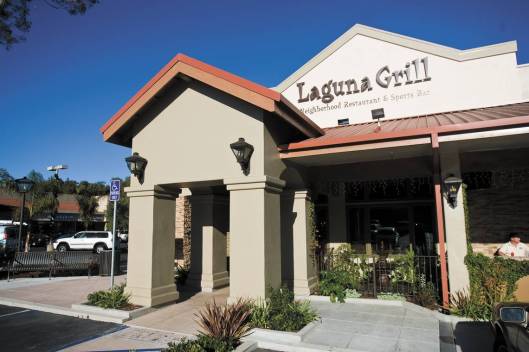
I worked, for many years, while going through Cuesta and then the teaching credential program at Poly, for Russ and Rich Bullock, who owned Laguna Liquors, on the site of today’s Laguna Grill. I liked most of my college jobs: working for the Missouri journalism school in a work-study job, stocking groceries at night (we were “Night Stockers”), except when a fellow worker jacked a load of maple syrup too high and thirty cases came crashing down, working on the “wham-bang machine” at the 3M plant. 3M makes Scotch Tape. We were making guided missile parts.

But I liked Laguna Liquors the best.

My bosses, Russ and Rich were both born in the little red house at the very end of French (now Madonna) Road, and they were two of the best bosses I’ve ever had.

I was reminded of all this because I saw another favorite boss of mine, Randy Bullock, and his wife Barb this weekend.

Back then, in the 1970s, the liquor store was pretty much the only market in the area. We were also the local bank, where folks came in to write twenty-dollar checks, which was an immense amount of money back then.

We were also part-time and totally unqualified psychiatrists: we got to know everyone for blocks around with a drinking problem, a marriage problem, a kid problem, a job problem.

We did a lot of listening, and we were, most of us, anyway, just liquor-store clerks in our twenties.

We also had a lot of fun, which frequently involved post-hours runs down to the Laguna Village Inn or the Oak Room.

We were engulfed by two waves of children in the afternoons: one from C.L. Smith and the second from Laguna Middle School, who swarmed around the candy rack like angry badgers. We even sold Pop Rocks and–I still can’t stand him–Reggie Bars.

This is where, actually, I found out that I liked kids, which is a good thing, because I spent thirty years teaching high school and liked them just as much at the end of my career as I had at the liquor store.

The wave Sunday mornings at 7 a.m. was almost as bad as the candy rush on weekday afternoons. There were always grouchy elderly men, some of them in their carpet slippers, lined up waiting for us to open so they could have their massive Sunday editions of the L.A. Times or the San Francisco Examiner/Chronicle.

But I didn’t like it when you realized an older customer wasn’t coming back. The philosophical Fuller Brush salesman took his own life. The sweetheart lady you were never supposed to sell to died of cirrhosis anyway.

The salesmen and route men were fascinating. Chet the Chip Man was an old Arroyo Grande High Classmate; Bob the Bread Man was the fastest stocker I’d ever seen; Tim from All-American beverage was the courteous, kind man who would someday become my brother-in-law. Brownie the Whiskey Guy once beckoned us into the back room, shushed us as if he were the Manhattan Project, and and poured each of us a blended whiskey that was going to be the next big thing.

It was so interesting, to me, as a young fellow, to be so integrated into the life of a neighborhood. I liked Mr. G.D. Spradlin, the general who orders Martin Sheen into the jungle in “Apocalypse Now.” He smoked Lark 100s.

I liked the elderly British couple who came down from See Canyon and loaded a shopping cart with Swanson’s Frozen Fish and Chips.

I liked the Poly professors mostly but not the arrogant ones. (Why aren’t you at Yale, you jerk?)

I learned that the favored breakfast of house painters is beer and Dolly Madison doughnuts.

I hated Hallowe’en. How do you card someone who looks like Wolfman?

I liked the hippies, gently edging into middle age, who once came to protest Diablo Canyon. One of them said Willie Nelson was coming, but he didn’t show up at the liquor store. We were sad.

I loved–absolutely loved–Willie the Golfer, an immensely charismatic black man who discovered the sport at the little nine-hole Laguna course. Willie had forearms the size of hams, and I wondered when he hit the ball if he didn’t turn it into powder.

I liked Forrest the Southern Pacific guy but never, ever figured out why he bought Burgie beer, which was incredibly cheap and tasted a little like what I thought embalming fluid might taste like (Budweiser was $1.69 a six-pack, by the way).

I used to hide from some customers, like Bob the Sherry Drinker, who did a dead-on imitation of Sgt. Schultz from “Hogan’s Heroes” but then liked to ramble, a lot and pretty loud.

I liked to listen to Russ talk about growing up in San Luis Obispo and delivering Golden State Creamery milk to the Red Light girls. I liked to listen when the old-timers came in to tell old, stories and complain about the guvmint and/or the mule deer who ate their garbanzo beans.

So I did a lot of listening, and I learned empathy, and I learned history, and I became a history teacher which is, after all, about telling the stories you’ve learned and telling them well. Working in that liquor store was one of the most important parts of my education.


Why I like Aldi: It reminded me of Holland

15 Thursday Nov 2018

Posted by ag1970 in Uncategorized

≈ Leave a comment


Aldiopens011870

Okay, I went back to Aldi.

I found a shopping cart with the quarter wedged in the slot and used it for my shopping. I just got a few things this time, but Aldi’s starting to grow on me.

A nice lady showed me how to get my quarter back, and this one from an abandoned cart belonging to a complete stranger, so we’re all square, Aldi.

One of the items I bought was a really nice Dutch beer called “Holland 1839,” which was yummy. So was the white Dutch cheese I sprinkled liberally, melted, over the French bread I served with pasta tonight.

My students will recall how much I love Holland, thanks, in no small part, to Jan Vermeer. Here is his famous “Girl in a Pearl Earring on a KLM Flight Reading an Annual Report with Champagne.”


Screen Shot 2018-11-14 at 5.52.08 PM

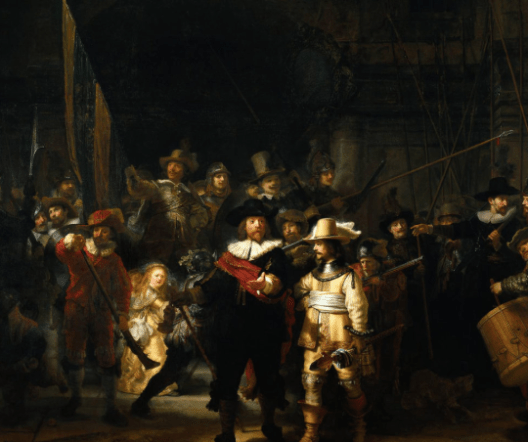
When Ms. Derbidge and I took students to Holland, I fell crazy in love. I stood in front of Rembrandt’s “Night Watch” for about two days.


Screen Shot 2018-11-14 at 5.53.36 PM


I said “Hallo” to Rabobank in downtown Amsterdam, which is where ours came from. And I’m not bitter, even though it was my Dad who came up with the name “Mid-State Bank.”


Foto-Rabobank

I marveled at the density of the bicycles, was nearly killed by two or more, including mothers on what are called “cargo bikes,” with up to four children bouncing happily in the bucket out front.


iamsterdam_1766_0

“Laten we de toeristen overvallen, kinderen!”
(“Let’s run over the tourists, kids!”)

I whispered to Freddy Rolland, our tour guide: “Is it just me, or are Dutch women really, c288d95425d5b506f9c67305c7218248--bicycle-girl-bike-stylereally pretty?” Freddy laughed knowingly. Be careful. They’re on bicycles and could kill you in a heartbeat.


I loved the richness of Amsterdam’s Jewish heritage, and its heartbreak. Anne Frank’s movie-magazine cutout of the actress Myrna Loy–I loved her in The Thin Man with William Powell–is preserved under Plexiglas in the Upstairs Annex.

I gained a new and much deeper appreciation for Cheese. It is capitalized in Holland. As is the word “Cow.” They are the happiest Cows I have ever seen, and I know Cows, having been on a first-name basis with Daisy, my big brother’s 4-H heifer.

If there’s any city I would go back to in an instant, it’s probably in Italy. Amsterdam is the grand exception. So any grocery store that reminds me of that place is going to get my business.

37360_1492990848492_2233831_n

The Caravan and Captain Dreyfus

02 Friday Nov 2018

Posted by ag1970 in trump, Uncategorized

≈ Leave a comment


honduran-caravan-17-e1540945189730


https://drive.google.com/file/d/1vp8S_KnFfP8uWfGk-rtSpfpJnKrL8i4N/view?usp=sharing

The link above leads to a PowerPoint from an old lesson plan from the AP European History course I taught for nineteen years. The music, by the way, is from Thomas Newman’s incredible score for the film American Beauty.

As if you haven’t noticed, the current state of the nation worries me greatly, and daily, in my sleep and with my first coffee.

I haven’t got a handle on it yet.

Emotions today are as high as they were on the eve of the Civil War, when Rep. Preston Brooks of South Carolina nearly beat the abolitionist Sen. Charles Sumner of Massachusetts  to death on the Senate floor. (Sumner was a bit of a prig, by the way. Spielberg treats him with justifiable unkindness in Lincoln.)

But we aren’t as neatly divided geographically as we were in the Election of 1860. If you look at the electoral map for 2016, we’re two coasts interrupted by a continent, with Oklahoma its epicenter. We’re as isolated as what we used to call “Pakistan” and “East Pakistan” on the maps I studied in high school.

So the division isn’t conveniently geographic, as it was in Lincoln’s time. (Nothing else about Lincoln’s time was “convenient”.)

It’s instead deep inside our national spirit, and deep among ourselves.

The nearest comparison I could come up with, one similarly marked by fear of outsiders, of The Other—and, to be discussed some other time, by a deep fear of change— was not American. It was French.

It came from a conflict deferred from the Revolution, between tradition and modernity, between church and state, between advocates of  Blood and Soil and unaccepted national communities who were, ironically, passionately French.

There was no civil war in France. They’d already had revolutions in 1789. 1830, 1848 and 1870, so they subsumed their passions until 1894, when The Dreyfus Affair set them aflame again.

The Affair revealed a spiritual sickness, like ours, that tore the French nation apart. It tore Renoir and Monet apart. The cartoon about a French family dinner struck me as especially relevant to America today.

What I learned about the destruction of French comity has been made fresh again in my time, in the exploitation of a “caravan” of refugees fleeing from nations in Central America that have become nightmares. These are refugees funded, “many people say,” by nefarious Zionists. Like George Soros.

In reality, they’re fleeing from homes made strange and deadly by gangs, fat ticks engorged by our appetite for drugs, and from death squads directed by Central American officer-graduates from the old School of the Americas at Fort Benning, Georgia.

For my Trump-supporting friends: Do the research.

Somehow, thanks to presidential innuendo and sanctuary walls perforated by .223 rounds, we have woven anti-Semitism into what was already a story tragic enough to fill yards of dusty and unexplored library shelves at Cal or Princeton.

Our story, like the one in Dreyfus’s France, has a similar element: we’re blissfully unaware of history and of our own historical power. We haven’t read the books.

We exert, for example, an immense gravitational pull on Central America. I’m  reminded of Titanic’s screws turning for the first time inside the harbor at Southampton; the powerful current they generated nearly sucked harbor boats to their destruction beneath the great, and doomed, ocean liner.

The Mexican poet Octavio Paz got this idea precisely once:

“Poor Mexico,” he said. “So far from God, so close to the United States.”

So our current fear of refugees and the implicit but insistent rumors about the Jewish plot to fund them reminded me of the old fear of The Other, and of the Dreyfus Affair, which I’ll never understand completely.

The closest anyone can come to understanding the Dreyfus Affair, I think, is to read Barbara Tuchman’s treatment of the case in her masterful book The Proud Tower.

Even after reading Tuchman, my favorite historian, when I taught this lesson about The Affair, I thought it peculiarly and quaintly French.

I stand corrected.


Subscribe

  • Entries (RSS)
  • Comments (RSS)

Archives

  • January 2026
  • December 2025
  • November 2025
  • October 2025
  • September 2025
  • August 2025
  • July 2025
  • June 2025
  • May 2025
  • April 2025
  • March 2025
  • February 2025
  • January 2025
  • December 2024
  • November 2024
  • October 2024
  • September 2024
  • August 2024
  • July 2024
  • June 2024
  • May 2024
  • April 2024
  • March 2024
  • February 2024
  • January 2024
  • December 2023
  • November 2023
  • October 2023
  • September 2023
  • August 2023
  • July 2023
  • June 2023
  • May 2023
  • April 2023
  • March 2023
  • February 2023
  • January 2023
  • December 2022
  • November 2022
  • October 2022
  • September 2022
  • August 2022
  • May 2022
  • April 2022
  • March 2022
  • February 2022
  • January 2022
  • December 2021
  • November 2021
  • October 2021
  • September 2021
  • August 2021
  • July 2021
  • June 2021
  • April 2021
  • March 2021
  • February 2021
  • January 2021
  • December 2020
  • November 2020
  • August 2020
  • July 2020
  • June 2020
  • May 2020
  • April 2020
  • January 2020
  • December 2019
  • November 2019
  • October 2019
  • September 2019
  • August 2019
  • May 2019
  • April 2019
  • March 2019
  • February 2019
  • January 2019
  • December 2018
  • November 2018
  • October 2018
  • September 2018
  • July 2018
  • June 2018
  • May 2018
  • April 2018
  • March 2018
  • February 2018
  • January 2018
  • December 2017
  • November 2017
  • October 2017
  • April 2017
  • March 2017
  • December 2016
  • November 2016
  • October 2016
  • September 2016
  • August 2016
  • July 2016
  • June 2016
  • April 2016
  • March 2016
  • February 2016
  • January 2016
  • December 2015
  • November 2015
  • October 2015
  • September 2015
  • August 2015
  • July 2015
  • June 2015
  • May 2015
  • April 2015
  • March 2015
  • February 2015
  • January 2015
  • December 2014
  • November 2014
  • September 2014
  • August 2014
  • July 2014

Categories

  • American History
  • Arroyo Grande
  • California history
  • Family history
  • Film and Popular Culture
  • History
  • News
  • Personal memoirs
  • Teaching
  • The Great Depression
  • trump
  • Uncategorized
  • World War II
  • Writing

Meta

  • Create account
  • Log in

Blog at WordPress.com.

  • Subscribe Subscribed
    • A Work in Progress
    • Join 68 other subscribers
    • Already have a WordPress.com account? Log in now.
    • A Work in Progress
    • Subscribe Subscribed
    • Sign up
    • Log in
    • Report this content
    • View site in Reader
    • Manage subscriptions
    • Collapse this bar
 

Loading Comments...