• About
  • The Germans

A Work in Progress

A Work in Progress

Monthly Archives: February 2019

How to write a book, in easy-to-understand steps

28 Thursday Feb 2019

Posted by ag1970 in Uncategorized

≈ Leave a comment

Cover

  1.  Decide to write a book.
  2. Wake up at 2 a.m. and realize that you may have made a mistake.
  3. Change your mind. Collect every short piece you’ve written in the last six years and divide them into themes.
  4. Collect them altogether into a Word document. It’s immense.
  5. Wake up at 2 a.m. and realize that some of your short pieces are doo-doo.
  6. Excise bad pieces, much like the guy who got his arm caught between boulders and sawed it off with a penknife.
  7. Word document slightly less immense. Hmmm. Something’s missing…
  8. So, what the heck? Add photographs. Make it immenser.
  9. Wake up at 2 a.m. and realize that you have to add headers, footers, page numbers, a table of contents and squish it altogether into a 6″ x 9″ format with 1″ gutters.
  10. Three weeks later, book is assembled.
  11. Rewrite begins. Rewrite, rewrite, rewrite. You wonder, in re-writing if you were actually literate to begin with. I said THAT?
  12. Three weeks later, you turn it over to a copy editor.
  13. Two weeks later, when she gives it back, you realize you are only semi-literate. Maybe the book should be in Esperanto.
  14. Rewrite, rewrite, rewrite. Throw stories out. Throw words out. Throw, throw, throw.
  15. Submit manuscript to automated online editor. Are you sure you’ve got the copyright? Throw photographs out.
  16. Rejected. Margins.
  17. Submit again
  18. Rejected. Page numbers.
  19. Repeat Step 15 fifty-six times.
  20. Yay! MS accepted! You get a proof copy of your book!
  21. You chose 12-point type, as recommended. It looks monstrous, like “On Cherry Street,” which was your first-grade reader in 1958.
  22. Re-do the entire manuscript in 10-point type. Re-do headers, footers, page numbers, table of contents.
  23. One week later, re-submit.
  24. Yay! You get a proof copy of your book!
  25. The header on page 156 is missing and so is the caption on page 203.
  26. Re-submit.
  27. Yay! You get a proof copy of your book!
  28. Wake up at 2 a.m. This was a really stupid idea.
  29. Re-read some of the content. Well, doggone it, that’s pretty good after all.
  30. Throw more stories out Throw more words out. Eliminate any references to Donald John Trump. Add a song you wrote about Mike the Wonder Chicken.
  31. Submit. It’s accepted!
  32. Yay! Get proof copy #3. It looks good.
  33. Caption on page 34 of proof copy is off center. At this point, you no longer care.
  34. Read many articles about “How to Market Your Book.” Realize that  “marketing a book” is only slightly harder than learning how to run a nuclear submarine by yourself.
  35. Wake up at 2 a.m. and realize that you may have made a mistake. Repeat this step for two weeks.

YOU MAY (OR MAY NOT) BE A PUBLISHED AUTHOR!

My Feelings Are Hurt and That’s Okay

02 Saturday Feb 2019

Posted by ag1970 in Uncategorized

≈ Leave a comment

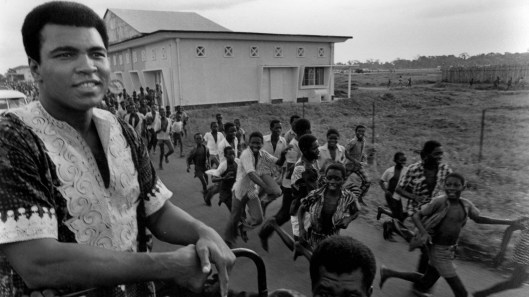
muhammad-ali-zaire-1974

Earlier this week, a fellow historian advised me, in the most well-meaning way, that my writing had been infected by the stream-of consciousness technique. Luckily, he suggested a couple of copy editors as an urgent and necessary corrective.

Ouch.

That hurt my feelings for three reasons. One of then is Revision: there was an implication of sloppiness on my part in the advice on his part, yet most of the writing I do— although I write quickly, because that’s what journalism training teaches you—goes through countless revisions. I will be the first to admit that almost everything I’ve ever written has gotten better with either fewer words or demanding editors, even the slightly daft ones.

A second reason for my emotional flesh wound is that my critic lives in San Luis Obispo, which means that he looks down on us bumpkins in Arroyo Grande or Morro Bay or Paso Robles from insurmountable intellectual heights.

The third reason that I got this counsel is that I don’t think like an academic historian. Although my books are researched in depth, with footnotes in platoons,  my writing doesn’t progress in a methodical manner: I’m not a tugboat nudging a great passenger liner into its berth along the East River in New  York.

Oops. I did it again.

I don’t think in a linear way. Never have. I think laterally: One idea will lead me to another that might be a continent or a century away from the idea I’m supposed to be discussing. I found that of immense help as a teacher, because I’d take the kids along with me in the comparison of one historical event to another, seemingly disparate, event. It worked, judging from the way their eyes would light up, because they understood metaphors and, even more, they loved understanding.

One of the historical events we studied was the impact of Freudian psychology on popular culture, and it just so happens that the stream of consciousness was part of one lesson plan. Here is a passage my kids read, from the opening to Joyce’s Portrait of the Artist as a Young Man:

Once upon a time and a very good time it was there was a moocow coming down along the road and this moocow that was coming down along the road met a nicens little boy named baby tuckoo

And here is an excerpt from an essay on Muhammad Ali that shows me doing the exact same thing. as if I were a member of the Junior Joyce Fan Club.

*  *  *

At a press conference at the Waldorf-Astoria before leaving for the 1974 Zaire fight against George Foreman, the “Rumble in the Jungle,”, Muhammad talked about his training:

I’ve wrestled with alligators,
I’ve tussled with a whale.
I done handcuffed lightning
And throw thunder in jail.
You know I’m bad.
just last week, I murdered a rock,
Injured a stone, Hospitalized a brick.
I’m so mean, I make medicine sick.


* * *

The novelist Norman Mailer, going into that fight, said that Muhammad was afraid. Foreman had destroyed Frazier, destroyed Ken Norton—two fighters who had beaten Ali–in two bouts that had lasted two rounds each. Mailer implied that the volume of Muhammad’s poetry was in direct proportion to the intensity of his fear.

But Ali had watched films of the fights, and when Foreman had knocked those men down, he’d meekly and quickly retired to his corner, breathing heavily. He didn’t have the stamina it would take to escape the trap Ali was laying for him—a fight intended to be a marathon. As Foreman pounded a crumpled Ali, gloves up, forearms locked at the elbows, in merciless showers of blows that would have hospitalized most men, Ali whispered to him, from the ropes, after one particularly jarring punch, “That the best you got, George?”

In the end, Mailer probably was right. Ali, the victor, was afraid of George Foreman. That is why he was so remarkable. George Foreman grew to love Muhammad Ali. That is why he is the greatest.

* * *

My late brother-in-law, Tim O’Hara, then living in Los Osos, took my nephew Ryan, then a little boy, to meet Ali at a Los Angeles-area sports-card show and signing. Ali signed a pair of boxing gloves, and took a moment to look at Ryan and remark on something I’m not sure Ryan had ever much liked. “I love your curly hair,” the Champ said softly.

* * *

In Famine Ireland, an English clergyman and his companion climbed into their carriage to leave a stricken town. A thirteen-year-old girl, expressionless, her clothing in tatters and so exposing ribs like an accordion’s bellows, her clavicle and shoulder joint with their contours visible just below her skin, began to run after the carriage. When the horses picked up speed, so did she. The clergyman, distressed, kept looking out the window and the girl and her long, bony legs were keeping pace with them. She did so for two miles. The clergyman could finally take no more, ordered the driver to stop, and gave the girl money. She took the money, expressionless and silent, and turned her back on them to walk home.

In the film When We Were Kings, African children, in the same way, ran after Ali’s car. They weren’t expressionless. Their faces were radiant with joy. They weren’t silent. They sang for Ali when his car stopped for them, a call-and-response song so beautiful that it makes you shiver to hear it. What the clergyman gave the little girl would have kept her alive, but only for a short time. What Ali gave these children would feed them all their lives.

 *  *  *

So there is nothing in my writing that couldn’t be better with a good editor, or with ruthless pruning. But for those who use literary terms loosely or whose thinking is safely bound by convention and by academic conformity, my writing lacks the certainty and comfort of boredom. For that I’m not too sorry.


 

Subscribe

  • Entries (RSS)
  • Comments (RSS)

Archives

  • January 2026
  • December 2025
  • November 2025
  • October 2025
  • September 2025
  • August 2025
  • July 2025
  • June 2025
  • May 2025
  • April 2025
  • March 2025
  • February 2025
  • January 2025
  • December 2024
  • November 2024
  • October 2024
  • September 2024
  • August 2024
  • July 2024
  • June 2024
  • May 2024
  • April 2024
  • March 2024
  • February 2024
  • January 2024
  • December 2023
  • November 2023
  • October 2023
  • September 2023
  • August 2023
  • July 2023
  • June 2023
  • May 2023
  • April 2023
  • March 2023
  • February 2023
  • January 2023
  • December 2022
  • November 2022
  • October 2022
  • September 2022
  • August 2022
  • May 2022
  • April 2022
  • March 2022
  • February 2022
  • January 2022
  • December 2021
  • November 2021
  • October 2021
  • September 2021
  • August 2021
  • July 2021
  • June 2021
  • April 2021
  • March 2021
  • February 2021
  • January 2021
  • December 2020
  • November 2020
  • August 2020
  • July 2020
  • June 2020
  • May 2020
  • April 2020
  • January 2020
  • December 2019
  • November 2019
  • October 2019
  • September 2019
  • August 2019
  • May 2019
  • April 2019
  • March 2019
  • February 2019
  • January 2019
  • December 2018
  • November 2018
  • October 2018
  • September 2018
  • July 2018
  • June 2018
  • May 2018
  • April 2018
  • March 2018
  • February 2018
  • January 2018
  • December 2017
  • November 2017
  • October 2017
  • April 2017
  • March 2017
  • December 2016
  • November 2016
  • October 2016
  • September 2016
  • August 2016
  • July 2016
  • June 2016
  • April 2016
  • March 2016
  • February 2016
  • January 2016
  • December 2015
  • November 2015
  • October 2015
  • September 2015
  • August 2015
  • July 2015
  • June 2015
  • May 2015
  • April 2015
  • March 2015
  • February 2015
  • January 2015
  • December 2014
  • November 2014
  • September 2014
  • August 2014
  • July 2014

Categories

  • American History
  • Arroyo Grande
  • California history
  • Family history
  • Film and Popular Culture
  • History
  • News
  • Personal memoirs
  • Teaching
  • The Great Depression
  • trump
  • Uncategorized
  • World War II
  • Writing

Meta

  • Create account
  • Log in

Blog at WordPress.com.

  • Subscribe Subscribed
    • A Work in Progress
    • Join 68 other subscribers
    • Already have a WordPress.com account? Log in now.
    • A Work in Progress
    • Subscribe Subscribed
    • Sign up
    • Log in
    • Report this content
    • View site in Reader
    • Manage subscriptions
    • Collapse this bar
 

Loading Comments...