
Former and much-beloved Arroyo Grande High School student Victoria, whom I teased for being distantly related, from my college studies, to a moderately reformist Mexican president, listened so intently in my classes and was so unafraid to ask hard questions that she became one of those students you never forget.
When you wanted to see whether your thirty-two kids had “got it,” your eyes always traveled back to Victoria’s because she was so transparently honest. She was your reality check.
She knew as well and all along that teaching history was just my cover story.
When I was teaching material as arcane and fun as social history (using parish registers to discover that many, many Tudor brides were heavily pregnant) or the more conventional stuff, like the stages of the French Revolution— or when we went on our little classroom trips to Paris in the Second Empire or to interwar Berlin–what I was really teaching, I hoped, transcended mere information. I wanted the thirty-three to learn humanity and empathy and hope. In teaching art, I had the chance to inspire them. In teaching war, I had the chance to make them angry.
History’s inert unless it inspires feelings we didn’t know we had that we discover in people we’ll never know.
Victoria got all that. And then she used it.
So now she is a mother and is a mover and shaker for environmental and cultural causes. I am so immensely proud of her.
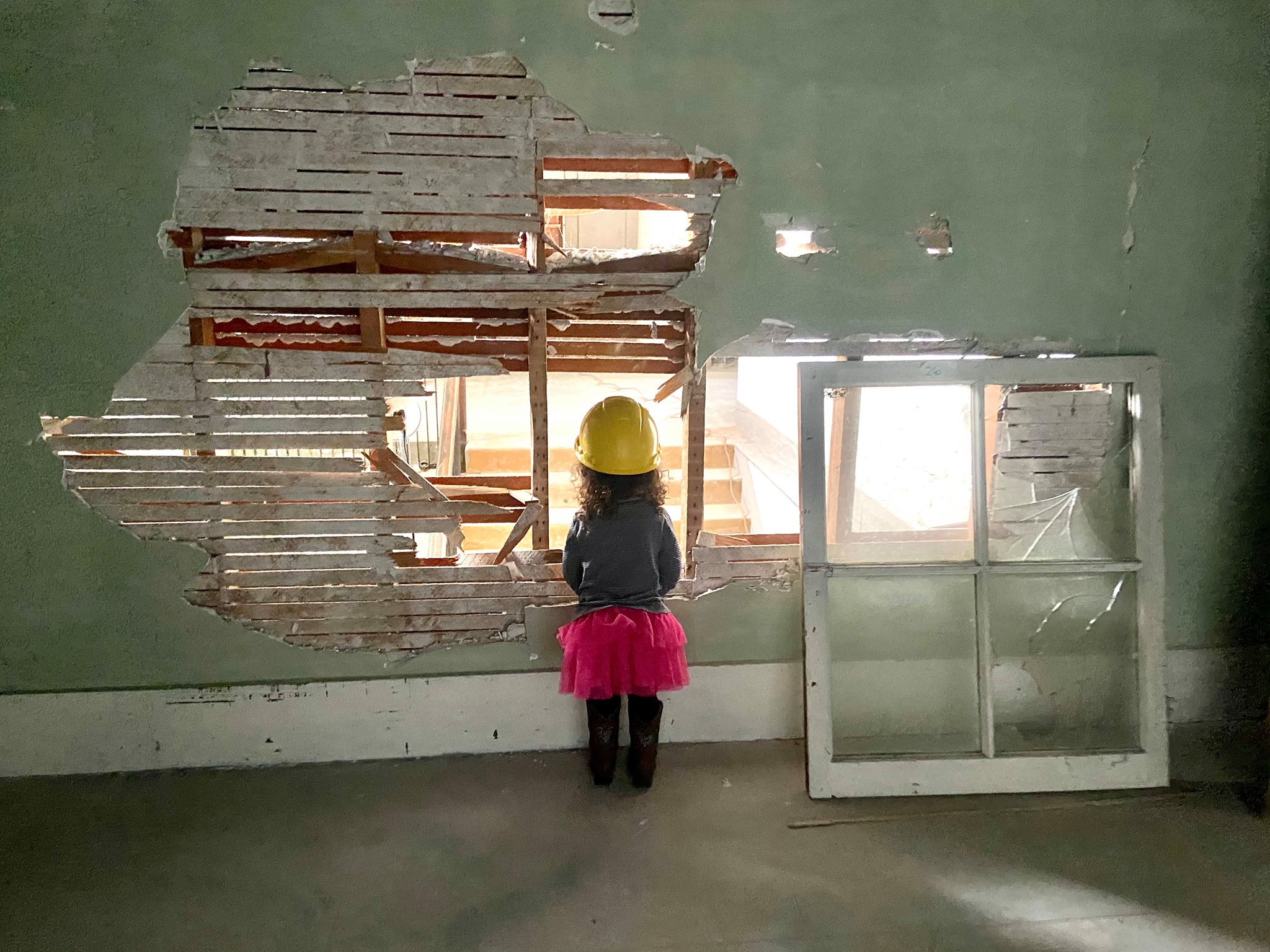
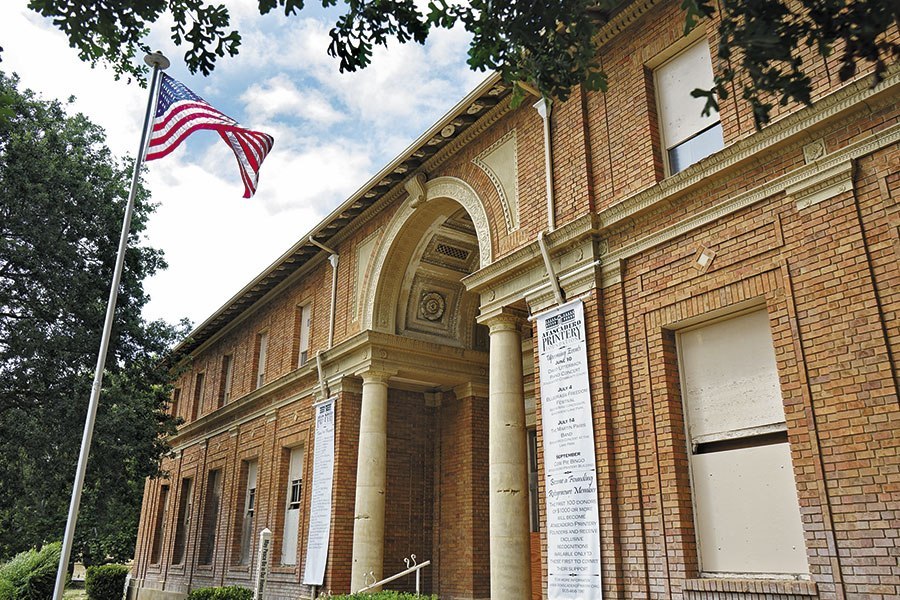
She’s part of Atascadero Printery Foundation–you can find it online, along with some photos of this beautiful building–and so is working toward the restoration of the old Printery to make it a community center for the arts.
This is how Victoria makes history live again.
And the photo above shows her daughter on a tour of the Printery. I haven’t seen an image like this one—not in a long, long time, and not until now, when I need it most—that made me so hopeful for the future.
 A Work in Progress