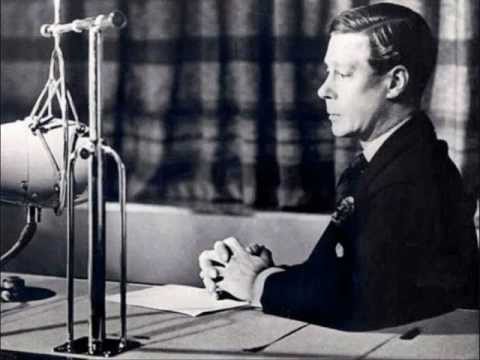
“I have found it impossible to carry the heavy burden of responsibility and to discharge my duties as King as I would wish to do without the help and support of the woman I love.”
Edward VIII, after eleven months as king, abdicates. He does so because he has fallen in love with Wallis Simpson, an American divorcee. The Church of England does not recognize divorce. The king is also the head of the church.
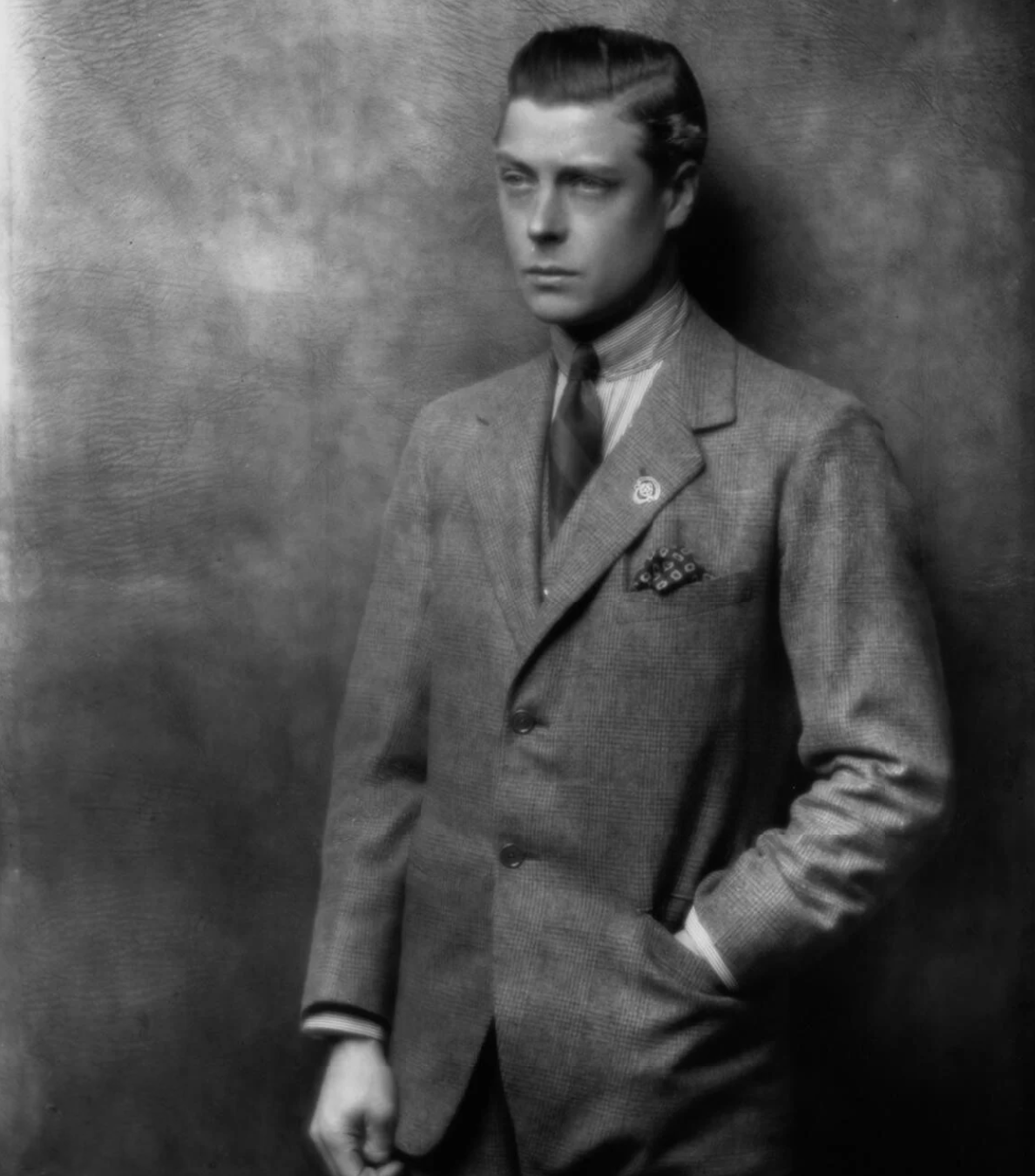
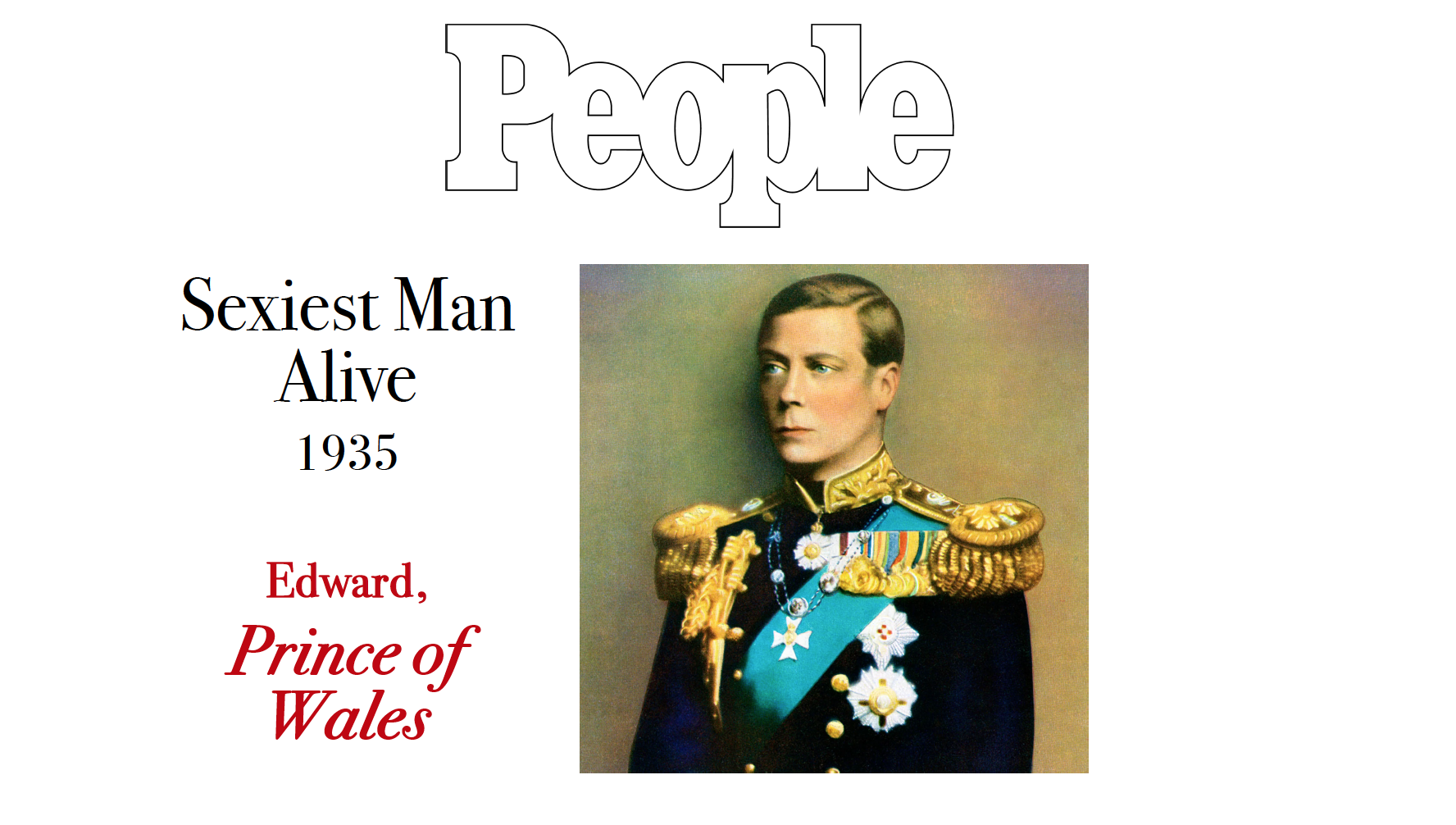
Edward as Prince of Wales. He was the world’s Most Eligible Bachelor in the 1920s and 1930s.
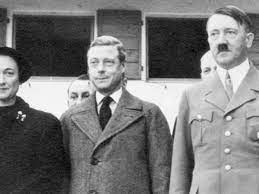
The story doesn’t have a happy ending. There’s a sadomasochistic twist to the marriage of Edward and Wallis, who chews him out within earshot of visitors, as if he were a little boy. She is a harpy and never forgives him for the couple’s exclusion from court and the perks of royalty. The two also develop a fondness for Adolf Hitler.
I apologize for cutting off Wallis’s image. However, that may be merciful. “David” certainly looks happy.
Maybe Kate in her wedding dress made up a little for Wallis. But just a little.
During the war, after they’d been given the honorary title Duke and Duchess of Windsor, they were installed as royal functionaries in the Bahamas, as far away from Germany as possible.
The happy ending isn’t Edward’s. It belongs instead to his little brother, George VI, who gets an entire film made about HIS speech, the one that earned Colin Firth an Oscar.
It’s a moving scene, but one that sticks with me, too, comes earlier in the film, when David (Edward’s family familiar) mocks Bertie’s (George’s family name) stutter. In an evocative piece of acting, you watch Firth’s character shrinks, deeply wounded, in the face of the abuse.
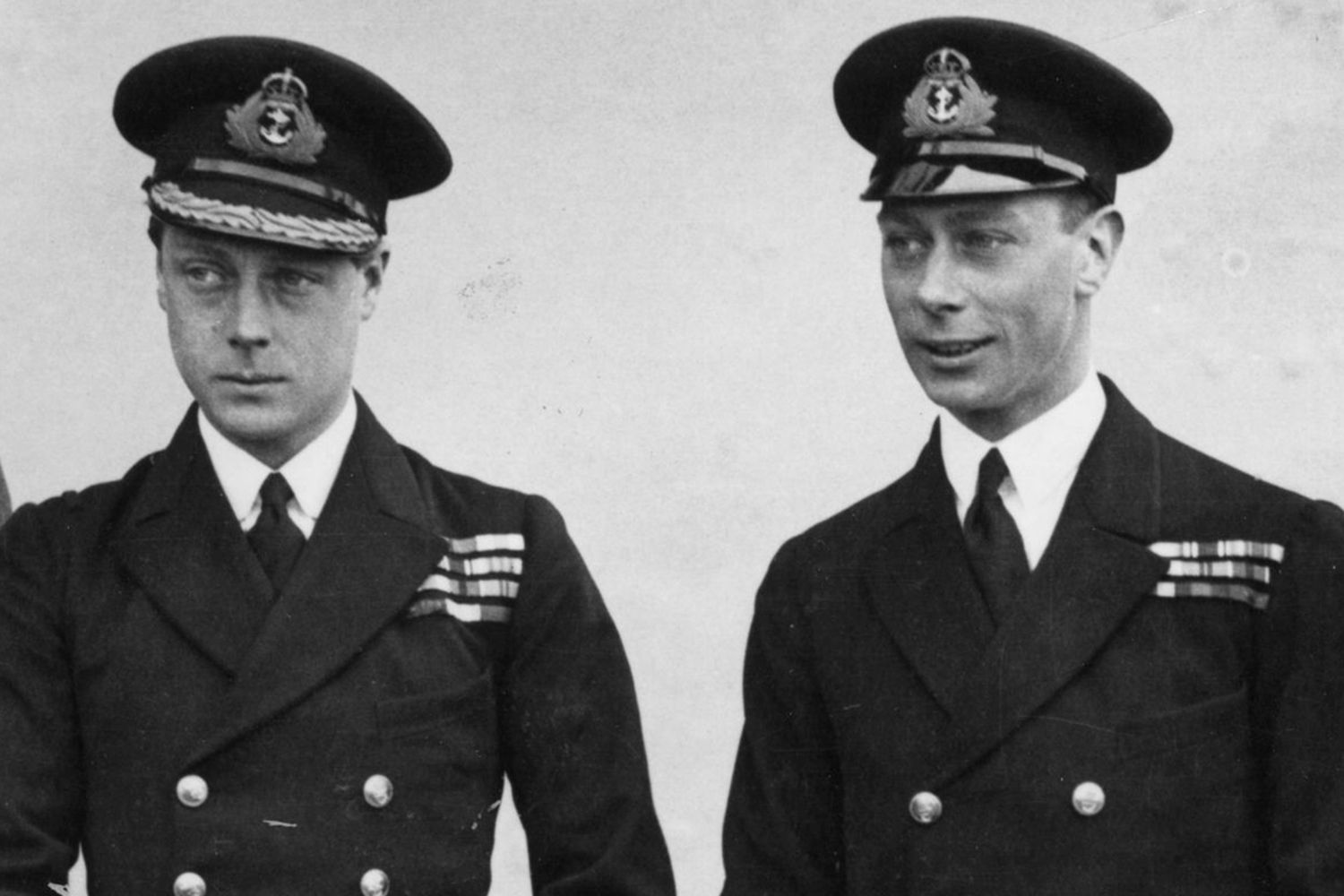
“David” and “Bertie,” the young princes, in naval uniform.
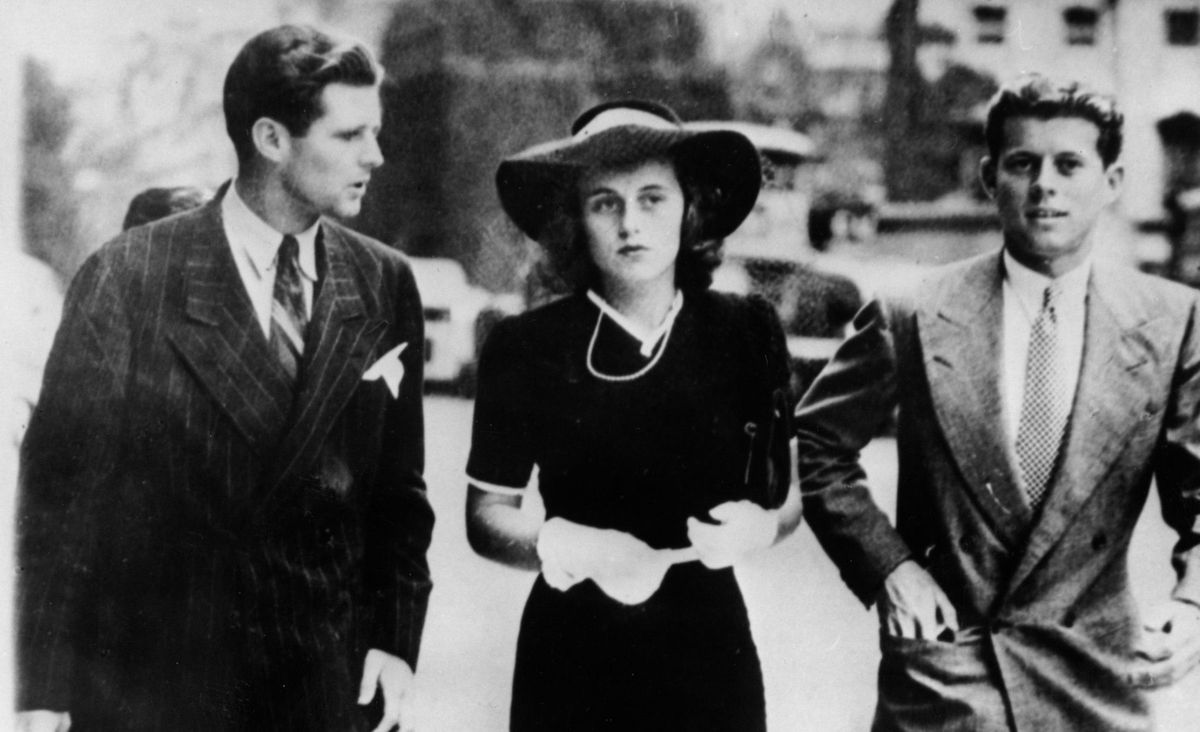
Royals, you may have noticed, are often shallow silly people. Edward was a bully, and he reminds me of Joe Kennedy, the eldest son, who blew himself in a B-24 bomber trying to outdo Jack’s PT 109 exploits.
Joseph Kennedy Jr., Kathleen (“Kick”) and Jack, in London before World War II.
But George, who I am sure had plenty of faults of his own, had courage, I think, and character. I do know that he loved his little girls, Elizabeth and Margaret.
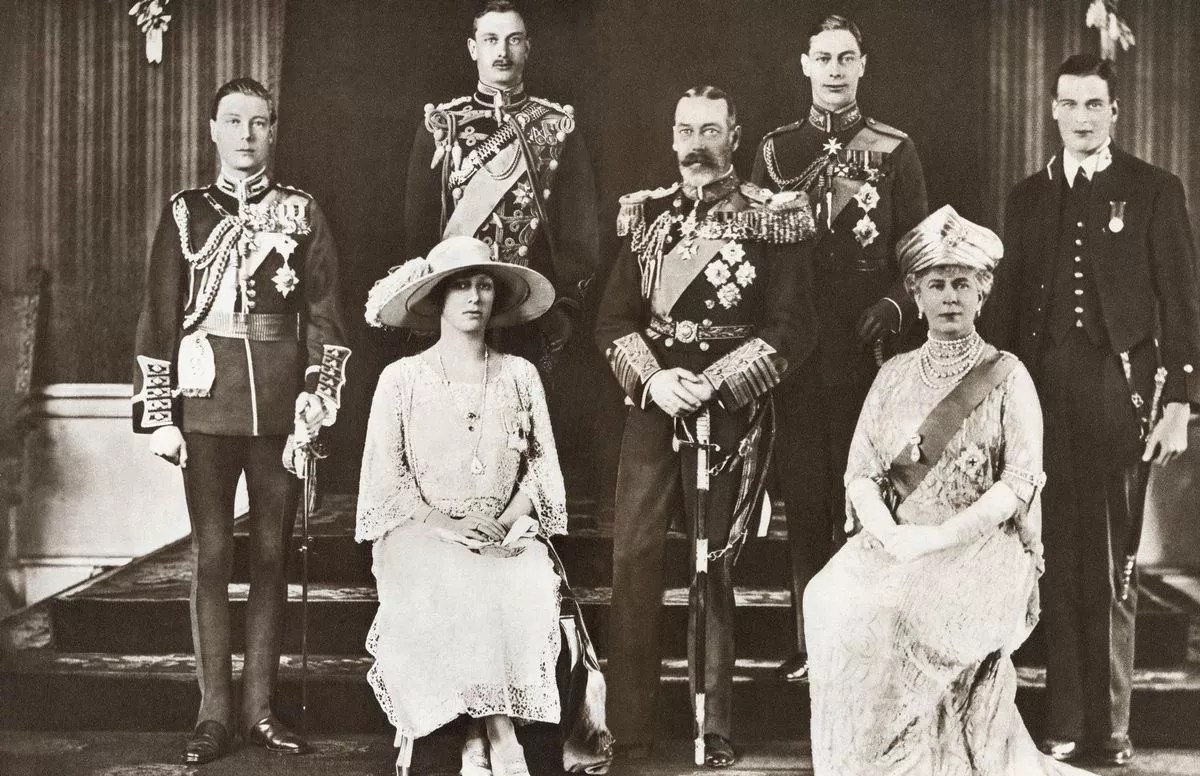
He certainly had no grounding in familial love, between his big brother and his parents. Queen Mary, once Mary of Teck, holds newborn royals looking as if she’s about to dine on them. Terrifying woman. George V was a cold man. And Kaiser Wilhelm, who alternated between brimming with undeserved self-confidence and hysteria, was his great uncle. What a family.
The principles, a jolly bunch. George V, center, who predicted that his son would muck it up, Queen Mary, lower right, David (Edward VIII) at left, Bertie (George VI) behind Papa.
And so Firth’s performance in this scene, along with Geoffery Rush’s performance as his speech therapist, are to me indelible.
Let the word go forth that I have been passed over again this year. Who’ve been my favorites? Well, George Clooney (a two-time “sexiest”), because he’s a fine actor with a marvelous self-deprecating sense of humor—the Hawaii movie, The Descendants, may be my favorite, tied with O Brother Where Art Thou? Three Kings is right up there, too, I think.
Idris Elba’s handsomeness and quiet intelligence, as a doctor who refuses to panic (much) after a plane crash in Alaska in The Mountain Between Us, with Kate Winslet, immediately appealed to me, and his commercials for Booking.com are charming.
But this year’s winner, Patrick Dempsey, is controversial. He’s too “old” (57), which is unfair to 71-year-old me, and he hasn’t done all that much lately, which is true.
I am a Patrick Dempsey fan only by extension. He was the romantic lead in Enchanted, about a Disney-type-all-sweetness princess transported to modern New York City, and it was Princess Amy Adams who caused Elizabeth and I to nearly fall out of our theater seats (remember those?) in a few seconds of shock before we started laughing uproariously. It was the cleaning scene, with the rats, pigeons and cucurachas:
And, truth be told, I never watched Grey’sAnatomy, which featured Hunky Dr. Patrick Dempsey, but the show’s star, Ellen Pompeo, moved me deeply in a film called Moonlight Mile.
In the early 1970s, Jake Gyllenaal’s fiance is murdered, shot to death, in her Massachusetts hometown. His character, emotionally shattered, moves in with her parents (Dustin Hoffman and Susan Sarandon. Some cast, huh?) and he gradually falls in love with Pompeo, whose relationship with the love of her life has ended. Pompeo works in a bar, and, despite Gyllenhaal’s stupid 1972 haircut, she falls in love with him. There’s nice chemistry between the two. In that film. Pompeo won me over as a kind of Sexiest Woman Alive, 2002 version. (Gyllenhaal, whose name is far too hard to spell, is also fine in Zodiac, about the San Francisco serial killer, as is Mark Ruffalo, who probably should be an S.M.A.,too)
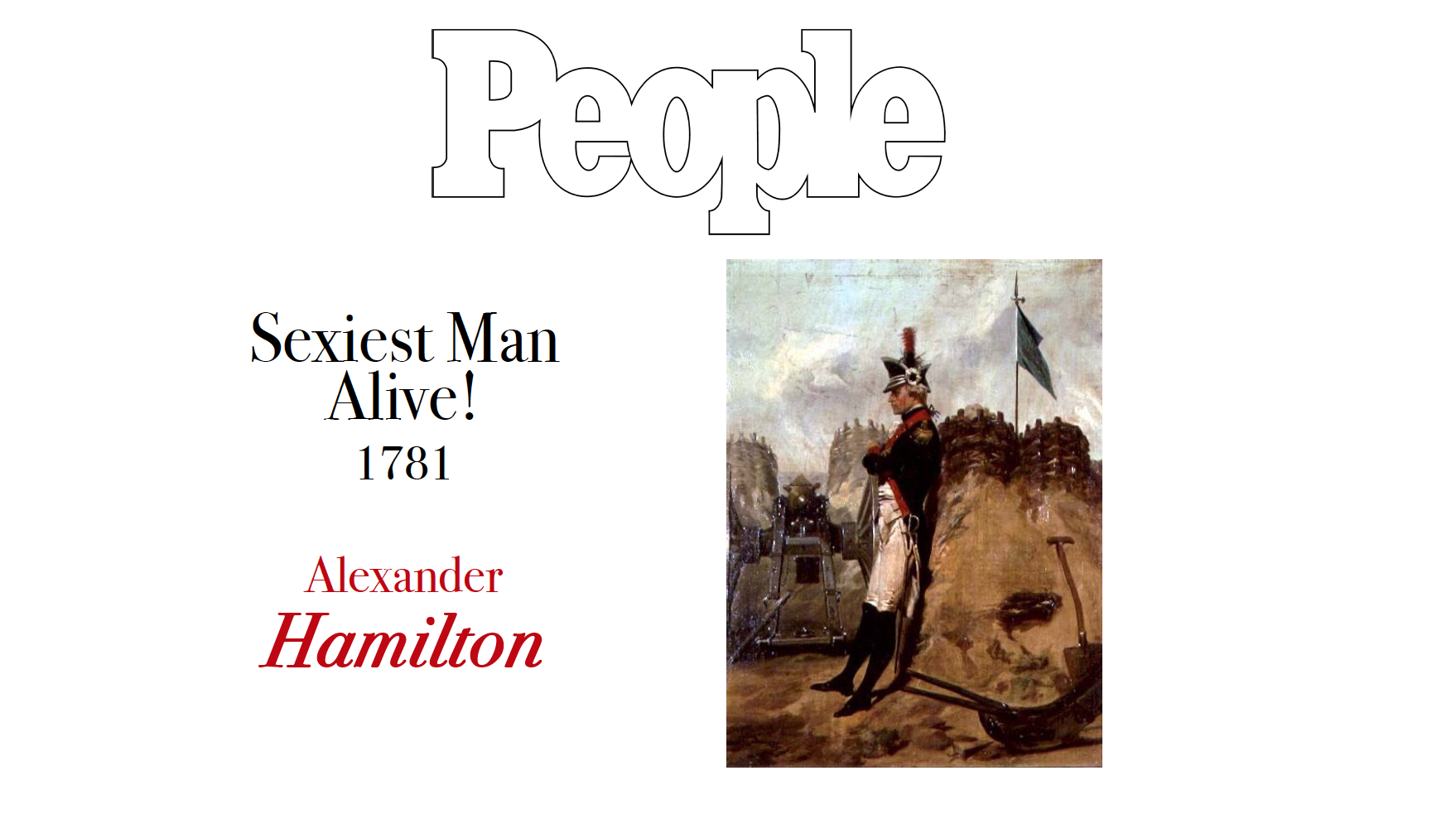
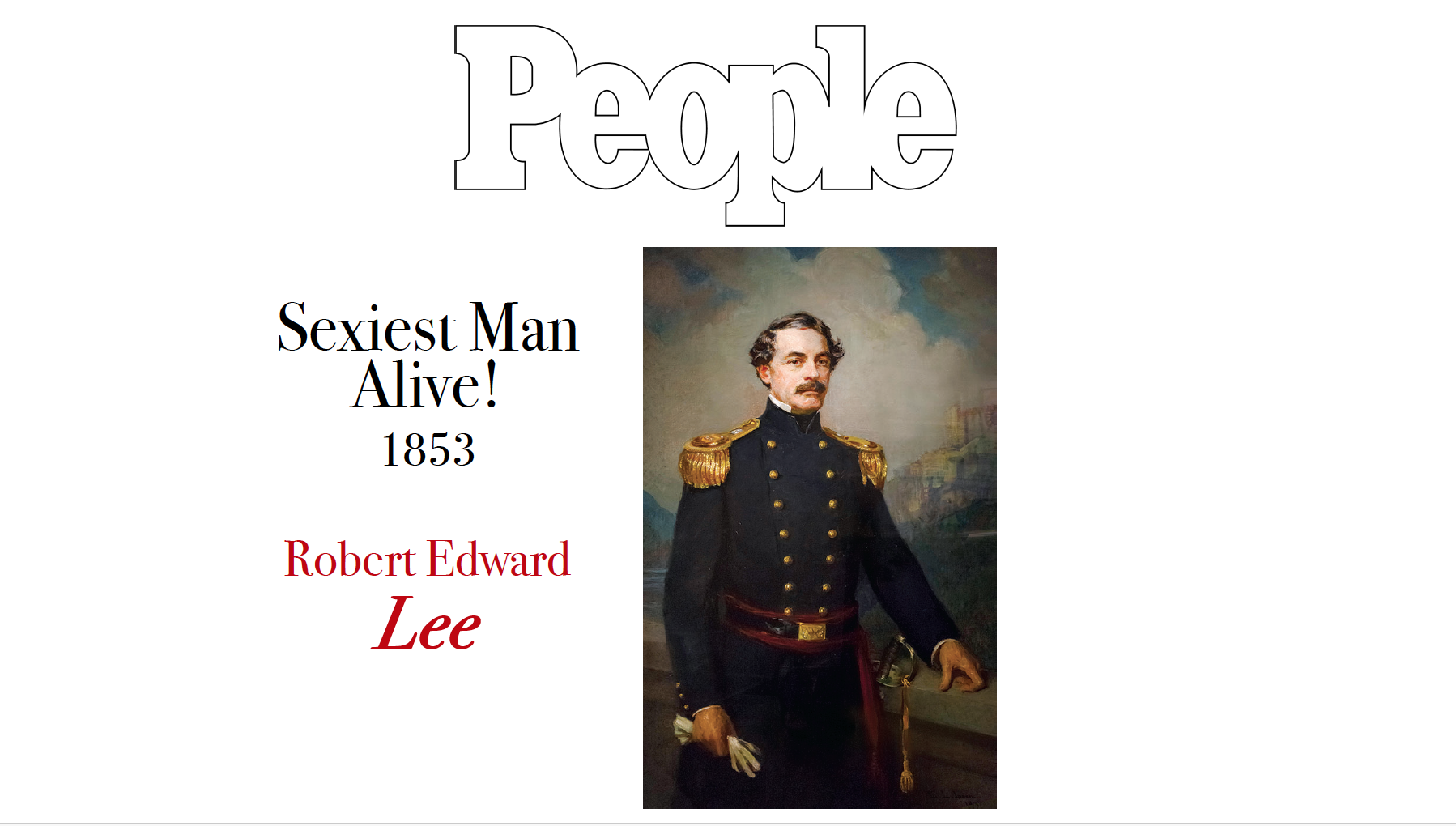
Anyway, we were talking about Patrick Dempsey as the Sexiest Man Alive(!)—remember that? So now I’d like to devote some more thought to not talking about him. Today is the anniversary of the abdication of Edward VIII (“…the woman I love…”) and that set me to thinking. David (his family name), twit that he was, would’ve made a 1930s People cover, too. Who else might I have chosen?Well, here are twelve possibilities:
Born illegitimate in the West Indies, at 19, one of Washington’s most trusted advisors, architect of American capitalism, hotly pursued—you can almost hear their starched petticoats rustling–of the Schuyler sisters.
Widely regarded, in the years before the Great Unplesantness (1861-65) as the handsomest man in America. I parted ways with Lee after seeing the terrain he ordered his soldiers to take in Devil’s Den at Gettysburg. I stood on top and said aloud “Lee, you bastard.” I am fond of enunciating when I’m provoked.
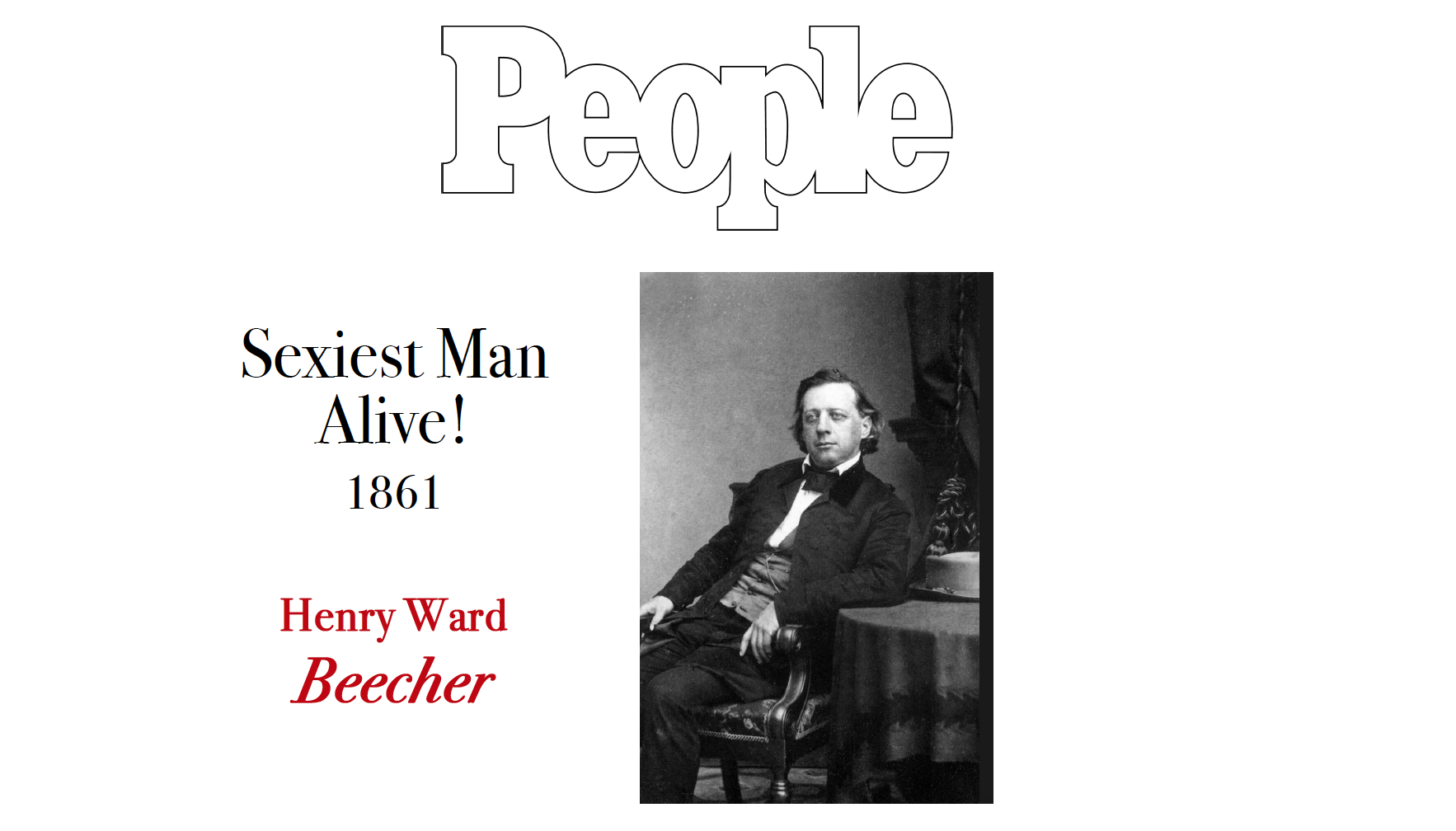
No, he doesn’t look it, but neither did Henry Kissinger, also considered sexy to the women who knew him in the 1970s. That’s as far as I want to go with Kissinger. Beecher, from the brilliant family of preachers (and one sister, Harriet, wrote Uncle Tom’s Cabin; another, Catherine, invented the modern kitchen, based on ships’ galleys) was perhaps the brilliant-est. Anti-slavery, liberal in that he rejected fire and brimstone and charismatic and irresistible to his female congregants; a sex scandal destroyed his reputation.
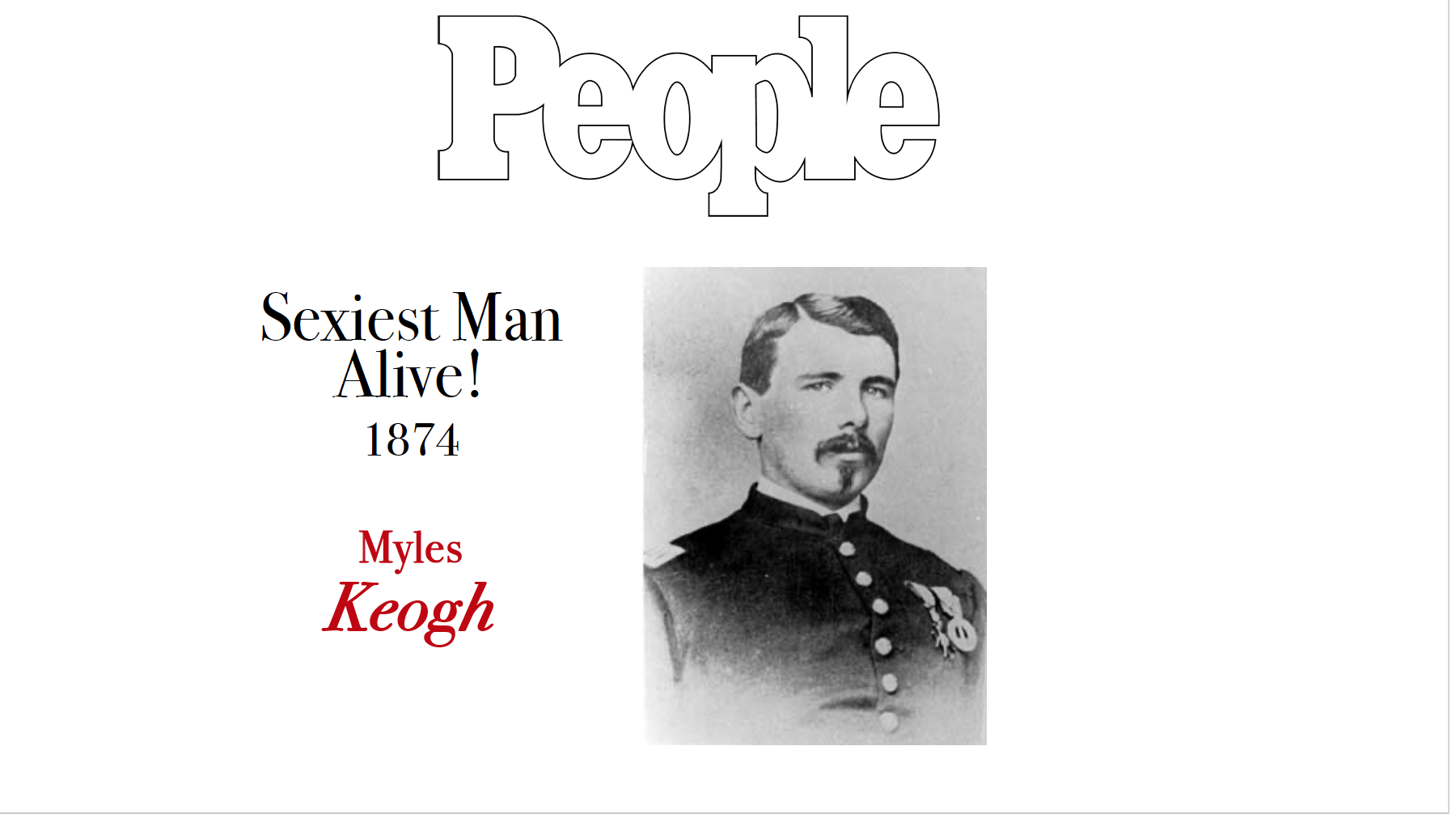
Civil War hero, cavalryman, the Irish-born Keogh was Lancelot to George Custer’s Arthur in the Seventh Cavalry. He retained the medieval conceit of loving married women from afar, though not always. Rubbed out at the Little Bighorn, 1876.
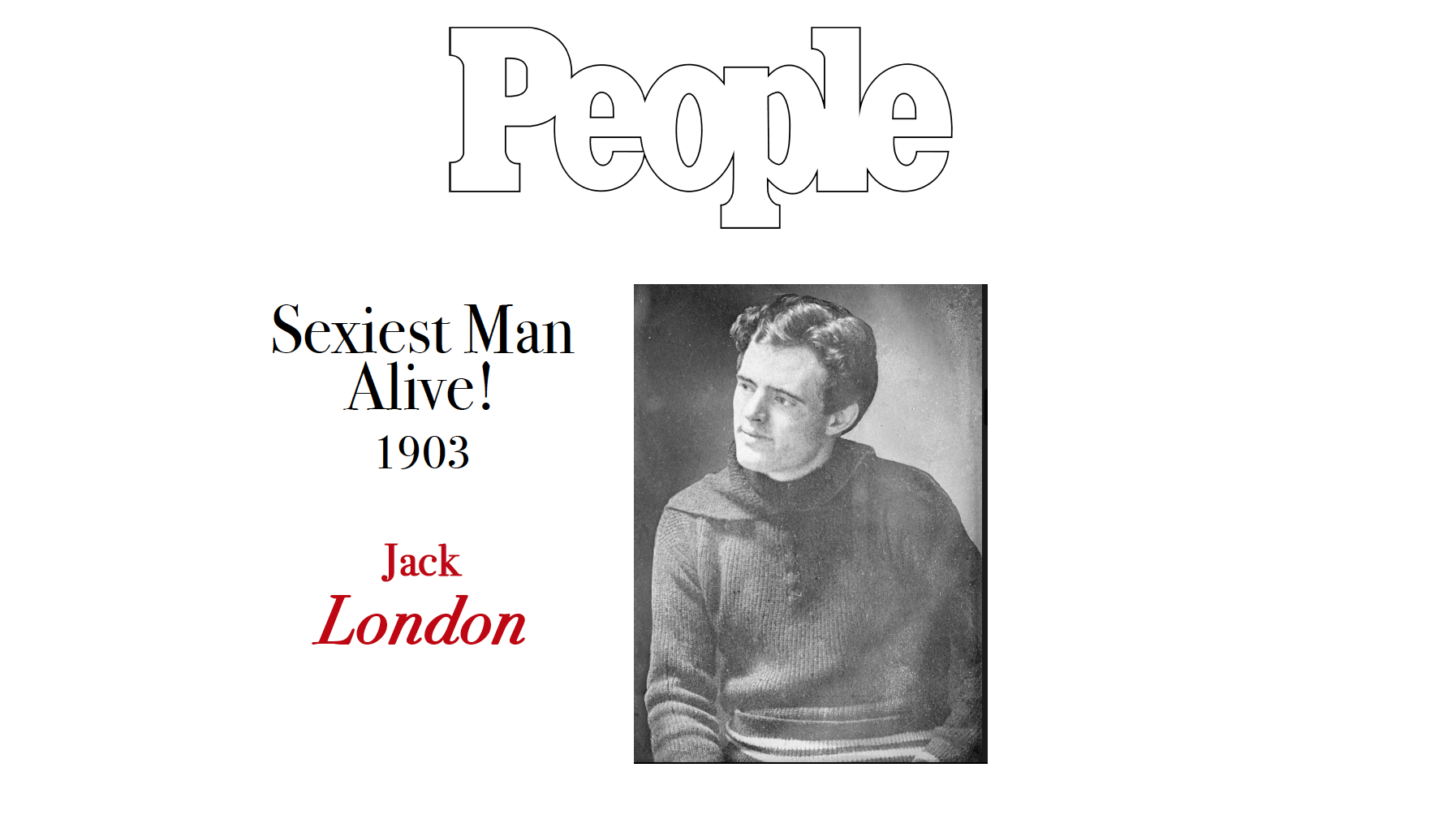
Oakland’s finest–writer, seaman, Alaska gold-rusher, and—wait for it—an oyster pirate, who raided oyster beds in the East Bay in a sloop he’d named Razzle Dazzle. Just how cool is that? Very, I think.
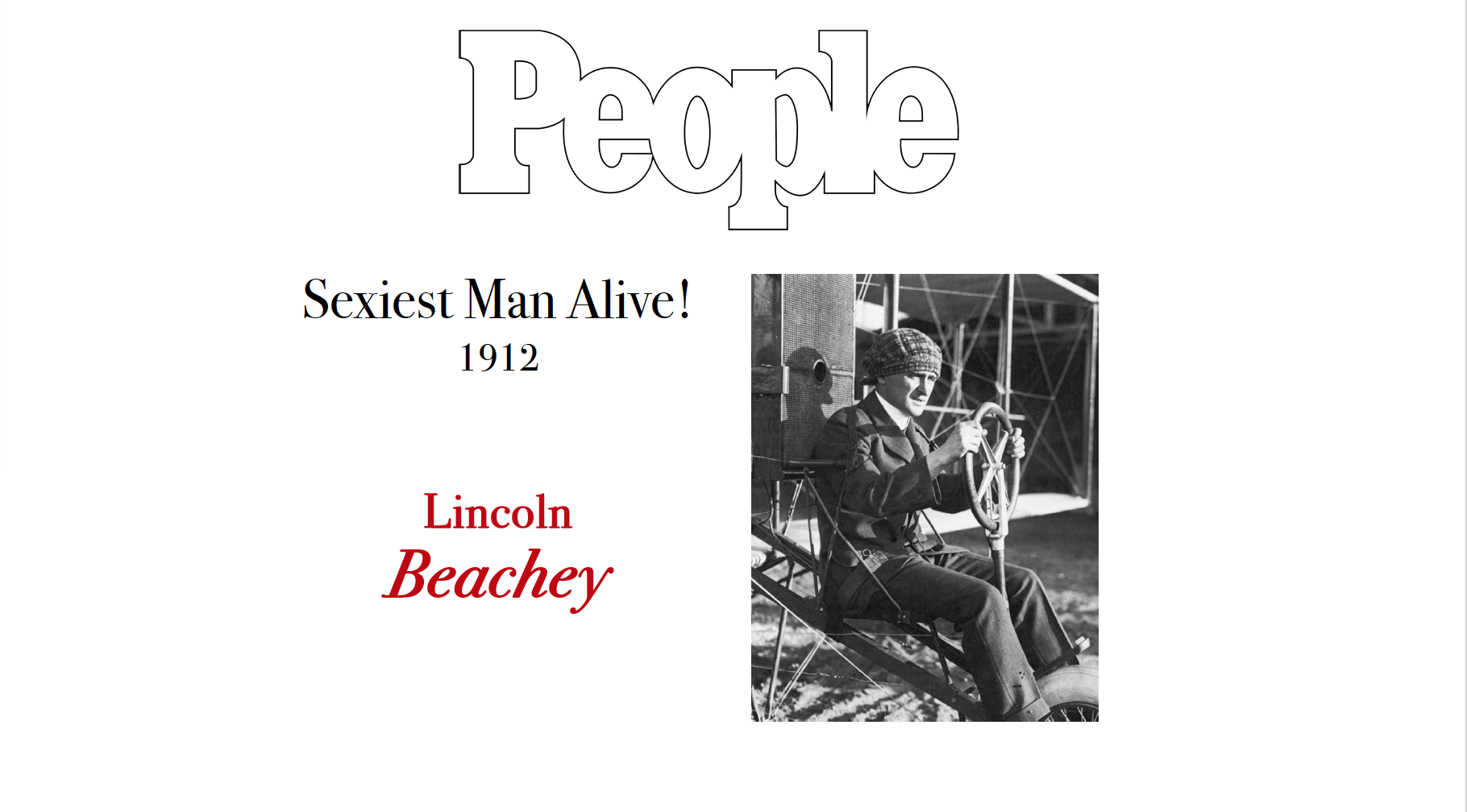
Lincoln and his big brother, Hillery—who made the first airplane flight in county history over San Luis Obispo in 1910—were San Francisco’s Wright Brothers (they even started out, like the Wrights, with a bicycle shop). Orville praised Lincoln as the finest pilot in the world, and it’s said the young man left a trail of engagement rings where he barnstormed. Killed in 1915 when the wings of his monoplane crumpled and plane and pilot plunged into San Francisco Bay.
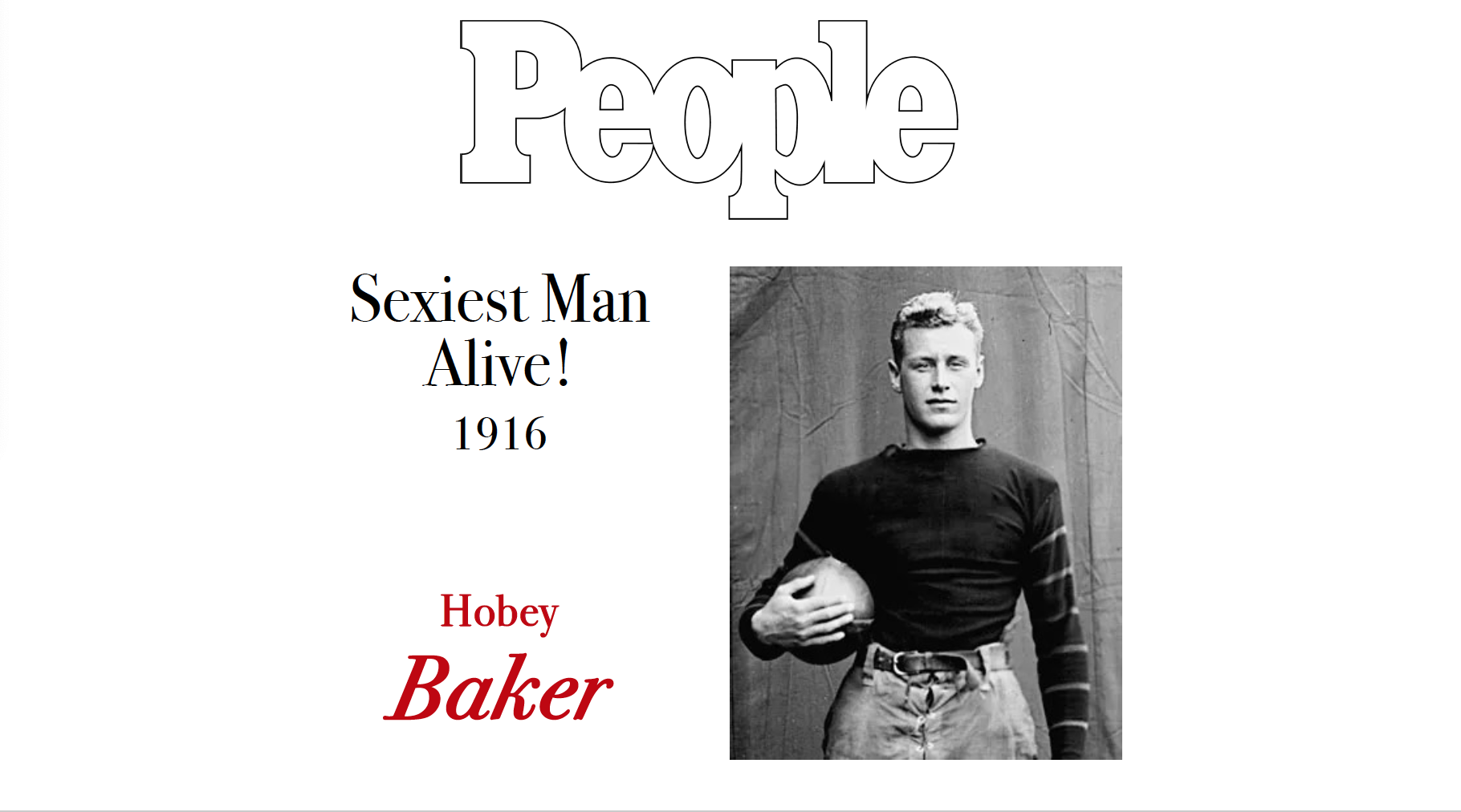
Legendary athlete, a three-sport star at Princeton (hockey, football, baseball, but a university rule forced him to give up baseball). Noted for his gallant sportsmanship. A member of the famed Lafayette Escadrille Squadron in World War I, Baker was killed in a fighter crash soon after the Armistice in 1918. He was twenty-six. The Hobey Baker Award recognizes, each year, the outstanding collegiate ice hockey player in America.
I was kissin’ Valentino by a clear blue Italian stream… The Bangles, “Manic Monday,” written by Prince.
His American wife, Wallis Simpson, turned out to be a Harpy. Their marriage relationship was a kind of Evil Stepmother-Simpering Stepson thing. Sick sick sick. Plus the pair evolved into continuing members of the Adolf Hitler Fan Club. (Lindbergh flirted with the Third Reich, too, coming close to treason until Pearl Harbor changed everything.)
If Clooney won it twice, this man would have won five or six times.
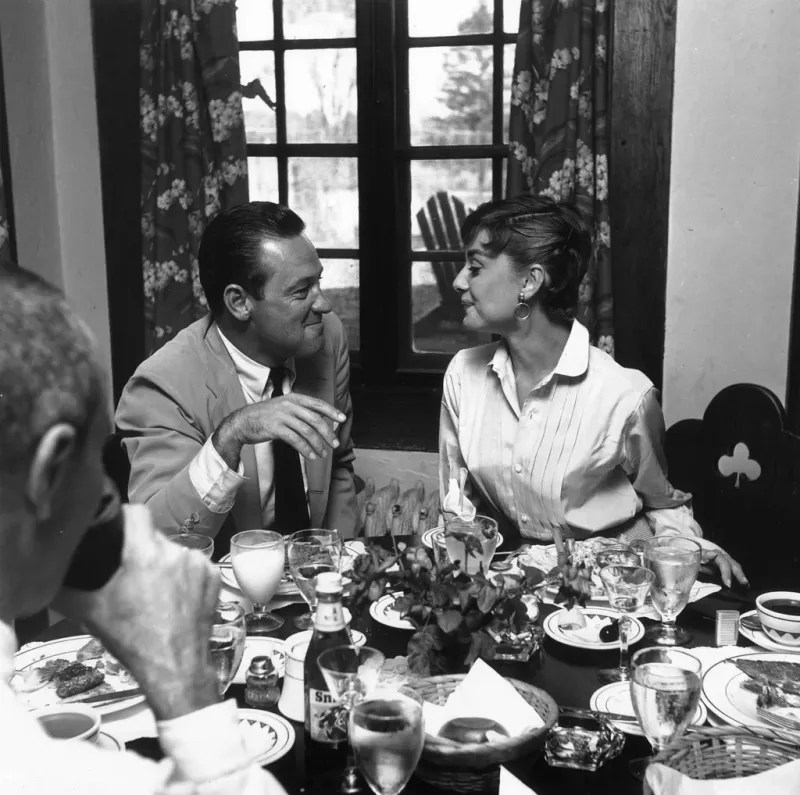
Dean’s three great films and his death came this year, in 1955. Holden is perhaps my favorite actor (Sunset Boulevard, Born Yesterday, Stalag 17, Bridge on the River Kwai, a very small film called Breezy, and Network are my favorites. He even did the cynic with hidden humanity role perfectly in a John Ford Civil War film, The Horse Soldiers, with John Wayne, who played John Wayne.My dear friend and former student Dee Ann needs to put in a vote for Picnic. Holden and Audrey Hepburn were deeply in love. It didn’t work out, and Dee Ann and I still regret that. They were a beautiful couple.
Holden and Hepburn lunch together while filming Sabrina. Sigh.
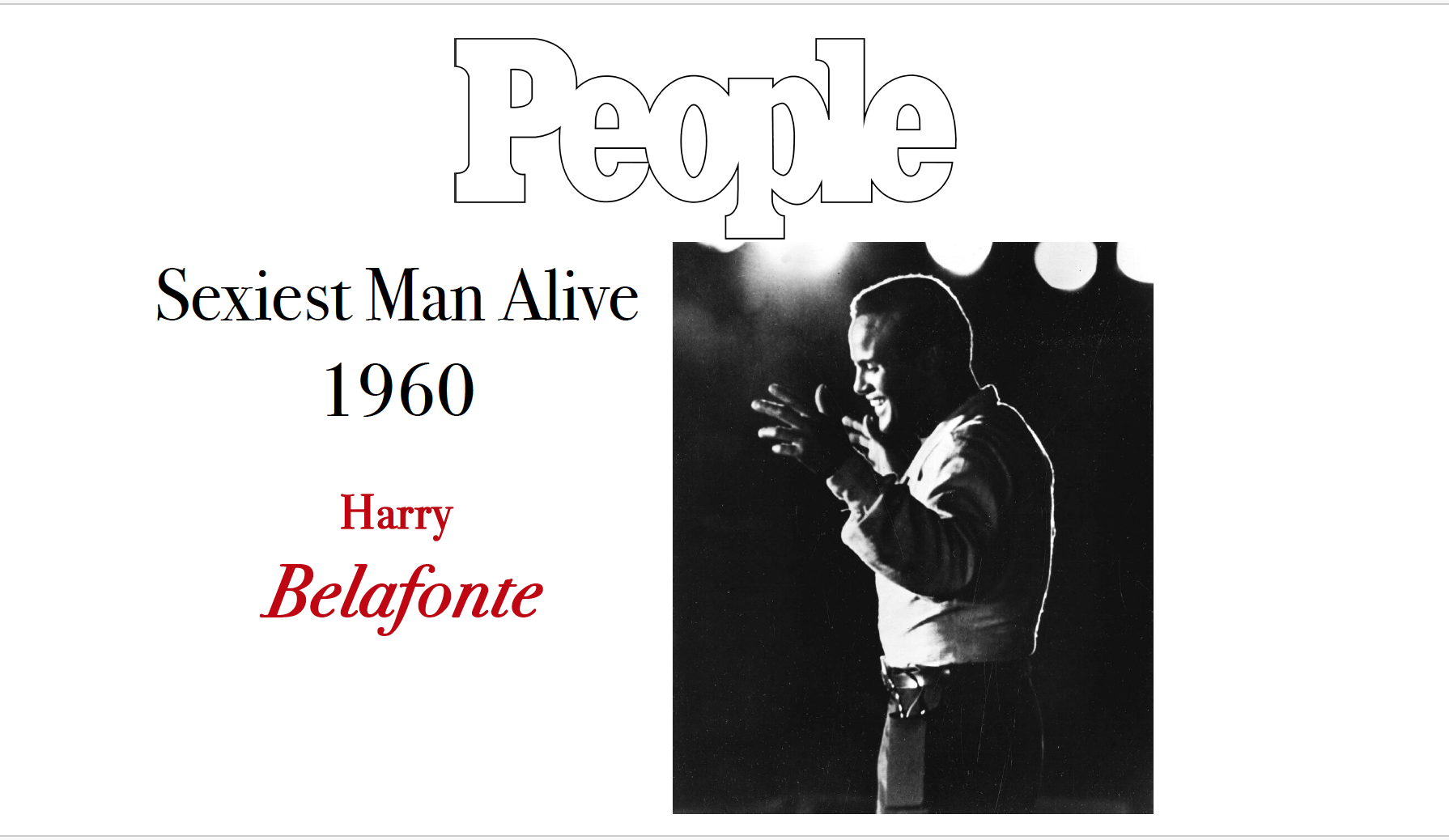
We had both of his Carnegie Hall live albums, and this multiculturarity, a word I just made up, and that beautiful voice made him one of the most important teachers of my childhood. Mom just thought he was gorgeous. Good call, Mom.
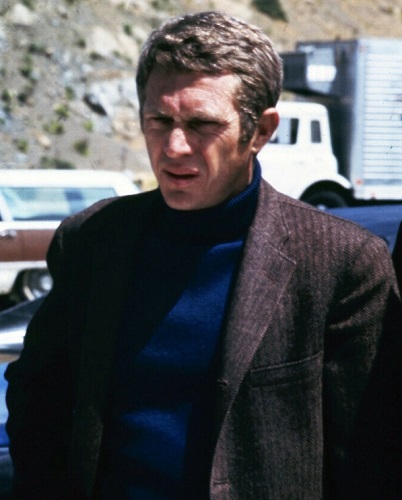
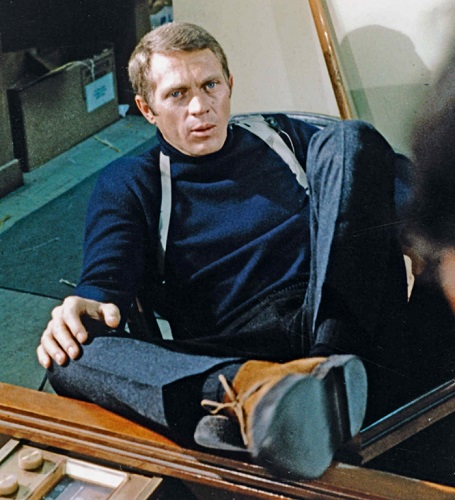
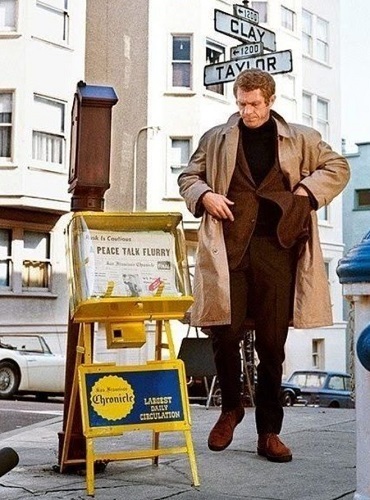
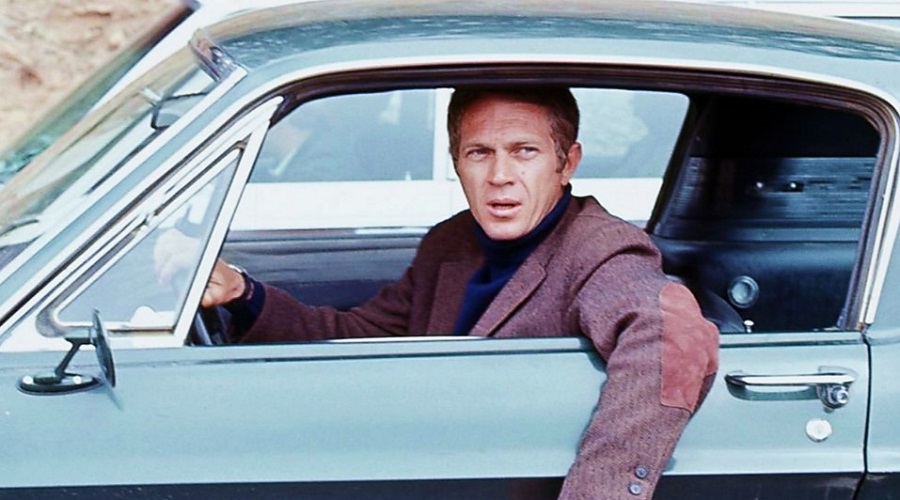
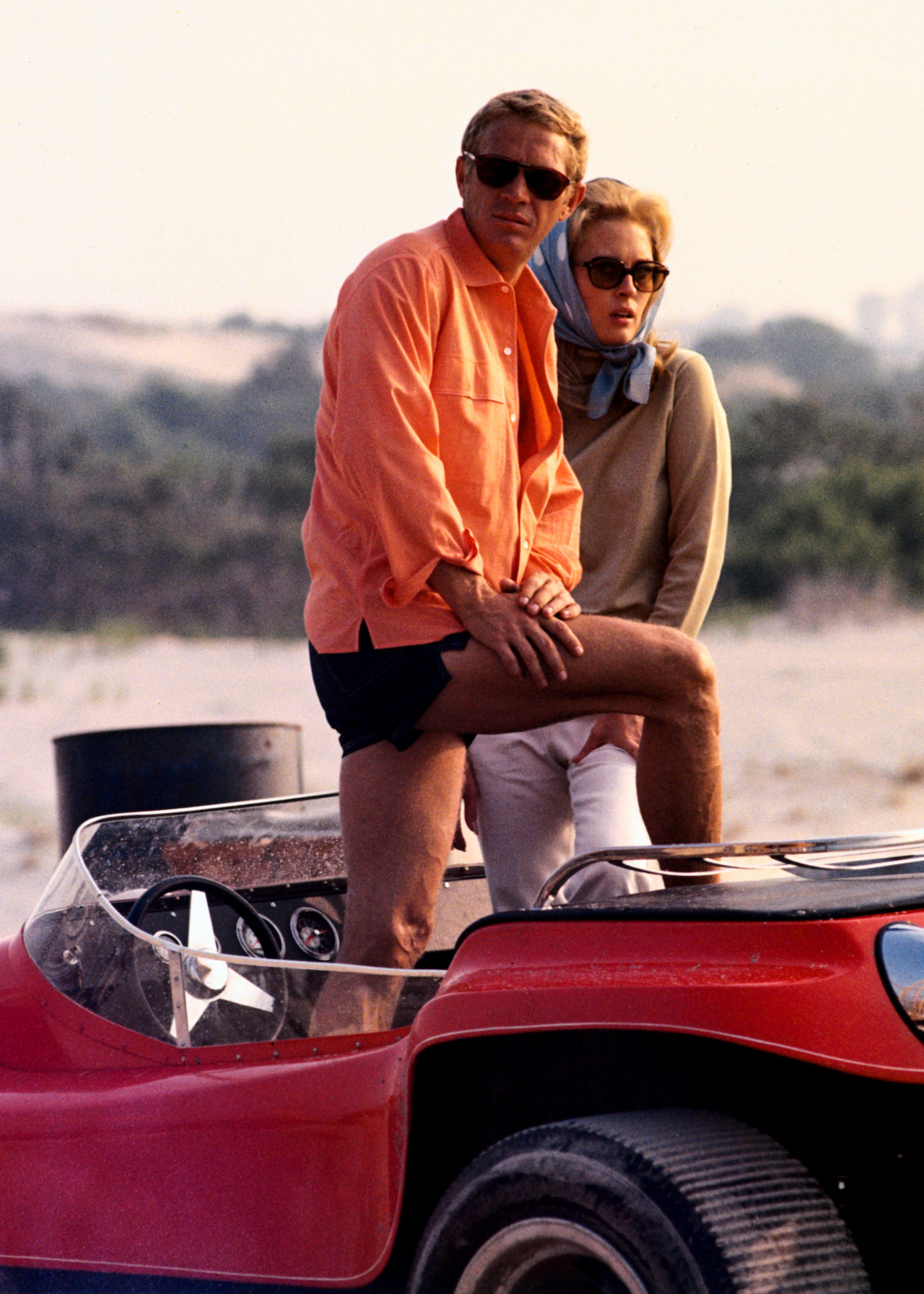
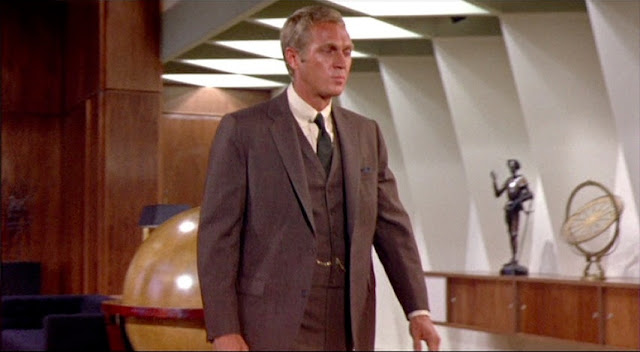
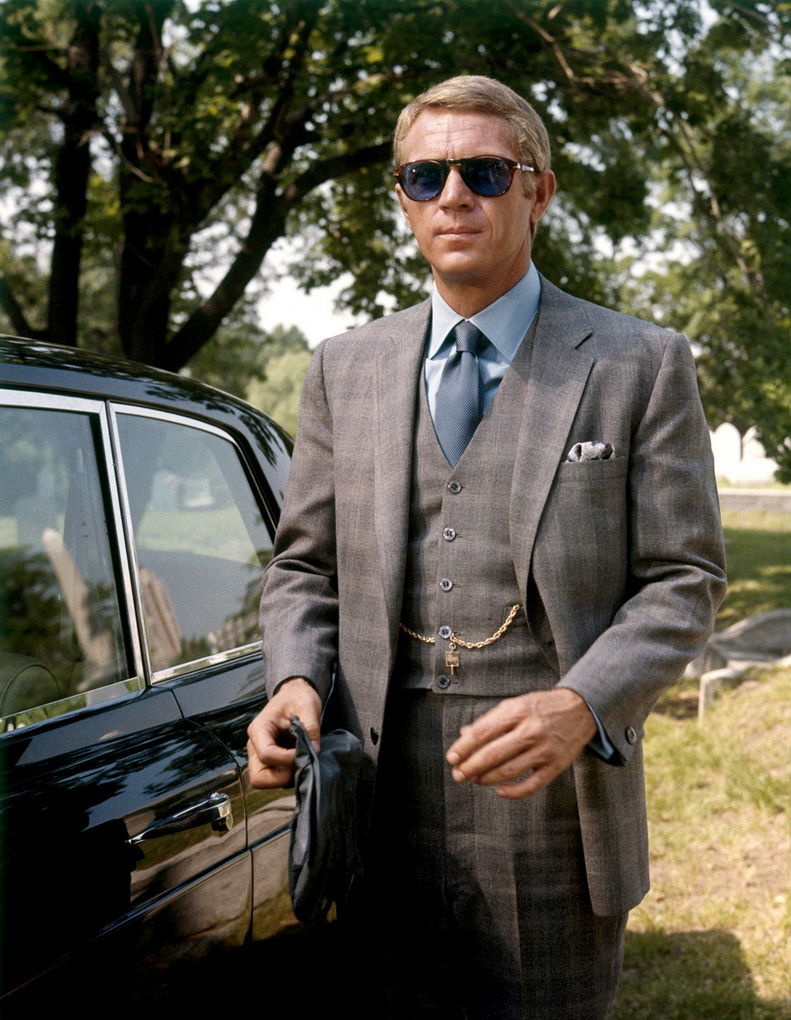
Finally, I would like to nominate Steve McQueen (Bullit, The Thomas Crown Affair) for a special Wardrobe of the Sexiest Man Alive (!) award.
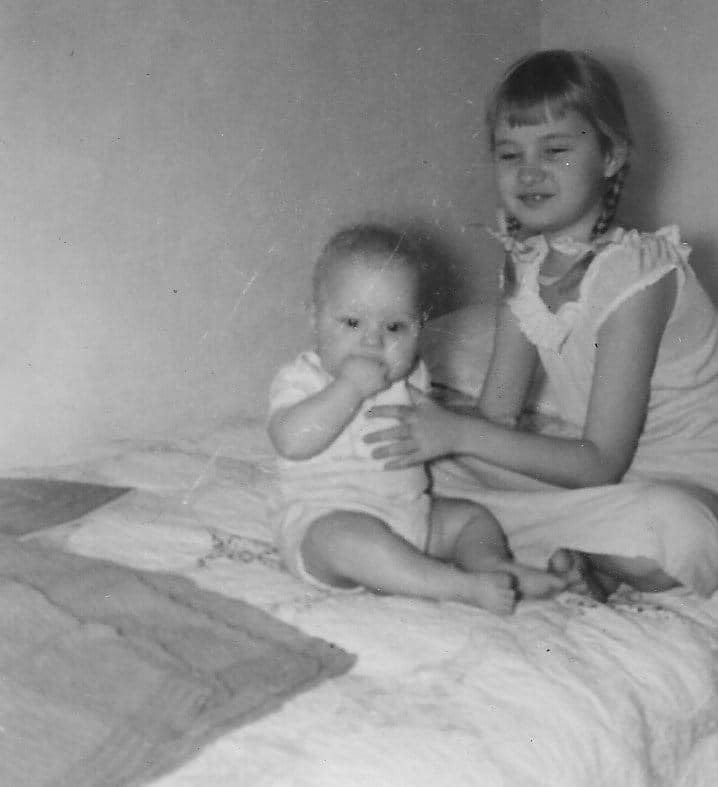
I guess visiting my big sister stirred this up, but it occurred to me that when it comes to scary Great-aunts, us four Gregory kids may have cornered the market.
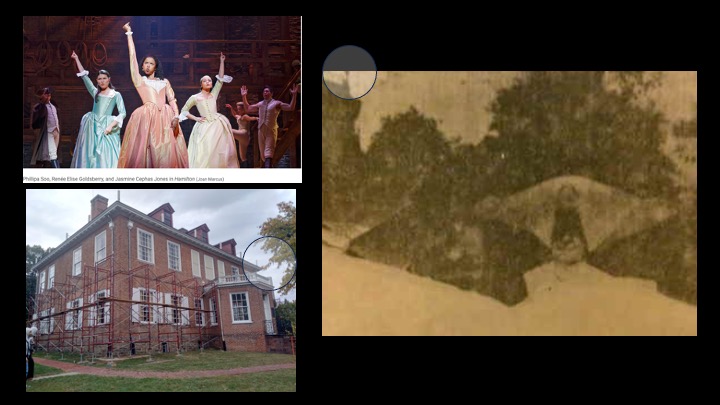
On Mom’s side, Margaret Fox, born 1840 County Wicklow, Ireland, became Sister Loreto, Daughters of Charity of St. Vincent de Paul. That’s her in front of her orphanage, once Philip Schuyler’s Albany home, and home, too, to those lovely Schuyler sisters from “Hamilton.”
I would not cross Sister Loreto, but, on the other hand, if her vocation called her to orphans, there’s an equal chance that she had a big, kind heart. She just looks scary in this, the only photo we have of her.
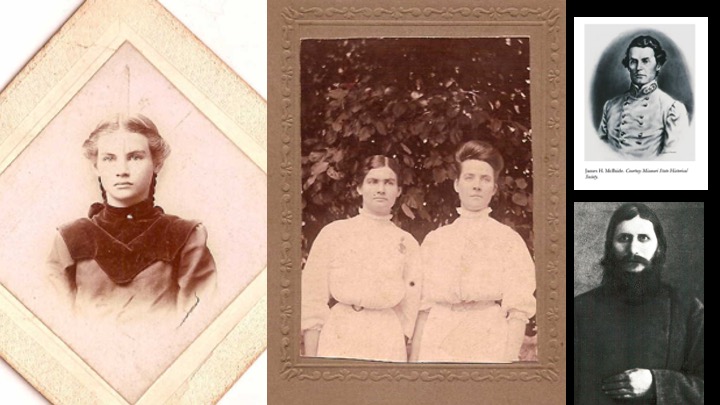
Speaking of scary, on Dad’s side, Jane Wilson, exquisite as a little girl of twelve or so, is seen to the left of my grandmother Dora in the next photo.
Something must have happened to Jane in puberty—was it a lightning strike?— and it’s not just the Frida Kahlo fused eyebrows: Suddenly, she’s the spitting image of her grandfather, Confederate Gen. James McBride.
And I, a Lincoln man, was named after the general.
There are other photos we have of Jane. See that look? It gets worse. She starts to look more and more like Rasputin. Without the beard.
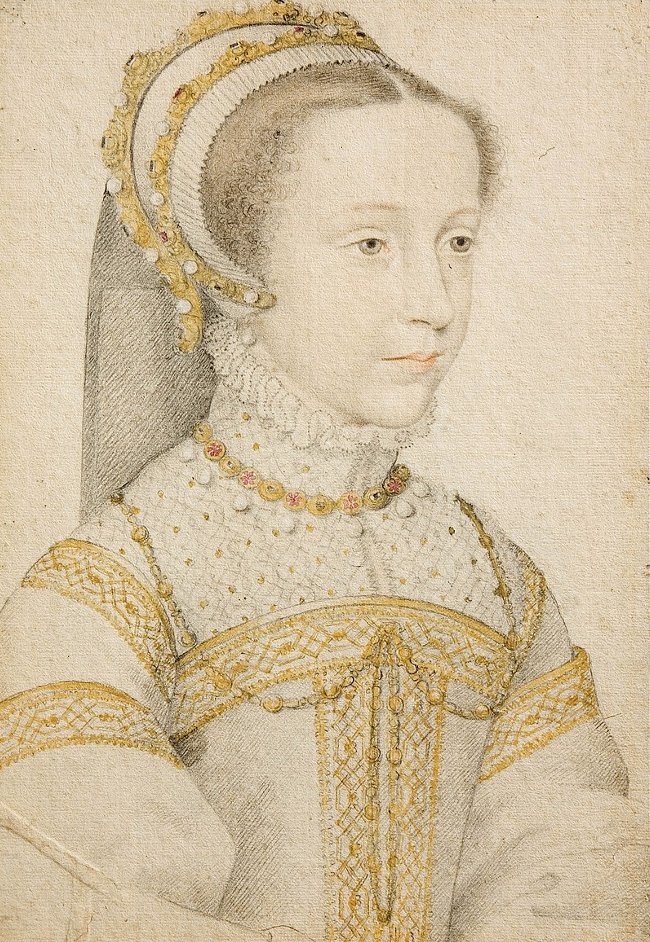
Fluttering eyelashes, botched beheadings, purloined pearls, bodies tumbling down the stairs, Notre Dame, Holyrood, mermaids, dispatch riders galloping over the moors, intense sexual attraction, three powerful queens, being strangled in your nightie, a thing for men’s legs, a loyal dog, secret codes and spymasters, four centuries of sweet revenge. If you’ve been sold on the notion that history is boring, you have been misinformed. Or badly informed.
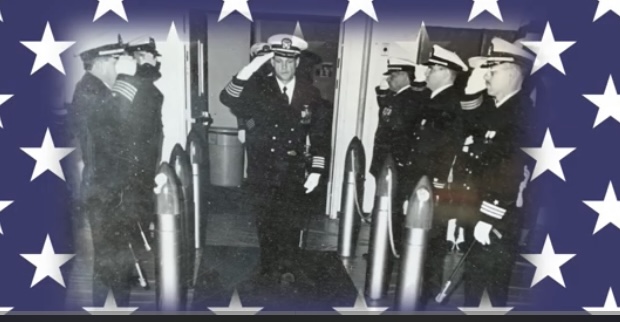
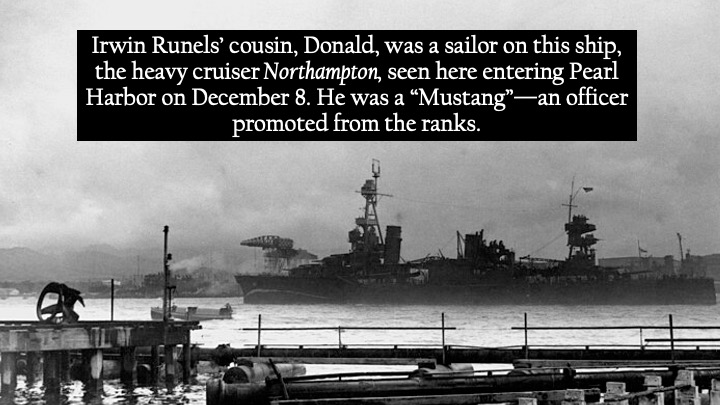
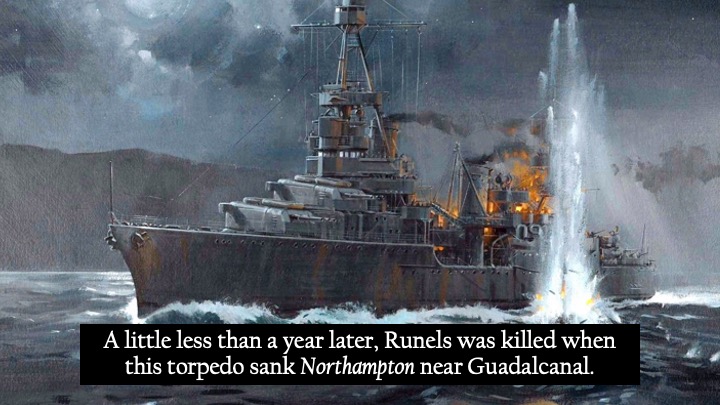
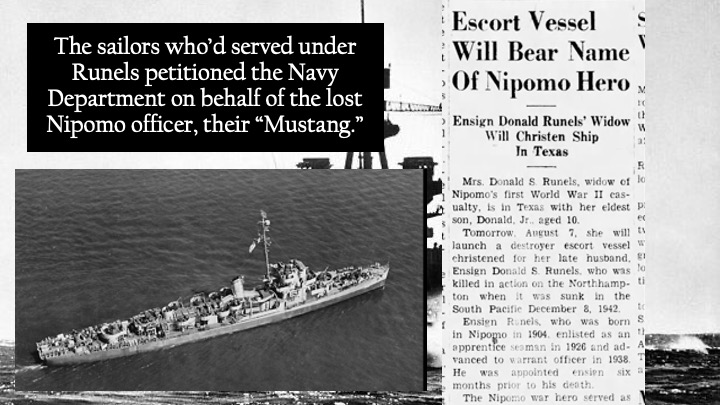
I’ve been obsessing over this particular anniversary this year. I think it’s in part because we lost Captain Steve, USN, my brother-in-law, an Annapolis grad. I miss that man.
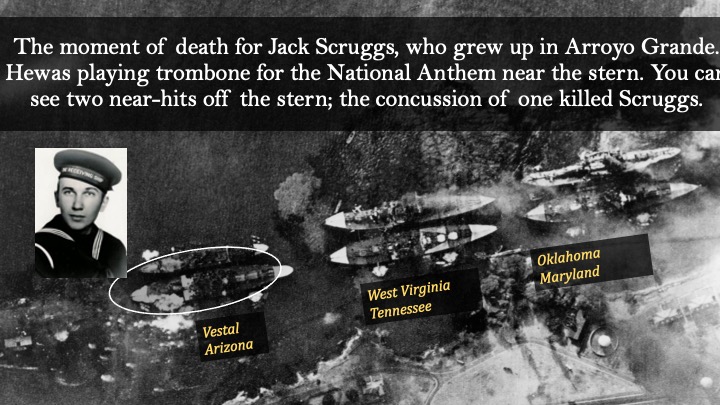
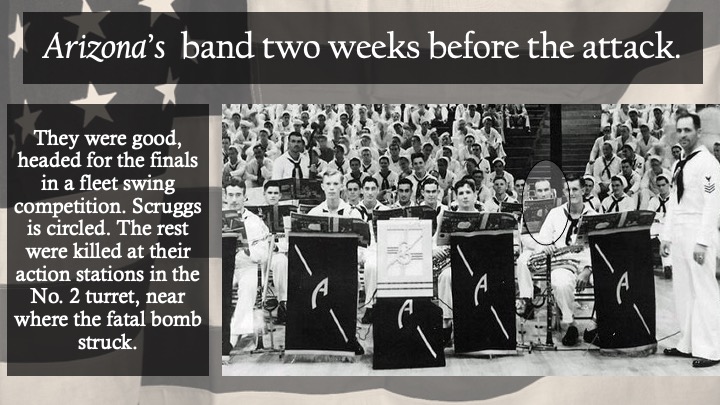
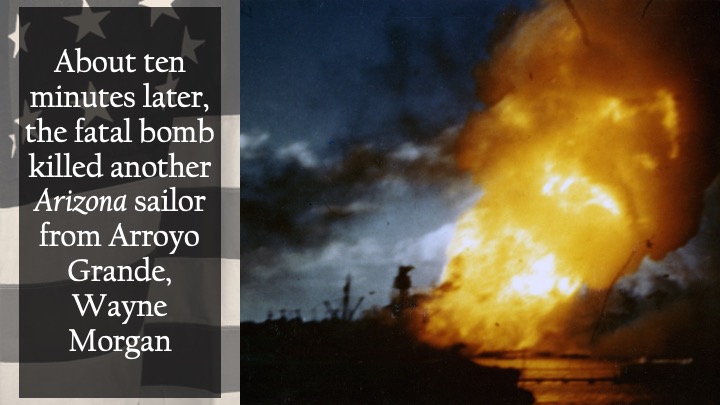
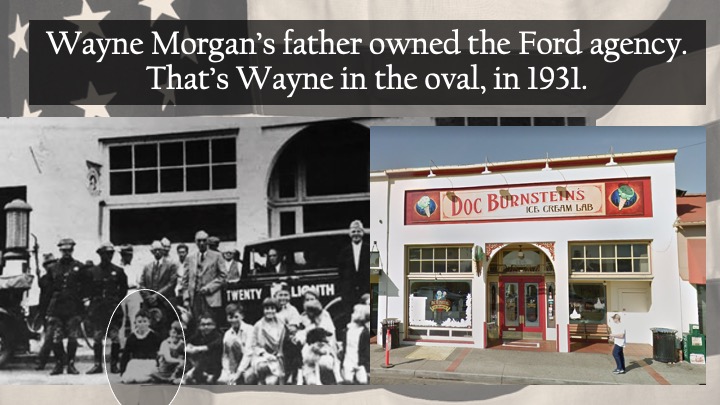
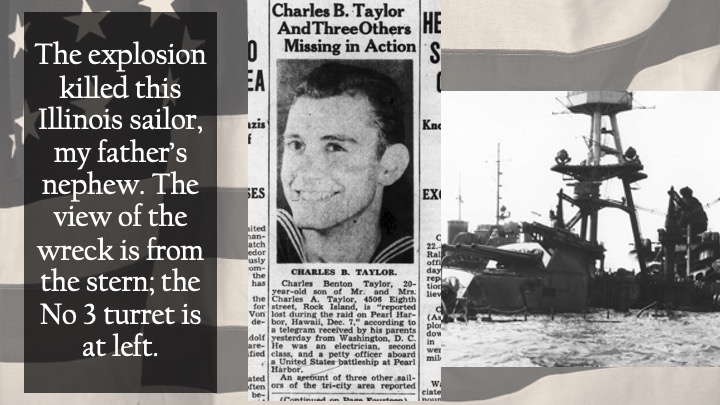
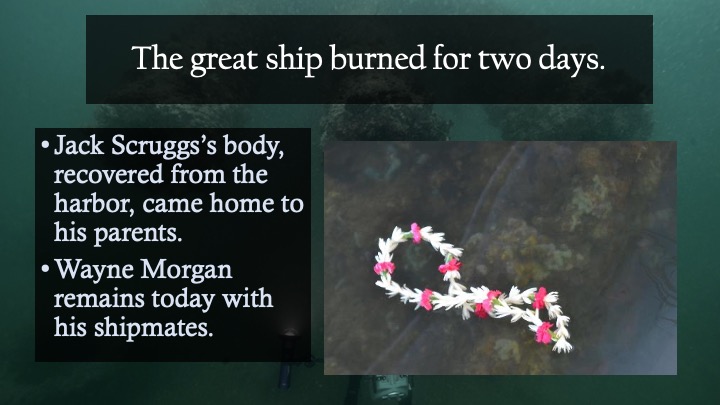
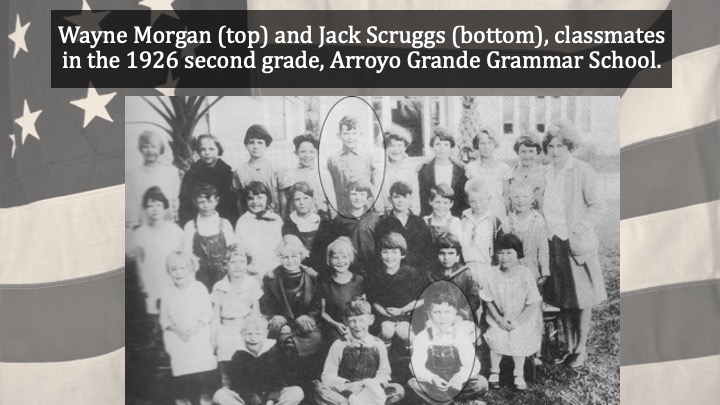
So this video is for Steve Bruce, and for Jack Scruggs and Wayne Morgan, Arroyo Grande boys, for two little Arroyo Grande girls, Jeanne and Yoshi.
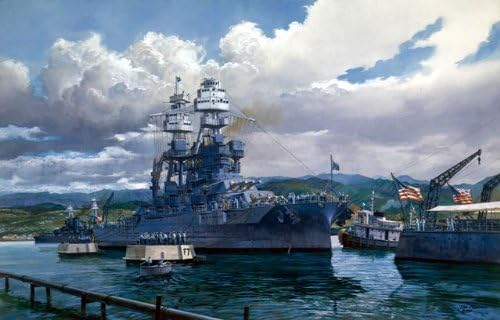
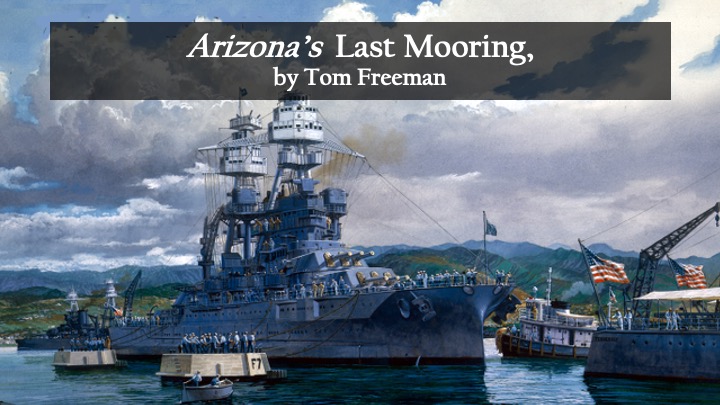
This painting haunts me. The artist is obviously gifted—capturing both water, as the Impressionists did this well, and the great steel machinery of a warship with equal skill means something. So does the occasion. It is 9:15 a.m. on December 5 and Arizona is being secured to her mooring quays near the end of battleship row. Two Arroyo Grande sailors and one from my family have a little under forty-eight hours to live.
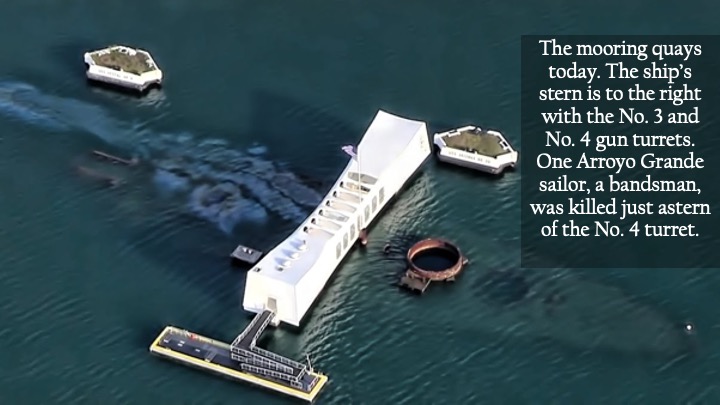
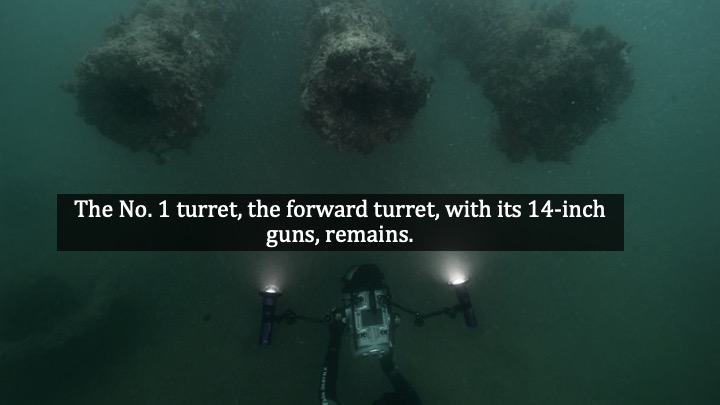
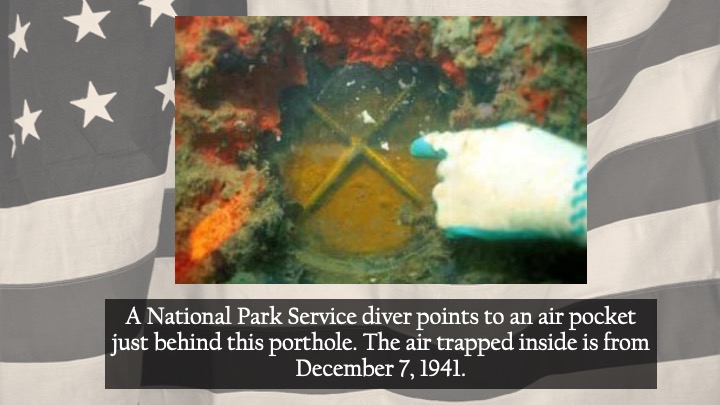
A year ago, in a moving ceremony, the Central Coast Veterans Museum unveiled this artifact from the battleship.
I remember a Twilight Zone where the protagonist was somehow transported from modern times, meaning 1960, to a passenger compartment on Lusitania in 1915. Serling was fond of time-traveling. So am I, thought I haven’t actually practiced it much. Of course in the episode the man’s warnings were useless—he was thought to be a lunatic—because history moves with great weight and determination. He was crushed by it.
Likewise, I have a foolish urge to drive a jeep down to chew out the duty officer who’s shrugging off the radar blips on Opana Point or break up the golf foursome that includes Adm. Kimmel and Gen. Short and somehow order them to get their fannies, even if they are in plus-fours, to their headquarters, and NOW. And I want someone to take that damned war-warning telegram seriously.
I’ve had no luck so far in these endeavors.
There was a science fiction-ish novel, The Final Countdown, and there was a not-very-good the film based on it. In the film, Adm. Kirk Douglas’s aircraft carrier was beamed–is that the right word?–from the 1970s back to the predawn of December 7 and his radar picked up Kido Butai-–the 1st Air Fleet and its six carriers—and he had the chance to obliterate it with his jets, Phantoms and Crusaders and such. I don’t remember what Kirk did, but I think he decided that you don’t mess with the timeline. Kirk (See: Seven Days in May , 1964) usually gets it right. And one of the better Simpsons Hallowe’en episodes made that point, when Homer stomped on a prehistoric bug and messed up everything.
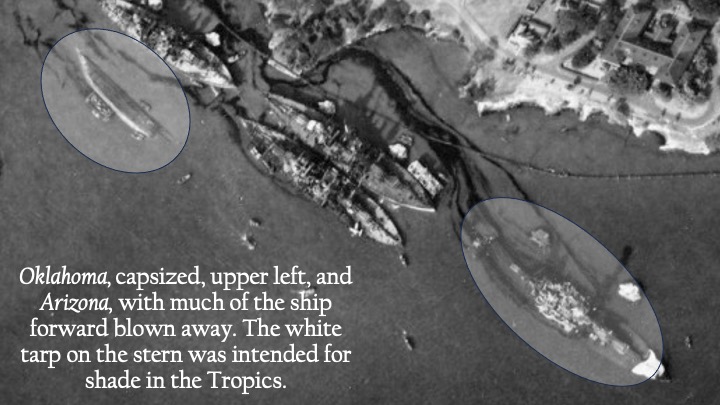
But today—and the day after tomorrow—aren’t funny. The attack on Pearl Harbor made us the world power that we are today. There are few turning points in history as clear as this one. It also claimed 1,177 Arizona sailors and Marines, most killed instantly, and it led to Executive Order 9066, to the shameful confinement of the families of some of my closest friends.
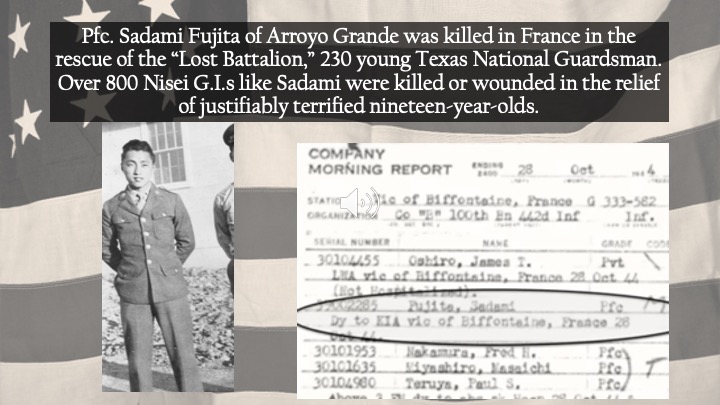
At Gila River, the desert winds carried the spores for Valley Fever that decimated the elderly Issei, the first generation immigrants who were not permitted to become citizens because they did not have the appopriate prerequisite, said the Supreme Court, which was Whiteness. They and their children turned the desert into truck gardens—cauliflower thrived at Gila River—and the young Nisei men joined the army to prove they were Americans. Many gave what Lincoln called, so movingly, “the last full measure of devotion.” 400,000 young Americans died with them, along with thousands more—many of them women—in wartime industrial accidents.
So this is Arizona in the last few moments of peace hours away from her last full measure of devotion. The America of Log Cabin syrup in little tin cans, of glass milk bottles delivered in Model A panel trucks, of Fred and Ginger and ruby slippers and Andy Hardy malt shops, is on the verge of vanishing. We’d built dams and bridges and dizzying skyscrapers in the Thirties, before Pearl Harbor, now we would build tanks and planes and, of course, warships.
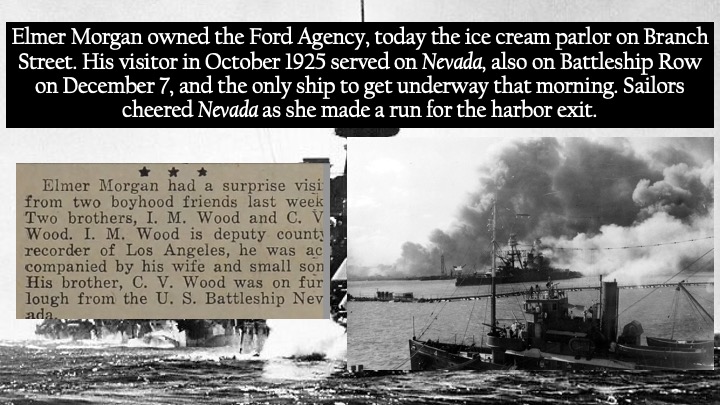
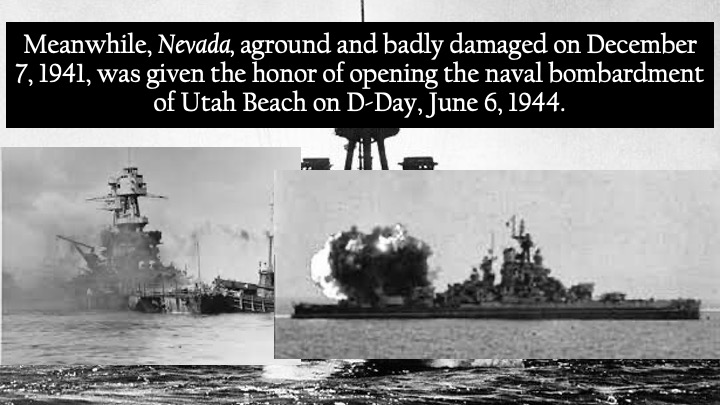
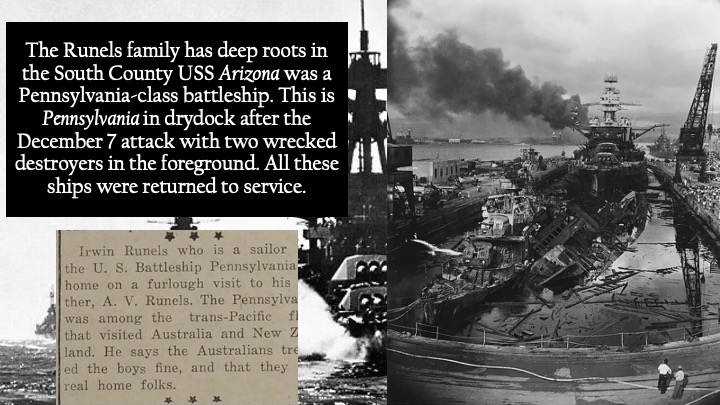
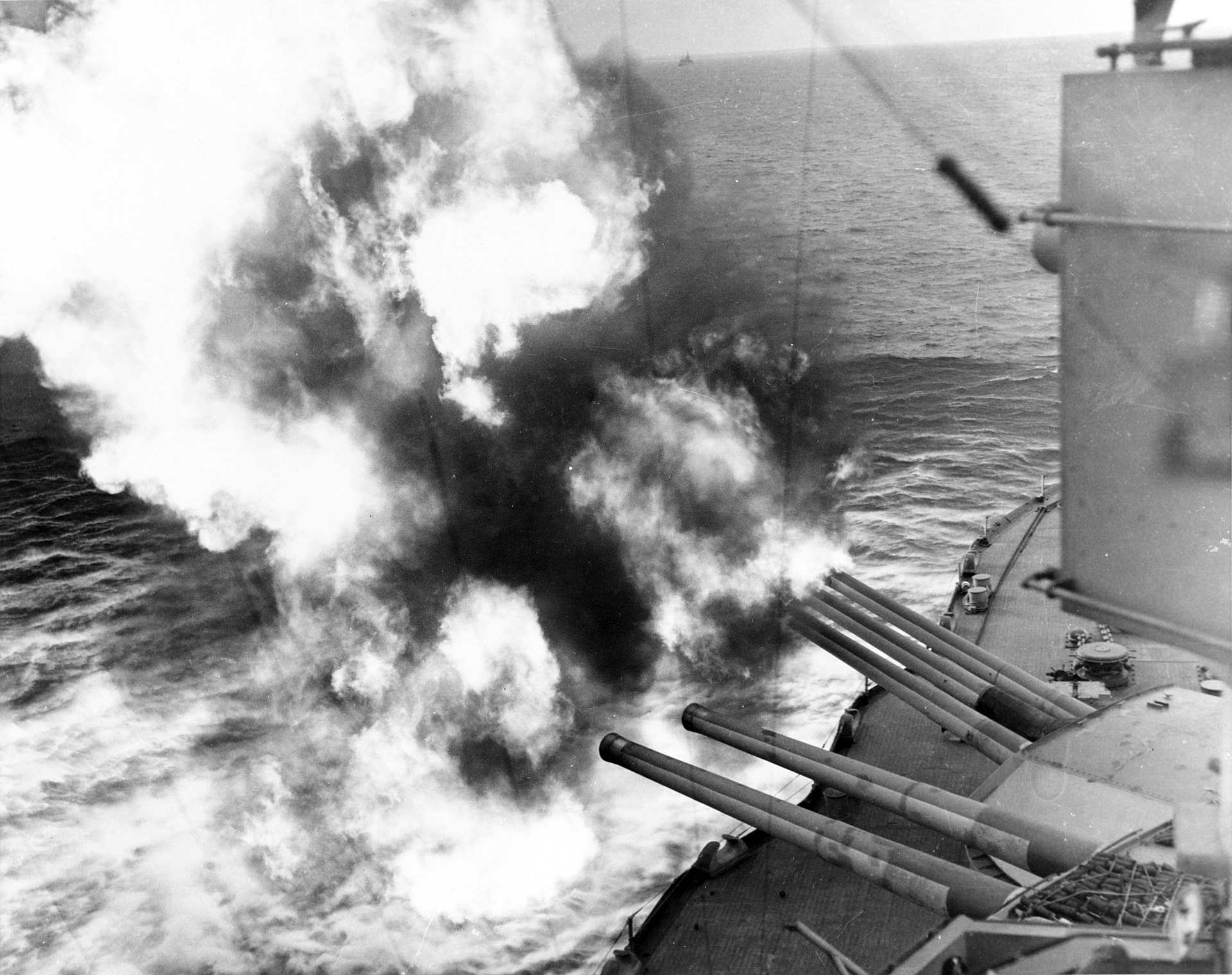
All but three of the battleships destroyed on December 7 were raised, repaired, refitted and modernized. Nevada, the only member of Battleship Row to make steam and get underway that terrible morning would, two and a half years later, cross the Channel to hurl the great weight over her fourteen-inch guns at the enemy behind Utah Beach. Nevada was afforded the great and perfect justice of firing the first salvo.
These were her guns at work that day, on another historic morning, during another historic turning point.
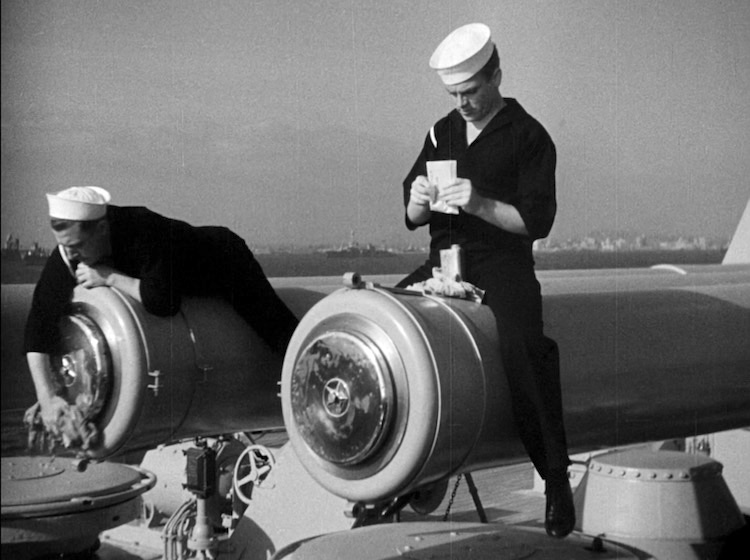
Forward 14/45 guns of USS Nevada (BB-36) fire on positions ashore, during the landings on Utah Beach, 6 June 1944. Official U.S. Navy Photograph, now in the collections of the National Archives.James Cagney in 1934’s Here Comes the Navy, filmed on Arizona. Arizona in line ahead in heavy seas.
A dignitary sails the Caribbean with the great ship:
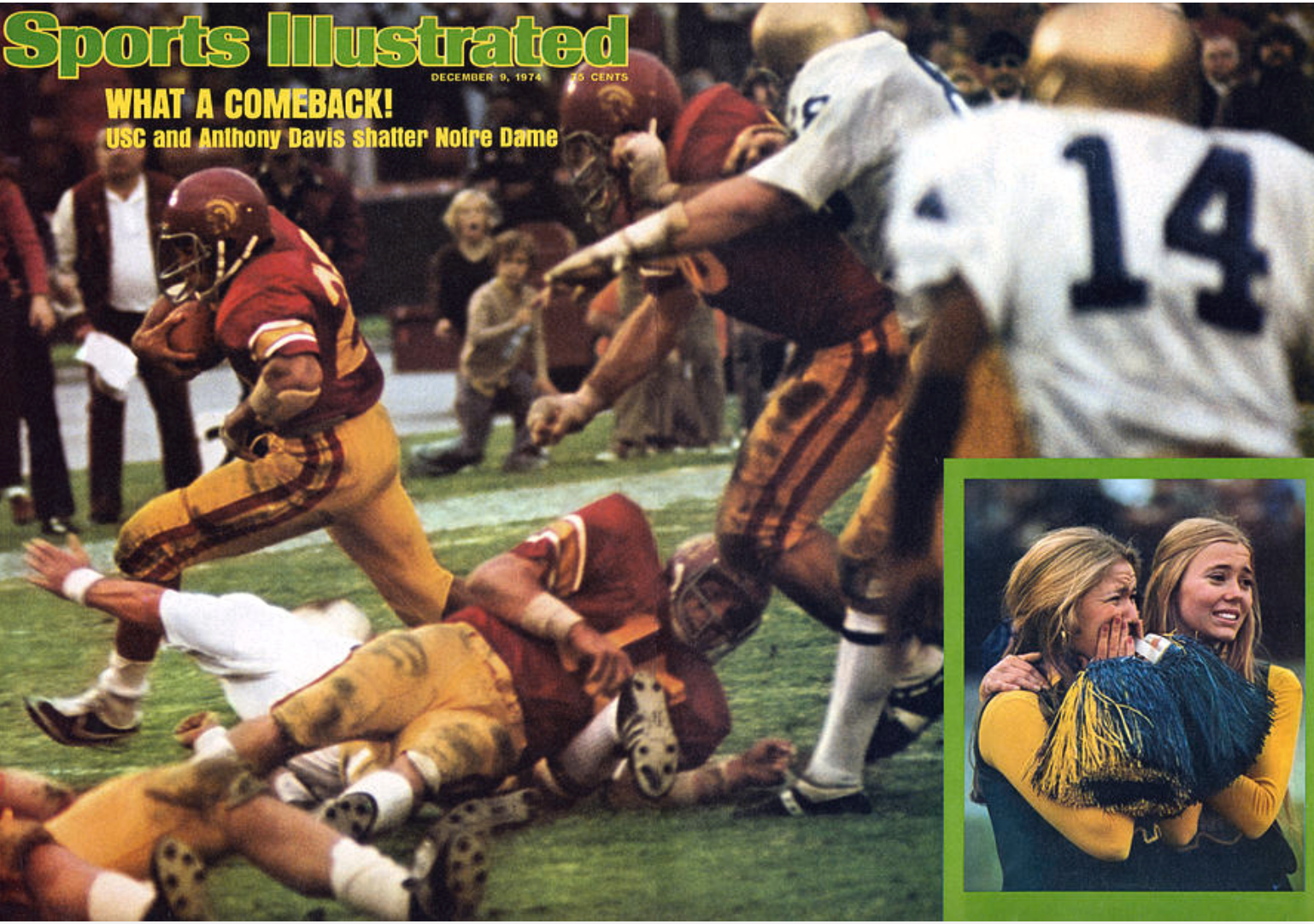
In truth, I could’ve done without the crying Notre Dame cheerleaders.
Well, Washington beat Oregon Friday night in the last Pac 12 Championship. I am sad to see the conference break up. I think that Washington State will play in the same league as Manchester United and Arizona might have the Edmonton Oilers on their schedule next year, I don’t know.
It was the Pac 4 in 1915, when the league was formed: Cal, Washington, Oregon and an agricultural college that is today Oregon State
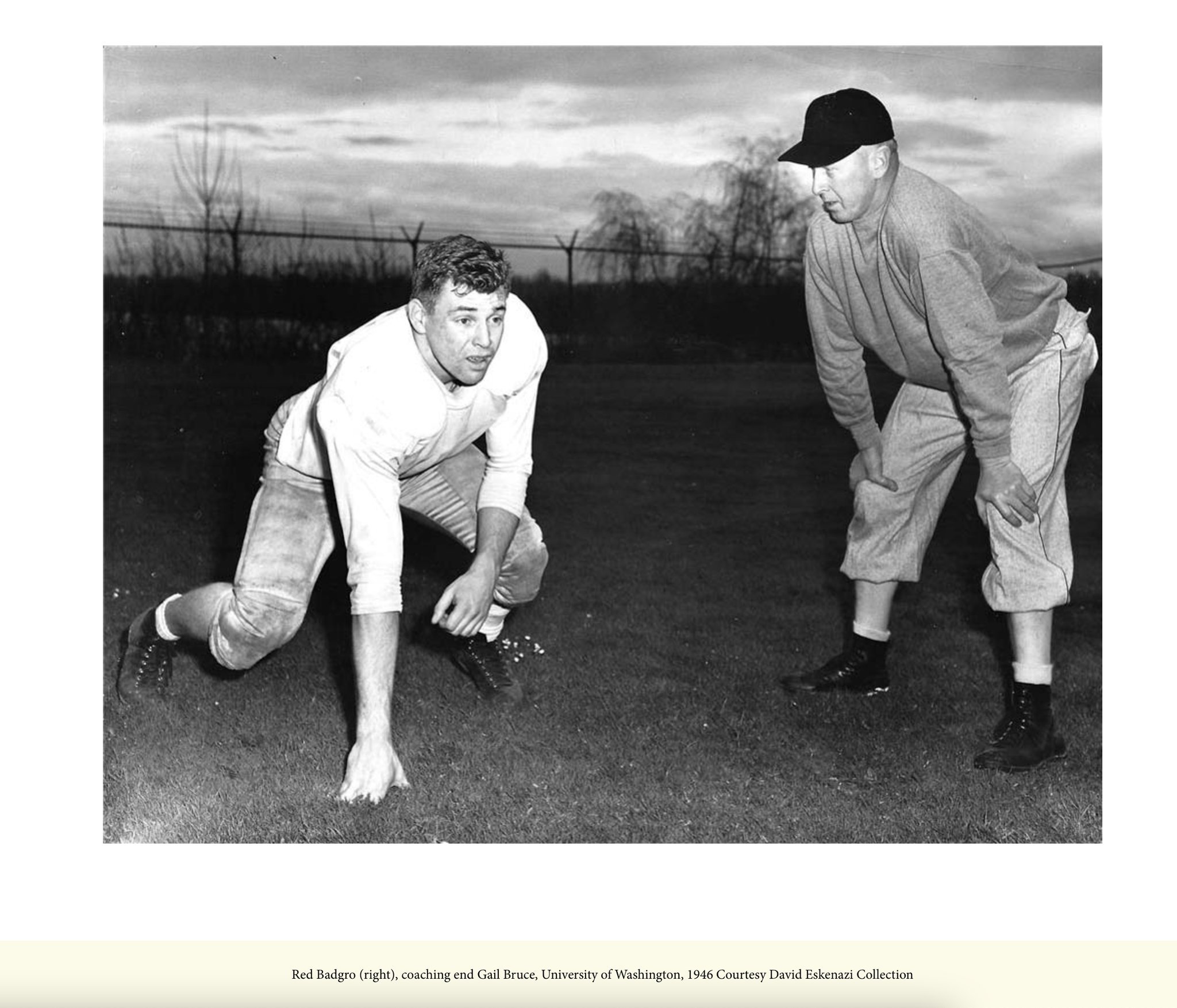
In the late 1940s, Elizabeth’s Dad played end for Washington and he went on to play for the 49ers. Football was his ticket out of poverty.
A decade ago, AGHS sent kicker Garret Owens, a fine young man I had the honor to teach, to Oregon State. along with fellow Eagles Brent Vanderveen and Garrett Weinrich.
And one of Elizabeth’s brothers, Kevin, who passed away this year, played in three Rose Bowls under USC coach John McKay. He was a runty linebacker who became the Trojan defensive captain because he was also really smart.
I was in Missouri atop the very famous and beautiful Ozark Plateua in 1974 when, on November 30, SC played Notre Dame. I was watching at my cousin Frances Sally’s house. The Irish were leading 24-6 at the half and my Missouri kin were making fun of Californians. “Them Trojans are playin’ like SISSIES.” (I am exaggerating. But not much.)
Then USC came back, thanks to running back Anthony Davis’s six touchdowns. My close personal friend Anthony Davis. (He met my Dad in Bakersfield one day and then my phone rang. Dad said “There’s somebody I want you to talk to.” Then another voice said “Hi, Jim! It’s Anthony Davis.” I stopped breathing, but only for about an hour.)
Final score that day: USC 55, Notre Dame 24. And this was Ara freakin’ Parsegian’s Notre Dame. He is one of the greatest football coaches in college history.
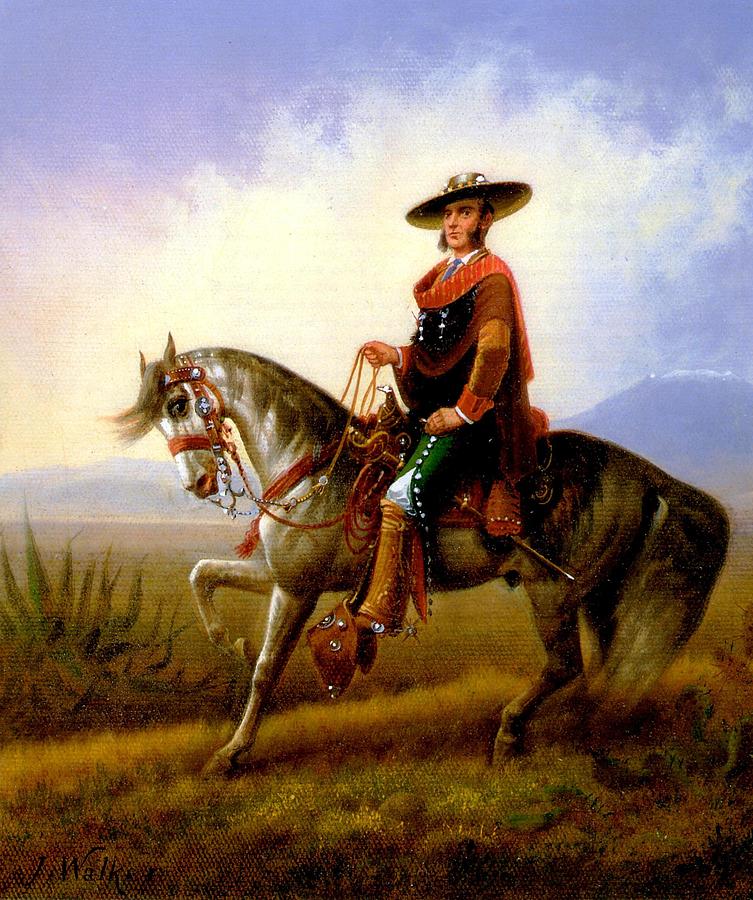
A California ranchero suitably dressed (and tacked) for the holidays.
Since Arroyo Grande founder Francis Branch assumed Mexican citizenship to obtain the 1837 patent on his 17,000-acre Rancho Santa Manuela, his family’s Christmases would’ve had a distinctly Mexican flavor.
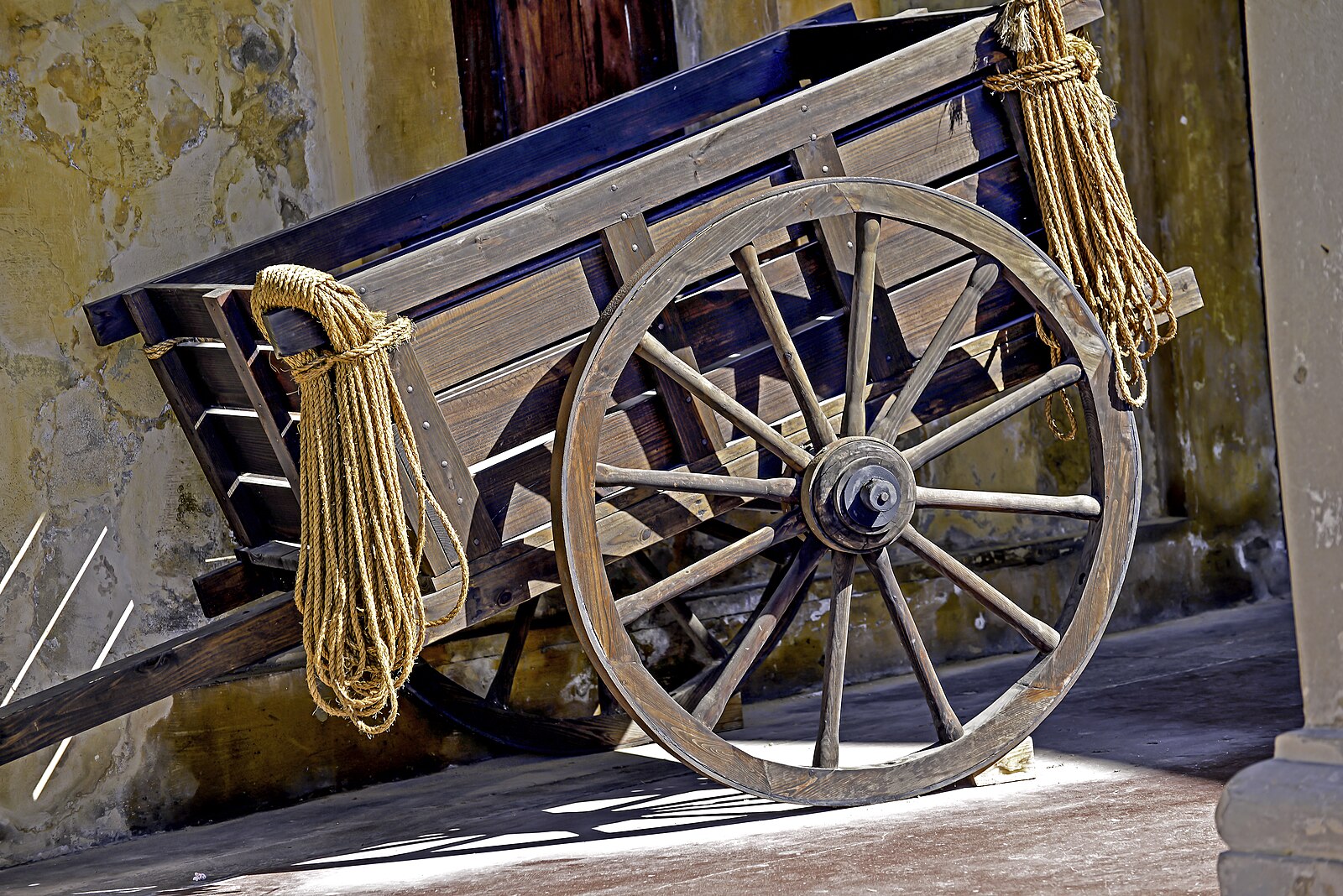
The dean of county historians, Dan Krieger, wrote a 2018 column with his wife Liz about Christmases in the rancho days. Rancheros, Krieger explained would’ve ridden into San Luis Obispo dressed in their finest, including their silver-inlaid saddles. Their families might’ve followed in the two-wheeled carretas, or carts, decorated for the occasion.
A carreta ride from Santa Manuela to the Old Mission couldn’t have been comfortable.
In town, Branch and his wife, Manuela, might’ve attended Christmas Eve mass. That would be followed by a Christmas play that focused on the shepherds’ discovery of the Christ child. And, for children, no holiday celebration would’ve been complete without the piñata, filled with the sweets that would spill out once the successful blow had been delivered.
Mission San Luis Obispo.
It was Queen Victoria’s German husband, Albert, who introduced the Christmas tree to the English-speaking world, and by the 1890s, it was central to Arroyo Grande’s celebrations. An 1896 Arroyo Grande Herald notes the big tree sponsored by the Grand Army of the Republic—Civil War veterans—put up outside their hall on Bridge Street, roughly across the street from the IOOF Hall.
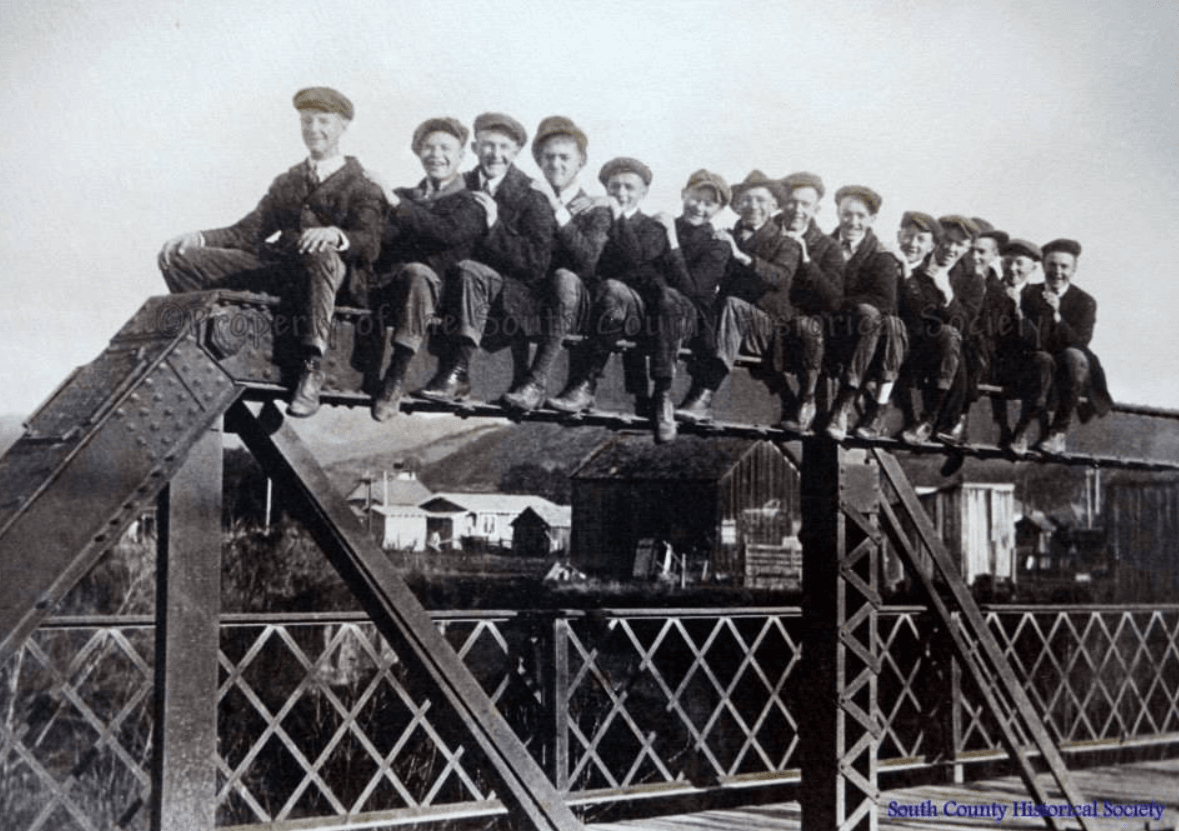
Young lads atop the Bridge Street bridge, built in 1909.
Later, community Christmas trees marked the holidays. The whole town gathered for its lighting in a custom that began in 1898 went into the 1940s. The Christmas trees were tied to the nation’s history: a 1937 Herald-Recorder article—this Christmas was observed during the Great Depression–notes with some alarm that the community Christmas expense fund, whose goal was $100, had not yet been met. Another issue Depression-era paper notes the generous contribution of a man who sent a check for $2.50 toward that year’s Christmas fund.
Sadly, a December 5, 1941 article anticipates the lighting of that year’s tree, an event that never would have happened because of the strict blackout regulations enforced immediately after Pearl Harbor. Arroyo Grande would later learn that two of its own, sailors on USS Arizona, had been killed on December 7.
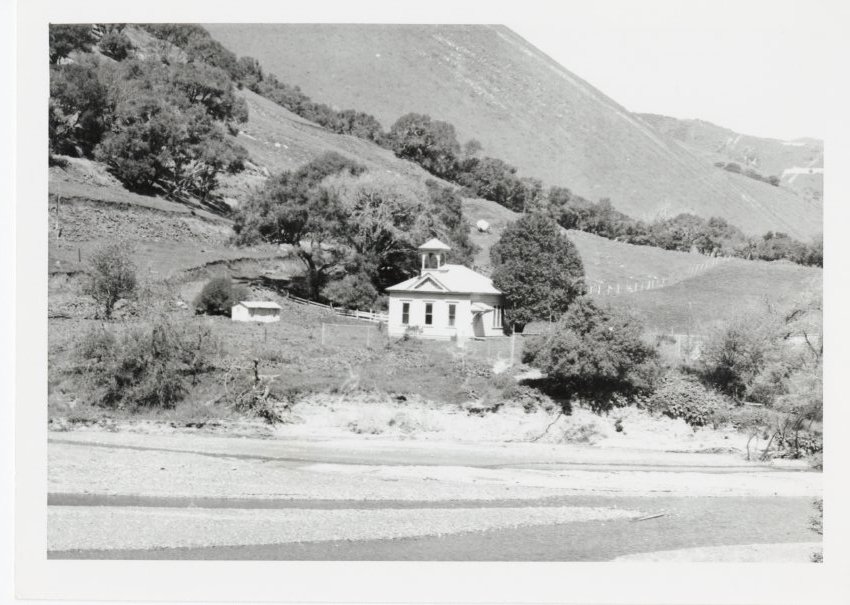
Santa ManuelaBranch Elementary
School pageants were another way to the bring smaller, rural communities that surrounded Arroyo Grande together; little country schools were central to farm life in Arroyo Grande; they served as voting precincts and as meeting places for organizations like the Farmers’ Alliance.
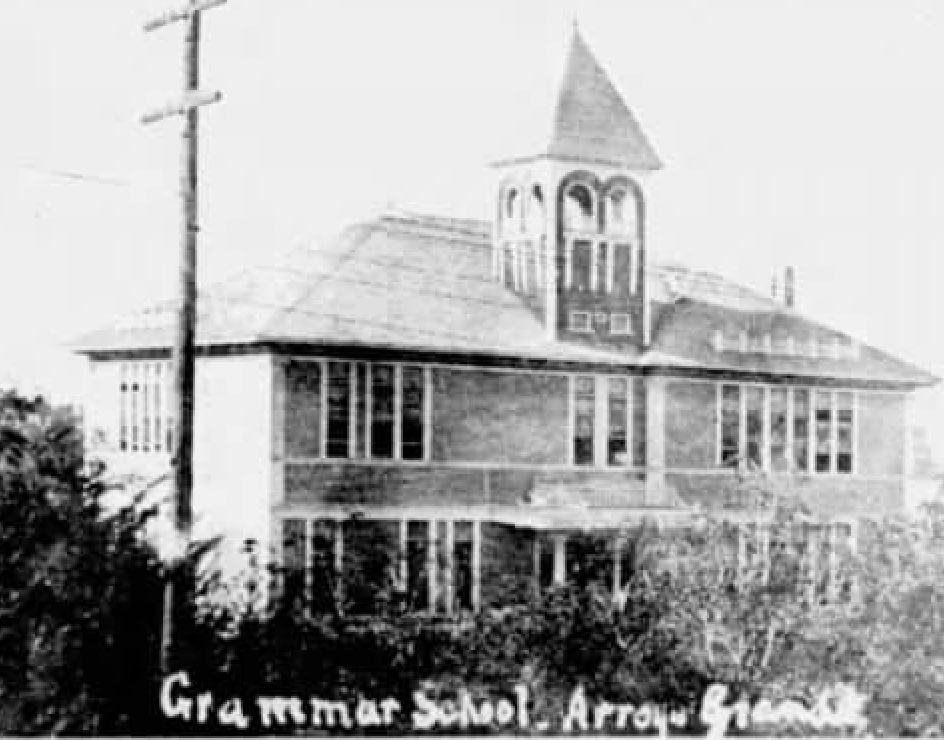
In town, an 1896 Arroyo Grande Grammar school program includes a play entitled “Brownies in Fairyland,” with an extensive cast that includes many pioneer surnames—Clevenger, Phoenix, Ballagh, Parsons, Musick, Whiteley and Silva are among them.
Even the tiny Santa Manuela School had a pageant in 1936, featuring familiar carols like “Hark! The Herald Angels Sing” and less familiar ones, like “Down the Chimney.” The teacher, Adelaide Rohde, would’ve spent countless hours rehearsing her students in addition to teaching her daily lessons, directed to multiple grade levels in a school that probably had no more than twenty or twenty-five students. But Santa Manuela was still prominent enough so that Santa himself made an appearance at the end of the program, handing out bags filled with popcorn and sweets, including to Miss Rohde and the eight audience members.
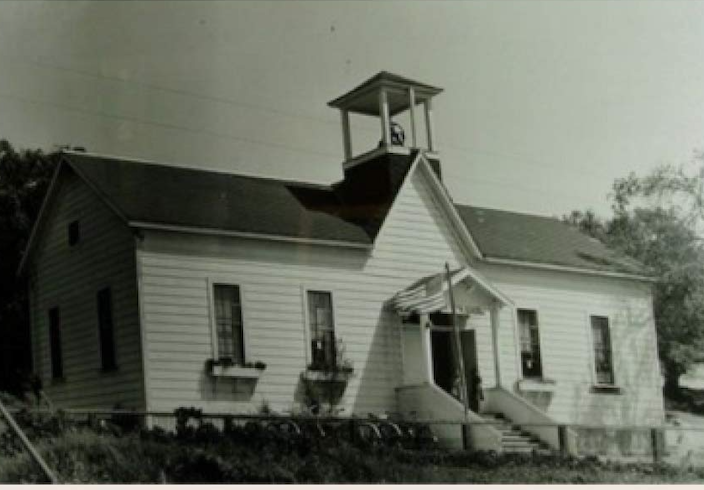
Since Branch School was twice the size of Santa Manuela—two rooms—it attracted an impressive audience of 125 in 1934. Both teachers—Mrs. Bair and Miss Whitlock—were also from prominent families—the Bairs ranched in the Huasna Valley and the Whitlocks owned the Commercial Company, a dry-goods store on Branch Street. The names here, too are familiar, many of them Azorean—Coehlo, Silva, Amaral, Reis—but George Cecchetti Sr., whose father came from Pisa, and four Agawas, two boys and two girls, whose parents came from Japan, also sing and act. The program features two harmonica solos, one by Billy Agawa and another by Francis Fink, who performed “Red River Valley.”
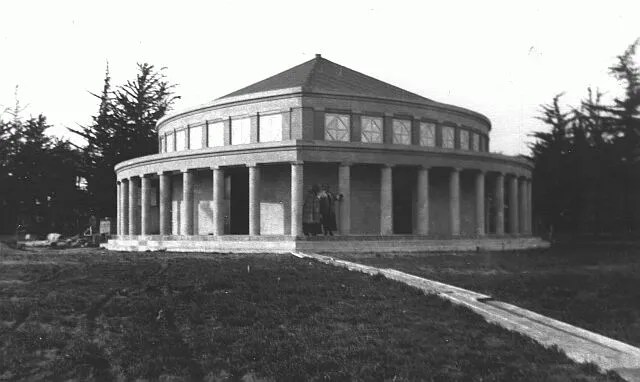
The Temple of the People’s Christmas observation seems to have been organized by Madame Borghild Janson, “the noted teacher of vocal culture.” A 1927 Herald-Recorder notes that the previous year’s program “overfilled” the Hiawatha Lodge, so 1927’s would feature two performances. Madame Janson staged a mystery play, a medieval tradition whose subject was biblical stories or the lives of the saints. In her choice of songs, she stuck to her theme. “Scandinavian Christmas songs from the 12th century” were part of the part of the program as well as more familiar Christmas carols.
The Temple of the People will celebrate its 100th anniversary in 2024.
A common thread in all of the holiday observations is the bringing together of people; Christmas broke down the isolation typical of far-flung rural farms and ranches. Seeing distant friends and neighbors must have been as much a celebration as was Christmas.
Adapted from The Heritage Press, published quarterly by the South County Historical Society. (Membership is $25 annually for individuals and $40 for couples.)
















 A Work in Progress