• About
  • The Germans

A Work in Progress

A Work in Progress

Author Archives: ag1970

Melting Pots

04 Saturday Sep 2021

Posted by ag1970 in American History, Uncategorized

≈ Leave a comment

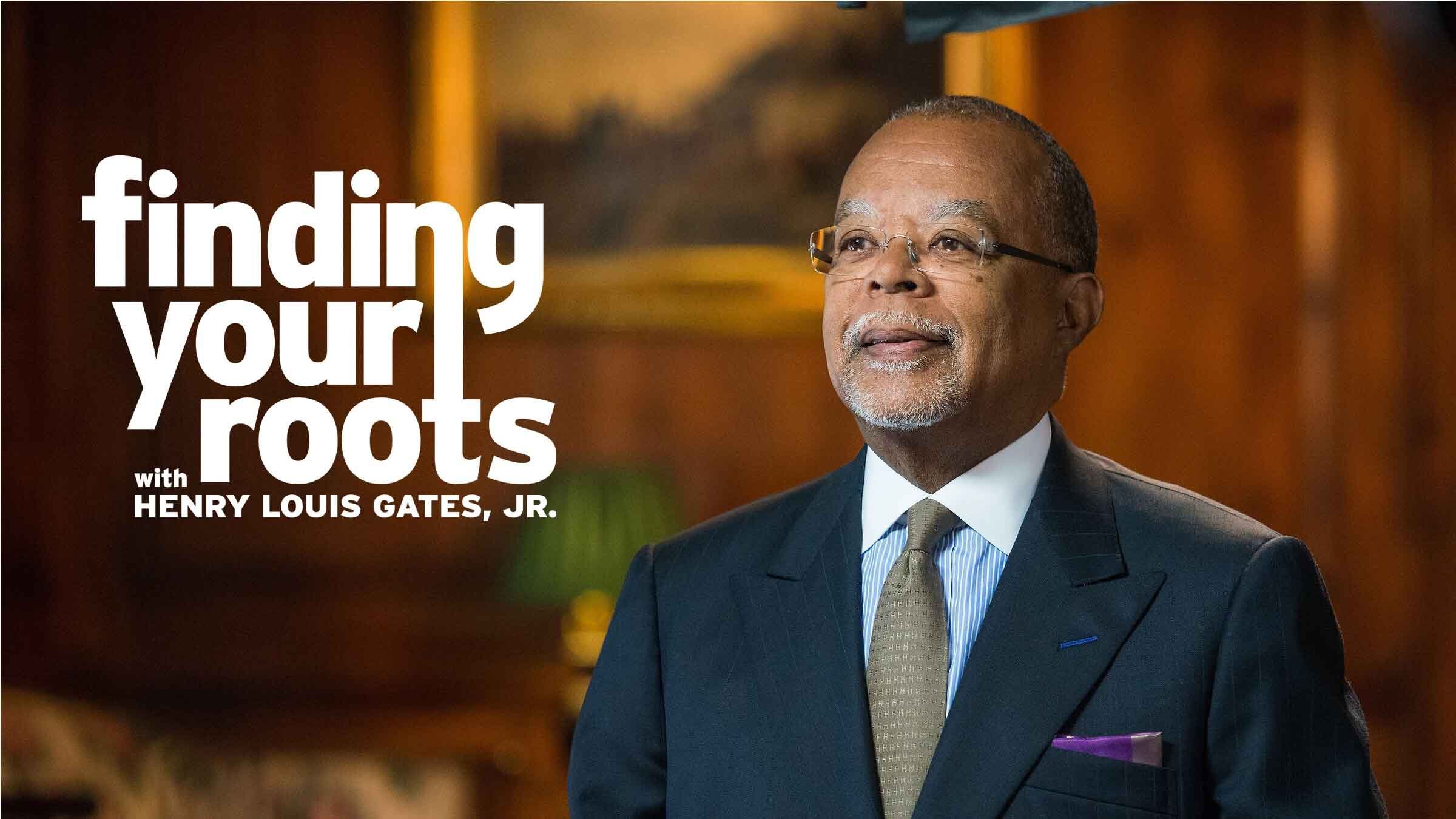
New/not so new favorite shows on KQED-San Francisco. “Finding Your Roots” with Harvard historian Henry Louis Gates Jr. The last episode that Elizabeth and I watched featured:

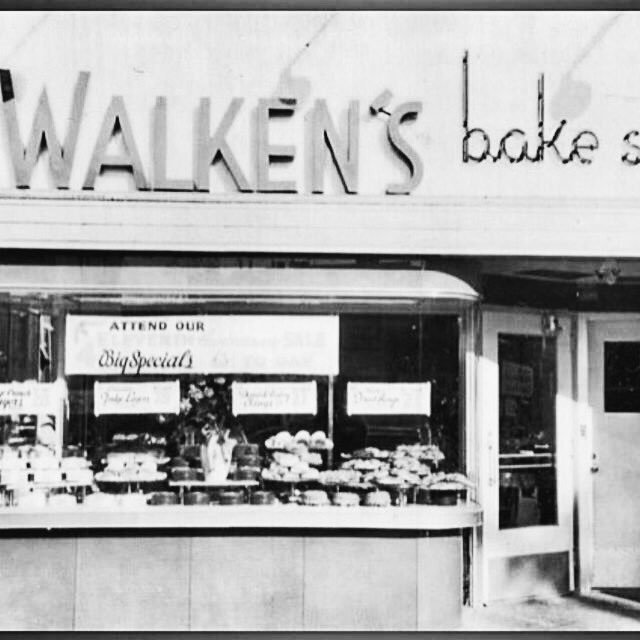
–Christopher Walken, whose father owned a bakery in Astoria, NY. Researchers found his grandfather’s bakery in Germany, captured in a 1912 photo. Walken’s father was an extraordinary man, I think. He immigrated from Germany in 1928, married a beautiful woman and started the bakery when the stock market crashed. “He just figured the Depression leveled the playing field for everybody,” Walken said. The bakery was in business for sixty years.


–Fred Armisen [“Portlandia”], who thought himself 1/4 Japanese and therefore loves Japanese food.. Nope.* Armisens’s grandfather, a dancer who had a brief fling with a German woman that eventually led to Fred, was Korean. And he was a part-time German spy on the side. The grandfather, Kuni, only studied in Japan, but he was such a gifted and influential dancer that a museum is dedicated to him there.


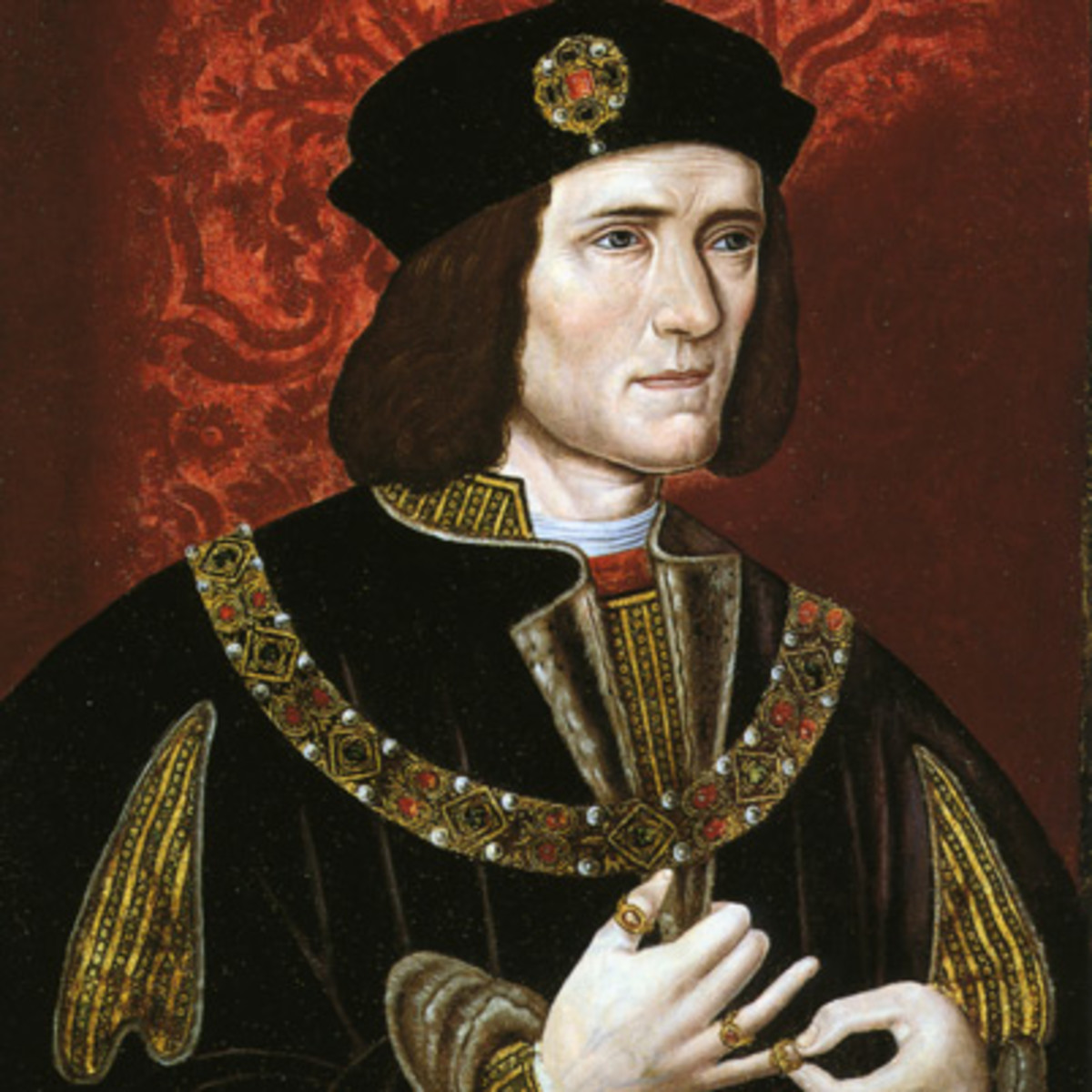
*[My Dad thought his family was Scots. Nope. They were from the coal-dusty English Midlands, not far from Bosworth, where Richard III got himself massacred. When they found the little fellow’s skeleton beneath a parking lot a few years ago, there was a deep postmortem puncture wound in his arse. Despite that indignity, Richard, remains, I think, Shakespeare’s greatest villain.]

The thoroughly dead Richard III

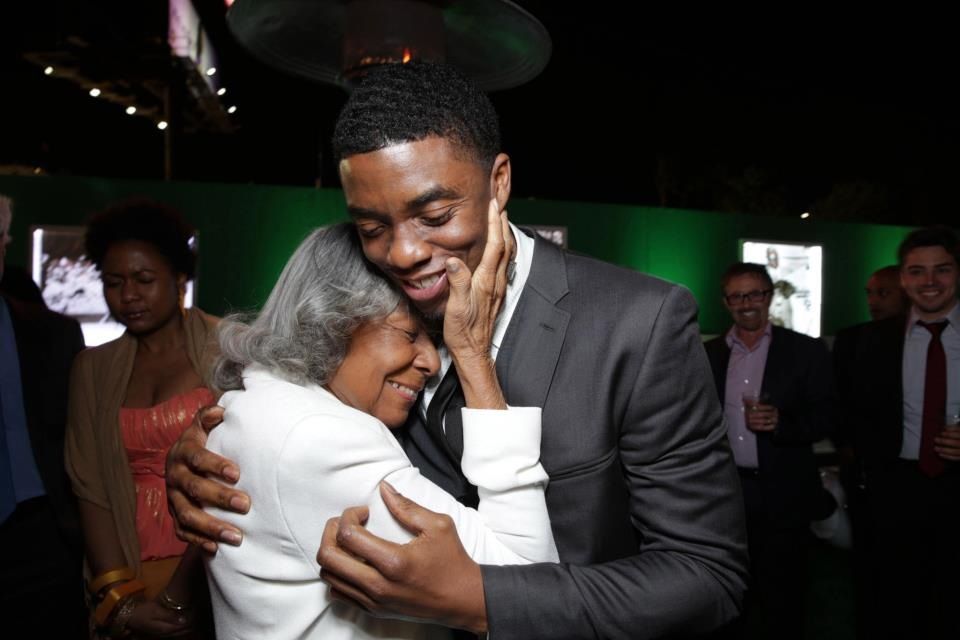
–Carly Simon, who loved her grandmother but knew almost nothing about her. DNA testing showed that her grandmother was the descendant of Cuban slaves, and that Carly’s ancestry is 10% African. “You’re the blackest white person we’ve ever tested,” Gates deadpanned. There’s some kind of justice there, I think. The Simon family was very close to an African-American couple who moved into their neighborhood: Jackie and Rachel Robinson.

Rachel Robinson embraces the late Chadwick Boseman, who played her husband in 42.
Armisen, Simon, Walken


“Check, Please, Bay Area.” Incredible visuals that make your mouth water. My favorite recent show featured reviews from these three adorable kids who reviewed Japanese, Italian and Burmese restaurants. They were incredibly articulate and they gave the desserts at all three places the attention that they deserved. Yum.

I don’t know. All that “melting pot” stuff kind of rocks. Here’s the “Check Please” episode with the kids. They are delightful. More Melting Pot: The Italian-American girl is an Irish step dancer.


If y’all look out the starboard side of the cabin…

01 Wednesday Sep 2021

Posted by ag1970 in American History, Personal memoirs, Uncategorized

≈ Leave a comment

Early in World War II, my Dad was stationed at Gardner Field in Taft. He was a marksman with both the 1903 Springfield and the M1 Garand, which is just above middling, but he was lethal when handling a shotgun. His last shotgun was a lovely Spanish over-and-under, and when Dad led a cock pheasant, the bird was doomed. No matter. The Army sent him to London with a typewriter and adding machine. He was a Quartermaster officer.

Dad, on the right, with a Winchester Model 12, about to go hunting with a neighbor in rural Missouri.

One of his jobs was to organize and dispatch gasoline supply companies to Omaha Beach, where George Patton would promptly steal them.

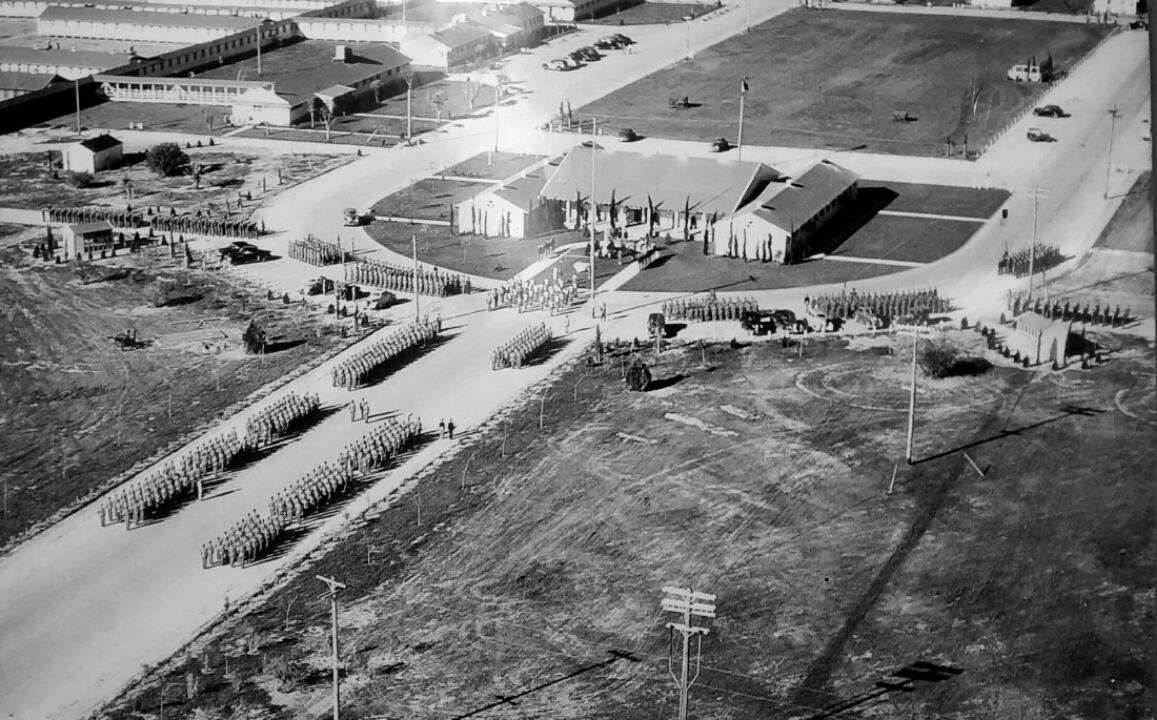
Another young man stationed at Gardner Field flew P-51 Mustangs into combat and, oh yes, broke the sound barrier two years after the war had ended.

Gardner Field, Taft, during World War II

Here’s one way that fellow entered my life. Elizabeth and I were on a JetBlue flight from somewhere to somewhere else when the pilot’s voice came over the intercom:

“Ladies and gennulmen. If y’all look out the starboard side of the cabin you’ll see a cloud that looks jes’ like a little ol’ puppy dog.”

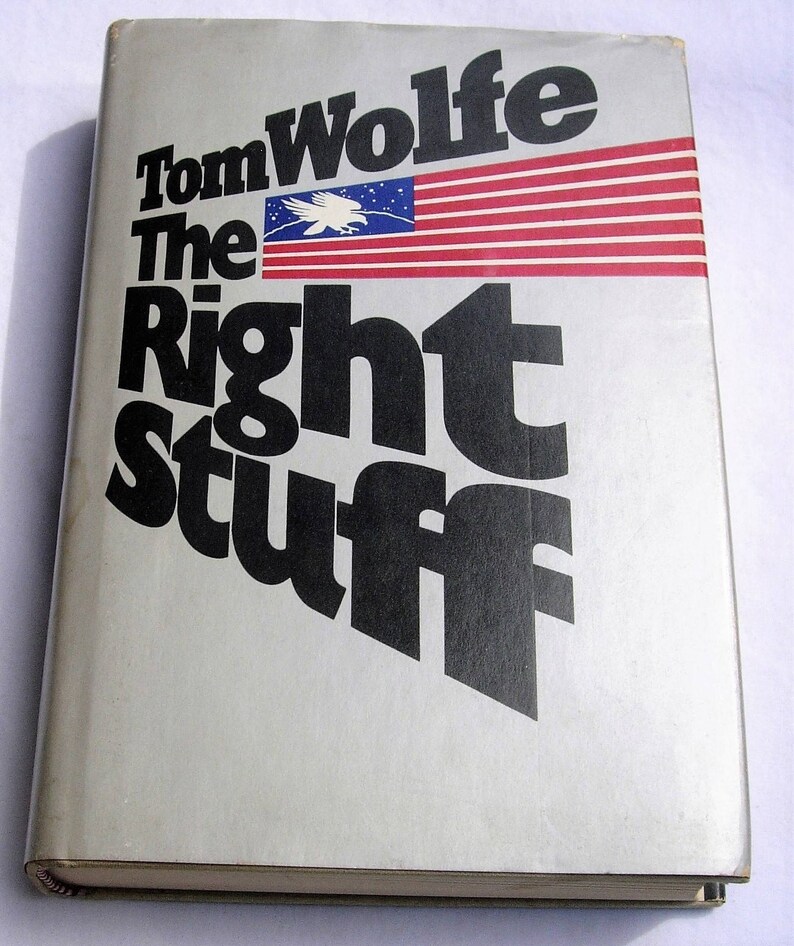
Because I’d read and so enjoyed the writing of the late Tom Wolfe, I realized suddenly where that voice came from. This passage is from The Right Stuff. It’s kind of fun.


Anyone who travels very much on airlines in the United States soon gets to know the voice of the airline pilot… coming over the intercom… with a particular drawl, a particular folksiness, a particular down-home calmness that is so exaggerated it begins to parody itself (nevertheless!—it’s reassuring)…the voice that tells you (on a flight from Phoenix preparing for its final approach into Kennedy Airport, New York, just after dawn): “Now, folks, uh… this is the captain… ummmm… We’ve got a little ol’ red light up here on the control panel that’s tryin’ to tell us that the landin’ gears’re not… uh… lockin’ into position when we lower ’em… Now… I don’t believe that little ol’ red light knows what it’s talkin’ about—I believe it’s that little ol’ red light that iddn’ workin’ right”… faint chuckle, long pause, as if to say, I’m not even sure all this is really worth going into—still, it may amuse you…

…Well!—who doesn’t know that voice! And who can forget it!—even after he is proved right and the emergency is over.

That particular voice may sound vaguely Southern or Southwestern, but it is specifically Appalachian in origin. It originated in the mountains of West Virginia, in the coal country, in Lincoln County, so far up in the hollows that, as the saying went, “they had to pipe in daylight.” In the late 1940’s and early 1950’s this up-hollow voice drifted down from on high, from over the high desert of California, down, down, down…into all phases of American aviation. It was amazing. It was Pygmalion in reverse. Military pilots and then, soon, airline pilots, pilots from Maine and Massachusetts and the Dakotas and Oregon and everywhere else, began to talk in that poker-hollow West Virginia drawl, or as close to it as they could bend their native accents. It was the drawl of the most righteous offal the possessors of the right stuff: Chuck Yeager.

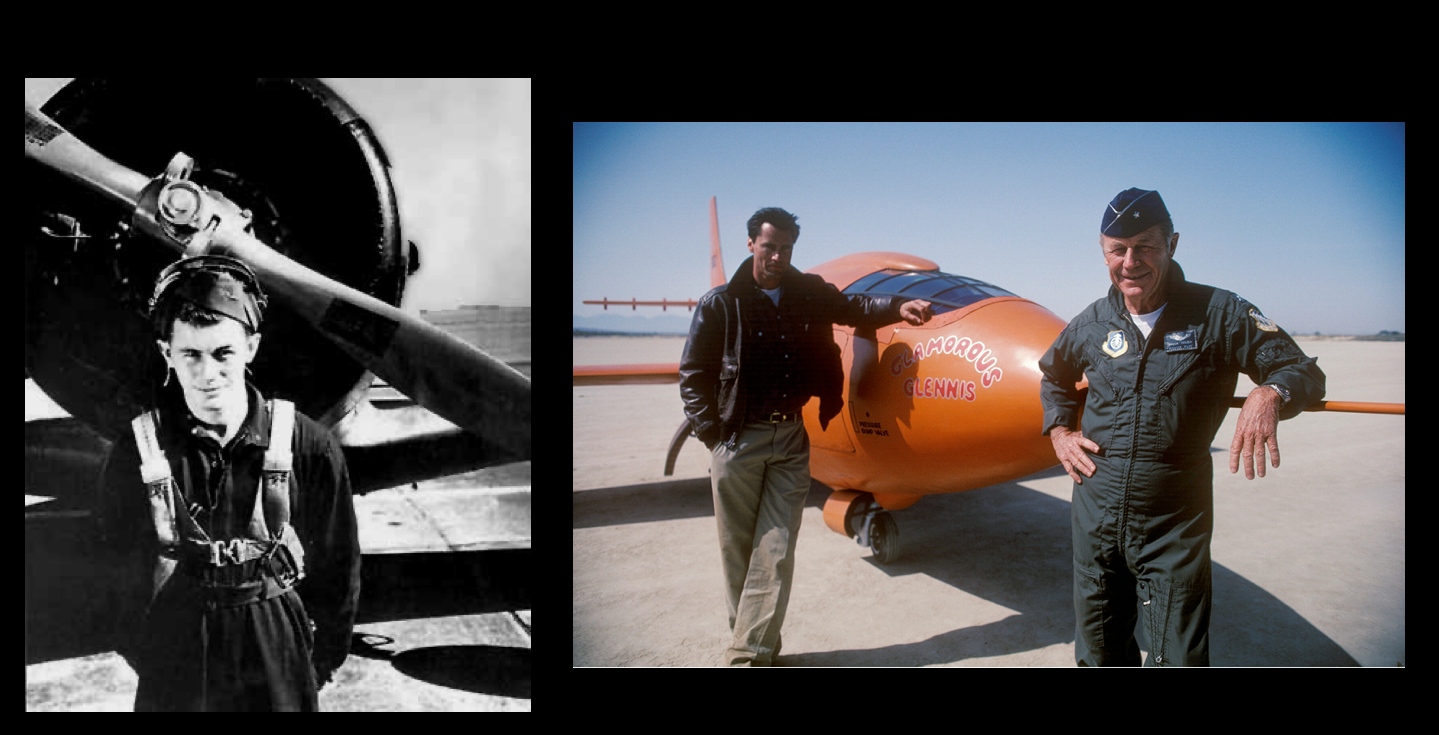
Young Yeager at Gardner Field in front of the BT-13, a trainer that shook so violently that student pilots called it the “Vultee Vibrator.” (Right) Actor Sam Shepherd and Yeager with a replica of the Bell X-1, the jet in which he broke the sound barrier. With a broken arm.

Wolfe became one of my role models as a writer, along with Ernest Hemingway, Hunter Thompson, Graham Greene, Bruce Catton, Dave Barry and Barbara Tuchman. The film version of The Right Stuff included a masterful performance by playwright/actor Sam Shepard, who comes face-to-face with the real Chuck Yeager, a bit player, in a couple of scenes. This, the crash of an F-104 Starfighter–the West Germans called the Starfighters we foisted on them “Widow Makers”–is a stunning bit of filmmaking.

Normandy, 1944

27 Friday Aug 2021

Posted by ag1970 in Uncategorized

≈ Leave a comment

I watched a good part of Saving Private Ryan again last night. It is so compelling, Tom Hanks’s Capt. Miller especially so, that, amid its graphic violence, it reminds us—Miller reminds us—of who we are.

It also reminded me of a local G.I. killed in Normandy. I wrote about Pvt. Domingo Martinez in World War II Arroyo Grande. He was on my mind as I watched this film again.

This is what I wrote about him.


Domingo Martinez’s grave, Colleville-sur-Mer

It was…drought that may have brought a fieldworker, whose family had lived for generations in New Mexico, to these coastal valleys in 1940. Much of his native [New Mexico] in the years before had been swept away by the Dust Bowl. Winds had carried the copper-red soil as far east as the Mid-Atlantic to drop it, like gritty rain from a place that had none, onto ships still sailing freely between continen

Those ships would lose their freedom in the years immediately after, and the coyotes that hunted them without fear were U-boats come out of their lairs in Kiel and later in Lorient. U-boat captains called this the “Happy Time.”

The U-boats would someday kill that young fieldworker, if indirectly, as part of an inexorable chain of events that would lead him to Normandy, so far away from the fields that border Arroyo Grande Creek, and to pastures bound by hedges and grazed by fat dairy cows, cows that lowed piteously to be milked in what had become killing zones. One of them, dead in the crossfire, may have provided scant cover from the German machine guns that harvested crops of young men for fieldworker, now rifleman, Private Domingo Martinez

Taking the radio site, from Saving Private Ryan.

It is difficult to imagine Normandy in 1944; it is beautiful today, as are its people. A bonjour from an American tourist has more traction here than it does in Paris, and the little villages, separated by pastures and farm fields, are lovely, each with its distinctive little parish church. During the Middle Ages, as the skilled writer and Francophile Graham Robb notes, few villagers ever went beyond the sound of their parish church’s bells. The world beyond was like the ends of the eart

It is not the ends of the earth, but the Arroyo Grande Valley is 5,500 miles away from the D-Day beaches. Three local men, killed in the campaign to capture and then and break free from Normandy, are buried at the American Cemetery at Colleville-sur-Mer, an almost impossibly serene place above Omaha Beach.

The American Cemetery

Below the cemetery, just offshore, a visitor today can see young men as they should be—exuberant and free—racing tiny sailboats, their sails bright oranges and reds, just beyond the surf line, where on June 6, 1944, young men floated like dead leaves on the water’s surface. The invasion of Hitler’s Europe nearly failed here. It didn’t but only because of an American generation that includes those who still hold the high ground at Colleville-sur-Mer

Omaha Beach, 2010

…The [Norman]hedgerows enclosed fields that had been plowed or grazed since Agincourt and were a hopscotch of natural fortresses—roots and compacted earth had formed defensible walls. The GIs had to assault them, one by one, to try to root out the defenders. When they broke through a hedge and entered a field, the superb German machine gun, the MG42, hidden in the next hedge beyond or positioned on the Americans’ flanks, annihilated entire rifle squads. It fired so rapidly that a burst sounded like canvas ripping. Army films had incorporated the sound to try to desensitize trainees. So the Americans could hear but never see in the tangle of the hedges who was killing them so efficiently. With supreme indifference, the bocage quickly transformed GIs into either hardened veterans or into statistics. This is what Private Martinez and the 313th Regiment faced in the attempt to seize the approaches to a key crossroads town, Le Haye du Puits.

The hedgerows. (Below) Wounded GI’s from Martinez’s 79th Division exit a farm field; Miller’s squad on patrol in a Norman field.

There, the Americans fought first-class combat troops, not garrison soldiers, many of them veterans of the Russian front. As the 313th fought to envelop the town, the regiment’s combat chronicle is almost monotonous with passages that have the Americans falling back to their jump-off points after repeated failed attacks through fields, then across a creek, where every time they would be driven back by concentrated German artillery fire. The Germans had not only the finest machine gun of the war but also the finest artillery piece, the versatile 88-mm gun.

The record of Martinez’s death.

Other elements of the 79th Division would take La Haye du Puits while the 313th Regiment continued its sledgehammer attacks to the south. Martinez died during three furious assaults near a little town called Le Bot on July 12. It was likely an 88-mm shell that killed Martinez. Shrapnel to the head and chest ended his life quickly, but his death wasn’t recorded for three days, an indicator of the intensity of the stress the 313th had to endure. The division was victorious, but both the regiment and the division were depleted and their dogfaces, real veterans now, were used up. Signal corps photographers show some Seventy-ninth soldiers playacting outside a wine shop along a street in La Haye du Puits—they sit at a small table amid the rubble, enjoying a fine red wine as if they had dinner reservations and were awaiting the first course. But other photos of other soldiers show men who resemble sleepwalkers: their faces blank and few of them celebratory.

79th Division soldiers leave a secured Le Haye du Puits. The G.I. in the lead carries a mortar tube; one just behind carries the mortar’s baseplate.

With rest and replacements, the veterans of three weeks’ combat soon joined the breakout from Normandy. Two weeks after Martinez’s death, the Allies launched Operation Cobra, a coordinated drive to the east. They uncovered Paris and liberated the city in August, standing aside to let Free French units and their prickly commander, General Leclerc, enter first. Leclerc would have been furious to learn that Ernest Hemingway and some of his camp followers had preceded him and were, with great offensive spirit but also with deteriorating unit cohesion, busy liberating the bar at the Ritz Hotel.

It’s not hard to wish that Private Martinez had been granted more time—maybe, for this migrant farmworker and Dust Bowl refugee, time enough for a few days’ leave to explore Paris. Perhaps he would decide to visit Notre Dame, where it’s not hard to see him in your mind’s eye. He would enter the great church, remove his garrison cap, and cross himself at a holy water font. Then he would walk up the nave, the silence pressing on his ears, to stand for a moment at the transept crossing, where he would stop to smile with delight as he was bathed in brilliant, colored sunlight. This is the gift of the Rose Window to men and women of good faith.

The Rose Window before the 2019 fire.


Harvest Festivals past. And other things.

26 Thursday Aug 2021

Posted by ag1970 in Arroyo Grande, Uncategorized

≈ Leave a comment

It’s sad–but no recriminations on my part–that the Harvest Festival was canceled this year. (There were cancellations during World War II, as well; the first Harvest Festival was in 1937). The Harvest Festival was an especially big deal when I was little, when my parents dropped me off and turned me loose for the day. The parade was the best part. My sisters, in matching mint-green outfits, appeared in at least one, in the pony cart with Obispo Telstar, one of Anne Westerman’s Welsh ponies, doing the work.


That’s my big sister in the center of the Jeanne Thwaites photograph, taken at Sid Spencer’s cattle ranch, now underneath Lopez Lake. Sid, on her Morgan–Roberta’s riding a Spencer Morgan mare–is on the left and her sister, Anne, on her pony, is on the right.


It was Sid Spencer who taught Sheila Varian how to work cattle. She was a good teacher. Sheila won the National Cow Horse Championship at the Cow Palace in 1961. She was the only woman competitor and her mare, Ronteza, was the only Arabian in a field of Quarter horses.Ronteza’s sire, Witez II, was a champion Polish Arab who plays a central role in a superb book, “The Perfect Horse,” about the American rescue of the Spanish Riding School’s Lipizzaner near the end of World War II.


My favorite Harvest Festival equestrian unit was the one that veered off the parade route and entered Ralph and Duane’s. The horses were thirsty.My most vivid memory was the Harvest Festival of 1966, I think. I was a ninth-grader at the big old Paulding campus, having just graduated from Branch in a class of ten boys and three girls. I went to a dance in Tanner Hall, where City Hall now stands.Tanner Hall had been a dance hall since it was built by Beder Wood in 1894.


But in 1966, at that particular Harvest Festival Dance, I saw the second-most epic girl fight of my life. It was terrifying when you come from a graduating class of ten boys and three girls.

These city girls are lethal, I thought.

The most-epic Young Woman fight–note the change in word choice, reflective of the times– I ever saw was one I broke up as a student teacher at Righetti. I barely survived. Boy fights end when they get tired. If I hadn’t intervened at Righetti, those two Young Women would STILL be fighting.I was lucky to survive.

Tanner, or Tanner’s, Hall was also where locals went to watch silent movies, enormously popular by 1912, when the ad appeared in the Herald-Recorder. And Young Women in 1918–we know this from contemporary teenager letters– couldn’t wait for the flu pandemic to end because they missed the movies. High school, not so much.

The Hall was also used for high-school graduations. The Hall, according to the Arroyo Grande Herald, “was filled to the point of suffocation” for the graduating class of 1898.All five of them. That’s the Class of ’98 in the photo.

Young Women wore white dresses to their graduations in those days. Fifty years after her graduation from Arroyo Grande Union High School, Ruth Paulding STILL fit into hers.

At the 1898 commencement, graduate Albert Ore delivered what the newspaper characterized as a stirring speech, “Spain and America!” about the then-current war still being played out in Cuba and the Philippines.

Ore gave that speech on June 30, 1898.The next day, Theodore Roosevelt’s Rough Riders, one of them from San Luis Obispo, followed the Buffalo Soldiers in to take the Spanish trenches atop Kettleman Hill in Cuba–misnamed “San Juan Hill.”

Albert Ore must have been thrilled. Look at what his speech did.

My friend Keith Sanbonmatsu

29 Thursday Jul 2021

Posted by ag1970 in Arroyo Grande, Uncategorized

≈ Leave a comment

Senior photo, 1970

I didn’t learn until last night that my friend and AGHS classmate Keith Sanbonmatsu, AGHS ’70, has died after a motorcycle accident in  Simi Valley.

I knew it couldn’t have been ‘natural causes.’ Keith was, throughout his life, an incredible athlete—a swimmer in high school, a relentless walker even as he approached seventy.

He was bright, unfailingly positive, with a sense of humor that flew like an arrow toward anything that was absurd or nonsensical.

He also had an integrity that was bedrock to his personality. I think it was Keith and Vard Ikeda we once saw as referees at a third-grade Biddy Basketball game, when one of the kids’ coaches was doing a terrible-tempered Coach Bobby Knight routine, stopping just short of throwing the folding chairs.

The refs called a time-out and had a very, very quiet talk–we couldn’t hear a word–with the offending coach.  He was very, very quiet for the rest of the game.

I love this photo. Keith’s parents, Nami Kobara Sanbonmatsu and Mitsuo Sanbonmatsu– and kitty. Mitsuo was a farmer and an artist, a painter.Keith Sanbonmatsu Collection, Cal Poly Re/Collecting Project

I know that one source of Keith’s integrity and strength of character came from his maternal grandparents, Shig and Kimi Kobara. Like our other Japanese-American neighbors, they were interned, at the Gila River Camp, during World War II. But Shig was such a successful  farmer, and such a natural leader, that the FBI picked him up and took him away only days after Pearl Harbor.

The Kobara family at Gila River…
…and in a remarkable contrast–an image that celebrates a marvelous moral victory– The Kobara family a decade later.

Top row (left to right): Ken Kobara, Mitsuo Sanbonmatsu, Towru Kobara, Hilo Fuchiwaki. Middle (left to right): Mari Kobara, Nami Kobara Sanbonmatsu, Shigechika Kobara, Kimi Kobara, Iso Kobara Fuchiwaki, Lori Fuchiwaki, Fumi Kobara, Joan Kobara. Bottom row (left to right): Gary Kobara, Keith Sanbonmatsu, Dona Fuchiwaki, Susan Fuchiwaki, Steve Kobara. Lori Fuchiwaki Collection, Cal Poly Re/Collecting Project

That’s also why the War Relocation Authority, at the end of the war, made sure the Kobaras were the first to come home from Gila River. They had to sleep for several weeks in the interior hall of their home in the Lower Valley. They could hear gunshots in the night. As the other families began to come home, it was Shig and Kimi who gave them shelter until they could re-establish their own homes and farms. This proved to be a necessity because local hotels refused the Japanese-Americans shelter.

But in a story that was repeated over and over again in Arroyo Grande, farmer Joe Silveira looked after the Kobara family’s land and equipment during the war; I think it was Cyril Phelan who stayed from time to time in their home and let it be generally known that he was accompanied by a 30.06 rifle. That discouraged potential vandals.

Keith and his cousin, Dona Fuchiwaki, both related to Shig and Kimi, were an immense help to me in writing the World War II book. And it was Kimi, through an oral history interview, who provided me with this charming story, included in World War II Arroyo Grande, about what was truly a frontier couple:

…Arroyo Grande’s Ella Honeycutt, a longtime conservationist and a gifted agricultural historian, notes that by 1913, when Congress passed the first Alien Land Law, it was too late. Many local immigrant families had already acquired farms.  They tended to concentrate in the Lower Arroyo Grande Valley, where they grew vegetables, especially bush peas and pole peas, and when the latter were hit by disease in the mid 1920s, they began to grow newer crops like celery, lettuce and Chinese cabbage.The newcomers had hunted for legal loopholes and found them: they formed corporations and bought land through them, or through friendly white intermediaries, or they bought land in the names of their American-born children, whose citizenship would be inviolable until Executive Order 9066 proved otherwise. The birth of that new generation of Japanese-Americans—the Nisei—was proof incarnate that the people from Kyushu intended to stay in the Valley and make it their home. This trend was made possible by a single premeditated and humane opening in the anti-Japanese laws. They allowed those men already in American to settle here with their wives, to send home for them, or to send, as if they came from the Sears Catalogue, for “picture brides.”

     This is how Shigechika Kobara, one of the early immigrants to the Valley, and his wife Kimi began their lives together. Their fathers were neighbors in Kagoshima, and after a short negotiation and a longer courtship-by-letter, the match was made. Shigechika took a train north and was waiting on a Seattle dock, looking for his bride among the passengers on her ship as it began to berth. She was looking back.  “I remembered his brother, a naval officer,” Kimi recalled, “and I found a man who resembled him. I thought that this was the man I was about to marry. From the deck I fixed my eyes on him, even though I had never met him. That is why it is called a ‘picture bride.’”

The young Kobara family, about 1930. Keith Sanbonmatsu Collection.

Learning the story of this family has been a grace to my life. I’ve been graced, too, in knowing their grandchildren, my friends and classmates, and in teaching their great-grandchildren in my history classroom. There’s some comfort to be found there when you’ve lost a friend who can’t be replaced.

A Treasure from Arroyo Grande’s past: On the eve of war

28 Wednesday Jul 2021

Posted by ag1970 in Arroyo Grande, Uncategorized

≈ Leave a comment

From 1938: A display ad from the Arroyo Grande Valley Herald-Recorder; below, the program for the game:

This is like a Rosetta Stone for local historians. To put this in context, 1938 was the year of the first Harvest Festival, indicative that the area was beginning to recover from the hit it had taken during the Great Depression, when San Luis Obispo County crop prices were halved between 1929 and 1933. And it’s in a kind of place of innocence, three years away from World War II, which will sweep up the little town, population 1,090 in the 1940 census.

A few examples among the advertisers in the newspaper ad, and this is just scratching the surface:

“J.J. Schnyder” was the kindly blacksmith who’d interrupt almost any paying job to fix a kid’s soapbox racer; he was responsible for funding the first swimming pool at Arroyo Grande High School because he wanted kids to have a place to play. When the Kobara family’s irrigation pump broke down in 1945, after their return from internment, Schyder insisted on fixing it immediately. It was Christmas Day.

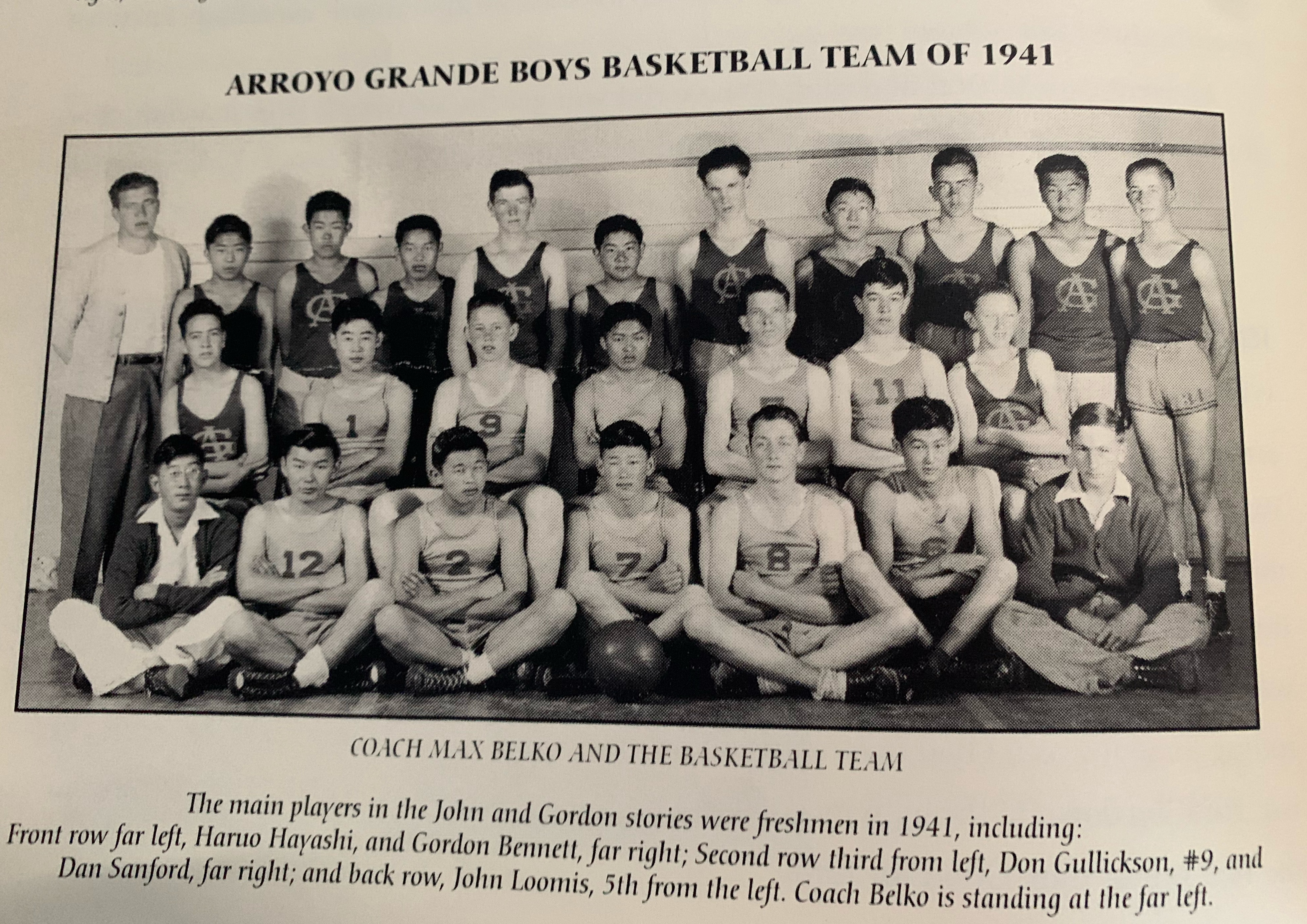
“E.C. Loomis and Son:” The family would safeguard the land and equipment of their Japanese-American neighbors during the war; one son, Vard, had coached the Nisei Arroyo Grande Growers, a powerhouse baseball team, before the war. His catcher was Kaz Ikeda, whose image is included in the mural on the Mason Bar wall, and Kaz named one son “Vard.” E.C.’s grandson, John, was a Marine who fought at Pelileu and Okinawa who maintained a lifelong friendship with the other three of a kind of “Four Musketeers:” Don Gullickson, Gordon Bennett, and Haruo Hayashi.

“Horner’s Second Hand Store:” Ed Horner, an Eighth Air Force officer, had his B-17 shot down in 1944 and would be a POW until war’s end.

“Commercial Company:” This general-goods store stood on the site of today’s Mason Bar; it was later a grocery in the same building Mason Bar occupies. One of the owner’s sons, Elliott Whitlock, AGUHS ’40, won a Distinguished Flying Cross for bringing his B-17 safely home after it’d been set afire by flak over Berlin in March 1944.

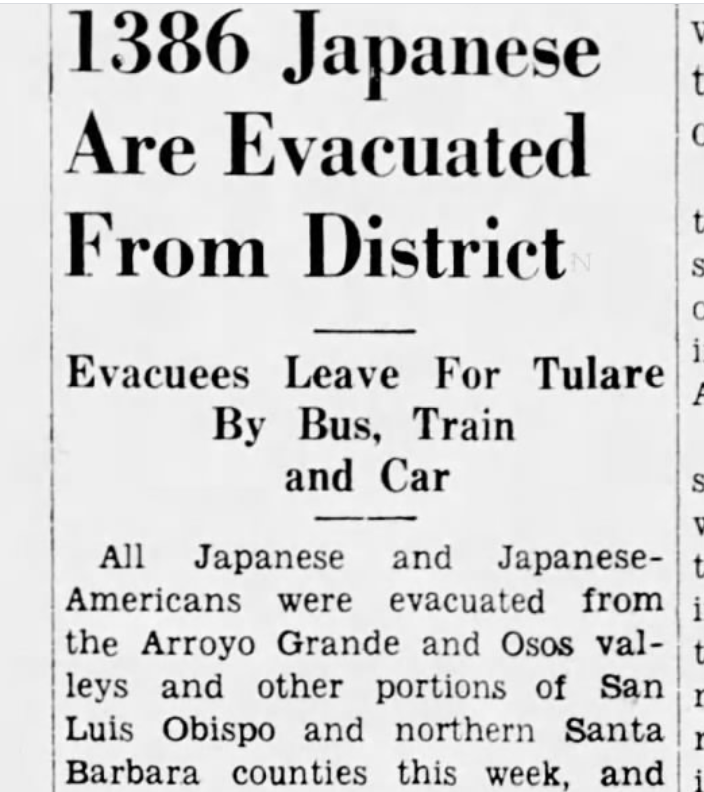
“French’s Cafe:” On April 30, 1942, French’s prepared over 200 box lunches for local Japanese-Americans on the day buses took them to the Tulare Assembly Center. Only about half of our prewar neighbors would come back after the war.

“Bennett’s Grocery” (today, the Chic Salon): Two of Rusty and Muriel Bennett’s sons would serve–Jerry in the Army Air Forces, Gordon in the Navy.

“E.M. Morgan:” His Ford agency occupied today’s Doc Burnstein’s. Morgan’s son, Wayne, was killed December 7 on USS Arizona, along with his second-grade classmate, Navy bandsman Jack Scruggs.

“Aki’s Market,” next to the meat market, was owned by Akira Saruwatari, a member of perhaps the first Japanese immigrant family to settle in the Arroyo Grande Valley; they farmed land across from the Halcyon Store. He was interned at Gila River and would live his postwar life in Santa Barbara.

“Wilkinson’s Market:” Today’s meat market. When his Japanese customers came in to pay their bills just before internment, Leo Wilkinson would’t take their money. “You keep it; you’re going to need it,” he told them. This act of generosity was repaid, in full, after the war.

“Grande Theater,” in the building that today houses Posies in the Village, would’ve been where many local people, through newsreels, kept up with the war news. (A short distance up Branch was the Security Drug Company, today’s Village Grill, where moviegoers could order a milkshake or ice cream sundae after the movies.)

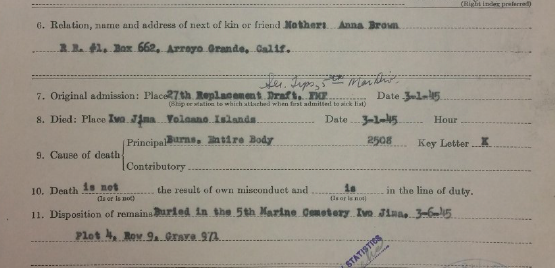
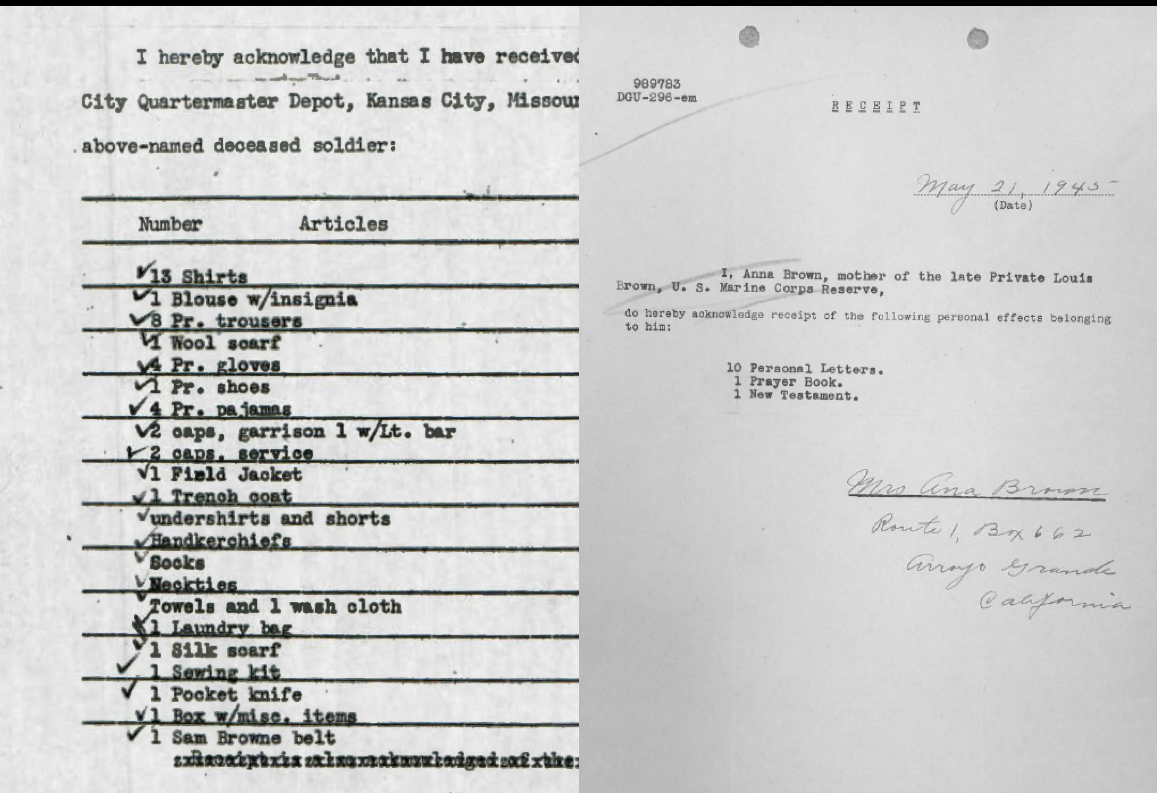
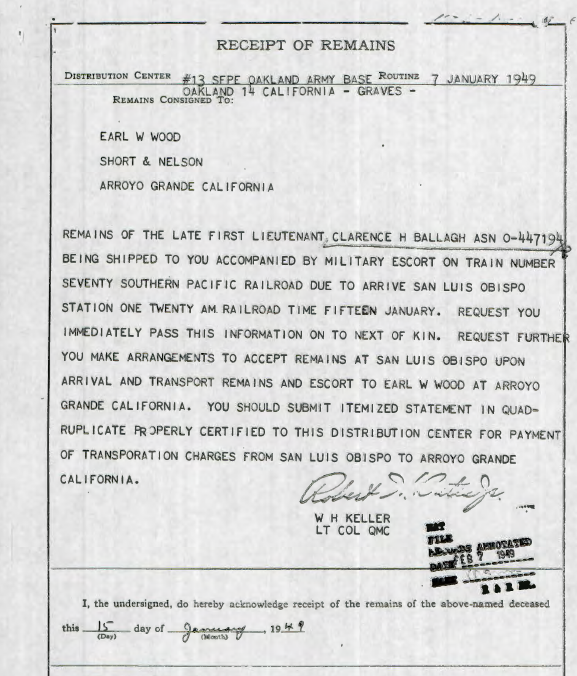
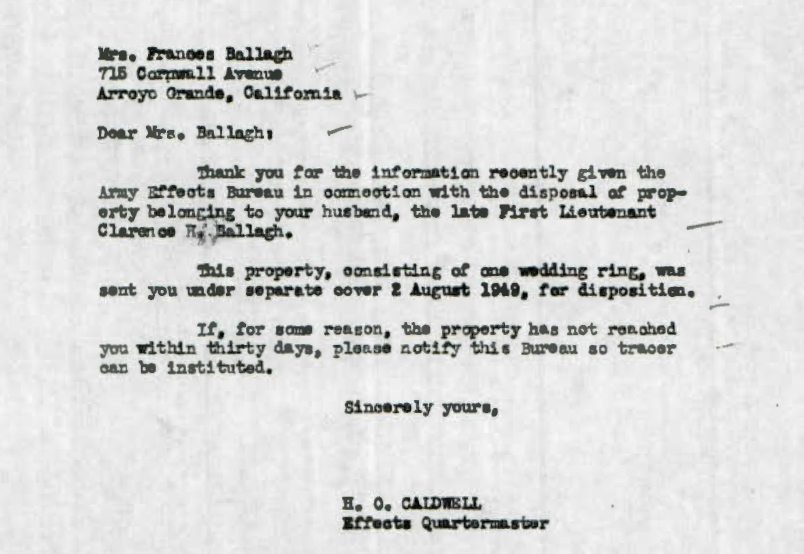
Earl Wood was the funeral director who would supervise the homecomings of many South County servicemen killed in Europe or the Pacific in the years after the war had ended; Louis Brown, for example, killed on Iwo Jima, came home in 1948.

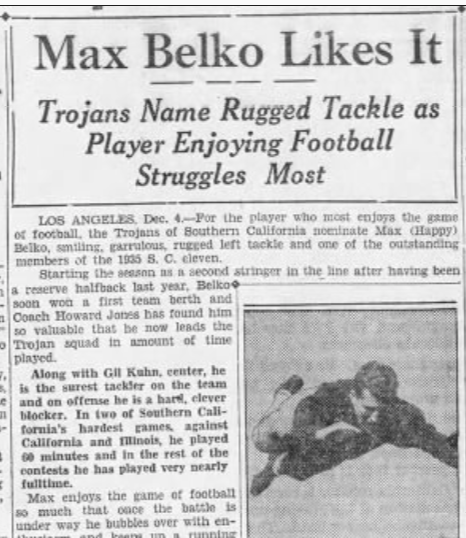
In the program, the Arroyo Grande coach, Max Belko, was once a USC All-American. He kicked a field goal against Montana in 1935, a feat that wouldn’t be repeated for fifteen years, when Frank Gifford kicked the next Southern Cal field goal. Belko, a Marine lieutenant, was killed on Guam in 1944, but we still have a connection to him: He was Haruo Hayashi’s P.E. teacher. (There are many familiar surnames in the football program, but two, both Navy men during the war, offer a glimpse into postwar Arroyo Grande: Tony Marsalek was our longtime fire chief; Chuck Brooner was the pharmacist/owner of the Fair Oaka Pharmacy.)

The sports editor of the high school newspaper, the “Hi-Chatter,” was George Nakamura. As a twenty-year-old intelligence officer in China, he was awarded a Bronze Star for going behind Japanese lines to rescue a downed American flier and, after the war, a Congressional Gold Medal in recognition for his efforts, as an international businessman, to nurture the relationship between Japan and the United States.


My simply incredible golf career

28 Wednesday Jul 2021

Posted by ag1970 in Uncategorized

≈ Leave a comment

Ben Hogan

In 1966, when green fees were $20 a month, I learned to play golf at Black Lake, when it wasn’t “Blacklake,” which still irritates me. (So does “California Mens Colony.” Just how many mens are incarcerated there?)

The pro was Eddie Nowak, one of the best teachers I’ve ever had. I’ve written about him. Eddie’s World War II army career was spent in teaching golf to flag officers so that they could relax enough to plan invasions of France or the Philippines.

Ben Hogan once said that Nowak was the finest golf teacher in America. I’ve written about Hogan, too.

One summer, when I was about sixteen, I played almost every day with my AGHS friend Kent Pearson. Once we hitched a ride with a friend of Kent’s who had a convertible ’60 Corvette and we went zipping up the Mesa–us, our clubs and the ‘Vette. I think I sat on Kent’s lap, back when seat belts were a novelty, but the Corvette handled beautifully on the road up the Mesa and the clubheads clicked softly at the turns. Oh, my. What a car.

The Corvette looked like this one.

Another time, we put together enough money to rent an electric cart. I left the brake off on a hill, the cart began a ponderous and dignified descent down the hill, and we caught it three feet from the lake that straddled the old eighth hole.

The golf cart would’ve looked like this one except we caught it in time.

That was a glorious summer. I would work all the rest of ’em, which is why I wasn’t at Woodstock in 1969. I was selling shoes with my friend Robert Garza at Kinney’s in the shopping center that now has the Rite-Aid and the Aldi. The Kinney’s is gone, a victim of advanced age.

Here it is. I wonder if they found any of my old shoehorns in the rubble when they demolished it?

Anyway, one day, he assistant pro introduced me to a revolution in irons, the Browning 440s, made by the same folks who brought you the Automatic Rifle. They were manufactured in Belgium and were “revolutionary” because of the tiny clubface.

Today, they’re as antiquated as a Brown Bess musket is when compared to an M4 carbine.

But when the assistant pro urged me to try a couple of Brownings out on the driving range. The golf balls seemed to leap off the clubface, leave little vapor trails in flight, and land crisply, since the driving range was aimed that way, in the southbound lanes of the 101.

I was entranced. And broke.

A vintage ad. Some think they’re hideous. I don’t. I think they’re svelte.

Ladies and gentlemen, fifty-five years later, I finally have a complete set of Browning 440s.

My (somewhat elderly) babies

Even though I’m elderly golfer whose backswing, given the current state of my back, ventures no farther than the minute hand at 12:45, with my Browning 440s, I am Bill Murray in this scene from Lost in Translation.


Going to the Movies

24 Saturday Jul 2021

Posted by ag1970 in Arroyo Grande, Film and Popular Culture, Uncategorized

≈ Leave a comment

The Fair Oaks Theater, Grand Ave., Arroyo Grande

My wife, Elizabeth and I had a post-quarantine movie date to see In the Heights at the Fair Oaks Theater. It was delightful and it was wonderful to see it at the Fair Oaks.

The theater opened in 1948 and by 1955, when my family moved from Taft to Arroyo Grande—the brick barbecue my father built still stands in the back yard of our old Sunset Drive home—it was kind of the center of a community that was growing rapidly.

Fair Oaks already had its own market—the building at the corner of Halcyon and Grand that includes a computer repair shop and a bookstore was the Fair Oaks Grocery, opened in 1939—and would, after the war,  add the Fair Oaks Pharmacy, across the street at the other corner of Halcyon and Grand. I remember, vaguely, Mr. Chuck Brooner coming in to fill an after-hours prescription when I was pretty sick.

There was a big hardware store just across Alder from the theater, whose ground floor also included an appliance store.  In 1955, Burkhardt’s Shoes, at 951 Grand Avenue, had its grand opening. Mr. Burkhardt was skinny as a whippet and was marked, as was Mr. Brooner, by his kindness: he treated my mother like royalty and was easy with kids who came in for their back-to-school Hush Puppies or Keds.

These places had a growing market because Arroyo Grande’s population more than tripled between 1940 and 1970—from 1,090 to 3,291—and an anecdotal study of new home purchases in the Arroyo Grande Herald-Recorder reveals that many of the new arrivals were, like us, refugees from the San Joaquin Valley.

Dad was a consultant to the founders of Mid-State Bank and got a job as comptroller for Madonna Construction, and, like many others of his generation, bought his home with a V.A. loan and, like many others, wanted a home near a school.

Arroyo Grande obliged with the September 1955 opening of Margaret Harloe Elementary, where my big sister finished her elementary education and my big brother began his. Harloe was one important anchor for Fair Oaks. The theater was the other.

The Grand Opening, 1948


We did not hit it off, the Fair Oaks and I. The first two films I saw there were deMille’s later Ten Commandments—I was distraught when Charlton Heston closed the Red Sea and the Egyptian charioteers’ horses drowned—and John Ford’s The Searchers, in the scene that traumatized me happened in the gathering dusk, when the Texas sodbuster family can hear the Comanche raiding party but can’t see them. It’s since become one of my favorite films, but it wasn’t then, not in 1956.

Forty years before, films were just as important a part of Arroyo Grande life as they were when the Fair Oaks was built. Silent films were screened Saturdays at Tanner’s Dance Hall, on the site where City Hall now stands, and young people were crazy about the movies.  I learned this from Jan Scott’s wonderful Readers’ Theater play, “Letters From Home: Keeping Him Close,” which told, through their letters, the story of an Arroyo Grande soldier and his family in the closing months of World War I.

The letters included the impact of the 1918 influenza epidemic and its closure of churches, schools and theaters, and the doughboy’s little sister was desperate to see the movies open again. The high school, maybe not so much.

By 1930, the Mission Theater—later the Grande—was boasting talking pictures in its ads. The newer theater—which also sometimes hosted high school commencements (including Stanford-bound Vard Loomis’s),  as Tanner’s Hall had once, for the five seniors of the Class of 1898—was housed in the Branch Street commercial building that now includes Posies in the Village.

Jean Wilkinson Frederick’s father owned the meat market on Branch that’s been a meat market since 1897. (Her classmates at the high school, fellow members of the Stamp Collecting Club, included the inseparable Haruo Hayashi, John Loomis, Gordon Bennett and Don Gullickson.)

Jeanne told me a  few  years ago that she loved the movies at the Grande. Her favorites were the Western serials, and her favorite cowboy was, of course, Gene Autry. It helped that Gene often sang to his horse, Champion, a beautiful sorrel with a blond mane that would’ve been every girl’s dream horse.

August 1944


The Grande was ideal, too, for high school dates, because just down the street, in today’s Village Grill, was the Economy Drug Company, which featured Arroyo Grande’s soda fountain. Soda fountains were vital to Mickey Rooney and Judy Garland and seemingly, to most young couples in the 1930s and 1940s. My mother was a soda jerk in Taft in 1939 when Dad came in for an ice cream sundae. They were married in 1940.

I would survive the first two films I saw with my parents at the Fair Oaks and would see films my Mom loved (Lilies in the Field), films my big sister loved (Tammy and the Bachelor) and films that were more to the taste of my big brother and me (20,000 Leagues Under the Sea and Kirk Douglas’s epic battle with the giant squid.)

Since the mid 1960s, the Rodkey family have run what is truly is a neighborhood theater with all the elements I require in a theater: it’s clean, with comfortable seats and refillable popcorn. My family missed it when it was closed.

It’s like so many other places in Arroyo Grande I’ve found in growing up here: even when you leave your house you can find a place that’s home.

Fair Oaks in 1949. The theater is circled; the corner market is just above and to the right; the Arroyo Grande District Cemetery is to the left.


Basset hounds and world peace

08 Thursday Jul 2021

Posted by ag1970 in Arroyo Grande, Uncategorized

≈ Leave a comment

Peter Falk, as Det. Columbo, demonstrates a trait common to Basset hound humans: their liberality with cookies.

I taught European history for many years at Arroyo Grande High School and so wound up leading summer trips for students so they could see some of the places we’d studied. The 2010 trip focused on Western Europe in World War II and during one of the stops we found ourselves in Bastogne, Belgium.

Bastogne, of course, won fame in the winter of 1944-45 when the town and the woods around it were occupied by the American 101st Airborne. Although surrounded completely by the Wehrmacht, the German army, the airborne troops refused to surrender. They were downright rude about it. “Nuts!” the airborne artillery officer in charge, Anthony McAuliffe, told the German delegation that offered humane surrender terms.
What does that mean? The German delegation asked.

It means “go to hell,” they were told.

That’s the sanitized version. I imagine the reply was closer to something the Wehrmacht could do to itself were it not anatomically and militarily impossible.

Bastogne, then and now.

The 101st held on until they were relived–one of them, Art Youman, a member of the 506th Parachute Infantry’s famed Easy Company, was from Arroyo Grande. In holding on, during the coldest winter in Europe in thirty years, the paratroopers ruined the German timetable for their offensive, and the timetable was precious to the offensive’s success. The 101st’s stubbornness helped defeat the Germans, rich in steel but oil-poor, in what came to be called the Battle of the Bulge because they simply ran out of the fuel they needed to drive their panzers— their tanks and trucks and their mobile artillery.

Art Youman, second from left, during jump training in South Carolina. Easy Company occupied Bastogne on his 23rd birthday; by then he’d been promoted to sergeant by Easy Company’s C.O., Richard Winters.
In 2019, 101st Airborne paratroopers posed in these foxholes, near Bastogne, that their comrades had dug in 1944-45.

None of that history mattered to the Bastogne lady giving our tour group the stinky eye in the creperie the day of our visit. All that Belgian-American amity built up during and since the war had dissipated in her eyes. Not only were we Americans–we laughed too loudly, chewed gum, were innocent of all languages other than a strange Southern California variant of Standard English, and we were (horrors!) a bunch of teenagers.
Despite the daggers the lady cast our way, I spotted one redeeming feature: in her lap was a small dog, secured by a chain leash. On my cell phone, I had a photograph of our Basset, Wilson, who passed away at thirteen earlier this year. “Wilson,” our neighbor said, “was a dog for the Ages.” Our neighbor was right.
Our best friend, Wilson.
This is why: I walked over to the lady and showed her the picture of Wilson. She grew so excited that she dropped her small dog.

“COLUMBO!” she shouted with delight. I could hear her dog’s nails askitter on the tile floor.

Her husband just then came out of the restroom. She gestured toward me—her little dog went with her, like laundry fluttering on a clothesline–and my cell phone. The husband looked.

And shouted “COLUMBO!” with delight.

We were all friends after that.

I have been convinced ever since of the singular ability that Basset hounds have to bring harmony to a disordered world. They should be the Official Dog of the United Nations.

Of course, the syndication of old Universal Studios detective shows played a part, as well. Despite your characteristically rumpled appearance, Lieutenant Columbo, I offer you a snappy 101st Airborne salute, sir.

And I offer for your viewing enjoyment another Basset hound photo. That’s Walter. We adopted him in March and drove so far south to meet him—way, way past San Diego—that his vaccination papers were in Spanish.

Wilson, Walter. What was the name of Columbo’s dog? I had to look it up: It was “Dog.” He was a dog for the ages, too.

Our Basset puppy, Walter, has stolen our hearts.

The Great Meteor Crater and My Head

22 Tuesday Jun 2021

Posted by ag1970 in Uncategorized

≈ Leave a comment

My room

I am in the hospital for a two-night stay. I will be okay but not our bedroom wall. This is what my head did to it.

I was dehydrated and passed out.

My head is fine My neck is not No fractures but deep and painful bruising. Ouch.

The boys are taking care of Walter. I miss him. I am getting lots of free hospital gurney rides. These help.

So I will be okay.

.

← Older posts
Newer posts →

Subscribe

  • Entries (RSS)
  • Comments (RSS)

Archives

  • January 2026
  • December 2025
  • November 2025
  • October 2025
  • September 2025
  • August 2025
  • July 2025
  • June 2025
  • May 2025
  • April 2025
  • March 2025
  • February 2025
  • January 2025
  • December 2024
  • November 2024
  • October 2024
  • September 2024
  • August 2024
  • July 2024
  • June 2024
  • May 2024
  • April 2024
  • March 2024
  • February 2024
  • January 2024
  • December 2023
  • November 2023
  • October 2023
  • September 2023
  • August 2023
  • July 2023
  • June 2023
  • May 2023
  • April 2023
  • March 2023
  • February 2023
  • January 2023
  • December 2022
  • November 2022
  • October 2022
  • September 2022
  • August 2022
  • May 2022
  • April 2022
  • March 2022
  • February 2022
  • January 2022
  • December 2021
  • November 2021
  • October 2021
  • September 2021
  • August 2021
  • July 2021
  • June 2021
  • April 2021
  • March 2021
  • February 2021
  • January 2021
  • December 2020
  • November 2020
  • August 2020
  • July 2020
  • June 2020
  • May 2020
  • April 2020
  • January 2020
  • December 2019
  • November 2019
  • October 2019
  • September 2019
  • August 2019
  • May 2019
  • April 2019
  • March 2019
  • February 2019
  • January 2019
  • December 2018
  • November 2018
  • October 2018
  • September 2018
  • July 2018
  • June 2018
  • May 2018
  • April 2018
  • March 2018
  • February 2018
  • January 2018
  • December 2017
  • November 2017
  • October 2017
  • April 2017
  • March 2017
  • December 2016
  • November 2016
  • October 2016
  • September 2016
  • August 2016
  • July 2016
  • June 2016
  • April 2016
  • March 2016
  • February 2016
  • January 2016
  • December 2015
  • November 2015
  • October 2015
  • September 2015
  • August 2015
  • July 2015
  • June 2015
  • May 2015
  • April 2015
  • March 2015
  • February 2015
  • January 2015
  • December 2014
  • November 2014
  • September 2014
  • August 2014
  • July 2014

Categories

  • American History
  • Arroyo Grande
  • California history
  • Family history
  • Film and Popular Culture
  • History
  • News
  • Personal memoirs
  • Teaching
  • The Great Depression
  • trump
  • Uncategorized
  • World War II
  • Writing

Meta

  • Create account
  • Log in

Blog at WordPress.com.

  • Subscribe Subscribed
    • A Work in Progress
    • Join 68 other subscribers
    • Already have a WordPress.com account? Log in now.
    • A Work in Progress
    • Subscribe Subscribed
    • Sign up
    • Log in
    • Report this content
    • View site in Reader
    • Manage subscriptions
    • Collapse this bar
 

Loading Comments...