• About
  • The Germans

A Work in Progress

A Work in Progress

Category Archives: California history

What I will say on Veterans Day.

11 Tuesday Nov 2014

Posted by ag1970 in American History, California history, World War II

≈ 1 Comment

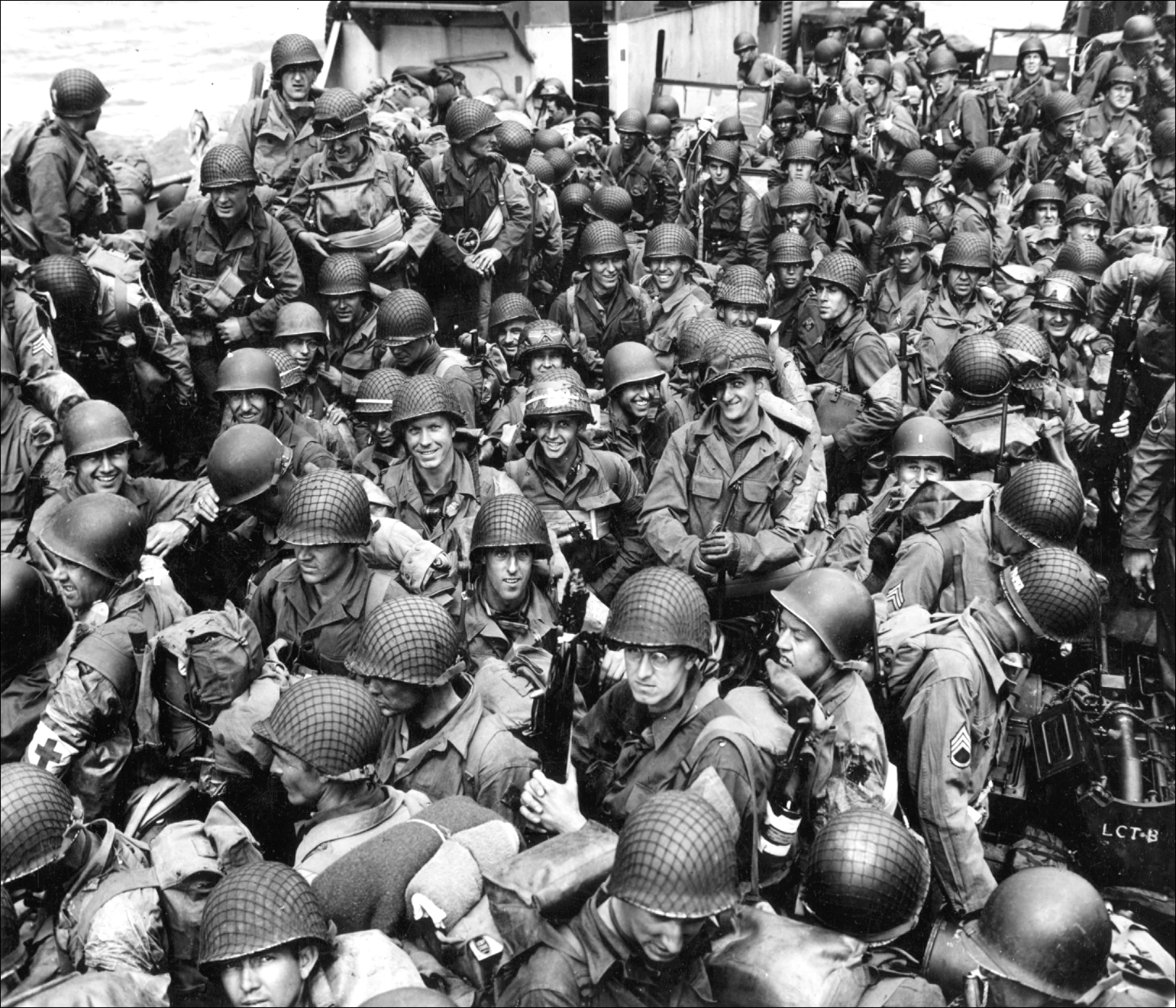
media-dday-anniversary-lg03

I am supposed to give a speech tomorrow to the American Legion for Veterans Day.  I enjoy public speaking every bit as much as a condemned man enjoys his firing squad. But I am stubborn Irish, and if I agreed to give a speech, I will do it.

I am speaking about Arroyo Grande’s participation in World War II.  I am not sure the American Legion would want to hear everything I might want to say. I do love my country–by which I mean frontier women on laundry day, hauling bucket after bucket of water from the well to zinc washtubs, black men rousted on street corners because they have the audacity to be black men, alive and on street corners, children in Appalachia whose cupboards are bare except for ketchup and white bread, the firemen who sprinted up the steps of World Trade 1, the young women and men who dance the old dances at tribal meetings, the beautiful jingling of their beaded costumes, the beauty of a young woman track athlete as she makes her measured, powerful approach to the pole vault–but I am not a flag-waver. America is the sum of the richness of her land and her people, and so is too complex to be trapped by facile symbolism.

I most emphatically do not believe in “American Exceptionalism”–I think, in fact, that it’s a pernicious idea and smacks of the kind of superiority, bred by insecurity, that so poisoned Germany and Japan in the years between the wars. And I know that our military, in places like Wounded Knee, the Philippines, and My Lai 4, have done barbaric things that soldiers, including the Germans and the Japanese, sometimes do in warfare and for which there is no conscionable excuse.

Since I want to live long enough to have lunch with them, I probably won’t bring those up.  I guess what I’ll say might be something like this.  But I believe this as much as I believe anything else I’ve said.

*  *  *

I made a decision several months ago to write a book about Arroyo Grande’s participation in World War II.

I was supposed to have written several by now, according to my high school classmates, but I am easily distracted and have a short attention span. That intensified the shock I felt when my book proposal was accepted by an actual, real live publishing company.

But I am a history teacher because my father taught me how to be a storyteller. The stories he told of his time in World War II mesmerized me. So my Dad is one reason for this book.  My love for my hometown, Arroyo Grande, is another.

What has struck me, over and over again, in researching this book, is how capricious and perverse war can be in taking the lives of young men whose first steps, or first words, first school play or first home run brought such joy to their parents.

Arroyo Grande in World War II provides many examples of this kind of cruelty.

–There is the little boy who learned to play piano in Arroyo Grande; he would eventually pick up the trombone and the accordion and, when his family later moved to Long Beach, he would start his own dance band.  He opted for the Navy specifically to stay out of the Army and he was about to join a detail from his ship’s band in the National Anthem when a bomb straddled “Arizona” and blew him, dead, into Pearl Harbor.  His name is Jack Scruggs.

–The 1938 Arroyo Grande Union High School valedictorian was so brilliant that after his graduation from Cal, the Army Air Force selected him for a special program: He would be among the lead pilots, called “Pathfinders,” in over the target, equipped with the new radar, and his bomb group would drop their payload on his signal, when he let his bombs go.  Three weeks before his first mission, he was hitching a ride on another B-17, whose inexperienced pilot flew the bomber into the side of a mountain in northern England. The wreckage is still there today.  His name is Clarence Ballagh.

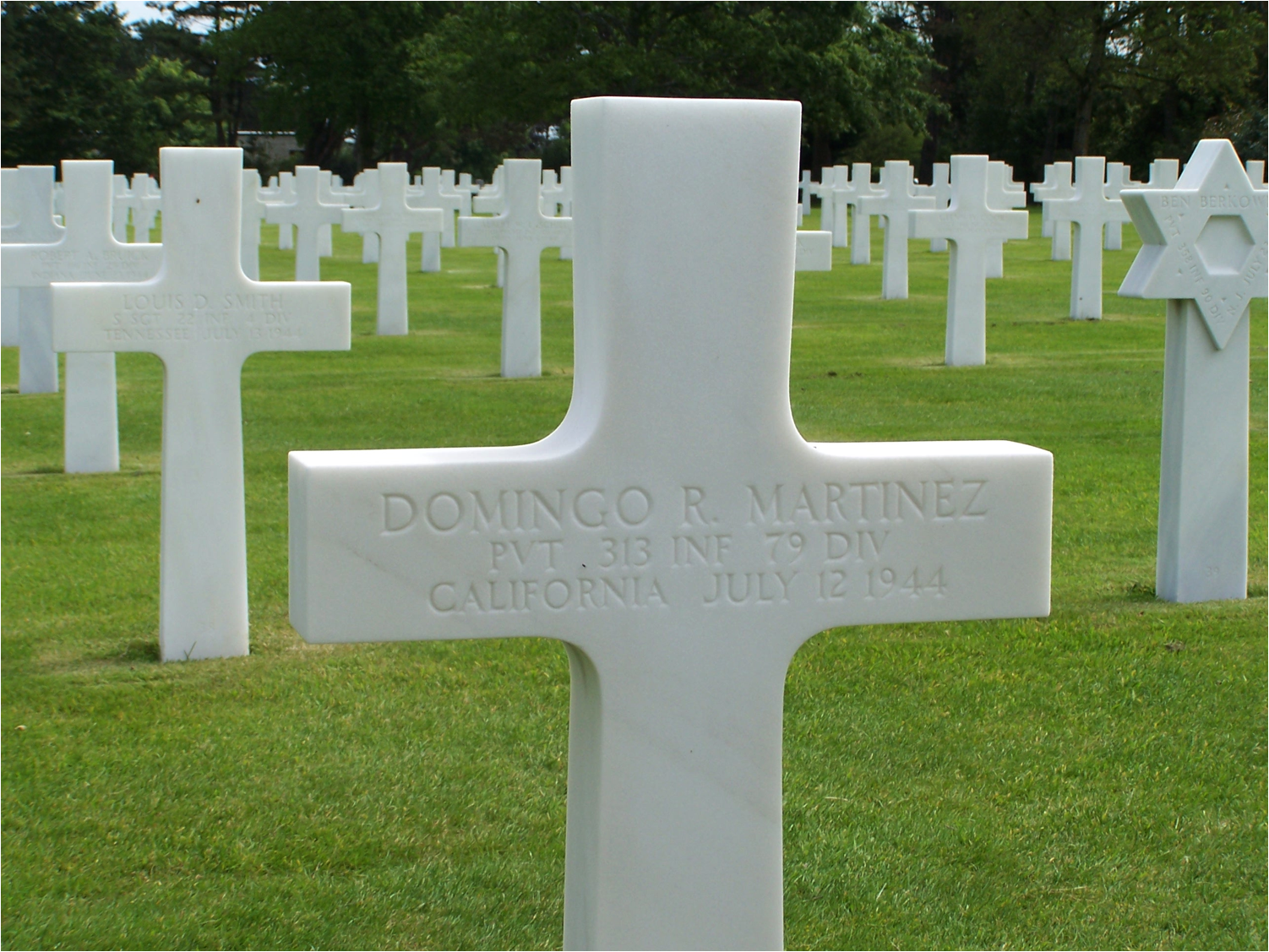
–The farmworker fought in Normandy with the 79th Division to secure Cherbourg. His regiment then fought through the hedgerow country, the death-traps of the bocage, and then helped to seize the heights above a key crossroads town, Le Haye de Puits. SS-Panzer units launched a counterattack on his regiment’s position and it failed. The Americans defeated some of the most hardened and motivated soldiers in the German Army, then, took the town the next day in house-to-house fighting. He died after this battle, when the 79th Division was pulled back off the front line for rest, in a chance encounter with German troops. His name is Domingo Martinez.

–The Filipino-American mess attendant, the only rating to which a man like him could aspire to in the racist wartime Navy, wrote the funniest, most endearing letter a serviceman could write home. It was published in the Arroyo Grande Herald Recorder, and it was the kind of letter that made you wish you had known him. Three weeks after he wrote it, near Guadalcanal, a Japanese Long Lance torpedo blew the bow off his destroyer, “Walke.”  He died along with a third of the crew, including her captain, and many of them died in the water. They survived the torpedo hit but were killed by the concussion of “Walke’s” depth charges as they tumbled to the bottom of Ironbottom Sound.  His name is Felix Estibal.

–Before the war, he worked at the E.C. Loomis feed store, one of the last of a string of children of parents who came from the Azores.  He supported his wife and helped to support his mother, and since he worked for the Loomises, he would have known virtually everybody in Arroyo Grande–population 1,090–and they would have known him. He served in a tank destroyer company in France–big tanks with 90 mm cannon that equaled or even bettered the German 88mm gun and the superb armor of their tanks.  On Nov. 27, 1944, his company fought off a furious German assault. The Germans brought superior numbers to the little town of Falck, but the Americans bloodied them and turned them back.  On the next day, his company advanced to another objective when the lead tank ran into a ditch, a German round knocked the tread off a second, and the whole column, stalled, was destroyed. Everything that could go wrong did. His name is Frank Gularte.

–And you will meet a 20-year-old Marine who died as a replacement on Iwo Jima among veterans who did not welcome him and did not want him.  His total combat experience in the Second World War was, at most, 48 hours. He died 48 hours before he turned 21 years old.  His name is Louis Brown.

It strikes me that what kills men most often in warfare is not glorious bayonet charges but mistakes, in inferior equipment, in misguided orders, in inexperience, and, most of all, because of mistakes on which nothing can be blamed.  They are fate.

Maybe it’s a different kind of fate that led me to write this book.

When you research men like these something powerful happens.  They are of my father’s generation, but the more I get to know them, the more they become my sons.

I miss men I have never met.

Their deaths may seem to have been impersonal and illogical, but they have great meaning. Here is why.

I am amazed at the way the young men and women who survived the war came home and put themselves back to work.

They built schools, started Babe Ruth leagues and Boy Scout troops, ran for office, started hardware stores, incorporated a hometown bank, and poured everything they had into my generation to make sure our lives were safe, to make sure our stomachs were full, to inculcate in us the need to get a good education and the desire to make something of our lives.

It is no coincidence that I grew up loving Arroyo Grande. When my family moved here in 1952, the veterans of World War II had already prepared a home for me.

They worked so hard, I think, because they knew that’s what Jack Scruggs, Clarence Ballagh, Domingo Martinez, Felix Estibal, Frank Gularte, and Louis Brown would have done, too.

The generation, raised in depression and in war, to whom we owe so much, would not allow themselves to rest until they had paid their debt to the men who would never see the Arroyo Grande Valley again.

Modern Conveniences. Bosh.

23 Saturday Aug 2014

Posted by ag1970 in American History, California history, Family history

≈ Leave a comment

Slide1

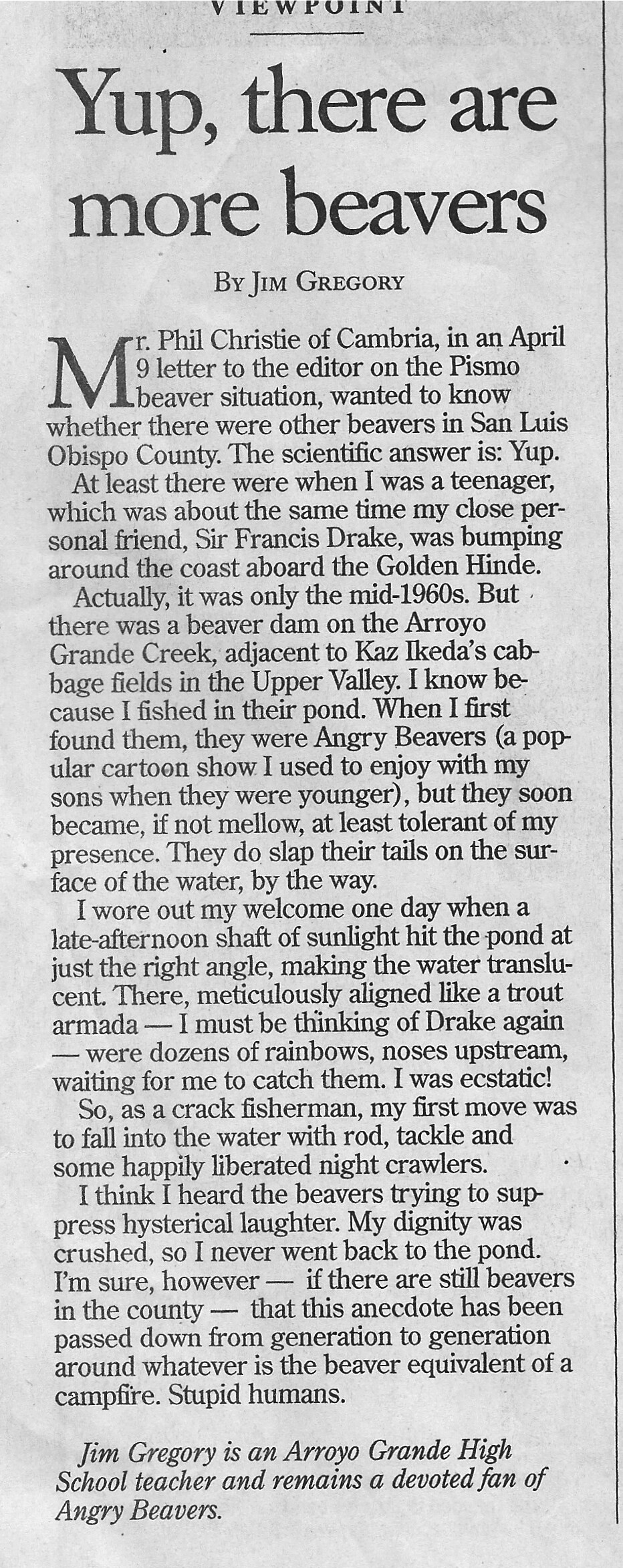
About Beavers

23 Saturday Aug 2014

Posted by ag1970 in California history, Personal memoirs

≈ Leave a comment

ww2 1

Image

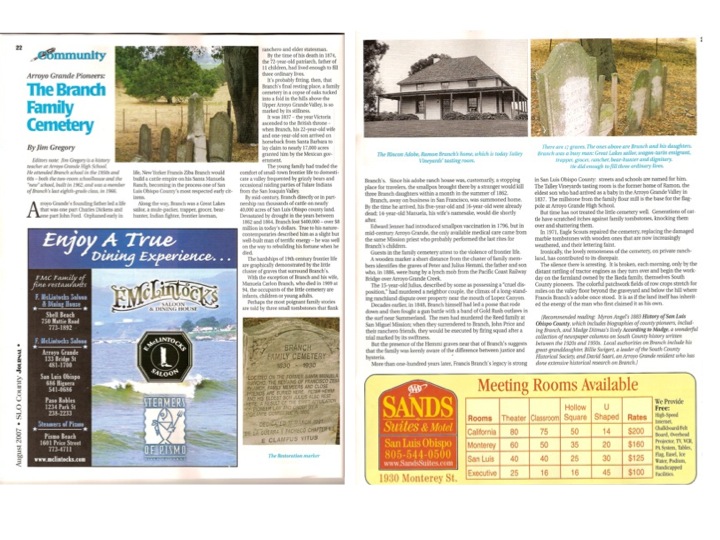
The Pioneers, from SLO Journal Plus magazine

23 Saturday Aug 2014

The Branch Family Cemetery

Posted by ag1970 | Filed under American History, California history, Uncategorized

≈ Leave a comment

Image

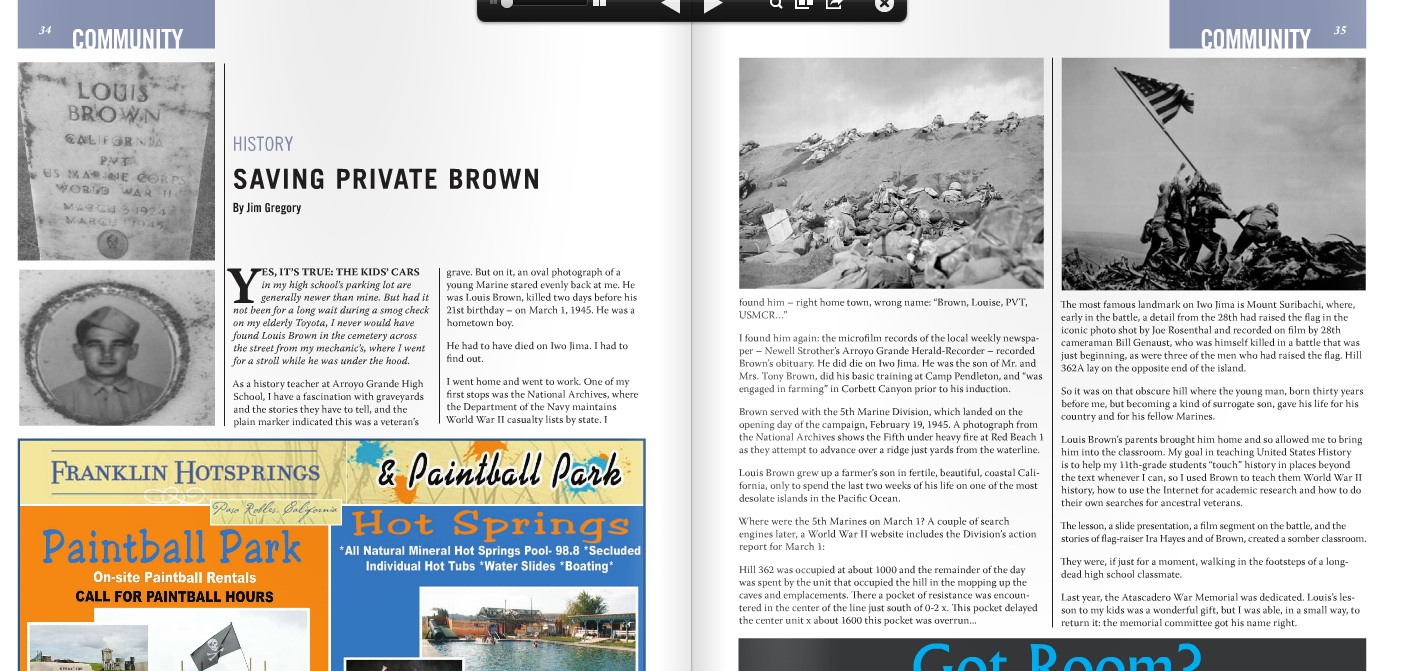
An Arroyo Grande Marine on Iwo Jima, from SLO Journal Plus Magazine

23 Saturday Aug 2014

An Arroyo Grande Marine at Iwo Jima

Posted by ag1970 | Filed under American History, California history, World War II

≈ Leave a comment

Image

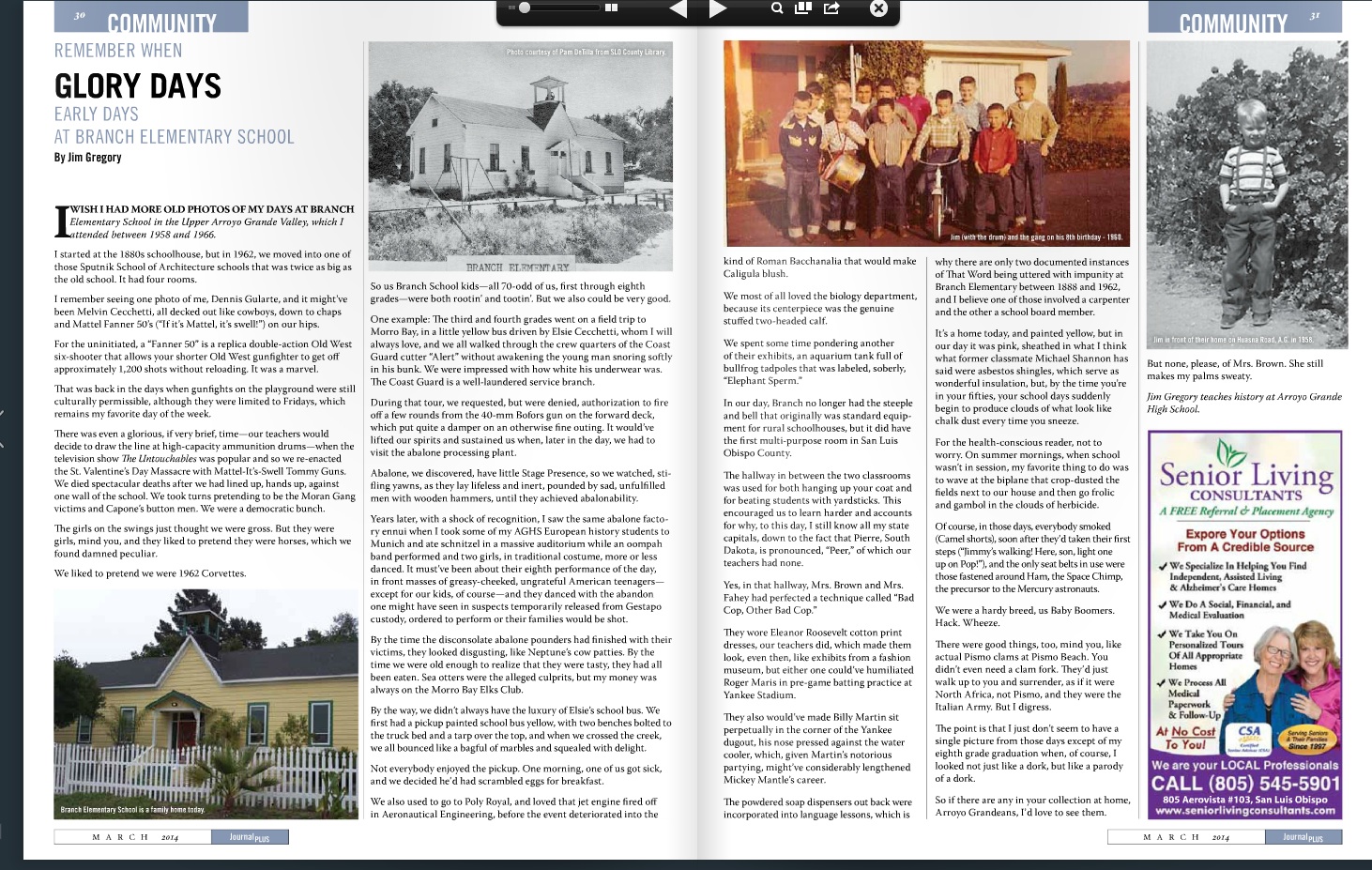
Branch Elementary, from SLO Journal Plus magazine

23 Saturday Aug 2014

Glory Days at Branch Elementary

Posted by ag1970 | Filed under American History, California history, Personal memoirs, Teaching

≈ Leave a comment

Arroyo Grande after Pearl Harbor

08 Friday Aug 2014

Posted by ag1970 in American History, California history, World War II

≈ Leave a comment


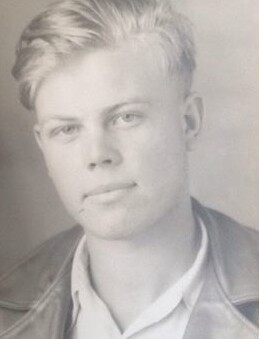
Will Tarwater as a young Arroyo Grandean

Will Tarwater as a young Arroyo Grandean

What happened the morning of December 7 reached Arroyo Grande at 11:30 a.m., when, for many townspeople, it was a quiet time: they might have been listening to classical music, interrupted by the news bulletin, while they read a Sunday paper from San Francisco or Los Angeles, and waiting for the big lunch that, for many American families, was as traditional as Sunday church services

For Juzo Ikeda’s children, that would have meant services at the Arroyo Grande First United Methodist Church where, three years earlier, in a foreshadowing of the suffering that was to come, Japanese-American members of the church had donated a painting of Christ in Gethsemane, struggling with the fear he felt as the Temple Guard was on its way to arrest him.

It is said that many Americans had to find an atlas to locate Hawaii; even the announcer in one of the initial broadcasts pronounced the island where Arizona burned, Oklahoma had capsized, and where 160 warplanes were destroyed on the ground as “Owahoo.”

Will Tarwater, whose family ranched in the Huasna Valley and who spent a career as a Border Patrol agent—a career that you learn, once you get to know him, has deepened in him an innate sense of justice and compassion—remembers being in town with his father and being “completely shocked. It was beyond our understanding. Bewildered! We went home and turned on the radio to hear more. Still could not make any sense of it.”

A little more than an hour after the first radio broadcast, San Luis Obispo Tribune photographer and archivist David Middlecamp writes, the fire siren in the county seat to the north of Arroyo Grande—affectionately called “Ferdinand”—began to wail. This was the summons for 40th Division soldiers, in training at Camp San Luis Obispo, to return immediately to base. County Sheriff Murray Hathaway dispatched extra deputies to Union oil storage facilities on the other side of town and the company itself provided extra security for Avila Beach and Estero (Morro) Bay. The newspaper rushed a Sunday edition to print—the first, Middlecamp notes, in decades—when it became apparent that the Philippines were under attack, as well. Tarwater remembered both that Sunday edition and the size of its headlines seven decades later.

The next day, he and his classmates at Arroyo Grande Union High School gathered in their new gymnasium—a New Deal WPA work project that still serves as the Paulding Middle School gym today—to listen to Franklin Roosevelt’s brief but dramatic address asking Congress for a declaration of war. By December 8, the initial disbelief that news of the attack generated had been replaced by growing fear.

FBI agents descended on the Valley that day. They began to collect the heads of the farm families. Shigechika Kobara was an important target because of his leadership in the Japanese-American community: he would spend the following days in the county jail, then in Army custody, before being reunited with his family in the Arizona desert. Juzo Ikeda would have faced the same fate, but he’d broken his neck in a farm accident and was helpless, watched over by his son, Kaz, who would be allowed to stay behind while the rest of the Ikeda family was sent to the Central Valley. The agents somehow missed another prominent man, Yeiji Hayashi, which was a relief to his 15-year-old son, Haruo, because it would be his father’s stoic strength that would keep the family together in the months to come.

This is when the rumors began–rumors that Will Tarwater refused to believe, since one of his closest friends was classmate Ben Dohi, in a high school where 25 of the 69 members of the class of 1942 were Americans of Japanese descent.

After Pearl Harbor, rumor mills had a heyday about it.   All kinds of wild rumors about everything: a large farmhouse off Halcyon near the highway had a basement full of guns! Another house had a secret room full of short-wave radios and they were in constant contact with Tokyo…on and on. It seemed like someone was trying to turn us against our neighbors. Most of us couldn’t buy it. We had grown up with them.

Haruo Hayashi, a sophomore at the high school, had grown up with three friends who meant a lot to him:  John Loomis, Gordon Bennett and Don Gullickson.  The three would stand by him when he returned to school–he’d listened to the news of Pearl Harbor on the radio while recuperating from an appendectomy, and had to wait another week not knowing how he’d be received by his classmates.  His three friends–two would go on to fight the Japanese at Pelelieu and Okinawa, would write letttters to Haruo in his internment  not the name of a tough Italian-American kid who told Haruo “I will personally at the shit out of any kid who calls you a ‘Jap.”” would be the friends who continued to write letters to Haruo in his internment Their friendship was not uiversal:  some classmates called Haruo a “Jap.” He has forgotten their

But beyond the little high school on Crown Hill, the fear hardened two weeks after the attack. The war arrived offshore. One story I heard growing up, though I’ve never been able to confirm it, has a housewife in the lovely seaside community of Shell Beach, about five minutes north of Arroyo Grande, looking out her picture window for a picture-postcard view of the Pacific, then freezing in horror when a the shaft of a submarine’s periscope appeared where she might have preferred the spout of an migrating grey whale instead.
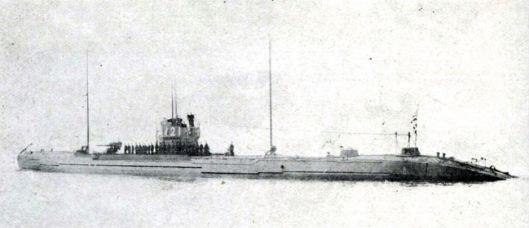
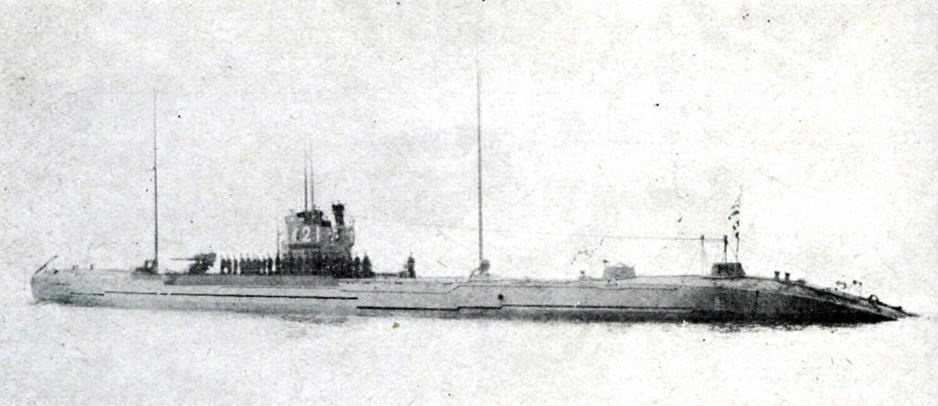
I-21

I-21

It is a plausible story: The Imperial Japanese navy had positioned nine submarines, or I-boats, all along the West Coast. One of them, I-21 had, on the morning of December 22, fired a torpedo that missed its target, an oil tanker, off Point Arguello, about 45 miles south of Arroyo Grande, and her captain, Kenji Matsumura, headed north in search of targets of opportunity. He would have passed Shell Beach on his way to another frustrating encounter, when his boat failed to sink the tanker Larry Doheny off the north coast of the county, despite an attack in which he fired another torpedo and opened fire with I-21’s deck gun.

Matsumura found a third target in the little tanker Montebello off another coastal town, Cambria, farther north, but this time, the result was more satisfying for him: at 5:45 a.m. on December 23, he fired two torpedoes and this time one hit; I-21 surfaced and opened fire with her gun—its report could be heard inland by residents of Atascadero, 26 miles away—and although her crew escaped, Montebello went under 45 minutes after the attack had begun.

Within weeks, I-21 was patrolling the coast of Australia, would later shell Sydney Harbor, and would be lost with all hands near Tarawa in 1943: Matsumura and his crew are ample demonstration of why this is called a “world” war.

Three days later, the Arroyo Grande Herald-Recorder reported that a 22-year-old sailor, Wayne Morgan, had been killed at Pearl Harbor. Arroyo Grande residents would find out much later that Morgan, who went to grammar school and graduated from the high school here, had died, like Jack Scruggs, on the U.S.S. Arizona.

So he surreal shock of Pearl Harbor, followed by the I-21’s attacks just off the coast, generated the kind of fear seen at its most extreme in “The Battle of Los Angeles” the following February, where anti-aircraft batteries, aided by an array of searchlights, opened fire on an air attack that never existed.

Californians’ fears far outweighed reason: in 1942, Japanese I-boats would sink four ships off the West Coast, while German U-boats sank 70 ships off North Carolina’s Outer Banks alone, when Americans from Fire Island to Miami Beach could watch as doomed American merchantmen—and their crews– burned offshore.

It was time, some began to say, to get the Japanese out—away, at least, from the coast, where they were suspected of Fifth Column activities like those in the wild rumors Will Tarwater had sense enough to doubt. When a Mutual Broadcasting commentator named John B. Hughes advocated the removal of the Japanese in a January 1942 broadcast, he was flooded with letters of support.

One came from a woman in Guadalupe, a little town just south of Arroyo Grande:

Today’s (broadcast) really came close to home.We live near this small town where nearly one half are Japs. They farm all the best land and pay outrageous prices per acre, such as $45 or $50, and live in a shack to do it. Besides [they] own the theatre, half the garages and just about run this town…really, this is no country for such people.

A woman from San Luis Obispo, north of Arroyo Grande, agrees.

…We want to congratulate you on the stand you are taking towards the Japs.  We wish there were more like you. We have lived in and around San Luis Obispo all our lives and have seen enough of the Japs to know that our races can never mix.

A local businessman:

I have talked to many people around the Arroyo Grande Valley…and the Japs farm two thirds of the best valley land and own 10% of it now, and every one of them are of the same opinion that now is the time to put the screws to the Japs before it is too late.

None of the letters, brimming with envy, cited the Japanese as a threat to national defense. But it would not be long until, indeed, the screws were put to them.

They would be applied by the President of the United States on February 19, 1942. Even before Pearl Harbor, as the superb historian Lynne Olson notes in her book about the president’s struggle with isolationists, Those Angry Days, the fall o2f France, Britain’s struggle under the Blitz, the efforts of lobbyists for Britain and, finally, the wiretaps he had authorized J. Edgar Hoover to place had all had a cumulative effect: on the President’s personality.  He no longer saw shades of gray.

Committed to defending the country, wounded by the devastation of his beloved Navy’s Pacific Fleet, and bolstered by public opinion that seemed to support those who wrote letters to John B. Hughes, he overrode his own Justice Department, which disputed Executive Order 9066’s constitutionality, and ordered the Western Defense Command and General John deWitt to begin removing “persons of Japanese ancestry” from their homes near the Pacific and into distant internment camps.

FDR and his Secretary of War, Henry Stimson,  had picked the right man. DeWitt accepted his assignment—although any general might have preferred a combat command—with a sense of mission, and this is how he justified it:

 In the war in which we are now engaged racial affinities are not severed by migration. The Japanese race is an enemy race and while many second and third generation Japanese born on United State soil, possessed of United States citizenship, have become “Americanized,” the racial strains are undiluted.

DeWitt now took control of the lives of 120,000 Pacific Coast residents–the Issei, first-generation immigrants who were not allowed to become citizens under the Naturalization Act of 1790, and reaffirmed by the Supreme Court in 1922, which restricted that privilege to whites, and 70,000 Nisei, the second generation, by birth American citizens.

When the evacuation order came to San Luis Obispo County, the Defense Command gave San Luis Obispo County residents, according to Pat Nagano, a resident of the county’s north coast, ten days to put their affairs in order, dispose of their property—Nagano describes what we would call “yard sales” today—it was a buyer’s market: he remembers desperate families parting, for pennies, with the belongings symbolic of a lifetime of hard work, and each teapot, dinner table or easy chair taken away by triumphant buyers—they were like carrion birds—meant the memories attached to them were taken away, as well.

They tried to find homes for their pets, to say goodbye to those friends who were willing to talk to them, and some of Nagano’s one-time friends were not, and, finally, pack what remaining belongings the evacuation orders allowed.

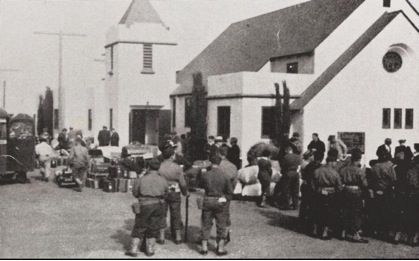
The buses came for them in the high school parking lot on Crown Hill in Arroyo Grande, and there was a poignant moment when the local Women’s Club brought box lunches for their neighbors as they waited to board. Will Tarwater remembered, too, a long line of farmer’s trucks that followed the buses inland; they must have looked almost exactly like the trucks that had brought farmers stricken by the Dust Bowl to California. So Tarwater lost his friend, Ben Dohi–a man whose family still farms the Lower Arroyo Grande Valley–on a day important to every local boy: it was the day before trout season opened.
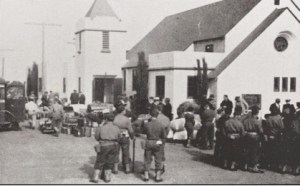
Evacuees in Santa Maria, south of Arroyo Grande, prepare to board the buses that will take them to Tulare on April 30, 1942.

Evacuees in Santa Maria, south of Arroyo Grande, prepare to board the buses that will take them to Tulare on April 30, 1942.

Not all Californians would be as charitable as the Arroyo Grande Women’s Club: some would soon begin to loot now-vacant farms and farmhouses, and sometimes, in little farm towns throughout California, they would burn the houses, tractor sheds and barns after they had taken everything of the remotest value.

The parents of one young Nisei, George Nakamura, would be among the families who would lose their farms, and, like the others, the Nakamuras would lose also almost everything else they owned. Now, in April 1942, the remains of their lives were packed in the suitcase stowed in the belly of the bus or under tarpaulins in the trucks that followed the buses. On their suitcases the families had painted their names–‘S KOBARA 14440″– in white letters that remind you of the abandoned luggage on display at Auschwitz.

Some two hundred residents boarded the buses for the long ride away from the coast and the land some of them had been farming for forty years. The convoy of buses pulled out of the Arroyo Grande Union High School parking lot and took them to Tulare, California.

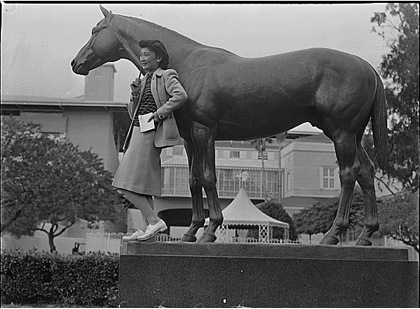
Tulare was among several temporary camps throughout California. One of the most notorious was at the Santa Anita racetrack, where the people who were now essentially refugees slept in horse stalls. One memorable photograph at the Santa Anita center shows a young Nisei woman posing, cheerfully and almost defiantly, beside the statue of the champion of underdogs like herself, Seabiscuit.

santa anita

The Nakamuras and their neighbors would endure a long, dispiriting bus ride over the hills of the Coast Range and into the vast, flat, and sometimes colorless interior of California where, they would be among the first arrivals as the camp opened on April 27—at its largest, 5,000 internees lived here—on a site that had been used for the county fair before the war.

What happened there in the space of five months is extraordinary The Tulare camp produced a newspaper that buzzes with news from the schools established there, features advice columns and an extended sports section, including many stories written by George Nakamura, who had been a reporter on his Arroyo Grande high school paper, the Hi-Chatter, about men’s baseball and women’s softball leagues (Arroyo Grande’s teams were in first place in both), played in the oppressive summer heat typical of the Valley—complete with box scores and league standings.

The farewell edition of the remarkable Tulare News—32 issues were published between May and August of 1942—includes a heartfelt letter of thanks from the Tulare Center’s director, Nils Aanonsen, who is remembered as a compassionate man who defied the army and tried to turn over management of the camp to leaders elected by the internees. It paints an optimistic picture, thanks to an article from a travel magazine, about their ultimate destination.

01

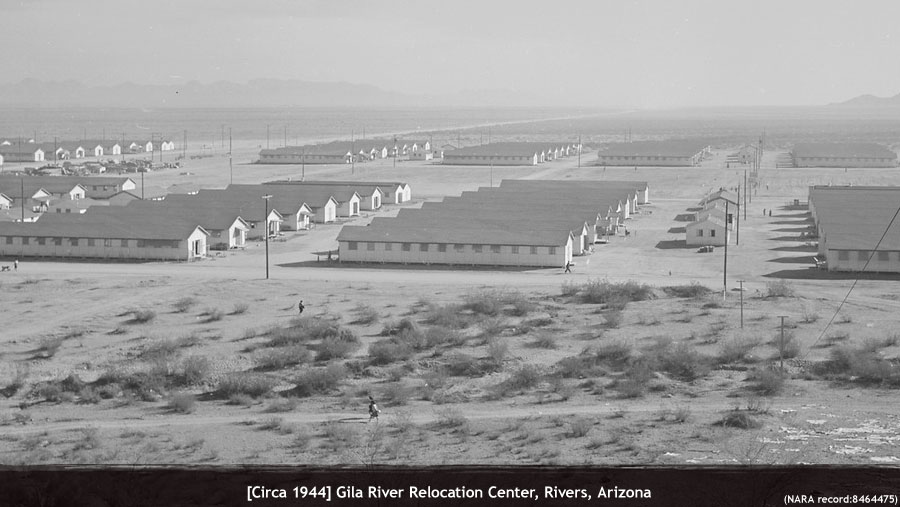
That was a camp on reservation land at Gila River, Arizona. When Nakumura and his family arrived and he saw what a desolate place it was, the first thing he did was to get the hell out. He was in a group of 32 young men were the first to leave Gila River for the comparative comfort of the United States Army. By the war’s end, 22 young men from the Gila River camp would be killed in action. while their families endured overcrowding—until additional barracks were added, some had to sleep in mess halls and even latrines—dust storms, rattlesnakes, and more: an internee learned to rap her shoe on the barracks floor in the morning before putting it on, to induce the scorpion inside to leave.

George Nakumura’s Army aptitude tests immediately impressed the Brass. He was brilliant and
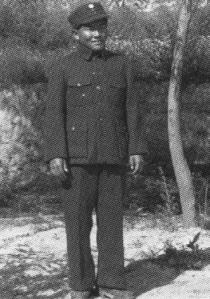
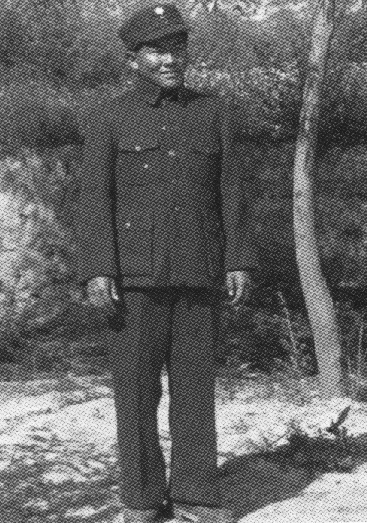
Nakamura in China, 1944 or 1945.

Nakamura in China, 1944 or 1945.

he was fluent in Japanese, so he became an Army Intelligence officer. He was assigned, as its youngest member, to what the Army called “The Dixie Mission:” Nakamura was one of a group of officers who, in 1944, were inserted into the hills of Yenan, where they would assist the Chinese in intelligence gathering as they resisted the Imperial Japanese Army and their brutal counterintelligence arm, the military police, the Kempeitai.

From his base with a group of Chinese resistance fighters, Nakumura and his fellow Americans

joined on intelligence-gathering missions: Nakamura would act as translator in the interrogation of Japanese soldiers captured on some of them, but on one mission, he went alone. He would win the Bronze Star for the daring rescue of a downed American pilot.

His Chinese hosts in their remote camp grew to like this Arroyo Grande soldier so much that, on his 21st birthday, they threw him a party. There were toasts and even a little dancing.

At the Chinese soldier-leader’s insistence, his young wife, named Jiang, took a turn dancing with Nakamura: they tried, perhaps, a fox-trot. She had been an actress before the War, and so was a woman of culture.

The young American officer would, after the war, get his Master’s Degree in International Relations from Columbia University, which suggests he might not have been such a bad dance partner for the boss’s wife

She would be reviled someday—in fact, in the many twists and turns that twentieth-century Chinese history took. the last two decades turned against Jiang. In 1981, the Communist government would put her on trial for her life, a trial where she was repeatedly mocked and insulted. In the peculiar Chinese dialect that is the language of the Party, she became “The White-Boned Demon.”
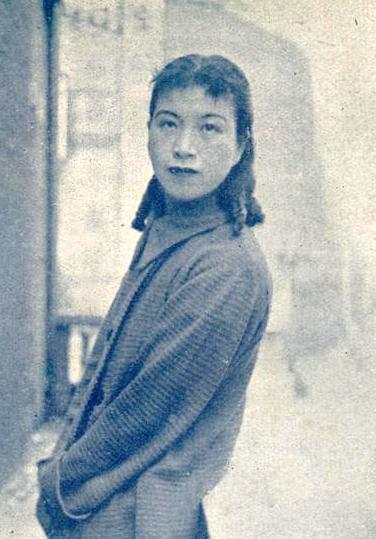
Young Jiang Qing

Young Jiang Qing

Jiang, in return, was defiant and supremely contemptuous of her accusers. She was fully aware that she was the star of a televised version of what was essentially a Stalinist show trial, and she was determined to do a star turn.

Her fiery defense was irrelevant, of course, and so Jiang was sentenced to be executed but, because of her husband’s influence, still potent even after his death, she would not be shot. The court instead handed down a life sentence for her membership in the “Gang of Four,” those accused of helping to conceive and carry out the disastrous 1968 Cultural Revolution. She would commit suicide in prison in 1991.

For almost forty years before that ignominious end to her long life, Jiang would become known universally by what was essentially her stage name in a role she relished more than any, for it was easily the role of a lifetime:

George Nakamura’s dance partner on his 21st birthday was Madame Mao.

Nakamura would live a long life, too, but his would be a happier one. He would finish his army career in Japan, where he served, after the war, as an interpreter for MacArthur’s occupation—some call it the vainglorious general’s shogunate, after the 300-year military dictatorship of the Tokugawa clan, ended in 1867 by the restoration of the Meiji Emperor. It would be the Meiji government that would dispatch American labor contractors to hard-pressed farmers in Kyushu, and it was those contractors and their persuasive powers that would bring families like Nakamura’s to the Arroyo Grande Valley.

The course of Nakamura’s life would, ironically, take him in the opposite direction. After finishing Columbia, he would return to Japan, where he lived for thirty years in Tokyo as the East Asian manager of a large American electronics firm and as the head of a management consulting company. He and his wife retired to Hawaii, then moved to Texas to be closer to their grandchildren

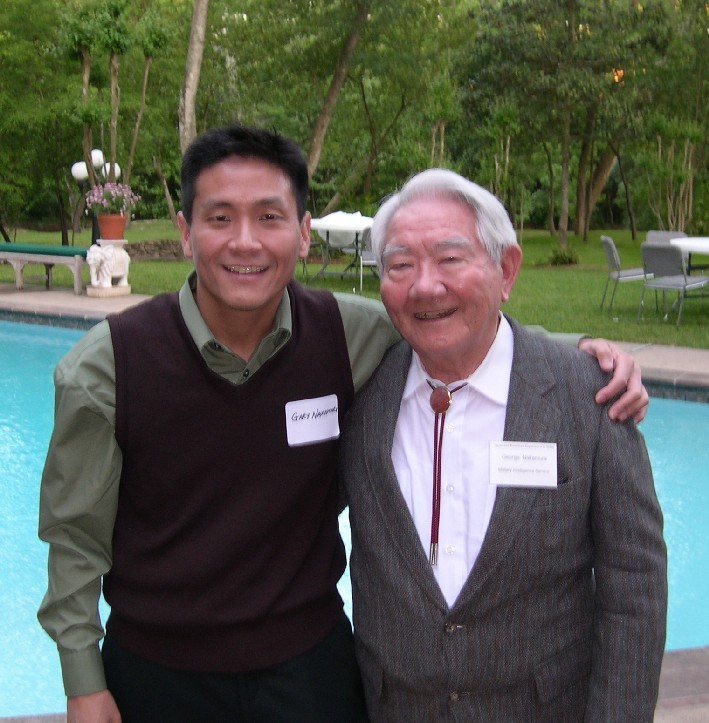
He died there at 90, in early 2014, and his obituary justifiably praises him—in his last years, President Barack Obama would sign a bill that would add the Presidential Medal of Freedom to the many honors George Nakamura earned in a long, productive and cosmopolitan lifetime. After it had ended, Gary Nakamura would visit the Arroyo Grande cemetery with his father’s ashes. It was in April, the same month when, in 1942, the buses had stood waiting in the high school parking lot, and now his Dad had come home.
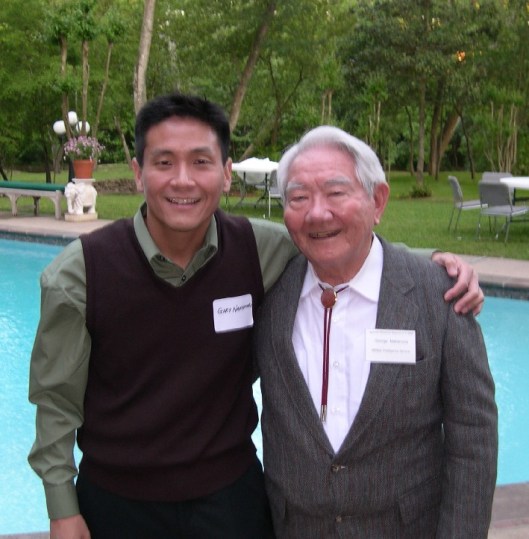
George I. Nakamura and his grandson, Gary, in 2005.

George I. Nakamura and his son, Gary, in 2005.
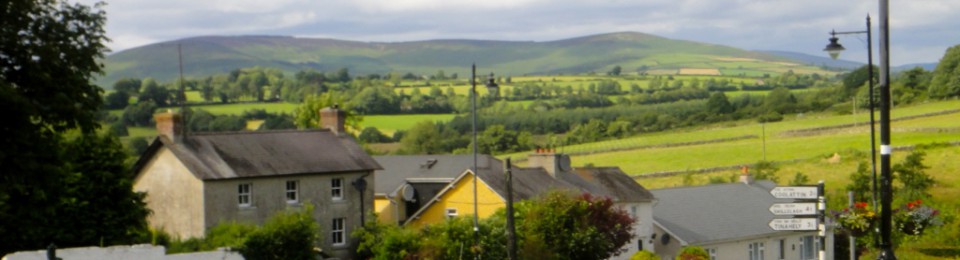
 

Pvt. Martinez

Featured

Posted by ag1970 in American History, California history, World War II

≈ Leave a comment

Martinez


It is difficult to imagine Normandy in 1944; it is a beautiful place today, as are its people: a simple bonjour earns an American tourist a  smile of appreciation, and the little villages are lovely, separated by pastures and farm fields, each with its distinctive little parish church. During the Middle Ages, as the skilled writer and Francophile Graham Robb notes, few villagers ever went beyond the sound of their parish church’s bells. The world beyond was like the ends of the earth.

It is not the ends of the earth, but the D-Day beaches are 5,500 miles away from the Arroyo Grande Valley. Three local men, killed in the campaign to capture and then and break free from Normandy, are buried at the American Cemetery at Colleville-sur-Mer, an almost impossibly beautiful place above Omaha Beach.

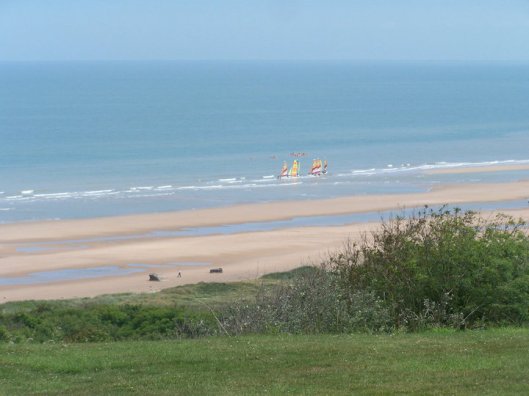
Below the cemetery, just offshore, a visitor today can see young men as they should be—exuberant and free– as they race tiny sailboats, their sails bright oranges and reds, just beyond the surf line, where on June 6, young men floated like dead leaves on the water’s surface. The invasion of Hitler’s Europe nearly failed here. It didn’t, but only because of an American generation that includes those who still hold the high ground at Colleville-sur-Mer.


wpid-36189_1493079010696_3236651_n.jpg

Omaha Beach today.


Up there, on the immaculate cemetery grounds, and not far from a famous American—the ebullient and popular Gen. Theodore Roosevelt Jr., felled by a massive heart attack soon after the invasion– lies a soldier as far removed from the Roosevelts’ patrician (if rambunctious) Oyster Bay home as a human being can be, in terms of both distance and social class.

He was a farm worker, Pvt. Domingo Martinez: Plot C, Row 13, Grave 38. Martinez is the soldier who more than likely knew the bean-stakes and the smell of sweet peas of prewar Arroyo Grande. The best that can be said is “more than likely:” the Arroyo Grande Valley is where a farm worker, as he’s listed in his 1943 Army enlistment records, would have found a job, or a series of jobs, following different harvests, and migrant farm workers are elusive for both historians and for census-takers.

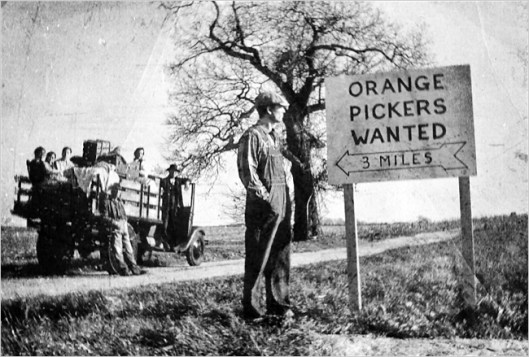
Domingo may even have been double-counted in the 1940 Census; there are two “Domingo R. Martinez” entries, both from New Mexico; one is living in San Miguel County, hit hard and recovering from the Dust Bowl; he is living with his father, Fulgencio; his mother is deceased. But a second Domingo R. Martinez, also originally from New Mexico, is counted in the same census, and in California. He is living in Redlands, picking oranges, with a man named Thomas listed as his father, and Thomas is married to Aliga Martinez.


grapes2


They must be different men. But “Aliga” Martinez is listed as “Aleja” in a postwar Redlands City Directory, and it is Aleja who will file the 1946 request for the marble cross that marks Domingo’s grave at Colleville-sur-Mer. The form lists Redlands as her hometown.

It is the measure of a poor man’s life: researchers can’t be certain of where he lived when the war broke out. They know exactly where he died.

Two more soldiers, city boys compared to Martinez, are honored here at the American Cemetery, both from the county seat just to the north, An artillery officer. 2nd Lt. Claude Newlin, from San Luis Obispo, is buried here. Ironically, Newlin’s battalion, attached to the 35th Infantry Division, had spent a year training at the camp just north of his home town. Newlin had survived some of the costliest fighting of the campaign, near St. Lo, only to die hours before the 35th broke out of Normandy to join George Patton’s breath-taking race across France to Metz and the German frontier.


4154150_f496

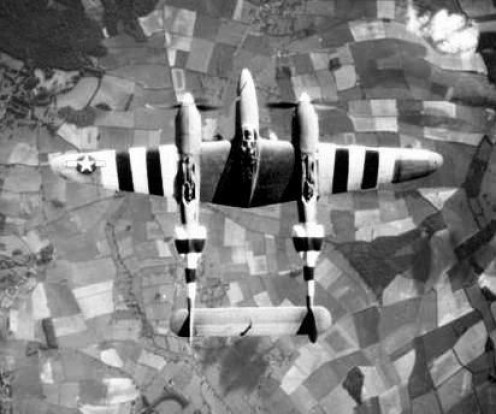
Lt. Jack Langston’s fighter would have looked like this P-38, with is distinctive D-Day identification stripes.


For another San Luis Obispo soldier, an airman, there is a memorial, but no grave. On June 22, 2nd Lt. Jack Langston was flying his P-38 in a low-level attack on Cherbourg with his 367th Fighter Squadron when that city demonstrated the folly of ordering low-level attacks. Langston died that day with four other 367th pilots. His body was never found.

The farm worker, Pvt. Martinez, 26 years old, born and raised in New Mexico, now a Californian, found himself  in the streets of Cherbourg in June 1944, far below the speeding fighter planes. Martinez was fighting with the 313th Regiment of the 79th Infantry Division, the “Cross of Lorraine Division”–their unit symbol had been St. Joan’s–and the 79th had seen hard fighting in France before, in 1918.

They were sent into action near Cherbourg soon after landing on Utah Beach, and they fought their way into the heart of the port city–a port the Allies would need, because a capricious Channel storm destroyed the “Mulberry,” the artificial harbor built off Omaha. The Allied armies in France therefore faced an enormous supply problem. They needed a port to help feed, arm, and fuel the growing numbers of Allied solders in France. For the Allied command, SHAEF, Cherbourg was critical.

It was also difficult to take. Its bristling anti-aircraft defenses would claim Jack Langston. Massive coastal batteries could keep naval support for the Americans at bay, and the city’s Wehrmacht defenders, though not elite troops (20% of them were non-German conscripts) were securely dug in and they had nowhere to go, for they were backed into a corner of France, and so isolated that the only alternative to fighting was to leap into the sea.

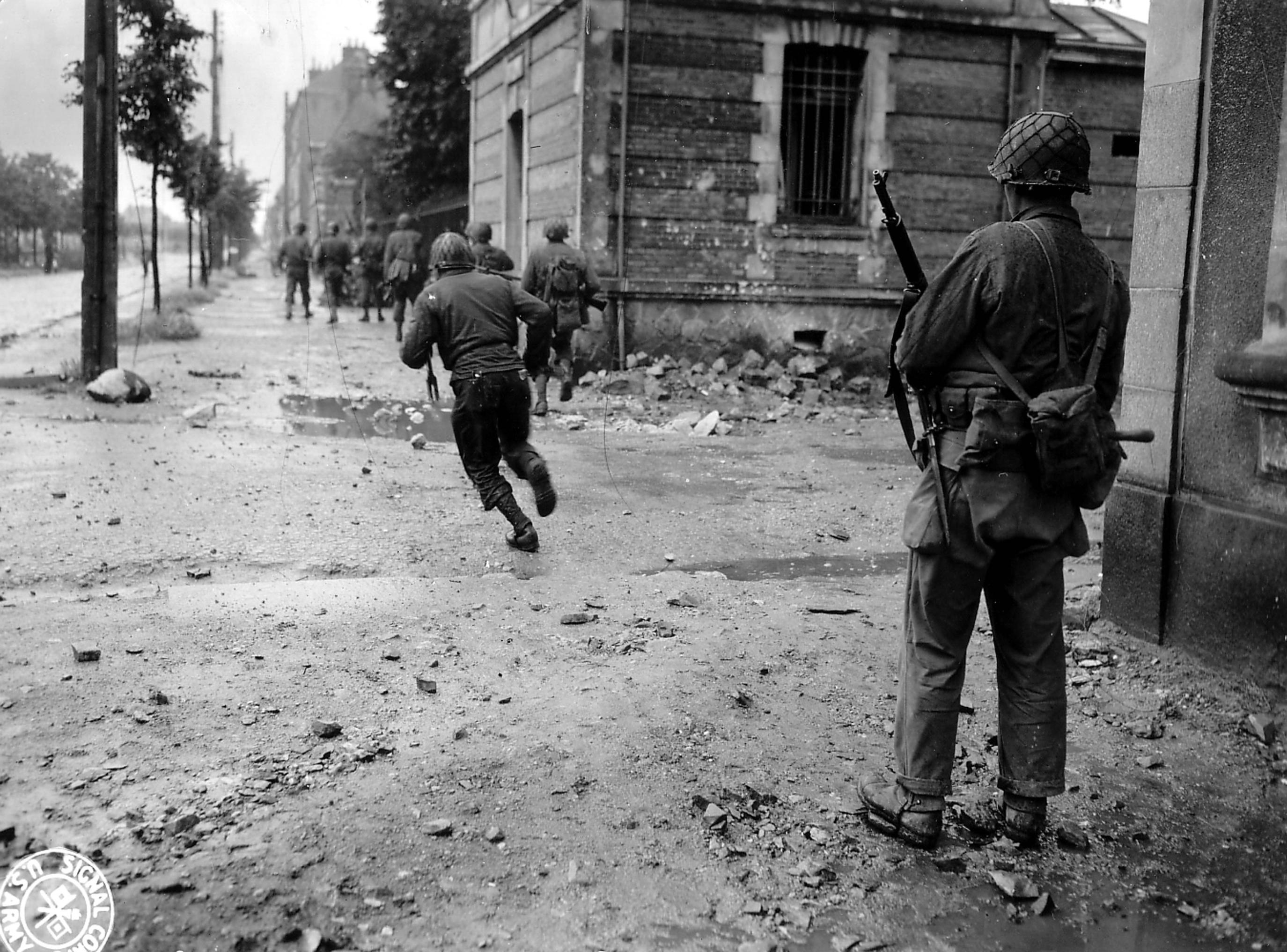
Once they’d gotten inside Cherbourg, G.I.’s learned to hate street fighting almost instantly. Death came instantly from illusory shadows that a fallen G.I.’s comrades never saw, and from gunfire they sometimes never heard. In peacetime, a French city block can be melodious with the sounds of cafe music or the singing of children at play. In combat, the same block, seemingly empty, can muffle the report of a sniper’s rifle or generate echoes that make soldiers look anxiously in every direction at once.


Street fighting, Cherbourg. These G.I.'s are from Martinez's 79th Division.

Street fighting, Cherbourg. These G.I.’s are from Martinez’s 79th Division.


It would be the 79th that would capture the fortress that dominated the city on June 26. Its commander surrendered three days later. Military historian John C . McManus notes that the men of the 79th that day were filthy, exhausted, and bearded, “like burlesque tramps,’ as one soldier said.  They got little rest. The division quickly shifted from urban combat to a drive through the farms and villages of the Cotentin Peninsula.

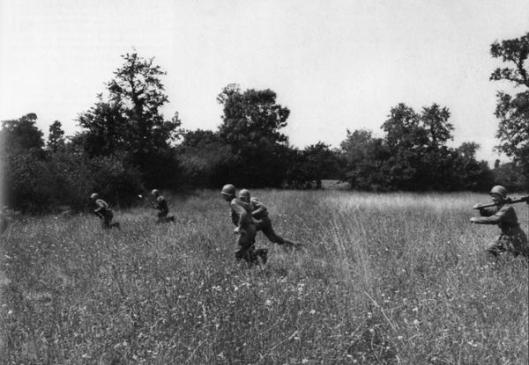
Now, American ground forces in Normandy faced a new, even more difficult challenge. Three weeks after D-Day, they had fallen far short of the objectives set for them by Allied planners and the staff officers working furiously over maps in Gen. Omar Bradley’s custom command trailer. The offensive in the Cotentin stalled in great part because the Germans had the advantage of fighting defensively, in the bocage, the Norman hedgerows, and they winnowed units like the 79th down.


NM5204

79th Division GIs sprint across a field bound by hedgerows.


The hedgerows enclosed fields plowed since Agincourt, or pasturage for fat Norman cows, and were a hopscotch of natural fortresses—roots and compacted earth had formed defensible walls.  The G.I.’s had to assault them, one by one, to try to root the defenders out.

When G.I.’s broke through a hedge and entered a field, the superb German machine gun, the MG42, hidden in the next hedge beyond, or positioned on the Americans’ flanks, annihilated entire rifle squads. It fired so rapidly that a burst sounded like canvas ripping.  Army films had incorporated the sound to try to desensitize trainees.


NM5093

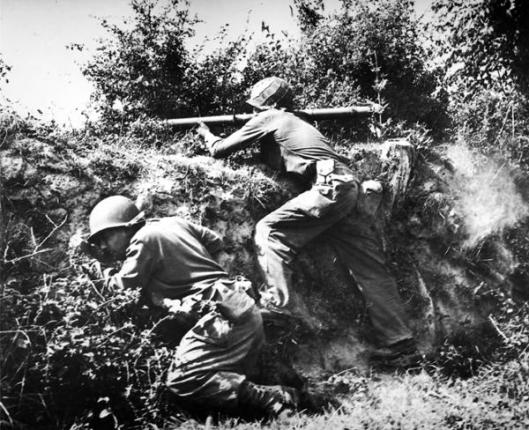
Fighting in the bocage:  A 79th infantryman fires a bazooka.


So the Americans could hear, but never see, in the tangle of the hedges, who was killing them so efficiently. The bocage quickly transformed G.I.s, with supreme indifference, into either hardened veterans or into statistics.

American soldiers, adaptive and imaginative, eventually would develop the tactics to overcome the kind of war the Germans fought in the bocage. For the 79th, in early July, what was beyond the hedgerows may have been worse. The Germans would not wait for them this time.  They would attack.  This came soon after the 79th, along with the 82nd Airborne and the 90th Infantry Divisions, seized, at great cost, several hills around a key crossroads, Le Haye du Puits.

This should have compelled the enemy to abandon the town. They didn’t. They attacked instead, on July 7, intent on destroying the 79th in their positions on a ridge above the town.  The German soldiers, including SS-Panzer units, attacked with great ferocity and with great courage. These were not garrison troops, but hardened and determined professionals. In a day of fighting that ended only at nightfall, the 79th stopped them. This was the turning point. On the next day, another day of street fighting, the Americans would capture Le Haye du Puits.


Le Haye de Puits

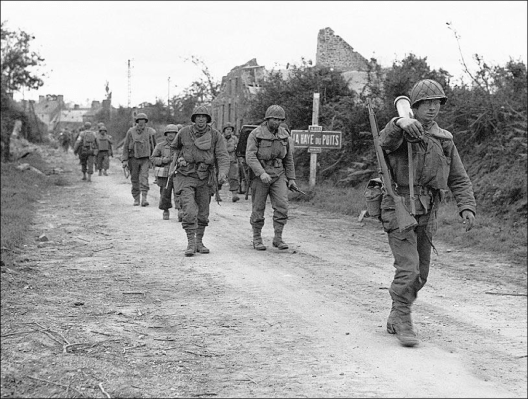
Le Haye du Puits is secured. The lead 79th division GI his carrying a mortar tube; one soldier behind him is carrying the mortar’s baseplate on his back.


Afterward, Signal Corps photographers attached to the 79th captured the images of some soldiers, like patrons arrived for their dinner reservation, enjoying a bottle of wine, sitting around a restaurant table set up on the street outside a partly-destroyed building; other photos reveal the faces of men as blank as those of sleepwalkers.  They are utterly worn out, used up,  by a month of ceaseless combat.


tumblr_n8xcs6euCD1rcoy9ro1_500

Le Haye du Puits, July 1944


Ironically, Domingo Martinez survived all this and was killed days later, after the division, including his 313th Regiment, had taken up defensive positions to regather itself. He died on July 12, near a village named Bolleville, and so would not experience the energy and the jubilation of the breakout from the bocage.

With the breakout at month’s end, the Americans would inexorably roll up the Germans, uncover Paris, and liberate the city in August, standing aside to let Free French units and their prickly commander, Gen. Leclerc, enter first. Leclerc would have been furious to learn that Ernest Hemingway and some of his camp followers had preceded him and they were, with great offensive spirit, but also with deteriorating unit cohesion, busy liberating the bar at the Ritz Hotel.


gal_artifacts_krations_03

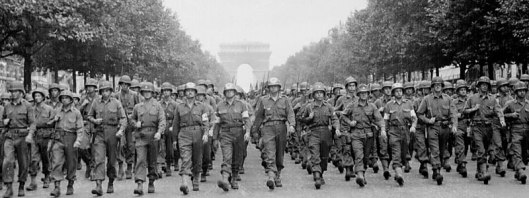
GI’s on parade, Paris, August 1944. These soldiers, from the 28th Infantry Division, marched directly out of Paris and back into combat.


It’s hard not to wish that Pvt. Martinez had been granted at least time enough to celebrate, as well.  And maybe, for a migrant farm worker and Dust Bowl refugee, even more time than that.

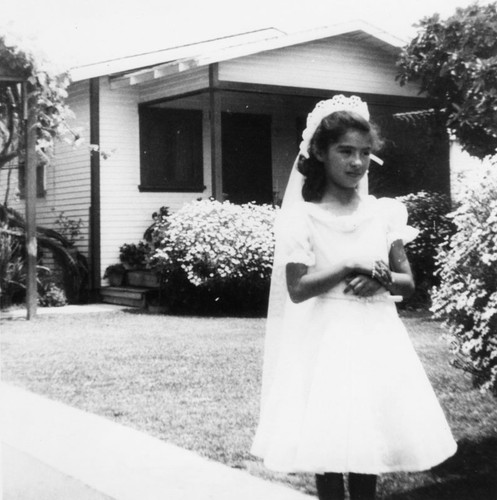
It is hard not to wish Domingo Martinez the time for a quiet talk with a little granddaughter. She is wearing a crisp white dress–it might be her First Communion– and wide-eyed and attentive, she is looking up at him while they are sitting, nestled together–she is feeling the wonderful safety that a grandfather’s love can provide– on the sofa. They are waiting together for the Sunday lunch his daughters are preparing after Mass, and he is telling the little girl about the five-day leave granted him that summer of 1944.


d8ce8cd1321cf29a626176be44aaf56a


He decided to visit Notre Dame. Once he’d entered the great church, he took his garrison cap off, crossed himself with holy water, and walked slowly down the nave, the silence pressing on his ears, past the clutter of the pews. There, delighted, he stopped and stood on a spot near the transept where he was suddenly bathed in brilliant, colored sunlight. This is the Rose Window’s gift to men and women of good faith.


stained_glass_rose_window_at_notre_dame_by_angela6331-d5pq0uy

Sopa, Sushi and Lumpias: Oh my!

27 Sunday Jul 2014

Posted by ag1970 in California history, Personal memoirs, Uncategorized

≈ Leave a comment


tomato soup bowlThere was a time that is gone forever when mothers would look at me accusingly. I would think I had done something wrong. I hadn’t. “You’re too skinny.” I miss those words. Mary Gularte lived a .22 long rifle away from us. I know this because her boys were out back shooting one day and I was walking across the Harris Bridge over Arroyo Grande Creek, and heard what Churchill called the “charming” sound of bullets overhead. Mary gave them no quarter when she found out. She sat me down at her kitchen table once, on a cold morning, in a tiny house where she raised her brood of Gularte boys and girls, and made me eat a big bowl of sopa, or Portuguese stew, aromatic and dense, and I was never so happy to follow orders as I was that day with Mary. I didn’t have to eat the rest of the day.


tuna_roll1Another food stands out: the sushi I had, long before it was fashionable, at Ben Dohi’s house, across from the high school—tuna and sticky rice wrapped in nori, strips of seaweed, a huge task for his wife and her Yamaguchi sisters to prepare, so it was reserved for special Japanese holidays only, like the Fourth of July and Labor Day. It was sweet and savory, chewy and delicate, and sometimes while Ben and the men watched sports in the living room, I would stay with the Yamaguchi sisters in the kitchen, both because they were hilarious and because I was closer to the food.


lumpia2Lumpias were the final treat, and I am reasonably sure that I could eat them until it reached the point that I would need transport to the Emergency Room. These are Filipino egg rolls, crunchy and filled with vegetables and pork, and an association of Filipino women sold them during the annual Arroyo Grande Harvest Festival, the big community celebration, and it was a courtesy, after a bit of cooling when you bought them, to eat the first one in front of their booth. It gave them a chance to watch your face, to watch the way your eyes closed and then the smile began as you took that first bite of lumpia. It made them happy because they were mothers, too.

Arroyo Grande is a microcosm of the American melting pot, but three immigrant groups have played formative roles in the shaping of the twentieth century town—in the 21st, we are seeing increasing numbers of immigrants from Egypt and South Asia, and their children are a joy to teach—but the 20th century belongs to the waves of people who came from Portugal, especially the Azores, from Japan, and from the Philippines.

For a people who traveled so far, I remember our Portuguese neighbors best when they came to a complete stop. In a phenomenon I’ve seen in eastern Colorado, the Texas Panhandle, and southern Missouri, two farmers, like Manuel and Johnny Silva, who just had breakfast together two hours before, would stop in the middle of the road, pickup-cab to pickup-cab, to talk while sprinklers described vast arcs in their fields alongside the road. I did not know what they talked about—if you had come up behind one of the trucks, the men inside wearing straw cowboy hats, you would have gotten a big smile and a wave and the truck would instantly pull off to the side to let you by. Two hundred yards later, if you looked in your rear-view mirror, the trucks would be together again and the conversation would have resumed. Those moments demonstrated to me that the secret to the success of Portuguese immigrants to the Arroyo Grande Valley–many of them refugees from natural disaster in the Azores–was their devotion to each other.

Mrs. Paulding’s Bike Ride

26 Saturday Jul 2014

Posted by ag1970 in California history, Teaching

≈ 4 Comments

The Hemmi lynching was an anomaly in the history of Arroyo Grande. The time between the drought years and the First World War would be marked by progress and by a happy confluence of remarkable families who replaced the ranchero generation of Branch, Price and Dana. Agriculture would provide them with a living and they would build a town of brickwork and ornate wooden facades two miles west of Branch’s ranch house.

He had donated the land along the Arroyo Grande Creek for the town, his gift to posterity; but he was a realist, as well. As drought decimated his cattle, Branch began to sell small pieces of the Santa Manuela to hopeful farmers.

So a new generation settled Arroyo Grande:  Easterners like Branch, some from England–which accounts for the road cheerily named “Tally Ho” by the immigrant Vachells, sometime polo players–or Moravia or, like Joseph Jatta, from Canada. For those who acquired a piece of Branch’s Santa Manuela, the bargain was simple: So long as they occupied the land, cleared the monte and planted both crops and family roots, Branch offered them easy mortgages.

The townsite he donated, the one whose main street bears his name, began to emerge in the 1880s and would incorporate just before the Great War. A smithy, little shops, and soon the PCRR and its attendant warehouses and platforms were built; the little track ran along the foot of Crown Hill, which dominated the eastern end of the town of Arroyo Grande, on its way north to San Luis Obispo.

Two inevitable and competing institutions would also be built—churches and saloons. Civilization was still incomplete: A town constable was shot to death when he tried to disarm a man at a local saloon early in the new century. Local historian Jean Hubbard has written a superb history of the Arroyo Grande Methodist Church: in 1892, when Pastor Ogborn’s sermon was interrupted by a befuddled drunk who wandered into the church; the pastor stopped, grabbed the trespasser by the collar, dragged him outside, and after the noise of “a brief scuffle,” nonchalantly re-entered and finished that Sunday’s lesson.

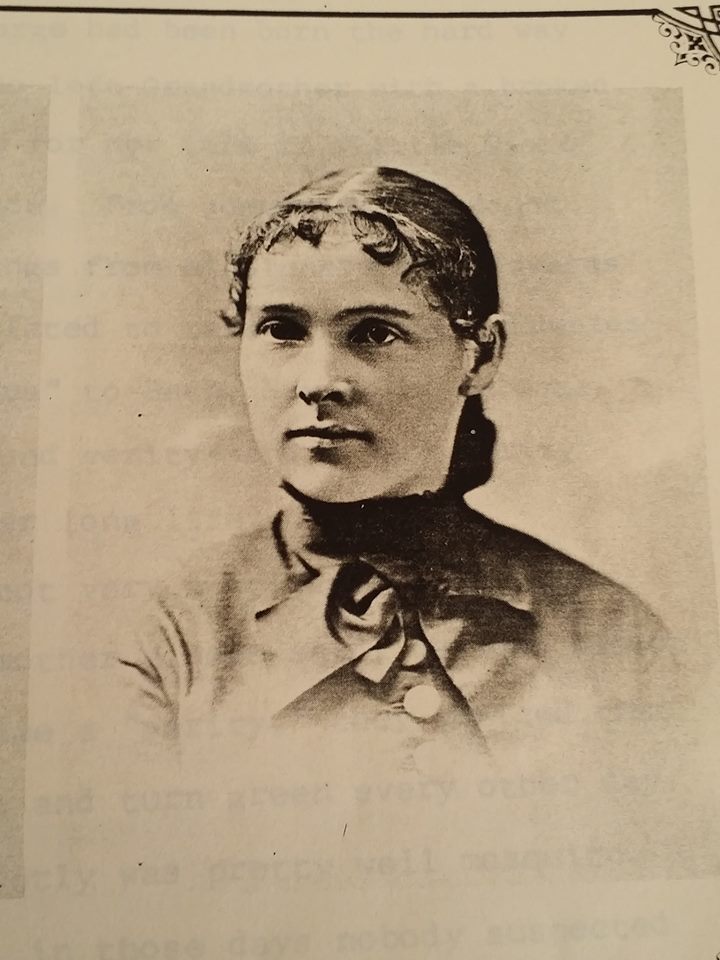
Clara Edwards Paulding two years before her marriage, 1881.

Clara Edwards Paulding two years before her marriage, to the man who would become the town doctor, in 1881. Clara is about to begin a teaching stint in Hawaii.

My childhood church was St. Barnabas Episcopal, where the Sunday nine o’clock featured a regular whose attendance was interrupted only by her death in 1983. She was Miss Ruth Paulding, a longtime teacher at the high school and a link to the earliest days of the town—she was born in 1892 in a large home partly hidden by an oak that pre-dates the Declaration of Independence, by vegetable gardens, and sometimes by sunflowers, on Crown Hill, and she only had to walk across the street to her work.

When I knew her, her wheelchair was always parked alongside the front pew. I can’t remember whether she was first or last, but the priest would leave the sanctuary to administer communion to her; it was a small but meaningful homage. I do remember the pleasure of getting a little smile from her if our eyes met while I returned to my pew from the altar rail. She was so fragile, so elegant, and so admired that a smile from Miss Ruth was as good as, or even better than, a blessing from a priest. She was ‘a gallant lady,’ the title of the little biography she wrote about her mother, Clara.

I did not know my own ties to Clara until later, but from what I knew about Ruth’s mother, I was an admirer.  She returned to college with Ruth, who’d been promised an extra $100 a year, if she took additional coursework, when the Second World War began to revive the economy. The pair decided to take summer courses at Clara’s alma mater, Mills College. Ruth took classes for the extra money; Clara, over eighty years old, took hers for pleasure, a course in “History of the United States to 1865” because, she said, she remembered the rest.

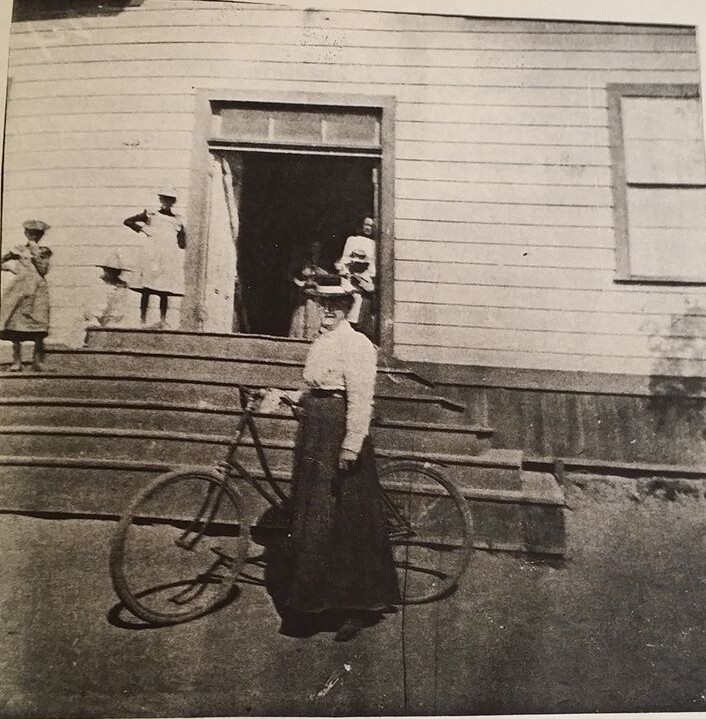
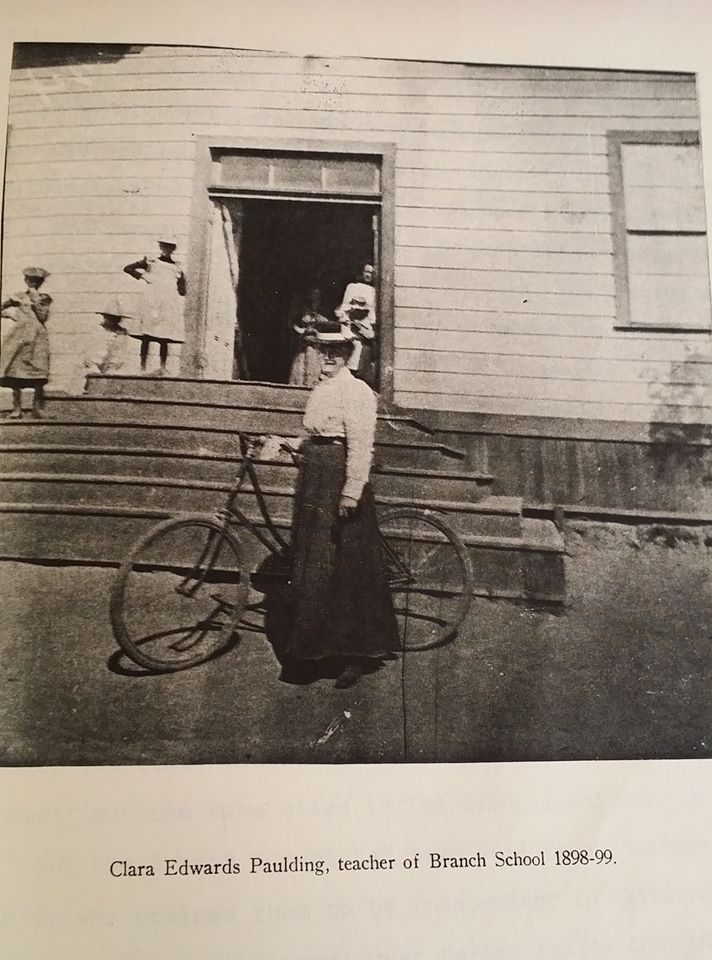
One of Clara’s assignments during more than thirty years in the classroom was at the school I attended, Branch Elementary. There is a photo of her in front of the school. Behind Clara and her bicycle in 1898 are the same steps I would climb on my first day of formal education sixty years later.

Arroyo Grande’s population, at the time of the photograph, was approaching 1,000. Beyond the town, to the east in the Upper Valley, and to the west, bounded by the sand dunes at the edge of the Pacific, in the Lower Valley, there were patchworks of farms worked by ambitious pragmatists:  Arroyo Grande men and their teams of heavily-muscled draft horses, their necks arched in effort, turned some of the richest soil in the world to prepare it for planting. They might have been plowing for sowing pumpkins or carrots, onions or beans, or one of the most important products in the many cycles of agriculture the Valley has seen: flowers, cultivated for their seeds.

What must have delighted Clara Paulding on her two-mile bicycle commute to her sixty students every morning would have been the sight of brilliant fields of flowers and, planted in others, she would have smelled the delicate fragrance of sweet peas.

It’s not hard to imagine her, given her personality, waving cheerily to the men working those fields, their faces hidden by broad-brimmed straw hats, or to imagine them waving back, wide smiles creasing their upturned faces. ecause even as field workers they had never had this much hope, and even in the Upper Valley, hemmed in closely by the oak-studded Santa Lucia foothills, they had never had this much room.

Clara’s spirit was expansive. She may look severe in her photograph, but she adored, without disguising it, young people, and the youngest the most, a feeling they reciprocated.  Her wave on school mornings would have touched these men, younger sons from a very crowded place, and not particularly welcome in this new place.

The men in the fields whom she greeted were from Japan, and some of them from a prefecture known as Hiroshima-ken.

Clara Edwards Paulding, 1898, Branch School.  She would later be a founder of Arroyo Grande Union High School and, beginning in 1920, would serve on its Board of Trustees.

Clara Edwards Paulding, 1898, Branch School. She would later be a founder of Arroyo Grande Union High School and, beginning in 1920, would serve on its Board of Trustees.


← Older posts
Newer posts →

Subscribe

  • Entries (RSS)
  • Comments (RSS)

Archives

  • January 2026
  • December 2025
  • November 2025
  • October 2025
  • September 2025
  • August 2025
  • July 2025
  • June 2025
  • May 2025
  • April 2025
  • March 2025
  • February 2025
  • January 2025
  • December 2024
  • November 2024
  • October 2024
  • September 2024
  • August 2024
  • July 2024
  • June 2024
  • May 2024
  • April 2024
  • March 2024
  • February 2024
  • January 2024
  • December 2023
  • November 2023
  • October 2023
  • September 2023
  • August 2023
  • July 2023
  • June 2023
  • May 2023
  • April 2023
  • March 2023
  • February 2023
  • January 2023
  • December 2022
  • November 2022
  • October 2022
  • September 2022
  • August 2022
  • May 2022
  • April 2022
  • March 2022
  • February 2022
  • January 2022
  • December 2021
  • November 2021
  • October 2021
  • September 2021
  • August 2021
  • July 2021
  • June 2021
  • April 2021
  • March 2021
  • February 2021
  • January 2021
  • December 2020
  • November 2020
  • August 2020
  • July 2020
  • June 2020
  • May 2020
  • April 2020
  • January 2020
  • December 2019
  • November 2019
  • October 2019
  • September 2019
  • August 2019
  • May 2019
  • April 2019
  • March 2019
  • February 2019
  • January 2019
  • December 2018
  • November 2018
  • October 2018
  • September 2018
  • July 2018
  • June 2018
  • May 2018
  • April 2018
  • March 2018
  • February 2018
  • January 2018
  • December 2017
  • November 2017
  • October 2017
  • April 2017
  • March 2017
  • December 2016
  • November 2016
  • October 2016
  • September 2016
  • August 2016
  • July 2016
  • June 2016
  • April 2016
  • March 2016
  • February 2016
  • January 2016
  • December 2015
  • November 2015
  • October 2015
  • September 2015
  • August 2015
  • July 2015
  • June 2015
  • May 2015
  • April 2015
  • March 2015
  • February 2015
  • January 2015
  • December 2014
  • November 2014
  • September 2014
  • August 2014
  • July 2014

Categories

  • American History
  • Arroyo Grande
  • California history
  • Family history
  • Film and Popular Culture
  • History
  • News
  • Personal memoirs
  • Teaching
  • The Great Depression
  • trump
  • Uncategorized
  • World War II
  • Writing

Meta

  • Create account
  • Log in

Blog at WordPress.com.

  • Subscribe Subscribed
    • A Work in Progress
    • Join 68 other subscribers
    • Already have a WordPress.com account? Log in now.
    • A Work in Progress
    • Subscribe Subscribed
    • Sign up
    • Log in
    • Report this content
    • View site in Reader
    • Manage subscriptions
    • Collapse this bar
 

Loading Comments...