
Somewhere we have a penciled thank-you note from John W. Davis, who is about as famous as whichever team finished third in the NL pennant race in 1939. (It was the Dodgers, 12 1/2 games out.) Davis was the Democratic nominee for President in 1924, and he did far worse than the 1939 Dodgers.
He was trounced by the less-than-effervescent Calvin Coolidge. Coolidge’s workdays at the White House were at most seven hours, punctuated by summer naps on the portico. Sadly, these had to be suspended when Coolidge began collecting dense crowds, silent tourists, watching gravely and debating among themselves in urgent whispers over whether the president had passed. After all, Harding had pulled that trick.
To be fair, the White House staff frequently had the same problem when the president was conscious.
Meanwhile, John W. Davis would go on to a distinguished career, arguing 150 cases before the Supreme Court. Today, Davis is noted mostly for being on the wrong side of every one of them. If it was racist, reactionary, or repressive, he defended it passionately, with the conviction and confidence of one who knows that God Almighty is his co-counsel. The crowning of his legal career—thank the aforementioned Lord–came when he lost Brown v. Board before the Warren Court. (Earl Warren, who turned out to be the biggest booby prize Ike had gotten since Field Marshal Montgomery, was the former Republican Governor of California, which goes to show how much times have changed–and Davis demonstrates the same for Democrats.)
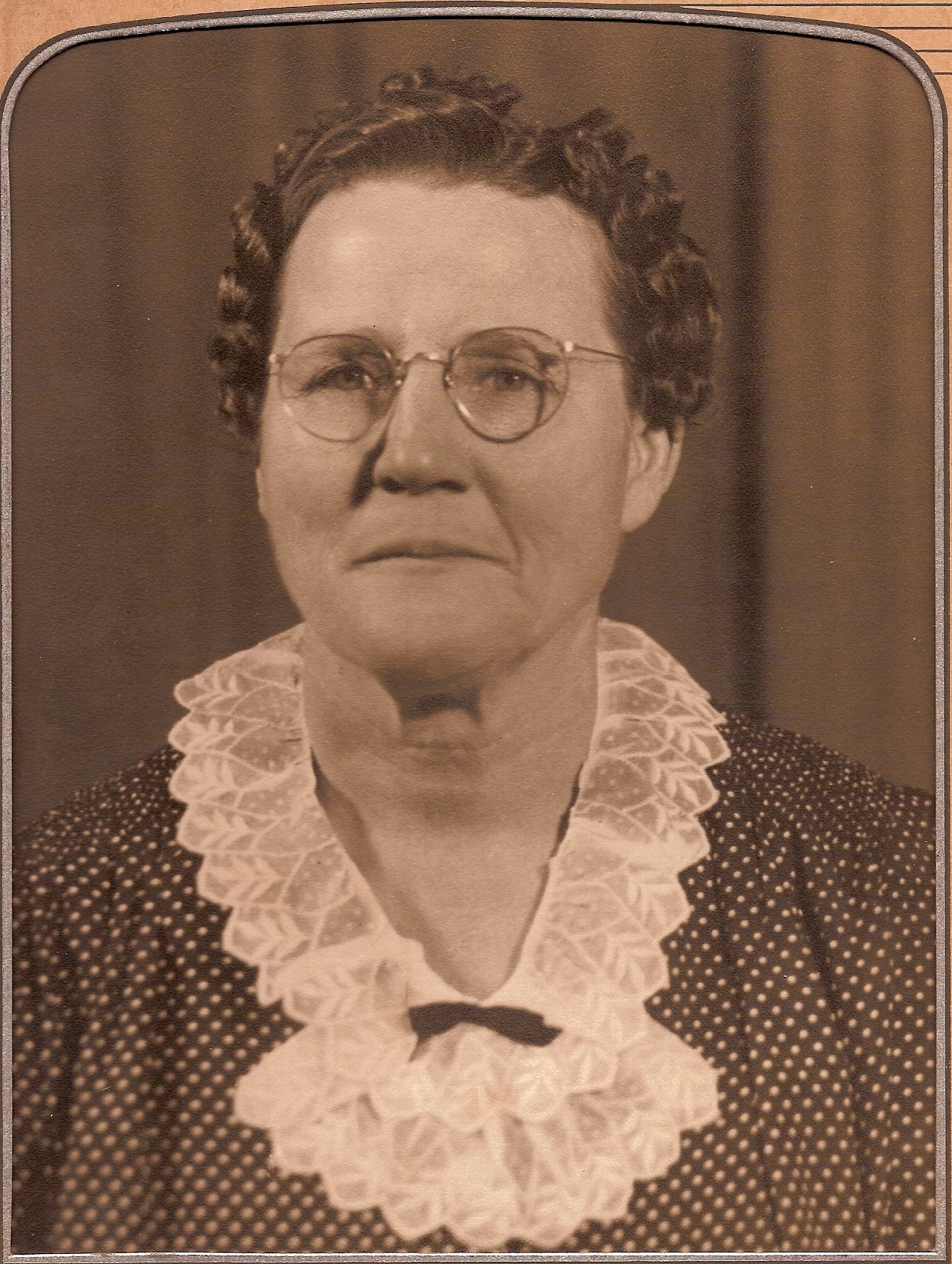
But the Democrats could’ve run Sacco and Vanzetti (has a nice ring, doesn’t it, for a law partnership?) in 1924, and I think Grandma Gregory–the woman, hard to knock down in a windstorm, next my Grandpa John in the photo below–would’ve worked her heart out for them as long as they were Democrats. She got to the convention as a delegate that year–103 ballots in a sweltering New York City summer, the delegates trapped in a battle to the death inside Madison Square Garden–and this was only four years after women had gotten the vote. She would later become the Texas County, Missouri, Party Chairwoman and a powerful figure in downstate Missouri politics.
She is undoubtedly why, when I actually watched a national political convention for the first time, when I was 12–-and when they actually meant something– I was entranced. Barry Goldwater would eventually beat my guy, William Scranton, for the 1964 Republican nomination. Probably our favorite film, in my high school years, was The Graduate. I enjoyed the following year’s Democratic convention just as much, for the Democrats in 1968 had the same intense focus and sense of direction that Dustin Hoffman’s Benjamin had shown in the movie. None.
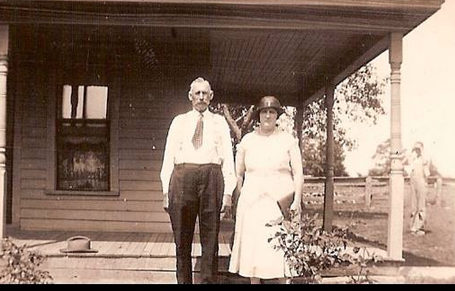
In Depression-era Missouri, before every election, my Dad remembered, a new car would pull up outside my Grandfather’s farmhouse and two men in three-piece suits (usually reserved for funerals, and even then for the Deceased) would deposit a bank-bag full of cash on Dora Gregory’s kitchen table. For them, it was but one more stop on a kind of purgatory circuit. That part of the state was thinly populated, so you had have a real passion for soybeans to make the drive enjoyable.
They were bagmen for the Kansas City Pendergast Machine, one of those old-timey operations that brought dead voters back to life, among other shenanigans.
Pendergast’s Kansas City was a kind of cultural hub for the Depression-era Midwest. Louis Armstrong played here, for example, and a new variant of Barbecue found a home here, too.
Meanwhile, in Texas County in the 1930s, the Civil War had not quite ended. When my father was 12 or 13, there was a Confederate veteran still alive in in Houston, the county seat. There also was one Union veteran in the same town. The two had not spoken since 1865.
FDR’s first term was past its midpoint when, on July 4, 1935, the county band was playing the National Anthem. A frayed cartridge belt in the old Confederate’s mind finally snapped: he leaped on the old Yankee, and the two rolled around on the courthouse lawn, knocking over potato salads and tubs of sweet tea in their personal Antietam. When six young man finally pried the two apart, the old Confederate triumphantly held up the Yankee’s ear, which he’d removed with a Barlow knife.
Most of the people of Texas County were considerably calmer and much kinder, especially if you happened to be a horse, about which, like my Mom’s ancestors from County Wicklow, they were passionate.
Tom Pendergast had Texas County in the bag, because, come Election Day, my pre-teen Dad handed out fives to waiting voters, murmuring, “The Democratic Party thanks you,” over and over, like a priest at Eucharist, so the Democrats never lost Texas County. The bank bag on Grandma’s kitchen table assured that.
To be fair to the Machine, it distributed food, not just bribes, and people in the hills were hungry in the depths of the Depression. A young Dad also helped distribute food to the needy. Grapefruit stymied them. “We boiled it, Bob,” they told him apologetically, “an’ then we fried it, but it still tasted putrid.” (Dad, a supply officer in 1944 London, also gifted an English family he knew with a bag of oranges. They virtually adopted him: the British had not seen oranges since the fall of France in 1940. Citrus fruit seems to follow the course of my father’s life.)
Boss Pendergast also made the career of Harry Truman possible, which, in turn made me possible: Truman favored my grandfather’s blackberry wine on campaign swings downstate–he’d stop for a sip or seven– and that little talent of Grandpa Gregory’s paid off in World War II: Truman got Dad appointed to Officers’ Candidate School as a Quartermaster, and so he served much of the war defending London’s pubs from the Nazi Hordes, which saved me the inconvenience of having him get killed before I had the chance to be born.
After, the war, my Mom was an Eisenhower Republican, so my parents had lively political discussions. One of them doomed dessert, because the colander of fresh strawberries, washed for strawberry shortcake, wound up on my father’s head, upside-down. JFK’s nomination brought political harmony to the marriage: Dad voted for him because he was a Democrat; Mom because he was Irish Catholic.
I wish I could say I loved my Grandmother Gregory, but she was a steel-spined schoolmarm who didn’t tolerate foolishness, by which she meant Consciousness, and she used to whack us absently with her cane. We stole her eyeglasses in revenge. And, sadly, by the time I knew her, she was edging into dementia, and though she couldn’t locate her dentures, or her eyeglasses, she could remember, in vivid detail–you could almost smell charred flesh and sick-room alcohol–how every person in southern Missouri had died between the War Between the States and the 1939 Dodgers.
It didn’t take a lot to prompt a Grandma Gregory Death Story, and, looking back from the fullness of years, I now realize that some of them were humdingers.
My favorite was the neighbor who suddenly disappeared. The family and the authorities and happy coonhounds–they like to be kept busy, or they get saucy– looked for several days, to no avail. When one of the kids finally did find him, he was at the bottom of the family’s well, where he’d plummeted after a massive coronary, which makes you wonder if they ever thought of lemonade the same way again.
Grandma liked that one, too.
Oddly, these stories were poignant because they showed she was already living in the past; her connections to modernity would grow more and more fragile. But, as a younger woman, she was shrewd, forceful, and I think had the same instinct, in a political sense, that leads orcas to crippled seals. I would not mess with that woman. And for that, and for her steel, I admire her and I am immensely proud to be her grandson.
 A Work in Progress