
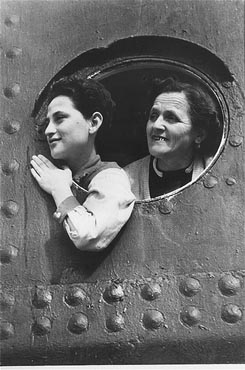
St. Louis passengers waiting to disembark in Havana. They would be turned away.
In May, 1939, the German liner St. Louis left Hamburg, bound for Havana, with over 900 passengers—most of them European Jews.
They hoped their stay in Cuba would be a short one; they’d applied there for U.S. visas. But when the St. Louis reached Havana, only 28 of the passengers were admitted. The rest were turned away at the demand of Cuban President Frederico Laredo Bru. Cuba was still feeling the effects of the Depression, the immigrants were seen as a threat, and Cuba’s right-wing press was powerful.
St. Louis had not stayed in Havana long enough for the Europeans, now stateless refugees, to have their U.S. visas processed. But her German captain–a determined man, and one deeply sympathetic to the passengers in his care–set course for the American mainland.
Despite intense press coverage of the passengers’ plight—Kristallnacht and the “racial laws” had bluntly served notice of what Nazi Germany had in store for them—this, according to the Holocaust Encyclopedia, is what happened.
Sailing so close to Florida that they could see the lights of Miami, some passengers on the St. Louis cabled President Franklin D. Roosevelt asking for refuge. Roosevelt never responded.
U.S. Coast Guard cutters shadowed St. Louis to make sure she did not try to enter an American port. Despite pleas on the passengers’ behalf, Canadian Prime Minister Mackenzie King also denied them entry. Eventually the ship returned to Europe. The UK admitted 288 passengers; the remainder were dispersed throughout France, Belgium, and Holland, all overrun by the Wehrmacht in 1940.
At least 227 vanished in the Holocaust.
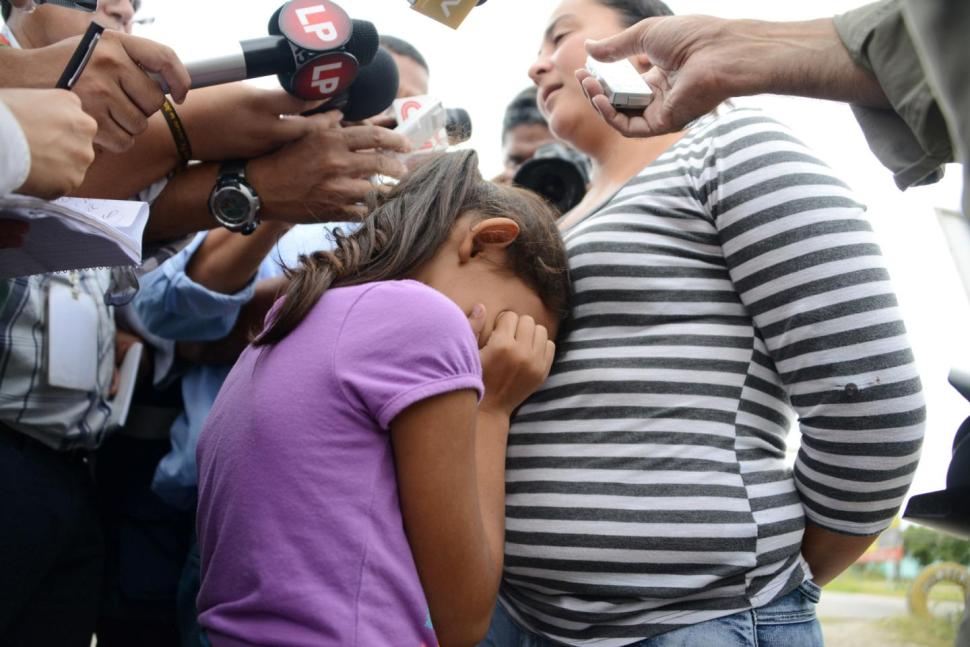
Today the United States deported a group of Hondurans: 17 women and 21 children, boys and girls between 15 and 18 months. Their charter flight landed in San Pedro Sula, Honduras, the city, according to U.N. data, with the highest murder rate in the world.
This is where the photograph of these deportees, a mother and daughter, was taken.
 A Work in Progress