 In the early summer of 1944—when Eisenhower pauses at the end of his weather officer’s report for June 6 and says simply, “Okay, we’ll go,” when Rome falls to Mark Clark’s armies, and when horrified Marines watch Japanese civilians leap to their deaths from the cliffs of Saipan—the war, for Americans at home, was both distant and painfully intimate, but even the war could not touch the work to be done.
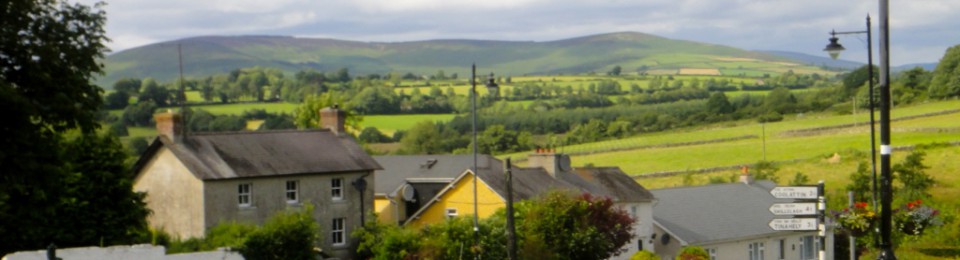
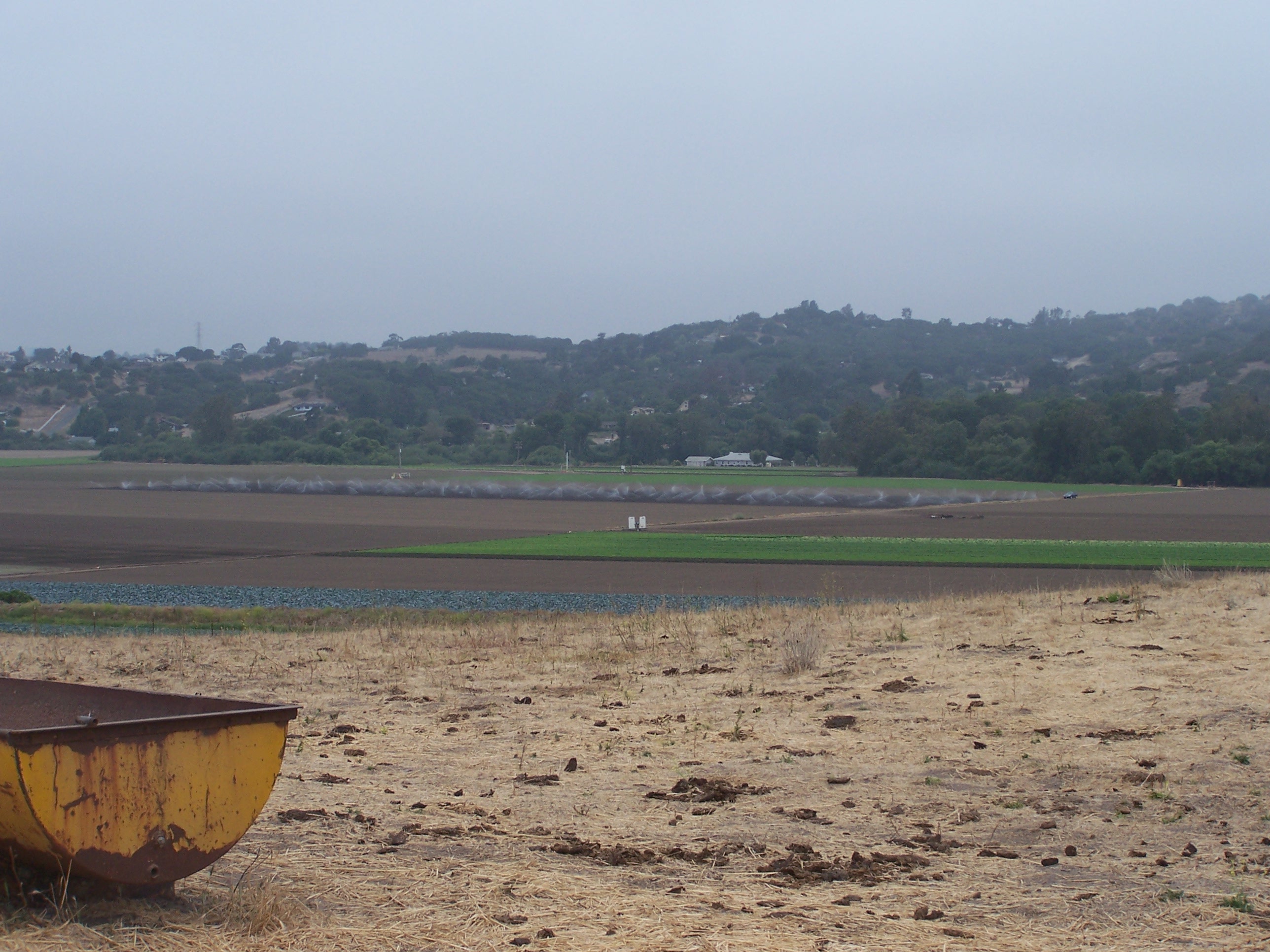
That month, in the Upper Arroyo Grande Valley of coastal California, this is what you would see, if not clearly, because the cold morning fog can be dense: labor contractors drop off pickup loads of field workers at the Harris Bridge, which spans the creek that gives the valley its name and that nourishes it.
The workers cross the bridge whistling, an incredibly beautiful, almost baroque whistling, Mexican folk tunes from the time of the Revolution, or love songs, as they walk down to the fields to their work with their lunches–wine-jugs filled with drinking water and perhaps chorizo-and-egg burritos, wrapped in wax paper, the fuel a man needs to do the kind of physical work that would make most men sit in the freshly turned field, gasping and woefully regarding their quickly-blistered hands, within fifteen minutes.
Their summer work might be in a new bean field and the whistling would stop because it is such a tax on men who work beans, whose breathing soon becomes laborious and therefore precious. To begin a newly planted field of beans, the field workers have to drive wooden stakes into precise parade-ground lines along the furrows, so that the bean vines can use the stakes to climb and twist—they will eventually yield bell-shaped flowers–toward the sun.
The sun invariably appears in late mornings when it burns the sea fog away and the colors of the valley, wheaten hills and verdant bottom land where the crop is in, are reborn, vivid and sharply focused.
To drive the wooden stakes, the field workers use a heavy metal tube, hollowed, with a handle attached that resembles that of an old-timed pump primer pioneer men and women once used to draw water out of the ground. So the whistling stops and is replaced by the rhythmic ring of the stake drivers as the workers pound hundreds of them into the field.
It is a musical sound, but, of course, what you cannot hear are the grunts of the men at each stroke of the stake driver and what you cannot feel is the enormous weight that exhausted arms and shoulders soon take on and what you cannot avoid, if you think about it sensibly, is admiration for the men who feed you. In turn, they are determined to feed families who live in camps or tarpaper shacks in the Valley, or, for some, part of the work force that will dominate agriculture here for the next twenty years, for families who are living in the tier of states of northern Mexico.
In 1944, Mexican nationals are doing this work. Four years before, many of the laborers would have been Japanese, but they are gone now, to bleak, colorless, and hopeless camps–where they would cultivate hope nonetheless– like Poston or Gila River. A few of them, as the war begin inexorably to wind down, will begin to trickle home. The Kobara family will be the first. But many, many families–now unfamiliar surnames in yellowed 1941 high school yearbooks–will never come home. The wound may have been too deep.
Beans are no longer central to the agriculture of the Arroyo Grande Valley, but once gain, Japanese American farmers—like the Kobaras, the Ikedas, the Hayashis—are. Agriculture has changed—the seemingly limitless groves of walnut trees that once competed with row crops are gone, victims of a malevolent infestation of insect larvae.
Today farmers grow more exotic crops, like bok choy or kale, and along the hillsides once given over, in the 19th centur, to beef cattle, there are new farmers and nearly endless row of wine grapes, multiplying every year, profitable, lovely, and greedy for water, a commodity that isn’t always plentiful in California.
That is why beef cattle haven’t dominated the coastal hills since the 1860s, when the drought that periodically afflicts the state hit as hard as it ever has. The cattle, either killed outright by ravenous coyotes come down from distant folds in the hills, or dead of thirst and hunger, would have covered the hills with their bones.
It was that kind of drought that may have brought a field worker–not a Mexican, but an American, a New Mexican–to these coastal valleys in 1940.
Much of his native state, of course, in the years before, had been swept away by the Dust Bowl. Winds had carried the copper-red soil as far east as the mid-Atlantic to drop it, like gritty rain from a place that had none, onto ships still sailing freely between continents.
Those ships would lose their freedom in the years immediately after, and the coyotes that hunted them without fear, of course, were U-boats come out of their lairs in Kiel, and later in L’Orient. U-boat captains called this “The Happy Time.” 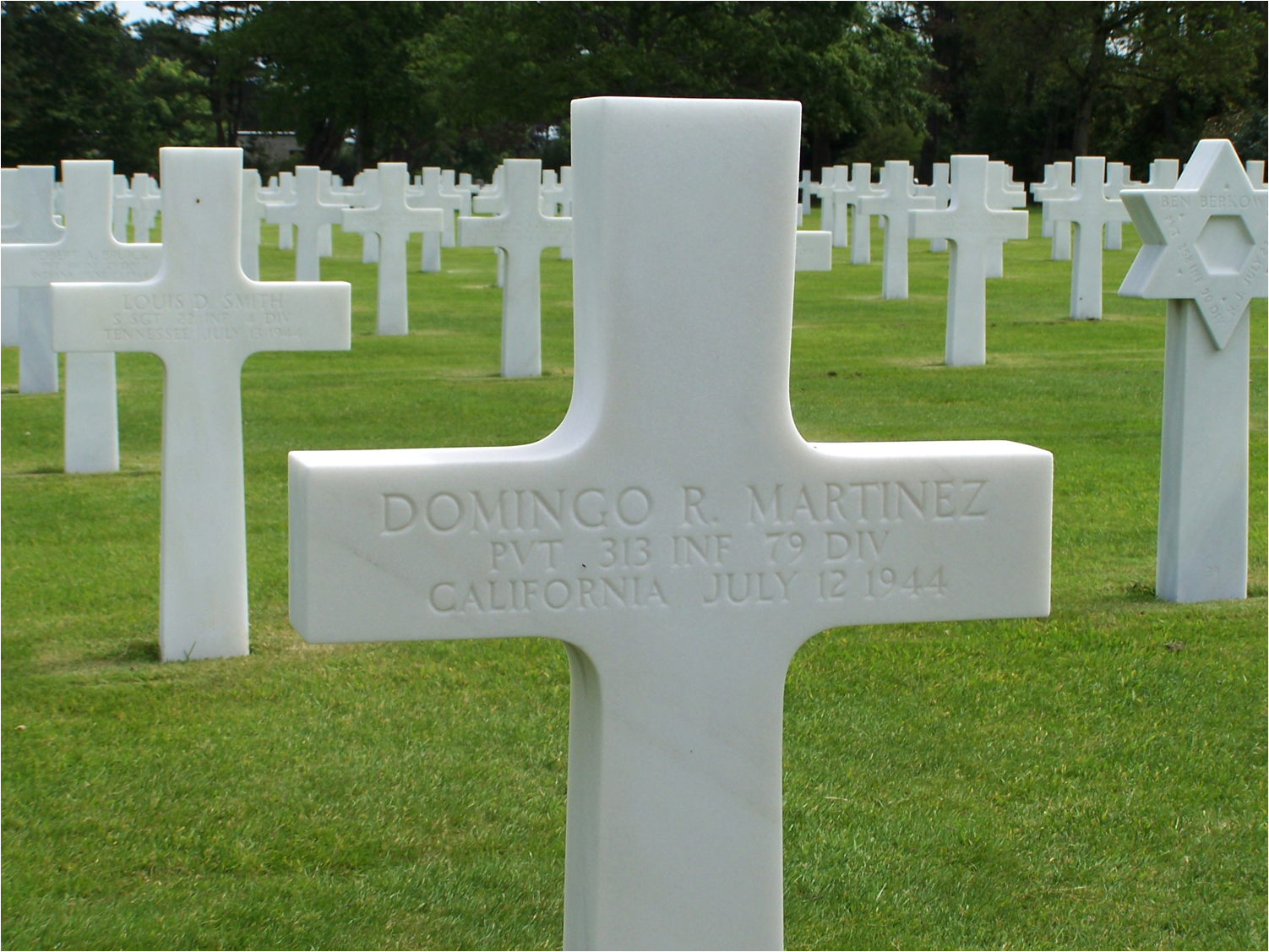
The U-boats would someday kill that young field worker, if indirectly, as part of an inexorable chain of events that would lead him to Normandy, 5,500 miles away from the fields that border Arroyo Grande Creek, and to pastures bound by hedges and grazed by fat dairy cows, cows that lowed piteously to be milked in what had become killing zones. One of them, dead in the crossfire, may have provided scant cover for the field worker, now a rifleman, Private Domingo Martinez, from the German machine-guns that harvested crops of young men.
 A Work in Progress