
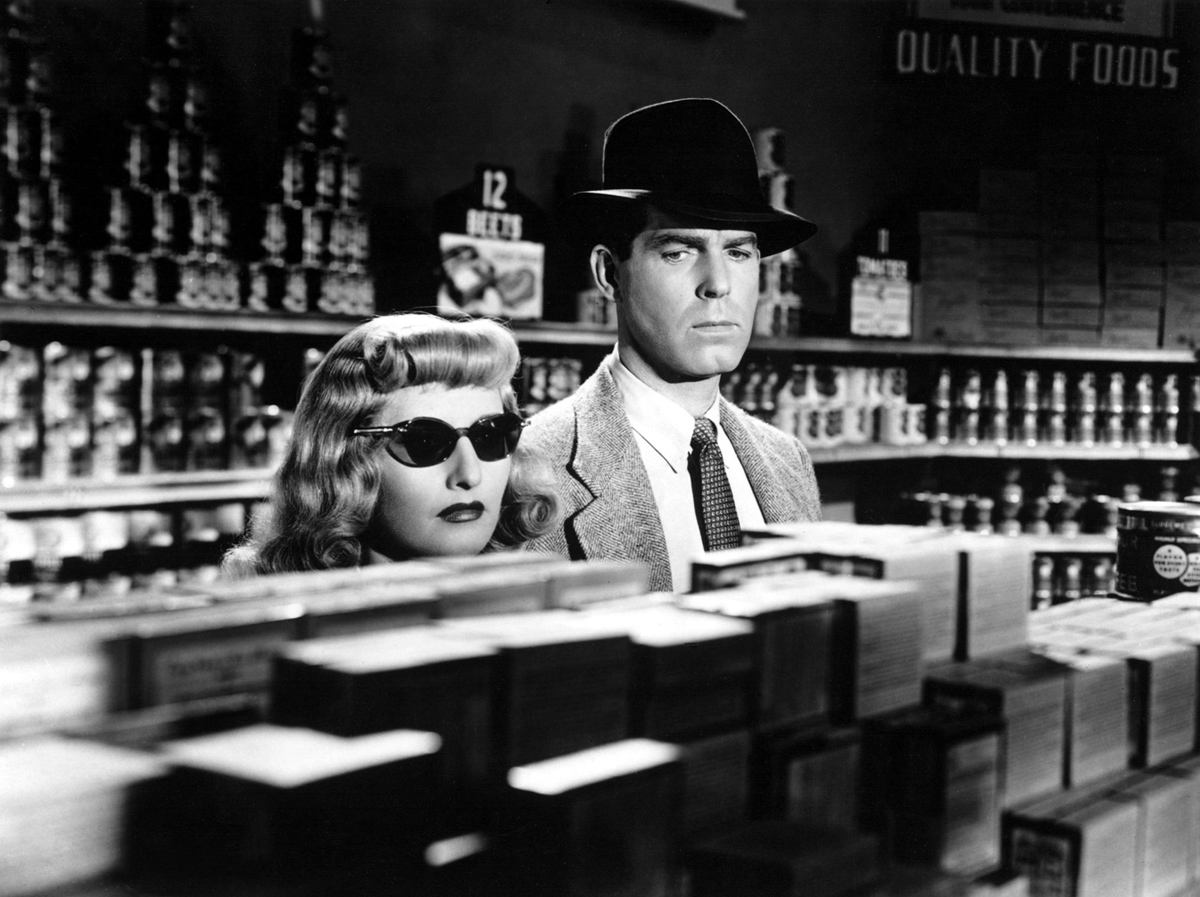
The L.A. Times food critic Jonathan Gold wrote an excellent summer piece this year on great Los Angeles hamburgers, and it made me think about my strange affection for a city I largely dislike unless it’s about 1946 outside and the Red Cars are running. I’m a San Francisco kind of guy, with the exception of the Dodgers, and that has more to do with Vin Scully than with any loyalty to the Southland. But there is no noir like Los Angeles Noir–-I watched Double Indemnity one more time recently on late-night television-–and the list of good films of the genre is kind of amazing. Here are just a few favorites:
- Chinatown. Not only a good hard-boiled detective film, in the Raymond Chandler tradition, the novelist who created private eye Philip Marlowe, but it deftly sketches the water wars that made L.A. and its orange groves–the attraction that lured my mother’s family from the Minnesota prairie–possible in the first place. J.J. Geddes, I think, is one of the most memorable characters in American film, and John Huston’s cameo, both jovial and sinister, is stunning.
- Double Indemnity. The murder plot flows seamlessly to the point where, after dumping the body of Barbara Stanwyck’s husband on the railroad tracks, she and Fred MacMurray can’t get her car to start so they can leave the murder scene. Then the seams start to unravel, and it’s a lovely thing to watch. Doom can be interesting. In a perverse way, it’s even kind of fun, especially in the implicit comedy of the Stanwyck-MacMurray plot-hatching in the aisles of the local grocery store: the two are interrupted by little ladies asking the lanky MacMurray’s help in reaching the canned goods.
- True Confessions. John Gregory Dunne’s screenplay about two brothers–-one, Robert Duvall, an L.A. homicide detective, and the other, Robert DeNiro, a politically ambitious monsignor–is deeply moving. Duvall must solve the mystery of a priest found dead in a prostitute’s bed, and he’s got to tear down the wall DeNiro’s character has constructed to protect his church and his career. This is a wonderful story about redemption, and how redemptive personal destruction can be.
- The Big Sleep. Bogart and Bacall in a plot so arcane that even the scriptwriters couldn’t figure it out. Bogie’s Marlowe builds on the fast-talking Sam Spade we’d first seen in San Francisco, in The Maltese Falcon, and his ability to shift character, posing, for example, as a dirty-minded bookworm in one scene, foreshadows James Garner’s television detective, the delightful Jim Rockford. Bacall is smoky, alluring, mysterious, dangerous, and Bacall.
- L.A. Confidential. A superb ensemble cast–Kevin Spacey, Guy Pearce, Russell Crowe, Kim Basinger as a kind of Bacall archetype, although her call-girl character has been molded to look like Veronica Lake. You’ve got your fast-talkers, con men, like Spacey, but you’ve also got your straight arrows, like Pearce and the wounded Crowe, and all three, it will turn out, are decent men at their core in a department so corrupt that even they, in own casual infidelities to the law, must finally take a stand. Again, a wonderfully redemptive story crowned by a harrowing shootout scene.
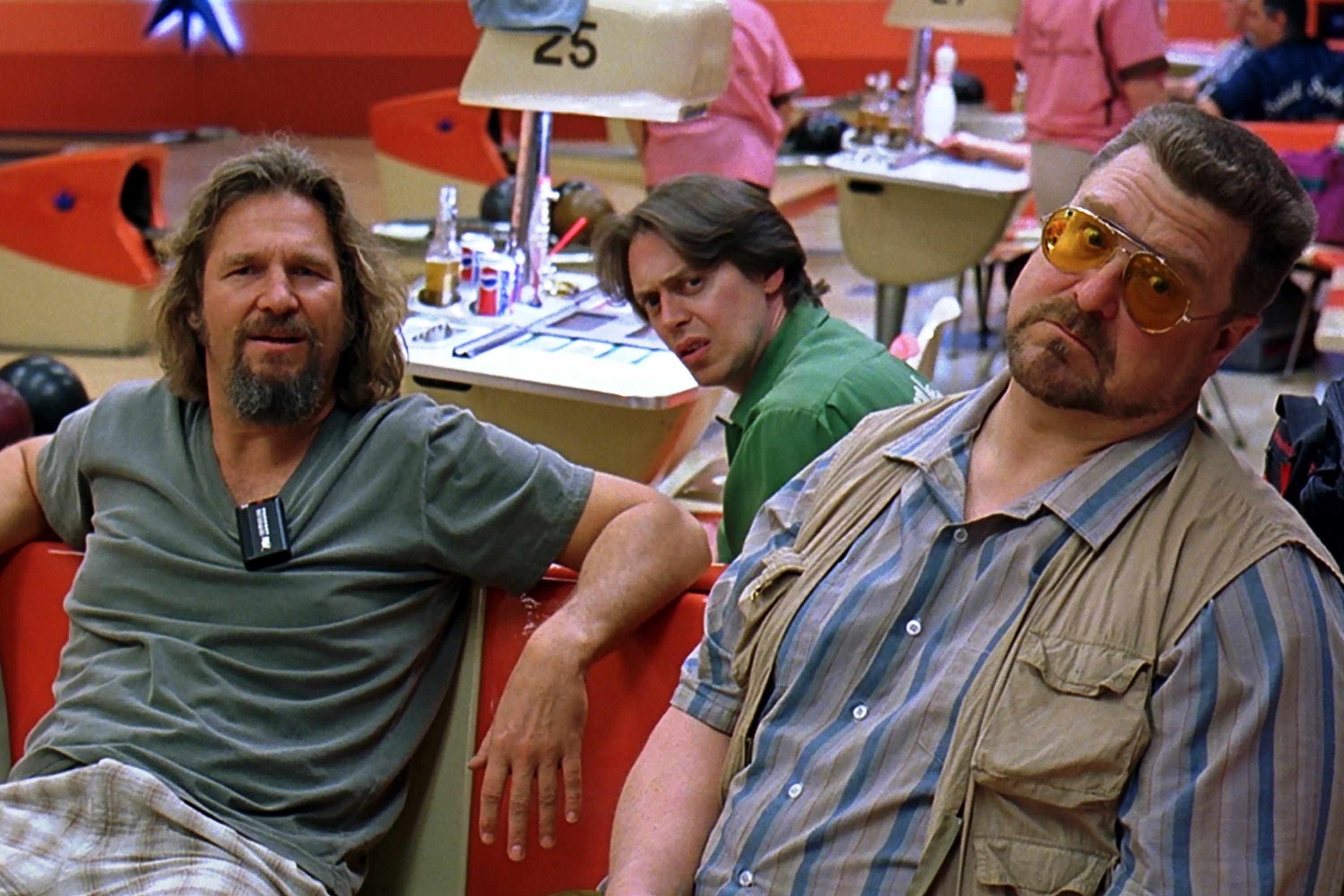
- The Big Lebowski. I’m a little dense, but by the third or fourth time I realized that this was a wonderful tribute to and parody of the Chandleresque formula, with Jeff Bridges as a soft-boiled stoner and the incomparable John Goodman as Walter, his manic, explosive and completely inept partner. Includes femmes fatale, slipped Mickeys (in Lebowski’s White Russian), a couple of Falcon-like talismans (a finger, Lebowski’s rug), and a brace of Nihilists.
What makes these films even more compelling is, of course, real tragedy. Human wreckage has always surrounded the film industry and examples include Elizabeth Short’s grisly 1947 murder (she worked for awhile at what would become Vandenberg Air Force Base), when she became immortalized as “The Black Dahlia;” the implosion of film comedian Fatty Arbuckle’s career when he was charged with the 1921 murder of aspiring actress Virginia Rappe; the mysterious 1924 death of producer Thomas Ince, “father of the Western,” after a visit to William Randolph Hearst’s yacht, Oneida, where Hearst mistress Marion Davies, as she did at San Simeon, served as the Chief’s hostess. What ended Ince’s life? Was it a heart attack or a bullet intended for Charlie Chaplin, Davies’ putative lover?
It’s film, finally and ironically, that best illuminates dark places like these. All of these films entangle us in L.A.’s tawdry Day of the Locust glamour, in its ambition and deception, because this is a place where nobody is who you think they are, a place where, as Chandler wrote, the Red Wind-–the Santa Anas-–can lead even the most dutiful Valley housewife to contemplate her husband’s back while absently squeezing the butcher knife’s handle in her free hand, the one without the potholder.
 A Work in Progress