• About
  • The Germans

A Work in Progress

A Work in Progress

Monthly Archives: July 2014

Glory Days

22 Tuesday Jul 2014

Posted by ag1970 in California history, Film and Popular Culture, Personal memoirs

≈ Leave a comment

Screen shot 2014-07-22 at 4.18.51 PMI wish I had more old photos of my days at Branch Elementary School in the Upper Arroyo Grande Valley, which I attended between 1958 and 1966.
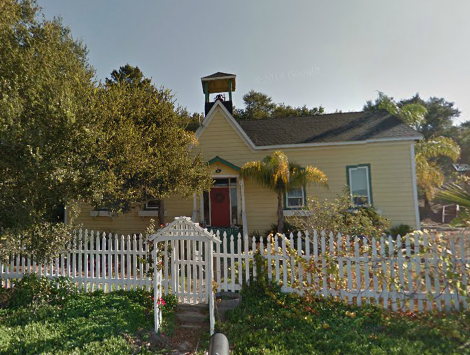
I started at the 1880s schoolhouse, but in 1962, we moved into one of those Sputnik School of Architecture schools that was twice as big as the old school.  It had four rooms.

I remember seeing one photo of me, Dennis Gularte, and it might’ve been Melvin Cecchetti, all decked out like cowboys, down to chaps and Mattel Fanner ’50s (“If it’s Mattel, it’s swell!”) on our hips.

For the uninitiated, a “Fanner ’50″ is a replica double-action Old West six-shooter that allows your shorter Old West gunfighter to get off approximately 1,200 shots without reloading. It was a marvel.

That was back in the days when gunfights on the playground were still culturally permissible, although they were limited to Fridays, which remains my favorite day of the week.

There was even a glorious, if very brief, time–our teachers would decide to draw the line at high-capacity ammunition drums–when the television show The Untouchables was popular and so we re-enacted the St. Valentine’s Day Massacre with Mattel-It’s-Swell Tommy Guns.  We died spectacular deaths after we had lined up, hands up, against one wall of the school. We took turns pretending to be the Moran Gang victims and Capone’s button men. We were a democratic bunch.

The girls on the swings just thought we were gross.   But they were girls, mind you, and they liked to pretend they were horses, which we found damned peculiar.

We liked to pretend we were ’62 Corvettes.

So us Branch School kids–all 70-odd of us, first through eighth grades– were both rootin’ and tootin’. But we also could be very good.

The entire third and fourth grades went on a field trip to Morro Bay, in a little yellow bus driven by Elsie Cecchetti, whom I will always love, and we all walked through the crew quarters of the Coast Guard cutter Alert without awakening the young man busy contradicting the cutter’s name, snoring softly in his bunk. We were impressed with how white his underwear was.  The Coast Guard is a well-laundered service branch.

During that tour, we requested, but were denied, authorization to fire off a few rounds from the 40-mm Bofors gun on the forward deck, which put quite a damper on an otherwise fine outing. It would’ve lifted or spirits and sustained us when, later in the day, we had to visit the abalone processing plant.

Abalone, we discovered, have little Stage Presence, so we watched, stifling yawns, as they lay lifeless and inert, pounded with wooden hammers, by sad, unfulfilled men, until they achieved abalonability.

Years later, with a shock of recognition, I saw the same abalone factory ennui when I took some of my AGHS European history students to Munich and ate schnitzel in a massive auditorium while an oompah band performed and two girls, in traditional costume, more or less danced.  It must’ve been about their eighth performance of the day, in front of masses of greasy-cheeked, ungrateful American teenagers–except for our kids, of course– and dancing with gleeful abandon was just not in their repertoire.

By the time the disconsolate abalone pounders had finished with their victims, they looked disgusting, like Neptune’s cow patties. By the time we were old enough to realize that they were tasty, they had all been eaten. Sea otters were the alleged culprits, but my money was always on the Morro Bay Elks Club.

[Clams are no more stimulating than abalone, by the way. The second-best show-and-tell ever, other than Tookie Cechetti’s fingertip in a vial of alcohol, lost in a saber-saw accident, was the Pismo clam Dennis Gularte and Melvin Cecchetti attempted to keep alive in the classroom sink in the new school. Clams have all the entitlement and ingratitude of the Kardashian sisters and are only marginally smarter. Our clam said little during the school day, showed little interest when we tried to push a length of kelp, which we know had to be yummy, through its shell’s opening, and then did nothing at all for about another day. Dennis ate it.]

By the way, we didn’t always have the luxury of Elsie’s school bus. We first had a pickup painted school bus yellow, with two benches bolted to the truck bed and a tarp over the top, and when we crossed the creek, we all bounced like a bagful of marbles and squealed with delight.

Not everybody enjoyed the pickup. One morning, one of us got sick, and we decided he’d had scrambled eggs for breakfast.

We also used to go to Poly Royal, the local college’s open house, and loved that jet engine fired off in Aeronautical Engineering, before the event deteriorated into the kind of Roman Bacchanalia that would make Caligula blush.

We most of all loved the biology department, because its centerpiece was the genuine stuffed two-headed calf.

We spent some time pondering another of their exhibits, an aquarium tank full of bullfrog tadpoles that was labeled, soberly, “Elephant Sperm.”

In our day, Branch no longer had the steeple and bell that originally was standard equipment for rural schoolhouses, but it did have the first multi-purpose room in San Luis Obispo County.

The hallway in between the two classrooms was used for both hanging up your coat and for beating students with yardsticks. This encouraged us to learn harder and accounts for why, to this day, I still know all my state capitals, down to the fact that Pierre, South Dakota, is pronounced, “Peer,” of which our teachers had none.

Yes, in that hallway, Mrs. Brown and Mrs. Fahey had perfected a technique called “Bad Cop, Other Bad Cop.”

They wore Eleanor Roosevelt cotton print dresses, our teachers did, which made them look, even then, like exhibits from a fashion museum, but either one could’ve humiliated Roger Maris in pre-game batting practice at Yankee Stadium.

They also would’ve made Billy Martin sit perpetually in the corner of the Yankee dugout, his nose pressed against the water cooler, which, given Martin’s notorious partying, might’ve considerably lengthened Mickey Mantle’s career.

The powdered soap dispensers out back were incorporated into language lessons, which is why there are only two documented instances of That Word being uttered with impunity at Branch Elementary between 1888 and 1962, and I believe one of those involved a carpenter and the other a school board member.

It’s a home today, and painted yellow, but in our day it was pink, sheathed in what I think what former classmate Michael Shannon has said were asbestos shingles, which serve as wonderful insulation, but, by the time you’re in your fifties, your school days suddenly begin to produce clouds of what look like chalk dust every time you sneeze.

For the health-conscious reader, not to worry. On summer mornings, when school wasn’t in session, my favorite thing to do was to wave at the biplane that crop-dusted the fields next to our house and then go frolic and gambol in the clouds of herbicide.

Of course, in those days, everybody smoked (Camel shorts), soon after they’d taken their first steps (“JIMMY’S WALKING! Here, son, light one up on Pop!”), and the only seat belts in use were those fastened around Ham, the Space Chimp, the precursor to the Mercury astronauts.

We were a hardy breed, us Baby Boomers. Hack. Wheeze.

There were good things, too, mind you, like actual Pismo clams–all from the extended family of our classroom clam–at Pismo Beach. You didn’t even need a clam fork. They’d just walk up to you and surrender, as if it were North Africa, not Pismo, and they were the Italian Army. But I digress.

The point is that I just don’t have to seem a single picture from those days except of my eighth grade graduation when, of course, I looked not just like a dork, but like a PARODY of a dork. So if there are any in your collection at home, Arroyo Grandeans, I’d love to see them.

But none, please, of Mrs. Brown.  She still makes my palms sweaty.

Redheads Again

22 Tuesday Jul 2014

Posted by ag1970 in Personal memoirs, Teaching

≈ Leave a comment


-portrait-of-mademoiselle-irene-cahen-danvers-pierre-auguste-renoirThis Renoir, the exquisite 1880 portrait of 8-year-old Irene Caher d’Anvers, was part of today’s lesson.   Irene would live to be 91.  Born in horse-and-buggy Paris, she would die with humans hurtling through space at unimaginable speeds.

Irene reminded me of a something I’d mentioned in class a few days before. In 29 years of teaching, I told them, I have never taught so many red-haired girls, in particular, and hair in so many shades of red–from strawberry blonde to deep copper. Having this many redheads is extraordinary.

This anomaly led to intense meditation and at least one extended monologue in front of 31 slightly befuddled sophomores, on redheads–all of this was me processing information–and it led to one logical, unavoidable conclusion about them:  They are beautiful.

My mother, by the way, had deep auburn hair. That’s her, with my big sister, Roberta, in 1943. She was twenty-two, with ancestors from County Wicklow, on Ireland’s east coast.

One of the dearest friends of my life, Joe Loomis, died last fall. Joe was the kind of guy–you hear stories about this in him over and over again–who would drop anything and everything to help a friend.

Here’s an example. My Mom, the single most informative influence of my life, died when I was 17.  She took her own life, a pattern that runs in my family the way cancer does in others. Nobody knew how to handle my tragedy. Joe did. He simply drove up to our front door in a jeep, invited me to jump in, and drove me—rapidly–up the Huasna to his family’s Tar Springs Ranch.  The Loomises gave me a place, their home, where I could feel safe again.

Years later, Joe and I had lost touch, but it didn’t matter because I knew this great friend would be around nearby and we would have the luxury of time to renew our friendship.

And now he isn’t, and now we don’t.

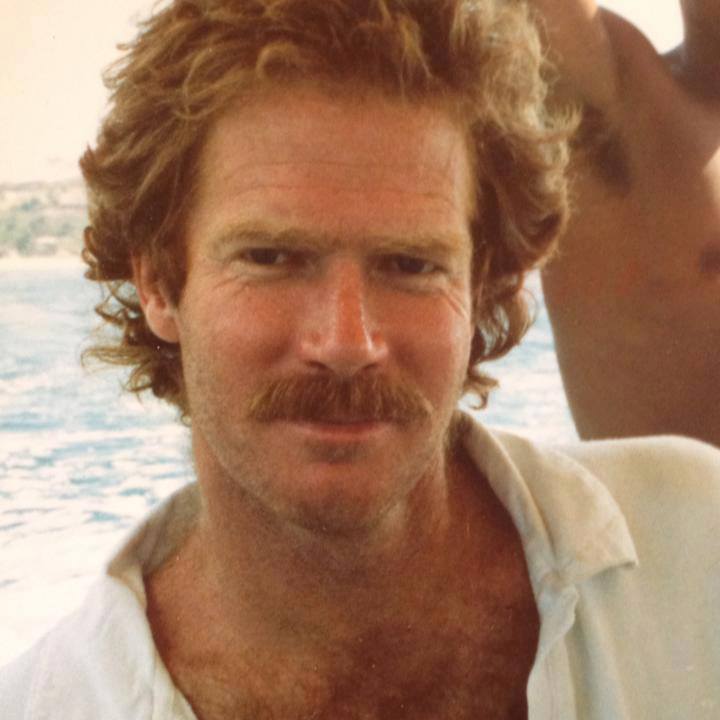
I made a color copy of a photograph of Joe– it radiates his kindness and good humor–and put it on the corner of my classroom desk.  This is his year. I will be the best teacher I can be, and it’s for him.

After school today, Kaylee and Maggie, two basketball players, were studying in my room–I work late, and I hate working alone, so having kids do their homework with me is a blessing.

We were talking, I think, about Irene again–-Irene with the red hair, because Maggie has red hair, too.  I was talking to Maggie and suddenly I thought of Joe.

“One of my best friends died this year,” I started.

The girls’ faces fell.  They started to stammer their “sorries.” These are good kids.

“No, you don’t understand.  Maggie, go look at the photo of my friend on the corner of my desk.”

She did.  The girls thought he looked nice.  I asked Maggie what color hair Joe had.  Red, she said.

I don’t think they completely got the point because I didn’t completely make it, and coherence is in short supply when you need it most.  They had to go to their game, and I think they believed they’d said or done something wrong, when in fact they’d given me a wonderful gift.  It took me a few hours to unwrap it.

The reason–and when you’re in your sixties, you begin to understand that life isn’t as accidental and random as you think it is–the reason I have more redheads this year than I’ve ever had in 29 years of teaching— is that Joe hasn’t left me at all.

My little brace of red-haired girls light me up inside every day they’re in my classroom, because they are themselves beautiful and, I now understand, because they connect me to the friend of a lifetime.  It’s no wonder I loved Joe—excuse me, love him–so very much.

February 2014


Joe Loomis.  1952-2013

Joe Loomis. 1952-2013

To the girl on the lawn at Cal

22 Tuesday Jul 2014

Posted by ag1970 in California history, Family history, Personal memoirs, Uncategorized

≈ Leave a comment

Patricia Keefe, Taft (CA) High School, about 1938

This year AVID students–kids whose family backgrounds do not include a college experience– invited me to go on the northern college tour, and I was honored. I had never visited Cal until a few years ago, with another AVID group.  I did go to Stanford. For a week. I won a teaching fellowship in 2004 and got to study the Great Depression and New Deal with David Kennedy, whose book on the subject won the Pulitzer Prize for History.  I tried not to look too adoringly at him while he taught us.  It was difficult, because not only was he brilliant, but he was a real human being– engaging, witty, and you could tell he loved the history of the time and the Americans who had lived it.

I instantly loved Stanford’s rival, Cal, when we visited, even though I had to fight the impulse, so common to my generation, to run off and occupy the administration building, Sproul Hall, and demand that we leave Vietnam.  It is so beautiful and I am convinced just walking around campus with the kids boosted my I.Q. a full 20 points, up to 100.

The other thing I thought, with a little sadness, was that my Mom–Patricia Margaret Keefe–should’ve been here.   She was desperately poor, a child of the Great Depression.  She was a human footnote in the immense body of Kennedy’s scholarship.  Her father, my Irish-American grandfather, deserted the family in the mid-1920s, so my grandmother worked long hours as a waitress in a Taft, California, coffee shop, where “extra sugar” meant a healthy dollop of bootleg Canadian whiskey in your coffee.  It meant my mother, as a little girl, spent a lot of time alone. Those years left their mark on her. We had a can cupboard longer than the cupboards in the back of my classroom, full of food we’d never eat, because the thought of being hungry must have terrified her. And so going to college, for the daughter of a waitress from an isolated outpost on the oil frontier, had been out of the question.

Earl Denton, the first superintendent of the Lucia Mar Unified School District in southern San Luis Obispo County, and a family friend, said that my mother, whose education ended with her graduation from Taft High School, was the most brilliant woman he had ever met.  I remember her devouring the works of the Jesuit theologian and anthropologist Pierre Teilhard de Chardin, who argued that evolution was no contradiction of faith; in fact, it was a divinely-inspired process.  She–-as I would years later with Das Kapital–-wrote almost as much in the margins of Teilhard’s books as he had written in the text.

When I was very little, we played school.  She even rang a hand bell when “recess” was over. It had been my grandmother’s—Dora Gregory, her mother-in-law, had been a schoolmarm in a one-room school in the Ozark foothills.  My first day of formal education was in first grade in a two-room school, Branch Elementary, in the Upper Arroyo Grande Valley.  I remember realizing, with a little shock of pleasure, that I could read the names of my classmates as our teacher, Mrs. Brown, wrote them on the blackboard.

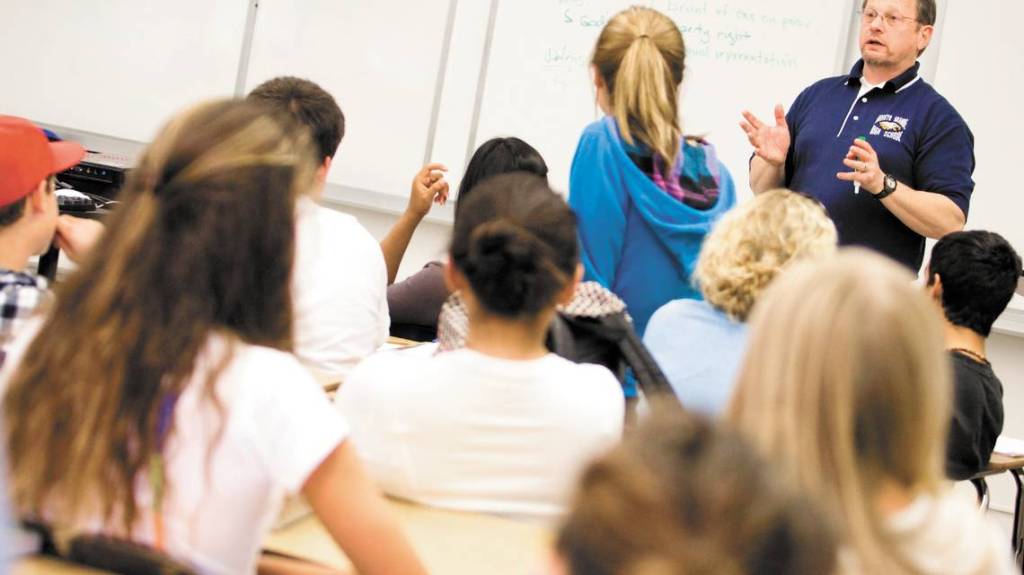
Me and my kids. My Mom was part of every lesson I ever taught.

My mother and I hadn’t been “playing” school at all.  She just made it seem that way. Losing her, when I was 17, remains the central tragedy of my life.

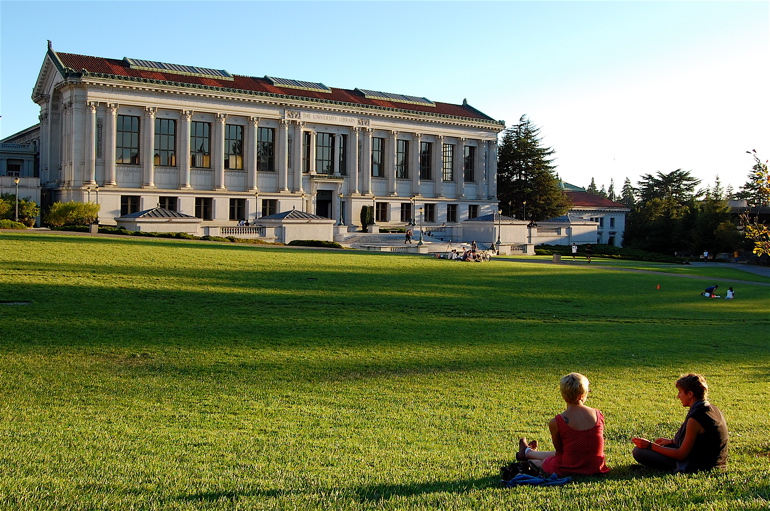
So, many, many  years later, on that visit to Cal, while the AVID kids explored, I had the briefest and loveliest mental image of her, about 1938 or 1939-–blouse, pleated skirt, saddle shoes, bobby socks, with her books and notebook spread out on one of those lush, verdant lawns, studying between classes. My mother was a beautiful woman, but the most beautiful thing about her may have been her mind.

memorialglade

And I think that’s why I enjoy these particular trips, with this particular group of kids. It’s my way of repaying Mom. One of them might take her place, studying in the sunlight on the lawn at a place like Memorial Glade.  She would love that idea.

And she would love these kids because she would understand them completely.  Despite my ne’er-do-well grandfather, I believe completely that my mother’s love for learning and for the the written word had deep genetic and psychological roots in County Wicklow.

So she would love without hesitation the AVIDS who show the incredible desire, the hunger, to improve themselves that she’d had, who refuse to complain when things get tough, who extend themselves to help their classmates, because she believed that all of us, and all of our lives, are intricately and intimately connected, and that this connection requires us to be responsible to and accountable for each other.

The young person who understands these things is close to my mother’s heart.

My mother and my big sister, Roberta, 1943. Mom was twenty-two.

Going to be a teacher? *Sigh!* Well, here’s some trade secrets.

20 Sunday Jul 2014

Posted by ag1970 in Uncategorized

≈ 1 Comment

10492258_10204106681091042_2162799464749117961_nI always wanted to be among those teachers who seem to command the fondest memories and the greatest respect, and in my high school experience—-the school where I teach today-—those would be Sara Steigerwalt, my speech teacher, and Carol Hirons, my journalism teacher. They generate fond and respectful memories, and I was terrified of both of them.

I also loved them.

I knew another teacher, with a fabulous reputation and whom I observed for an education class, who terrified his students; in fact, tyranny was the bedrock of his classroom technique. He did not hesitate to use humiliation and he used it frequently, and he did it to push his kids into thinking and speaking and writing in ways that made them better students, and it worked. He was gifted, charismatic, and passionate, and I hated the way he taught.

In his defense, he really did care for his students. The English loved the Parthenon, too, which is why they mutilated it, breaking off huge chunks of Antiquity so they could sail them across the seas and up the Thames to the British Museum.

I tried to be a Tough Guy, like him, early on in my teaching career, but something unexpected happened: My stomach began to hurt so badly that I would actually have to stop and catch my breath. I couldn’t sustain it.

So I went back to being myself. And, as much as I’d like to, mostly to salve my male ego, I can’t be a tough guy. It saved my pride a little when I came to realize that I deal with children, not calves at branding time.

Don’t be mistaken: That doesn’t mean I’m not demanding. I expect a lot from my kids, and I hold them to those expectations. And my most demanding demands are for civility and effort.

But I fail, every year, the basic Jesuit rule about teaching: Don’t smile until Christmas. This is because if I couldn’t be funny when I teach-—I was my high school’s Class Comedian, 1970—-I would almost certainly die, and it also means that sometimes, especially when I’m watching students write an essay or take a test, when they’re not watching me, they make me so happy that I can’t help but smile. Children are so beautiful, and what’s just as beautiful is thinking about the kinds of people they will grow up to be. They will, I think, do a better job than my generation did.

[Sure, Gregory. You teach really smart kids. I get that a lot from one or two teachers, who think teaching AP European History is easy. Here’s a little secret for them: It isn’t, and, by the way, I have taught all kinds of students, and I love teaching knuckleheads, having been one myself. One of my all-time favorite teaching experiences came in a support class for Alternative kids—the kids we try desperately to keep in school, and they taught me something valuable. They weren’t knuckleheads at all. They were some of the funniest and most honest and most decent kids I’ve ever taught, and some of them came from homes that would’ve made mine, sometimes a Reign of Terror with Dad as Robespierre, look like a Thanksgiving episode of The Waltons. ]

I once took one of those education classes—and you know how I feel about education classes—when we observed a not-very-competent teacher on videotape and the prof asked for feedback after. Mine was that the teacher didn’t seem to like kids much. The professor looked as if I were the Village Idiot with two of his prize hens under my arms. “Who said,” he asked, both rhetorically and icily, “that it’s necessary to like kids?”

I later taught two of his children. They were brilliant students and gentle, selfless human beings. I liked them. I really liked them. I came to realize that my professor must have been going through a hard time; he would father these two a little later in his life, in another, better, marriage, and when I met him again, at Parent Conference Night—-I didn’t bring up our previous acquaintance-—he was a changed man. He was much happier and he was, most deservedly, a proud father. He had done a beautiful job with them, and the gift he gave me in those children trivialized that bitter moment years before in his classroom.

I need to point out that I am not a saint, plaster or otherwise, either. I’ve screwed up in the classroom in ways that still make me flinch, years later. I’ve gotten angry—-absolutely and flamboyantly lost my temper, and reamed a class with more fury, minus the profanity, than a Parris Island D.I. could summon, and left them shaken.

Two years ago, I completely mishandled a situation involving a young man throwing the F-bomb at a young woman sixty feet away. I was furious, he was suspended, and, it wasn’t until much later that I realized she probably was fluttering her eyelashes, the whole time, in shocked innocence. What he said was completely inappropriate, and the chances were that she completely deserved it.

But that was kind of an exception. This is the part I love about getting older. I seldom get angry anymore. At my students, anyway.

I make an exception for most educational theorists, and that stems from their theories but it also has a lot to do with they way they savage the language I love so much. They B.F. Skinner English to death, and there’s nothing more infuriating and less enlightening than a sentence written by a typical Doctor of Education.

When I do get angry in the classroom, it’s more likely that I’m pretending to be angry. I’ve learned to pick my spots: those talks, at the right moment, can be marvelous motivators, and it’s fine with me if I’m the only person in the room who knows I’m delivering a monologue in the Globe Theater of my mind, usually as either Henry V or Richard III.

But when I do get genuinely angry, and, in the process, I belittle a student, here is what I’ve learned to do:

Apologize.

If possible, within earshot of that student’s friends.

Here’s why: Teaching is about human relationships, and a kid you’ve humiliated isn’t going to be in relationship with you. He’s going to shut down, he’s not going to learn, and you’ve failed him. And I do fail, with such blithe regularity, and in so many areas of my life, and while it’s all right for kids to see an adult fail, it’s essential for them to see that adult accept responsibility for his mistake.

The basketball player Charles Barkley was absolutely right when he said it wasn’t his job to be a role model. But it is for teachers.

Finally, all of us deserve to be treated with respect and dignity, and I don’t have the right to take any student’s dignity away, and that is the difference between me and the brilliant, but abrasive, teacher I observed so many years ago.

That goes for my behavior outside the classroom, as well. If I want to buy something from the lunch ladies, I’ve made this a cardinal rule: Never cut in front of the kids. Wait your turn with them instead. Inside the classroom, I will never ask a student to do an assignment I haven’t done myself.

I believe these things so strongly and try to live them, too, because of the biggest single influence on my life: My Mom. She was no saint, either—-she had an Irish temper, on occasion, so I come by mine honestly—tragically, she died when she was only forty-eight, when I was seventeen—but in our short time together she was, to me, one of the strongest, one of the most brilliant, and one of the most generous persons I’ve ever known. Every moment I’m in the classroom is meant to honor her.

My values and my spirituality—-because, to me, teaching has always been a vocation, a ministry, and while my faith is mine, and personal, it includes Humanity—-are my way of letting my Mom touch, and inspire, through all the years of my career, the four thousand children who are hers, too, because her life still burns inside me.

My relationship with my Dad was fraught, but he was the most engaging storyteller I’ve ever heard in my life. You forgot to breathe when he was telling a story about our ancestors and you never, ever saw the punchline coming when he delivered it at joke’s end. I inherited that from Dad. I will always be grateful to him.

I’ve also discovered, years later, that “classroom management” isn’t about disciplining kids: It’s about disciplining yourself. It means thinking out your lesson—my role model in lesson design is Filippo Brunelleschi, the jeweler who designed the Florence duomo and engineered the incredible machinery that made its construction possible. It’s means you make your objectives clear, you know how to change the subject or the learning style at least three times in a class period, and you know your students–the last is as much intuition as it is science–and, most of all, it means what comes easiest for me: being excited about what you’re teaching and, for that matter, about the honor of being a teacher.

It is amazing how something so unmeasurable—educational theorists adore the term “data driven,” and they’re easy to visualize with tape measures, calipers, and slide rules, always measuring, and meanwhile an eighth-grade girl has tied their shoelaces together–is also so marvelously effective.

But it also takes a tremendous amount of hard work. My easy workdays are ten hours. We don’t, despite the popular belief, go home at three. School is why we’re scribbling in our weekly plan books at our kids’ soccer games, or why I’m grading essays at the local coffeehouse while my peers are stopping by for a cup before they go on a bike into one of our beautiful coastal valleys, or sipping a cappuccino with the New York Times Book Review. That’s not how teachers spend their weekends.

And while I love kids, they can take a toll: I’m also a raging introvert, and all those surging emotions and all the needs and all the questions that young people have can wear me out. Sometimes, on my prep period, I have to turn out the classroom lights and put my forehead down on my desk and just let the exhaustion take over for a little while. That moment comes to every teacher. It’s a price, we’ve decided, that’s worth paying.

Fortunately, I am not so absorbed in my own noble suffering that I’m not willing to share some outrageously cheap stunts. in the name of classroom management, that might illuminate the gifted young teachers that will replace me:

Not getting an answer to a question you’ve asked? Threaten to hold your breath until you die, in which case it will all be their fault, and will have to live with that for the rest of their lives! Somebody will raise her hand!

Also, I will sometimes lie down on the floor and pretend to take a nap, and ask them to wake me up when they want to re-engage in the class discussion.

It’s useful to have a few stage tricks, too. Sometimes I will have to chew out a kid, but we’ll go outside to do it, get our signals straight again, and then I will hit a locker (darn it, they are gone now) with my fist and we’ll re-enter the classroom with the kid rubbing his arm and wincing. When they laugh, it’s because the joke is ours––mine and the kid who got into trouble––and we’ve turned the tables on something that could have been hurtful.

I hate them in the classroom, but parents with cell phones are quite useful. It’s a marvelous thing to call to the door a student who’s frittering away a chance to study for an exam, hand him your cell phone, and whisper:

“It’s your Mom.”

By the way, I once asked a parent, and my anger was not well disguised, who was texting during my Back to School Night presentation to turn the phone off. He did.

Early in my career, in a Catholic high school, I had a rambunctious class that wouldn’t settle down for the lesson. I assigned them an essay instead, due the next day. I collected them at the beginning of class and then, in front of the classroom, ripped them all apart and threw them into the wastebasket.

“Now,” I said, “do you understand why I was upset with you yesterday?”

I believe they did.

Another time, I got so frustrated with a class that I left the room and walked out in seeming cold fury. Then I ran around to the other side of the building, where there’s a bank of windows, and crawled under the lowest ones and brought my face up, glowering, very, very slowly, as if I were a periscope. When they started laughing, I got them back.

I’ve gotten the kind of angry teachers can get with a kid that’s such a bad anger that it keeps you up all night. We lose a lot of sleep worrying about you, American students. Here’s what I finally learned to do: I go to the records office, find the student’s folder, and look at the first-grade school photo. That little, little boy, whose hair has been combed so carefully, is your student, too. And if his hair’s not combed, then you begin to understand how the two of you arrived your sad meeting place, and you can start to look for a better one.

At the same time, my humanitarian tendencies are tempered by a catalogue of snappy lines:

When they’re supposed to be doing quiet seated work:

“I can hear voices, and the last time I checked, I wasn’t Joan of Arc.”

I asked two chatty girls to leave the room, then went outside and asked them: “There are two variants of the Plague. What are they?” They knew: Bubonic and Pneumonic.

“Which variant are you two?”

Bubonic?

“WRONG! You are pneumonic, because you’re more contagious. You’re out here because the two of you were talking, and then there would be two more, and two more after that, and what that means is that one of your friends is going to miss a question on the next exam because they’ve been distracted. They’ve been cheated out of a chance to study. Do you understand?”

They nodded. Enthusiastically. I was kind of flummoxed, but the best part was I got the chance to do a little re-teaching.

Two boys were sending eye signals when they were supposed to be reading. Some teachers would immediately launch an all-out nuclear strike. I waited instead, in the bushes, for twenty-four hours, then took them outside.

“Gentlemen,” I said. “I’ve been teaching for a long time, and can always tell the kind of guys who are going to give me trouble, the kind of guys I’m going to butt heads with.”

Pause. The pause is the most important part.

“And you aren’t those guys.”

Pause. I learned to pause from the sportscaster I so admire, Vin Scully.

“I like you.”

And then you describe the behavior, and why it’s a problem, and they get it.

They get it, too, when they get a good grade on a difficult test, or they try to answer a difficult question, or when they are kind to another student, because when I pass that student’s desk and give him or her just the briefest pat on the shoulder, they know what I’m saying: You matter, your did your best, your behavior is admirable, and I admire you, too.

When it comes to behavior, I am, ironically, the worst note-passer in my own class. A 15-year-old honors student last week told me she was having a panic attack and left the classroom in tears. Later I passed her a note: I’ve had them, too. So have Lincoln, Adele, Johnny Depp, and John Steinbeck, We’re not weirdos. We’re humans, you and me. Love, Mr. G.

Summer, 1944, Arroyo Grande, California

19 Saturday Jul 2014

Posted by ag1970 in Uncategorized

≈ Leave a comment

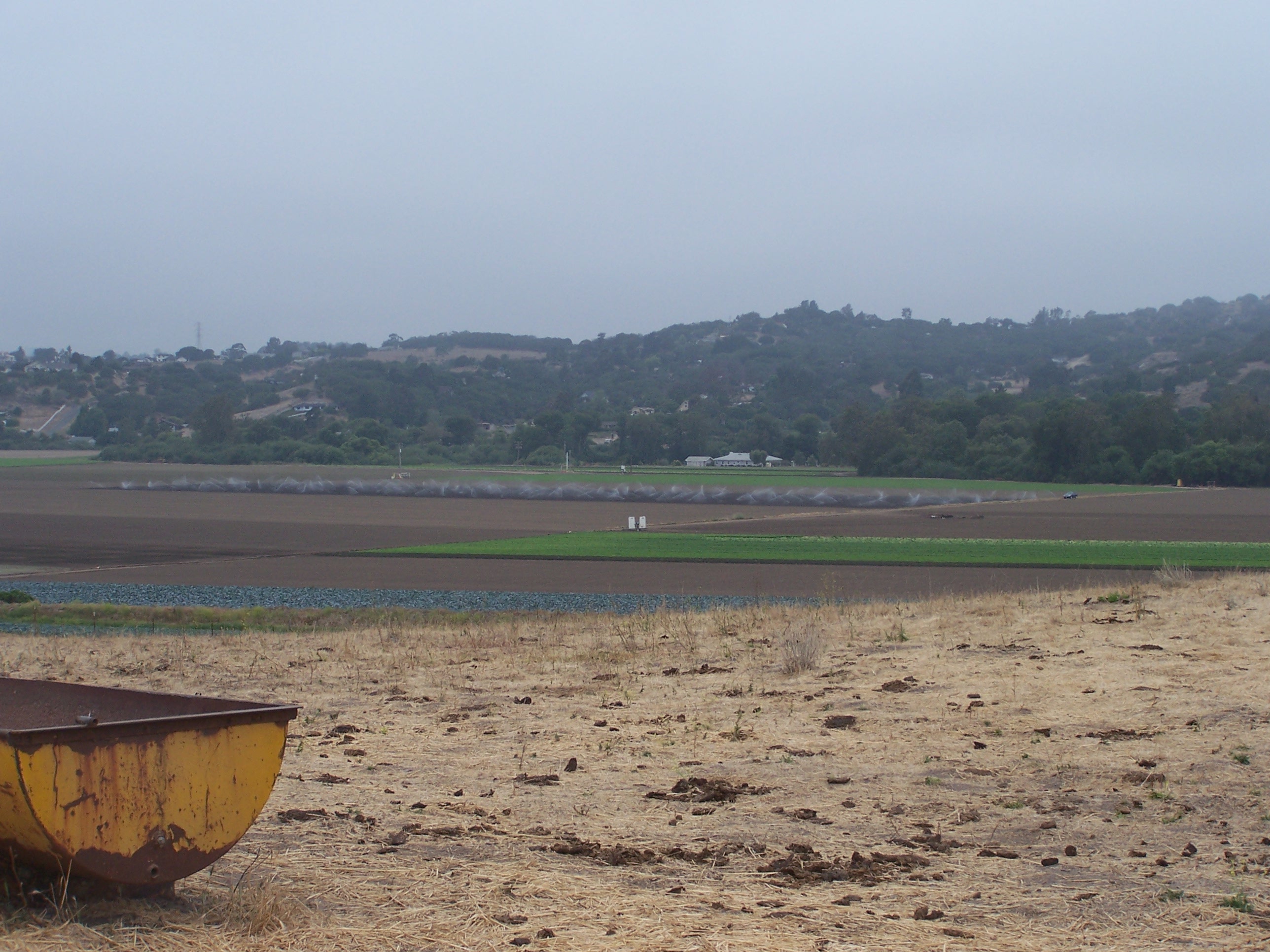
100_1460In the early summer of 1944—when Eisenhower pauses at the end of his weather officer’s report for June 6 and says simply, “Okay, we’ll go,” when Rome falls to Mark Clark’s armies, and when horrified Marines watch Japanese civilians leap to their deaths from the cliffs of Saipan—the war, for Americans at home, was both distant and painfully intimate, but even the war could not touch the work to be done.

That month, in the Upper Arroyo Grande Valley of coastal California, this is what you would see, if not clearly, because the cold morning fog can be dense: labor contractors drop off pickup loads of field workers at the Harris Bridge, which spans the creek that gives the valley its name and that nourishes it.

The workers cross the bridge whistling, an incredibly beautiful, almost baroque whistling, Mexican folk tunes from the time of the Revolution, or love songs, as they walk down to the fields to their work with their lunches–wine-jugs filled with drinking water and perhaps chorizo-and-egg burritos, wrapped in wax paper, the  fuel a man needs to do the kind of physical work that would make most men sit in the freshly turned field, gasping and woefully regarding their quickly-blistered hands, within fifteen minutes.

Their summer work might be in a new bean field and the whistling would stop because it is such a tax on men who work beans, whose breathing soon becomes laborious and therefore precious. To begin a newly planted field of beans, the field workers have to drive wooden stakes into precise parade-ground lines along the furrows, so that the bean vines can use the stakes to climb and twist—they will eventually yield bell-shaped flowers–toward the sun.

The sun invariably appears in late mornings when it burns the sea fog away and the colors of the valley, wheaten hills and verdant bottom land where the crop is in, are reborn, vivid and sharply focused.

To drive the wooden stakes, the field workers use a heavy metal tube, hollowed, with a handle attached that resembles that of an old-timed pump primer pioneer men and women once used to draw water out of the ground. So the whistling stops and is replaced by the rhythmic ring of the stake drivers as the workers pound hundreds of them into the field.

It is a musical sound, but, of course, what you cannot hear are the grunts of the men at each stroke of the stake driver and what you cannot feel is the enormous weight that exhausted arms and shoulders soon take on and what you cannot avoid, if you think about it sensibly, is admiration for the men who feed you. In turn, they are determined to feed families who live in camps or tarpaper shacks in the Valley, or, for some, part of the work force that will dominate agriculture here for the next twenty years, for families who are living in the tier of states of northern Mexico.

In 1944, Mexican nationals are doing this work. Four years before, many of the laborers would have been Japanese, but they are gone now, to bleak, colorless, and hopeless camps–where they would cultivate hope nonetheless– like Poston or Gila River. A few of them, as the war begin inexorably to wind down, will begin to trickle home. The Kobara family will be the first. But many, many families–now unfamiliar surnames in yellowed 1941 high school yearbooks–will never come home. The wound may have been too deep.

Beans are no longer central to the agriculture of the Arroyo Grande Valley, but once gain, Japanese American farmers—like the Kobaras, the Ikedas, the Hayashis—are. Agriculture has changed—the seemingly limitless groves of walnut trees that once competed with row crops are gone, victims of a malevolent infestation of insect larvae.

Today farmers grow more exotic crops, like bok choy or kale, and along the hillsides once given over,  in the 19th centur, to beef cattle, there are new farmers and nearly endless row of wine grapes, multiplying every year, profitable, lovely, and greedy for water, a commodity that isn’t always plentiful in California.

That is why beef cattle haven’t dominated the coastal hills since the 1860s, when the drought that periodically afflicts the state hit as hard as it ever has. The cattle, either killed outright by ravenous coyotes come down from distant folds in the hills, or dead of thirst and hunger, would have covered the hills with their bones.

It was that kind of drought that may have brought a field worker–not a Mexican, but an American, a New Mexican–to these coastal valleys in 1940.

Much of his native state, of course, in the years before, had been swept away by the Dust Bowl. Winds had carried the copper-red soil as far east as the mid-Atlantic to drop it, like gritty rain from a place that had none, onto ships still sailing freely between continents.

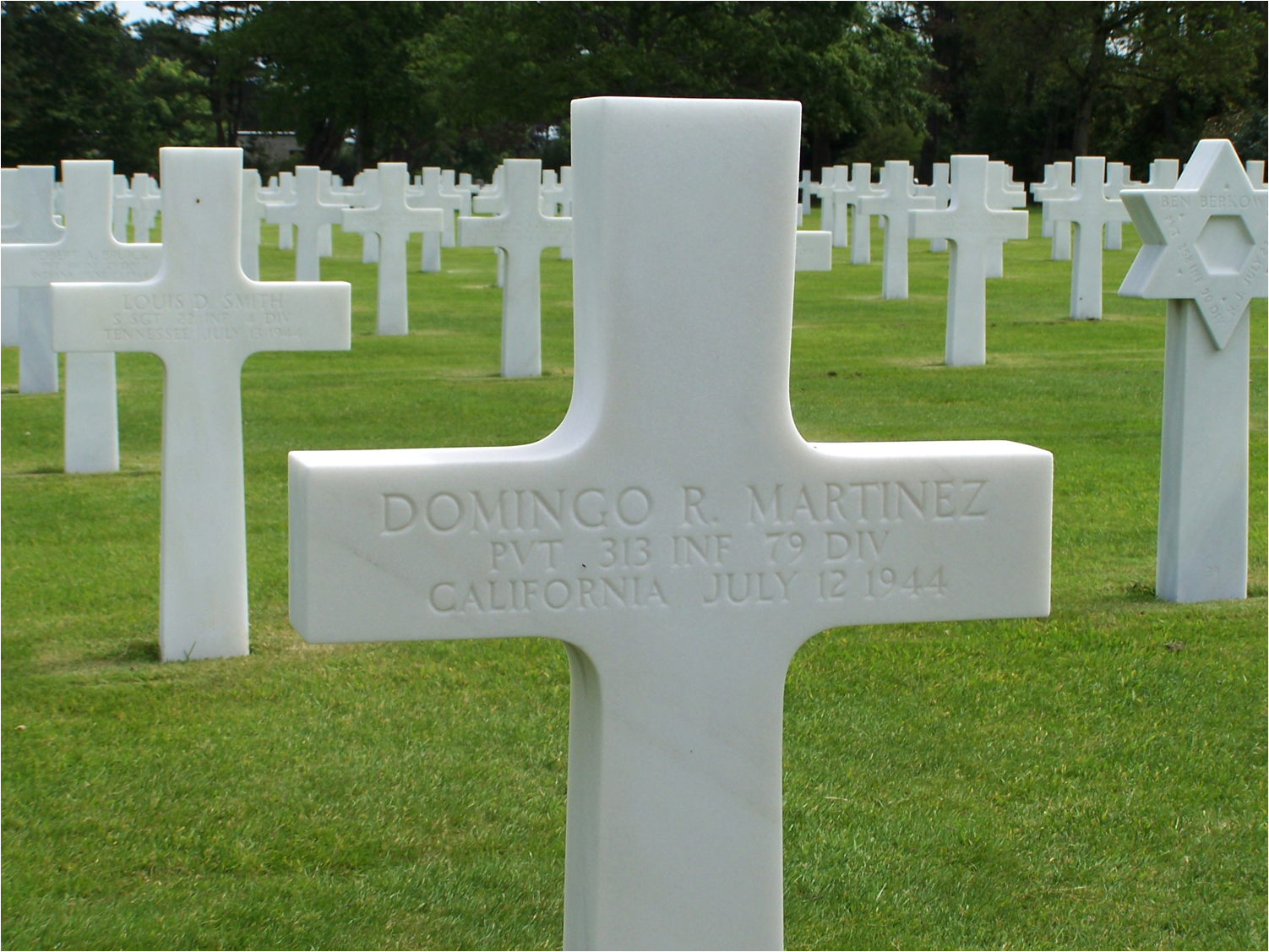
Those ships would lose their freedom in the years immediately after, and the coyotes that hunted them without fear, of course, were U-boats come out of their lairs in Kiel, and later in L’Orient. U-boat captains called this “The Happy Time.” Martinez

The U-boats would someday kill that young field worker, if indirectly, as part of an inexorable chain of events that would lead him to Normandy, 5,500 miles away from the fields that border Arroyo Grande Creek, and to pastures bound by hedges and grazed by fat dairy cows, cows that lowed piteously to be milked in what had become killing zones. One of them, dead in the crossfire, may have provided scant cover for the field worker, now a rifleman, Private Domingo Martinez, from the German machine-guns that harvested crops of young men.

He calls them “Japs”

18 Friday Jul 2014

Posted by ag1970 in American History, California history, World War II

≈ Leave a comment

http://m.youtube.com/watch?v=pOy2c6BOKPM

A Reporter’s Notebook

16 Wednesday Jul 2014

Posted by ag1970 in Writing

≈ Leave a comment

I’m sorry I’m posting so much, but I am laid up and besides that, but this is how my mind has worked all my life. It always has lots to think about.

This morning it was about two wonderful interviews I got to do when I was a reporter.

One was with Tom Carolan of the Carolan House in Grover. He was 100 when a gifted photographer, Thom Howells, and I met him. Carolan’s home was, to borrow Steinbeck, like a museum of uncatalogued exhibits, like an incredible antiques shop.  I was particularly  taken, and so was Thom, by a pair of beautifully-crafted binoculars from 1906. Carolan was Irish-born–not fond of Oueen Victoria–funny, eccentric, and delightful. He still missed the love of his life. He outlived Mrs. Carolan by twenty years.  She was a New York girl, I think, with whom he, a young immigrant had fallen in love, during the McKinleyvAdministration. . I loved the interview and I loved his little house, one of the first in Grover City.

I get a little emotional in old homes because some part of me intuits the lives that have left their traces in them, and the Anne Frank home in Amsterdam very nearly overwhelmed home me. Even as a supposedly objective historian, I have a consistent habit of making friends I have never met. The young men of World War II  I am now researching are from my father’s generation, but their lives ended so young that they become, in a way, like adopted sons. They are my boys, and I miss them.

The second wonderful interview was with Gene Saruwatari over coffee at what is Pancho’s today. It was still Sambo’s, and a place where in high school I had spent hours talking about books and music and poetry and ideas over botomless cups coffee–ten cents, no limit on refills–with my friend Paul. A peroxide blonde with a beehive who snapped her gum and looked tough–she more than held her own with truckers, farmhands,  and drunks– served us. But she liked Paul and me, called us “Hon,” and so I liked it when Gene suggested that place for the interview.

(By the way, we all had crushes on Gene’s lovely sister, Gayle, back in high school and also with the car Gayle drove–their Dad’s 1969 400-horsepower Pontiac GTO, black top over midnight blue.)

It had suddenly suddenly occurred to me that all the walnut trees of my youth, including the groves that had once surrounded the high school, were gone. I remember that Joe Loomis, in his woodcutting days, had cut enough firewood from them to keep all the fireplaces at Hearst Castle roaring for fifty years.

Gene told me a pest–the husk fly larvae–had infested the trees and so killed walnut cultivation in the Valley. But Gene made it interesting, and then even more interesting when he talked about how his grandfather, who harvested walnuts as well as vegetables (My Kelly grandparents had 40 acres of almond trees in Williams, California) had come from Japan and settled here.

I remember Tom and Gene because in both interviews, I had to struggle to take notes. Sometimes you just want to put down your pen and Reporter’s Notebook and listen to good people tell good stories. It is a great honor.

4102443434_d5a3f95405

The Return of the “St. Louis”

16 Wednesday Jul 2014

Posted by ag1970 in American History, News

≈ Leave a comment

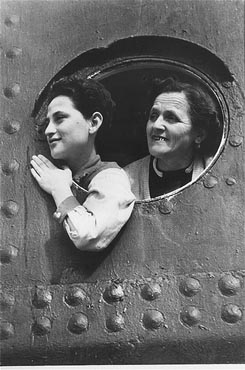
St. Louis passengers waiting to disembark in Havana. They would be turned away.

St. Louis passengers waiting to disembark in Havana. They would be turned away.

In May, 1939, the German liner St. Louis left Hamburg, bound for Havana, with over 900 passengers—most of them European Jews.

They hoped their stay in Cuba would be a short one; they’d applied there for U.S. visas. But when the St. Louis reached Havana, only 28 of the passengers were admitted. The rest were turned away at the demand of Cuban President Frederico Laredo Bru. Cuba was still feeling the effects of the Depression, the immigrants were seen as a threat, and Cuba’s right-wing press was powerful.

St. Louis had not stayed in Havana long enough for the Europeans, now stateless refugees, to have their U.S. visas processed. But her German captain–a determined man, and one deeply sympathetic to the passengers in his care–set course for the American mainland.

Despite intense press coverage of the passengers’ plight—Kristallnacht and the “racial laws” had bluntly served notice of what Nazi Germany had in store for them—this, according to the Holocaust Encyclopedia, is what happened.

Sailing so close to Florida that they could see the lights of Miami, some passengers on the St. Louis cabled President Franklin D. Roosevelt asking for refuge. Roosevelt never responded.

U.S. Coast Guard cutters shadowed St. Louis to make sure she did not try to enter an American port. Despite pleas on the passengers’ behalf, Canadian Prime Minister Mackenzie King also denied them entry. Eventually the ship returned to Europe. The UK admitted 288 passengers; the remainder were dispersed throughout France, Belgium, and Holland, all overrun by the Wehrmacht in 1940.

At least 227 vanished in the Holocaust.

Today the United States deported a group of Hondurans: 17 women and 21 children, boys and girls between 15 and 18 months. Their charter flight landed in San Pedro Sula, Honduras, the city, according to U.N. data, with the highest murder rate in the world.

This is where the photograph of these deportees, a mother and daughter, was taken.

immig16n-7-web

We cannot condemn…

15 Tuesday Jul 2014

Posted by ag1970 in American History, California history, World War II

≈ Leave a comment


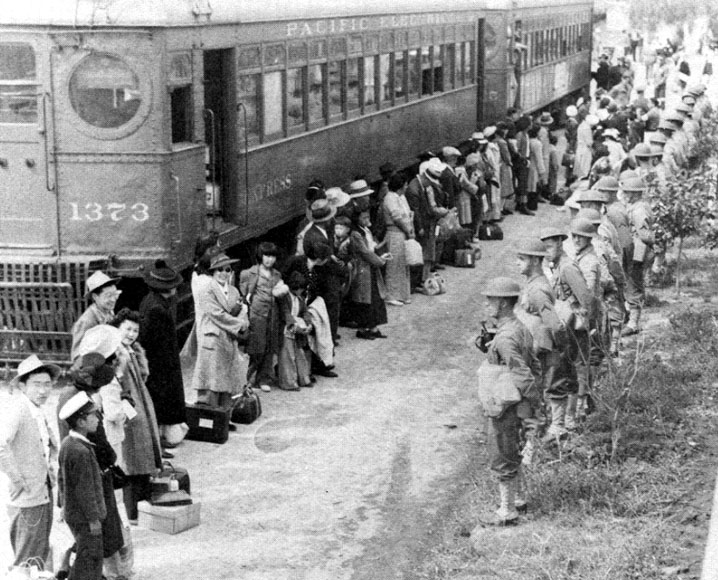
Japanese-Americans await transport at the Santa Anita Racetrack. They slept in the stables.

Japanese-Americans await transport at the Santa Anita Racetrack. They slept in the stables.

From a letter to a University of Oregon alumni magazine that ran an article on the internment of World War II:

“In 1942, U.S. Marines were battling the Japanese in the Guadalcanal jungles. American aircraft carriers were sunk by Japanese warplanes. So many ships were sunk in the Solomon Islands ‘slot’ that it was nicknamed Iron Bottom Sound. The fighting was a match of equals that could have gone either way. The American public was frightened of a West Coast invasion. We cannot condemn 1942 policy using our 2013 mores and sensibilities. The prospect of a ready made collaborationist population, following a Japanese invasion, impelled the internments of Japanese Americans.”

This, of course, excuses the irrational. Consider the other coast of the United States:

–In 1941, German U-boats were already attacking American warships: the destroyers Greer and Kearny came under fire before a torpedo took the Reuben James and 115 of her 159-man crew in October, five weeks before Pearl Harbor. Even before then, with the fall of France in June 1940, war hysteria in America had been intense. With FDR’s blessing, J. Edgar Hoover would compile voluminous lists, aided by wiretaps, of suspected German Fifth Columnists living in the United States; the agency included more lists of any American who subscribed to periodicals written in German or Italian, and until FDR ordered the registration and monitoring of all aliens, there were isolated but frightening cases of Germans or German-Americans who were attacked–one was murdered–by wrongheaded “Patriots,” deprived of our 2013 mores and sensibilities.

–By 1942, American troops were fighting Rommel’s Afrika Korps—and getting routed, at Kasserine Pass. In general, the war was going against the Allies on both the Western Front—the disastrous Dieppe Raid is a notable example–and Eastern Front, with Gen. von Paulus’s Sixth Army, which would eventually surrender at Stalingrad, defeating Soviet forces in combat around Kharkov.

In the Pacific war, we had lost the Philippines, just as the War Department knew we would, and our Pacific possessions, but we’d taken the war to Japan with the Doolittle Raid in April and achieved a much more substantive victory–the first American turning point–at Midway in June with destruction of four of the six carriers that had begun the war against us at Pearl Harbor, along with the cadre of the Japanese naval air forces.

–German U-boats sank 82 American ships in all waters in December 1941 alone; In 1942, they sank 121 American ships off the East Coast and 42 along the Gulf Coast out of a total of 500 American merchant marine ships sunk by German submarines that year. Americans on holiday, from Coney Island to Miami, could see our ships glowing at night as they burned,, with their crews.  A U-boat also delivered a team of Abwehr saboteurs  onshore near Jacksonville, Florida. We were bleeding ships and English children were beginning to go hungry: they were allowed one small egg every four weeks.

During the same period, Japanese submarines sank a total of four ships off the West Coast.

–120,000 Japanese-Americans were interned under Executive Order 9066. Fewer than 3,000 Italian-Americans or Italian aliens and 11,000 German-Americans or German aliens were interned.

Stabbed in the Arras, Bigod!

15 Tuesday Jul 2014

Posted by ag1970 in Film and Popular Culture

≈ Leave a comment

Give me a flit-flit here...

Give me a flit-flit here…

...and a flit-flit there...

…and a flit-flit there…


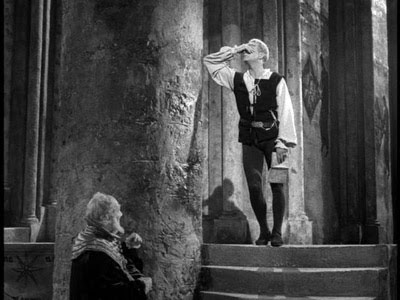
Sir John Gielgud-Obit

John Gielgud as Hamlet. This look’s for you, Mother…

I’m sorry.  I cannot sit through Olivier’s Hamlet. There’s entirely too much flitting, and Ophelia, he’s just not that into you. We saw the play, perhaps Shakespeare’s longest, and I was ready to shake off his mortal coil about halfway into Act III. Tedious. Now Olivier’s Richard III—that’s delicious malevolence. I love that film.

Elizabeth and I saw Rosencrantz and Guildenstern Are Dead in London; I rented a little pair of opera glasses but we couldn’t focus them because we were laughing so hard. That’s good Shakespeare, that.

One of the best Hamlets ever was said to be John Gielgud, and Gielgud directed one of my favorite actors, Richard Burton, in the role in a 1964 film.

Both Gielgud and Burton were big drinkers and did not mind imbibing before or during a performance, like the way Babe Ruth ate hot dogs.  Burton once drank a fifth of vodka, gave a flawless performance in Camelot, then threw up.

Gielgud was in his cups a wee bit in a London play where his character was to commit suicide in the final act, which, now that I think about it, makes Hamlet’s failure to act after the mid-play “To be or not to be…” soliloquy even more painful. In Gielgud’s play, his final line was delivered to a butler: “A pint of port and a pistol, if you  please.”

Burton suspects Guinevere's mind is not on a Doe, a Deer, A Female Deer.  Instead, she's thinking about...

Burton suspects Guinevere’s mind is not on a Doe, a Deer, a Female Deer. Instead, she’s thinking about…

...Robert Goulet's Lancelot.

…Robert Goulet’s Lancelot!

Well, of course, it didn’t come out that way. Gielgud asked instead for “a pint of piss and a portal.”

The rest was Silence.

← Older posts
Newer posts →

Subscribe

  • Entries (RSS)
  • Comments (RSS)

Archives

  • January 2026
  • December 2025
  • November 2025
  • October 2025
  • September 2025
  • August 2025
  • July 2025
  • June 2025
  • May 2025
  • April 2025
  • March 2025
  • February 2025
  • January 2025
  • December 2024
  • November 2024
  • October 2024
  • September 2024
  • August 2024
  • July 2024
  • June 2024
  • May 2024
  • April 2024
  • March 2024
  • February 2024
  • January 2024
  • December 2023
  • November 2023
  • October 2023
  • September 2023
  • August 2023
  • July 2023
  • June 2023
  • May 2023
  • April 2023
  • March 2023
  • February 2023
  • January 2023
  • December 2022
  • November 2022
  • October 2022
  • September 2022
  • August 2022
  • May 2022
  • April 2022
  • March 2022
  • February 2022
  • January 2022
  • December 2021
  • November 2021
  • October 2021
  • September 2021
  • August 2021
  • July 2021
  • June 2021
  • April 2021
  • March 2021
  • February 2021
  • January 2021
  • December 2020
  • November 2020
  • August 2020
  • July 2020
  • June 2020
  • May 2020
  • April 2020
  • January 2020
  • December 2019
  • November 2019
  • October 2019
  • September 2019
  • August 2019
  • May 2019
  • April 2019
  • March 2019
  • February 2019
  • January 2019
  • December 2018
  • November 2018
  • October 2018
  • September 2018
  • July 2018
  • June 2018
  • May 2018
  • April 2018
  • March 2018
  • February 2018
  • January 2018
  • December 2017
  • November 2017
  • October 2017
  • April 2017
  • March 2017
  • December 2016
  • November 2016
  • October 2016
  • September 2016
  • August 2016
  • July 2016
  • June 2016
  • April 2016
  • March 2016
  • February 2016
  • January 2016
  • December 2015
  • November 2015
  • October 2015
  • September 2015
  • August 2015
  • July 2015
  • June 2015
  • May 2015
  • April 2015
  • March 2015
  • February 2015
  • January 2015
  • December 2014
  • November 2014
  • September 2014
  • August 2014
  • July 2014

Categories

  • American History
  • Arroyo Grande
  • California history
  • Family history
  • Film and Popular Culture
  • History
  • News
  • Personal memoirs
  • Teaching
  • The Great Depression
  • trump
  • Uncategorized
  • World War II
  • Writing

Meta

  • Create account
  • Log in

Blog at WordPress.com.

  • Subscribe Subscribed
    • A Work in Progress
    • Join 68 other subscribers
    • Already have a WordPress.com account? Log in now.
    • A Work in Progress
    • Subscribe Subscribed
    • Sign up
    • Log in
    • Report this content
    • View site in Reader
    • Manage subscriptions
    • Collapse this bar
 

Loading Comments...