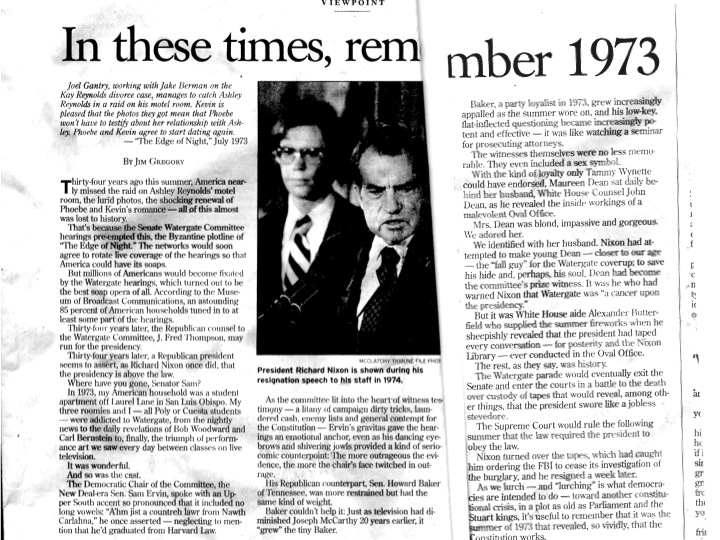
Watergate As a Spectator Sport
23 Saturday Aug 2014
Posted in American History, Uncategorized

23 Saturday Aug 2014
Posted in American History, Uncategorized
23 Saturday Aug 2014
Posted in American History, California history, Family history

23 Saturday Aug 2014
Posted in California history, Personal memoirs
23 Saturday Aug 2014
23 Saturday Aug 2014
23 Saturday Aug 2014
16 Saturday Aug 2014
Posted in Teaching

Amanda, Alaiana, Andrea, Tessa, Madi.
Dear Amanda, Alaina, Andrea and Tessa,
I love Madi, too, but this message is for the Class of ’15. I wish we could squeeze Leila in here, too, but she and I already had a chat sort of like this one.
I need to have it with you four, too, because, part of being Irish is going through life certain that a meteor will land on you and squash you flatter than a bug at any minute, so I’d better get this said.
You are now seniors. You are reminded to see me for a good letter of recommendation because I write a dilly.
I know I’ve stuff like this before, but I am 62, dammit, and we repeat ourselves, and it doesn’t matter, anyway: good things bear repeating, because so often in life all we hear is what we did wrong.
I have been teaching for thirty years and have taught some extraordinary young women, but I have never encountered a group—a combination of talent, intelligence, grace and determination—like you four and Leila.
I took great joy in being your teacher, and when Andrea invited me to the Progressive Dinner last year, it was one of the best parts of the entire school year (not to mention getting to hang, even if it was in a stupid school van, whose seat belts I never did quite figure out, with such beautiful young women.)
I think I’ve mentioned that I really, really wanted a little girl, but the Lord opted for boys, and if one of ‘em’s gonna be a priest, that shoots a rather large hole in any potential for granddaughters.
But that’s okay, because I think so highly of you five, and have so much affection for you—my heart gets all squishy—that you are kind of like the daughters I would have wanted to have: you are young women of great character, and it is my fond hope that you and your (female) peers will take over this country and, for once, run it right.
This has been your Official Senior Year Pep Talk, and it comes from someone who loves you all very much.
That is all. Class dismissed.
JG

Tessa and Leila. Leila’s mother, by the way, makes Killer baklava.
14 Thursday Aug 2014

Robin Williams and his daughter, Zelda
My eyes popped open at 3 a.m. A woman way over on that Other Coast read the thing I wrote about depression and I realized–you could fire a nail gun at this Irish skull and they’d bounce off, bent and useless–I needed to “friend” her, because no one in her family understands what it is she is suffering. I found her page and, of course, was not surprised at what I found: a vibrant, smiling woman with beautiful children–they look grown now–whose faith life is very important to her. I liked her immediately.
Of course this reminded me of Joe Loomis who, again, took care of me after my Mom died. This is that “paying it forward” business.
This is my space, so I get to ramble.
All of this in turn reminds me of why I became a history teacher. We are not, in the end, fractured and alone–sorry, existentialists. We are all in some way connected to each other and we all have obligations that we may not even be consciously aware of to take care of each other: if you’re lucky, and had the kind of parents I had, then you commit your life to acting on those obligations no matter what you do “for a living.”
This is why so many locals love John Gearing, who works at the cemetery and had the article in yesterday’s Tribune. John has dedicated his life to caring for that cemetery and in the process has become, because of his compassion, a great comfort to those who have lost loved ones.
What John does is so important because my calling has led me to understand that we are connected even to the dead: I have never felt more heartbroken than I did in Anne Frank’s home in Amsterdam, nor more intimate with a family I had never met. I wanted to go backward in time and rescue her and the Franks from the evil that would sweep them up, but then I had to remind myself that Anne was fulfilling her obligation to all of us, at a terrible, terrible price. She reminds us, to this day, of what it is to be human, reminds us that we have a purpose, even in a life so brief, and she reminds us, too, that what we do matters.
The wonderful thing about history is realizing that the dead are not really dead. They stay with
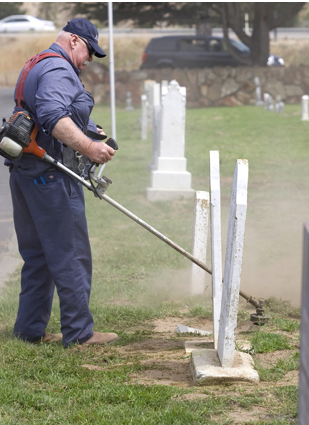
John Gearing
us. They walk with us on our journeys, and, if we pay attention and are watchful, they light the path ahead for us.
14 Thursday Aug 2014

Heartbreaking.
This is what happens: A voice is born inside you. It lies to you –and it is so persuasive–and it never, ever lets up: it tells you that you are no good, that you are weak, that you are a failure, and you go through life the way I have been the last few weeks after minor surgery, as if you’re on crutches, like I was, when sometimes anything you do demands the greatest effort to achieve the smallest of results.
It’s a drumbeat in the background every waking moment of your life, and you use alcohol or work, and I’ve used both, to mute the sound of that voice. It’s not a surprise to me that he is dead. What he lived with in the murmur of that insistent voice for 63 years was a burden that would crush anyone else in a matter of weeks.
The fact that he fought this for so long–and gave so much joy in the process–speaks to me of a man with courage beyond understanding.
That voice has spoken to me. It took my mother’s life. We are not weaklings, we are not failures, we are not cowards. (Those ads for suicide hotlines? The voice tells you that making that phone call is confirmation that you are a coward.)
Finally, we are not “selfish.”
We have a disease that turns every day into combat and the trick isn’t to win, because you never will. The trick is to fight that lying, seductive voice inside to a draw. The next day you begin again. Robin was simply exhausted from fighting not one, but two, diseases. Civil War soldiers remembered that the comrades who finally, finally broke and ran were the bravest soldiers they’d ever seen.
08 Friday Aug 2014
Posted in American History, California history, World War II
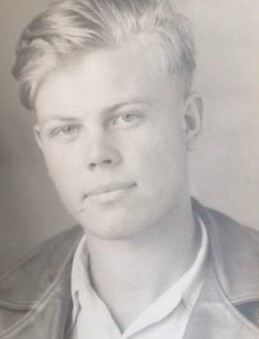
Will Tarwater as a young Arroyo Grandean
What happened the morning of December 7 reached Arroyo Grande at 11:30 a.m., when, for many townspeople, it was a quiet time: they might have been listening to classical music, interrupted by the news bulletin, while they read a Sunday paper from San Francisco or Los Angeles, and waiting for the big lunch that, for many American families, was as traditional as Sunday church services
For Juzo Ikeda’s children, that would have meant services at the Arroyo Grande First United Methodist Church where, three years earlier, in a foreshadowing of the suffering that was to come, Japanese-American members of the church had donated a painting of Christ in Gethsemane, struggling with the fear he felt as the Temple Guard was on its way to arrest him.
It is said that many Americans had to find an atlas to locate Hawaii; even the announcer in one of the initial broadcasts pronounced the island where Arizona burned, Oklahoma had capsized, and where 160 warplanes were destroyed on the ground as “Owahoo.”
Will Tarwater, whose family ranched in the Huasna Valley and who spent a career as a Border Patrol agent—a career that you learn, once you get to know him, has deepened in him an innate sense of justice and compassion—remembers being in town with his father and being “completely shocked. It was beyond our understanding. Bewildered! We went home and turned on the radio to hear more. Still could not make any sense of it.”
A little more than an hour after the first radio broadcast, San Luis Obispo Tribune photographer and archivist David Middlecamp writes, the fire siren in the county seat to the north of Arroyo Grande—affectionately called “Ferdinand”—began to wail. This was the summons for 40th Division soldiers, in training at Camp San Luis Obispo, to return immediately to base. County Sheriff Murray Hathaway dispatched extra deputies to Union oil storage facilities on the other side of town and the company itself provided extra security for Avila Beach and Estero (Morro) Bay. The newspaper rushed a Sunday edition to print—the first, Middlecamp notes, in decades—when it became apparent that the Philippines were under attack, as well. Tarwater remembered both that Sunday edition and the size of its headlines seven decades later.
The next day, he and his classmates at Arroyo Grande Union High School gathered in their new gymnasium—a New Deal WPA work project that still serves as the Paulding Middle School gym today—to listen to Franklin Roosevelt’s brief but dramatic address asking Congress for a declaration of war. By December 8, the initial disbelief that news of the attack generated had been replaced by growing fear.
FBI agents descended on the Valley that day. They began to collect the heads of the farm families. Shigechika Kobara was an important target because of his leadership in the Japanese-American community: he would spend the following days in the county jail, then in Army custody, before being reunited with his family in the Arizona desert. Juzo Ikeda would have faced the same fate, but he’d broken his neck in a farm accident and was helpless, watched over by his son, Kaz, who would be allowed to stay behind while the rest of the Ikeda family was sent to the Central Valley. The agents somehow missed another prominent man, Yeiji Hayashi, which was a relief to his 15-year-old son, Haruo, because it would be his father’s stoic strength that would keep the family together in the months to come.
This is when the rumors began–rumors that Will Tarwater refused to believe, since one of his closest friends was classmate Ben Dohi, in a high school where 25 of the 69 members of the class of 1942 were Americans of Japanese descent.
After Pearl Harbor, rumor mills had a heyday about it. All kinds of wild rumors about everything: a large farmhouse off Halcyon near the highway had a basement full of guns! Another house had a secret room full of short-wave radios and they were in constant contact with Tokyo…on and on. It seemed like someone was trying to turn us against our neighbors. Most of us couldn’t buy it. We had grown up with them.
Haruo Hayashi, a sophomore at the high school, had grown up with three friends who meant a lot to him: John Loomis, Gordon Bennett and Don Gullickson. The three would stand by him when he returned to school–he’d listened to the news of Pearl Harbor on the radio while recuperating from an appendectomy, and had to wait another week not knowing how he’d be received by his classmates. His three friends–two would go on to fight the Japanese at Pelelieu and Okinawa, would write letttters to Haruo in his internment not the name of a tough Italian-American kid who told Haruo “I will personally at the shit out of any kid who calls you a ‘Jap.”” would be the friends who continued to write letters to Haruo in his internment Their friendship was not uiversal: some classmates called Haruo a “Jap.” He has forgotten their
But beyond the little high school on Crown Hill, the fear hardened two weeks after the attack. The war arrived offshore. One story I heard growing up, though I’ve never been able to confirm it, has a housewife in the lovely seaside community of Shell Beach, about five minutes north of Arroyo Grande, looking out her picture window for a picture-postcard view of the Pacific, then freezing in horror when a the shaft of a submarine’s periscope appeared where she might have preferred the spout of an migrating grey whale instead.
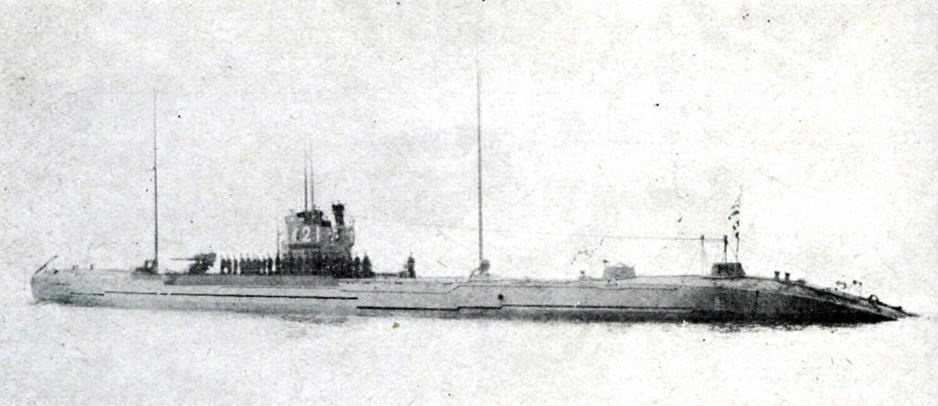
I-21
It is a plausible story: The Imperial Japanese navy had positioned nine submarines, or I-boats, all along the West Coast. One of them, I-21 had, on the morning of December 22, fired a torpedo that missed its target, an oil tanker, off Point Arguello, about 45 miles south of Arroyo Grande, and her captain, Kenji Matsumura, headed north in search of targets of opportunity. He would have passed Shell Beach on his way to another frustrating encounter, when his boat failed to sink the tanker Larry Doheny off the north coast of the county, despite an attack in which he fired another torpedo and opened fire with I-21’s deck gun.
Matsumura found a third target in the little tanker Montebello off another coastal town, Cambria, farther north, but this time, the result was more satisfying for him: at 5:45 a.m. on December 23, he fired two torpedoes and this time one hit; I-21 surfaced and opened fire with her gun—its report could be heard inland by residents of Atascadero, 26 miles away—and although her crew escaped, Montebello went under 45 minutes after the attack had begun.
Within weeks, I-21 was patrolling the coast of Australia, would later shell Sydney Harbor, and would be lost with all hands near Tarawa in 1943: Matsumura and his crew are ample demonstration of why this is called a “world” war.
Three days later, the Arroyo Grande Herald-Recorder reported that a 22-year-old sailor, Wayne Morgan, had been killed at Pearl Harbor. Arroyo Grande residents would find out much later that Morgan, who went to grammar school and graduated from the high school here, had died, like Jack Scruggs, on the U.S.S. Arizona.
So he surreal shock of Pearl Harbor, followed by the I-21’s attacks just off the coast, generated the kind of fear seen at its most extreme in “The Battle of Los Angeles” the following February, where anti-aircraft batteries, aided by an array of searchlights, opened fire on an air attack that never existed.
Californians’ fears far outweighed reason: in 1942, Japanese I-boats would sink four ships off the West Coast, while German U-boats sank 70 ships off North Carolina’s Outer Banks alone, when Americans from Fire Island to Miami Beach could watch as doomed American merchantmen—and their crews– burned offshore.
It was time, some began to say, to get the Japanese out—away, at least, from the coast, where they were suspected of Fifth Column activities like those in the wild rumors Will Tarwater had sense enough to doubt. When a Mutual Broadcasting commentator named John B. Hughes advocated the removal of the Japanese in a January 1942 broadcast, he was flooded with letters of support.
One came from a woman in Guadalupe, a little town just south of Arroyo Grande:
Today’s (broadcast) really came close to home.We live near this small town where nearly one half are Japs. They farm all the best land and pay outrageous prices per acre, such as $45 or $50, and live in a shack to do it. Besides [they] own the theatre, half the garages and just about run this town…really, this is no country for such people.
A woman from San Luis Obispo, north of Arroyo Grande, agrees.
…We want to congratulate you on the stand you are taking towards the Japs. We wish there were more like you. We have lived in and around San Luis Obispo all our lives and have seen enough of the Japs to know that our races can never mix.
A local businessman:
I have talked to many people around the Arroyo Grande Valley…and the Japs farm two thirds of the best valley land and own 10% of it now, and every one of them are of the same opinion that now is the time to put the screws to the Japs before it is too late.
None of the letters, brimming with envy, cited the Japanese as a threat to national defense. But it would not be long until, indeed, the screws were put to them.
They would be applied by the President of the United States on February 19, 1942. Even before Pearl Harbor, as the superb historian Lynne Olson notes in her book about the president’s struggle with isolationists, Those Angry Days, the fall o2f France, Britain’s struggle under the Blitz, the efforts of lobbyists for Britain and, finally, the wiretaps he had authorized J. Edgar Hoover to place had all had a cumulative effect: on the President’s personality. He no longer saw shades of gray.
Committed to defending the country, wounded by the devastation of his beloved Navy’s Pacific Fleet, and bolstered by public opinion that seemed to support those who wrote letters to John B. Hughes, he overrode his own Justice Department, which disputed Executive Order 9066’s constitutionality, and ordered the Western Defense Command and General John deWitt to begin removing “persons of Japanese ancestry” from their homes near the Pacific and into distant internment camps.
FDR and his Secretary of War, Henry Stimson, had picked the right man. DeWitt accepted his assignment—although any general might have preferred a combat command—with a sense of mission, and this is how he justified it:
In the war in which we are now engaged racial affinities are not severed by migration. The Japanese race is an enemy race and while many second and third generation Japanese born on United State soil, possessed of United States citizenship, have become “Americanized,” the racial strains are undiluted.
DeWitt now took control of the lives of 120,000 Pacific Coast residents–the Issei, first-generation immigrants who were not allowed to become citizens under the Naturalization Act of 1790, and reaffirmed by the Supreme Court in 1922, which restricted that privilege to whites, and 70,000 Nisei, the second generation, by birth American citizens.
When the evacuation order came to San Luis Obispo County, the Defense Command gave San Luis Obispo County residents, according to Pat Nagano, a resident of the county’s north coast, ten days to put their affairs in order, dispose of their property—Nagano describes what we would call “yard sales” today—it was a buyer’s market: he remembers desperate families parting, for pennies, with the belongings symbolic of a lifetime of hard work, and each teapot, dinner table or easy chair taken away by triumphant buyers—they were like carrion birds—meant the memories attached to them were taken away, as well.
They tried to find homes for their pets, to say goodbye to those friends who were willing to talk to them, and some of Nagano’s one-time friends were not, and, finally, pack what remaining belongings the evacuation orders allowed.
The buses came for them in the high school parking lot on Crown Hill in Arroyo Grande, and there was a poignant moment when the local Women’s Club brought box lunches for their neighbors as they waited to board. Will Tarwater remembered, too, a long line of farmer’s trucks that followed the buses inland; they must have looked almost exactly like the trucks that had brought farmers stricken by the Dust Bowl to California. So Tarwater lost his friend, Ben Dohi–a man whose family still farms the Lower Arroyo Grande Valley–on a day important to every local boy: it was the day before trout season opened.
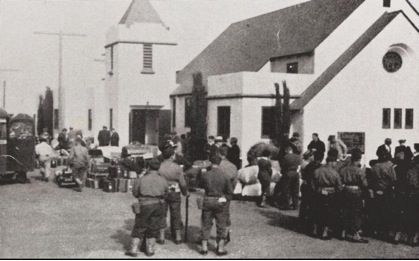
Evacuees in Santa Maria, south of Arroyo Grande, prepare to board the buses that will take them to Tulare on April 30, 1942.
Not all Californians would be as charitable as the Arroyo Grande Women’s Club: some would soon begin to loot now-vacant farms and farmhouses, and sometimes, in little farm towns throughout California, they would burn the houses, tractor sheds and barns after they had taken everything of the remotest value.
The parents of one young Nisei, George Nakamura, would be among the families who would lose their farms, and, like the others, the Nakamuras would lose also almost everything else they owned. Now, in April 1942, the remains of their lives were packed in the suitcase stowed in the belly of the bus or under tarpaulins in the trucks that followed the buses. On their suitcases the families had painted their names–‘S KOBARA 14440″– in white letters that remind you of the abandoned luggage on display at Auschwitz.
Some two hundred residents boarded the buses for the long ride away from the coast and the land some of them had been farming for forty years. The convoy of buses pulled out of the Arroyo Grande Union High School parking lot and took them to Tulare, California.
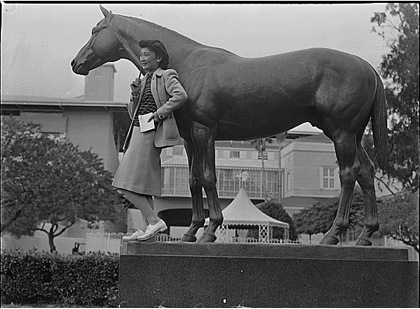
Tulare was among several temporary camps throughout California. One of the most notorious was at the Santa Anita racetrack, where the people who were now essentially refugees slept in horse stalls. One memorable photograph at the Santa Anita center shows a young Nisei woman posing, cheerfully and almost defiantly, beside the statue of the champion of underdogs like herself, Seabiscuit.
The Nakamuras and their neighbors would endure a long, dispiriting bus ride over the hills of the Coast Range and into the vast, flat, and sometimes colorless interior of California where, they would be among the first arrivals as the camp opened on April 27—at its largest, 5,000 internees lived here—on a site that had been used for the county fair before the war.
What happened there in the space of five months is extraordinary The Tulare camp produced a newspaper that buzzes with news from the schools established there, features advice columns and an extended sports section, including many stories written by George Nakamura, who had been a reporter on his Arroyo Grande high school paper, the Hi-Chatter, about men’s baseball and women’s softball leagues (Arroyo Grande’s teams were in first place in both), played in the oppressive summer heat typical of the Valley—complete with box scores and league standings.
The farewell edition of the remarkable Tulare News—32 issues were published between May and August of 1942—includes a heartfelt letter of thanks from the Tulare Center’s director, Nils Aanonsen, who is remembered as a compassionate man who defied the army and tried to turn over management of the camp to leaders elected by the internees. It paints an optimistic picture, thanks to an article from a travel magazine, about their ultimate destination.
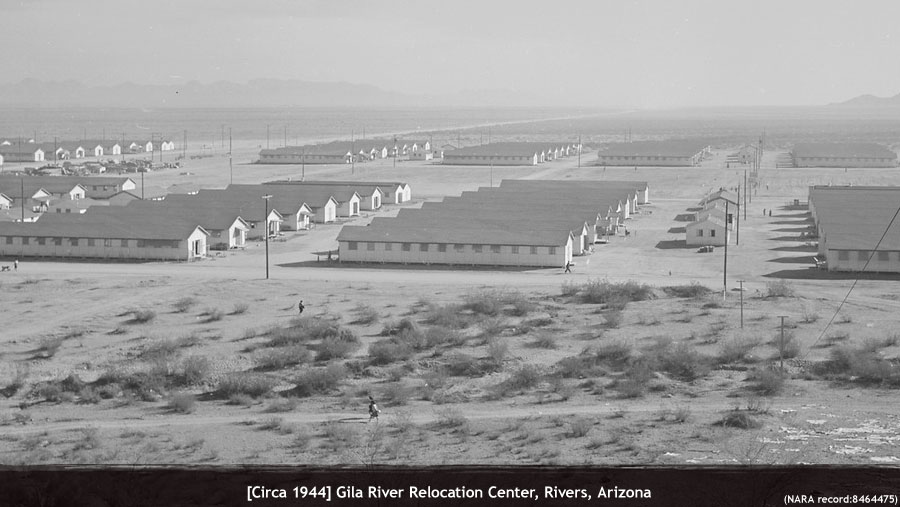
That was a camp on reservation land at Gila River, Arizona. When Nakumura and his family arrived and he saw what a desolate place it was, the first thing he did was to get the hell out. He was in a group of 32 young men were the first to leave Gila River for the comparative comfort of the United States Army. By the war’s end, 22 young men from the Gila River camp would be killed in action. while their families endured overcrowding—until additional barracks were added, some had to sleep in mess halls and even latrines—dust storms, rattlesnakes, and more: an internee learned to rap her shoe on the barracks floor in the morning before putting it on, to induce the scorpion inside to leave.
George Nakumura’s Army aptitude tests immediately impressed the Brass. He was brilliant and
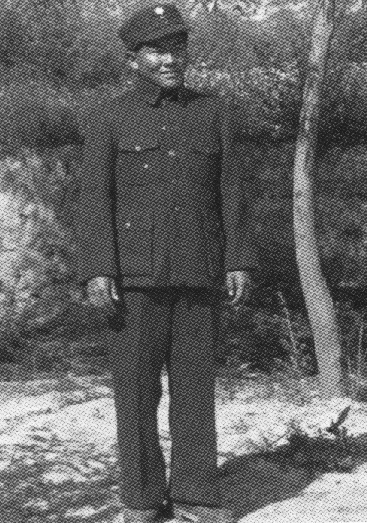
Nakamura in China, 1944 or 1945.
he was fluent in Japanese, so he became an Army Intelligence officer. He was assigned, as its youngest member, to what the Army called “The Dixie Mission:” Nakamura was one of a group of officers who, in 1944, were inserted into the hills of Yenan, where they would assist the Chinese in intelligence gathering as they resisted the Imperial Japanese Army and their brutal counterintelligence arm, the military police, the Kempeitai.
From his base with a group of Chinese resistance fighters, Nakumura and his fellow Americans
joined on intelligence-gathering missions: Nakamura would act as translator in the interrogation of Japanese soldiers captured on some of them, but on one mission, he went alone. He would win the Bronze Star for the daring rescue of a downed American pilot.
His Chinese hosts in their remote camp grew to like this Arroyo Grande soldier so much that, on his 21st birthday, they threw him a party. There were toasts and even a little dancing.
At the Chinese soldier-leader’s insistence, his young wife, named Jiang, took a turn dancing with Nakamura: they tried, perhaps, a fox-trot. She had been an actress before the War, and so was a woman of culture.
The young American officer would, after the war, get his Master’s Degree in International Relations from Columbia University, which suggests he might not have been such a bad dance partner for the boss’s wife
She would be reviled someday—in fact, in the many twists and turns that twentieth-century Chinese history took. the last two decades turned against Jiang. In 1981, the Communist government would put her on trial for her life, a trial where she was repeatedly mocked and insulted. In the peculiar Chinese dialect that is the language of the Party, she became “The White-Boned Demon.”
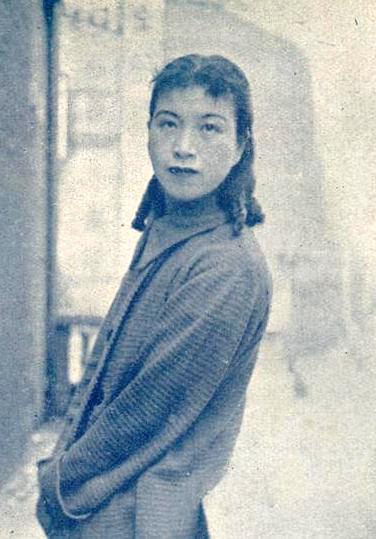
Young Jiang Qing
Jiang, in return, was defiant and supremely contemptuous of her accusers. She was fully aware that she was the star of a televised version of what was essentially a Stalinist show trial, and she was determined to do a star turn.
Her fiery defense was irrelevant, of course, and so Jiang was sentenced to be executed but, because of her husband’s influence, still potent even after his death, she would not be shot. The court instead handed down a life sentence for her membership in the “Gang of Four,” those accused of helping to conceive and carry out the disastrous 1968 Cultural Revolution. She would commit suicide in prison in 1991.
For almost forty years before that ignominious end to her long life, Jiang would become known universally by what was essentially her stage name in a role she relished more than any, for it was easily the role of a lifetime:
George Nakamura’s dance partner on his 21st birthday was Madame Mao.
Nakamura would live a long life, too, but his would be a happier one. He would finish his army career in Japan, where he served, after the war, as an interpreter for MacArthur’s occupation—some call it the vainglorious general’s shogunate, after the 300-year military dictatorship of the Tokugawa clan, ended in 1867 by the restoration of the Meiji Emperor. It would be the Meiji government that would dispatch American labor contractors to hard-pressed farmers in Kyushu, and it was those contractors and their persuasive powers that would bring families like Nakamura’s to the Arroyo Grande Valley.
The course of Nakamura’s life would, ironically, take him in the opposite direction. After finishing Columbia, he would return to Japan, where he lived for thirty years in Tokyo as the East Asian manager of a large American electronics firm and as the head of a management consulting company. He and his wife retired to Hawaii, then moved to Texas to be closer to their grandchildren
He died there at 90, in early 2014, and his obituary justifiably praises him—in his last years, President Barack Obama would sign a bill that would add the Presidential Medal of Freedom to the many honors George Nakamura earned in a long, productive and cosmopolitan lifetime. After it had ended, Gary Nakamura would visit the Arroyo Grande cemetery with his father’s ashes. It was in April, the same month when, in 1942, the buses had stood waiting in the high school parking lot, and now his Dad had come home.
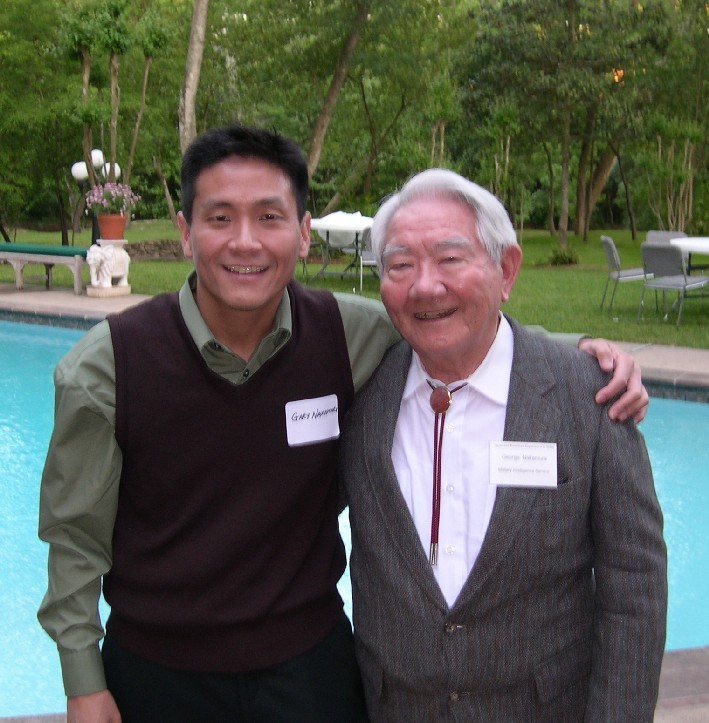
George I. Nakamura and his son, Gary, in 2005.
 A Work in Progress