• About
  • The Germans

A Work in Progress

A Work in Progress

Monthly Archives: January 2016

The Confederate Undead

30 Saturday Jan 2016

Posted by ag1970 in Uncategorized

≈ Leave a comment

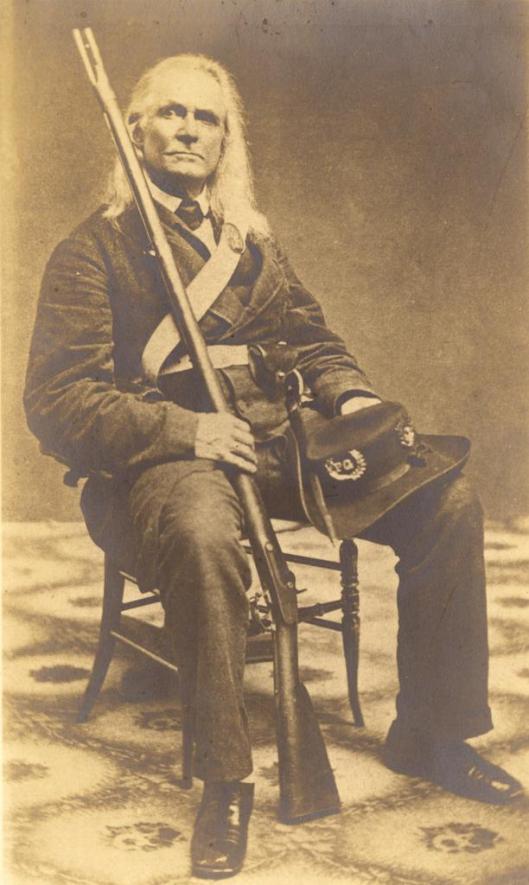
EdmundRuffin.2007.5.48

Edmund Ruffin


I thought today about my old friend Edmund Ruffin.

Edmund hated the hated the Bank of the United States, hated the federal government, hated abolitionists, hated Abraham Lincoln, and most of all, like many Southerners, he hated change—southern planters, like Ruffin, were beginning to sense that their traditional dominance of the federal government (four of our first five presidents were Virginians) even if increasingly it lay only in their power to block legislation, was eroding, and they were starting to realize, too, that the future lay with the North and with the Free Soil states entering the Union in the West. It is a great irony that as profitable as Southern agriculture was–60% of the value of 1860 American exports was in cotton–no one did more to bring on the Industrial Revolution in America than the Southerners who fired on Fort Sumter: it was Yankee steel that put so many  young Southern men into the ground of Virginia or Mississippi.

And so we are changing, too. White Americans will soon be a minority; the economy faces a postindustrial future that is neither clear nor reassuring; it appears as if it was my generation, the postwar “Boomers,” will be the last to enjoy the assurance (tempered as it was by nuclear annihilation) of an America ever progressing to a brighter, more powerful, more affluent future.  Things look grim. They must have looked that way in 1861.

The crowning insult, of course, for 21st Century Ruffins is the presence of a black man in  the White House–this one more a child of the Pacific Rim and not, to be accurate, an “African American” in the sense that we understand that term, because it is Mrs. Obama, and not her husband, whose ancestors were enslaved: she is of West African descent. Obama’s ancestors, on his father’s side, were from Kenya, a place far away from the Dutch and Spanish and English and Portuguese slavers who dropped anchor off Ghana or Mali and introduced the firearms that led to such rapid West African political destabilization; this was the factor that would lead to the trade in human beings on a scale never before seen.

Over eight years ago, I distinctly remember a New Yorker profile of Obama, this son of a Kenyan, still in the thick of the primaries, that reminded of Lincoln. (This is not a judgment on the current presidency and I am not talking about “greatness” in this paragraph. I don’t know that history will judge the Obama presidency that sympathetically.) Here is the narrower similarity: the writer depicted a young man in the Illinois State House and then the Senate who was dispassionate, rational (John Kennedy traits, at least in politics), and one who was invariably open to hearing the other side in a debate, almost at pain to understand that side’s viewpoint, and willing  to look for an eddy where compromise might be reached when the current necessitated it. He was, in that way, much like Lincoln. That’s what I was hoping for–the Lincoln in Doris Kearns Goodwin’s Team of Rivals. But I tried not to get my hopes up: he was also, I thought uneasily, a little too Clintonesque, like Bill the Triangulator–the political equivalent of a man who smiles at you with such charm as he slips his hand into your pocket to remove your wallet–always ready to trim his sails to suit Republican winds.  This, after all, was “Bubba,” the nation’s “first black president,” who perhaps did more than any modern president to incarcerate young black males by the tens of thousands.

For whatever reason, and maybe that reason is and always has been obvious–Obama’s intellect is as subversive in its way as Emmitt Till was in his–the conciliator that the magazine piece portrayed was pinned to the wall from the moment of his swearing-in. A cabal of conservative congressmen, with Newt Gingrich in a special guest appearance, had already met the night before and decided on a scorched-earth policy for the duration of the new administration. They would fight every Obama initiative, block every Obama appointee, frustrate every Obama reform. This included the one reform most inspired by a Republican, Mitt Romney, in the Affordable Care Act, which came down in a ludicrous public debate to death panels and a “Government Takeover of Our Health Care System.” In reality the act was timid to the point of pipsqueakery when compared to the health care programs long ago adopted by nearly every Western democracy.

Of course, in FDR’s day, Social Security faced the same kind of wild-eyed hysteria–still does–even though it took the United States 70 years to adopt such a law once that noted socialist, Otto von Bismarck, had put Germany’s into effect. The other side is today, as it was in 1935 on the eve of the Social Security Act,  immune to conciliation, to compromise, and most of all to reason–“reason can deceive a man,” another German statesman once wrote in the 1930s. I spent an hour today researching and explaining the origins of and the reasons for the presence of so many undocumented Mexican workers in the United States to someone from the other side, and he thanked me for the pains I took and then dismissed Obama, without citing a single reason for his judgment, as a man who has irreparably and deliberately harmed the United States.

So it was with Lincoln.

Lincoln did not make a single speech and issued very few political statements, the exceptions being a few private letters, during the campaign of 1860, because he knew that whatever he said would be twisted by Southern opinion-makers–many of them planters, and so men of immense economic power a who had a stranglehold on every little rural courthouse in the South–into a malevolent scheme to irreparably and deliberately harm Southern rights.

In modern politics, this kind of distortion is mostly seen in the advocacy practiced by the National Rifle Association. Lincoln wanted to limit the spread of slavery, not abolish it. Reasonable Americans want to abolish large-capacity ammunition drums, not the guns themselves. In both cases, men and women of reason are painted as dangerous interlopers, as demagogues who want to destroy American rights.

The foremost Southern right, of course, in 1860, was the right to own human beings. Everything else, for the sake of accuracy, is irrelevant. Everything the South Carolina fire-eaters said in the month between Lincoln’s election and the  secession crisis that began in December was in a code–these were politicians who could weave, in hyperbole, a lurid tapestry whose centerpieces were Denmark Vesey, Nat Turner and John Brown. What they said and wrote in 1860 was  so powerful that the technique  worked to perfection a century and more later with Nixon’s Southern Strategy, with Reagan’s Welfare Queen,  with George H.W.Bush’s Willie Horton.

In 1860, every Southern white man woke up to the realization that somehow his rights were being violated, his freedom that was being threatened, and so it was his duty to go to war to fight tyranny. But the real tyrants weren’t the godless polyglot money-changers so far away in boardrooms and exchanges in Manhattan and Boston and Chicago, they were, in truth, the down-home speechifiers, the nullifiers, the secessionists. These were the opportunists who would push the South into  war. In the months before that war came, Edmund Ruffin and his cohort saw no contradiction in calling Lincoln an extremist long before that man had written the opening sentence to his first Inaugural, a speech that was extremist if sentiments like conciliation, compromise, patriotism and brotherhood can be called “extreme.”

Ruffin must have laughed at the transcript of that speech, if he ever read it, and snorted derisively, in the same way that those who know better on the other side insist that when Obama’s tears are manufactured, as if there would be need for that in a town whose first-graders have just been slaughtered by a madman with an assault rifle. So, not believing a word that came our of Lincoln’s mouth or recorded by his pen, the last principle that Edmund Ruffin supported was war.

He got to pull the lanyard on one of the artillery pieces that opened fire on Fort Sumter at 4 a.m. on April 9,  1861. Edmund Ruffin and his friends, in the pretzel logic they’d come to master, called the event that  they had started “The War of Northern Aggression.”

Ill health prevented him from killing the bushels of Yankees he wanted so badly to kill–his war had come and gone, in 1812–but a few weeks after Lee’s surrender, Edmund Ruffin had the good grace to put the muzzle of a gun to his head and pull the trigger.

What made me think about Edmund was a king-sized “DON’T TREAD ON ME!” flag I saw today, flying in the back of a pickup, and, of course, the shootout in the snow that ended the “siege” in Oregon, which I’d hoped would end when the ostensibly besieged ranchers issued a desperate call for, among other things, Cheetohs. Not even Edmund Ruffin was that funny.

Those things made me think some more: we haven’t learned a damned thing from the 620,000 boys and men we lost 150 years ago.

Our polarization and our refusal to compromise is as grievous today as it was on the eve of war in 1861. In Oregon, men very similar to Edmund Ruffin painted themselves into a corner inside an office on national parkland because they’d created a mindset as paranoid and unyielding as was Ruffin’s. They were hemmed in–long before their takeover– by the enemies their imaginations had created.The killing of Robert LaVoy Finicum a couple of days ago was the dead man’s moment of triumph: it was, after all, the way he wanted to go out. He didn’t have the time to think that the way his life was coming to its end was both tragic and the darkest of comedies. What Finicum’s partners in revolution left behind, in their little fortress on national parkland, was an immense debris field of garbage that they’d failed to clean up. Like Edmund Ruffin, their cause was passionate but empty of accountability.
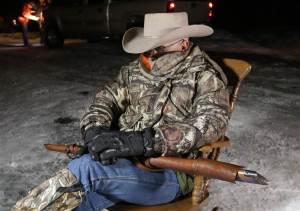
 

160106-oregon-standoff-rd-205a_3d736df4f3175258ad2c55363b686a51.nbcnews-ux-2880-1000

Robert LaVoy Finicum

Little Phil

25 Monday Jan 2016

Posted by ag1970 in Uncategorized

≈ Leave a comment

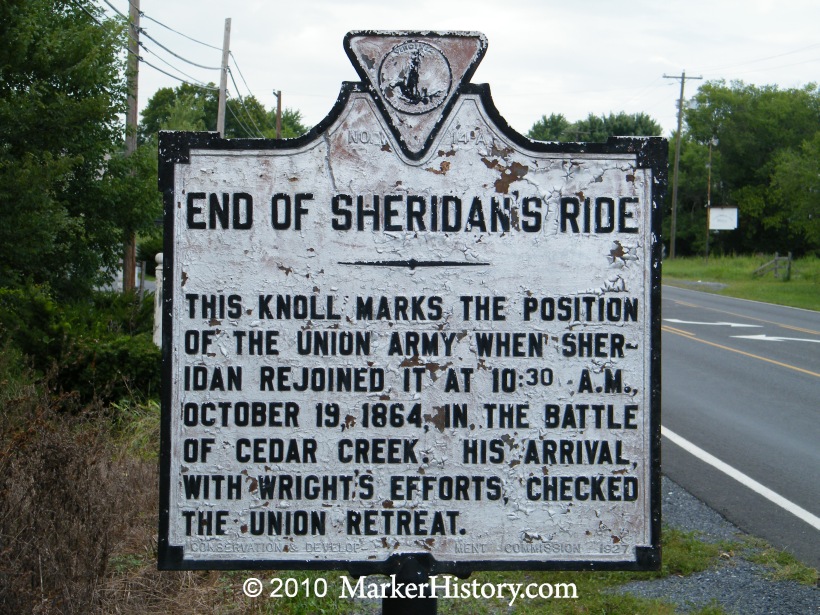
There was one sin no Union soldier forgave in his commander, and that was if he called a halt during a march but didn’t give him enough time to brew coffee. Gen. Phil Sheridan must have known that in rallying his men during the 1864 Battle of Cedar Creek, and among Sheridan’s soldiers were eight young men who would someday settle in Arroyo Grande

3a16047r

In the fall of 1864, the rich farmland of the Shenandoah Valley was razed by Union troops under the command of their fiery, pint-sized commander, Phil Sheridan, in a replication of Sherman’s tactics in Georgia and the Carolinas. The Valley had long provided food and forage for Confederate armies in the East and a conduit for repeated threats to Washington; perhaps a more modern comparison might be the Ho Chi Minh Trail in the Vietnam War.

But on October 19, at the suggestion of one of my favorite Civil War generals, John B. Gordon (shot five times at Antietam, thank you very much), Confederate forces under Jubal Early fell on Sheridan’s men at their encampment on Cedar Creek and generated a rout that looked to be as complete as the one Albert Sidney Johnston inflicted on Grant’s troops the first day of Shiloh.

Unfortunately for Early, this battle turned out with the same result: a Confederate defeat. And it was because of Sheridan and one of the most inspirational moments of the war.

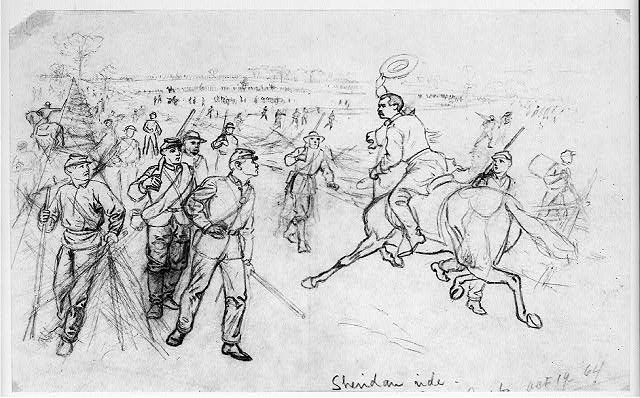
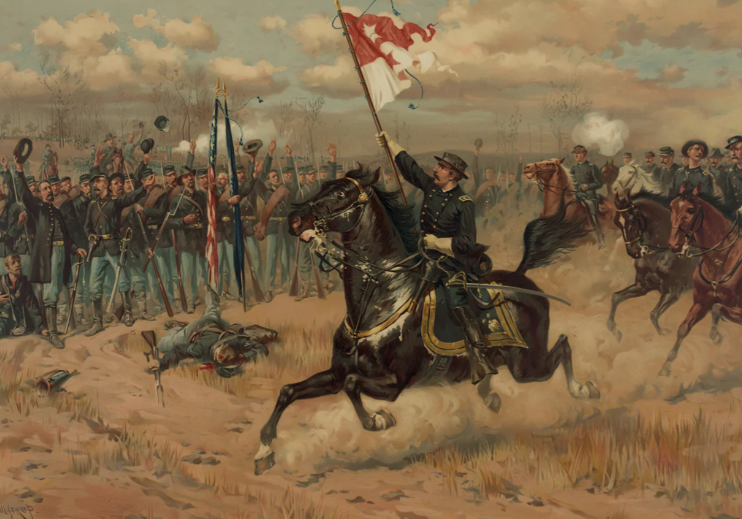
Sheridan was some ten miles away, in Winchester, when, at 9 a.m. he heard the sound of cannon fire (in the massive cannonade on Gettysburg’s last day, residents of Washington, Baltimore and Philadelphia heard what sounded like a distant thunderstorm). He swung into the saddle of his mount, Rienzi, a spirited black Morgan named for a town in Mississippi, and started to ride toward the sound. And then he began to gallop, with frantic staff officers, including young William McKinley, trying to keep up. As Rienzi and Sheridan closed on the battlefield, the little general began to holler–“God damn it, boys, we’ll be making coffee out of Cedar Creek tonight!”–and wave his porkpie hat, rallying his men, who were lining the roads in retreat.

It worked.

Sheridan’s Ride, in a postwar painting

Early and his Confederates made the mistake of pausing to rest–the rations in the Union camp were too much for the perpetually hungry rebels to resist–when Sheridan and his dynamic VI Corps commander, Horatio Wright, slammed into them in mid-snack. Meanwhile, George Custer’s cavalry looped around the Confederates, got into their rear, threatening to block their escape route across the creek, and generated a panic that was complete. Jubal Early’s army disintegrated and was never an effective fighting force again.

Here are the Arroyo Grande veterans who fought at Cedar Creek:

  • Alexis Adams  12th Maine
  • Herbert D. Adams  Co. K 12 Maine
  • William Lane  1st Lt Co. Co. C 24th Iowa
  • Samuel McBane  Co. F 123rd Ohio
  • Samuel B. Miller Co. G 24th Iowa
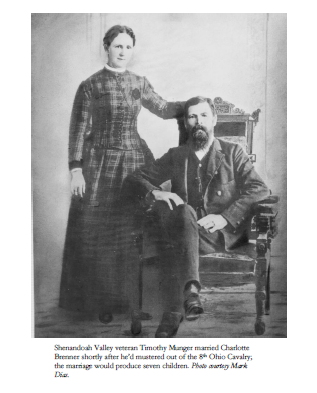
  • Timothy Munger, Co. C 8th Ohio Cavalry (Arroyo Grande’s first City Recorder, 1911)
  • George Henry Purdy Capt. Co. A  11th WV
  • William Haze Stobridge  1st Michigan Cavalry (part of Custer’s command)
a-14 end of sheridan's ride

Our Yankees

24 Sunday Jan 2016

Posted by ag1970 in Uncategorized

≈ 1 Comment


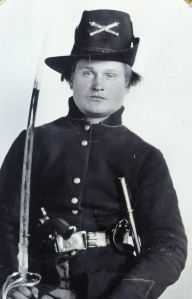
kidThere are 57 Union veterans in the Arroyo Grande District Cemetery. (We have one county Confederate that I know of, from the Washington Artillery of New Orleans, but he’s disqualified himself by getting buried in San Luis Obispo.) I suppose I will write a book about them.
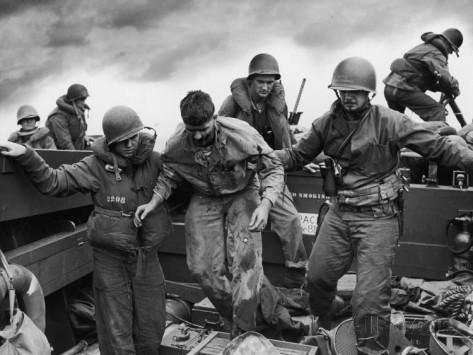
So what I’ve done in the last two days is to link each soldier to his regiment and then link the regiment to a particular battle–or more than one, since many fought in more than one. A majority seem to have fought in what was then the “West”–the war west of the Appalachians, and I was amazed to find at least four who fought in the Indian conflicts that paralleled the fighting in the east between North and South. The battles in which Arroyo Grande veterans fought are listed below.

I’ve already found the regiment I would have wanted to serve with–surprisingly, a regular U.S. Army unit. They were held in reserve at Antietam, were on the other side of Little Round Top at Gettysburg, idly watching artillery bursts blow up caissons and their horses, and arrived in New York City just after the draft riots. I like their sense of timing.

Now I need to start tracking these men on ancestry.com to see if I can find primary sources and photographs of them. I’ve already found a letter written by one–a woman who served as a Union Army nurse in Tennessee. Then I have to get into my Myron Angel, Madge Ditmas and Pat Loomis and into the veterans’ obituaries to discover what they did here in Arroyo Grande in their mature years–I’ve already ordered a book that’s a kind of postwar psychological portrait of Civil War veterans, so maybe that will help me figure out what brought them to our little valley. I suspect they wanted the distance between themselves and the things they saw as young men.

Then I need to locate each regiment (and company, because those are listed) in combat reports and secondary sources to see if I can pinpoint these men and what they did at Shiloh, or Antietam, or Spotyslvania. And I’ve got a Medal of Honor winner to investigate.

We’ve also got:

–A cavalryman who fought in Custer’s Michigan brigade–his Wolverines–the men he led in the kind of audacious charges, in that quaint mid-Victorian pursuit of glory, that would make him a twenty-three-year-old major general and then doom him 11 years after Appomattox.

–A Minnesotan who fought in the 1862 Sioux uprising, and later in Tennessee. The government would hang 38 Santee Sioux warriors, cousins to the men who would rub out Custer, young men who struck back when they could no longer endure the humiliation that arrived with the “civilizing” of the prairie. They sang before the traps were sprung.

–Three infantrymen with O.O. Howard’s XI Corps at Chancellorsville, in the electric moment when Howard’s men ran for their lives: suddenly rabbits, foxes and deer, panic-stricken, burst from the underbrush and into their camp, and what followed the animals were thousands of Stonewall Jackson’s howling men.

–An ancestor of my friend Will Tarwater’s, a soldier who survived the slaughter of the Union frontal assault at Cold Harbor, Virginia, in 1864, perhaps Grant’s greatest blunder, and a lesson the British failed to learn when they mimicked Grant’s assault, on a massive scale, at the Somme against teams of German machine-gunners. He may have been present later for the ghastly Battle of the Crater in front of Petersburg.

Before I get to the primary sources, I’ve got to re-read my Bruce Catton and my Shelby Foote, my Stephen Sears and my James McPherson: it’s time to re-acquaint myself with a war I once knew almost by heart. And this wouldn’t pretend to be a comprehensive summary of the war–that’s been done far better than I could do–but a series of snapshots of the roles local veterans played in winning it.


Patriot Graves

The Civil War Veterans of Arroyo Grande, California

The mystic chords of memory, stretching from every battle-field, and patriot grave, to every living heart and hearthstone, all over this broad land, will yet swell the chorus of the Union, when again touched, as surely they will be, by the better angels of our nature.

–Lincoln, First Inaugural, March 4, 1861.

Preface:  Gray Ghosts:  My Confederate ancestors and why they had to be defeated.

Chapter 1.  “A Fragment Spared by Time” FDR quote at the last Gettysburg reunion, 1933; then a flashback to Lincoln’s address in November 1863, when the smell of death was still present: the Sanitary Commission had by then interred the fallen soldiers–some in mass graves–but they had not yet gotten to all of the thousands of slain horses.

Chapter 2.  “I Have Long Desired to See California”  A Lincoln quote. Why they came to Arroyo Grande, and what they accomplished here.

Chapter 3.  “He Fights”  Grant in the West: Fort Donelson, Shiloh.

Chapter  4.  “If There Is a Worse Place than Hell, I Am in It” Lincoln’s quote. Low ebb: Antietam, Fredericksburg, Chancellorsville.

Chapter 5. “The Whites Are the Same Everywhere” Red Cloud. Indian wars, 1862-64. The Minnesota Sioux uprising, the Powder River War against Red Cloud, the Sand Creek Massacre, Colorado.

Chapter 6. “This is a Glorious Occasion for a Speech” Which Lincoln declined to deliver. July 4, 1863: The turning points at Gettysburg and Vicksburg.

Chapter 7. “I Intend to Make Georgia Howl!” Sherman’s invasion of Georgia; the Battle of Atlanta, The March to the Sea: Savannah and the Carolinas.

Chapter 8.  “A Most Fearful Sacrifice” John Bell Hood quote. The fight for Tennessee in the fall and winter of 1864: Franklin and Nashville. A lot of our veterans fought in this campaign, one in which Hood, less one arm and one leg with which he’d started the war, proved himself a consummate master at getting his own Confederates killed, and in bushel-loads.

Chapter 9.  “There Will Be No Turning Back” Grant’s message to Lincoln. The war across the Rappahannock: The Wilderness Campaign, Cold Harbor, Sheridan’s war of movement in the Valley vs. trench warfare in front of Petersburg; the surrender.

Epilogue: Mr. Handy’s Bivouac


My kind of war story

20 Wednesday Jan 2016

Posted by ag1970 in Uncategorized

≈ Leave a comment

The Estrella Warbirds, a group of antique military airplane fans (like me) in northern San Luis Obispo County, have 7 or 8 World War II airmen among their membership.

One of them was a fighter pilot.

For the Germans.

Which he wasn’t. Not exactly.

His Dad was American, his Mom was German, but he was living with Mom and going to university when Hitler declared war on the U.S. (which he wasn’t required to do, by the way) after the Pearl Harbor attack. The Nazi government wouldn’t let him go back to the States.

–I grew up in America! he protested.

—NEIN! replied the Nazi bureaucracy. You’re staying here, young man, and you will do military service for the Fatherland.

 Which he did, in the German air force, or Luftwaffe.


2-1


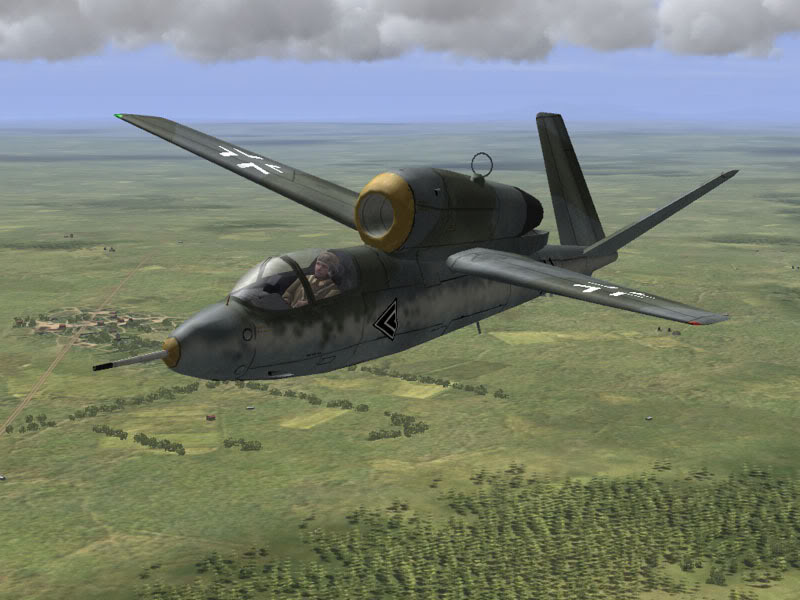
He wound up flying the plane in the picture, a Heinkel He162 (this one is the “D” model). Notice the absence of propellers? It was one of the Fuhrer’s beloved wonder weapons, put into production near the end of the war. It was a jet.

It was also a death trap. Note the placement of the engine. Visualize an He162 hit by shellfire, and the pilot trying to bail out.

See where he would go?

Which is what happened to this hapless young man’s airplane in 1945: it was hit by shellfire–in this case, a 20mm cannon.

He made one of the mistakes fighter pilots are NOT supposed to make. As he was landing, he forgot to look behind him.

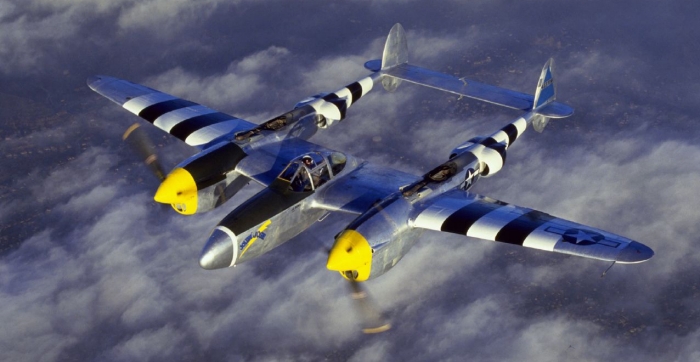
If he had, he would have seen the American P-38 firing a burst from its machine guns, just to kind of finish off the work his cannon had started. He was the last thing the young American/German pilot needed that day: a perfectionist.

1418140188897

A P-38 Lightning


So a Browning 12.5 mm machine gun bullet went through the young pilot’s leg. He forgot all about landing and got busy passing out.

When he regained consciousness, he received news from a monstrous American GI, a sergeant, standing over him and peering into the cockpit.

Here was the news: “Hey! I think this sumbitch is still alive!”

He was indeed. And, as it turned out, the Americans liked this particular sumbitch, who probably knew as much about Joe DiMaggio and Buck Rogers in the 25th Century as they did. He was treated at a mobile hospital and somehow stayed with the American unit that had captured him.

His near-death experience happened only about a hundred miles from his mother’s home.

When the Americans’ advance took them there, they knocked on his Mom’s door and dropped him off for her to take care of.

After the war, he came home. To here, that is. And now he lives in the Paso Robles area.

That, I think, is a good war story.

Mama, don’t let your babies grow up to be historians.

15 Friday Jan 2016

Posted by ag1970 in Uncategorized

≈ Leave a comment

us-coast-guardsmen-assisting-a-wounded-marine-returning-from-the-fight-on-iwo-jima

Coast Guardsmen and a wounded Iwo Jima Marine.

I got wounded today–nothing at all like what this young Marine is going through. I left something out of the book, and I got reamed for it. I’d let a reader down who deserved to be in the book. A lot of it went back to the maddening business about the photographs. I submitted 104; they used 70, of the 70, I had to re-submit about thirty.

It has to do with megapixels and dpm’s, which are beyond my understanding. What it meant was that a story and image–this man’s story and his family’s story– that deserved to be shared didn’t make it into the book. There were other images that didn’t get in, each with its own story, that included:

–My friend Will Tarwater

–Vard Loomis and the Arroyo Grande Growers baseball team–Vard’s first name was “Joseph,” as in Joe, one of the best friends of a lifetime.

–The Dohi family; it took me weeks to get permission to use this photo. Didn’t make it.

–Jess Milo McChensney and his B-24 crew

–A photo of Clara Paulding, just dismounted from her bicycle, in front of 1898 Branch Elementary School–the same schoolhouse where my education would begin sixty years later.

–Pvt. Francis Fink, a relative of an Arroyo Grande family that means a lot to me.

–A photo I thought essential, of two Filipino men in the garden of their Allen Street home, inundated with ten-year-old boys who were their pals.

–A photo donated by my friend Gerrie Quaresma, of a Portuguese wedding of an ancestor of hers at old St. Patrick’s.

–The senior portrait of Elliott Whitlock, who won the Silver Star for bringing his B-17 and her crew home to their base in Norfolk.

Not getting those in and not having the chance to tell the story the way you want to is  heart-breaking.

I was so disgusted with their photo policy that I decided, at one point, to give up the book entirely. I had put too much work into it and changed my mind.

But one part of the reaming that grated was the insinuation that I hadn’t worked hard enough in my research, that I didn’t do enough homework.

Getting called on the carpet for an accusation like that is bullshit.

The “Notes” section only lists those works I actually cited in the manuscript. If I’d had a bibliography, here are the sources I consulted to learn about one Marine’s family, his service, and his death (I got his whole personnel file, including his fitness reports, his last will and testament, the last effects recovered from his body, the pitifully small list of his personal belongings kept back home, at Pendleton, and some things that were none of my damned business. I used it and then trashed it. It seemed an invasion of the young man’s privacy, and he’d led a good and hard-working life.):

I don’t have all of them, but here are the at least most of the sources I consulted to learn about Marine Pvt. Louis Brown, about one man:

  • “Azoreans and Madeirans,” Minority Rights Group International—Workingto Secure the Rights of Minorities and Indigenous Peoples, http://www.minorityrights.org/1820/portugal/azorea.
  • Yesterday, Today, and Tomorrow, vol. 5 (Arroyo Grande, CA: South County HistoricalSociety, 1981–89).
  • Antone [sic] Brown, “Headstone Applications for Military Veterans,” Ancestry.com.2009.
  • “Certificate of Death,” Private Louis Brown, Bureau of Medicine and Surgery, Navy Department, Washington, D.C., June 1945.
  • Antone [sic] and Anna Brown, “Family Tree,” Ancestry.com
  • 1920 Census
  • 1930 Census
  • 1940 CensusComplete personnel file, Pvt. Louis Brown, Records of the United States Marine Corps, Department of the Navy, National Archives (that cost $100)
  • Arroyo Grande Valley Herald-Recorder, 6 April 1945
  • World War II Navy, Marine Corps, and Coast Guard Casualties, 1941-1945. (where I discovered Louis’ name had been spelled “Louise.”)
  • The First Battalion of the 28th Marines on Iwo Jima: A Day-by-Day History from Personal Accounts and Official Reports, with Complete Muster Rolls, by Robert E. Allen.
  • MUSTER ROLL OF OFFICERS AND ENLISTED MEN OF THE U.S. MARINE CORPS FIRST BATTALION, TWENTY-EIGHTH MARINES, FIFTH MARINE DIVISION, FLEET MARINE FORCE, C/O Fleet Post Office, San Francisco California.
  • The United States Marines on Iwo Jima: The Battle and the Flag Raisings. By Bernard C. Nalty and Danny J. Crawford
  • Fifth Marine Division Daily Summaries, Iwo Jima. 19 Feb. 1945-24 March 1945.
  • The Ghosts of Iwo Jima. Robert Burrell, 2006.
  • Action Report on Iwo Jima, Part 1, Vol I: Schmidt, K.E. Rockey, 7 February 1945-24 May 1945.
  • “Closing In: Marines in the Seizure of Iwo Jima,” by Colonel Joseph H. Alexander,U.S. Marine Corps (Ret.)
  • “Team Find Two Possible Sites in Search for Remains of Marine From Iwo Jima Flag-Raising,” (Bill Genaust) AP, June 27, 2007
  • Map: “ Iwo Jima: Nishi Village and Hill 362-A.” jacklummus.com
  • Records of War: Casualties of Iwo Jima. http://www.recordsofwar.com/iwo/dead/dead.htm
  • “Iwo Jima Retrospective,” by Cyril J. O’Brien. http://www.military.com/NewContent/0,13190,NI_Iwo_Jima2,00.html
  • From Leatherneck: Iwo Jima: “Hell With The Fire Out” – See more at: https://www.mca-marines.org/gazette/leatherneck-iwo-jima-hell-fire-out#sthash.G6FJ7IHq.dpuf
  • Sergeant Christopher Zahn, “Echoes of Iwo Jima Heard by Present-day Marines,”Quantico Sentry Online, http://www.quanticosentryonline.com.

The sum total of that research was a 640-word passage in a small (35,000-word) book. And for every $21.99 book The History Press sells, I get less than $1–this is for work that lasted over eighteen months. I will break even for that work. Maybe.

It may sound like it, but this isn’t meant to be sour grapes. I’m a happy historian. I deserved the knock—and besides, it was just the corrective I needed—but I’m still proud of the work I did. I knew from the beginning that I would miss some stories that needed to be told–one that comes to mind is of an Army nurse who would’ve pulled duty during the Bulge in 1944-45– but that story didn’t happen after eight phone calls that were never returned. Sometimes, though, I just wish folks would wait a minute before they let fly. I can be accused of many, many things. Laziness isn’t one of them. It wasn’t true of me as a teacher, it’s not true of me as a writer, and, like my critic, I’ve gotten my hopes up as a writer and had stories, story ideas, and essays rejected by more editors than I can count. It was crushing.

What I did, though, was pick myself, up and keep writing–until I wrote a book that is imperfect, but  writing the book filled a hole in my town’s heritage that no one realized was there at all.

Oh, and the other criticism, that there were too many Japanese in the book? 25 of the 58 members of the Class of ’42 were Japanese-American. I just emphasized the “American” part.


Gallery

A casualty of war.

14 Thursday Jan 2016

Posted by ag1970 in Uncategorized

≈ Leave a comment

This gallery contains 17 photos.

Buyer, Beware! Confessions from a guy who wrote a book

10 Sunday Jan 2016

Posted by ag1970 in Uncategorized

≈ Leave a comment

Screen Shot 2015-11-28 at 6.36.09 AM


  1. It is not perfect. I made mistakes—word choice here, a caption there (one cites walnut trees that aren’t there because they switched photos; I won’t cop to that one), and there will be factual errors that, for someone trained as newspaper reporter, are sins that send a writer to hell, postage paid. There were about 35 revisions to the book, and sometimes things I corrected were counter-corrected in a manner that wouldn’t have happened with good old typewriter drafts. Other mistakes I made because sometimes I am stupid. Also, the young woman who edited the book and I have a deeply philosophical disagreement over comma usage. And there were gaps in her knowledge: she didn’t appear to know all that much about World War II; she turned all ships from “shes” into “its,” and she was not clear on what school the word “Cal” denoted.  She also did some wonderful and necessary corrections that made my draft better.
  1. Two of the chapters are not about World War II. My audience was my friends from Arroyo Grande, but I also wanted to introduce strangers to my home town, so Chapter 2, “Pioneers,” goes back to 1837 and Branch, and Chapter 3, “Immigrants,” focuses on the waves of immigration from the Azores, Japan and the Philippines, which became necessary because the children of those people would play such a prominent part in the book, in fighting and enduring the war.
  1. There are not enough Mexicans in the book, and this from someone whose college major’s focus was Latin American, and particularly Mexican, history. Part of this is because we deported so many early in the Depression—many of them, by the way, American citizens. Part of it’s because my publisher didn’t understand the “South County” concept, the Five Cities familiar to you and me, and while there were many Mexican-American veterans from Oceano, she wanted the book’s focus on A.G. Most of the servicemen I discuss have a common thread, and that’s their attendance at the Arroyo Grande Union High School. Because of the Great Depression, there were many World War II servicemen who’d achieved only an eighth-grade education because they lived in the kind  of poverty that made high school a luxury. They went to work. At the time of the War, the dominant immigrant groups here, and represented in the yearbooks, were of Portuguese or Japanese descent. 43% of the Class of 1942 was Nisei.
  1. There are not enough women in the book. Had we more industry here, that would have been a different story. There’s some detail about a woman Marine; nine phone calls to learn more about an Army nurse proved fruitless and I am sad about that. But women—like Clara and Ruth Paulding, Gladys Loomis,Eileen Taylor, Kimi Kobara, Evelyn Betita—who appear only briefly in the book still have important roles to play, and some of them are staggeringly heroic.
  1. For a book about Arroyo Grande, we sure spend a lot of time in places like Normandy and the South Pacific. That’s one of the major reasons for me writing the book. I think our kids—my students—feel sometimes that history is something that happens somewhere else, to someone else. That’s not true, because Arroyo Grande has unique links to wartime London, to Bastogne, to Iwo Jima, and even to Hiroshima. I wanted to make that connection because even a little farm town of 1,092 people was—and is—important to all history, and so to all Americans.
  1. The worst part was the photographs. I am heartbroken because photos of new and dear friends like Will Tarwater, or the fathers of friends—Pvt. Francis Fink—or heroes who need their faces to be seen, like Jack Leo Scruggs, killed on Arizona, did not have images that fit the peculiar digital requirements of modern publishing. The photographs I mention here were submitted and re-submitted; I made alternate versions or hunted down alternate versions on my own, and submitted those, but they didn’t make the cut. This turned, for me, out to be the most hurtful aspect of writing the book and the one area where I feel like a failure.
  1. This is not academic history. This is this is a very personal book. I use the pronoun “I” in several places, something I will not tolerate in my students’ essays, because this is a book that is deeply rooted in my life experience, and that life experience includes events, like the death of a Marine on Hill 362A on Iwo Jima, that happened a long time before I was born. When I found that Marine’s grave in the Arroyo Grande cemetery, he, like so many soldiers and sailors I wrote about, became part of my family. These young men are from my father’s generation; in writing about them, they became my sons.
  1. I know that there are many, many stories that I missed. I regret those almost as much as I do the photographs, but I had a word count limit–it’s just a little book– and I had a deadline. They made me stop. Good thing. If I’d been the editor for Gone with the Wind, the movie would still be on the cutting-room floor.

The Work that Teachers Do

10 Sunday Jan 2016

Posted by ag1970 in History, Personal memoirs, Teaching

≈ Leave a comment

Tags

education


12466239_10208324640457390_4987351987083300621_o


12548856_10208324641497416_6532004896748370571_n


10314542_10208324641737422_1985620031252979684_n


I re-read the manuscript of my little book, World War II Arroyo Grande, this morning, found it brilliant, and then remembered, because of a degenerative neck disk, that I was loopy on Norco, and “The Berenstain Bears Dig a Septic Tank” on Norco would have exactly the same impact on me as the first time I read From Here to Eternity or Cold Mountain.

Here’s the Magic part.

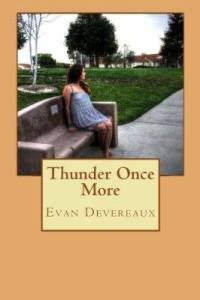
There are three books, out or about to be released, written by former students of mine. I take no credit for anything they write–except for their history essays–but I am every bit as happy for these books as I am for mine, and now that I know how hard the work in writing a book truly is I don’t even have the words for how proud I am of three young writers: Alex Bittner, Maeva Considine, and Evan Devereaux.

No work is more demanding and more lonely than the craft of writing. With one exception, and that is teaching.

What we do every day in the classroom isn’t work–for me, it was the greatest joy to teach young people like these in my years at Mission Prep and then in Lucia Mar. Nowhere was I more authentically myself than in a classroom, in the time I shared with teenagers.

For most of us, the “work” begins at three o’clock and ends in the dark. The weekends are just two more workdays: we write our weekly plans at our kids’ Babe Ruth games and we grade our essays at Cafe Andreini–seething a little at the guy at the next table burrowed deep inside the Sunday “Times” or the fiftysomethings in bicycle tights about to head up the Huasna. It’s galling to see leisure flaunted so shamelessly while we work in such anonymity.

It takes a toll. My serum cholesterol levels dropped 61 points in the five months after I retired.

We work hard, but the toll is exacted most in the extra work we are required by distant decision-makers to do–mandated in a fantasy world where we actually have the time to do it–and what we do for them is eventually written up in a barbaric language, Educationese. It’s work that almost always has no meaning and does almost nothing to make us better teachers, when wanting to be a better teacher is a constant hunger every good teacher feels. A good teacher would never force her students to do this kind of work because she respects children.

And the work we amass really is meaningless, because within three years it’s all thrown away. A new model rolls into Education–NCLB, OBE, Integrated Teams, The Common Core–so a new paradigm shift sweeps us away and we start a new round of what is most accurately called “busywork.” We feel a little like Rose Parade princesses, with fixed smiles that make even a princess’s jaw ache and endless Rose Princess waves that will eventually numb her arm. We’re like prisoners on a pedagogical Rose Float whose petals will turn brown as quickly as the last one’s did.

And we are told, every time, that we should not fear change. This is insanity, of course, not “change,” what we do to teachers. It’s the kind of busywork that crushes the second-greatest gift a classroom teacher has: her idealism.

Her greatest gift, of course, is the roomful of children entrusted to her, the complex and precious aggregate of human beings she has to face every Monday morning.

I hated Monday first period. I am an introvert and I was terrified every first period of every Monday for thirty years. My hands trembled every Monday for thirty years. But we force ourselves to begin because we worked so hard, when we were alone and anonymous, on our lesson plan. Plans. Mine usually went through two and sometimes three revisions.

Sometimes they don’t work at all and you have to learn to throw the plan out in the middle of a class and fly by wire.

A lot of good teaching is like that: it’s not meant to be weighed, measured and stored in the Skinner boxes the distant decision-makers build for teachers. A lot of good teaching is instinctual, improvisational, and attuned to what the students need in the moments where they depend on your leadership and on your humanity.

By the way, thank God, the anxiety of starting a class dissipates and in a few minutes: we are so absorbed in teaching the plan well and clearly that we really have just the faintest connection to it. Even in the lessons that go well, we teach instinctively, because now we are in a deep, living and constantly evolving relationship with our students.

We aren’t dispensing information. We’re inspiring, infuriating, affirming, correcting, evoking, and confronting.

There is nothing in my life–only the births of my sons come immediately to mind– that has made me happier than my time with children, and the captivity of all the unseen we work we do to prepare is transformed, as if it were alchemy, into the kind of freedom only a teacher understands.

What other career gives you something that approaches the sensation Orville Wright might have felt that day at Kitty Hawk?

And then young adults like these three remind us that what we do is important and powerful. It makes an old teacher like me very quiet inside. My little Wright flyer is safely on the beach again, and the miracle of what we’ve done together is overwhelming.

Huasna Road spirituality

09 Saturday Jan 2016

Posted by ag1970 in American History, California history, Family history, History, Personal memoirs, Teaching

≈ Leave a comment


1929425_1124481235982_1907209_n

Mom and Roberta, 1943


I think about my Mom a lot in January, the month when she was born, and in March, the month when she died. She never said any of the things below, but I decided to try to say them for her as authentically as I could. What lessons did I learn from her when I was a little boy?  I decided on ten. I’ll never get the wording exactly right, and I’ll never be able to articulate all the lessons, because so many of them were nonverbal and taught by example. Ours was not a peaceful home, nor was it always a happy one, but there were times when my mother’s parenting was, as I think about it more than fifty years later, actually quite inspired.


Ten Lessons

  1. Each of our lives is tuned differently, so each of us produces a different tone. It’s the melodies that please God most.
  2. Books, and music, and ideas, and politics, and God, and talk. That makes this place, five thousand miles away from Ireland, an Irish house.
  3. You young people might be all right after all. Ringo makes me think so. He looks just like a Basset hound!
  4. Faith is stronger when it’s tempered by doubt. The men they tried at Nuremberg were True Believers.
  5. Those people working the pepper field over our pasture fence don’t look like us, and they don’t speak our language. How lucky we are to have them so close.
  6. You’re the one that burns a little hotter than the others. I need to be patient because I love you.
  7. We owe the poor our love and respect; we owe the rich prayers for good eyesight. It’s so hard to see a carpenter’s son planing His father’s wood from the great heights that they inhabit.
  8. There is no forgiving intentional cruelty.
  9. I will raise singular daughters and honorable sons.
  10.  Life inflicts terrible wounds and unbearable pain. Just hang on. If the pain continues, just hang on. A time may come when you need to let go of it. Say goodbye with love.

Dad and the German Major

06 Wednesday Jan 2016

Posted by ag1970 in American History, Arroyo Grande, Family history, History, World War II

≈ Leave a comment


003 (1)


I’ll be sending two copies of the book World War II Arroyo Grande to young active-duty soldiers. This makes me a happy new/old writer: one reason I wrote the book, I think, was to reintroduce the World War II generation to my generation and to my students, and I’ve always had a soft spot for students who’ve gone into the service. I’m also very happy that I’ll be sending a copy to Judith, a favorite student who achieved the highest grade ever in my U.S. History classes. Judith is from Germany. She loved learning American history.

The photo is of my father when he was a young man on active duty in 1944. I’ve told Judith this story, but once the war had ended in the spring of 1945, Europe went hungry–the Continent’s infrastructure had been obliterated by ground combat and by the Allied air campaign. The footage of German kids eating out of garbage cans in 1945, in the long months before the Marshall Plan, always stunned my students. In the meantime, thousands of POW’s in our care died of hunger or of opportunistic diseases because civilians got first priority for food, and there never was enough.

A Wehrmacht major, who outranked my father, then a U.S. Army captain on occupation duty, somehow latched onto him and for a few weeks became his personal bodyservant: the German officer cooked for him, cleaned his quarters, washed and pressed his uniforms, the works.

He did that because Dad was a Quartermaster officer and so had access to food. (A year before, my father repaid an English family’s kindness to him with a bag of oranges. The mother’s British reserve crumbled. She wept. Her family hadn’t seen oranges in five years.) The young German officer wanted to live: his pride meant nothing when compared to the wife and children he wanted in his arms again once he was cashiered. My father was his ticket home.

In summer, he would begin the long walk home along roads choked with refugees and gaunt, tired soldiers. Dad never learned what happened to him but hoped, in talking about him years later, that the German major had lived a long and happy life. What started as a relationship of expedience had begun to edge into a friendship. Perhaps, very faintly in the recesses of my imagination, there was the unspoken thought that my student Judith was the major’s great-granddaughter. I owed it to this soldier to be the best teacher I could be for her.

The tough American soldiers of Easy Company–-the “Band of Brothers”–-liked the English, for the most part, loved the Dutch, but, like my father, felt most at home with Germans.

It does make you wish that British Pvt. William Tandey had shot Hitler in 1918, when he had the man in his sights at Marcoing. We could have done without Clemenceau as well, I guess, in his 1918-19 incarnation, but a younger Clemenceau had done great good for France and for the revolutionary ideals of tolerance and of the equality that citizenship confers.

These are ideals that Hitler despised because, of course, they included Jews, like Alfred Dreyfus. Clemenceau had been one of Dreyfus’s most adamant defenders. Dreyfus was a good French soldier, but the older Clemenceau dominated the drafting of a foolish, vindictive peace treaty dictated, in his mind, by a generation of good French soldiers whose bones littered the nation’s soil. Even today, farmers in northern France, in turning over fields there, find the bones of boys their harrow blades.

A generation after that war, there were more good soldiers, good young men on both sides who in a better world should never have been enemies. But they didn’t live in a better world; theirs had been penetrated by evil.

Americans had fought a war in the face of great evil once before. There was a lull in a Civil War campaign that gave a Union army band, its vast audience in bivouac, time enough for a concert. Confederates on a nearby hillside were listening. One of them called “Yank! Play one of ours!” So the band played “Dixie,” and at the song’s conclusion, both sides erupted, thousands cheering, tossing their caps in the air. They embraced a vivid moment when they were at peace together, before the close-quarters murder so characteristic of that war—and, sadly, so necessary for its resolution—resumed.

Similarly, once their war was over, a German soldier reached across the divide to make a necessary peace with my father. I hope my book will allow two young soldiers today to reach across the divide that time imposes to meet other young soldiers, including some who died such a long time ago. In a small way, it gives them life again.

Walt Whitman may have articulated this idea best in what I think is one of his finest poems, “Crossing Brooklyn Ferry.” Time and distance avail not, Whitman wrote. They are irrelevant. Indeed, when you read the poem you have the uncanny sense that Whitman is reading with you, just over your shoulder, or that you’re leaning on the ferry’s rail, together with the old man, the harbor’s breeze in his whiskers.

In the same way, we are all of us on the road together in the journeys of our lives. I think that sometimes, without recognizing them, we walk alongside our ancestors, and among them is the German major who yearns for home.

← Older posts

Subscribe

  • Entries (RSS)
  • Comments (RSS)

Archives

  • January 2026
  • December 2025
  • November 2025
  • October 2025
  • September 2025
  • August 2025
  • July 2025
  • June 2025
  • May 2025
  • April 2025
  • March 2025
  • February 2025
  • January 2025
  • December 2024
  • November 2024
  • October 2024
  • September 2024
  • August 2024
  • July 2024
  • June 2024
  • May 2024
  • April 2024
  • March 2024
  • February 2024
  • January 2024
  • December 2023
  • November 2023
  • October 2023
  • September 2023
  • August 2023
  • July 2023
  • June 2023
  • May 2023
  • April 2023
  • March 2023
  • February 2023
  • January 2023
  • December 2022
  • November 2022
  • October 2022
  • September 2022
  • August 2022
  • May 2022
  • April 2022
  • March 2022
  • February 2022
  • January 2022
  • December 2021
  • November 2021
  • October 2021
  • September 2021
  • August 2021
  • July 2021
  • June 2021
  • April 2021
  • March 2021
  • February 2021
  • January 2021
  • December 2020
  • November 2020
  • August 2020
  • July 2020
  • June 2020
  • May 2020
  • April 2020
  • January 2020
  • December 2019
  • November 2019
  • October 2019
  • September 2019
  • August 2019
  • May 2019
  • April 2019
  • March 2019
  • February 2019
  • January 2019
  • December 2018
  • November 2018
  • October 2018
  • September 2018
  • July 2018
  • June 2018
  • May 2018
  • April 2018
  • March 2018
  • February 2018
  • January 2018
  • December 2017
  • November 2017
  • October 2017
  • April 2017
  • March 2017
  • December 2016
  • November 2016
  • October 2016
  • September 2016
  • August 2016
  • July 2016
  • June 2016
  • April 2016
  • March 2016
  • February 2016
  • January 2016
  • December 2015
  • November 2015
  • October 2015
  • September 2015
  • August 2015
  • July 2015
  • June 2015
  • May 2015
  • April 2015
  • March 2015
  • February 2015
  • January 2015
  • December 2014
  • November 2014
  • September 2014
  • August 2014
  • July 2014

Categories

  • American History
  • Arroyo Grande
  • California history
  • Family history
  • Film and Popular Culture
  • History
  • News
  • Personal memoirs
  • Teaching
  • The Great Depression
  • trump
  • Uncategorized
  • World War II
  • Writing

Meta

  • Create account
  • Log in

Blog at WordPress.com.

  • Subscribe Subscribed
    • A Work in Progress
    • Join 68 other subscribers
    • Already have a WordPress.com account? Log in now.
    • A Work in Progress
    • Subscribe Subscribed
    • Sign up
    • Log in
    • Report this content
    • View site in Reader
    • Manage subscriptions
    • Collapse this bar
 

Loading Comments...