
The Estrella Warbirds, a group of antique military airplane fans (like me) in northern San Luis Obispo County, have 7 or 8 World War II airmen among their membership.
One of them was a fighter pilot.
For the Germans.
Which he wasn’t. Not exactly.
His Dad was American, his Mom was German, but he was living with Mom and going to university when Hitler declared war on the U.S. (which he wasn’t required to do, by the way) after the Pearl Harbor attack. The Nazi government wouldn’t let him go back to the States.
–I grew up in America! he protested.
—NEIN! replied the Nazi bureaucracy. You’re staying here, young man, and you will do military service for the Fatherland.
Which he did, in the German air force, or Luftwaffe.
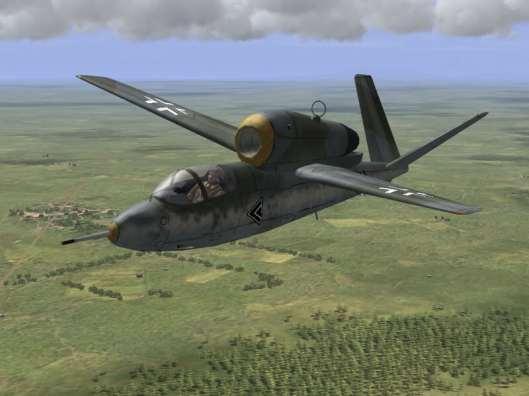
He wound up flying the plane in the picture, a Heinkel He162 (this one is the “D” model). Notice the absence of propellers? It was one of the Fuhrer’s beloved wonder weapons, put into production near the end of the war. It was a jet.
It was also a death trap. Note the placement of the engine. Visualize an He162 hit by shellfire, and the pilot trying to bail out.
See where he would go?
Which is what happened to this hapless young man’s airplane in 1945: it was hit by shellfire–in this case, a 20mm cannon.
He made one of the mistakes fighter pilots are NOT supposed to make. As he was landing, he forgot to look behind him.
If he had, he would have seen the American P-38 firing a burst from its machine guns, just to kind of finish off the work his cannon had started. He was the last thing the young American/German pilot needed that day: a perfectionist.
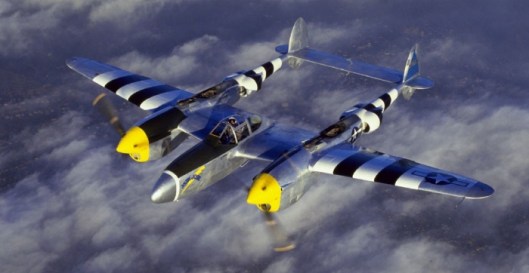
A P-38 Lightning
So a Browning 12.5 mm machine gun bullet went through the young pilot’s leg. He forgot all about landing and got busy passing out.
When he regained consciousness, he received news from a monstrous American GI, a sergeant, standing over him and peering into the cockpit.
Here was the news: “Hey! I think this sumbitch is still alive!”
He was indeed. And, as it turned out, the Americans liked this particular sumbitch, who probably knew as much about Joe DiMaggio and Buck Rogers in the 25th Century as they did. He was treated at a mobile hospital and somehow stayed with the American unit that had captured him.
His near-death experience happened only about a hundred miles from his mother’s home.
When the Americans’ advance took them there, they knocked on his Mom’s door and dropped him off for her to take care of.
After the war, he came home. To here, that is. And now he lives in the Paso Robles area.
That, I think, is a good war story.
 A Work in Progress