• About
  • The Germans

A Work in Progress

A Work in Progress

Monthly Archives: January 2016

The hunch

06 Wednesday Jan 2016

Posted by ag1970 in California history, Family history, Personal memoirs

≈ 1 Comment

1003595_10208291341784944_2527951556034985778_n

It took me almost 64 years, but I finally found this handsome young fella last night. This is Dykes Johnson, Taft Union High School ’27, Stanford University BS, University of Louisville M.D., Taft Union High School Hall of Fame.

He passed away in 1996. Damn it.

I was born on January 25, 1952, when I should’ve been arriving some time around Washington’s birthday. Dykes was our family doctor in Taft. He was a flying enthusiast–he’d also served in the Navy as a doctor during the War–and was gone to the other end of a Valley on some kind of fly-in.

When Dad took Mom to the hospital, things weren’t going so well. Dad was scared. I was about to make my appearance (or not) when Dykes burst through the door, which almost hit my Dad in the face.

Dykes, I guess, was a blunt man, and especially that night. “Get the hell out of here!” he told my father. “Something’s wrong.”

He’d flown back down to Taft. He’d had a hunch.

I was not only a preemie–four pounds–but the cord was wrapped around my neck and I was blue. I’d stopped breathing.

Meet the man who saved my life

A spooky hallway in the abandoned West Side Hospital, built in 1949. This is where I was born; it was demolished a few years ago.
The Dykes Johnson Medical Center, torn down in late 2022.

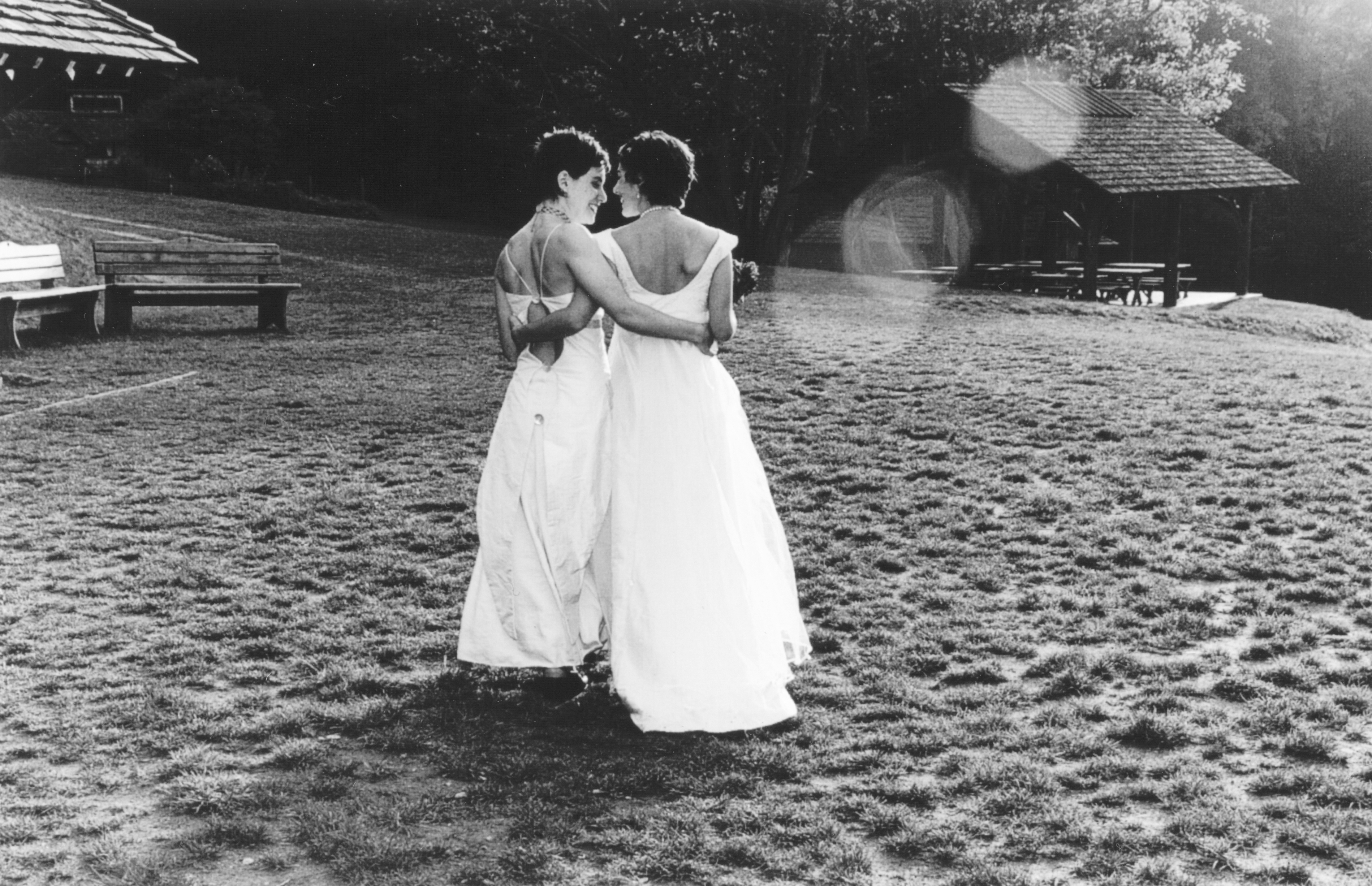
Two brides.

05 Tuesday Jan 2016

Posted by ag1970 in Family history, News, Teaching

≈ Leave a comment

2-brides-wedding-style-page

I’ve been seeing a lot of this in recent years on Facebook: a former female student gets married. To another female. So I guess I’ll keep this as a link on Facebook, rather than a direct entry, to avoid the stone-throwing.

But, again, you’re dealing with my Irish mother’s son, and she’s the Irish mother who loved God with her mind as much as her heart: she amazed priests, to the point of devastation, with her knowledge of theology. Her first prime directive, similar to Christ’s, was that love is a gift from God. From that flows a corollary: To love another human being is the most terrifying leap anybody can make, and to have the courage to commit yourself to the leap—both to the letting go, and to the hanging on on the other side—is the most perfect gift a person can give back to God.

So seeing those photos of young women who’ve made that commitment has a deep impact on me. The photos show two young women who are happy.  So they make me happy, too.

These young people, just starting new lives together, don’t need my blessing. I don’t have that kind of power, and that’s not the point I’m trying to make. I can only tell you–please forgive my forwardness–that I love you and I am very proud of you. You have reciprocated God’s greatest gift. And no stone can wound the strength in two people united together.

Before you throw yours, if you’re infuriated by my impious linkage of God with same-sex marriage, wait and listen quietly to discern whether condemnation—when you might be as confident in your faith as the Sanhedrin was in its faith when it arrested Jesus—is really what God desires. I believe from the bottom of my heart that She has a surprise for you.

Gisela’s murder

03 Sunday Jan 2016

Posted by ag1970 in American History, History, News

≈ Leave a comment


Gisela Mota


Gisela Mota became the mayor of Tenmixco, Mexico–in Morelos, the state of a hero of mine, Emiliano Zapata–on Friday. She’s seen here at her swearing in. Yesterday, Saturday, drug cartel gunmen shot her to death outside her home.

I hate drugs because they are so much more insidious than bullets. So it’s jarring when a little research reveals that recent marijuana legalization may have been the most effective tactic yet used against the Mexican cartels. They are losing a significant part of the immense flow of dollars that sustains them. They are hurting.

So was a recovering heroin addict I knew once. But he was having a far, far easier time than the guy trying to kick his—legal—prescription painkillers. That man was going to pieces. Both  were sick men; I’m not sure why they’re alive, but not this vital young woman. None of this makes sense to me.

Two more things, in our relationship with Mexico, don’t make sense to me, either:

  • In the wake of NAFTA, American corn producers dumped their product on the world market a decade ago. They generated a wave of foreclosures on small Mexican farms and the resultant migration, now subsiding, that Mr. Trump wants to end with a wall.
  • If you know our history of alcohol abuse, from the very beginning of the nation (it was, ironically, corn alcohol at the beginning), then you know that we are not noted for our impulse control. So it’s not supply, but instead American demand for drugs that helps to fuel the cartel crossfire that kills so many innocent Mexicans.

“Poor Mexico,” the poet Octavio Paz once wrote. “So far from God, so close to the United States!”  Few nations are so tightly linked yet so insistent on denying their kinship. The first victim of the Mexican Revolution was an El Paso housewife hanging out her laundry, killed by a bullet that crossed the border. More than a century later, the cartel murders represent the worst violence since the Revolution, which killed a million people, or one of every ten Mexicans.

Somehow, the drug violence must stop. I don’t know how to stop it. But I know that this not what Zapata died for when he, too, was assassinated in 1919. I know, looking at Gisela’s image, that the Mexican people have been cheated again, robbed of a young woman of promise in the young part of a year that now promises nothing at all.


A Tudor woman? No thank you.

02 Saturday Jan 2016

Posted by ag1970 in History, Teaching

≈ Leave a comment

wolfhall314
Mark Rylance, as Thomas Cromwell; Claire Foy as Anne.


It took Anne Boleyn to help me to understand why I cringe when Donald Trump asserts that he “cherishes” women. Henry VIII cherished Anne, and that diminishment is what made killing her so much easier for him.

I thought about Anne recently while watching PBS’s Wolf Hall, based on the wonderful Hilary Mantel novels, whose protagonist is Henry’s minister, Thomas Cromwell.

One of my favorite lines–Cromwell’s, and typically, it stings–involves Anne’s alleged lack of cleavage. There’s an exchange between him and Jane Boleyn, when Cromwell asks Jane, who has little love for her brittle sister, if Anne and Henry’s love has been consummated.

Not yet, Jane tells him. But Anne allows Henry to kiss her breasts.

A pause. Just a slight one.

“Good man if he can find them,” Cromwell replies, and exits.


* * *


Henry wrote about them in his love letters. He refers to Anne’s breasts as “pritty Duckys” in 1533, three years before he has her executed.

There was, by the way, bad weather in the Channel that day. Anne had prepared herself to die, only to be told the superb French executioner, her husband’s parting gift, was delayed. She had to do it all over again the next day, when he arrived and she departed.

She did so with immense courage.

Her grave is beneath the altar of St. Peter ad Vincula—I’ve taken students there–within the Tower of London, only a short walk for her ladies-in-waiting, who brought her coffin down from the scaffold, once they’d carefully wrapped Anne’s head and body in damask and reunited them inside. In reality, it wasn’t a coffin. It was a chest for storing bow staves, originally bound for Ireland to kill humbler subjects there.

It’s hard to hate Anne, with her being there the way she is. It’s such a tiny grave. So was her neck, she remarked with a laugh before the execution. Her alleged lovers, including her brother, were buried at the other end of the little chapel, and their bones now are intermingled there, as if they finally were co-conspirators, after all. But the Boleyn family was evidently a piece of work: arrogant, ambitious, tone-deaf–-much like the Greys, who beat Lady Jane all through her growing up–-they boxed her ears, punched her, flailed at her legs with a birch rod, and then they got her beheaded, still a child, in the name of their own ambition.

I would not have chosen a life as a noblewoman, I remember telling my students. The lives lived by the wives of peasants or tradesmen, I think, were in many ways more substantive: the executions, disinheritances, serial affairs, and the emotional and physical abuse so prevalent in Henry’s circle set noblewomen apart from most English women, who could count on the smallness of their rural villages for protection.

One example. No pregnant girl was left bereft. There are virtually no illegitimate births in rural England in the sixteenth century. There are plenty of marriages recorded in parish registers that produce issue in the christening books four months later. [Anne herself was heavy with Elizabeth when she finally married Henry in a midnight ceremony.] Young men, anonymous to us, were held accountable for their actions; we can’t even hold a famous man, Trump, accountable for his words.

No woman’s life was easy. But the lives of women like the Boleyn sisters or Jane Grey had such cruel edges. Their personal power was cleaved as decisively as if they’d all gone to the block.

Meanwhile, Henry’s love letters are in the Vatican Library, which seems a waste. So does his life: all the statecraft, the parsimony and the ruthlessness of his father, Henry Tudor, was wasted by Henry VIII, a soft, self-indulgent man, in the single-minded pursuit of a son of his own.

Neither Trump nor Henry, so often true of soft, self-indulgent men, show evidence of a sense of humor, so the irony would have eluded them: within Henry’s court, in her little petticoats, there was Anne’s red-haired toddler daughter, who would become twice the king her father ever hoped to be. Donald, just as oblivious as Henry was to an obviously gifted daughter, has opined, creepily, that he would date his if their lives had been different.

There’s a scene in one segment of Wolf Hall where Henry holds Elizabeth in his arms. He is enchanted, but only momentarily. Mistress Seymour catches his eye, so Henry abruptly hands the little girl off to her governess. Damian Lewis, who plays Henry, is such a good actor that you can see the king forgets his daughter in the instant he loses physical contact with her. Meanwhile, Jane might burst into flames, so intense is his focus.

I think that’s why Cromwell is so appealing in Wolf Hall. Henry’s self-absorption, like Trump’s, is suffocating, so Cromwell’s competence, which is so unlike Trump, is like a candle that won’t go out. Not yet.

Jane Seymour finally gave Henry the son he wanted, only to die after the little boy’s birth. She was another female sacrificed for her king. Henry was heartbroken. Of his six wives, Jane was the one he cherished most.

Of course, little Elizabeth would grow up to decide that she would never marry. There’s no mystery in that at all. She’d grown up in a world dominated by vain and powerful men like her father. There was nothing they had that she wanted.
 

DuffontheroadtoTilbury

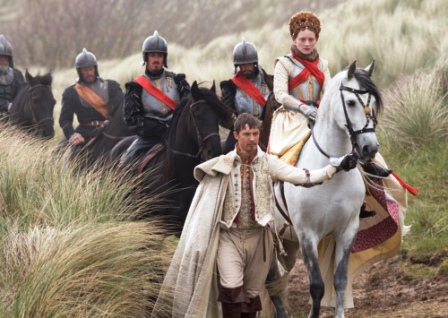
Anne-Marie Duff as Elizabeth, Tom Hardy as Leicester, as she approaches Tilbury to speak to her troops, assembled for the Armada invasion. Duff’s delivery of the speech is, I think, pitch-perfect.

Newer posts →

Subscribe

  • Entries (RSS)
  • Comments (RSS)

Archives

  • January 2026
  • December 2025
  • November 2025
  • October 2025
  • September 2025
  • August 2025
  • July 2025
  • June 2025
  • May 2025
  • April 2025
  • March 2025
  • February 2025
  • January 2025
  • December 2024
  • November 2024
  • October 2024
  • September 2024
  • August 2024
  • July 2024
  • June 2024
  • May 2024
  • April 2024
  • March 2024
  • February 2024
  • January 2024
  • December 2023
  • November 2023
  • October 2023
  • September 2023
  • August 2023
  • July 2023
  • June 2023
  • May 2023
  • April 2023
  • March 2023
  • February 2023
  • January 2023
  • December 2022
  • November 2022
  • October 2022
  • September 2022
  • August 2022
  • May 2022
  • April 2022
  • March 2022
  • February 2022
  • January 2022
  • December 2021
  • November 2021
  • October 2021
  • September 2021
  • August 2021
  • July 2021
  • June 2021
  • April 2021
  • March 2021
  • February 2021
  • January 2021
  • December 2020
  • November 2020
  • August 2020
  • July 2020
  • June 2020
  • May 2020
  • April 2020
  • January 2020
  • December 2019
  • November 2019
  • October 2019
  • September 2019
  • August 2019
  • May 2019
  • April 2019
  • March 2019
  • February 2019
  • January 2019
  • December 2018
  • November 2018
  • October 2018
  • September 2018
  • July 2018
  • June 2018
  • May 2018
  • April 2018
  • March 2018
  • February 2018
  • January 2018
  • December 2017
  • November 2017
  • October 2017
  • April 2017
  • March 2017
  • December 2016
  • November 2016
  • October 2016
  • September 2016
  • August 2016
  • July 2016
  • June 2016
  • April 2016
  • March 2016
  • February 2016
  • January 2016
  • December 2015
  • November 2015
  • October 2015
  • September 2015
  • August 2015
  • July 2015
  • June 2015
  • May 2015
  • April 2015
  • March 2015
  • February 2015
  • January 2015
  • December 2014
  • November 2014
  • September 2014
  • August 2014
  • July 2014

Categories

  • American History
  • Arroyo Grande
  • California history
  • Family history
  • Film and Popular Culture
  • History
  • News
  • Personal memoirs
  • Teaching
  • The Great Depression
  • trump
  • Uncategorized
  • World War II
  • Writing

Meta

  • Create account
  • Log in

Blog at WordPress.com.

  • Subscribe Subscribed
    • A Work in Progress
    • Join 68 other subscribers
    • Already have a WordPress.com account? Log in now.
    • A Work in Progress
    • Subscribe Subscribed
    • Sign up
    • Log in
    • Report this content
    • View site in Reader
    • Manage subscriptions
    • Collapse this bar
 

Loading Comments...