• About
  • The Germans

A Work in Progress

A Work in Progress

Monthly Archives: February 2016

The Man of Honor

29 Monday Feb 2016

Posted by ag1970 in Uncategorized

≈ Comments Off on The Man of Honor


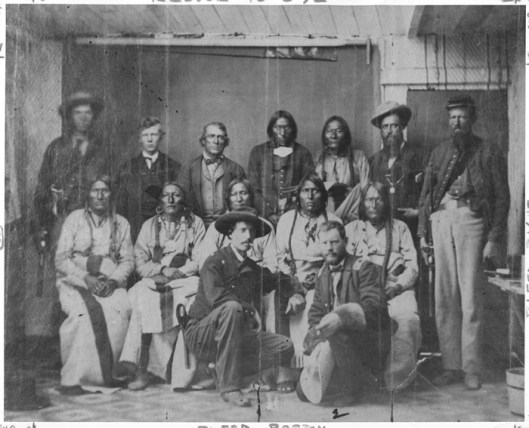
Camp-Weld-Conference-October-2014

The Camp Weld Conference, Sept. 1868. The soldiers kneeling are (l) Edward Wynkoop and Silas Soule, Directly behind Wynkoop is Black Kettle; the man to Black Kettle’s immediate left is One-Eye.

John Rice would leave Minnesota and farm for a decade in Iowa before coming to Arroyo Grande. He and his brother, Daniel, who transformed local cattle and Indian trails into serviceable roads, would make a mark on the community that would sustain it, after the rancho days of Francis Branch had ended, during its incarnation as a center for California truck gardening.

Much less is known about another veteran with an impressive name. Harrison Marion Bussell was born in Tennessee in 1835 and died in Arroyo Grande, but in 1864 he was living in Colorado, and the notation on his gravestone:– “1st Colorado Cavalry”—refers to one of the units responsible for perhaps the greatest atrocity of the Civil War years, an attack on a Cheyenne village that would become known as the Sand Creek Massacre. Bussell’s role at Sand Creek is not completely clear, but it’s significant that his gravestone identifies him as a member of the First Colorado’s Company G.

It was Cheyenne Chief Black Kettle who said that he would find it hard to believe white men anymore, and, in 1863-64, deteriorating communications between Colorado military and civil authorities and the Cheyenne would be a key cause of what would happen in November 1864 at Sand Creek. Colorado Governor John Evans began to hear rumors of a meeting among several Plains tribes—Cheyenne, Arapaho, Sioux and Kiowa—planning a coordinated war on white settlers and soldiers. It was doubtless the Minnesota Sioux uprising the year before—with troops, including John Rice’s Tenth Minnesota, still in the field on Gen. Sibley’s punitive expedition—that would have given Evans reason to believe those rumors.

Isolated but violent raids seemed to confirm the threat of war: a band of Arapaho launched a raid on Isaac van Wormer’s ranch southwest of Denver and stole some of his cattle; a year later, another party of Indians—assumed to be Cheyenne—returned to the van Wormer ranch and killed a young couple and their two small children. The mutilated bodies of the Hungate family were disinterred and put on display in Denver. Meanwhile, raids persisted from various tribes, including Utes, Lakota Sioux and a Cheyenne warrior society, the Dog Soldiers, whose power seemed to be growing during 1863 and 1864 when leaders like Black Kettle were counseling peace with the whites.

The aggressive Dog Soldiers would get a counterpart on the other side. His name was John Chivington. A Methodist pastor who secured an officer’s commission from the Governor of Colorado, Chivington had made his reputation with Harrison Bussell’s First Colorado Cavalry in the Battle of Glorietta Pass in New Mexico, where a Confederate force was defeated in part because of the First’s daring attack—rappelling on ropes down a mountainside—on their supply train. Now, in the fall of 1864, Chivington was among the increasing chorus of Coloradans—led by newspaper editors and both military and civil leaders—calling for, as one Denver newspaper called it, “the extermination of the red devils.”

That prospect was complicated by Black Kettle and other Cheyenne leaders when they came into Camp Weld, near Denver, in September to ask for peace. They were accompanied by Maj.Edward Wynkoop, the commander of nearby Fort Lyon, whose opinion of the Indians he was to police had been steadily evolving: as he got to know Cheyenne like Black Kettle and another leader, One-Eye, he wrote that “I felt myself in the presence of superior beings, and these were the representatives of a race I had heretofore looked upon without exception as being cruel, treacherous, and bloodthirsty…” Neither Governor Evans nor Colonel Chivington was pleased with Wynkoop’s peace efforts: Evans had just raised a regiment of 100-day volunteers, the Third Colorado Cavalry, whose sole purpose was to exterminate hostiles, and Wynkoop threatened to make the Third redundant. So the Camp Weld conference ended inconclusively, without a peace agreement. Black Kettle and his people were told to come in to Fort Lyon and surrender to Wynkoop when they were ready to make peace—that is, to give up their traditional lives to become farmers. But Chivington’s opinion of Wynkoop became apparent when the young officer was relieved of his command and replaced, six weeks after the Camp Weld conference, by Maj. Scott J. Anthony.

Black Kettle, anxious about the new commander of Fort Lyon, came to the fort to meet him; the Cheyenne had heard he was not friendly toward Indians. His reception belied that: Maj. Anthony assured the Cheyenne that they were under his protection and would be safe at their winter encampment on Sand Creek. He even sent a trader, accompanied by a trooper from Harrison Bussell’s First Colorado Cavalry, out to the encampment to do some business with Black Kettle’s people. At the same time, Anthony telegraphed his superiors, informing them of the encampment at Sand Creek. The telegraph read in part: “I shall try to keep the Indians quiet until such time as I receive reinforcements.”

Anthony got his implied wish quickly: Governor Evans’s 100-day volunteers, the Third Colorado Cavalry, about 300 troopers, arrived at Fort Lyon on November 28, commanded by John Chivington. Chivington was just as quick: once he’d arrived at the fort, he informed the officers of the First Cavalry stationed there that he intended to take both regiments out to Sand Creek and attack Black Kettle. Several of the First Colorado’s officers—men who had served under Wynkoop—immediately protested, insistent on the good intentions of leaders like Black Kettle and One-Eye. Chivington overrode the protest, but one of the officers he’d failed to convince was Lt. Silas Soule; after the meeting, Soule made his position clear to his brother officers: “[I] told them,” he wrote in a later letter to Major Wynkoop, “that any man who would take part in the murders, knowing the circumstances as we did, was a low lived cowardly son of a bitch.” Despite his protests, Soule would ride out with his Company D, First Colorado Cavalry, as part of Chivington’s attack force—believing, perhaps, as Chivington had implied, that the expedition was going after hostile Dog Soldiers and not peaceful Indians. Harrison Marion Bussell was a private in Company G, commanded by Lt. Horace Baldwin, whose troopers also had responsibility for two of the four small mountain howitzers that Chivington’s command, now about 700 soldiers, would bring along with them.

To the northeast, Black Kettle’s encampment of some 650 Cheyenne and Arapaho would be awakened by barking dogs. Women beginning to prepare breakfast could feel and hear the pounding of hooves, which they at first assumed, hopefully, was a nearby herd of buffalo, but the vibration was followed almost immediately, as dawn broke, by heavy small-arms fire and the terrifying shriek of artillery shells from the mountain howitzers. What happened next will never be known definitively; apologists for Chivington argue that a substantial number of warriors was present at the encampment and quickly returned fire. The historical record, which includes testimony from two Congressional investigations, indicates something much more sinister happened on November 29, 1864. Twenty-four of Chivington’s men were killed in combat that lasted from early morning until nearly sunset—about 3 p.m., in winter—but perhaps as many as 200 Cheyenne and Arapaho died. Many of them were women and children.

Lt. Silas Soule and his Company D refused to participate; D Company held its fire. Later, Soule recorded, in his letter to  Wynkoop, horrific scenes:

 
I tell you Ned [Wynkoop] it was hard to see little children on their knees have their brains beat out by men professing to be civilized. One squaw was wounded and a fellow took a hatchet to finish her, she held her arms up to defend her, and he cut one arm off, and held the other with one hand and dashed the hatchet through her brain. One squaw with her two children, were on their knees begging for their lives of a dozen soldiers, within ten feet of them all, firing – when one succeeded in hitting the squaw in the thigh, when she took a knife and cut the throats of both children, and then killed herself. One old squaw hung herself in the lodge – there was not enough room for her to hang and she held up her knees and choked herself to death. Some tried to escape on the Prairie, but most of them were run down by horsemen. I saw two Indians hold one of another’s hands, chased until they were exhausted, when they kneeled down, and clasped each other around the neck and were both shot together.

What about Arroyo Grande’s Harrison Bussell and his Company G? While men from both the regulars of the First Cavalry and the 100-day volunteers of the Third Cavalry participated in the killing—and in the sexual mutilation of bodies afterward—a September 2013 acquisition by Colorado College’s Special Collections at least suggests the possibility of exoneration for the man who would make Arroyo Grande his home.

The acquisition is a typescript of an account by a Company G trooper, Pvt. Isaac Clarke, which suggests that Bussell and G Company acted that day much as Silas Soule’s men had. Clarke, like Major Wynkoop, had become acquainted with One-Eye and respected the Cheyenne leader immensely; according to him, One-Eye came walking toward Chivington’s soldiers  carrying a white flag. The soldiers began to shoot at their target, obligingly coming toward them. Just as a G Company trooper rode out to try to save One-Eye, a bullet finally found its mark and the Cheyenne leader fell dead; moments later, the soldiers’ comrades killed him, too, as he trotted back toward the firing line. Isaac Clarke blamed the short-term volunteers of the Third Cavalry; it would take every effort, Clarke reported, of Company G’s officers “to keep us from turning our artillery loose on every hundred day man in the bunch.”

So it’s entirely possible that Harrison Bussell did not share, or did not care to share, in the accolades Denver showered on Chivington and his men once their mission had been completed. The Rocky Mountain News proclaimed, without proof, that the murderers of the Hungate family had themselves been killed and so had Cheyenne Chief Black Kettle. He had not: Black Kettle had survived, dragging his wounded wife to safety, away from their lodge, over which the chief had flown a large American flag, hoping for its protection.

Black Kettle would live only a few years longer. In a remarkable duplication of history, George Custer’s Seventh Cavalry troopers would kill him, along with hundreds of others, in a surprise attack on a winter camp along the Washita River in 1868. Silas Soule, after testifying against Chivington in the investigations that followed, was shot dead on a Denver street, five months after Sand Creek. Chivington loyalists were suspected but no man ever stood trial for the murder. Soule had been walking with his wife of five weeks when he was gunned down. Harrison Marion Bussell would marry an Ohio girl, Mattie Imus, and move to Arroyo Grande, where Mattie died in 1896 and Harrison ten years later.

Censured by Congress, John M. Chivington would resign from the service and move away from Colorado. He returned in 1887 to visit the town named in his honor. One of the citizens of Chivington, Colorado, remembered him in a 1940 memoir:

Colonel Chivington impressed us with his frankness and sincerity. We believe he really had consideration and even affection for the Red Man. But he did his duty as a soldier. After all he forever put a stop to the Indian massacres on the plains of eastern Colorado…

We doubt if any other man has ever been the target of unjust criticism and calumny that has fallen upon the head of Col. Chivington. He denied the accusation that when asked by his troops, what do with the “woman and papooses,” that he replied “Nits make lice, kill them.”…

We believe that Col. Chivington has been much maligned and misrepresented in that he was a kindly, but dignified and courageous officer.

For the last two decades, on the anniversary of Sand Creek, runners from the Cheyenne and Arapaho people have participated in a three-day race that ends at the Colorado State Capitol. It is as much a spiritual event, dedicated to healing, as an athletic contest. After the 2015 run, the presentations were made at Riverside, Denver’s oldest cemetery. The runners, their families and friends, and tribal elders wanted to be close to the grave, and so the spirit, of a man buried there: Lt. Silas Soule, First Colorado Cavalry.
The Tragedy of Gettysburg’s Culps

22 Monday Feb 2016

Posted by ag1970 in Uncategorized

≈ Leave a comment

The Civil War was a brothers’ war, one that tore families apart. Culp’s Hill, near where the 17th Connecticut was redeployed on July 2, was named for the man who’d bought the property a decade before Fort Sumter, Henry Culp. Culp’s nephew, Wesley, grew up in Gettysburg, learning the same trade, harness making, that had sustained Ulysses Grant in Galena, Illinois, when his fortunes were at low ebb.

Wesley’s boss moved his business to Virginia in 1858, and Wesley moved with him, although the young man kept in touch with friends he’d grown up with, like Jack Skelly and Skelly’s sweetheart, Virginia (Ginnie) Wade. But he made new friends in Virginia, so when the war broke out, Wesley enlisted in the 2nd Virginia Infantry and fought for the Confederacy. Wesley’s brother, William, fought for the Union in the 87th Pennsylvania, and the two regiments faced off during a firefight in Stonewall Jackson’s Shenandoah campaign in 1862. Neither brother was hurt.

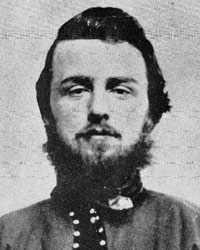
culp
Wesley Culp
HD_skellyJHc_0
Jack Skelly

Another Union soldier in the 87th wasn’t so lucky. In one of the many coincidences that marks wartime, when great numbers of people are put into motion, Wesley Culp found his old friend Jack Skelly in late June 1863, badly wounded and in a Confederate field hospital. Skelly knew that he would never see Ginnie Wade again, and he asked his Gettysburg friend to find a way to deliver a last letter to her. Wesley Culp promised that he would.

Culp and the 2nd Virginia came back to his old hometown as part of Richard Ewell’s Confederate corps, and the regiment fought on his uncle’s property on July 2,  part of the sequence of attacks that included Arroyo Grande’s Erastus Fouch and the 75th Ohio on nearby Cemetery Hill. Fouch was captured. Culp survived July 2.

He died the next day, on Culp’s Hill. He was the only solider in the 12th Virginia’s B Company killed at Gettysburg.

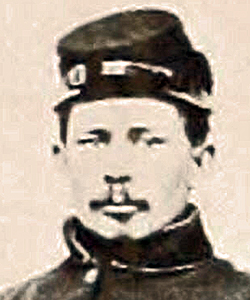
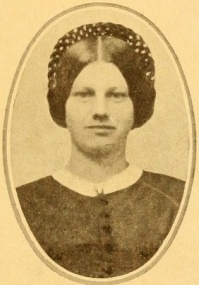
Jennie-Wade
Ginnie Wade

So Jack Skelly’s letter never got to Ginnie Wade.

But Jack never knew that Ginnie had died at Gettysburg, as well, On the same day, July 3, that Wesley Culp was killed in action, Ginnie was kneading dough in her sister’s kitchen to make biscuits—her sister had just delivered a baby.

A bullet penetrated the heavy kitchen door—the bullet hole, widened by generations of tourists’ index fingers, is still there– struck her in the back, and killed her instantly. Ginnie was the only civilian killed at Gettysburg.

Nine days later, Jack Skelly died from his wounds.

Ginnie Wade was nineteen. Jack Skelly was twenty-one. Wesley Culp was twenty-four.

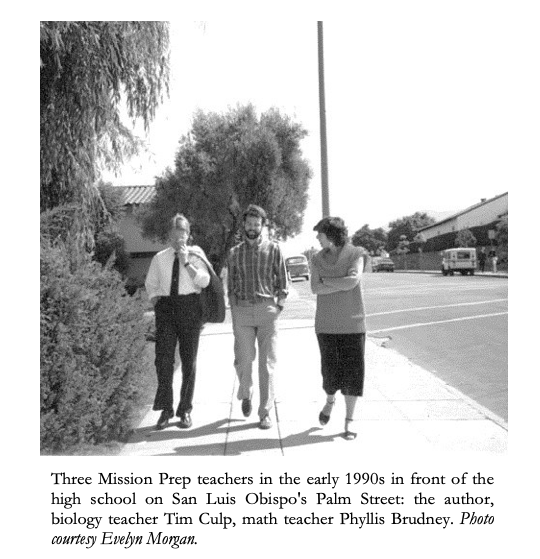
A descendant of the Culp family, Tim Culp, taught biology at Mission Prep in San Luis Obispo and coached the high school’s boys’ basketball team for many years. He returned to his roots in Pennsylvania, earned a doctorate in microbiology and immunology from Penn State, and now works as Principal Scientist for Merck Pharmaceuticals, at West Point, Pennsylvania.

West Point is a little more than two hours away from Gettysburg, close enough for the residents who lived there on July 3, 1863, to have heard the Confederate artillery bombardment on the last day of the battle. After it was all finally over, searchers on the Culp farm found a rifle stock with Wesley’s name carved in it. Although his 2nd Virginia friends had buried Wesley on Culp’s Hill, his body was never found.

Learning about the Souls of Black Folk

19 Friday Feb 2016

Posted by ag1970 in Uncategorized

≈ Leave a comment

20160219_144524

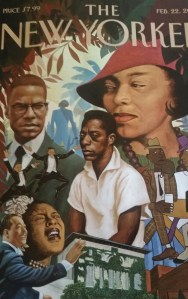
History types like me love this week’s “New Yorker” cover. When I taught U.S. History, the kids enjoyed learning about the Twenties–I taught them how to speak “Flapper”–and they enjoyed especially learning about the Harlem Renaissance. 

I’ve always loved black history, ever since I took a class on the history of slavery at Mizzou, which had the odd effect, in learning about people “endurin’ slavery,” (they never said “durin’ slavery” in the slave narratives, precisely because they knew the difference) of making me even prouder to be an American: their lives were such an integral part of our history and so they live on in our lives, our language and our culture.

Maybe when I taught this material my love for it was a little contagious.

Anyway, I took my time on these lessons: Langston Hughes, Josh Gibson and Satchel Paige (“With which pitch would you like me to strike you out?” he’d call to a batter), Duke Ellington and “Take the A Train,”Billie Holiday and “Strange Fruit,” and excerpts, with Wynton Marsalis, who was perfect in explaining both the technical and cultural nuances of the music,  from Ken Burns’s Jazz.

I took a long time, in one lesson, to teach them Malcolm X, and I did it with primary sources taken from poetry.

The students invariably amazed me. They instinctively connected to, and adored, Louis Armstong, and the story of his life always captivated them. I think most teens, unless we extinguish the spark, have an innate sense of justice, of what’s right, and we all know how keen their Hypocrisy Detectors are. That’s one reason why I loved teaching them.

There’s one scene, in Jazz, when Armstrong captivates another teen– Bix Beiderbecke, a Davenport, Iowa, boy, who hears the sound of Armstrong’s cornet skipping across the water from the bandstand of a Mississippi riverboat. Bix was as transfixed as was Saul on the road to Tarsus. He had never heard a sound that pure, and he would spend the rest of his gifted but tragically brief life chasing after it with his own cornet.

Music is amazing, isn’t it?

The students loved, too, the anecdote about the time Bessie Smith interrupted a set to light into, and then chase, some hooded Klansmen, who ran for their lives. “Pick up them skirts, Trash!” she hollered after them.

A historian who learns a story that satisfying doesn’t need to eat much the rest of the day.

Soldiers’ Home

18 Thursday Feb 2016

Posted by ag1970 in Uncategorized

≈ Leave a comment

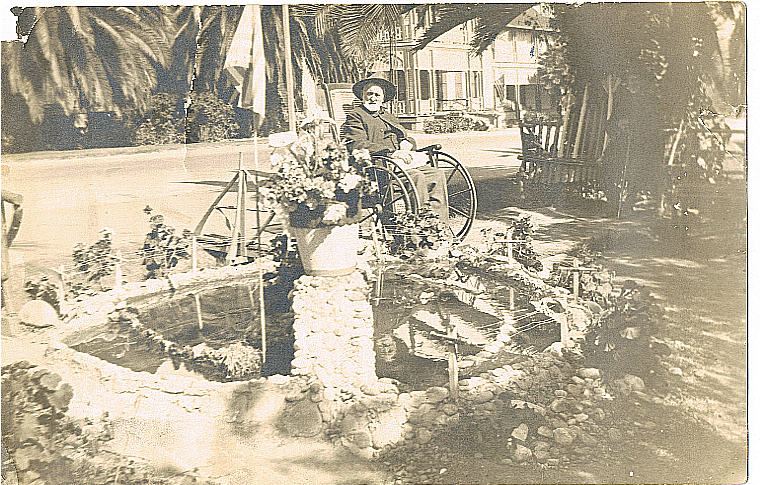
Otis W.Smith Sawtelle CA near LA

Otis W. Smith at the Sawtelle Home for Disabled Veterans, Los Angeles.

Early that morning, long and twisting columns of butternut gray moved slowly up the three pikes that cut their way toward Franklin, Tennessee. They were miles away but closing fast. Bright metal flashed from within each column, like the glistening of a snake’s scales. The locals later remembered that the thump of boots and bare feet upon the macadam rattled the windows of their houses. These were the Confederates, come to smash the Federals.

–From the novel The Widow of the South,
By Robert Hicks

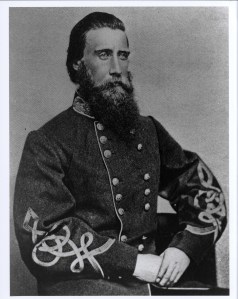
This is what happened instead: the Confederates smashed themselves upon the Federals, who had gotten to Franklin first and had gone to work with picks and shovels. They’d thrown up earthworks beyond a two-mile stretch of bare field that was punctuated only by islets of scrub brush not big enough to hide a dog, let alone a man. When they marched into Franklin, the Confederates had been ordered to cross that field and carry the federals’ entrenchments. This was in part because their commander’s audacity had won him promotion after promotion in fighting the war which had whittled him half away. John Bell Hood’s reputation for bravery grew even as he’d lost a leg and the use of an arm in battles farther north; at Antietam, in 1862, he’d lost even more when he sent his Texans shrieking like Comanches into the cornfield beyond the Dunker Church. They’d gone into the cornstalks and disappeared. Hood was asked later where his division was. “Dead on the field,“ he’d replied.

GenHood

Gen. Hood

Now Hood, who had to be strapped into his saddle, had been sent south to replace a general, Joe Johnston, with too much finesse and not enough deference for the taste of the Confederate commander-in-chief, President Jefferson Davis. Hood was a smasher. In truth, he had been promoted this time beyond his capabilities. But now, in the late fall and early winter of 1864, even the smasher was playing—strategically, at least—with finesse. If he could raise enough hell in Tennessee–enough, maybe, to get in between the two Union armies there and then replicate Napoleon at Austerlitz, or Hood’s breathing hero, Lee, at Chancellorsville—he could take on one army, bloody it, and then turn and knock aside the second on a fighting march north, into Kentucky.

And that feat, if Hood could accomplish it, would force Sherman to double back on the path he’d burned into Georgia. Sherman would have no choice but to come to the rescue of the wreckage John Bell Hood left for him in Tennessee.

Hood wasn’t impressed with the material he’d been given to accomplish the coup he’d designed so artfully. He was convinced his army was made up of diggers—like the Yankees two miles away, they fought only behind earthworks or stout stone walls. They didn’t have the drive or the killer instinct of the Texans Hood once commanded, and, a few days before, at Spring Hill, they had allowed one of the armies that Hood had wanted to maul a free march, screened by trees, past their encampment, so close that a few Yankees had come up to the Confederate campfires to light their pipes, where they were taken prisoner instead. That was a few Yankees. The rest of the army—the Army of the Ohio, led by Union Gen. John Schofield—had slipped away in the night as noiseless as Lee’s had at Antietam, and in the morning an enraged Hood discovered that they were gone.

Now, on November 30, he’d found Schofield’s army again, behind their entrenchments and two miles away across ground bare enough for Hood to put his entire Army of Tennessee on parade, in a grand review. And this, essentially, was what Hood intended to do. This would be an assault to remember; Hood would teach his 26,000 Confederates a lesson. They would take entrenchments, not hide behind them. He was going to put some salt into the Army of Tennessee.

What happened next was, of course, murder.

* * *

Prunes again. Otis W. Smith weighed only a little more now than he had when his Ohio regiment had arrived at Franklin in 1864, over fifty years ago. It was the diet—or the lack of a diet—at the Sawtelle National Home for Disabled Veterans in Los Angeles, California, which allowed Smith, even while confined to a wheelchair with wire wheels big enough to drive a motorcar, to remain as lean as a whippet.

He didn’t want to eat now and he didn’t want to eat then. Smith had seen dead men before—he’d enlisted in 1862, at 17—but never on the scale John Bell Hood had arranged. Smith’s regiment came up the day after Hood’s assault, so he had seen the Confederate dead strewn in driblets across the field and packed in dense clumps against the face of the Union earthworks. They were shapeless, some, torn by artillery shells, gelatinous and shiny—not men, but sacks of men. He may have helped burial details dig the long, shallow trenches into which the shapeless bodies, or fragments of bodies, were rolled by the dozen. Forty Confederates buried here, a penciled epitaph might read on a tombstone no more substantial than the lid from a crate of hardtack.

The Confederates, being dead, couldn’t complain about their lot, but neither could the living graybeards who were Smith’s friends at Sawtelle. If the “inmates,” as the papers called them, complained about the food or an attendant’s cruelty, they’d be “shown the gate.” One Sawtelle veteran taught them an object lesson about what life was like beyond the gate: he’d been burned alive in his little apartment in Santa Monica. Another had wandered off the grounds once, tumbled into a ditch and hadn’t been found for hours—he was lucky enough to go to a hospital, where the food might be marginally better and the staff’s attitude marginally softer.

Sawtelle had been investigated twice, and exonerated twice, in 1897 and in 1912, for allegations of mistreating veterans like Smith. But, in truth, there weren’t that many veterans like Smith. While, like many of those tottering around or being wheeled around the grounds of the National Home—grounds shaded by palm trees, and Smith liked a dappled spot next to a little Spanish-style fountain–he had built himself a new life in California, as a rancher in the Huasna Valley, east of Arroyo Grande. But none of the “inmates,” none of his friends in Arroyo Grande, and not even Smith’s family, knew the secret he’d hidden about the war.

In combat against John Bell Hood’s Army of Tennessee, Otis Smith had won the Medal of Honor. Here is how that happened.


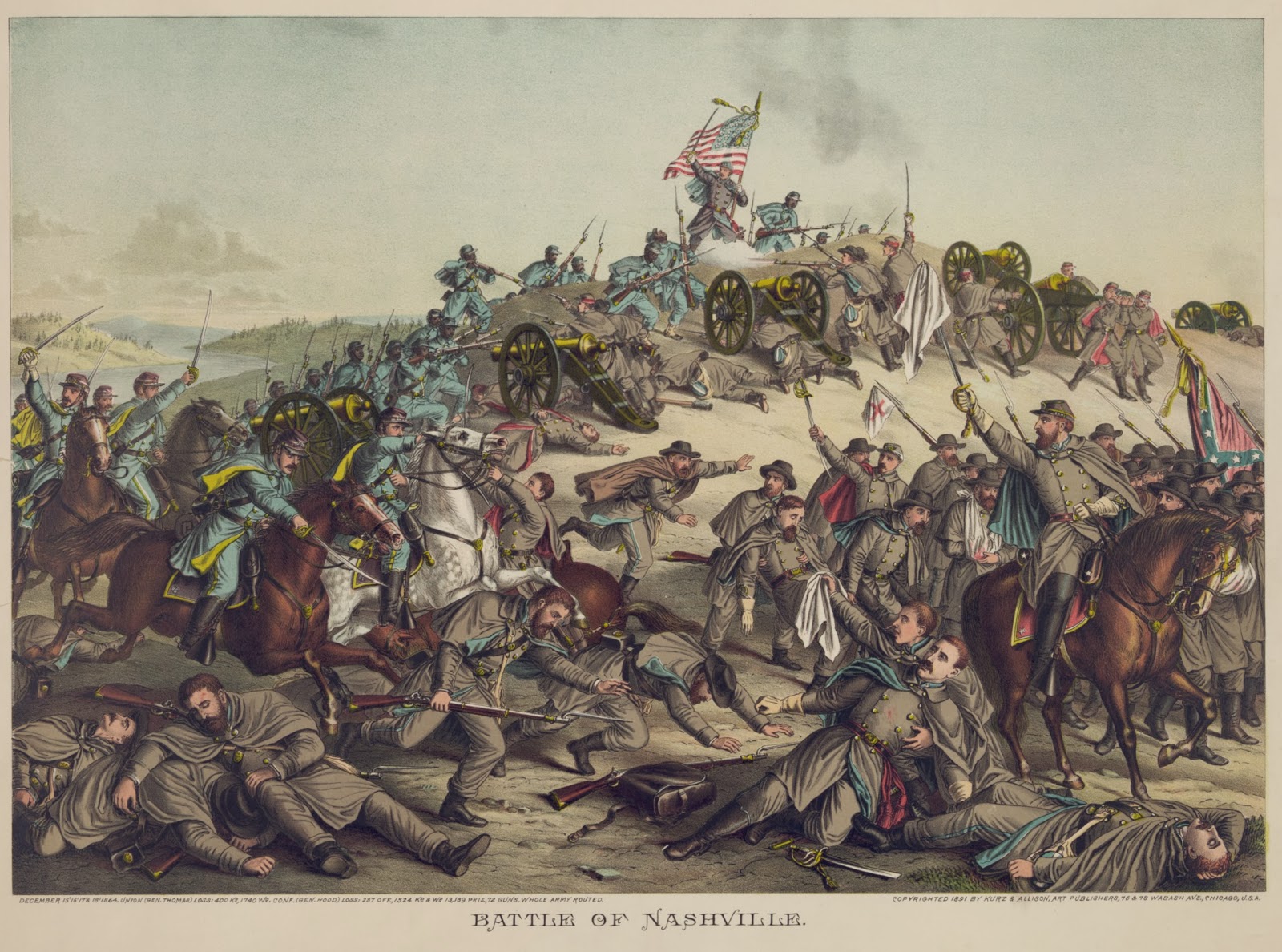
A contemporary depiction of the assault of the U.S. Colored Troops

…A month after the Battle of Franklin, outside Nashville, Gen. John Schofield was stalling. Perhaps it was the memory of what he and Otis Smith had seen at Franklin in the tangled mounds of Confederate dead. Now, in December, Schofield was in the same place [Confederate Gen. John B.] Hood had been at Franklin. The Union general was about to lead an assault on an enemy that was well dug in. There was one difference between Schofield’s situation and Hood’s. He was a subordinate officer, not in command. Maj. Gen. George Thomas was Schofield’s superior, and Thomas was ordering him, in the second day of fighting at Nashville, to attack a hillside held by entrenched Confederates. So it would be Hood’s men who would be waiting for Schofield’s this time, not the other way around, and they would be eager to return the favor of Franklin. Earlier that afternoon, December 16, three regiments of U.S. Colored Troops had attacked the Confederate right and were repulsed with forty percent of them dead or wounded—the Confederate officer commanding thetroops that had inflicted this destruction noted the African Americans’ bravery in his official report.

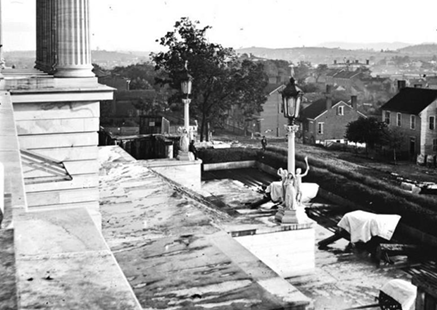
The state capitol steps at Nashville, protected by an artillery battery, 1864. Library of Congress.

Now, on the Confederate left, Schofield was to duplicate that costly effort and send his men up the steep slopes of Shy’s Hill. So he hesitated. He asked General Thomas for reinforcements. Thomas studied the hill for a moment and the decision was suddenly made for him: there were Union troops already attacking the entrenchments there. They were Brig. Gen. John MacArthur’s men. MacArthur, an aggressive and, on December 16, an insubordinate Scot, born in a town on the River Clyde, had grown tired of waiting. Thomas ordered Schofield to follow MacArthur’s lead and send in the rest of his men.2

Otis Smith’s 95th Ohio Infantry was on the right of the impetuous Scot’s attack when MacArthur let it go at 3:30 p.m. The 95th advanced silently, with fixed bayonets, and began to clamber up the hill, ironically, up hillsides so steep that they protected Smith and his comrades from the enemy entrenched unwisely on the summit, rather than below it, where they would have enjoyed a shallower and so more punishing field of fire. The men atop Shy’s Hill included a depleted Florida brigade; in fact, they could manage to field only enough troops that day to make up a regiment. Their position had been further weakened by Hood, who’d transferred troops from the hill to other points in his line. The Floridians had worked all night digging trenches, had been soaked all day by a cold rain, and so they were exhausted. Suddenly, the 95th Ohio, after advancing without a cheer and without firing a shot, were in the Floridians’ entrenchments, Otis Smith among them, killing the Southerners with their bayonets.

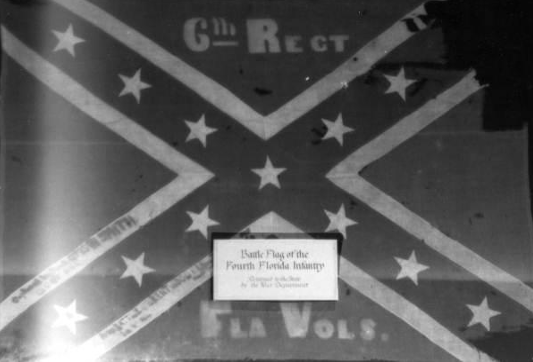
The Confederate position collapsed and Hood watched, dismayed, as his army’s left dissolved. Those left behind were now surrounded by the Union brigade that included Smith. One Floridian started to tear his regimental flag into pieces to keep the victors from having it. For the 6th Florida, it was too late: during the assault, Otis Smith had seized their regimental colors. After the capture of Shy’s Hill, the rest of Hood’s men followed their comrades who were retreating on the left. Hood later wrote that he had never seen a Confederate army retreat in such confusion.3 His army was finished. Less than a month after their rout at Nashville, Hood resigned his command, and Otis Smith would be awarded the Medal of Honor that he never talked about, perhaps because it was tarnished.

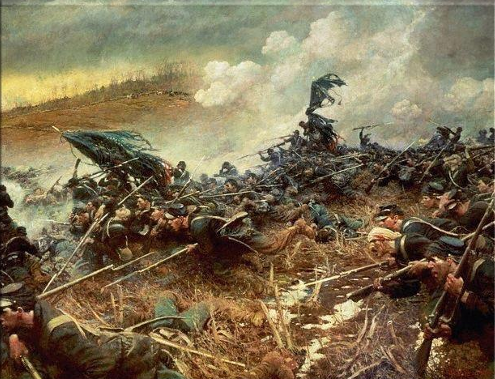
Artist Howard Pyle’s depiction of a Minnesota regiment’s assault on Shy’s hill, part of the attack in which Otis Smith played a role.

This is why. The officer commanding the Floridians on Shy’s Hill, Gen. Thomas Benton Smith, was being conducted to the rear when he was confronted by Otis Smith’s regimental commander, a peacetime physician, Lt. Col. William Linn McMillen. Words were exchanged. McMillen may have been drunk. He suddenly drew his saber and began striking the disarmed Gen. Smith on the head; one blow was so deep that Smith’s brain was exposed.4 McMillen’s own men intervened to disarm their enraged commander. No charges were ever brought against him. He was later promoted, grew cotton in Louisiana after the war, was a state senator, and won patronage jobs from two presidents as postmaster and then port inspector for New Orleans.

In 1886, his victim at Nashville, Thomas Benton Smith, was admitted to an insane asylum where he would spend most of the rest of his life, crippled by the depression that doctors said was a result of his injuries that day below Shy’s Hill. He was temporarily released in 1910 to attend a veterans’ reunion. Out of kindness, he was allowed to conduct close-order drill with some of his old soldiers, and the moment transformed him. An observer wrote that the old general was “as full of the animation of the old days as could be imagined” as he put his little command through its paces.5 Gen. Smith died on May 21, 1923, ten weeks after Medal of Honor winner Smith died at the Sawtelle Home in Los Angeles.

The flag that Smith captured at Nashville.

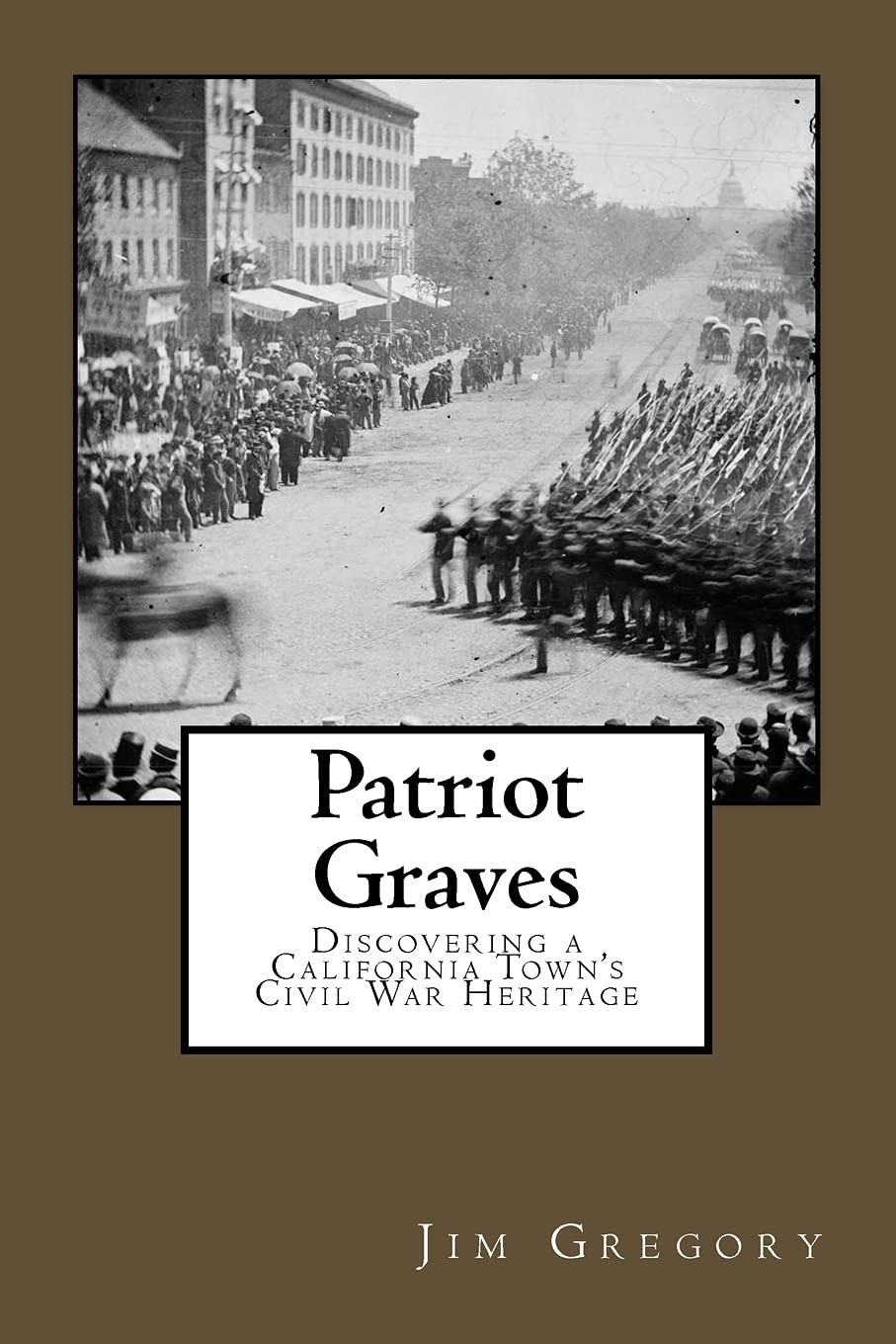
From the book Patriot Graves


Argh.

17 Wednesday Feb 2016

Posted by ag1970 in Uncategorized

≈ Leave a comment

Slide1

Okay, let’s assume you want to write a book about the Civil War. You want photographs, which is fine, because most Civil War photographs are in the public domain—with credit and attribution, they’re free.

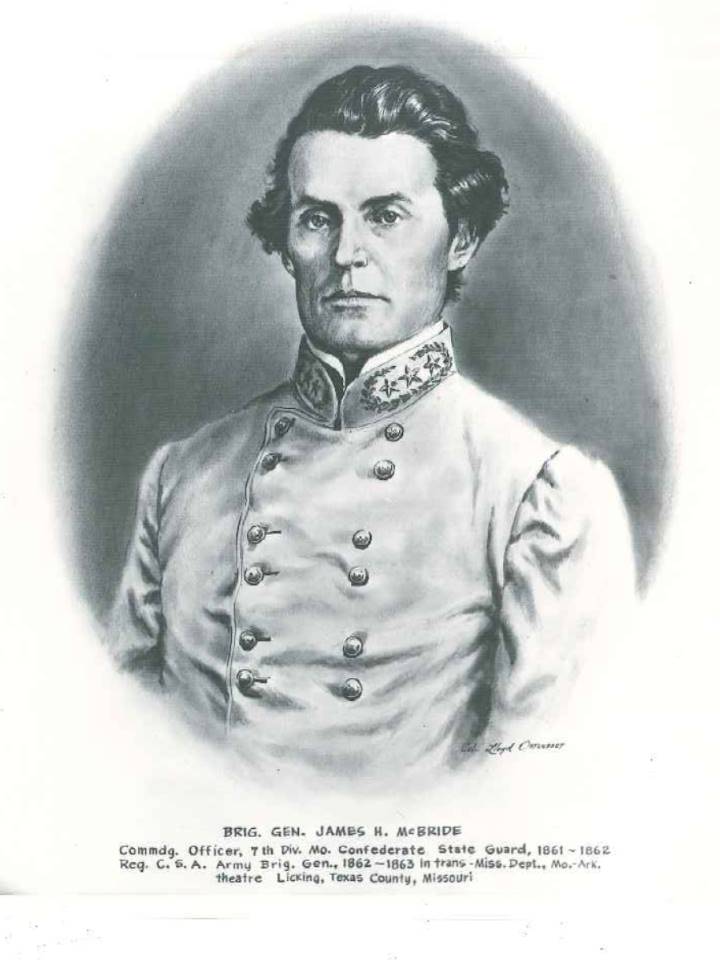
This is my great-great grandfather, a Confederate brigadier general. I was named after him. This was taken from a photograph that’s about 156 years old—the uniform was superimposed by an artist. The subject died in 1863—153 years ago. So clearly, this is in the public domain, right?

Wrong.

I had to pay for it, which I don’t mind at all. If I hadn’t paid for it, family or not, I could’ve been sued. But here’s where it gets complicated.
Say I want to use a photo from your family: a great-great-great grandpa, for example, who fought with Sherman at the Battle of Atlanta. You (graciously) give me permission to use the photo, and I (naturally) credit you for it in the caption of the book I publish.

Then we both get sued.

Just because it’s your photo, and in your possession, doesn’t mean you’re the owner. The guy who took the photo is the owner. Rightfully so. But let’s assume, being reasonable people, that the guy who took a photo in 1860 is dead. Pssst! He is!

Then you’re home free, right?

Wrong.

Is someone PUBLISHED the photo—for example, posted it on their ancestry.com family tree, then you are doomed.

A photo taken before Jan. 1, 1923, is in the public domain. Freebie.

But a photo taken before Jan. 1, 1923 and published, say, in 2002, is under copyright until 2047—the life of the creator plus 70 years, or 2047, whichever is greater.

So, let’s say the photo you want was published on ancestry.com in 2002. You can’t use it, because you can’t establish the identity of the “creator,” nor can you assume that the person who posted that photo is the creator and entitled to the copyright. It gets even dicier if the person who published that ancestry.com photo hasn’t been active on that website since 2003, which means you can assume that he or she is dead, dead, dead.

That means that the photograph you want of a private citizen who was once a soldier serving under Sherman during the Atlanta Campaign during one of the most significant events in American history AND who farmed thirty acres in the Upper Arroyo Grande Valley, voted every election day, served on the Branch School board, left behind a brace of little Yankees, that means that the photograph of that person…

 
…is unattainable.

Which is bad for you, a writer. But, in another way, it cheats the subject of the photograph, doesn’t it? A man who would otherwise be an anonymous tombstone who MIGHT get a second look from a passerby who knows a little history (“Oh, look! That guy was in the Civil War!”)—and that’s chancy—has lost the chance to be remembered in a way that’s meaningful to him, to his family, and to our history.

And that’s a tragedy.

How long does copyright last?

Quick Copyright Overview for Genealogists

Due to complicated and ever-changing copyright laws, the duration depends on when the work was created and whether it was published. Here are simplified guidelines (though exceptions apply):

Works published before Jan. 1, 1923, are in the public domain (meaning anyone can use, adapt or copy them freely).

Works published between 1923 and 1963 were protected for 28 years—but the copyright could be renewed for 47 years, then extended for another 20. If the copyright wasn’t renewed, the work is in the public domain. About 85 percent of works published during this period aren’t protected anymore.

If a work was published between 1964 and 1977, the copyright lasts a total of 95 years.

Any published or unpublished work created on or after Jan. 1, 1978, is protected for the life of the creator plus 70 years.

A work created before Jan. 1, 1978, and published between that date and Dec. 31, 2002, is protected for the life of the author plus 70 years or until Dec. 31, 2047—whichever is greater.

Confused? You can assume that anything published within the past 75 years is protected. Once the copyright expires, a work moves into the public domain.

The Good Ship Dunbrody

07 Sunday Feb 2016

Posted by ag1970 in Uncategorized

≈ Leave a comment


Slide1


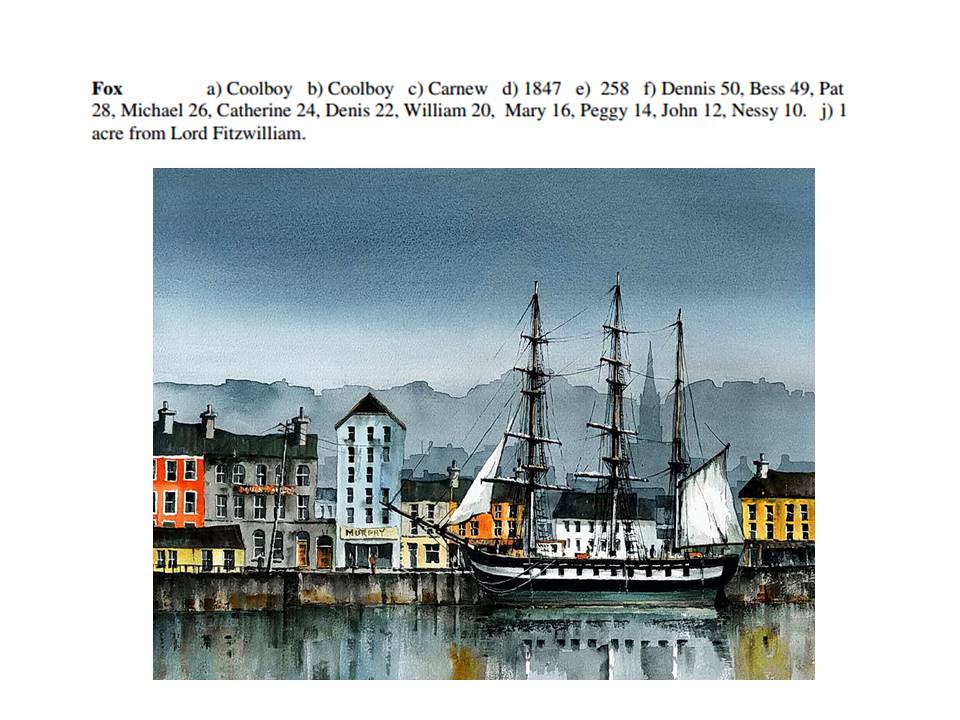
This is New Ross, Ireland, and the folks in the list are distant ancestors, fleeing the Famine and bound for Canada. When the Fox family got settled in Ontario, Denis’s son, Pat, fathered a little girl named Margaret. Margaret was my mother’s grandmother.

So Mom’s name–her other great-grandfather was Patrick Keefe, another Coolboy tenant– was Patricia Margaret.

This is a replica of the ship that might have brought them, the Dunbrody, and it’s the same ship that brought a third Patrick to Boston–John F. Kennedy’s great-grandfather, from County Wexford. My ancestors were close by, in Wicklow, near the Wexford border.

It must have been terrifying. It would have been a two-day walk from Coolboy to New Ross and few Irish–this was true for most medieval Europeans, and in Ireland, the Middle Ages persisted well into Victoria’s reign–ever traveled beyond the sound of their parish church’s bells.

The voyage took two weeks, and the ships carrying Famine refugees became known as “Coffin Ships” because sometimes half the passengers died. Dunbrody, thank goodness, was an exception: the owners seemed to actually care for their human cargo, and she made dozens of passages between New Ross and the New World (New York, Boston and Quebec) with a very low death rate.

But, if I have the sailing date right, June 1849, the time the Fox family finally, after a long wait, left New Ross (Denis and two children had been sick when they were first scheduled by their landlord, Lord Fitzwilliam, to leave his estate), two of these Famine ships foundered on icebergs: one was lost with all souls and the other lost sixty passengers.

There’s a wonderful book about the Famine and migration called Paddy’s Lament, and emigrants bound for America were feted, with what folks could get together, with a grand farewell party. But these were celebrations shot through with sadness and they inevitably ended with tears.

The Irish called them “American wakes.”

Gallery

An unplanned gift

03 Wednesday Feb 2016

Posted by ag1970 in Arroyo Grande, Uncategorized

≈ 1 Comment

This gallery contains 25 photos.

Happy Birthday, Emperor Norton!

03 Wednesday Feb 2016

Posted by ag1970 in Uncategorized

≈ Leave a comment

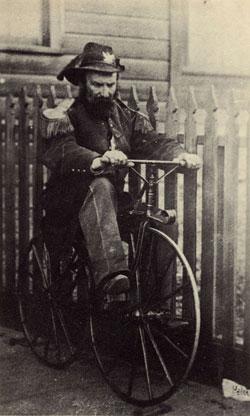
emperor-norton-bicycle
Tomorrow is the 198th birthday of Norton I, Emperor of North America and Protector of Mexico, and he’s another reason why San Francisco, after all the cities I’ve seen, remains my favorite.

If I remember the story right, Joshua Norton spent thousands in an attempt to corner the rice market in the city, then populated by thousands of immigrant Chinese laborers, and had just about pulled it off when an unexpected shipment sailed into the bay and destroyed his scheme.

He disappeared.

He reappeared.

But he reappeared, in full-dress uniform, with epaulets, saber and an imperial ostrich plume and announced his new identity to the City of San Francisco, his imperial capital.
And San Francisco gracefully accepted the honor. For twenty years, it also fed the emperor and his court, a pack of his beloved mongrels who followed him everywhere on his rounds, including to some of the city’s posh restaurants.

Printers ran off imperial edicts–including one that directed a bridge to be built connecting San Francisco to Oakland– Emperor Norton Script (usually in fifty-cent denominations) and, occasionally, a summons to a duel if some local politico had offended Norton.

When Norton collapsed and died on Grant Ave. in 1880, the city went into mourning. The Chronicle headline–spelled correctly, by the way– read “Le roi est mort.”

He was a pauper–he had at most five or six dollars and a few shares in a defunct gold mine that were found along with a cache of letters addressed to Alexander II and Queen Victoria.

Norton would have been buried in a poor man’s pine coffin, but the Pacific Club paid for a beautiful coffin made of rosewood. On the day of his funeral, the crowd that made up the funeral procession behind Norton’s hearse was two miles long.

Arroyo Grande’s Old Soldiers

03 Wednesday Feb 2016

Posted by ag1970 in Arroyo Grande, Uncategorized

≈ Leave a comment


Otis W.Smith Sawtelle CA near LA

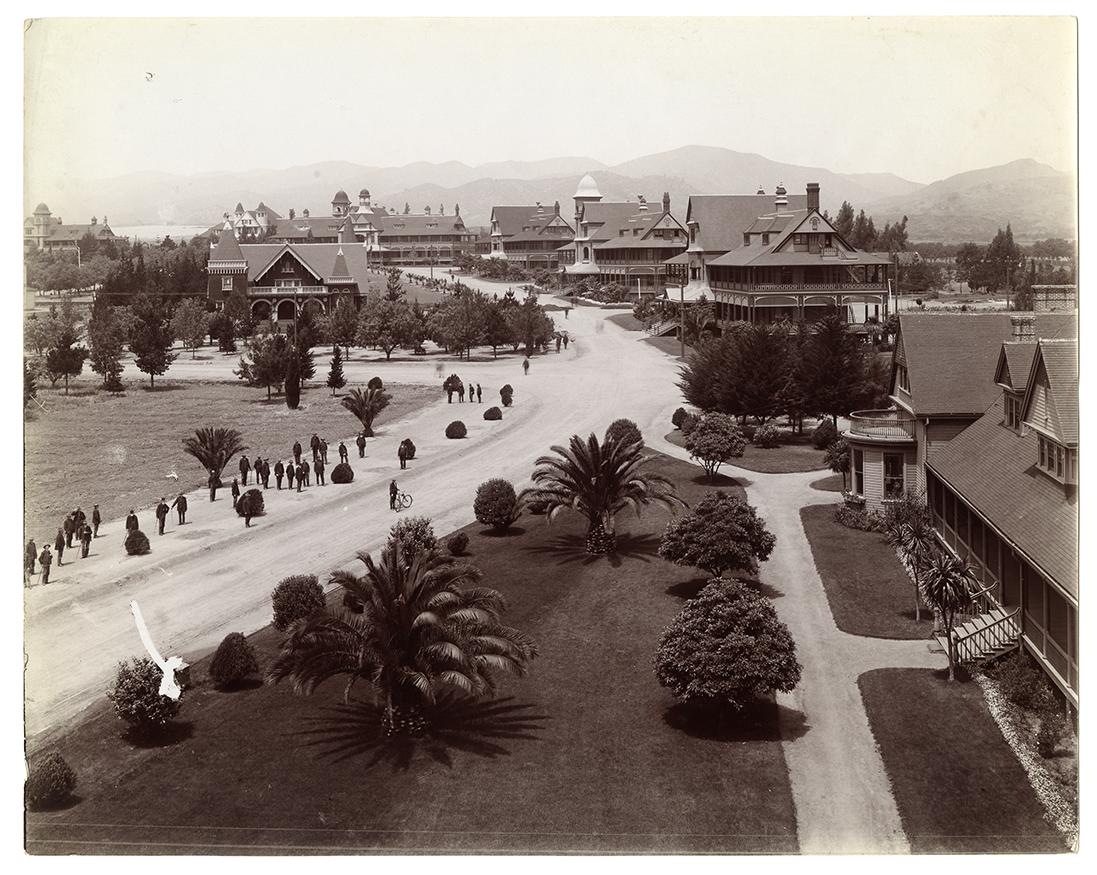
This is Arroyo Grande’s Medal of Honor winner, Otis Smith, in a pleasant-looking Californio courtyard at the Sawtelle Home for Disabled Veterans in Los Angeles, about 1915. Smith won his medal for seizing the flag of the 6th Florida at the Battle of Nashville in December 1864.

He would live fifty-nine more years. Like other veterans, he seemed to be semi-migratory, checking in and out of Sawtelle. Cavalryman James Dowell, a member of an important family in the South County, checked himself into the facility twice, in 1903 and 1907, for unknown reasons, but they must have been serious ones, because he was an independent farmer in the Arroyo Grande Valley–the only medical condition listed was one endemic to cavalrymen like him: hemorrhoids. He is listed as “D’Pd” on one discharge, “Own Request” for the second.

James Ananias Dowell and Louisa Jane Dowell

James and Louisa Dowell

Sawtelle looked beautiful. It wasn’t, necessarily. The people who ran the home were twice investigated but twice exonerated for mistreating the pensioners in their care.

A widespread complaint was the food–or, rather, the lack of it. If meat appeared, the veterans knew it was because there was an important visitor.  “I know,” one veteran said in 1909 of other mealtimes, “exactly what we’ll have tonight. Prunes, applesauce, a little bread and tea. About three cents’ worth.” Other problems were more serious: one veteran was found dead off the grounds: he’d wandered away, fallen into a ravine, and broken his neck.

Maltreatment of Civil War veterans, from what I’m learning, seems to have been widespread. Americans lauded them on the Fourth and Decoration Day, and the rest of the year seem to have wanted them to disappear. The sight of legless or armless men was resented; when soldiers came home from the war, thousands went on an kind of mass bender, got into fights, raised hell, and made Americans fearful of them and the resentment of that, too, seemed to stick.

Of course many of them couldn’t leave the alcohol alone: a hard drinker in one veterans’ home had a habit of biting the other pensioners; another got the point where he had to be committed to an asylum, a third lay down on the railroad tracks to die; a bottle of whiskey was found nearby as a kind of abstract suicide note.

You wonder if a place as beautiful as this, even if it’d been run skillfully and compassionately, could ever offset the demons that pursued these soldiers for decades after Appomattox.

Sawtelle was located just west of the 405, near UCLA. It was torn down years ago. You hope its demolition released the battalion of ghosts that must have haunted the place.

Sawtelle_Veterans_Home Wikipedia no restrictions


Subscribe

  • Entries (RSS)
  • Comments (RSS)

Archives

  • March 2026
  • February 2026
  • January 2026
  • December 2025
  • November 2025
  • October 2025
  • September 2025
  • August 2025
  • July 2025
  • June 2025
  • May 2025
  • April 2025
  • March 2025
  • February 2025
  • January 2025
  • December 2024
  • November 2024
  • October 2024
  • September 2024
  • August 2024
  • July 2024
  • June 2024
  • May 2024
  • April 2024
  • March 2024
  • February 2024
  • January 2024
  • December 2023
  • November 2023
  • October 2023
  • September 2023
  • August 2023
  • July 2023
  • June 2023
  • May 2023
  • April 2023
  • March 2023
  • February 2023
  • January 2023
  • December 2022
  • November 2022
  • October 2022
  • September 2022
  • August 2022
  • May 2022
  • April 2022
  • March 2022
  • February 2022
  • January 2022
  • December 2021
  • November 2021
  • October 2021
  • September 2021
  • August 2021
  • July 2021
  • June 2021
  • April 2021
  • March 2021
  • February 2021
  • January 2021
  • December 2020
  • November 2020
  • August 2020
  • July 2020
  • June 2020
  • May 2020
  • April 2020
  • January 2020
  • December 2019
  • November 2019
  • October 2019
  • September 2019
  • August 2019
  • May 2019
  • April 2019
  • March 2019
  • February 2019
  • January 2019
  • December 2018
  • November 2018
  • October 2018
  • September 2018
  • July 2018
  • June 2018
  • May 2018
  • April 2018
  • March 2018
  • February 2018
  • January 2018
  • December 2017
  • November 2017
  • October 2017
  • April 2017
  • March 2017
  • December 2016
  • November 2016
  • October 2016
  • September 2016
  • August 2016
  • July 2016
  • June 2016
  • April 2016
  • March 2016
  • February 2016
  • January 2016
  • December 2015
  • November 2015
  • October 2015
  • September 2015
  • August 2015
  • July 2015
  • June 2015
  • May 2015
  • April 2015
  • March 2015
  • February 2015
  • January 2015
  • December 2014
  • November 2014
  • September 2014
  • August 2014
  • July 2014

Categories

  • American History
  • Arroyo Grande
  • California history
  • Family history
  • Film and Popular Culture
  • History
  • News
  • Personal memoirs
  • Teaching
  • The Great Depression
  • trump
  • Uncategorized
  • World War II
  • Writing

Meta

  • Create account
  • Log in

Blog at WordPress.com.

  • Subscribe Subscribed
    • A Work in Progress
    • Join 69 other subscribers
    • Already have a WordPress.com account? Log in now.
    • A Work in Progress
    • Subscribe Subscribed
    • Sign up
    • Log in
    • Report this content
    • View site in Reader
    • Manage subscriptions
    • Collapse this bar
 

Loading Comments...