The Civil War was a brothers’ war, one that tore families apart. Culp’s Hill, near where the 17th Connecticut was redeployed on July 2, was named for the man who’d bought the property a decade before Fort Sumter, Henry Culp. Culp’s nephew, Wesley, grew up in Gettysburg, learning the same trade, harness making, that had sustained Ulysses Grant in Galena, Illinois, when his fortunes were at low ebb.
Wesley’s boss moved his business to Virginia in 1858, and Wesley moved with him, although the young man kept in touch with friends he’d grown up with, like Jack Skelly and Skelly’s sweetheart, Virginia (Ginnie) Wade. But he made new friends in Virginia, so when the war broke out, Wesley enlisted in the 2nd Virginia Infantry and fought for the Confederacy. Wesley’s brother, William, fought for the Union in the 87th Pennsylvania, and the two regiments faced off during a firefight in Stonewall Jackson’s Shenandoah campaign in 1862. Neither brother was hurt.
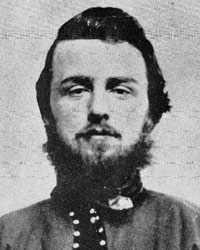
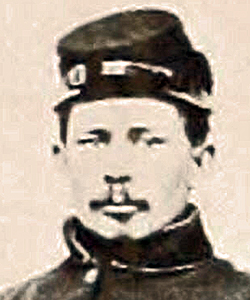
Another Union soldier in the 87th wasn’t so lucky. In one of the many coincidences that marks wartime, when great numbers of people are put into motion, Wesley Culp found his old friend Jack Skelly in late June 1863, badly wounded and in a Confederate field hospital. Skelly knew that he would never see Ginnie Wade again, and he asked his Gettysburg friend to find a way to deliver a last letter to her. Wesley Culp promised that he would.
Culp and the 2nd Virginia came back to his old hometown as part of Richard Ewell’s Confederate corps, and the regiment fought on his uncle’s property on July 2, part of the sequence of attacks that included Arroyo Grande’s Erastus Fouch and the 75th Ohio on nearby Cemetery Hill. Fouch was captured. Culp survived July 2.
He died the next day, on Culp’s Hill. He was the only solider in the 12th Virginia’s B Company killed at Gettysburg.
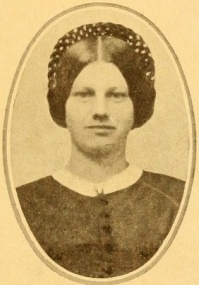
So Jack Skelly’s letter never got to Ginnie Wade.
But Jack never knew that Ginnie had died at Gettysburg, as well, On the same day, July 3, that Wesley Culp was killed in action, Ginnie was kneading dough in her sister’s kitchen to make biscuits—her sister had just delivered a baby.
A bullet penetrated the heavy kitchen door—the bullet hole, widened by generations of tourists’ index fingers, is still there– struck her in the back, and killed her instantly. Ginnie was the only civilian killed at Gettysburg.
Nine days later, Jack Skelly died from his wounds.
Ginnie Wade was nineteen. Jack Skelly was twenty-one. Wesley Culp was twenty-four.
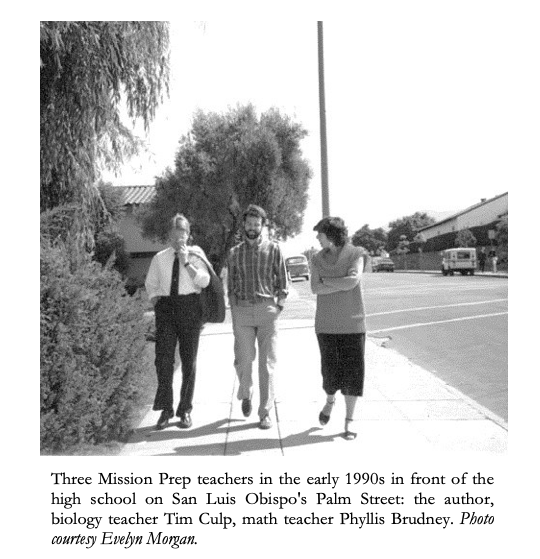
A descendant of the Culp family, Tim Culp, taught biology at Mission Prep in San Luis Obispo and coached the high school’s boys’ basketball team for many years. He returned to his roots in Pennsylvania, earned a doctorate in microbiology and immunology from Penn State, and now works as Principal Scientist for Merck Pharmaceuticals, at West Point, Pennsylvania.
West Point is a little more than two hours away from Gettysburg, close enough for the residents who lived there on July 3, 1863, to have heard the Confederate artillery bombardment on the last day of the battle. After it was all finally over, searchers on the Culp farm found a rifle stock with Wesley’s name carved in it. Although his 2nd Virginia friends had buried Wesley on Culp’s Hill, his body was never found.
 A Work in Progress