• About
  • The Germans

A Work in Progress

A Work in Progress

Monthly Archives: June 2016

Two Patricks from Wicklow

26 Sunday Jun 2016

Posted by ag1970 in Uncategorized

≈ Leave a comment

Coal_Miners_Portage_PA.jpg

I just found my Mom’s maternal great-grandfather, Patrick Fox, from the 1880 Pennsylvania Census. He was a coal miner. Mom’s paternal great-grandfather was also named Patrick, and his last name was Keefe.

1929425_1124481235982_1907209_n

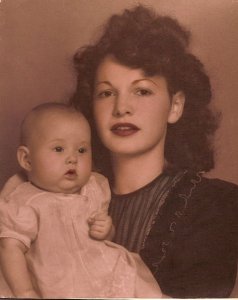
My mother, Patricia Margaret Keefe Gregory, with my big sister Roberta, 1943.

The two Patricks were Famine immigrants from the same village, Coolboy, in County Wicklow, tenants to the same landlord, Lord Fitzwilliam. Fitzwilliam paid their passage to the New World because his tenants were so unfaithful to him. They kept starving to death, or more likely, dying of the typhus or pneumonia that hunger invites. The last thing the Famine Irish lost, according to contemporary chroniclers, who wrote of them in amazement, was their sense of humor. Once they’d stopped laughing, death was close at hand.

Long before that, they’d stopped knuckling their foreheads in deference to their betters who waited impatiently for them to die. Some of them had the audacity to refuse the sustenance offered them by Presbyterians in missionary kitchens that required only their conversion as the price for soup. (Before the great Famine exodus, every Irish family kept a hog, which had run of the place, cottage included. They sold it to market to pay their tithes to the Protestant Church of Ireland, to which none of them belonged. It was the law, you see.)

Fitzwilliam replaced his Irish families with sheep, generally easier to get along with than the natives and slightly cheaper to feed, although the variety of potato the Irish ate was so inferior that any self-respecting sheep would have turned it down. The vast majority of the Irish, in the 19th century, lived their entire lives without ever once eating meat, and this is a true thing that I am not inventing. They were the poorest people in Europe before the blight hit, when they were then transmuted from poor people into statistics.

image

A replica of the coffin ship Dunbrody in New Ross, Wexford. This is the port from which both the Kennedys and my family sailed for the New World.

But by 1849, my two ancestral families had come to North America, to Canada, at first. They survived Quebec, where, on Belle Isle, thousands died in quarantine once they’d been deposited there by the Coffin Ships.

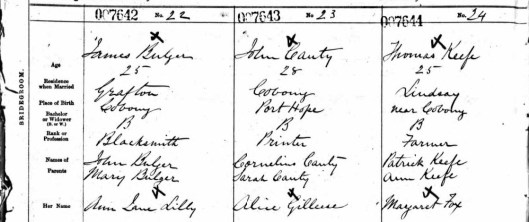
Patrick Fox’s daughter, Margaret, married Patrick Keefe’s son, Thomas, so Mom’s name was Patricia Margaret Keefe. Margaret and Thomas went from a farm in Ontario to a Minnesota homestead to California orange groves, leaving a trail of children and grandchildren in their wake before they decided to divorce when they were in their seventies. My great-grandfather died in San Jose, my great-grandmother in Los Angeles. He was a Republican, she a Democrat. So it goes.

As to their children, most were named after ancestors, which simplified naming them at all. I guess a couple’s imagination for names runs thin by the time when they dry newborn #11 and wrap her in warm blankets, so the old standards serve best, and the families the size of either the Foxes or the Keefes would’ve easily filled almost a whole 19th-century row house in Boston or New York, with some of the kids spilling over into the flats of families named Berkowitz or Guggia and maybe absently getting adopted. It would’ve looked just like the “Every Sperm is Sacred” number from Monty Python’s Meaning of Life.

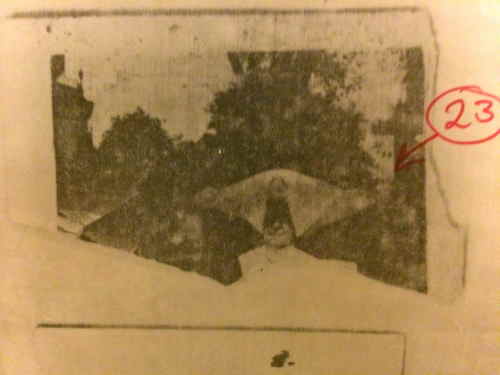
One of the Foxes, Sister Loreto, bucked the naming trend, but that’s because she became a nun. Her order wore the same headpiece as Sally Field’s order did, but Sister Loreto did not fly much. Nor does she look perky, like Sally Field.  In the one photo we have of her. She looks Determined. She makes the late Mother Angelica look like a Mousketeer. Sister Loreto was a nurse in homes for unwed mothers in the Midwest. I do not want to think too much about that.

8f70db68-427f-4f48-83b3-18bca95b4785

Sister Loreto, from a photo possibly taken in St. Louis.

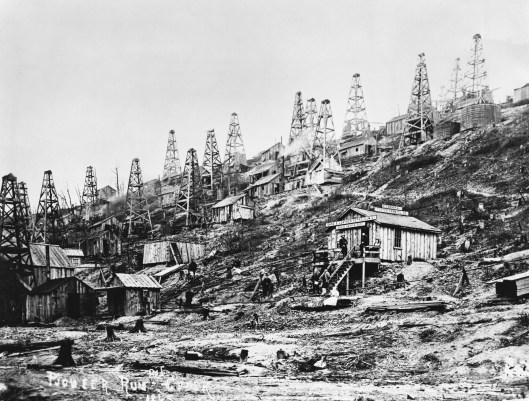
By the way, Patrick Keefe never would have stooped to working in a Pennsylvania coal mine like Patrick Fox, Loreto’s father, did. Keefe preferred the Pennsylvania oil fields, preferred labor in forested derrick landscapes where the explosions at least had the decency to kill workingmen in the open air above ground and not bury them anonymously in collapsed tunnels below.

First Commercial Oil Well

So did my Dad’s side of the family. The middle two of those roughnecks in the photo below are from his side, my great-uncles, at a field in Taft or Bakersfield. One of them became enraged at a rude and incompetent camp cook and shoved him into a boiler. We’re not sure whether it was lit.

0025f8fb-8d08-4f67-9868-3fb72df5d346

My Grandfather, Edmund Keefe, was an oilfield worker, too–a “battice man,” which I’ve never successfully defined, before he disappeared in the 1920s, probably with a whore who’d ridden a motorcycle from Texas to take up trade in California. In the wake of his desertion, he wrote plaintive letters to my grandmother in Taft–we have one, post-marked in Long Beach–and even wrote a one-act play about her. She would not take him back.

She instead married another Irishman named Kelly, a sergeant of police, who became my real grandfather.  Yet it was my biological grandfather, Ed Keefe, who remained the real love of my grandmother’s life, which was a long one. I suspect that his wasn’t. He died, in my imagination, in a PEMEX oilfield somewhere deep in post-revolutionary Mexico, a time when gringos were about as welcome as archbishops. Maybe he was shoved into a boiler, too. If so, he likely deserved it.

I’m reasonably sure this is true of every family: our ancestors were hard people, somehow capable of both love and great cruelty, and occasionally both at the same time. We inherited that contradiction, too, I guess, but we would’ve inherited nothing from them at all had they not been so determined to survive.

Marriage

Marriage 007644, October 3, 1876, Northumberland and Durham, Ontario: My great-grandparents.

Harmonic Convergence

26 Sunday Jun 2016

Posted by ag1970 in Arroyo Grande, Uncategorized

≈ Leave a comment

DSC01516.JPG
After the show today, Elizabeth and I visited the Temple of the People and talked with Eleanor Shumway, the wonderful woman who is the Temple Guardian. I don’t know about mysticism or Magnetic Lines, but I DO know that every time I’m in Halcyon, my blood pressure seems to drop a little and I seem to relax. So that got me to thinking about special places in my life. I bet you have them, too. Here’s a few on the Jimmy List:
1. Halcyon.  Wind chimes required.
2. San Francisco. Still my favorite city. My first trip there, I was six, and there was a lightning storm. I was impressed. Then I saw the Golden Gate Bridge. I was overwhelmed.
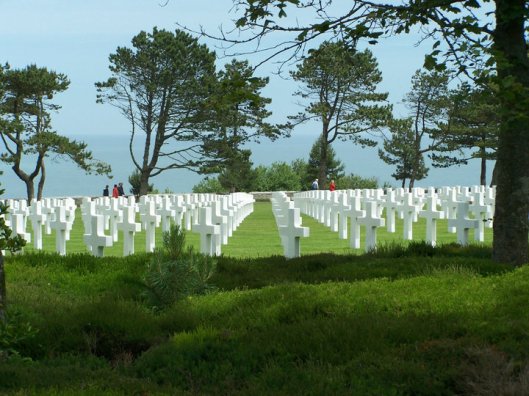
3. The American Cemetery at Colleville-sur-Mer, above Omaha Beach. It’s beautiful and incredibly serene. You are compelled to touch the crosses and Stars of David. With the sea air, the marble is so cold that it startles you. You keep brushing the markers with your fingertips anyway. You want so badly for those young men to know that you are there.
35992_1493078450682_2630988_n
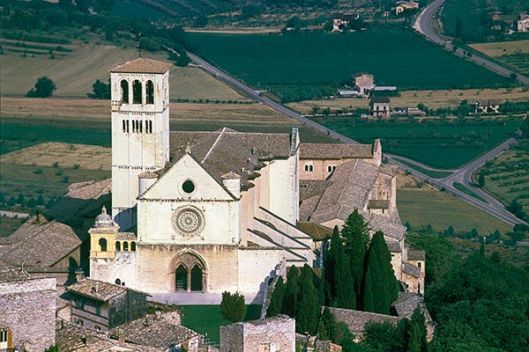
4.  Assisi, Italy. Both for the hilltop view and for being near Francis.
asissi_st_francis_cathedral_600
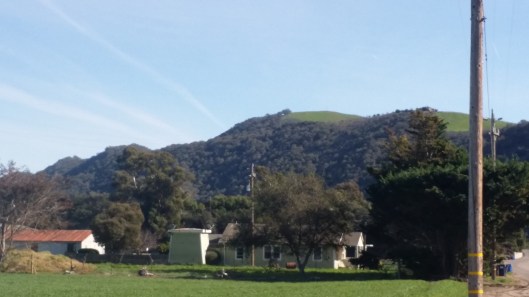
5. A little square between Branch Mill Road and Arroyo Grande Creek, where I grew up.
20160203_135150
 

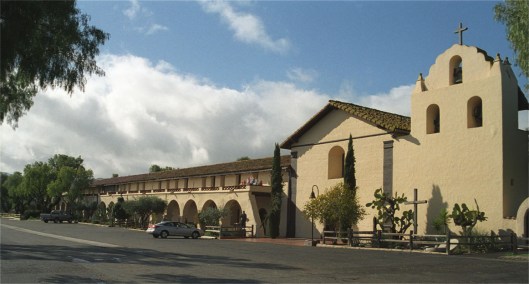
6. Mission Santa Ines. It was my Mom’s favorite mission, my fourth-grade mission project, the place where Elizabeth and I were married, and there are miles of open country that front the place where you can imagine what it might have been like two hundred years ago.


Mission_StInes

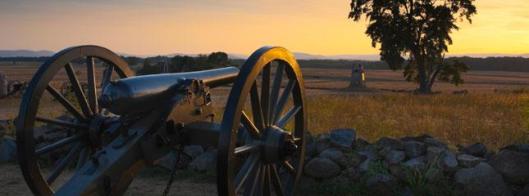
7. Gettysburg. Yes, it’s haunted.
gettysburg
8. The Uffizi, Florence. I think I could live there.
9. Rural Missouri, summer, when the lighting bugs start to come out.
10. St. Stephen’s Park, Dublin, on a typical (wet) Irish day, when the sun suddenly comes out, brilliant and clear. Miraculous.
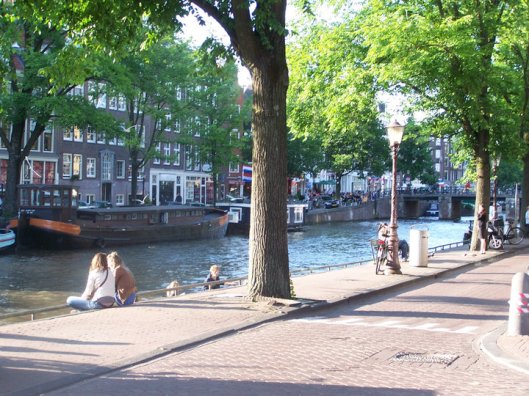
11. Anne Frank’s home, Amsterdam. No other place has ever evoked so much sorrow and compassion in me. The family’s presence is palpable.
37360_1492991128499_520747_n.jpg
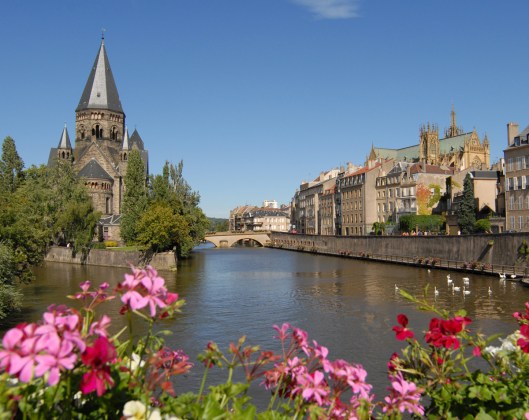
12. Metz, France, nearing sunset, when trout start to nose up and leave little ringlets on the surface of the Moselle.
1200_954_4_templeneuf-moselle

Image

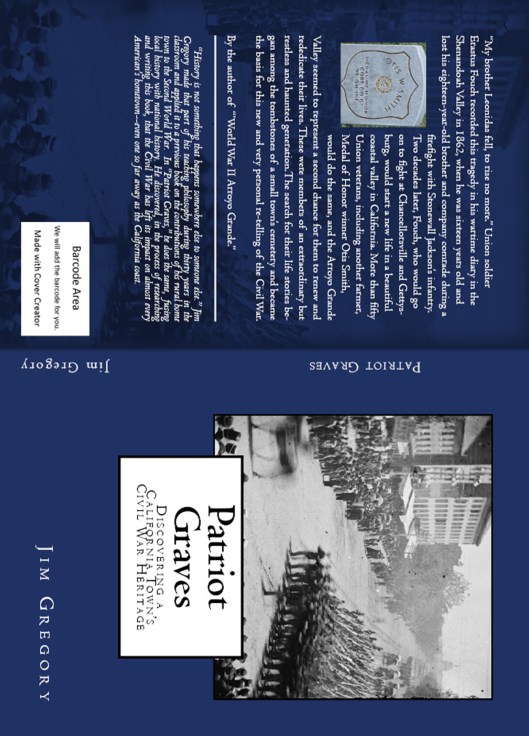
The cover

26 Sunday Jun 2016

BookCoverPreview.jpg

Posted by ag1970 | Filed under Uncategorized

≈ Leave a comment

Braggin’ on my Pop

17 Friday Jun 2016

Posted by ag1970 in Uncategorized

≈ Leave a comment

ag1970's avatarA Work in Progress

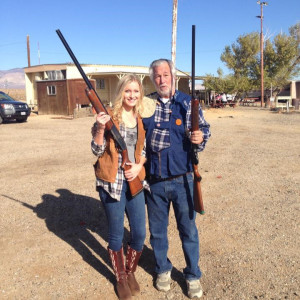
Kali and her Grandfather A wonderful Facebook exchange began when Kali, a a former student, posted a photo of herself and her late grandfather, trap shooting.  I think, to use a trite phrase I would never tolerate from any student, that he looks like a really cool guy. Look at their faces and you can see they loved each other–and there’s plenty to love about Kali.

She was my student, I was a sponsor in her confirmation class at St. Patrick’s, and she is an outstanding young woman.  You can tell, too, that they loved being together.

Sometimes, and I had this experience with a photo of Joey Rodgers’s Grandpa, a World War II Marine, you can see a man and know instinctively that you would’ve loved him, too.  That’s what struck me about this photograph. Kali has just lost him, but another reason I know he was a good man is that he’s…

View original post 842 more words

Ending the book

12 Sunday Jun 2016

Posted by ag1970 in Uncategorized

≈ Leave a comment


churchill

I don’t know how many times I’ve re-written the ending to Patriot Graves. Today I lucked into a discovery, revealed below, about Arroyo Grande farmer Otis W. Smith, who received the Medal of Honor after the 1864 Battle of Nashville.  So I will try this one out. It will change, too.

The last verified survivor of the Civil War died in 1955, at 109. The passage picks up with his death:

He was the last survivor of a war that, in many ways, has survived his generation and many since. It left battles that still needed to be won and others that still need to be fought for the “new birth of freedom” that Lincoln identified in two transcendent minutes at Gettysburg. In January 1941, Medal of Honor winner Otis W. Smith’s grandson, Johnnie, would enter the army to fight for freedom in a new and terrible war. When Hitler joined it, at the end of that year, he did so jubilantly, thinking America decadent and Americans, in his simplistic and twisted Darwinian worldview, a mongrel people. Churchill was said at the time to have been nearly as pleased as the parochial Austrian dictator was because, unlike Hitler, Churchill knew about Grant and Sheridan, knew what the Iron Brigade had done at Gettysburg and he knew Americans—his mother, Jennie, was born in Brooklyn. As Johnnie Otis Smith, a soldier from the other end of the nation, from the Huasna Valley of California, prepared to go to war, Churchill knew with crystalline certainty that the two nations were destined to vindicate their faith. Democratic government would not perish from the earth.

Not in God’s house

09 Thursday Jun 2016

Posted by ag1970 in Uncategorized

≈ Leave a comment


gettyimages-478534434_custom-d6fee927157169d14b001a1fe43bdfc63f3f3ba8-s300-c85


My third great-grandfather’s will, 1812:

Washington, Kentucky

I Richard Gregory being of perfect mind and memory do make this my Last Will and Testement and revoking and disannulling all and every other Will or Wills before made by me. And first of all I give to my wife Anne Gregory the plantation whereon I now live and the first choice of two of my Negroes and also as many of Cattle and hoggs and Sheep as she thinks fit and one horse such as she may Choose and all the rest of the house hold furniture during her natural life. Also I give unto my Grandson Uriah Sandifer Gregory one negroe boy Named Stephan and one feather bed and one horse namely a bluish in stud colt that he has now in possession and also to divide equally with my nine Children in each division of my estate.

* * *

I thought I’d re-read some of the Ordinances of Secession, hip-deep as I am in the Civil War, to see just how Southerners justified their separation. I looked at those issued by South Carolina, Georgia, Mississippi and Texas. What I discovered was stunning.

Only one of them mentioned “States’ Rights,” and that was South Carolina’s, and it was not as that state’s rationale for secession.

States’ rights were mentioned, instead, in a clause that condemned the federal government for failing to exercise its power to return fugitive slaves from Northern states who claimed “states’ rights” as the basis for protecting them.

Every ordinance cited the incipient threat, posed by Lincoln’s election, to their right to own human chattel as the fundamental reason for secession. They also accused the new government of exciting “servile insurrection”–that’s a vile term, isn’t it?–and of advocating equality of the races–a clear violation, the Texas ordinance said, of God’s will.

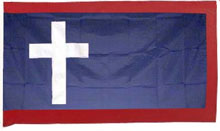
That would explain, of course, the flag my second great-grandfather fought under as a Missouri secessionist in 1861:

moflag

This week the National Cathedral in Washington, good Episcopalians, decided it might be time to re-discern God’s will. Once they had, they decided to remove stained-glass windows put up in tribute to the Southern heroes, Lee and Jackson, with their Confederate battle flags. They’d been installed in 1953–the year before Brown v. Board.

White Southerners understood then and understand now what that flag represents. It flew in defense of slavery, and Southerners themselves were explicit about that in 1861. Read the ordinances of secession. A century later, it flew in the face of the civil rights movement, in response to what whites had once called “servile insurrection.”  The Confederate flag doesn’t belong in God’s house. Neither is it appropriate to validate treason in a National cathedral. The windows should come down.

It’s about time.

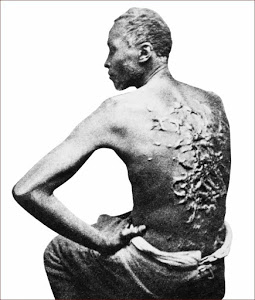
Escaped Slave, Gordon

Missing Muhammad Ali

06 Monday Jun 2016

Posted by ag1970 in Uncategorized

≈ Leave a comment

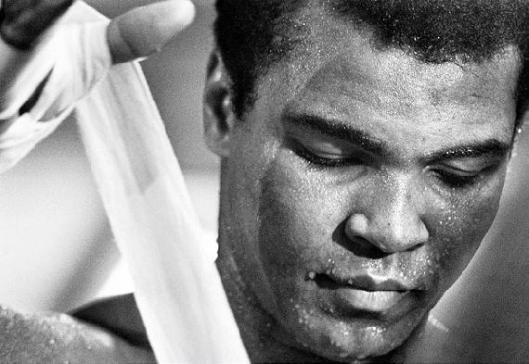
muhammad_ali2012-bw-art-exhibit-wide1

Muhammad Ali’s nemesis, Joe Frazier, was a counterpuncher—I used to teach Frazier to my high school students to help them learn how to write argumentative essays—but that label belies his savagery. Opponents said that Frazier hit so hard that they thought they were going to die. Frazier hit so hard that the disbelief on Ali’s face when the Philadelphia fighter knocked him down is indelible. Frazier hit him just as hard in the rematch, the “Thrilla in Manila”—he said afterward that he’d hit so hard that he landed punches that would’ve knocked down the wall of a house—but Ali took them, kept talking to him, kept making delicate little circular gestures to Frazier with one glove, goading him to come in closer.

Ali’s left jab was his most famous and most electric weapon, but what finally put Frazier away was a staccato series of rights, the last one quick as a cobra strike; it traveled only a little more than eighteen inches and it left Frazier on the canvas in the fetal position. Death would travel more slowly than Ali’s right, but this was the night that both men began to die.

* * *

From The Telegraph (UK), from an interview with Ali’s business manager, Gene Kilroy:

I remember a lady came by our camp in Zaire and said her son was sick.

“Ali said: ‘We’ll go visit him.’ She took us to a leper colony. The staff would put the food down and walk away. Ali was soon lying down with the lepers, hugging them. I took about 10 showers when we got back. Ali just said: ‘Don’t worry about it, God’s looking out for us.’”

* * *

At a press conference at the Waldorf-Astoria before leaving for the 1974 Zaire fight against George Foreman, the “Rumble in the Jungle,”, Muhammad talked about his training:

“I’ve wrestled with alligators,
I’ve tussled with a whale.
I done handcuffed lightning
And throw thunder in jail.
You know I’m bad.
just last week, I murdered a rock,
Injured a stone, Hospitalized a brick.
I’m so mean, I make medicine sick.”

* * *

The novelist Norman Mailer, going into that fight, said that Muhammad was afraid. Foreman had destroyed Frazier, destroyed Ken Norton—two fighters who had beaten Ali—in two bouts that had lasted two rounds each. Mailer implied that the volume of Muhammad’s poetry was in direct proportion to the intensity of his fear.

But Ali had watched films of the fights, and when Foreman had knocked those men down, he’d meekly and quickly retired to his corner, breathing heavily. He didn’t have the stamina it would take to escape the trap Ali was laying for him—a fight intended to be a marathon. As Foreman pounded a crumpled Ali, gloves up, forearms locked at the elbows, in merciless showers of blows that would have hospitalized most men, Ali whispered to him, from the ropes, after one particularly jarring punch, “That the best you got, George?”

In the end, Mailer probably was right. Ali, the victor, was afraid of George Foreman. That is why he was so remarkable. George Foreman grew to love Muhammad Ali. That is why he is the greatest.

* * *

My late brother-in-law, Tim O’Hara, then living in Los Osos, took my nephew Ryan, then a little boy, to meet Ali at a Los Angeles-area sports-card show and signing. Ali signed a pair of boxing gloves, and took a moment to look at Ryan and remark on something I’m not sure Ryan had ever much liked. “I love your curly hair,” the Champ said softly.

* * *

In Famine Ireland, an English clergyman and his companion climbed into their carriage to leave a stricken town. A thirteen-year-old girl, expressionless, her clothing in tatters and so exposing ribs like an accordion’s bellows, her clavicle and shoulder joint with their contours visible just below her skin, began to run after the carriage. When the horses picked up speed, so did she. The clergyman, distressed, kept looking out the window and the girl and her long, bony legs were keeping pace with them. She did so for two miles. The clergyman could finally take no more, ordered the driver to stop, and gave the girl money. She took the money, expressionless and silent, and turned her back on them to walk home.

In the film When We Were Kings, African children, in the same way, ran after Ali’s car. They weren’t expressionless. Their faces were radiant with joy. They weren’t silent. They sang for Ali when his car stopped for them, a call-and-response song so beautiful that it makes you shiver to hear it. What the clergyman gave the little girl would have kept her alive, but only for a short time. What Ali gave these children would feed them all their lives.

The Haunted Men

05 Sunday Jun 2016

Posted by ag1970 in Uncategorized

≈ Leave a comment


Civil-War-Vet-D_Chadwick_0

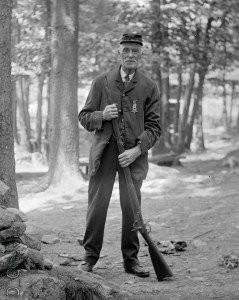
…A soldier who had endured the third day of Gettysburg, and emerged unhurt, and who had then seen his own boys destroy Pickett’s (12,500 Confederates participated in the charge on July 3, the last day of the battle. Only half of them made it safely back to their own lines.) and so destroy the myth of Robert Lee’s invincibility, had already passed the zenith of his life. Nothing like this would ever happen to him again.  For a generation enmeshed in the ethical web spun so tightly by mid-Victorian Protestantism—these were Christian soldiers who fought in armies marked  by intense waves of  wartime revivalism—the excitement of battle  generated a  profound moral contradiction. In This Republic of Suffering, a superb account of coming to terms with the scale of death the Civil War generated, Harvard president and historian Drew Gilpin Faust describes the experience of a stunned Confederate who, during a firefight, came to the aid of a shrieking comrade, only to find out that he was “executing a species of war dance,” exulting over the body of the Union soldier he’d just killed. In another battle in 1862, Union soldiers on the firing line called their shots, as if combat were billiards: “Watch me drop that fellow,” one said to his comrades; it was, indeed, like a game.[1]

The killing didn’t end when the war did. Violent crime rose at three times the rate of population growth in the decades following the war, and perhaps as many as two-thirds of the nation’s convicted felons were veterans.[2] Soldiers understood, on some level, that combat had changed them irrevocably and some worried about it. Society, one Vermont soldier wrote his sister, “will not own the rude soldier when he comes back, but turn a cold shoulder to him, because he has become hardened by scenes of bloodshed and carnage.”[3] He was, in many respects, right: some of the soldiers who came home to Vermont, New Jersey or Iowa brought with them a measure of fear—they had become, in the Civil War novelist Michael Shaara’s term, “Killer Angels.”

Many Union soldiers had demonized themselves and by extension all of their comrades by celebrating their mustering out with epic alcohol binges and episodic violence throughout the demobilization summer of 1865.[4] A Chicago civilian’s insulting comment about William Sherman set off a saloon brawl that cascaded into a riot that police were helpless to put down. Only the fortuitous appearance of the legendarily hard-drinking Gen. Joseph Hooker, who had the credibility to intervene with combat veterans, brought the violence to an end.

But for even the most sober of veterans that was precisely the problem with homecoming: it brought them little peace. Professor Jordan describes a sense of what, at its mildest, could be called disorientation. Home wasn’t home anymore. Even little farm towns had changed so much in four years that, for some veterans, that they didn’t feel like home at all. Soldiers from the hard-fighting regiments of the Old Northwest, states like Iowa and Minnesota, couldn’t reconcile themselves to the cold winters they’d forgotten while fighting in Mississippi or Georgia.  There was a more sinister change to which they couldn’t adjust: Union veterans resembled the little boys who’d survived the 1918 influenza epidemic and were finally let out to play, only to find there was no playmate on their city block left alive. The survivors of “Pals” Battalions who’d joined the Great War’s British Army together went home to neighborhoods empty of the young men with whom they’d grown up together. Their pals were gone, swallowed up by the Western Front.

Gone too, in 1865, were whole towns of young men in New York or Vermont or Indiana, dead and buried on Southern farmland that had been poisoned by violence, land still studded by spent bullets. Other young men had vanished without a trace in dark, dense woodlots or fetid swamps. Soldiers came home, then, ostensibly alive and whole and strong but with unseen dead spaces inside where their comrades had once lived. Missing them, or the trauma of seeing them killed, figured in the chronic depression that so many veterans fought. Now that the war was done, they still were caught in its aftermath like swimmers in an undertow, struggling to break surface, to find light and cool air, to breathe again.

Their struggle was only  intensified by the recognition that what they had fought for—for the rededication of the democracy Lincoln had described at Gettysburg in November 1863—was fast slipping away. Union veterans remained intently suspicious of and hostile toward the defeated South; Lincoln’s assassination had been one impetus for their rancor but their anger only intensified when they read the newspaper accounts of the postwar emergence of the old Slave Codes, now called Black Codes.  They read, too, of defiance and the terrorism of the Ku Klux Klan, co-founded by a cavalryman, Nathan Bedford Forrest, who had bedeviled some of them in the Deep South. When Reconstruction ended in 1877, Jim Crow laws revived white supremacy in a way that rivaled the days of slavery. The Union veterans’ hostility was exacerbated because the other side refused to admit—significantly, on a moral level—that they’d lost the war. Typical, in 1894, were the dedicatory remarks that accompanied the unveiling of a Confederate memorial in Richmond, when newspapers noted that the clouds parted and the sun emerged when the speaker, the Rev. R.C. Cave, began an oration that included passages like this:

But brute force cannot settle questions of right and wrong. Thinking men do not judge the merits of a cause by the measure of its success; and I believe

The world shall yet decide

In truth’s clear, far-off light,

that the South was in the right; that her cause was just; that the men who took up arms in her defence were patriots who had even better reason for what they did than had the men who fought at Concord, Lexington, and Bunker Hill; and that her coercion, whatever good may have resulted or may hereafter result from it, was an outrage on liberty.[5]
gburg

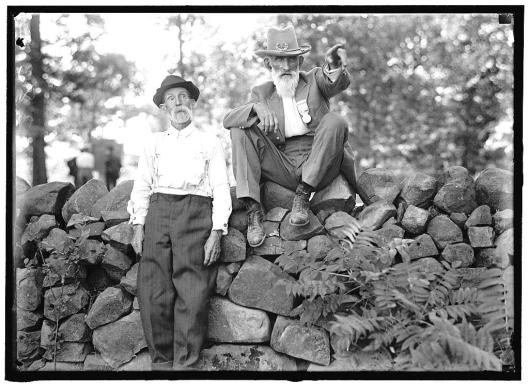
At least two veterans seem to have worked out a truce at the 1913 Gettysburg Reunion. Library of Congress.

Similar remarks by Southern speakers invited to a Gettysburg reunion in 1913, Professor Jordan notes, rankled the same Union veterans who had protested another unveiling, in 1909, in the Capitol’s Statuary Hall: a sculpture of Robert E. Lee. They would protest again at the rapturous reception, one that included the Southern-bred President Woodrow Wilson, awarded the D.W. Griffith film Birth of a Nation, which depicts Klansmen as chivalric heroes who reassert Southern white supremacy over rapacious carpetbaggers and predatory African Americans. “It is like writing history with lightning,” the president said, “and my only regret is that it is all so terribly true.”[6] The most enduring image of the 1913 Gettysburg reunion is that of Confederate survivors of Pickett’s Charge reaching across the stone wall–fifty years before, it had been their objective– to shake the hands of Pennsylvania veterans. What goes unmentioned is the fistfight at the same event that sent seven aged Yankees and Confederates to the hospital.[7]

Even as Southern whites reasserted their social and political primacy, American democracy in the North was no tribute to the sacrifice of Civil War veterans, either. The Radical Republican Congress and Andrew Johnson finished what should have been Lincoln’s second term in what resembled the political equivalent of a Western range war. Johnson escaped conviction on impeachment charges by one Senate vote. Grant’s relentlessness and drive had served him well in the struggle against Lee, but another aspect of his personal character—an almost childlike credulity—ate his presidency alive in a series of scandals perpetrated by subordinates who betrayed Grant as surely as Warren G. Harding would be betrayed by his “Ohio Gang” in the 1920s (Harding had the good sense to die mysteriously as the worst scandal broke—Teapot Dome, which also involved kickbacks involving the Elk Hills reserve, just over the San Luis Obispo County line. By contrast, in some ways Grant’s finest hours were his dying ones, as he raced, penniless and reliant on Samuel Clemens’s charity, to finish his memoirs, now a classic, as cancer slowly took his life.) The corruption penetrated to state houses, where the lobbyist for the Santa Fe Railroad kept a slush fund in his office safe for the frequent lubrication of Kansas legislators about to vote on regulatory bills; the monopoly that railroads enjoyed in their American fiefdoms and the freight rates they demanded were so egregious that it cost a farmer more to ship a bushel of wheat from Topeka to Chicago, by rail, than it did to ship that bushel from Chicago to Liverpool, mostly by water. Machine politics dominated cities from New York to San Francisco, where Irish-American voters really did vote early and often, and deceased. In New York, the most famous political machine was Tammany Hall, and it was Tammany Hall’s Boss Tweed disbursed the equivalent of $4 million to a Tammany plasterer for two days’ work on City Hall.


bristol

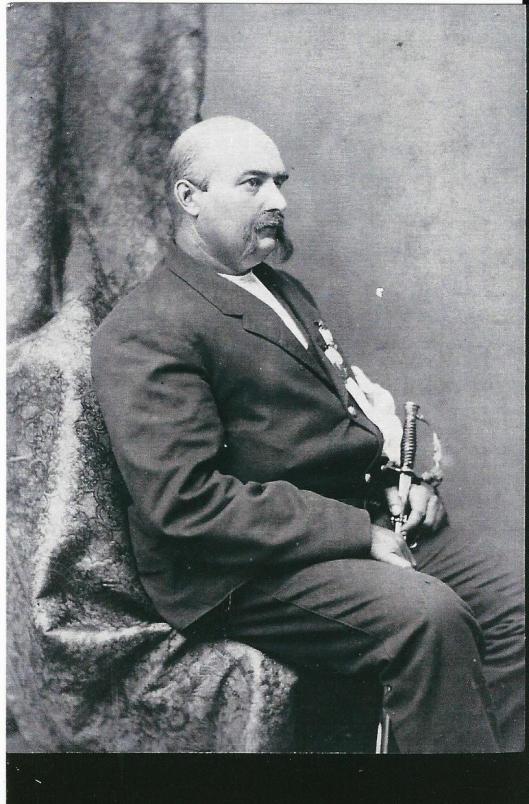
Charles Bristol typifies the restlessness of his generation. After his service–he’s seen holding his wartime 8th Michigan Cavalry saber here—he lived in Missouri and Kansas before moving to Nipomo, just south of Arroyo Grande, in 1892. Photo Courtesy of Blake Bristol.


In both their disillusionment and in their restlessness, the Civil War generation seems to resemble the generation that came of age during the First World War. Afterward, they became expatriates–Ernest Hemingway, F. Scott Fitzgerald, John Dos Passos among them—young men, many of them veterans, who no longer recognized or understood the America they’d known as boys. They were among the young people of Gertrude Stein’s  “Lost Generation.” During the 1920s, they were always on the move: Ernest and Hadley Hemingway, for example, lived in Paris–a Paris captivated by American musicians like Sidney Bechet and entertainers like Josephine Baker– fished mountain streams and watched matadors at their work in Spain and put up in little Italian penziones. In fact,  the couple moved so frequently that on one trip they left behind a steamer trunk that contained everything young Hemingway had ever written. It was never found.

So, like the young people of the 1920s, Civil War veterans were members of a generation on the move.  In postwar America, veterans, according to a 2010 study by Seoul University economist Chulhee Lee, were 54% more likely to move to a different state and 36% more likely to move to a different region than non-veterans.[8] Lee posits several reasons for this phenomenon: a central one is the idea that veterans had been exposed to the concept of a wider nation, one beyond their rural farms or row tenements, by campaigns in the South. Westerners, too, fought along the Atlantic seaboard, and  some Easterners saw combat or garrison duty during the 1860s Indian Wars on the frontier. Lee’s point is a key one: Americans had been so isolated and disparate before the war that an outbreak of measles that would make a New York regiment sick would kill soldiers in the Iowa regiment bivouacked alongside, soldiers that, before the war, were so geographically isolated that they lacked the immunity to that particular strain of measles. (Measles, in fact, killed 11,000 soldiers during the war.[9]) Ironically, the war and the troop movements necessary to fighting it had opened young soldiers’ minds to the vastness of their nation and to the possibility of starting over somewhere else.

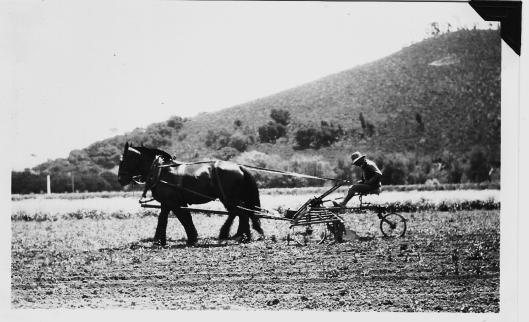
This pattern of increased mobility was a key factor in the lives of Arroyo Grande’s Union veterans. Over fifty would settle the Arroyo Grande Valley and nearby Nipomo. Enough census data exists to follow twenty-three of them, in the course of their lives. After the war, seven of them moved once from the state they’d served as soldiers; seven had moved twice. Nine had moved three times or more. So the men who came to Arroyo Grande had come as far as they could—like Jody’s grandfather in the Steinbeck novella The Red Pony, they had to stop because they’d arrived at the Pacific: their days of “Westering” were over. Most of them were farmers—census data show them living in the Huasna Valley, the Branch Tract of the Upper Arroyo Grande Valley, Los Berros, Oak Park, the Arroyo Grande Township, Pismo Beach, and Oceano or in Nipomo.[10] They’d arrived here when the area was being touted as a kind of agricultural paradise, marked by dairy farming and by the truck gardening of vegetables, tree crops, and seed flowers.
 

waller

A Waller Seed Company employee tills  a field in the Lower Arroyo Grande Valley. Photo courtesy Richard Waller.


Most of the veterans had arrived in the Valley earlier, but nearly all of them were established by 1900, when Arroyo Grande’s population was approaching 1,000. Thirty-eight years before, in a single day’s combat, Antietam had claimed the equivalent of twenty-two Arroyo Grandes in killed and wounded men. Whatever wounds these men still carried inside, they made a decision to move their lives forward; here, they had work to do in planting pumpkins and onions, peas and tomatoes, squash and beans. They were still, in their mature years, building a nation that had come perilously close to disappearing in the darkest months of the Civil War, in the long casualty lists produced by Antietam and the humiliation of the defeat inflicted at Chancellorsville.

[1] Drew Gilpin Faust, This Republic of Suffering: Death and the American Civil War. Vintage Books: New York, 2008, pp. 37-38.

[2] Michael C.C. Adams, Living Hell: The Dark Side of the Civil War, Johns Hopkins University Press, Baltimore: 2014, p. 198.

[3] Edward Alexander, “Life of the Civil War Soldier in Battle: And Then We Kill,” Hallowed Ground Magazine, Winter 2013, http://www.civilwar.org/hallowed-ground-magazine/winter-2013/life-of-the-civil-war-soldier-battle.html?referrer=https://www.google.com/

[4] Jordan, pp. 46-47.

[5] R.C. Cave, “Dedicatory Remarks, Soldiers’ and Sailors’ Monument, May 30, 1894,” Southern Historical Society Papers, Volume 22. Reverend J. William Jones, Ed. http://www.perseus.tufts.edu/hopper/text?doc=Perseus%3Atext%3A2001.05.0280%3Achapter%3D1.27%3Asection%3Dc.1.27.198

[6] “D.W. Griffith’s Birth of a Nation,” The Rise and Fall of Jim Crow, PBS., http://www.pbs.org/wnet/jimcrow/stories_events_birth.html

[7] Jordan, p. 197.

[8] Chulhee Lee, “Military Service and Economic Mobility: Evidence from the American Civil War,” February 2010. http://www.sciencedirect.com/science/article/pii/S0014498312000046

[9] “Civil War Diseases,” http://www.civilwaracademy.com/civil-war-diseases.html

[10] Census figures were taken from the website ancestry.com



Subscribe

  • Entries (RSS)
  • Comments (RSS)

Archives

  • January 2026
  • December 2025
  • November 2025
  • October 2025
  • September 2025
  • August 2025
  • July 2025
  • June 2025
  • May 2025
  • April 2025
  • March 2025
  • February 2025
  • January 2025
  • December 2024
  • November 2024
  • October 2024
  • September 2024
  • August 2024
  • July 2024
  • June 2024
  • May 2024
  • April 2024
  • March 2024
  • February 2024
  • January 2024
  • December 2023
  • November 2023
  • October 2023
  • September 2023
  • August 2023
  • July 2023
  • June 2023
  • May 2023
  • April 2023
  • March 2023
  • February 2023
  • January 2023
  • December 2022
  • November 2022
  • October 2022
  • September 2022
  • August 2022
  • May 2022
  • April 2022
  • March 2022
  • February 2022
  • January 2022
  • December 2021
  • November 2021
  • October 2021
  • September 2021
  • August 2021
  • July 2021
  • June 2021
  • April 2021
  • March 2021
  • February 2021
  • January 2021
  • December 2020
  • November 2020
  • August 2020
  • July 2020
  • June 2020
  • May 2020
  • April 2020
  • January 2020
  • December 2019
  • November 2019
  • October 2019
  • September 2019
  • August 2019
  • May 2019
  • April 2019
  • March 2019
  • February 2019
  • January 2019
  • December 2018
  • November 2018
  • October 2018
  • September 2018
  • July 2018
  • June 2018
  • May 2018
  • April 2018
  • March 2018
  • February 2018
  • January 2018
  • December 2017
  • November 2017
  • October 2017
  • April 2017
  • March 2017
  • December 2016
  • November 2016
  • October 2016
  • September 2016
  • August 2016
  • July 2016
  • June 2016
  • April 2016
  • March 2016
  • February 2016
  • January 2016
  • December 2015
  • November 2015
  • October 2015
  • September 2015
  • August 2015
  • July 2015
  • June 2015
  • May 2015
  • April 2015
  • March 2015
  • February 2015
  • January 2015
  • December 2014
  • November 2014
  • September 2014
  • August 2014
  • July 2014

Categories

  • American History
  • Arroyo Grande
  • California history
  • Family history
  • Film and Popular Culture
  • History
  • News
  • Personal memoirs
  • Teaching
  • The Great Depression
  • trump
  • Uncategorized
  • World War II
  • Writing

Meta

  • Create account
  • Log in

Blog at WordPress.com.

  • Subscribe Subscribed
    • A Work in Progress
    • Join 68 other subscribers
    • Already have a WordPress.com account? Log in now.
    • A Work in Progress
    • Subscribe Subscribed
    • Sign up
    • Log in
    • Report this content
    • View site in Reader
    • Manage subscriptions
    • Collapse this bar
 

Loading Comments...