

My third great-grandfather’s will, 1812:
Washington, Kentucky
I Richard Gregory being of perfect mind and memory do make this my Last Will and Testement and revoking and disannulling all and every other Will or Wills before made by me. And first of all I give to my wife Anne Gregory the plantation whereon I now live and the first choice of two of my Negroes and also as many of Cattle and hoggs and Sheep as she thinks fit and one horse such as she may Choose and all the rest of the house hold furniture during her natural life. Also I give unto my Grandson Uriah Sandifer Gregory one negroe boy Named Stephan and one feather bed and one horse namely a bluish in stud colt that he has now in possession and also to divide equally with my nine Children in each division of my estate.
* * *
I thought I’d re-read some of the Ordinances of Secession, hip-deep as I am in the Civil War, to see just how Southerners justified their separation. I looked at those issued by South Carolina, Georgia, Mississippi and Texas. What I discovered was stunning.
Only one of them mentioned “States’ Rights,” and that was South Carolina’s, and it was not as that state’s rationale for secession.
States’ rights were mentioned, instead, in a clause that condemned the federal government for failing to exercise its power to return fugitive slaves from Northern states who claimed “states’ rights” as the basis for protecting them.
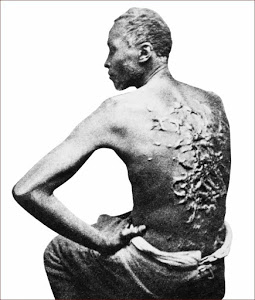
Every ordinance cited the incipient threat, posed by Lincoln’s election, to their right to own human chattel as the fundamental reason for secession. They also accused the new government of exciting “servile insurrection”–that’s a vile term, isn’t it?–and of advocating equality of the races–a clear violation, the Texas ordinance said, of God’s will.
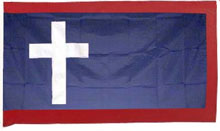
That would explain, of course, the flag my second great-grandfather fought under as a Missouri secessionist in 1861:
This week the National Cathedral in Washington, good Episcopalians, decided it might be time to re-discern God’s will. Once they had, they decided to remove stained-glass windows put up in tribute to the Southern heroes, Lee and Jackson, with their Confederate battle flags. They’d been installed in 1953–the year before Brown v. Board.
White Southerners understood then and understand now what that flag represents. It flew in defense of slavery, and Southerners themselves were explicit about that in 1861. Read the ordinances of secession. A century later, it flew in the face of the civil rights movement, in response to what whites had once called “servile insurrection.” The Confederate flag doesn’t belong in God’s house. Neither is it appropriate to validate treason in a National cathedral. The windows should come down.
It’s about time.
 A Work in Progress