
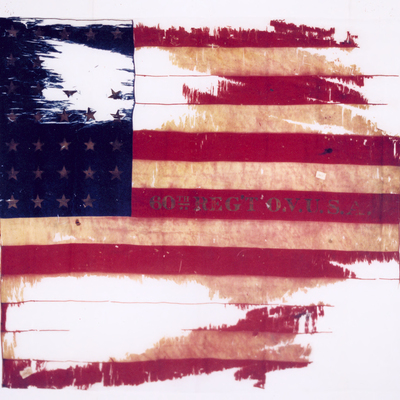
In January 1941, Medal of Honor winner Otis W. Smith’s grandson, Johnnie, would enter an army belatedly preparing to fight an even more terrible war, this one against fascism. Hitler declared war near the end of that year, though he had no obligation to do so after the Pearl Harbor attack that had claimed two Arroyo Grande sailors on U.S.S. Arizona. The dictator was jubilant, thinking America decadent and Americans, in his simplistic and misshapen worldview, a “mongrel people.”
Prime Minister Winston Churchill was said at the time to have been nearly as pleased as the parochial Austrian dictator was. Unlike Hitler, Churchill knew about Grant and Sheridan, knew what the Iron Brigade had done at Gettysburg, and knew, as well, what Jackson and his “foot cavalry” had done at Chancellorsville. He admired Americans. After all, his mother, Jennie, had been born in Brooklyn.
Three thousand miles from Brooklyn, on the Pacific Coast, the Huasna Valley’s Johnnie Otis Smith was preparing to go to war. He was just one of over three hundred young men and women from southern San Luis Obispo County who would join the military in World War II, including the Gularte brothers, Manuel and Frank, whose parents came from the Azores, and the Fuchiwaki brothers, Hilo and Ben, whose parents came from Japan. All three Robison brothers saw action. In nearby Oceano, when Thelma Murray learned that her younger brother, George, had been killed on Tarawa, she became a Marine, too.
So this, too, was a brothers’ war, but in this war the brothers fought on the same side. Of course, that realization wouldn’t have had time to occur to Americans on December 7. They would realize it later in the war, when a California GI might write home to his family about the rifle squad that was his new family, write about his new friend, his brother in arms, a dogface from South Carolina. World War II, brutal as it was, would force Americans to rediscover themselves as a common people with a common purpose. The war did this even as it scattered young Americans around the world, to battlefields in New Guinea, the Solomons, and the Aleutians; to Cassino, Eindhoven, and St. Vith.
That rediscovery was in the future. On December 7, the first CBS bulletin had come at about 11:30 that morning to the people of Arroyo Grande. On hearing the news of the burning wrecks along Battleship Row, families here would have pushed listlessly at Sunday lunches for which they had no appetite. They would have been shocked and somber and tense, a father snapping at a mother who’d turned off the radio to try to recapture the kind of Sunday afternoon the family would never enjoy again. The war meant that some Arroyo Grande families would never be complete again.
A continent and an ocean away, in the depth of an English winter night, Winston Churchill was filled with hope. In an instant of clarity, he understood that now democracy would not—could not—perish from the earth.
 A Work in Progress