
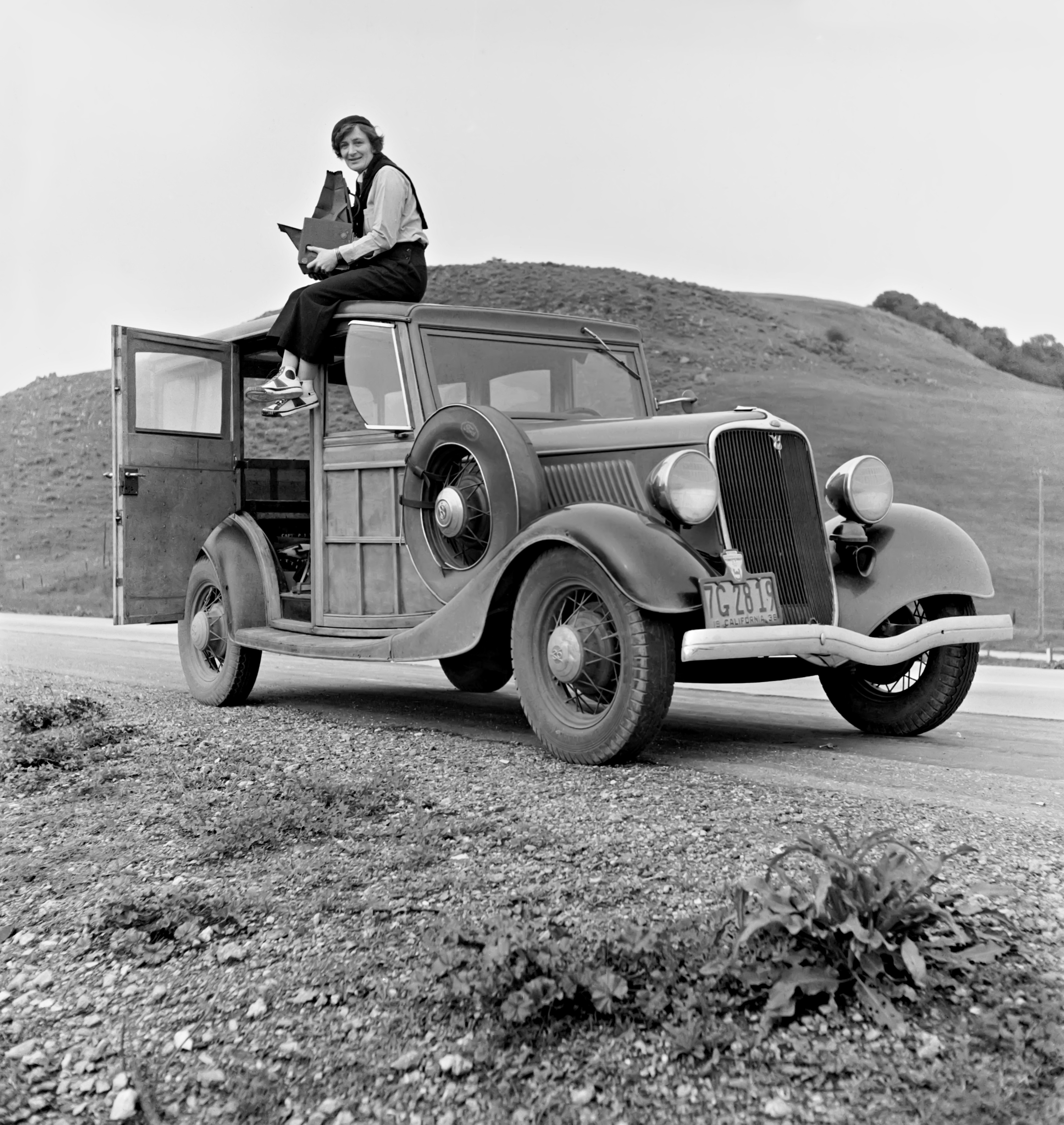
In 1936, the woman’s beret and mannish dress—oxford shirt, pleated skirt, sweater tied around her shoulders, high-topped tennis shoes—might have made her look a little like the outlaw Bonnie Parker. The car she drove was a powerful V8, the engine Bonnie and Clyde favored, but her car was homely and utilitarian, a wood-paneled Model C Ford wagon, not sleek and raked like the Ford DeLuxe in which the outlaws had met their deaths two years before. The driver, nodding a little with each click of the seams in the two-lane concrete Highway 101, needed a wagon’s room, not for bank-bags full of loot, but for equipment, the boxy, awkward but fragile paraphernalia of the documentary photographer, tucked securely inside the passenger cabin and wedged together in cases to make the run north to San Francisco secure and tight.
She had a good six hours to go before San Francisco and so was taking a chance on dubious tires on the narrow coast highway, littered in sad little Darwinian islets with expired possums, skunks, and ground squirrels. For her, the more menacing detritus was that of a nation in motion: fragments of glass, shredded and peeled truck-tire treads, oil slicks, fragments of cargo that included scraps of lumber and tenpenny nails. Her tires, nearly bald at the edges from months of traveling hard roads in the San Joaquin Valley and the California coast, were vulnerable to the traps the 101 had laid for her, but she wasn’t prepared for the trap the roadside sign presented.
PEA PICKERS CAMP
At first, she was strong enough to resist the seduction of the crudely-lettered sign; she had so far to go and had, after all, only reached the southern edge of San Luis Obispo County. Here the terrain was just beginning to reveal that she’d left the gravitational pull of Los Angeles, which ends at about the Gaviota Pass, with its severe rock outcroppings scattered with spiny yucca plants, where the light hits hard at noontime and yields to soft pastels at sunset, purples and pinks, all suggestive of aridity and drought in a country meant for lizards and coyotes and not for farming.
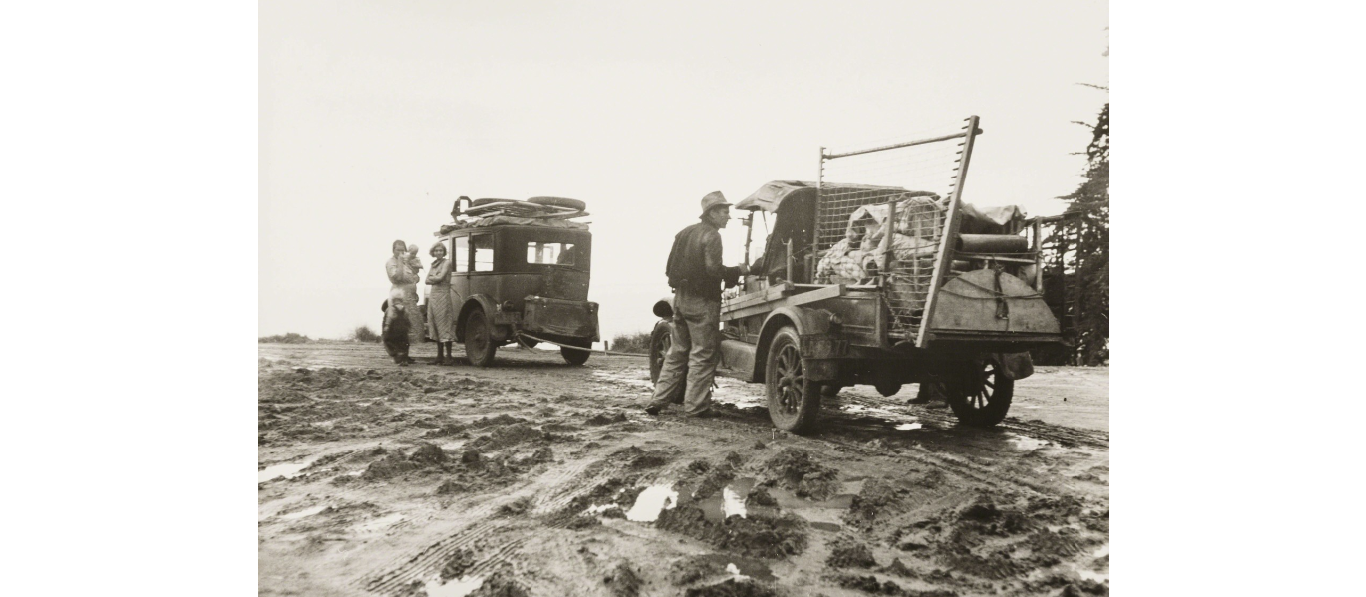
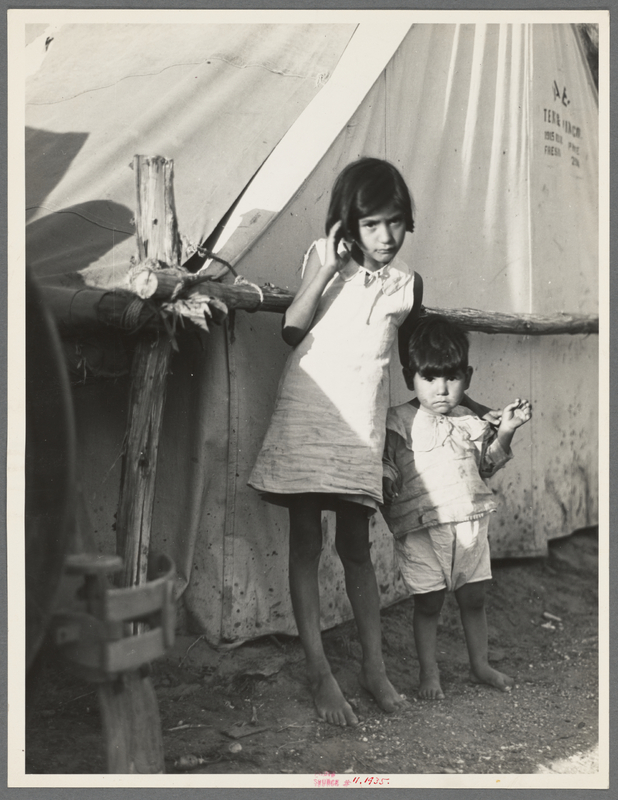
She knew the farmland she was entering pretty well, had interviewed and talked to its Mexican migrants and itinerant cowboys and the gypsy people mistakenly generalized as “Okies,” “mistaken” because she’d photographed the same kind of people from as far away as Vermont. They lived in their canvas tents and lean-tos in labor camps like the one the cardboard sign suggested, and they were as hard and as stark and as dry as the rocks at Gaviota. Poverty and stoop labor and hunger and human hostility had dried these people out by 1936. If the woman had her way, hope would wash through them like irrigation water the color of creamed coffee did through the furrows of the fields they worked, fields of pole beans and strawberries, cabbages and peas. But this water would revive them, fill them out, galvanize and energize them, restore to them the forward-looking strength that had been so fundamental to their ancestors from Germany, from the Scots Lowlands, from Sonora and Mississippi, from Luzon and Kyushu. These people waited, quiet, stoic, unblinking, for the waters of hope to baptize them. But they thirsted for them.
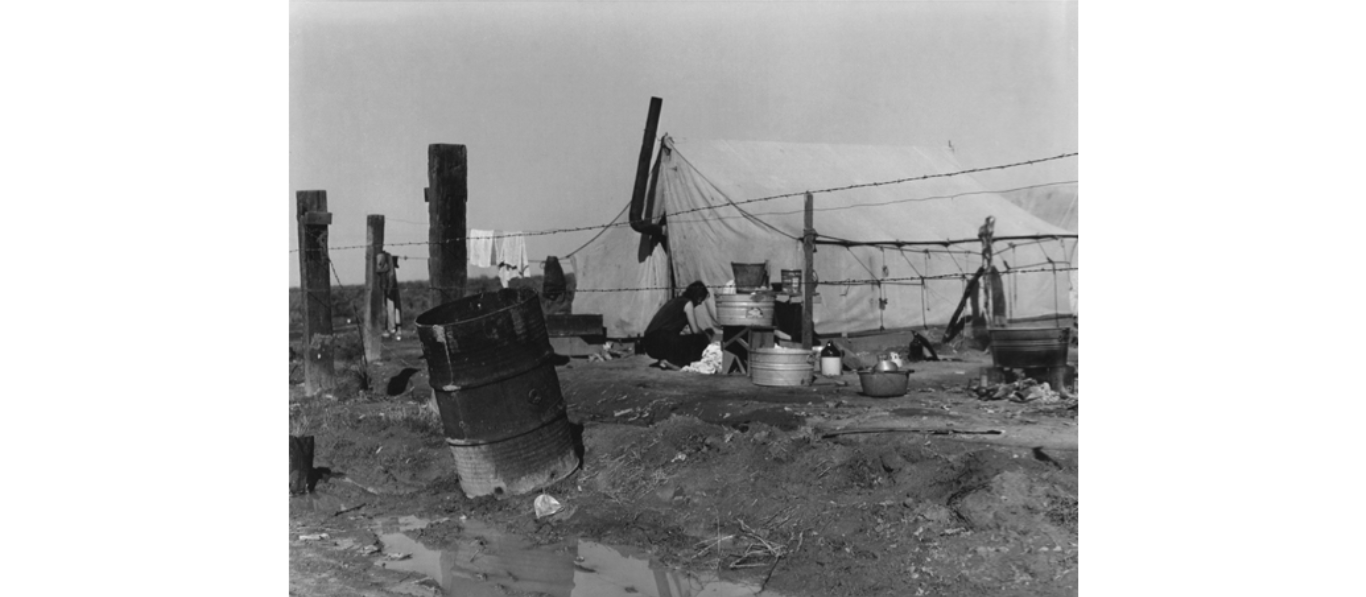
She kept driving north past the irrigated fields and vast groves of fruit and walnut trees because there was no need for her to stop. On the seat and the floor beside her were thousands of 5 x 7 negatives secure inside their wooden frames, stored in black light-resistant boxes, and on that film she had captured the hard, dry, and thirsty people at work in their fields, in camps preparing dinner or washing laundry, and their children beside them in the fields, whole families struggling with the trailing bags they were struggling to fill with cotton bolls or onions or potatoes or with the tall wooden pails meant to be filled with fruit or pea pods. They harvested the food that fed a nation that was now too incapable, in places like Henry Ford’s Detroit, of feeding itself. Ironically, the harvesters themselves went hungry. They’d been abandoned by fossilized congressmen who forgot the hunger of the hill people that had driven their forebears, fierce Populists like Tom Watson, to the offices of great power that they now held.
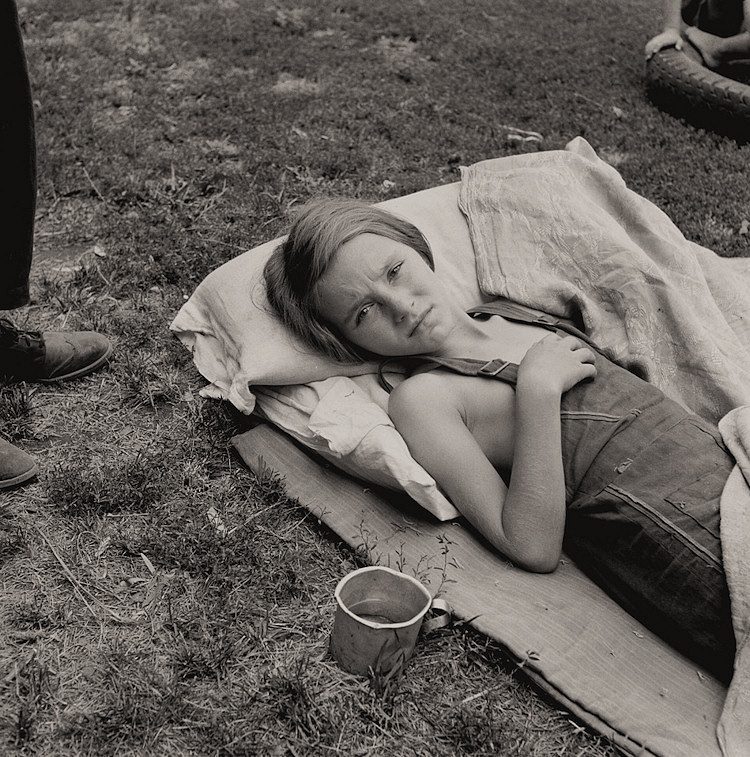
So the migrants’ children’s bellies were swollen, their legs were like sticks, knock-kneed from rickets, and now, in the hard rains that had come late this year, the dominant sounds that came from the tents in the migrant camps were the wracking coughs of migrant children in attacks that convulsed them and curled them like sowbugs into the fetal position where they could gather enough strength for another breath. There were thousands of people like these harvest people, sealed in her negatives on the seat beside her, waiting to come to life again in tubs of fixer in the photo lab.
Some of them, some of those children, were going to die.
South of the Ontario Grade, to her left, was a stretch of the Pacific in a shallow crescent from Guadalupe to Port Harford; the sight of it must have hurried her north to where she would finally see the ocean again, and with it San Francisco.
Ten minutes later, impulsively, somewhere near San Luis Obispo, the driver pulled to the shoulder and stopped her car.
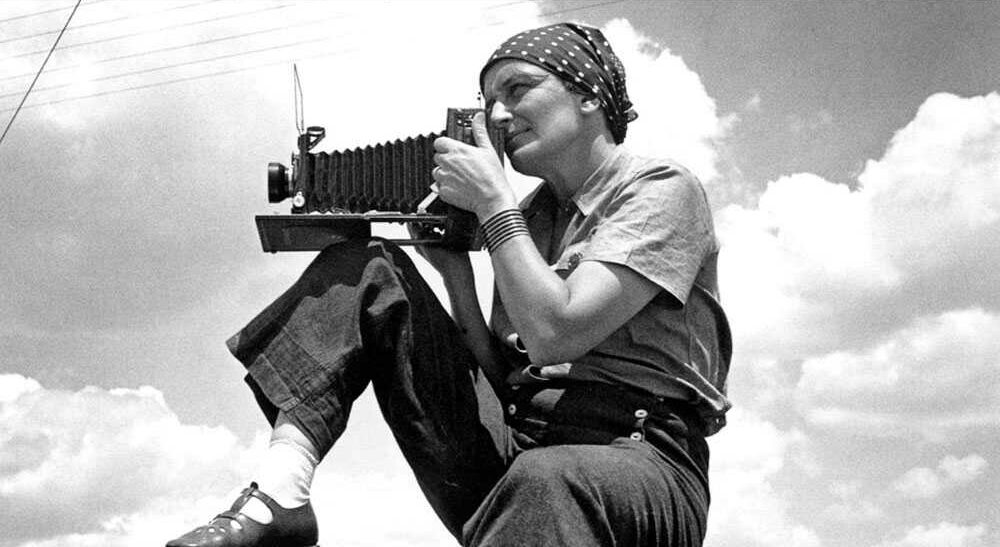
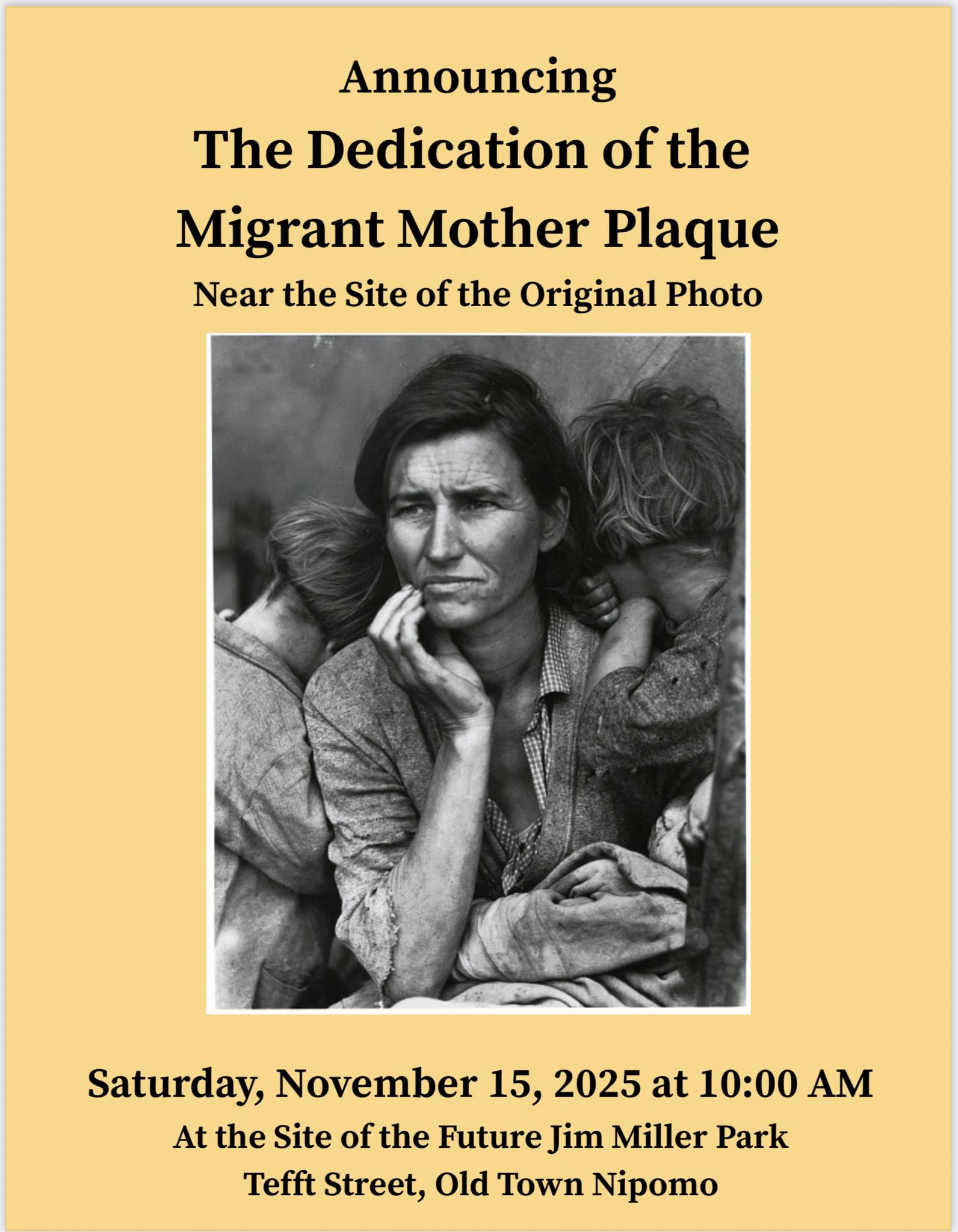
The engine idled and her grip tightened atop the steering wheel. She leaned forward until her forehead rested against her knuckles and she closed her eyes. She was tired. She had miles and hours of highway ahead of her before home and relief and release from the hard work she’d been doing. Then she sighed. There was only one thing to be done. She brought the Ford around in a U-turn and headed south on the highway she knew so well that she would intuit a mile ahead of its appearance where the sign would be, where she would turn off the 101. She could not know it now, a little angry at herself for reversing course, but when she turned off she would meet a Madonna of the Sorrows, a woman in a tent in a muddy field who would leave even a master like Raphael rapt in her presence and powerless to capture her image. This image was meant for the photographer, and meant for her alone.


 A Work in Progress