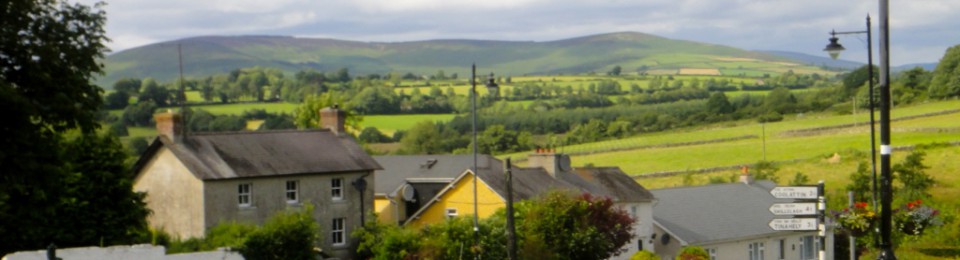
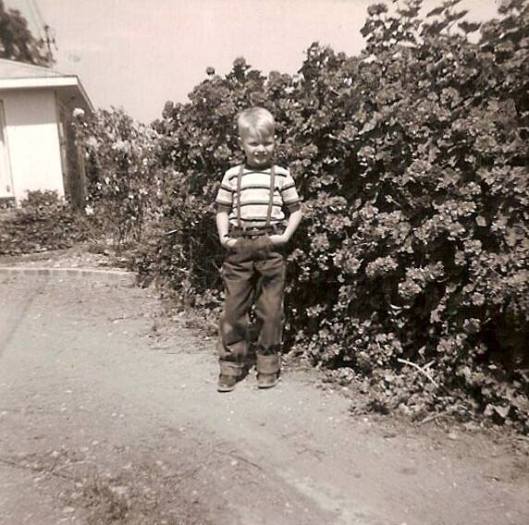
 A ten-mile corridor of land between Valley Road in Arroyo Grande and Mary Hall Road in the Huasna Valley has been the most formative influence of my life. I grew up on Huasna Road in the Upper Arroyo Grande Valley, and I knew instantly the day we moved there, when I was five, that this was home.
We never lacked for guests. There were mule deer, a weasel, red-tailed hawks, an unexplained peacock, and two barn owls that slept together on a ledge beneath the Harris Bridge. Coyotes yipped in the hills and a colony of beavers built a dam in the Arroyo Grande Creek that ran with rainbow trout I did catch and one big steelhead that I didn’t. Once a mountain lion sniffed around our Branch School softball field.
Just over the hill from the two-room school was the Branch family burying ground. I used to visit to wonder what Arroyo Grande Valley must have been like when Francis and Manuela Branch arrived in 1837, wonder at the heartbreak represented by the small tombstones of three daughters taken by smallpox in 1862.
It was in part the Branch family that would lead me to teach history for thirty years, when I found that my life’s calling and greatest joy was to be surrounded by teenagers.
I’ve written two books about Arroyo Grande since I retired in 2015, and I constantly find hope in our past:
• In 1862, a Civil War soldier, Erastus Fouch, lost his eighteen-year-old brother during a firefight with Stonewall Jackson’s forces in the Shenandoah Valley. Thirty years later, Fouch, now an Arroyo Grande farmer, would be the most forceful advocate for the founding of the high school, a perfect memorial to a lost brother.
• Ruth Paulding taught at the high school in the 1940s and 1950s. Her mother, Clara, had taught locally for over forty years, including, at one point, teaching sixty students in eleven grades at Branch by herself. Both Pauldings loved children. In the family home on Crown Hill, there are several tea and coffee services. In one of them, Ruth, at the end of the school year, would serve her students Mexican hot chocolate so rich that the teenagers would remember it the rest of their lives.
• The Ikeda brothers were superb athletes and passionate about baseball, which is the sport that that kept the internees together, body and soul, in the desolate World War II camp at Gila River. More than half of Arroyo Grande’s Japanese internees never came home after the war. The Ikedas did, to teach baseball to two generations of children who will never forget Coach Saburo Ikeda because, as one of them wrote, “Coach always had a smile on his face.”
On the day that we moved to Huasna Road, there had just been a thunderstorm, and the air was pungent with ozone and earth just turned over by a farmer’s tractor. In writing about our past, I am always inspired by chronicling lives as rich as the soil of the Valley, and I always come back to that moment, sixty years ago, when I knew I was home.
 A Work in Progress