

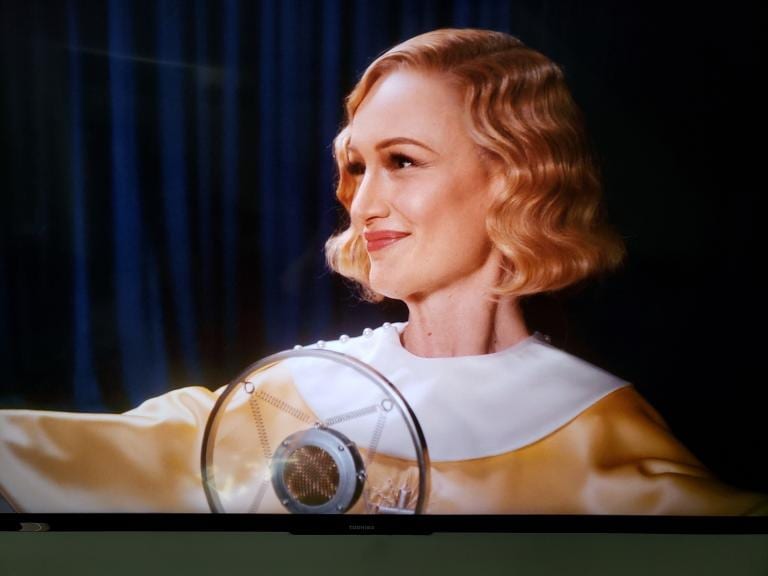

Aimee Semple McPherson was, in the 1920s, one of the most famous evangelists in America and was the founder of the Foursquare Gospel Church, which is now 1,400 churches strong. She was a marvelous actress–advised in part by friend Charlie Chaplin, her sermons were framed by elaborate stage settings and she dressed in various costumes, as a little Dutch girl, for example, complete with sabots. The milkmaid-revivalist portrayed by Jean Simmons in the film production of Elmer Gantry was based on Sister Aimee, as was a character in Nathanael West’s dark novel, The Day of the Locust. She was flamboyant, dramatic, attractive and enormously successful.
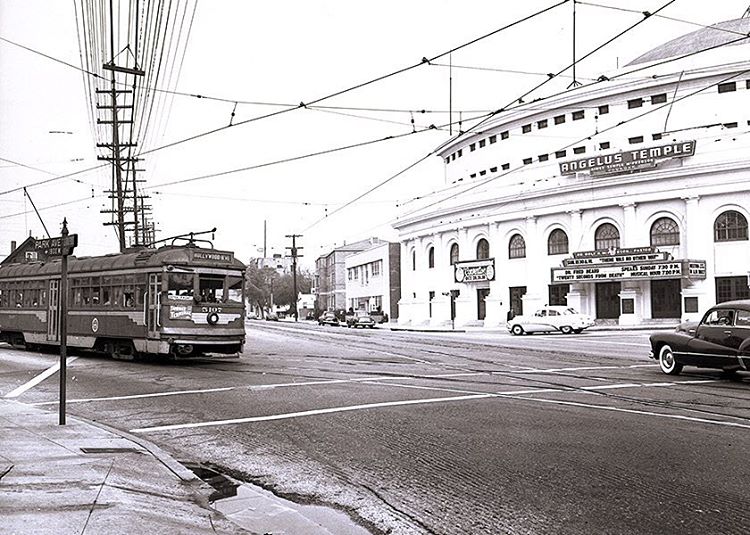
She was known for her good works. In the 1925 Santa Barbara earthquake, she took the microphone away from a stunned broadcaster and immediately requested aid for the stricken city. Convoys of food, blankets and emergency supplies were soon on their way. She was insistent integrating her congregation, a courageous policy at a time when the power of the Ku Klux Klan, even in California, was at its height. She ran a commissary for the homeless out of her Angelus Temple that was shut down briefly in 1932 when a still was discovered in the kitchen.
In May 1926, Aimee disappeared. Presumed drowned off Venice Beach, a search that included the California National Guard failed to turn up any trace of the beloved Aimee. She was gone.
For a month.
In June, she turned up, disheveled and disoriented, in the town of Agua Prieta, on the Mexican border, revealing that she’d escaped from an adobe house in Mexico where she’d been held captive by two kidnappers named “Steve” and “Rose.” She was hospitalized in Douglas, Arizona, and the newspaper accounts of her survival were welcome news to her followers: as many as 50,000 Angelenos were waiting for her when her train arrived from Arizona.
As it turned out, Aimee’s story was a fabrication. When her account began to come under scrutiny, she brazenly, and foolishly, demanded the grand jury investigation whose focus soon became Aimee herself.

Enough character witnesses appeared on her behalf to muddle the case, which was eventually dismissed, but this is what most likely happened: Aimee had an affair with a former employee, a radio engineer named Kenneth Ormiston, and the dates of her disappearance coincided with his rental of a seaside cottage in Carmel.
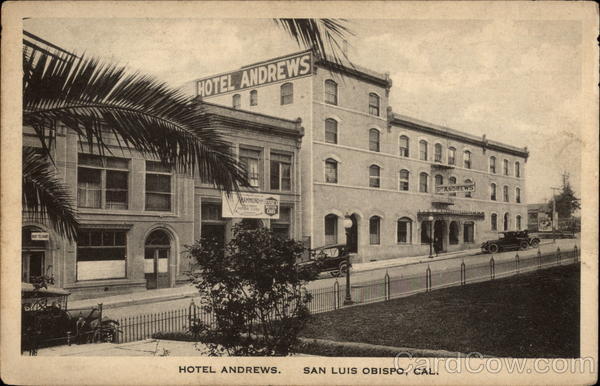
The plot thickened when Ormiston was identified as the male half of a couple that had registered as “Mr. and Mrs. Gibson”–the female was heavily veiled–when they’d checked in at the Hotel Andrews in San Luis Obispo shortly after Aimee’s alleged drowning. The Andrews, which stood on the corner where the San Luis Obispo City-County Library today stands, reached the height of its fame in a 24-hour cycle of national newspapers.
Aimee had reached the height of her fame, as well. She continued to preach until her death in 1944, but the luster was gone; in-fighting between Aimee and her mother, Mildred Kennedy, took both a personal and business toll on the evangelist; when her body was found in an Oakland hotel, a bottle of Seconal was found nearby and the coroner’s inquest suggested that both an accidental overdose and kidney problems figured in Sister Aimee’s death.
Admirers sent eleven truckloads of flowers, valued at $50,000, to her funeral at the Angelus Temple. She is buried, along with so many other Hollywood stars, at Forest Lawn in Glendale.

The only Hollywood star who could exceed Sister Aimee, in my mind, was Burt Lancaster in one of the most stunning opening scenes in film history, from Elmer Gantry.
 A Work in Progress