
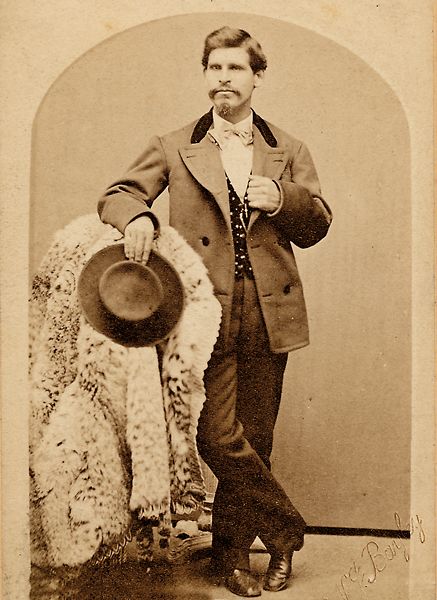
Californio outlaw Tiburcio Vasquez was hanged in 1875 San Jose.
The passage below is from the acknowledgements to the new book, on outlaws. I am already receiving messages from folks urging me to reconsider the scholarship and portray California outlaws like Vasquez, Salomon Pico, and Pio Linares as patriots, as social outlaws, or what the Marxist historian Hobsbawm called “primitive rebels.” They are going to be unhappy:
Forty years ago, I found Hobsbawm’s thesis thrilling, because his was one of those books that forced you to look at history in a totally different way. I even took a college course in social outlawry–in Missouri, not far from towns that Jesse James once haunted–and wrote my paper on Vasquez.
I took the class because I inherited my Irish-American mother’s instinctive distrust of the powerful and her faith in the poor and working people who, like her ancestors, suffered so much under men like the oligarchs who are such a potent presence in our government today. If anything, the wealthy are as powerful or even more powerful now than they were in Jesse James’s lifetime, and they are the most clear and present danger to American representative democracy. I can think of no decision since Plessy v. Ferguson that has been more injurious than Citizens United.
But I am forty years older from the time I read my Hobsbawm. Some Marxists age well–Eugene Genovese, now a rabid conservative, wrote Roll, Jordan, Roll, an incandescent history of slavery, when he was younger and more sensible, and it is still brilliant–but my Hobsbawm-inspired treatment of Tiburcio Vasqeuz is trite and shallow.
In the course of researching the outlaws book, I found overwhelming evidence to explain the satisfaction Latino Californians took in the actions of the men, like Vasquez, whom they identified as social outlaws, because these people were driven out of the gold fields, politically marginalized, and their land was seized. But I finally decided that what makes a social outlaw is not what he does, but how he dies. Outlaws like Vasquez die at a young age and their deaths are invariably violent. What’s left behind is what I used to call “the James Dean effect:” the suddenness of their deaths is a powerful catalyst for creating myths they really don’t deserve.
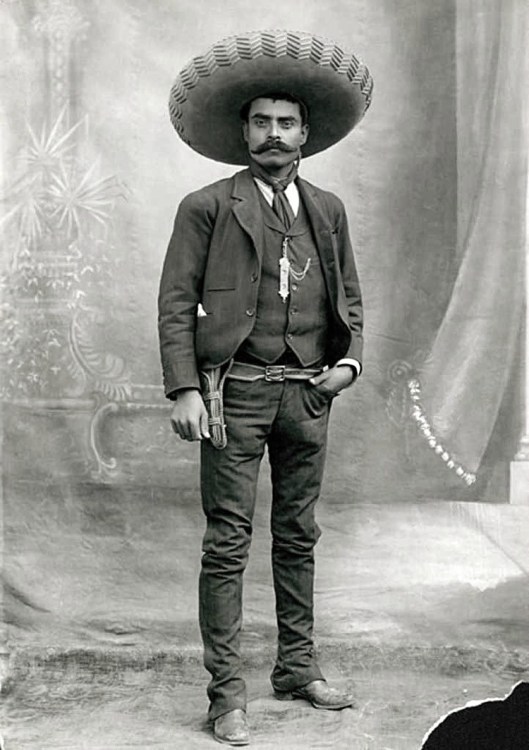
Emiliano Zapata, killed in 1919.
In life, they are neither heroic (Joaquin Murieta shot unarmed Chinese miners) nor consciously and deliberately acting to make a political statement. Vasquez pleaded that he was, but he was in jail facing the possibility of hanging, and his pleas were intended to generate sympathy, which they did.
There is, then, a vast difference between a Californio bandit like Salomon Pico and a Mexican revolutionary like Emiliano Zapata. Both men were killers. Pico killed to satisfy Pico. Zapata killed because the wealthy sugar planters of Morelos had a monopoly on farmland that starved peasant families to death. There are men, like the Morelos sugar planters, whose lives are improved immensely by killing. While he fought them, Zapata promulgated the Plan de Ayala, a cogent statement of revolutionary justice. The outlaws I met in researching the book had to rely on the writers of pulp fiction to give their lives a sense of justice. These are the lives that their admirers truly deserved. They exist only in fiction and in our dreams.
 A Work in Progress