
Sometimes, as arid as they may seem, statistics can reveal history in a poignant way. This isn’t Cliometrics, which is a much more sophisticated discipline that uses statistical analysis to understand history. It’s based, instead, on a small but very precious sampling: These are the young men—their names are recorded on The Wall—who we lost in Vietnam.
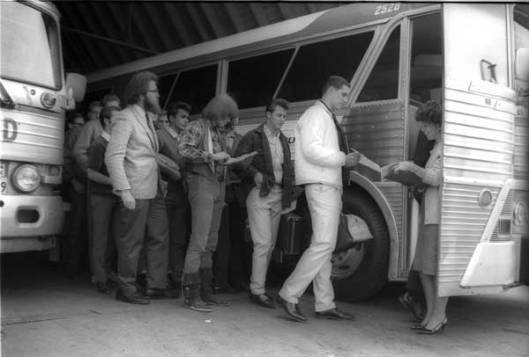
Draftees board a bus at the San Luis Obispo Greyhound Station, 1966. Despite the popular belief, volunteers outnumbered draftees in the Vietnam War. Photo from David Middlecamp’s Photos from the Vault.
34 total dead, San Luis Obispo County, Vietnam War (1965-1972)
National average, Vietnam war dead, per 100,000 population: 28.5
California average per 100,000 population: 27.9
San Luis Obispo County average per 100,000 population: 32*
Deaths by municipality:
San Luis Obispo: 9
Arroyo Grande: 4
Atascadero: 8
Grover City (Beach): 4
Morro Bay: 2**
Oceano: 2
Paso Robles: 4
Pismo Beach: 1
Deaths by year:
1965 1
1966 1
1967 6
1968 11
1969 9
1970 3
1971 2
1972 1
Average Age at Death: 22.4
Average Age, Vietnam soldier: 22
21 most frequent age for SLO County servicemen killed [Two were 18, one was 19; the oldest was 31]
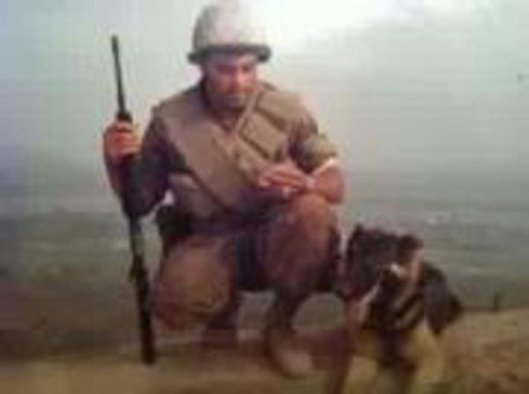
Sgt. Pete Sprule Segundo of Oceano, U.S. Marine Corps dog handler, killed by “friendly fire,” 1969. To know Segundo, say his friends from AGHS, was to love him. Pete is buried near my parents in the Arroyo Grande District Cemetery.
Service Branch
Army 24
Marine Corps 8
Air Force 1
Navy 1
[Three officers; 31 enlisted men]
Cause of death:
Explosive device 3
Helicopter crash 4
Aircraft Crash 1
Accident “other” 3
Accident, friendly fire 1
Grenade 8***
Artillery/mortar/rocket 6
Unknown 3
Small arms fire 3
Illness/infectious disease 2
*County Population, 1970 Census: 106,403. Our average is higher than either the state or national averages. One supposition is that military service, in rural America during the 1960s, was seen as a way to serve America and a way to advance in life. This was still very much a rural county in 1965, when the war began to accelerate and long before it became so divisive.
**The two Morro Bay soldiers were killed within four days of each other in April 1968, when Tet was still convulsing South Vietnam; the impact on such a small town had to be devastating.
***This statistic is shocking. It meant that those casualties, even if some were inflicted by RPG’s, were the result of extremely close combat.
 A Work in Progress