
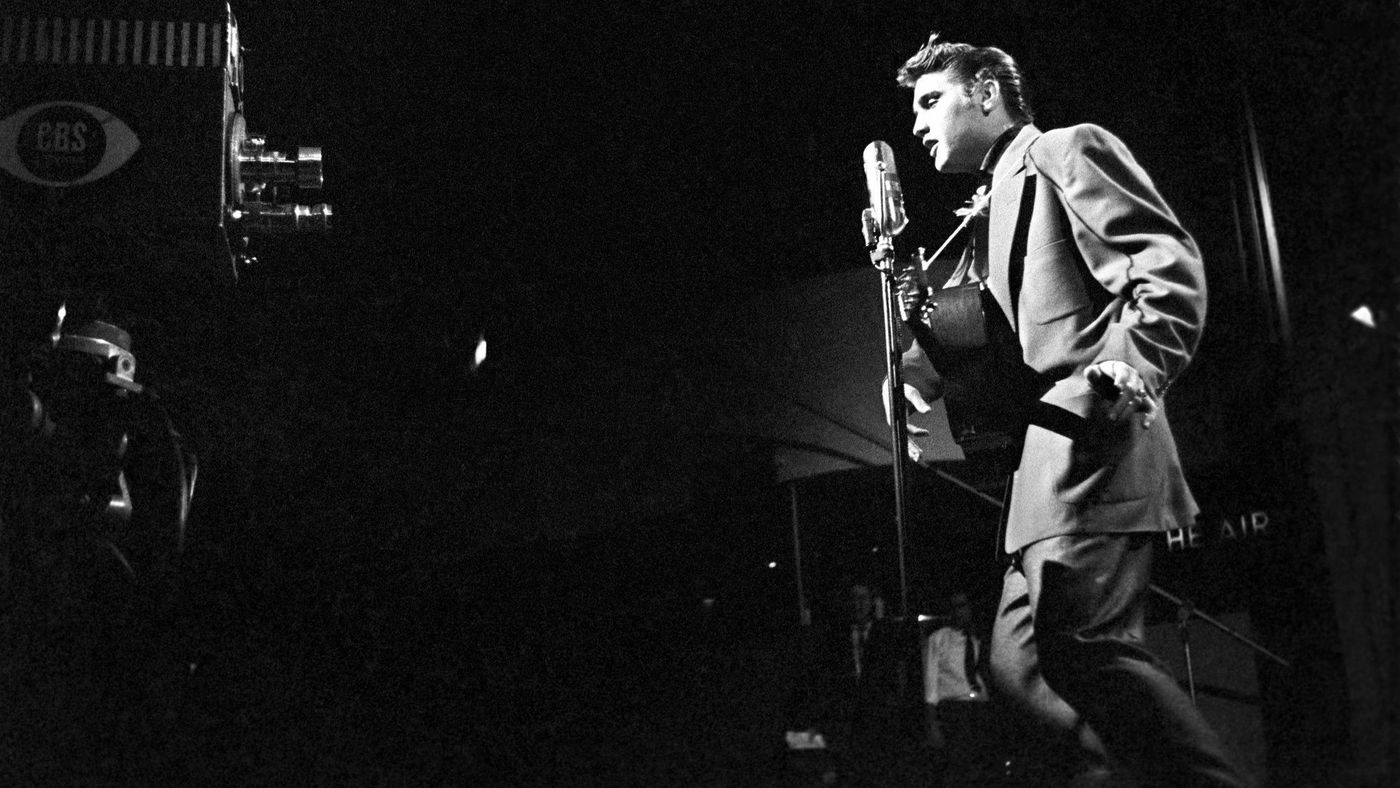
The two-part HBO documentary on Elvis, The Searcher, was absorbing. Tom Petty–sigh!– and Bruce Springsteen were among the commentators. It was also, of course, heart-breaking, because Elvis never exactly found what he was searching for.
You wonder, of course, about the dead twin, the early poverty, the almost Jesuitical sense of mission he felt to overcome his family’s seeming failure and to heal their heartbreak. And you wonder about his mother. It wasn’t that he was a mother’s boy, according to the documentary: it was instead that the son and the mother were extensions of each other. They were, in some ways, the same person. He never recovered from her death.
She died just before he went into the Army, which was a pivotal and in many ways tragic break in his career. He lost his mother and he lost contact with that first vital wave of rock ‘n’ roll, which died while he was overseas. He also, in Germany, discovered the uppers that would keep him awake on overnight duty and which would help to kill him seventeen years later.
He really wanted to be a movie star, but he hated the stupid movies, too, three a year, each with meaningless “Elvis” soundtracks. [Significantly, the one possible exception to stupid Elvis musicals was King Creole, when so many of the supporting musicians were African-Americans. His delight in performing the music for this film is transparent.]
Later, he did Vegas and the insane, exhausting tours because he was compelled to do so. For five years, he was on the road for a hundred-fifty concert dates a year. I think they, combined with that damnable sense of duty, with Colonel Tom Parker and with the prescription drugs, were more than enough to kill him. They were more than enough to kill anybody.
But Part One of the documentary portrays a young man alive to every sound coming from every black blues club on Beale Street in Memphis, alive to every stylish walk he saw there (“A’hm gonna USE that!” he told a friend. I don’t know about the Forrest Gump bit.), alive, most of all, to Gospel, but understanding also of the Scots-Irish ethic that permeates Southern culture, and so understanding of the Country-Western tradition kept carefully and jealously at the Grand Old Opry. (He horrified the Opry; it was the Louisiana Hayride that spread the Gospel of Elvis instead.)
When he first went into Sun Records he took everything he’d absorbed growing up and created, in a studio no bigger than a custodian’s closet, Elvis. Sam Phillips knew instantly that he had found someone like no one else in music history–and then was generous enough to let him go to RCA Records because Sun just wasn’t big enough for Elvis’s talent.
Elvis knew that he was like no one else, either. He was both self-aware of this and shocked by it. Springsteen spoke movingly about the early recording sessions, about how the epiphany that visited both of them: both realized just how powerful their talents were. And in those moments and in those sessions, both young men (and later, the Beatles, with George Martin) recorded music with such purity that it will move us all always.
Addendum November 2022: I finally got around to watching Baz Lurhmann’s version of Elvis. I have a complex relationship with the director, and this film disappointed me: it was perhaps too accurate in its portrayal of Elvis’s later life, which is unremittingly depressing. The first half remain inspirational to me, especially in this shorthand sequence on the influence of Black culture on Elvis. This is Lurhmann at his best.
 A Work in Progress