• About
  • The Germans

A Work in Progress

A Work in Progress

Monthly Archives: July 2018

My father. And fried food.

28 Saturday Jul 2018

Posted by ag1970 in Uncategorized

≈ Leave a comment

0727181751-1

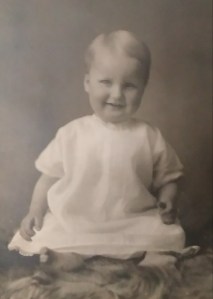
This is my Baby Dad. The 100th anniversary of his birth is July 31, so we are wondering what we should eat to celebrate his memory. Since he grew up on the Ozark Plateau, some of the potential dishes:

–Chicken-fried steak. I haven’t had chicken-fried steak in thirty-five years. The last time I tried it, it was so good that I only noticed momentarily that my arteries were slamming shut like the WalMart electric doors at closing time Black Friday.

–Ham-hocks and Lima beans. Nope. Lima beans are the only culinary abomination I find more disturbing than kale. Their interiors have the texture of beach sand and taste the same. Lima beans deserve to be extinct, like Dodo birds and Tea Party Republicans. Kale, by the way, reminds me of concertina wire.

–Squirrel stew. Not bad. A little peppery when Dad made it, about as bony as a Lake Trout but darker and more mysterious in flavor. Not for me: The squirrels around here, I assume, are all rabid and homicidal. The ones who aren’t carry the Plague bacillus.

–Missouri fried chicken. Not as batter-y as Southern Fried chicken. Dust it with either corn meal or flour, add Secret Spices, fry, inhale. Grandma Gregory’s Missouri fried drumsticks were divine, so good that we almost forgot she used to absently whack us with her cane. She’d been a country schoolteacher, you see, and whacking then was what refer to now as “Classroom Management.”
Screen Shot 2018-07-27 at 6.56.11 PM

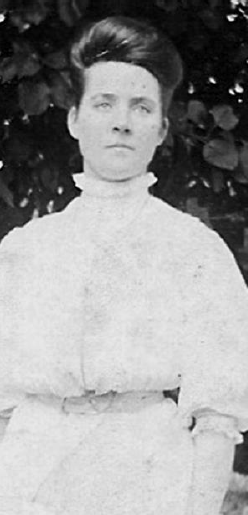
My grandmother, about 1910, in one of her sunny moods.

–A full-out Ham Dinner, with accompaniments, but it requires a table at least twelve feet long. And an immensity of hams. Fruit salad, potato salad, hot German potato salad, jello salad, macaroni salad, mounds of deviled eggs, cinnamoned yams grown in the Old Confederacy but invaded by melting Yankee marshmallows, biscuits smeared generously with butter melted in honey, string-bean casserole, mashed potatoes that remind you of fluffy clouds–if we could somehow get butter up there–and so many pies that another table is required just for them: Sweet potato pie, pumpkin pie, Dutch apple pie, chocolate pie, lemon meringue pie, peach pie and, most of all, pecan pie, with the “can” in “pecan” pronounced the way you’d pronounce it in the term “tin can.”

Also, the emphasis is emphatic on the first syllable in the words “July” and “insurance” and you go to see a movie at the “thee-AY-ter.”

In defense of the Ozark Plateau, a meal like this Meal of Many Hams is intended to reinforce ideals like Family and Community, and it’s eaten in several shifts that are interspersed with funny stories, family stories, local scandals, livestock inspection–Ozarkers love horses, and love commenting on them, as much as County Wicklow Irish do–neighborhood walks to work the food off where the neighbors wave from the front porch. Afterward, for folks my age, there are pleasant naps in rockers on those front porches while the kids screamed at Badminton to the Death on the back back lawn, because yards in the Border States and the tier of states below were and are immense and fenceless. They make you wonder, with all that room and neighborly welcome, why Fort Sumter ever happened.
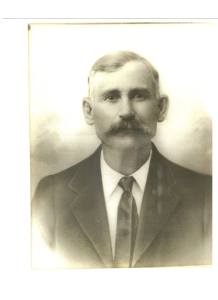
1483874_10202932872506561_316264286_o_10202932872506561 copy

My Grandfather, John Gregory, born in Kentucky in 1862, the second year of the Civil War. The appropriate term for me is “Older Than Dirt.”

–Here’s the favorite potential Celebrate Dad meal so far, and it’s intended for breakfast: BISCUITS AND GRAVY, with a creamy gravy studded with nougats du pork and sided by fried (Do you notice a pattern here? Teenaged Dad brought grapefruit to some Hill People in a New Deal relief program and they tried to fry them, too) eggs and bacon. The Ozark Plateau, you may have noticed as well, is no place to be a hog. Biscuits, to be measured with calipers, must be at least four inches thick and also must be able to float effortlessly just before serving. CJ’s and Francisco’s Country Kitchen both serve up biscuits and gravy like that.

EXPS_BMZ17_8030_D10_25_3b

The mental picture in the author of  Exodus had in mind when he coined the term “Promised Land.’

I think that’s the meal I’ll go for. Don’t tell Dr. Tackett, my cardiologist. She is, however, from Kentucky, where they eat the EXACT SAME STUFF. Dr. Tackett eats kale and might occasionally and accidentally smell a halibut if it’s served on a table at the opposite end of the restaurant. She is a much stronger person than I could ever hope to be.

download

My cardiologist, whom I both admire and adore.

The beach at Cabo, the hospital bed

27 Friday Jul 2018

Posted by ag1970 in Uncategorized

≈ Leave a comment


depositphotos_66990517-stock-photo-fresh-margarita-cocktail-on-a


Every once in awhile, breaking through all those Facebook posts from Cabo and Maui and Paris that make us question our own self-worth and our boring, pedestrian lives, a little truth gets posted.

A friend of mine is mentally ill, and his Facebook posts have no Margaritas, no white ribbons of beach, no banks of elms along the Seine with Notre Dame’s towers soaring just beyond.

My friend is in a hospital.

I emailed the hospital and asked if there’s anything I-—or we-—could do to help him. I don’t know that there is. I had to ask.

When I knew him almost fifty years ago, he was one of the finest young men I’d ever met. He impressed me so much with his integrity, his intellect and, underneath his shyness, his personal warmth. We grew up together in both high school and in the Episcopal Church, so that means a lot to me, too. The kind of young man he was-—the kind of person each of us once was, or the person that we hoped to be-—is something profound and deep and enduring. But it’s not unassailable.

We spend great parts of our lives, I think, under siege, rather than sipping Margaritas, fighting so hard just to survive that we never quite become the person we were going to be in our dreams. We get worn down. Sometimes, in our exhaustion, we lose faith in ourselves and we have to fight to get it, and ourselves, back again. Life is a war, constant and merciless, for so many of us.

My friend’s war may be the most frightening any of us has ever fought.

I know a little, and it’s a very little, about what he’s going through. So do many of the young people I’ve taught who fought their struggles so quietly but with so much courage.

I’ve been hospitalized several times in my life for depression—it killed my mother and twice almost killed me—and while the spectrum of our illnesses might be vastly different, the constant in both is the voice inside my head and inside my friend’s, insistent and seductive, that tells you lies about yourself, your self-worth, and about reality itself (it may be as menacing as the green fog in Eliot’s “Prufrock,” or, conversely, reality might be a kind of English garden, lavender-scented, where you are a barren stinking weed). That voice is a damnable liar.

It’s also cunningly persuasive—-the most persuasive when it makes the least sense—and it is powerful. It’s a voice that lies almost as much as Facebook.

So I’ve been crazy, too, and I wanted to say that in my friend’s defense. I also wanted to say that because it gives me an extra measure of responsibility toward him.

I am also a devout coward. I like mental hospitals and long-term care institutions only a little less than I liked bulls when I was a little boy, when, laden with fresh jolts of testosterone and adrenaline, they would look up at me from their grazing with suddenly murderous eyes. I get the same catch in my throat today when I see large men driving pickup trucks garnished with Confederate battle flags.

Fear’s the only thing that stops me trying to do something for my friend. I don’t know that seeing him would do any good, or even if his doctors would think it a good idea. Maybe it wouldn’t be a good idea for me.

But maybe it is.

Maybe anything we can do, even if it’s tollhouse cookies, is a good idea. Compassion is never a small gesture and, in the research and the writing I’ve done, it’s never rare, either, not even when the war is even more murderous than the one we fight inside ourselves, when it’s the kind of war young men fight to murder each other.

You’re right, by the way, if you think that this is none of my damn business and that I’m in way over my head. I agree with you completely. Maybe, and I’ve done this before, I am confusing myself with Jesus.

Maybe that’s exactly what He wants of me.

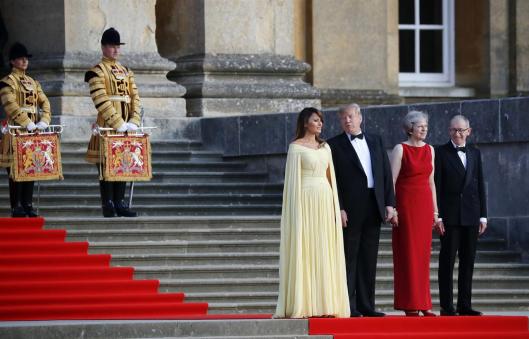
The President visits Blenheim Palace

13 Friday Jul 2018

Posted by ag1970 in Uncategorized

≈ Leave a comment

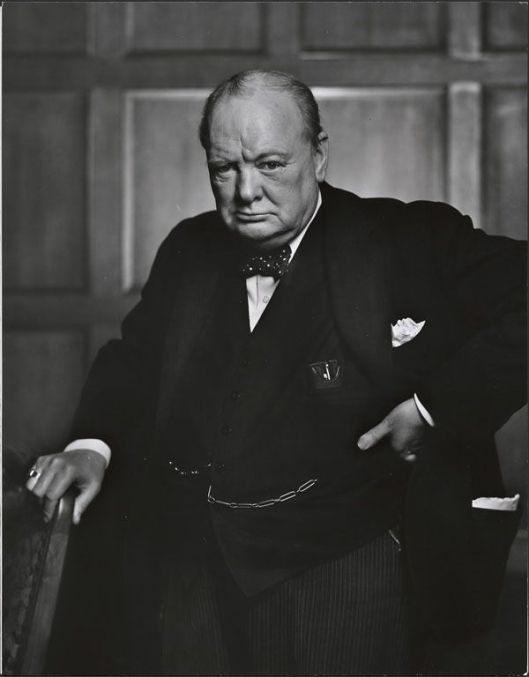
Churchill

42ec40b7-ab54-489f-a5f8-6f6e51ef9848

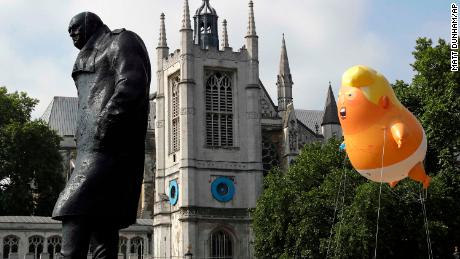
The photos above are of Churchill’s famous portrait (Cecil Beaton got the expression by reaching out and snatching the cigar out of Winston’s mouth) and of Trump visiting Blenheim Palace today.

Blenheim Palace was Churchill’s birthplace, named for the victory his ancestor, Marlborough, won in Bavaria, fighting for Queen Anne and for Britain in the War of the Spanish Succession, when the Bourbons aimed at disrupting the balance of power in a manner only slightly blunter than Putin’s. The intent, the malevolence, was otherwise the same.

blenheim-palace-view

Capability Brown’s work, Blenheim.

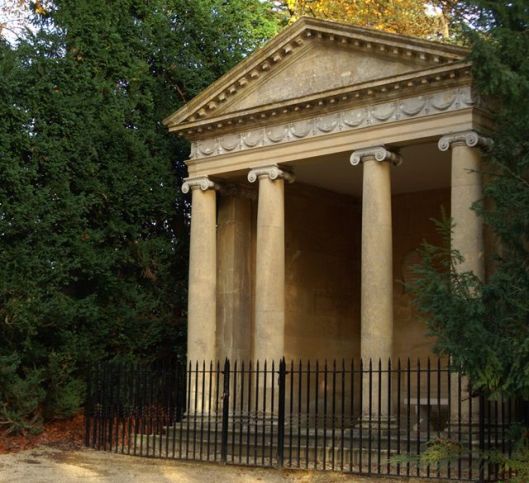
The palace is magnificent—-my wife, Elizabeth, and I have visited—but it’s the estate that’s even grounder, with the grounds so beautifully and carefully designed, yet with a seeming artlessness that gives hillsides and lakes and copses of trees the appearance of happy accidents, and all of it was executed by my favorite landscape architect, Capability Brown, a man I used to explain the Enlightenment, in visual language, during nineteen years of teaching history to the high-school sophomores I loved so much. Churchill proposed to Clementine in a neoclassic Greek temple recessed in Capability Brown’s shade, cast by trees that he hadn’t planted yet. He had faith that the shade would be there when it was required. That kind of faith leads to the imperfection we call “democracy.”

35c7d2db858b3e8508a972a8a2b26eb3

Temple of Diana, Blenheim.

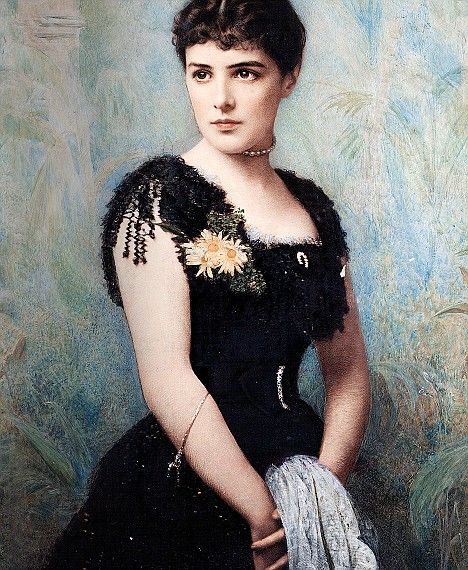
The two men, Churchill and Trump, have much in common. Both had emotional lives that were stunted by neglectful mothers. Winston’s Jennie, a Philadelphian, resented his very birth, in a cloakroom, because his arrival made her miss a ball, and in revenge, she practiced premeditated and cruel neglect on her son until she discovered her love for him, finally, in the moment that he began winning elections.

42e59814d686b010923438d9d67d9561

Jennie Jerome Churchill

Trump’s mother grew ill when he was a toddler and she was so consumed with staying alive that he was, for several years, a virtual orphan.

As a result, both men grew up terribly insecure, petulant, self-centered, childish and given to bouts of anger that were frequently cruel. Both men were impatient with arcane bureaucracies and took cudgels to them, beating shortcuts through the red tape that often proved disastrous. The disasters resulted from their certainty that they were smarter than every expert summoned to counsel them.

Both men were racists: Churchill witnessed with satisfaction the salutary effect the Maxim Gun had on North Africans and he loathed Gandhi; Trump delights in making orphans by the hundreds, as long as they’re brown.

Both held forth interminably at social gatherings, impatient with the contributions of their guests because they interrupted the flow of their own brilliant monologues.

But only one of them was brilliant, and brilliant, most of all, in our language.

Only one of them was a statesman.

Only one of them instructed, elevated and inspired his people.

Only one of them studied history, understood it, after his fashion, and appreciated the depth of history’s lessons and used them to shape his decisions.

Only one of them was a patriot.

BN-SP287_bkrvch_P_20170322165127

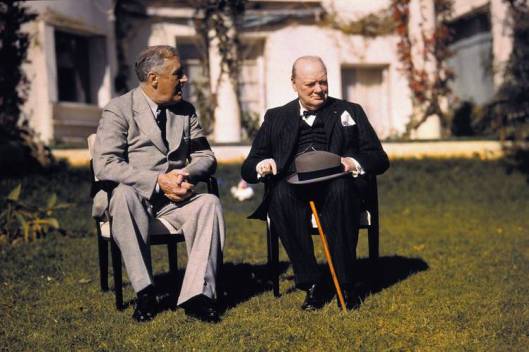
FDR and Churchill

Only one of them was a man so profoundly gifted, and so determined to use his gifts, that he was able to transcend his deepest and most grievous flaws. For Churchill, the most crippling flaw was the depression, the trait he shared with the one man he admired more than the Duke of Marlborough, and that was Lincoln–the Black Dog, he called it–that he fought, admittedly and in part with generous doses of brandy and champagne, but he found his steel in fighting it, in pushing it aside in every waking hour of his life.

Trump finds his steel–his is no stronger than tin– in insults and in cruelty. There is none of Churchill’s spine in the man. There is no man there at all.

Yet Trump was at Churchill’s ancestral home today. In keeping him away from London, in evoking Churchill’s birthplace, Her Majesty’s Government may have reminded us, deliberately or not, of Trump’s tragic smallness.

180713101211-10-trump-baby-0713-large-169

Trump is Shakespearean, but only in a minor key: He is Rosencrantz, or Guildenstern, or perhaps, in his best moments, Polonius. He is a character best dismissed offstage, behind an arras, where he can’t harm the plot.

But the same was said, and I’ve read the journalists who said it, about Mussolini and Hitler. They were, seemingly,  petit-bourgeois clowns, nearly as crude as Trump, yet they dragged the world down with them, and they made orphans from the Atlantic to the Urals. And then, having dispatched the parents, Hitler burned the orphans.

Where is our Churchill?  Where is the statesman with the talent to remind us all of our own greatness? That’s the faith, naive as it might seem, that Churchill kept and that Americans as diverse as Abigail Adams, Thomas Jefferson, Walt Whitman, Abraham Lincoln, Willa Cather, Dorothea Lange, Frank Capra, and Martin Luther King Jr. kept. It’s a faith I try so hard to summon in the little books I write. one that’s been validated in places as far away as Antietam and Cold Harbor, Papua New Guinea and Iwo Jima, Normandy and Berchtesgaden.

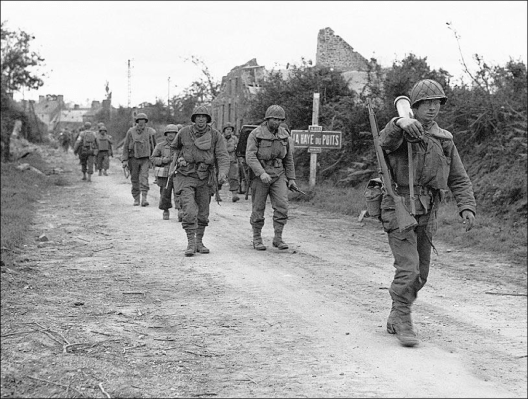
Le Haye de Puits

Exhausted 79th Division soldiers leave Le Haye du Puits, in Normandy, July 1944. One of them, local farmworker Domingo Martinez, was killed during the assault on this crossroads town.

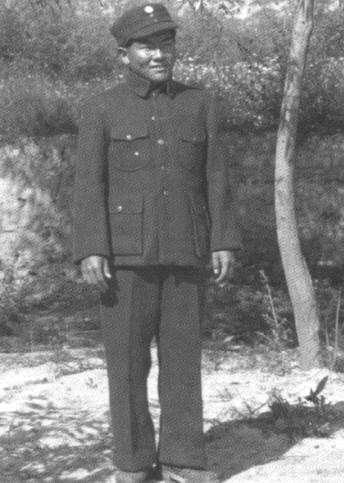
It’s a faith that was lived by Army nurses who whispered gently and urgently into soldiers’ ears to keep them alive. It was a faith lived by the big Missouri farm boy, a B-17 waist gunner, who got his comrades out in their parachutes but went down with his bomber. It’s a faith that was  lived by the Japanese-American teenager, sent from Arroyo Grande to a desert concentration camp, who answered this insult by becoming an Army intelligence officer serving his country in the mountains of China: he won a Bronze Star, he won a Congressonal Medal of Freedom and he never came back to Arroyo Grande again. Until he died. He told his son, a Texan, to bring  his ashes home to Arroyo Grande, seventy years after the buses had taken him and his family and his friends away.

image107

Arroyo Grande intelligence officer George Nakamura, dressed in a Chinese uniform, 1945. Nakamura disguised himself as a Chinese peasant to rescue an American flier behind Japanese lines and won both a Bronze Star and a battlefield promotion to lieutenant. He was twenty years old.

So where is our Churchill? Today reminded me that we don’t need him. We need ourselves. We need to remember who were are. There was Churchill’s genius: it was all in the reminding.

9398666cf10f38f581d4ccb4848ebade

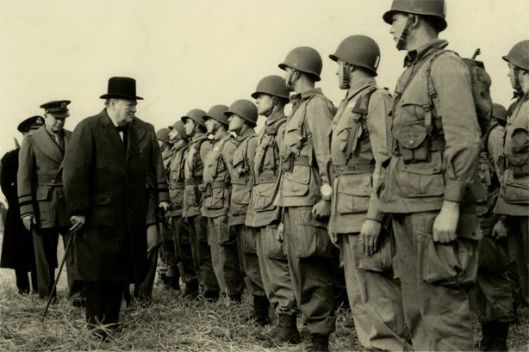
Churchill, with Ike, inspecting the newly-arrived GI’s of the 101st Airborne.

Subscribe

  • Entries (RSS)
  • Comments (RSS)

Archives

  • January 2026
  • December 2025
  • November 2025
  • October 2025
  • September 2025
  • August 2025
  • July 2025
  • June 2025
  • May 2025
  • April 2025
  • March 2025
  • February 2025
  • January 2025
  • December 2024
  • November 2024
  • October 2024
  • September 2024
  • August 2024
  • July 2024
  • June 2024
  • May 2024
  • April 2024
  • March 2024
  • February 2024
  • January 2024
  • December 2023
  • November 2023
  • October 2023
  • September 2023
  • August 2023
  • July 2023
  • June 2023
  • May 2023
  • April 2023
  • March 2023
  • February 2023
  • January 2023
  • December 2022
  • November 2022
  • October 2022
  • September 2022
  • August 2022
  • May 2022
  • April 2022
  • March 2022
  • February 2022
  • January 2022
  • December 2021
  • November 2021
  • October 2021
  • September 2021
  • August 2021
  • July 2021
  • June 2021
  • April 2021
  • March 2021
  • February 2021
  • January 2021
  • December 2020
  • November 2020
  • August 2020
  • July 2020
  • June 2020
  • May 2020
  • April 2020
  • January 2020
  • December 2019
  • November 2019
  • October 2019
  • September 2019
  • August 2019
  • May 2019
  • April 2019
  • March 2019
  • February 2019
  • January 2019
  • December 2018
  • November 2018
  • October 2018
  • September 2018
  • July 2018
  • June 2018
  • May 2018
  • April 2018
  • March 2018
  • February 2018
  • January 2018
  • December 2017
  • November 2017
  • October 2017
  • April 2017
  • March 2017
  • December 2016
  • November 2016
  • October 2016
  • September 2016
  • August 2016
  • July 2016
  • June 2016
  • April 2016
  • March 2016
  • February 2016
  • January 2016
  • December 2015
  • November 2015
  • October 2015
  • September 2015
  • August 2015
  • July 2015
  • June 2015
  • May 2015
  • April 2015
  • March 2015
  • February 2015
  • January 2015
  • December 2014
  • November 2014
  • September 2014
  • August 2014
  • July 2014

Categories

  • American History
  • Arroyo Grande
  • California history
  • Family history
  • Film and Popular Culture
  • History
  • News
  • Personal memoirs
  • Teaching
  • The Great Depression
  • trump
  • Uncategorized
  • World War II
  • Writing

Meta

  • Create account
  • Log in

Blog at WordPress.com.

  • Subscribe Subscribed
    • A Work in Progress
    • Join 68 other subscribers
    • Already have a WordPress.com account? Log in now.
    • A Work in Progress
    • Subscribe Subscribed
    • Sign up
    • Log in
    • Report this content
    • View site in Reader
    • Manage subscriptions
    • Collapse this bar
 

Loading Comments...