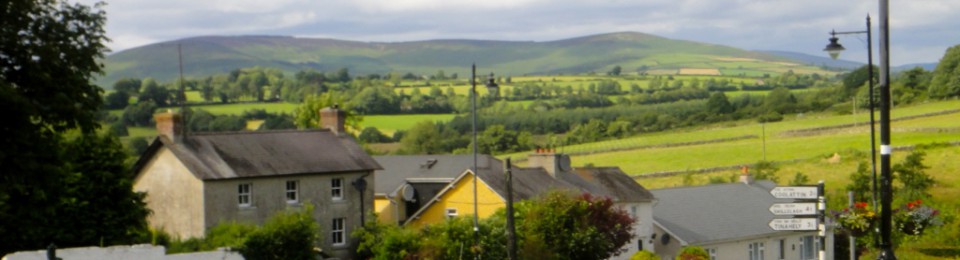
I’ve friends in places like Edinburgh, Assisi and Dublin right now, so it’s kind of stoking that bittersweet urge to travel.
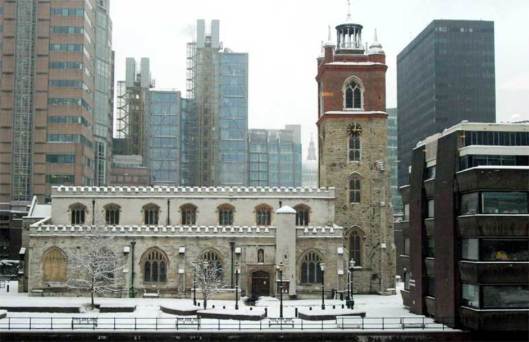
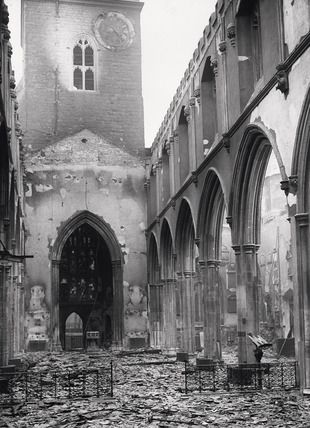
Here’s one place I’d like to see–oddly enough, because it’s such an anomaly, this little 14th-century church, set as it is in a part of modern London that’s all steel and glass and deeply unattractive. But it’s homely, too, with an afterthought of a cupola, built without much thought to its place in architectural history.
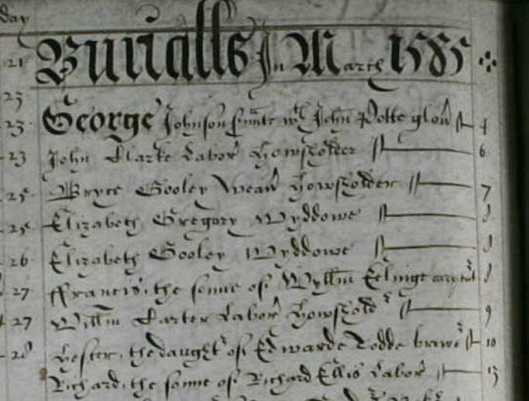
St. Giles-without-Cripplegate, a name that befuddles etymologists, is where my ninth great-grandmother Lady Elizabeth Gelsthorpe Gregory, was buried in 1585. Her husband, Sir John, a mere comma in English genealogy, was from Nottinghamshire, not far from where they found the little cache of bones that belonged to Richard III, with the deep puncture wound, inflicted post-mortem at Bosworth Field, in the royal rear end.
But that was far before Lady Elizabeth’s time.
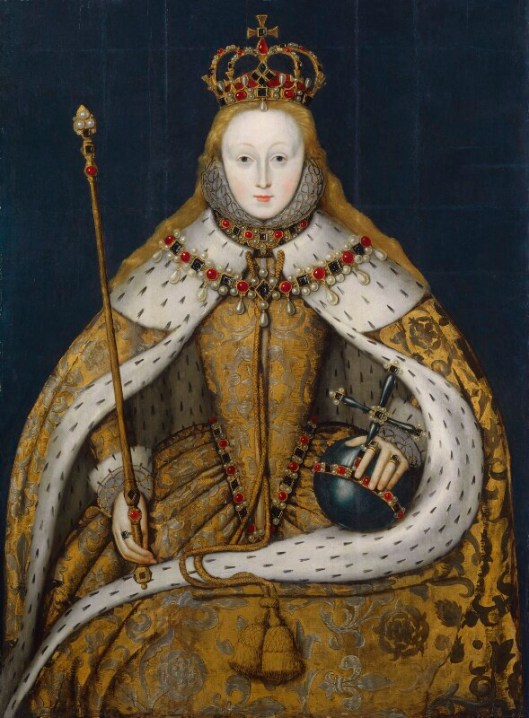
Nope. Her time belonged to this Elizabeth, the granddaughter of Henry VII, the victor at Bosworth. This is her coronation portrait.
What an exciting–and fearful–time to be alive for Lady Elizabeth Gelsthorpe Gregory. The year she was born, Henry VIII declared himself the head of the English Church. When she was five, Thomas More was beheaded.
A girl growing up faced a future nearly as bleak as More’s. (More’s dutiful daughter, Meg, fetched his head–it’d been parboiled to more or less preserve it– down from its spike atop London Bridge, wrapped in it soft linen, and reunited it with the rest of her father.) She was a rarity, Meg More, because she could read and write and speak fluent Latin and passable Greek; even a daughter from a prominent family like the Gelsthorpes would have had just enough learning, including music lessons, to make her marriageable with not a lesson beyond.
At puberty, Lady Elizabeth would’ve been enshrouded in clothing almost as barbaric as the not-yet-invented whalebone corset: linen petticoat surmounted by a stiffened bodice, or kirtle, that mashed the breasts and stifled breathing and then, over that, the gown–for noblewomen, made of dense and elaborate fabric (velvet, or even cloth of gold for prospective noble marriages); the gown would’ve been nearly as heavy as the chains sported by Marley’s ghost. English or French hoods–the latter, Anne Boleyn’s innovation–covered most of a woman’s head. Lady Elizabeth, like most Tudor women, grew up in a cocoon.
She didn’t take long to grow up. She was fifteen when she was married, in the middle of the reign of Henry’s successor Edward VI, the little prig. It appears that she went to the altar pregnant with what would turn out to be a baby boy. This was quite common to the times, a story the parish registers tell us from all the weddings followed scant months later by all the christenings. (Anne Boleyn was heavily and obviously pregnant, like a lower-case letter “b”– or “d,” depending on which way she was facing–when she married Henry VIII.)
Meanwhile, Lady Elizabeth lost that son two years after Mary Tudor became queen. She was twenty-five. Her son was named Thomas; he had just turned eleven. She would would lose another son three years before Elizabeth acceded and her husband three years afterward. A third son would survive her by just two years.
It was a heartbreaking life, made moreso because it was a time bereft of spiritual sureness, what with the Bible whipsawing back and forth between Latin and English and smaller armadas of bishops–High Church, Low Church–taking their turns as kindling, burned at the stake. (More traditional English believers were so incensed by the Bible translator Wycliffe that burned him at the stake forty years after he’d died.)
So she must have spent much of her life holding her breath and mumbling her prayers, the way the Lollards did. Something in you wants to comfort her, which will have to wait, of course.
Here she is in the 1585 parish register:
Three years later the Armada would be blown clear ’round England to wreck on rocks far to the north, off Scotland and Ireland. I wish my Lady Elizabeth Gelsthorpe Gregory could’ve lived to have heard news like that. We Gregorys have a fondness for underdogs. This was the speech Queen Elizabeth delivered to her troops awaiting the Armada and its army, beautifully interpreted by the actress Anne-Marie Duff in the BBC series The Virgin Queen.
Thirty-five years after Lady Elizabeth’s death, Oliver Cromwell would be married in St. Giles.
Eighty-nine years after, John Milton would be buried here.
(She would’ve been incensed, I bet, when, In 1940, St. Giles was set afire in the Blitz.)
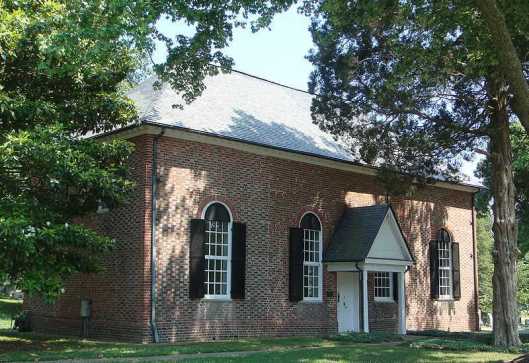
And about fifty years later, her great-grandson, John Gregory, an immigrant from Nottinghamshire, would be a member of the vestry in this little church, St. Mary’s Whitechapel, in Lancaster County, Virginia, the parish of Washington’s mother. (Another Gregory would marry Washington’s Aunt Mildred, a name that has persisted for generations in my family, despite its homeliness, and cede Mt. Vernon to the future president’s family. Do not take real-estate advice from anybody named “Gregory.”)
We had arrived. More or less. Mostly less. Here’s why:
Washington County, Kentucky, of course, was named for the great man. And in the 1850 Kentucky census, here are the slaves owned by Godfrey Gregory, my second great-grandfather. He was, by Kentucky standards, a wealthy man. The slaves have no names in the census, a convenience that made them emotionally as well as legally disposable.
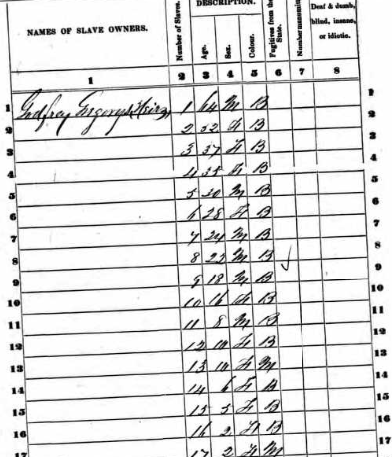
I have no way, of course, of knowing this would be so, but I like to think Lady Elizabeth Gregory would have boxed Godfrey Gregory’s ears. Life is cruel enough. She would’ve had little patience in the practiced cruelty and the hypocrisy that were slavery’s bedrock.
 A Work in Progress