
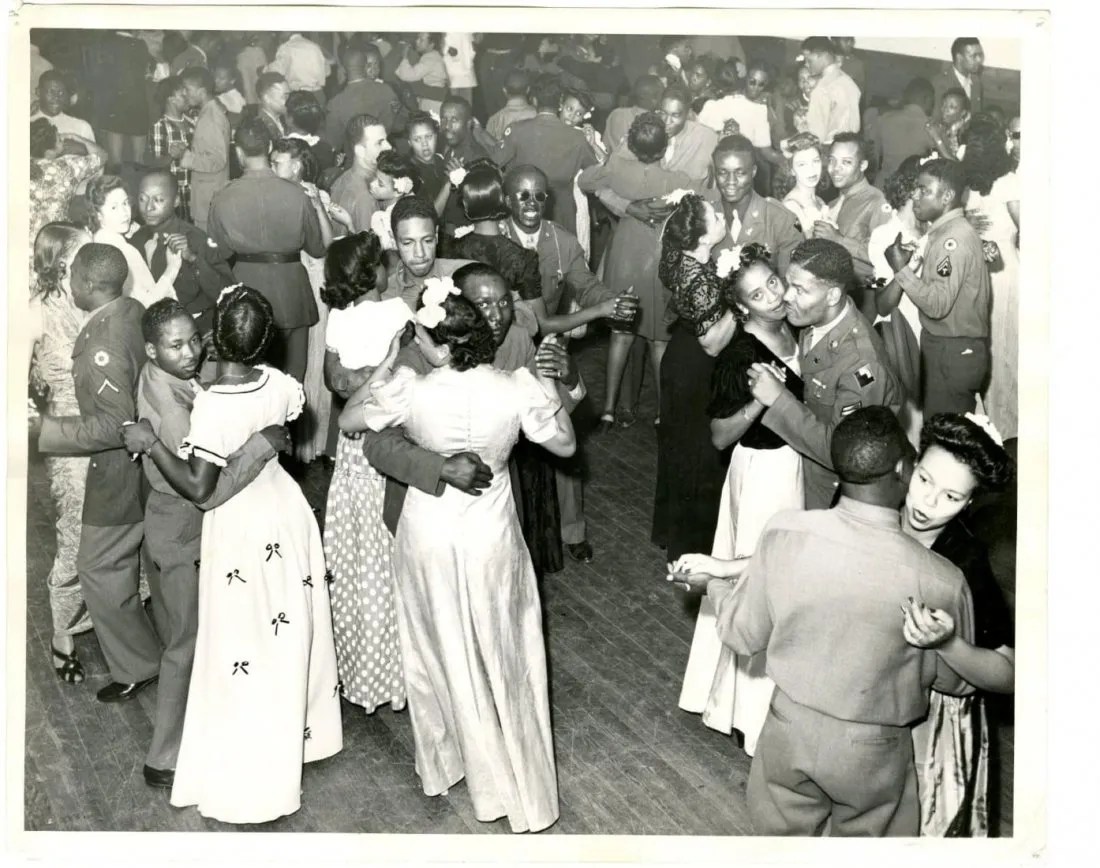
This is one of my favorite photos from the Central Coast Aviators in World War II book, and I got a little more insight into it today. These young women were more than likely USO guests of the Army Air Forces cadets at Hancock Field, Santa Maria, the site of today’s Hancock College. I see at least two girls–one of them looks a little like Betty Grable–with whom I would’ve fallen in love more or less instantly.
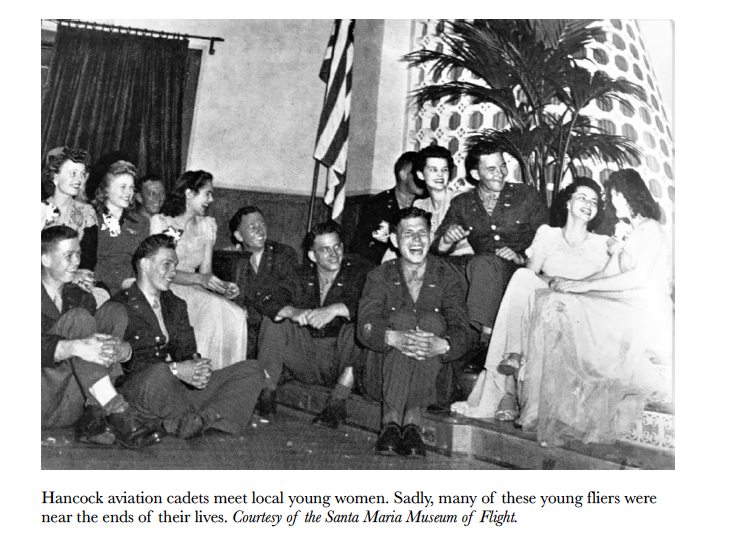
The poignant part is in the caption. For every American infantryman killed in World War II, three were wounded.
For every American airman wounded in World War II, three were killed.
I was giving a talk today in Grover Beach on Central Coast Aviators to the volunteers at the Five Cities Food Bank, who, by the way, lay out a lunch to rival any of my grandmother’s, and I noticed, during the talk, an older woman looking at me narrowly. I thought I was bombing, so I didn’t look at her for fear of breaking out in the flop sweat so familiar to standup comedians.
I was wrong.
She came up to me after the talk and told me that she’d lived in Los Angeles during the War, and she was part of a USO visit to Camp Cooke, today’s Vandenberg Space Force base. In her time, in World War II, it had been a US Army armored training base, and she was one of the young women, densely chaperoned and caravaned north in Greyhound buses, who would visit the GIs, training to become tank crewmen, courtesy of the USO.
“We had dinner with them, and we went out to a dance, and then we went to church with them. And they were so happy to see us–I had a marvelous time!” Then she bought a book.
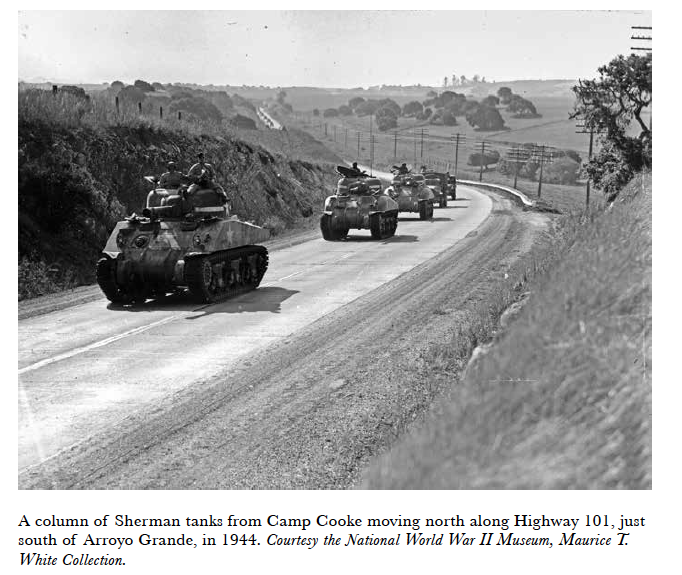
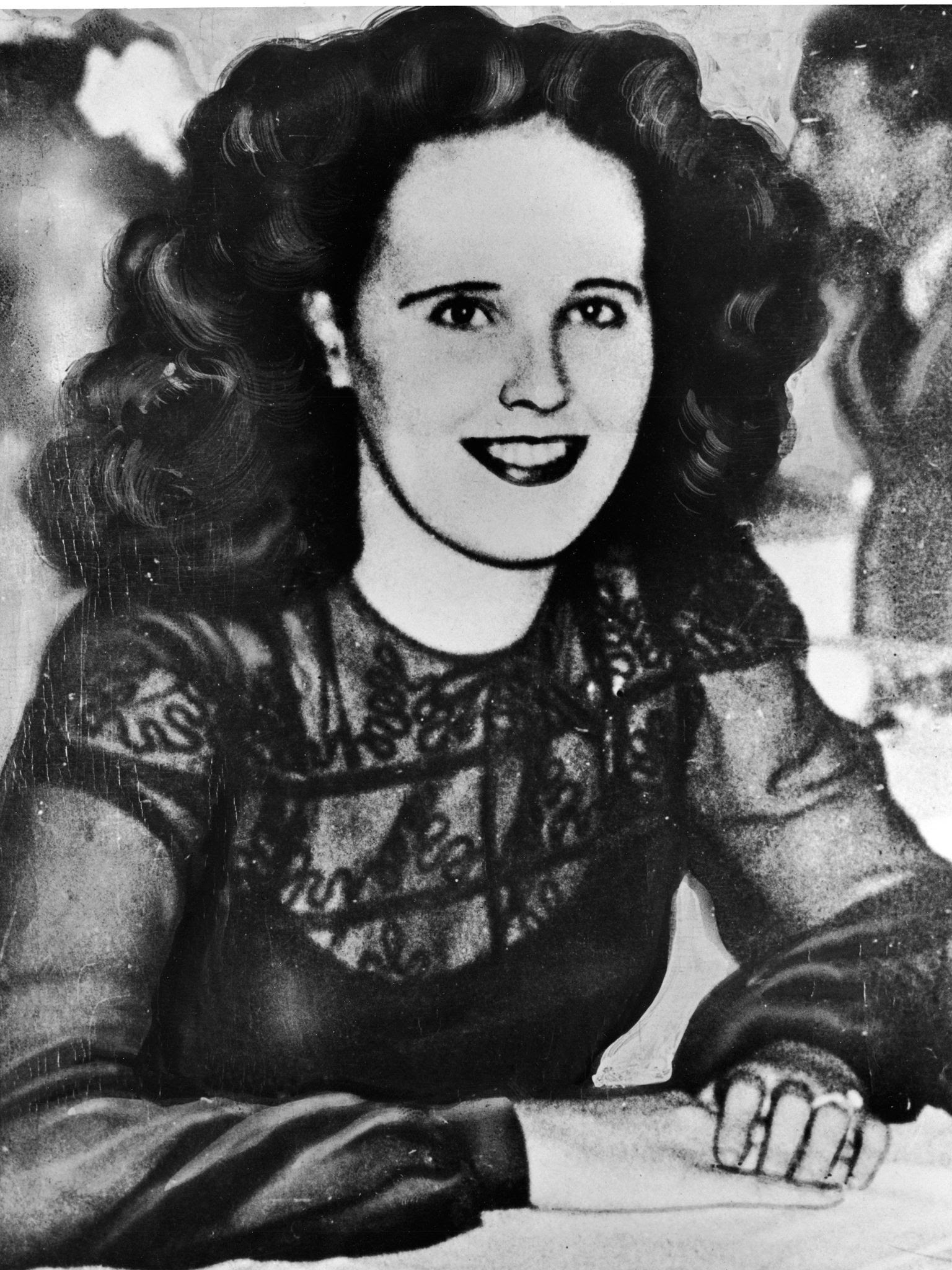
Before you think I’ve gone all soft in the head, I’m well aware that wartime was not an Andy Hardy movie. Illegitimacy skyrocketed, and so did juvenile delinquency. And one of the civilian workers at Camp Cooke–voted a “Camp Cooke Cutie” in the camp newspaper in 1944–was Elizabeth Short (below), the “Black Dahlia” murder victim three years later, which proves, sadly, that a tradition of trivializing women, and of brutalizing them, goes deep in American culture.
This woman’s experience was, thank God, vastly different, yet it was the same one I’d heard from a veteran Santa Maria Times reporter, Karen White, who once told me that her big sister went to USO dances at Camp San Luis Obispo. She, too had a marvelous time.
(As a high school history teacher, one of the best proms I ever chaperoned, when my wife and I taught at Mission Prep in San Luis Obispo, was at the Camp SLO Officers’ Club. The place is alive with the presence of officers and officers’ wives or fiancés from back home—they would’ve endured unbelievably uncomfortable wartime train trips—come all the way to California, from a long, long time ago. You can sense them there, sense the vitality of young lives interrupted. I remember feeling somehow comforted by the closeness of them. I’ve heard others talk about the same feelings I had.)
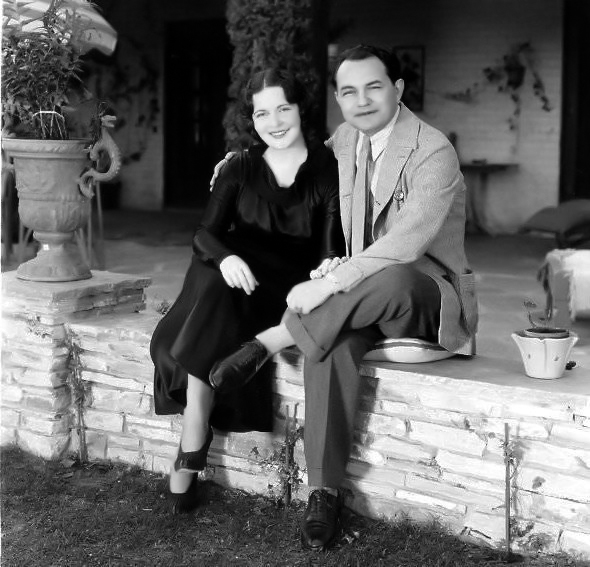
The graduation dances for Navy fliers who’d completed preflight training at Cal Poly—3,000 did during the war, while the civilian student population fell to eighty–had a special touch because the chaperone who brought the young women to Poly was none other than Mrs. Edward G. Robinson. It made sense, Edward G. had been a Navy man in the First World War, long before he became Scarface, long before Fred McMurray poured out his lifeblood and his murder confession to Edward G. in Double Indemnity.
So I was gifted today with story of a woman who went to a dance with young soldiers seventy-five years ago. For just the briefest of moments, she was, in my imagination and in her memory, a teenager again.
What a blessing.
 A Work in Progress