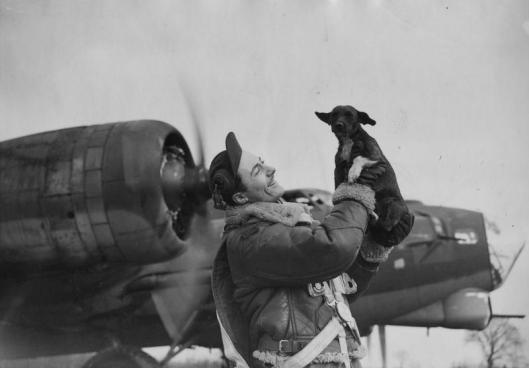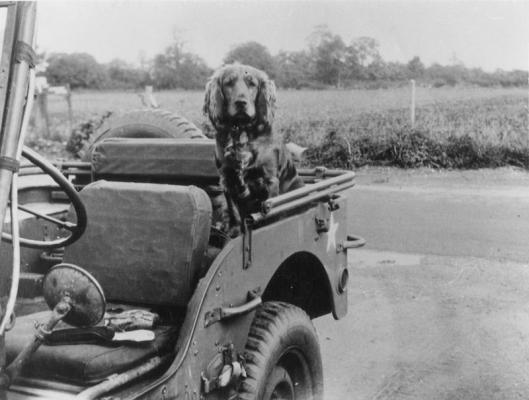
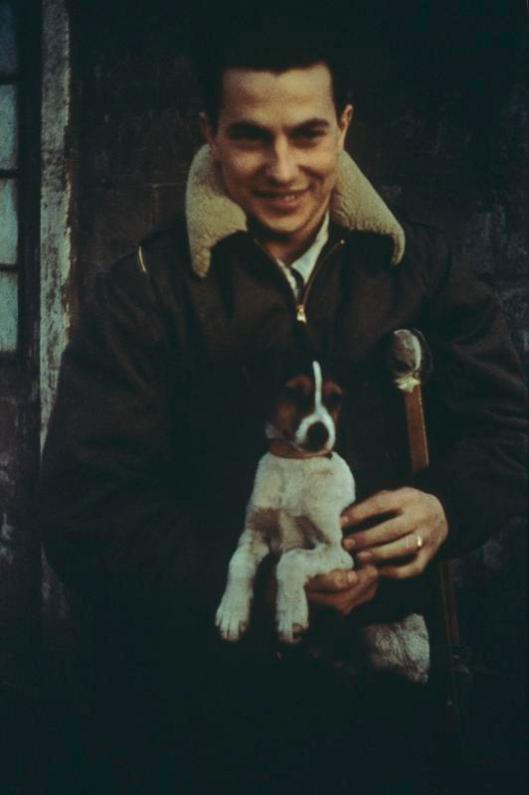
One of the most wonderful discoveries I made while researching the “Aviators” book was learning how much young American fliers loved their dogs—in the records of the American Air Museum in Britain, the best resource for the American Eighth Air Force, lovingly and meticulously kept by our historian friends across the sea, a dog’s nationality is officially listed as “British.”
I was reminded, too, of how young these men were–the average age of a B-17 or B-24 pilot was twenty-two. There were waist gunners as young as sixteen.
When you are that young, you have reason to live.
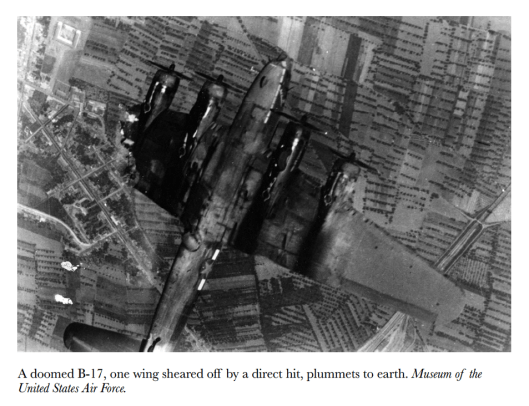
You want to get home. After twelve or fourteen hours in the air, where breathing and urinating and speaking, in unpressurized cabins at 25,000 feet where the temperature is twenty degrees below zero, are all encumbered. The discomfort is broken up by moments of unimaginable terror when you watch your friends’ airplanes break up in the air or you stop breathing to listen to anti-aircraft shrapnel—called “flak,” from a German word too serpentine to pronounce—hit your own plane. Flak sounds like dense hail on a tin roof. Some of it will sever throttle cables or hydraulic lines, or, far worse, some of it will kill friends even closer than the ones you watch falling so slowly to earth. There is nothing you can do about flak.
You want it to be over. You want to get home to the one friend who will still be there for you.
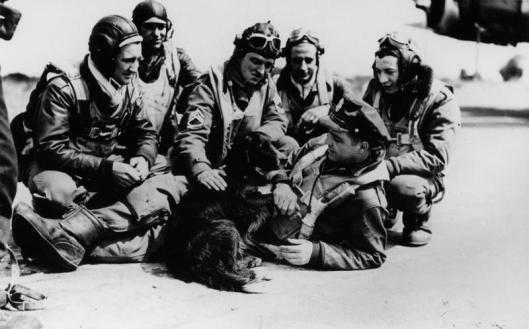
The historian for one B-17 group, the 92nd, provided me with my favorite find: She told me that the ground crews remembered that an airman’s dog would become excited and happy at a mission’s end at the moment when the animal recognized the distinctive pitch of his or her master’s B-17 engines.
No greater love.