• About
  • The Germans

A Work in Progress

A Work in Progress

Monthly Archives: December 2018

Billy’s Funeral

24 Monday Dec 2018

Posted by ag1970 in Uncategorized

≈ Leave a comment

1222181029a_Film2

My brother-in-law’s funeral was awkward and wonderful. “Awkward” because Gregorys are both tightly-bond and distant–we don’t get together often– given childhoods marked by confusion, by alcohol and an unerring moral compass, by violence and inspired moments of love, by the imperative of survival and the depth of our pride in our parents, who remain the most singular and brilliant human beings I’ve ever known.

But we come together when we need to. We don’t talk much about what we feel for each other because proximity alone is so powerful. The pride we had in our parents is now manifest in the way we feel about each other: We are alive. We made it.

We didn’t know most of the people at Billy’s ceremony well, but the ones we remembered—sons and grandsons, soft-voiced and boulder-strong, beautiful daughters and granddaughters, blondes—came up to us without hesitating and embraced us.

These were the children my sister, Roberta, helped to raise as if they were her own.

All of them, boys and girls, children and grandchildren, no matter how hard the lives they’ve lived, are marked by a kind of bedrock integrity that Billy left for them, as if it were as genetic as brown eyes.
 

1131


You can’t help but love them.

The ones we didn’t remember weren’t relatives at all: they were cowboys Billy had hired –as skilled with a welding torch (the water-pipes on the ranch freeze in cold Bakersfield winters) as they are with gentling horses–or homeless veterans he’d taken in and so saved their lives.  There were at least sixty stories like his, one of the veterans told me.
 

1222181056_Film2


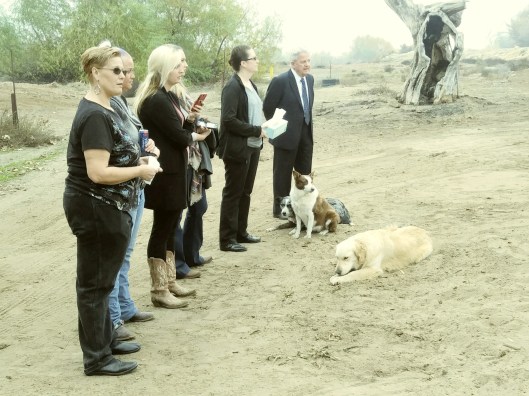
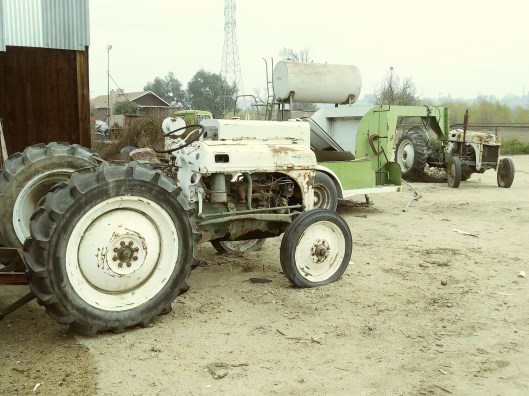
As is always the case, the humans weren’t the only ones present. Several dogs trotted up to the planting with the humans and looked for solace there, too, rubbing up against the friendly guests and nuzzling the ones who needed comfort. A pony whinnied in the distance without Billy there to see if he might be colicky. No fewer than four vintage Ford garden tractors, in various stages of repair or mortality, were a reminder of the briefness of life.

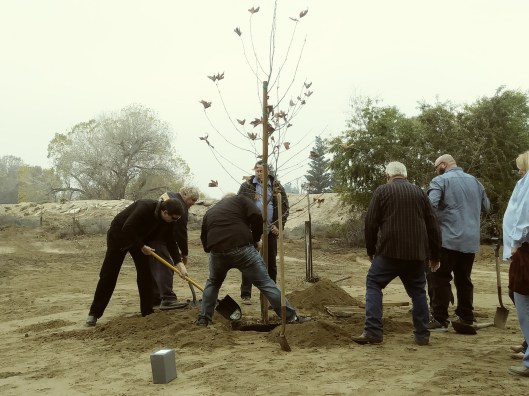
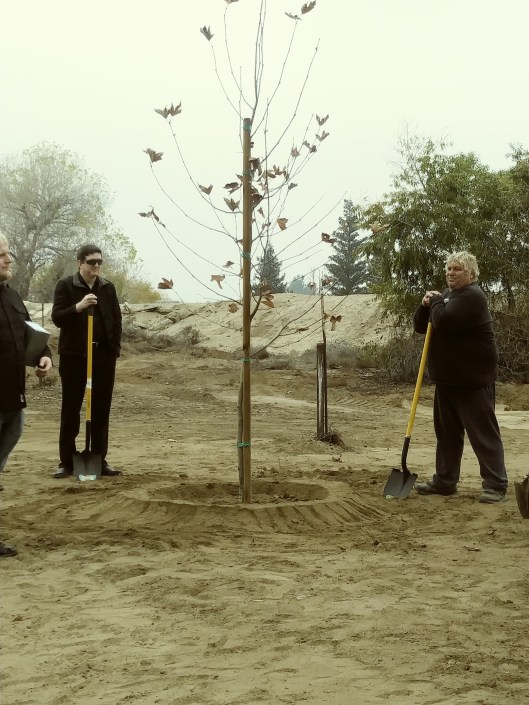
Bill’s girls talked about Dad and Grandpa (he was plain-spoken and cranky, soft-hearted and fiercely protective) the boys talked a little too, some of them in elongated Ozark Plateau vowels that I recognize almost instantly, once the warmth of my heart has relayed the sound to my brain, and then they took up shovels and mixed Billy’s ashes in the roots of a sycamore they were planting in a riverbank along the Kern, which straddles the ranch.

Given the now-giant sycamore planted nearby for Billy’s son, killed years ago in a tule-fog car wreck, this tree will be strong, like that boy was, and it’s on a little rise where Billy can look over the 250 horses he cared for so much.

My big sister put a little packet in the roots and I didn’t for a minute think of asking what that was about. My big sister was always so big to me and in the funeral’s aftermath I realized how small she is (so was my mother, another giant and powerful influence on my life.)
 

1127

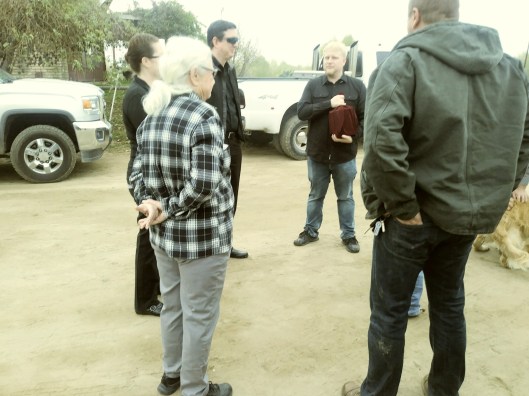
My big sister is in the plaid shirt.


What her daughters and granddaughters did for my sister was perfect, too.

Roberta has a little girl, a border collie puppy not yet weaned from her own mother, coming to her late Christmas, and that’s is just what she wanted: Someone to take care of, the way she took care of us when our Mom died, the way she took care of Billy, the way Billy will always take care of her.

Once the boys had the tree seated and upright, secure and settled, they planed a pretty little well around it with the flats of their shovel blades and the soles of their boots. My brother-in-law’s funeral was awkward and wonderful, and in every way it was perfect.
 

1222181034_Film2

My weakness

21 Friday Dec 2018

Posted by ag1970 in Uncategorized

≈ Leave a comment


e187545c7daf36834c1d1c62c6819356

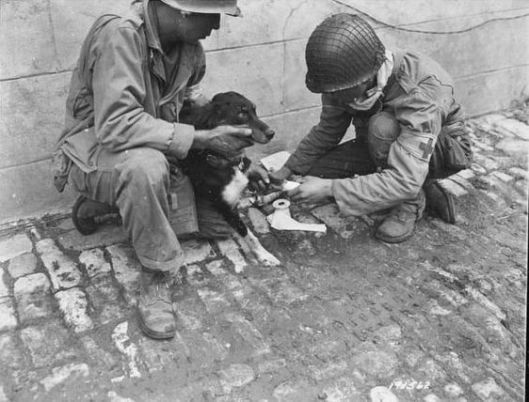
A G.I. and a medic from the First Infantry Division treat a dog wounded by shrapnel on D-Day, 1944.

Here is the deal: I understand this photo because it tells me why, other than the accident of birth, I am an American. The compassion of a medic with time enough to treat a dog (he would lose that luxury in the next few weeks, in the hedgerows of Normandy. Believe me.) is so obvious and so sweet that I can feel the moment seventy-five years later. Me feeling moments like this has been a lifelong curse. Sort of.

Even when I was a little boy, you could walk me into an abandoned house, and I could smell the meals that had been cooked there, flinch, even momentarily, at the family arguments that had buried themselves beneath peeling wallpaper and feel inchoate grief at the lives that had ended in bedrooms where the floorboards were now exposed.

When I visited Anne Frank’s home in Amsterdam with my students many years ago, what I could feel there–the palpable and powerful presence of the Frank family and the moment of terror at their betrayal—struck me into a silence that lasted a long time afterward.

I could never, ever understand why so many find history so boring.

Elizabeth and I took our boys, when they were little boys, to Gettysburg and we didn’t need a battlefield guide. I knew exactly where we were and what had happened there–from the bulldog resistance of Buford’s cavalry and their Sharps carbines on July 1 to the 20th Maine’s counterattack on Little Round Top on July 2–one of the most decisive moments in American history–to the marvel of Pickett’s division shaking out its columns into butternut lines of advance—the Union soldiers up on Cemetery Ridge marveled at the precision of their drill— across farm fields on July 3. Somehow, I saw all of these events as they happened and, thank God, was able to remember them for my sons.

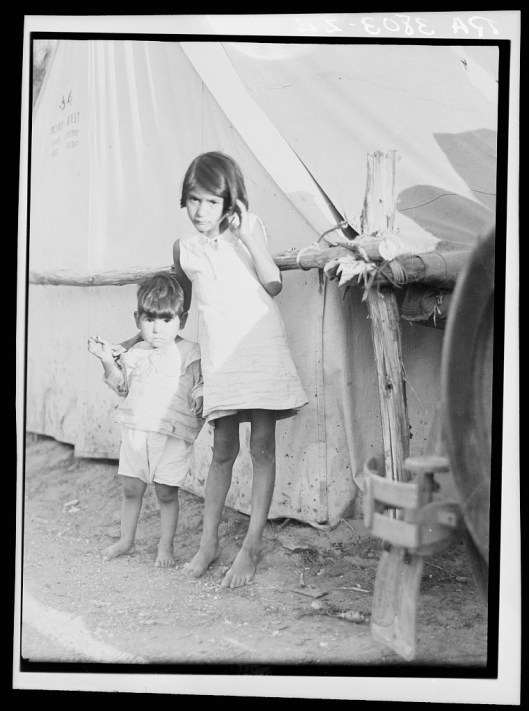
I can’t tell you exactly why I feel a hard knot in my stomach when I see a Dorothea Lange photo of a Mexican migrant child in a Nipomo migrant camp. But I feel it just the same. Her knees are slightly knocked: That’s a symptom of rickets, a nutritional disease.

8b27537v


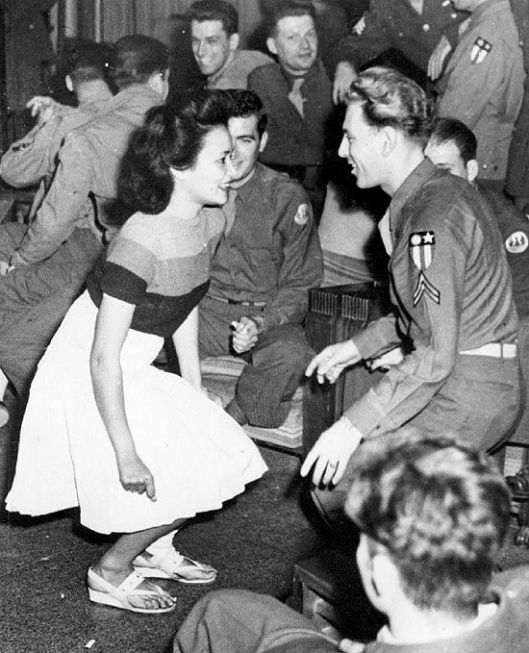
I feel a flood of adrenaline that speeds my heartbeat when I see this photo, taken inside a USO in 1944, of a G.I. from Brooklyn jitterbugging with a young Japanese-American woman from Spokane. She is lovely. They are happy.


49f55cacd6dc26ec2be3a36ce4b471ad.jpg


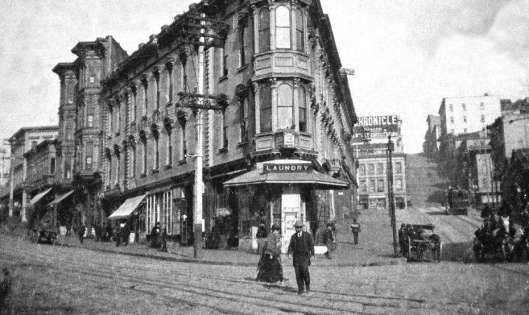
I can understand a narrow walkup in Boyle Heights in Los Angeles and smell fresh-baked tortillas from 1938; understand a row Victorian in North Beach in San Francisco and hear the pop of squid on the fryer and see the richness of red marinara bubbling gently on a burner nearby. That meal was eaten by hungry fishermen in 1916.


monaco1


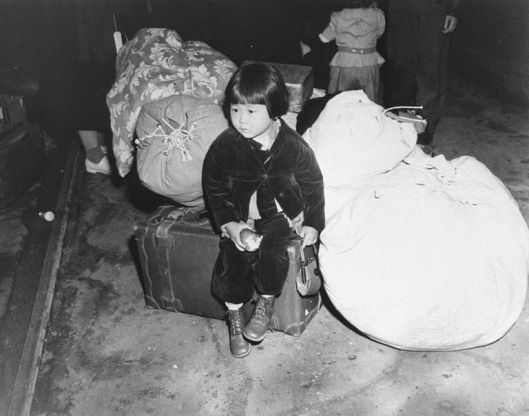
I can still see the line of Greyhound buses aligned in a semicircle in the high-school parking lot on Crown Hill on Arroyo Grande and the stacks of heirloom luggage stacked alongside as our Japanese-American neighbors say goodbye, in many cases with tearful hugs, to their neighbors as they prepare to board for the internment camps in April 1942.


gallery-1480356870-girl-on-suitcase


Wherever I go, there are field-workers working crops with a short-hoe—now outlawed in California—who have been dead for decades. There are lovely teenaged girls in saddle-shoes and bobby sox cradling their texts in the hallway of a high school that was demolished in 1961. There’s a P.E. coach full of masculine bluster, a trait that will serve him well as a football coach and as a leader of Marines, at least until the bluster bleeds out on the beach at Guam in 1944. There is the lifelong guilt of a mother whose toddler fell into the fireplace in 1904 while she was preparing pie crusts in the kitchen; not even Arroyo Grande’s venerable Doctor Clark could save her little girl. There is the incomparable moment in 1940 when a Swiss-Italian bride and groom turn proudly toward the congregation and walk down the nave of Mission San Luis Obispo with Mike the bell-ringer at work above them.

The problem is—and it’s a blessing, too, I guess—is that I can still hear the discordance of those bells, cast in Mexico in 1769. It’s the job of teachers to bring this sound, these smells, these sights, and these people, to life again. That is how you teach history.

Subscribe

  • Entries (RSS)
  • Comments (RSS)

Archives

  • January 2026
  • December 2025
  • November 2025
  • October 2025
  • September 2025
  • August 2025
  • July 2025
  • June 2025
  • May 2025
  • April 2025
  • March 2025
  • February 2025
  • January 2025
  • December 2024
  • November 2024
  • October 2024
  • September 2024
  • August 2024
  • July 2024
  • June 2024
  • May 2024
  • April 2024
  • March 2024
  • February 2024
  • January 2024
  • December 2023
  • November 2023
  • October 2023
  • September 2023
  • August 2023
  • July 2023
  • June 2023
  • May 2023
  • April 2023
  • March 2023
  • February 2023
  • January 2023
  • December 2022
  • November 2022
  • October 2022
  • September 2022
  • August 2022
  • May 2022
  • April 2022
  • March 2022
  • February 2022
  • January 2022
  • December 2021
  • November 2021
  • October 2021
  • September 2021
  • August 2021
  • July 2021
  • June 2021
  • April 2021
  • March 2021
  • February 2021
  • January 2021
  • December 2020
  • November 2020
  • August 2020
  • July 2020
  • June 2020
  • May 2020
  • April 2020
  • January 2020
  • December 2019
  • November 2019
  • October 2019
  • September 2019
  • August 2019
  • May 2019
  • April 2019
  • March 2019
  • February 2019
  • January 2019
  • December 2018
  • November 2018
  • October 2018
  • September 2018
  • July 2018
  • June 2018
  • May 2018
  • April 2018
  • March 2018
  • February 2018
  • January 2018
  • December 2017
  • November 2017
  • October 2017
  • April 2017
  • March 2017
  • December 2016
  • November 2016
  • October 2016
  • September 2016
  • August 2016
  • July 2016
  • June 2016
  • April 2016
  • March 2016
  • February 2016
  • January 2016
  • December 2015
  • November 2015
  • October 2015
  • September 2015
  • August 2015
  • July 2015
  • June 2015
  • May 2015
  • April 2015
  • March 2015
  • February 2015
  • January 2015
  • December 2014
  • November 2014
  • September 2014
  • August 2014
  • July 2014

Categories

  • American History
  • Arroyo Grande
  • California history
  • Family history
  • Film and Popular Culture
  • History
  • News
  • Personal memoirs
  • Teaching
  • The Great Depression
  • trump
  • Uncategorized
  • World War II
  • Writing

Meta

  • Create account
  • Log in

Blog at WordPress.com.

  • Subscribe Subscribed
    • A Work in Progress
    • Join 68 other subscribers
    • Already have a WordPress.com account? Log in now.
    • A Work in Progress
    • Subscribe Subscribed
    • Sign up
    • Log in
    • Report this content
    • View site in Reader
    • Manage subscriptions
    • Collapse this bar
 

Loading Comments...