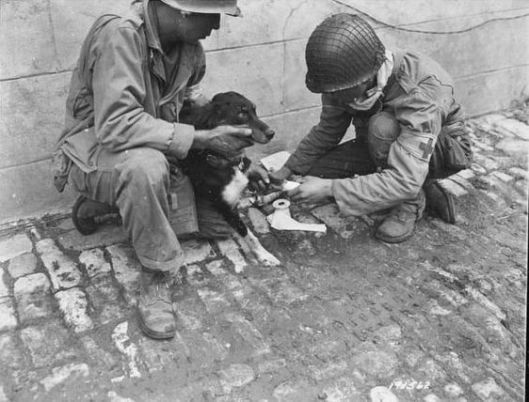
A G.I. and a medic from the First Infantry Division treat a dog wounded by shrapnel on D-Day, 1944.
Here is the deal: I understand this photo because it tells me why, other than the accident of birth, I am an American. The compassion of a medic with time enough to treat a dog (he would lose that luxury in the next few weeks, in the hedgerows of Normandy. Believe me.) is so obvious and so sweet that I can feel the moment seventy-five years later. Me feeling moments like this has been a lifelong curse. Sort of.
Even when I was a little boy, you could walk me into an abandoned house, and I could smell the meals that had been cooked there, flinch, even momentarily, at the family arguments that had buried themselves beneath peeling wallpaper and feel inchoate grief at the lives that had ended in bedrooms where the floorboards were now exposed.
When I visited Anne Frank’s home in Amsterdam with my students many years ago, what I could feel there–the palpable and powerful presence of the Frank family and the moment of terror at their betrayal—struck me into a silence that lasted a long time afterward.
I could never, ever understand why so many find history so boring.
Elizabeth and I took our boys, when they were little boys, to Gettysburg and we didn’t need a battlefield guide. I knew exactly where we were and what had happened there–from the bulldog resistance of Buford’s cavalry and their Sharps carbines on July 1 to the 20th Maine’s counterattack on Little Round Top on July 2–one of the most decisive moments in American history–to the marvel of Pickett’s division shaking out its columns into butternut lines of advance—the Union soldiers up on Cemetery Ridge marveled at the precision of their drill— across farm fields on July 3. Somehow, I saw all of these events as they happened and, thank God, was able to remember them for my sons.
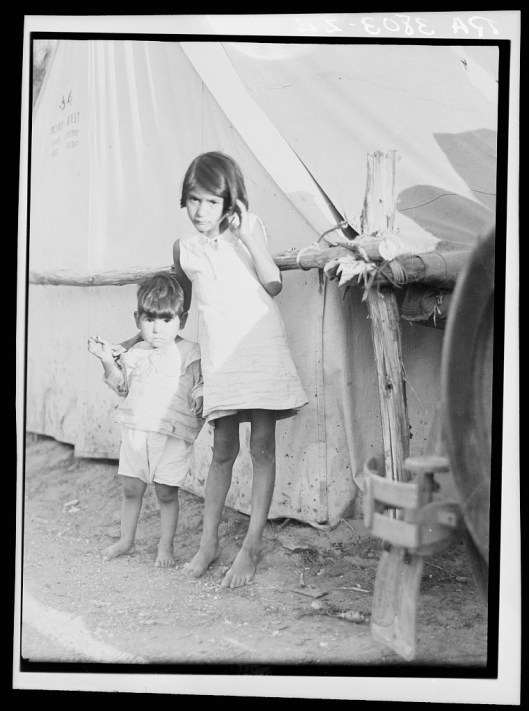
I can’t tell you exactly why I feel a hard knot in my stomach when I see a Dorothea Lange photo of a Mexican migrant child in a Nipomo migrant camp. But I feel it just the same. Her knees are slightly knocked: That’s a symptom of rickets, a nutritional disease.
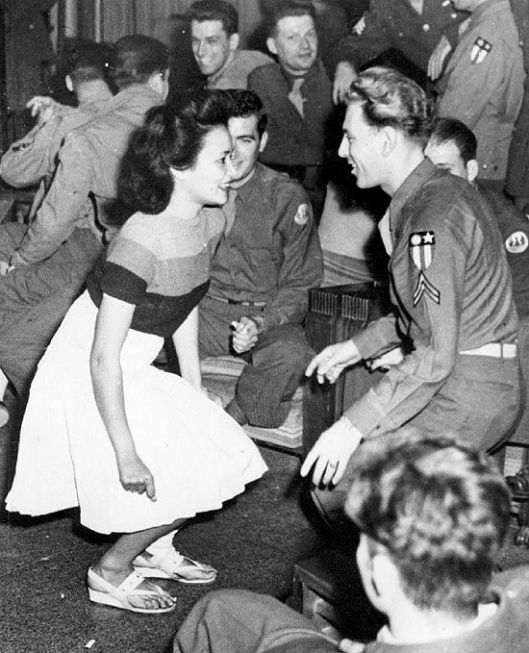
I feel a flood of adrenaline that speeds my heartbeat when I see this photo, taken inside a USO in 1944, of a G.I. from Brooklyn jitterbugging with a young Japanese-American woman from Spokane. She is lovely. They are happy.
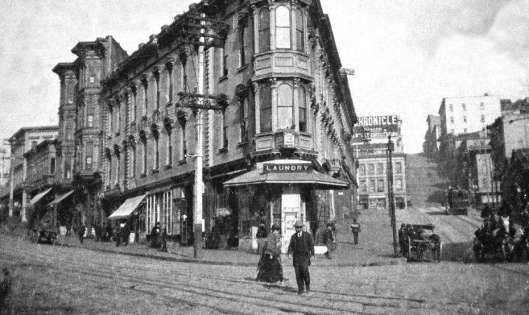
I can understand a narrow walkup in Boyle Heights in Los Angeles and smell fresh-baked tortillas from 1938; understand a row Victorian in North Beach in San Francisco and hear the pop of squid on the fryer and see the richness of red marinara bubbling gently on a burner nearby. That meal was eaten by hungry fishermen in 1916.
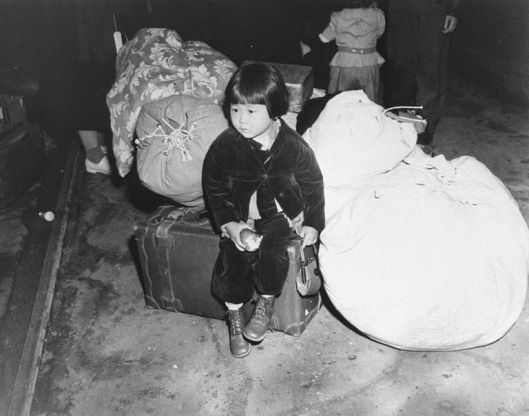
I can still see the line of Greyhound buses aligned in a semicircle in the high-school parking lot on Crown Hill on Arroyo Grande and the stacks of heirloom luggage stacked alongside as our Japanese-American neighbors say goodbye, in many cases with tearful hugs, to their neighbors as they prepare to board for the internment camps in April 1942.
Wherever I go, there are field-workers working crops with a short-hoe—now outlawed in California—who have been dead for decades. There are lovely teenaged girls in saddle-shoes and bobby sox cradling their texts in the hallway of a high school that was demolished in 1961. There’s a P.E. coach full of masculine bluster, a trait that will serve him well as a football coach and as a leader of Marines, at least until the bluster bleeds out on the beach at Guam in 1944. There is the lifelong guilt of a mother whose toddler fell into the fireplace in 1904 while she was preparing pie crusts in the kitchen; not even Arroyo Grande’s venerable Doctor Clark could save her little girl. There is the incomparable moment in 1940 when a Swiss-Italian bride and groom turn proudly toward the congregation and walk down the nave of Mission San Luis Obispo with Mike the bell-ringer at work above them.
The problem is—and it’s a blessing, too, I guess—is that I can still hear the discordance of those bells, cast in Mexico in 1769. It’s the job of teachers to bring this sound, these smells, these sights, and these people, to life again. That is how you teach history.
 A Work in Progress