Courtesy of Anne-Marie Duff as Elizabeth I, the Tilbury Speech, with the Armada approaching in August 1588, when her nation was threatened by enemies both foreign and domestic:
It’s hard to beat Elizabeth’s contemporary, Shakespeare, for leadership lessons. It’s no wonder that Olivier’s Henry V became an instrument of war in 1944. Agincourt was fought in 1415; the history play was written in 1599. Both events retained their immediacy as Britain and her allies fought just as bitterly—but with far more lethality— as Henry had on the Continent.
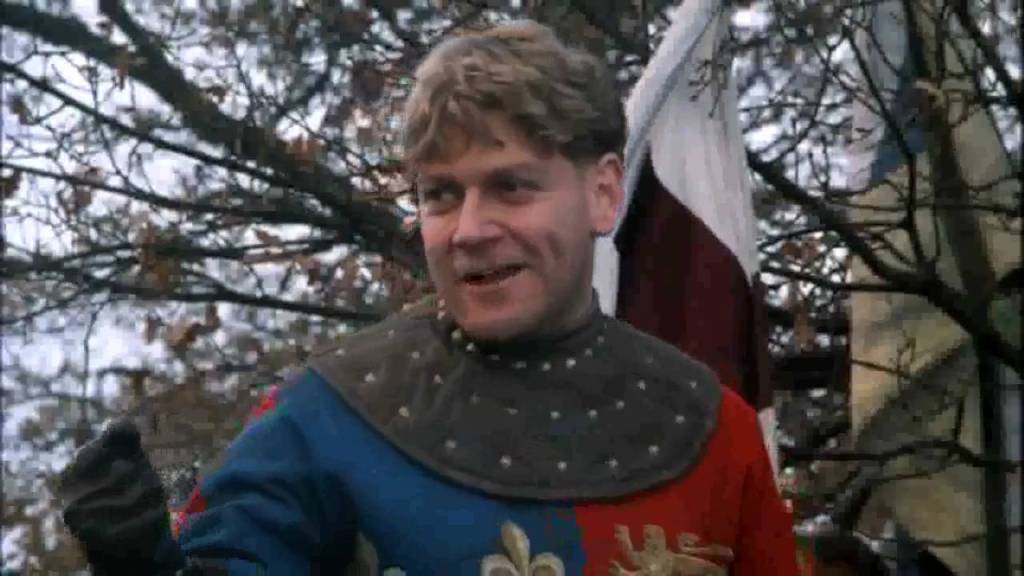
Here is the context: An exhausted, disease-ridden and seemingly doomed English army, vastly outnumbered, prepares to meet the cream of French chivalry in Normandy. These are the words Shakespeare puts in Henry’s mouth, and from what I’ve read about the young king—charismatic, implacable and immensely courageous—this is thin fiction indeed:
Abraham Lincoln’s devotion to Shakespeare was legendary. For a man whose formal education totaled about seven weeks, it was Shakespeare, the Bible and Blackstone’s Commentaries on the Laws of England that formed the fundament of the president’s self-education and the templates for his rhetoric, which no president has matched.
What Henry V might’ve taught Lincoln was the importance of the bond between a leader and his people—Elizabeth clearly understood that bond— a lesson mythologized in this scene from Spielberg’s Lincoln.
The scene is mythic because it never happened. But it’s mythic, too, because myths tell the truth in a way we can understand.
It’s that bond that’s been broken and it’s truth that we’ve lost today: it’s been so besmirched, just as it was in Southern newspapers in December 1860, that recovering it—and with it, constitutional democracy—may require great sacrifice. It may inflict on us wounds beyond imagining. We are met again on a great battlefield where the enemy includes malignant men, so alien to us and to our traditions, and our countrymen, among them those whom we love the most.
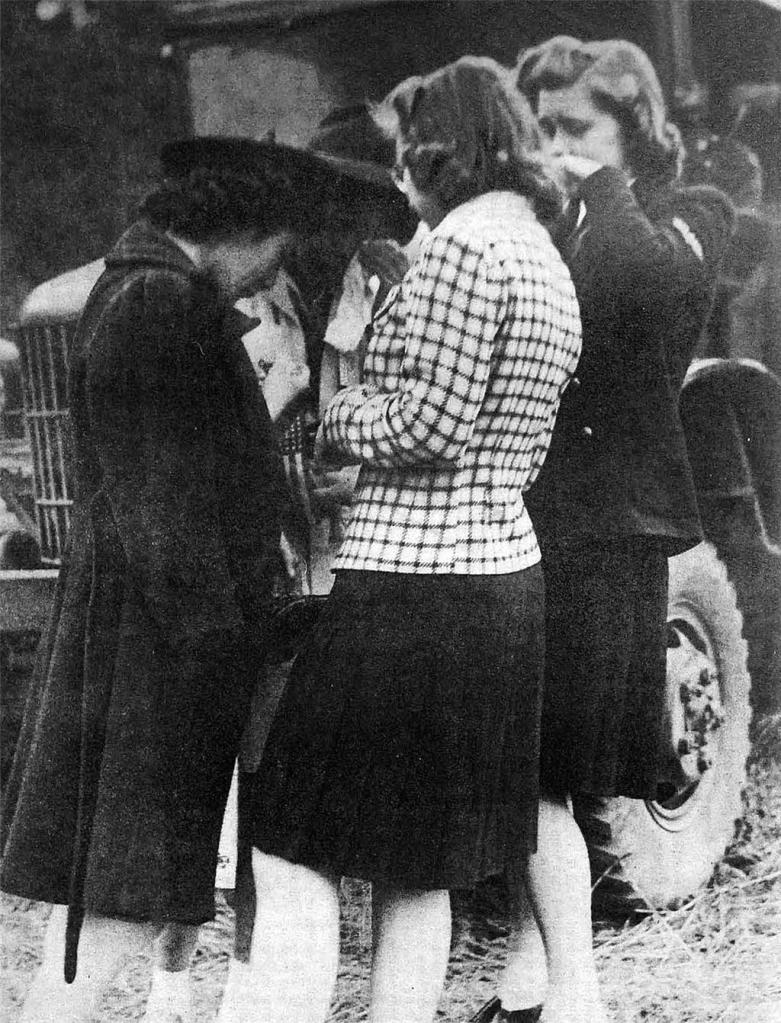
This photograph was taken on Bainbridge Island, Washington, on the day Executive Order 9066 was executed and these friends were separated.
There’s a good chance they never saw each other again.
When the buses came to take our Arroyo Grande, California, neighbors away on April 30, 1942, many of them—less than half—came back. I grew up here, and I don’t recognize many of the surnames in the old high school yearbooks.
One woman told me this: On the day the buses came to the high school parking lot, her mother saw a line of high-school girls, some Japanese, some not, walking up Crown Hill, walking up toward their high school, holding hands and sobbing.
Arroyo Grande’s Japanese-Americans went first to the Tulare County Fairgrounds, where they slept in livestock stalls, and then to the Rivers Camp in Arizona, where the temperature was at or above 109 degrees for twenty of their first thirty days there.
I interviewed a remarkable woman named Jean a few weeks ago. She is 94, is briskly intelligent, articulate and gracious. Her father owned the meat market on Branch Street in Arroyo Grande, population 1,090 in the 1940 census, and when his Japanese-American customers, farmers, came in to settle up before the buses came, he refused to take their money. “You keep it,” he told them. “You’re going to need it.”
When they came home three years later, he extended them easy credit until they could begin to bring in crops again. Jean showed me her father’s business ledgers, so I have no reason to doubt it when she told me that every one of those farmers paid her father back. In full.
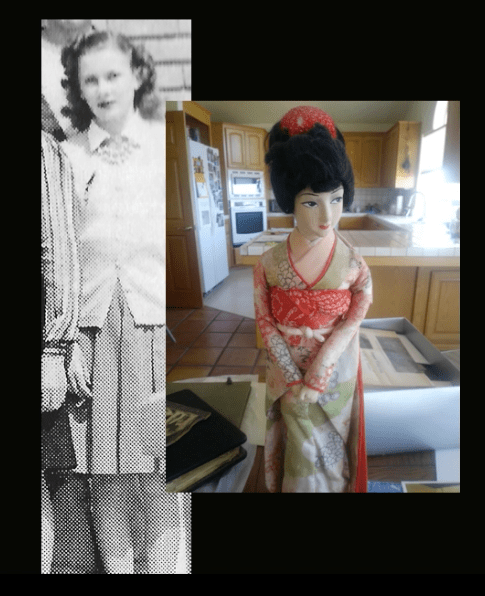
This is Jean as a high-school freshman. The doll, with her handmade kimono, came to Jean from Gila River in gratitude for her family’s friendship. For their loyalty.
At ninety-four, that loyalty runs in Jean as deeply as it ever has. One of her best high-school friends was named Yoshi. I can find a photo of the two together in second grade. I found a photo, too, of two second-grade boys in the Arroyo Grande Grammar School in 1926. They would die, about twelve minutes apart, on USS Arizona.
Yoshi’s brother became a war hero. He won a battlefield promotion to lieutenant when he went behind Japanese lines in China to rescue a downed American flier.
Yoshi’s brother brought that flier in and made him safe. Jean never saw Yoshi again and, because of April 30, 1942, there is a part of her that can never feel safe.
The war, at its outset for America, killed two of our sailors. It would claim many more local young men, killing them in Ironbottom Sound off Guadalcanal and on the beach at Tarawa. It would kill a young paratrooper in Holland during Operation Market Garden. It would kill, with a sniper’s bullet, a tank-destoyer crewman on the German frontier three days before his first child, a son, was born.
The war killed neither Jean nor Yoshi. They remain its casualties, nonetheless.
We had to stop the interview for a moment. In remembering her friend, Jean was fighting hard to stop the tears. One escaped. That moment taught me so much history, and with such intensity, that I almost couldn’t bear it.
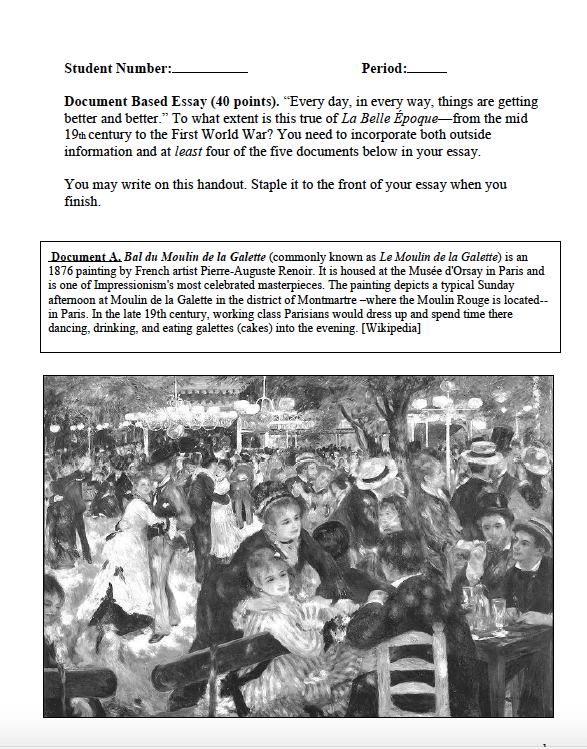
I taught AP European History for nineteen years, and I quickly discovered a passion for social history, including women’s history. We learned about skimmingtons, Tudor marriage patterns, women’s work on farms and in factories. Then we got to La Belle Epoque–-Victorian Europe—which should have been my favorite chapter. It was Marion Cotillard’s favorite era, too, in Midnight in Paris, and I would’ve been hard-pressed to choose between Cotillard’s Paris and Owen Wilson’s Lost Generation version of the great city.
I have my romantic reveries about the film interrupted by the reality of its director, whose victim—much later, his wife— was his stepchild, and that unpleasant juxtaposition reminds me of the way I taught this chapter.
Cotillard and Wilson, Midnight in Paris
I didn’t lead with Julie Andrews’ Mary Poppins or Nicole Kidman’s Satine from Moulin Rouge–although I did touch on Montmartre and on Hausmann’s re-imagining of Paris.
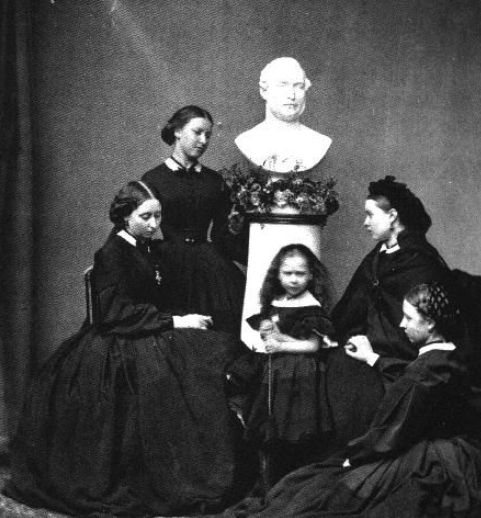
No. I started the chapter with Jack the Ripper. The Ripper murders, in 1888, were so revelatory of the larger society’s misogyny. The students were reminded of Nancy in Oliver Twist and they learned about Victorian widow’s reeds—for which Her Majesty, in her pining for Albert, deserves so much blame–when it was discovered that black taffeta, required for a year, when combined with gaslights, led to British and American middle-class sati, the tradition where, once upon a time, Hindu women threw themselves onto their husbands’ funeral pyres.
Victoria’s daughters mourn dutifully for their father.
The Rippers’ victims funerals were attended only by detectives. These women, some but not all of them prostitutes, were desperately poor, frequently drunk and utterly alone. (This was when the Industrial Revolution had advanced to the point where women, thanks to cooperation between male workers and male capitalists, had been forced out of factory work, where they’d always been integral. World War I would call them back, when munitions work would kill women workers in bushel-loads; shell-filling turned their skin bright yellow. So most of them died slow deaths, from chemical poisoning, rather than the instant deliverance conferred on other women by accidental explosions.)
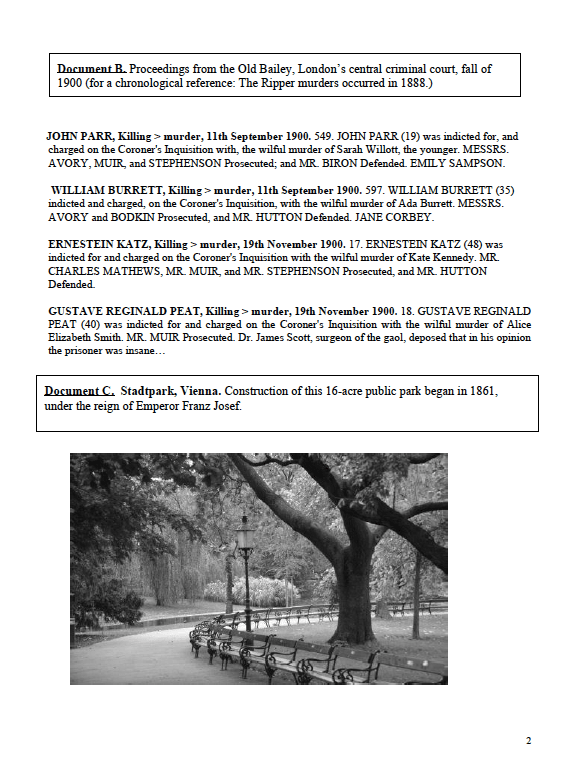
The Ripper’s escapes were made possible by the rabbit-warren of alleyways and the density of London fog–T.S. Elliot described its greenish cast—that were so evocative of the density and the filth of the East End. Sunlight rarely penetrated the lives of these women; their deaths were captured in photographers’ flashes—theirs were among the first autopsy photos ever taken for police work. I could not show some of them to sixteen-year-olds.
So we began a chapter that was ostensibly my favorite (they learned how to speak Cockney, learned rhyming slang, learned about department stores and the demarcation lines between social classes within Parisian apartment buildings and in the process of lifeboat-filling on Titanic, learned, most of all, about Paris) with some of the most brutal material I’ve ever taught.
I wanted it that way. I taught, whenever I could, to my students’ emotions, because that’s the way I experience history—these people are very much alive and so very human to me—and I wanted them, as we began this chapter, to be outraged.
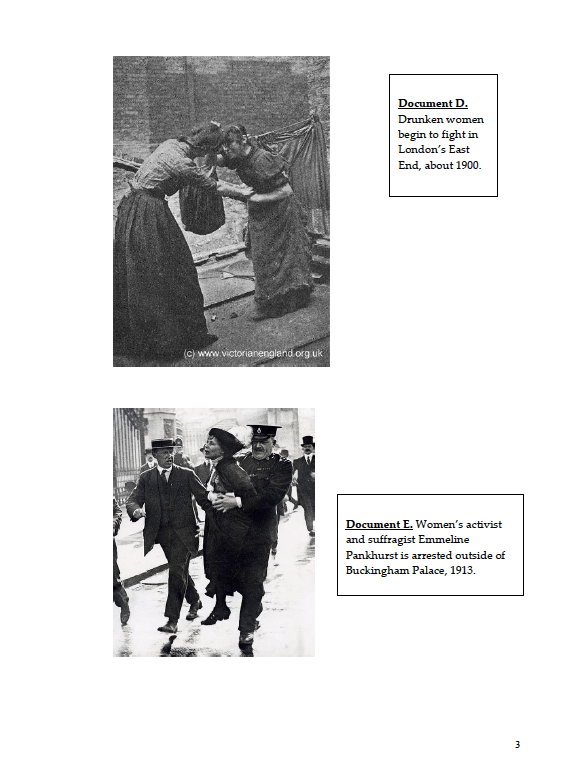
Most of all, I wanted my male students to understand the Ripper’s brutality, so reflective of the society’s brutality, to understand what it might have been like to be a woman then—and now, because we would visit this topic again before the year had ended–and if outrage wouldn’t take with them, with my young men, then discomfort would do.
I hope their discomfort hasn’t ended. The misogyny, revealed in so many presidential tweets, certainly hasn’t.
This was the Document-Based Essay that ended the chapter–a truncated version of the much more lengthy essays they’d encounter on the AP exam. I was a little proud of this one.
I always reasoned that I needed to retire once my own anger over World War I had passed. I think that sentiment extends logically to the status of Victorian/Edwardian women, as well.
On the morning of Friday, April 12, 1895, the proprietor of the Fashion Stables in San Luis Obispo discovered a body. It lay in a pool of blood—the back of the victim’s skull had been crushed—in a vacant lot behind The Palace, a “house of ill fame,” near the intersection of Monterey and Morro Streets.
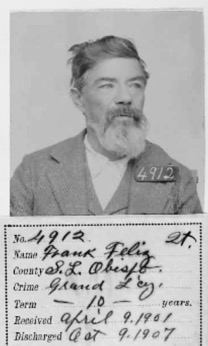
An Arroyo Grande man, Frank Feliz, was nearby, inside Sinsheimer’s store—today’s Giuseppe’s—and after he’d followed the gathering crowd to the vacant lot he identified the victim as Ygnacio Villa, a neighbor of his. Villa’s family was prominent but had fallen on hard times. Ygnacio’s father had been the master of the 30,000-acre Corral de Piedra rancho between Pismo Beach and the Edna Valley. Ygnacio, by contrast, homesteaded 160 acres in Lopez Canyon.
The sheriff’s deputy on the scene, Joseph Eubanks, would have had bad memories of Lopez Canyon. Eubanks had assisted Constable Thomas Whitely in the arrest of Peter and P.J. Hemmi for the 1886 murder of Eugene Walker. The Hemmis and Walker had been involved in a land dispute in the canyon; Hemmi had reportedly broken down fences and poisoned livestock to force Walker off land he believed to be his. On March 31, fifteen-year-old P.J. shot Walker and his young wife, Nancy, who died several months later.
On the night of
the Hemmis’ arrest, Eubanks had to share Whitely’s humiliation when a mob, their
faces covered by handkerchiefs, locked the two inside a Branch Street restaurant’s
storeroom. The mob then stormed the little town jail and lynched the Hemmis
from the PCRR trestle over Arroyo Grande Creek. It was schoolchildren who first
discovered the hanging bodies the next day—April Fool’s Day.
After 1886,
Arroyo Grandeans remembered Lopez Canyon for its bounty, rather than its
violence.
A 1909 San Luis
Obispo Morning Tribune portrait of
the canyon was titled “Where Nature Has Been Lavish With Her Charms.” Local
papers were frequently filled with little stories about Arroyo Grandeans taking
extended hiking and camping trips or those who came back to town to brag about a
big catch of trout, to show off trophy mule deer bucks or, in one case, four
bird hunters who returned with “a wagon load” of pigeons.
But Deputy
Sheriff Eubanks wasn’t done with Lopez Canyon. Within days of Ygnacio Villa’s
murder, he would place Frank Feliz and two others under arrest. The killing was
the apparent culmination of a year-long feud between two factions in the canyon—one
led by Feliz and the other by a neighbor named Gerard Jasper.
There are
repeated stories about the feud throughout local newspapers in 1894-95. It began, as the Hemmi-Walker dispute had,
because of conflicting claims over land. Neither side comes off looking
innocent.
Gerard Jasper
was a contrary man. In 1869, when he’d lived in Cambria, a deputation of local
citizens was organized to warn him not
do bring his cattle into town during an outbreak of what was called “Texas
Fever.” He appears frequently in county civil suits in subsequent years, but
his contrariness took a new direction in Lopez Canyon: Jasper was accused, in
the fall of 1894, of setting a string of arson fires. Pasturage, a neighbor’s
wagon and twenty-five cords of wood went up in flames, and one of those fires
burned land claimed by Frank Feliz.
At his San Luis
Obispo trial, Jasper, according to one account, “offered a very vigorous
defense, and at times branched out into philosophical utterances, which His
Honor [Judge V.A. Gregg] was finally compelled to check.” Jasper’s character
witnesses, which included prominent local men like Fred Branch and David
Newsom, were more effective in his eventual acquittal.
After the trial, the Jasper-Feliz feud escalated in late 1894 and early 1895. Feliz was arrested and charged with assault with a deadly weapon. A comrade of Jasper’s, identified only as P. Morales, broke down a neighbor’s fence and smashed the windows and door of his little Lopez Canyon cabin. Morales had to be subdued by two deputies when he resisted arrest. Another friend of Jasper’s was a victim: he returned from town to find seven bullet holes in his front door and seven .44-caliber slugs embedded in the opposite wall.
It seemed that
Frank Feliz was itching to make Ygnacio Villa a victim, too. Villa had
testified against Feliz in the Jasper arson trial and, according to news
accounts, Feliz accused Villa of stealing one of his cows. “I will kill him the
first time I see him,” Feliz reportedly told Villa’s niece, Rafaela.
There was
evidence that Feliz had done just that, according to trial accounts that
dominated the news in August 1895.
Two prostitutes
from the Morro Street houses saw Feliz and some companions verbally confront
Villa the night he died (one of them was the first to find the body the next
morning, but she didn’t report it). Evidently all of the men, Villa included,
had spent much of Thursday night, April 11, drinking heavily in a nexus of saloons—one
of them, ironically, was called the Olive Branch–along Monterey Street. There
was physical evidence, as well: blood on Feliz’s overalls. On the witness
stand, Feliz maintained the blood had come from slaughtering a steer several
days before Villa’s murder.
The evidence
wasn’t enough to convince the jury. On August 11, 1895, they acquitted Feliz. A
few years later, Gerard Jasper died a natural death and the feud seemed to end
with him.
Ironically, the
crime that would finally doom Frank Feliz, in 1901, was the one he’d accused
Ygnacio Villa of committing: cattle theft. On April 7, 1901, the Morning Tribune exulted in Feliz’s
conviction and subsequent ten-year sentence to Folsom prison: time enough, the
article opined, for Feliz to reflect on a brutal murder “in an alley back of a
darkened street where evil flourished.”
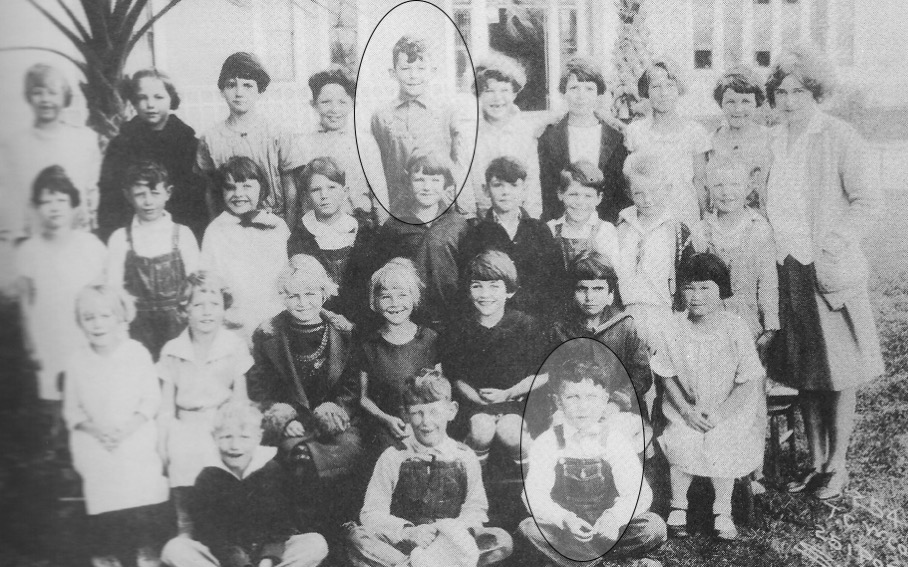
I was browsing an early 1980s version of Yesterday, Today and Tomorrow, the South County Historical Society journal, and I found this photograph of the Arroyo Grande Grammar School second grade in 1926-27.
The two boys who are circled are Wayne Morgan (top) and, in the front row, Jack Scruggs. Wayne’s father, Elmer, was a partner-owner of the Ford agency, today’s Doc Burnstein’s Ice Cream Parlor. Jack’s father had lost his farm earlier in the 1920s; at the time the class photo was taken, he worked with an oil prospecting company exploring the Huasna Valley.
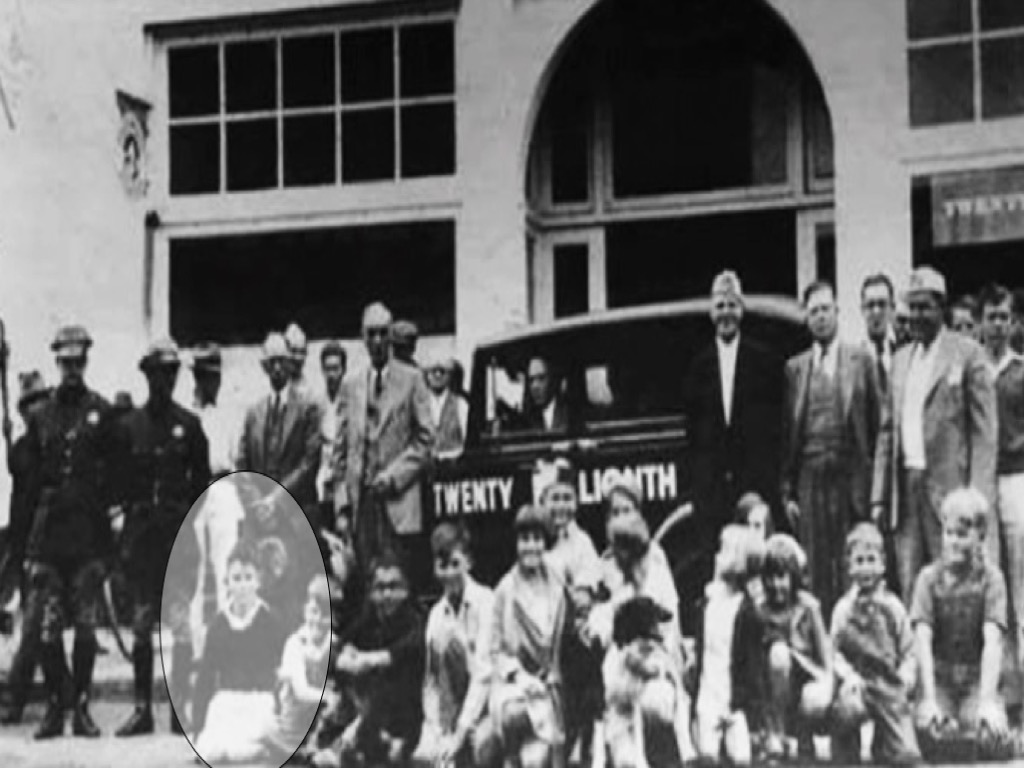
That’s Wayne in the front, in a photo taken during this Ford Model A’s nationwide tour in 1931 (the car, fully restored, is owned by a Michigan car collector).
Nine years later, Wayne would join the Navy.
By the time Wayne Morgan graduated from eighth grade, Jack Scruggs’s family had moved to Long Beach. Both boys were musicians–Wayne played violin in Mr. Chapek’s orchestra (he was also an avid Boy Scout), but Jack would make music his career.
In 1940, Jack joined the Navy.
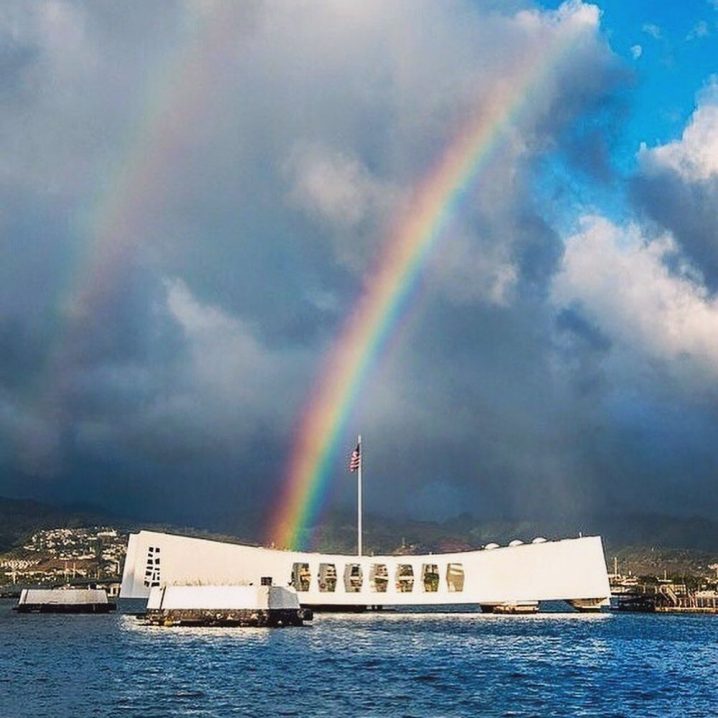
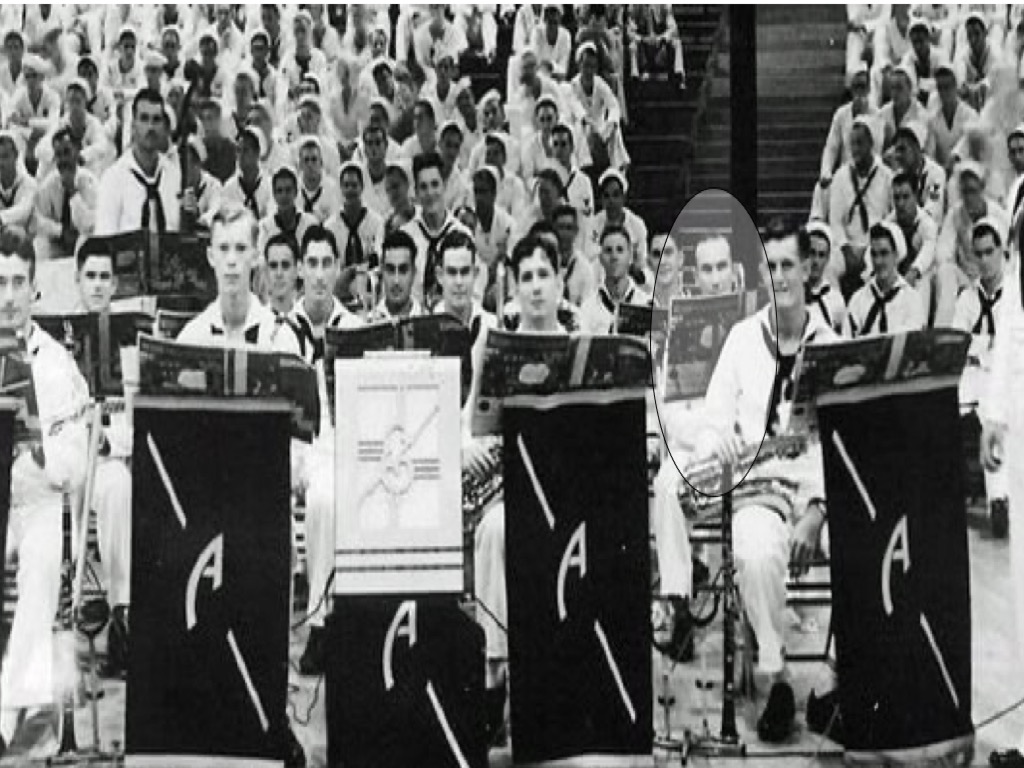
Jack is circled in this photo taken on November 22, 1941, during a Battle of the Bands competition among the ships of the Pacific Fleet. Jack was a trombonist in Navy Band 22–the band of USS Arizona.
So there’s a very good chance that the one-time classmates had a reunion on the great ship.
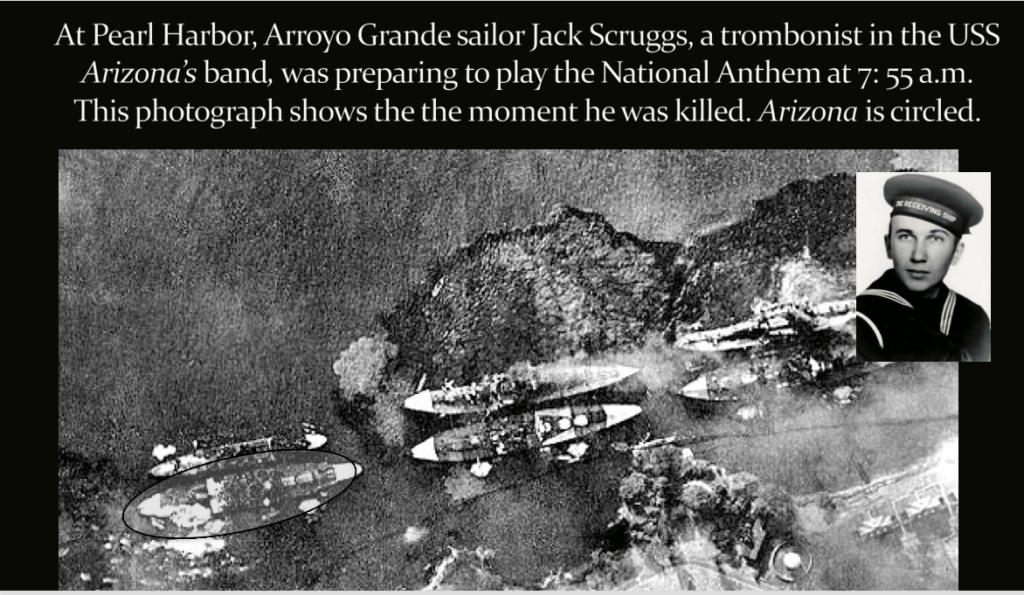
The tragic part of the story, of course, is that both were killed on Arizona. The concussion from a near-miss killed Jack just before 8 a.m. as the band was preparing to play the National Anthem during the colors ceremony. Wayne died about ten minutes later, when the ship blew up. So were all of Jack’s bandmates, killed at their action stations in the Number Two gun turret, just inboard from where the fatal bomb struck.
A few weeks before the attack, Jack had played “Happy Birthday” on the accordion for Rear Adm. Isaac Kidd’s wife–Kidd flew his flag on Arizona. All that was found of him after the attack was his Annapolis class ring, fused to a bulkhead.
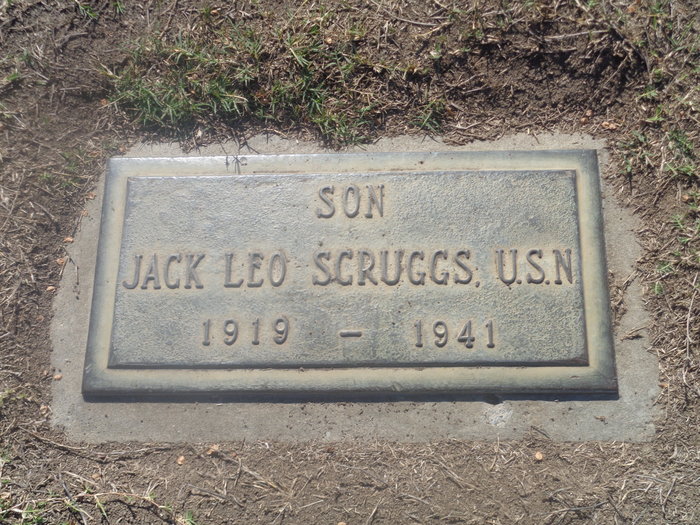
Jack’s body was recovered; he came home to Long Beach. Wayne rests with his shipmates.
I knew both were from Arroyo Grande, population 1,090 in 1940. I thought it extraordinary that two young men from such a small town wound up serving on the same ship. I had no idea that they were in the same grammar school class.
Sometimes even the smallest footnotes in history tell compelling stories.


 A Work in Progress