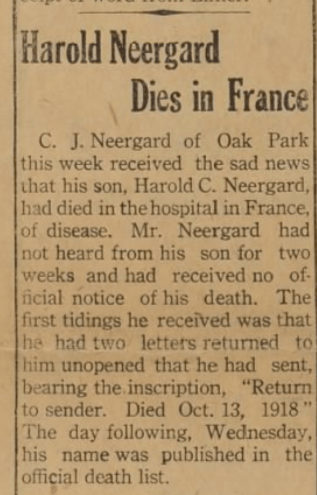
This was how Mr. Neergaard—his name misspelled— of Arroyo Grande learned of his son’s death in France. It’s hard to imagine getting news in so cruel a manner.
But this, of course, had been a cruel war on an epic scale. What ended it was crueler still.
One of the climactic battles of the First World War came at the end of September, 1918, two weeks before the flu took thirty-year-old Harold, on the St. Quentin Canal.
Part of the battle involved Americans, who came into the war so badly equipped (it was the mirror reversal of World War II, when we were the “Arsenal of Democracy”) that our fliers flew obsolete French Nieuports, the Marines at Belleau Wood were casually smoking cigarettes, bewildered German soldiers noted, as they advanced while firing French Chaucat light machine guns from the hip. The heavy machine gun we used was the British Maxim Gun and doughboys were driven into the Meuse-Argonne aboard Renault trucks driven by young men from what would someday be called Vietnam.
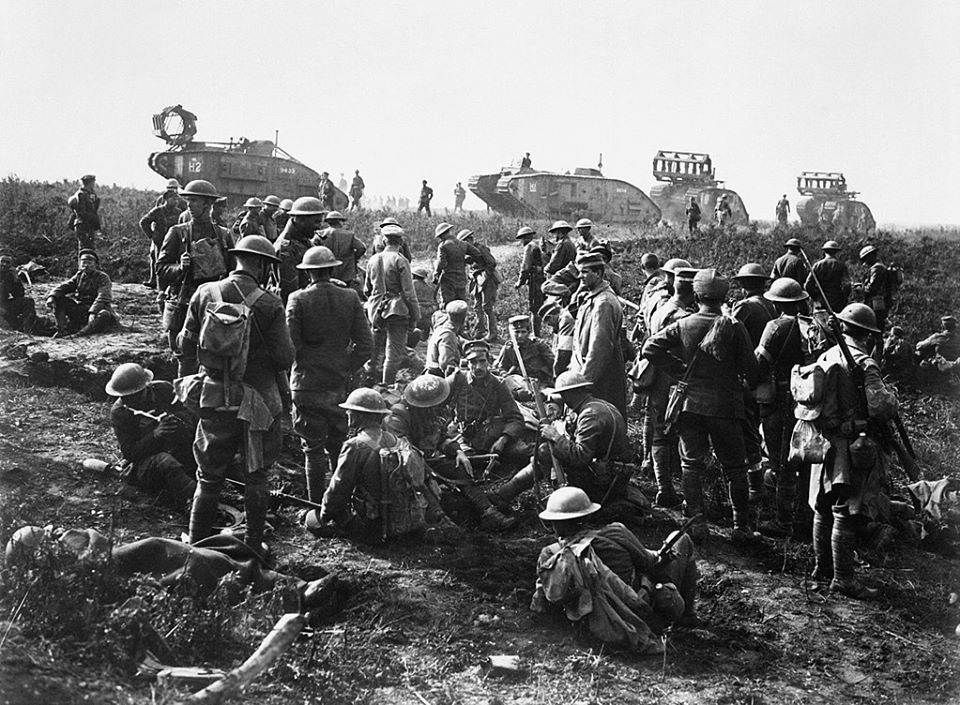
At the canal, the American 30th Division, shown in the photo with German POWs (the tanks are British), went into the Bellocourt Tunnel, shown below, and met the Germans in hand-to-hand combat.
The 30th Division prevailed in ways beyond the ferocity with which they fought. At least one historian has suggested that in the confines of the tunnel and in the closeness of the combat, the Americans brought the flu with them, too, and this was a new, far more virulent strain than the one that had struck the combatants earlier that year, in the spring.
The war ended six weeks later in part from sheer mutual exhaustion. The two sides were too sick to fight anymore.
The flu even played a role in the unsatisfactory peace that followed–the one that led to another, more terrible war–in part because the American delegate, Woodrow Wilson, became ill, with a temperature of 103 degrees, with what was quite possibly the flu
(This was 1919, but the flu came back to Arroyo Grande, too, in 1919 and again in February 1920.)
When Wilson recovered, some said, he wasn’t the same man he’d been. (His presidency would be shattered soon after by the stroke that incapacitated him.)
So it would be the vengeful French leader, Georges Clemenceau, who would dominate the peace settlement at Versailles. Which, of course, was not a peace at all. Even the attacks on 9/11 can be traced back to the terrible Versailles Treaty.
I imagine this pandemic might have powerful effects, many now unseen, that will play out decades away from us.
This was all provoked by Marlo Thomas and a St. Jude’s Hospital commercial. They always leave me little weepy. I immediately turn the channel, too, whenever they show the ASPCA abandoned dogs commercials. I’m just a wimp.
Anyway…
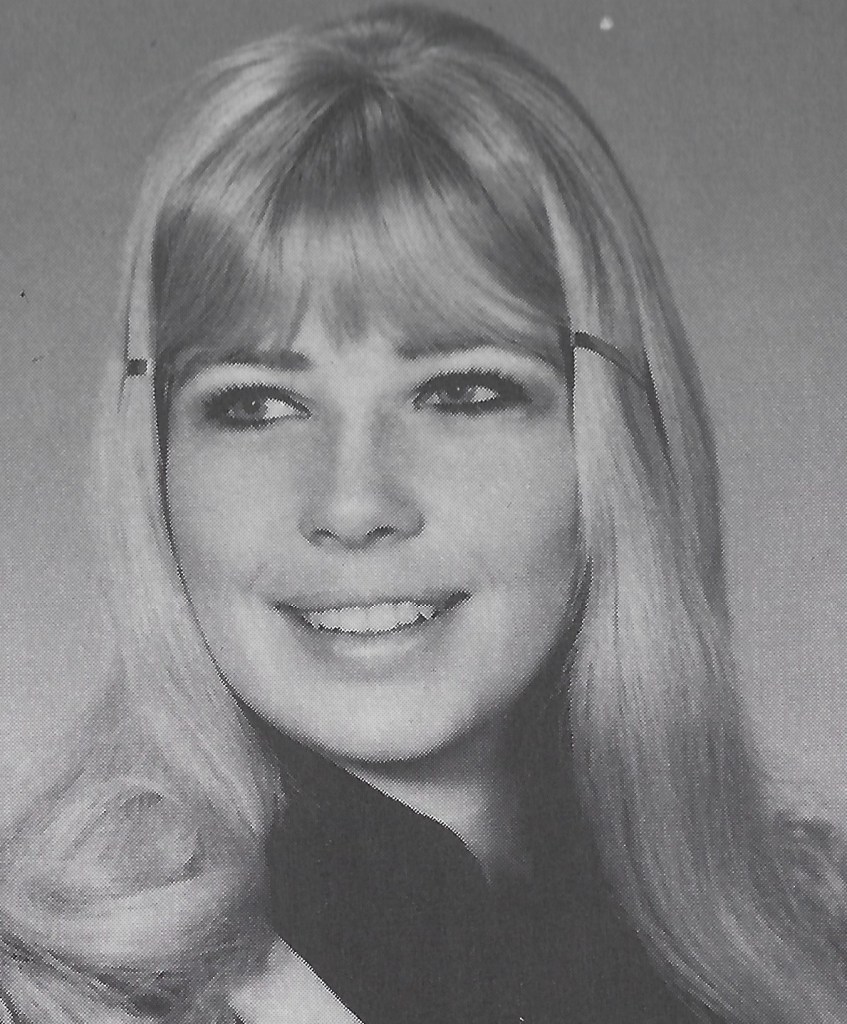
Jeri.
My woeful performance on the “Ten Famous People You Have Met and One You Haven’t” Facebook survey– my famous people were pretty anemic, including G.D. Spradlin, the actor who sent Martin Sheen Up the River in Apocalypse Now and the guy whom singer Trini Lopez portrayed in The Dirty Dozen. (“Lemon tree, verrry pret-ty…” Trini Lopez sang. The G.I. he portrayed blew stuff up.)
I remembered that Jeri was my date for the 1969 Arroyo Grande High School Winter Formal. She was very bright and had a refreshingly sardonic sense of humor that was about 23 years older than the rest of us. Jeri and I were just friends, with no romantic inclinations, except for the ones I felt for her car.
She drove a 1966 Mustang 2 +2 Fastback, with a classic short-block 289 V-8 under the hood. Sigh!
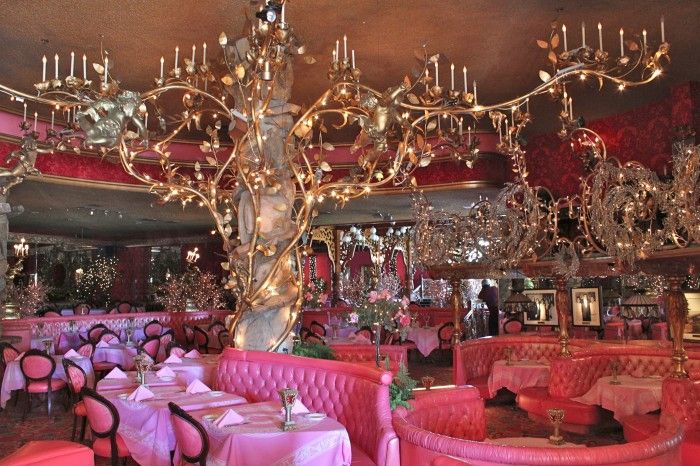
Alas, we went to the Madonna Inn for dinner in my father’s 1965 Chrysler, which, for those of you not up on your Chryslers, was roughly the size of the carrier USS Eisenhower.
Jeri and I on our way to the Madonna Inn.
No, Jeri was not a Famous People. We’ll get to that right after we order.
Yes, baked potatoes with sour cream, please.
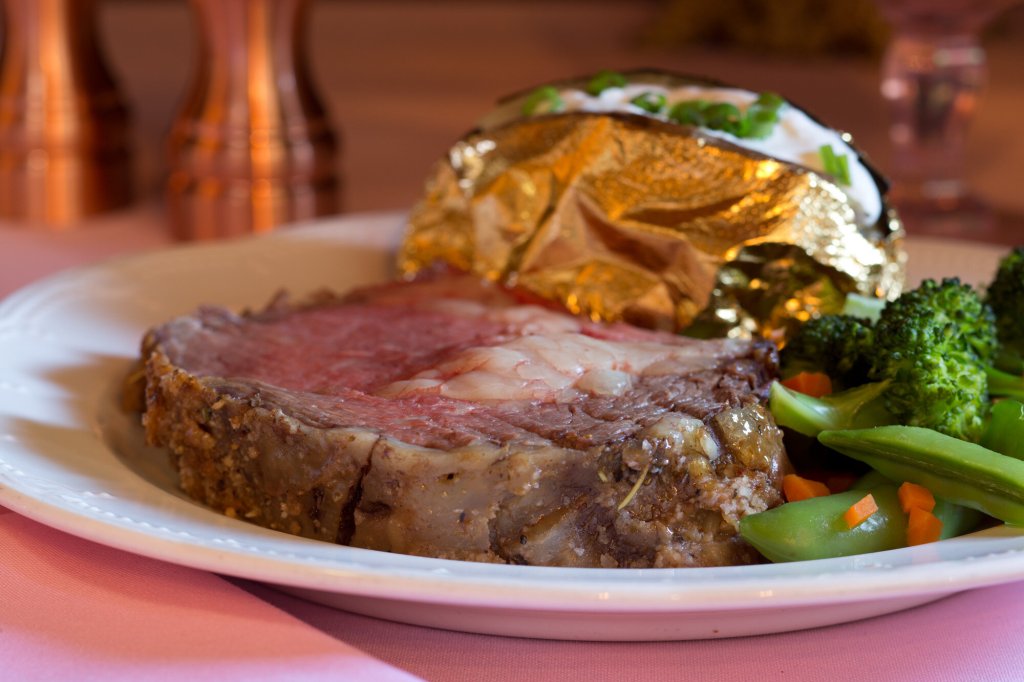
As we were beginning dinner (TWO prime rib dinners, $13.74. I kept the receipt), Jeri punched me in the arm. It wasn’t something wrong with the prime rib. It was DANNY THOMAS, sitting in a booth thirty feet away with Mrs. Madonna, and Jeri wanted his autograph. If Danny Thomas wasn’t exactly a celebrity on the scale of all four Cartwrights AND Marshal Dillon in the Madonna Inn Liberace Room on horseback, he was close enough for two kids from Arroyo Grande, California, USA.
The Madonna Inn–as always, casual and understated.
Now, I worked with Jeri on the school newspaper, and she’d punched me in the arm before. She could leave a bruise if you’d deserved it.
So, after about the third punch, I went over to the booth, introduced myself, blushing profusely and speaking in what must have sounded like Urdu (I knew Mrs. Madonna slightly; my Dad worked for Madonna Construction) and Mr. Danny Thomas provided the autograph.
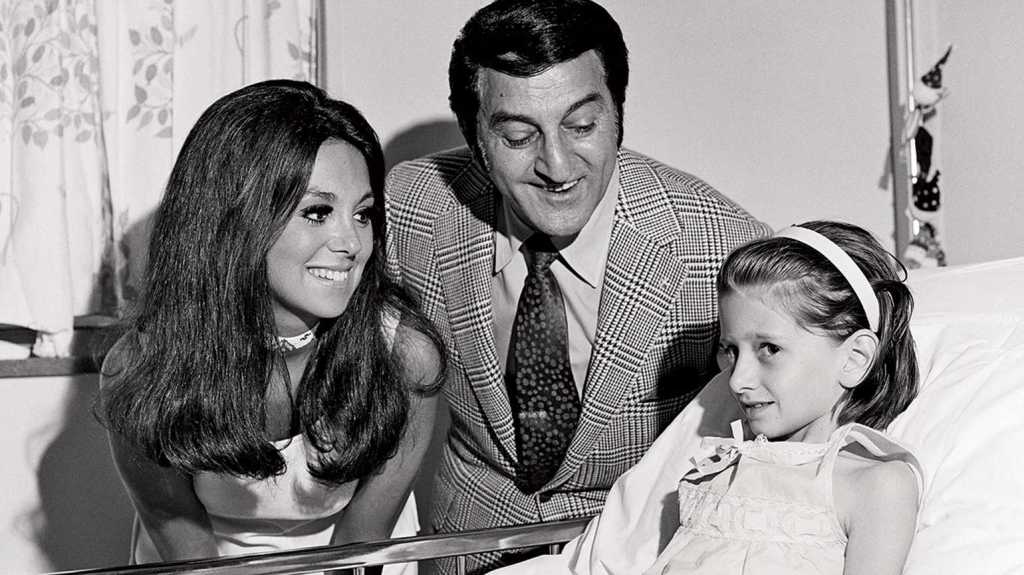
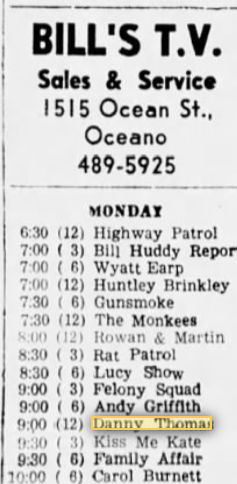
Danny Thomas and his lovely daughter, Marlo, at St. Jude’s, the incredible hospital Mr. Thomas founded. (Below) Mr. Thomas’s sitcom was at one point on opposite The Andy Griffith Show, which was awkward, because Thomas was Griffith’s executive producer.
That is not really the point of the story, but I have misplaced the point somewhere.
My current television addiction is a German miniseries called Babylon Berlin, thanks in part to a tip from much-beloved former student and fellow history enthusiast Alycia Jones.
The New Yorker summary of the series is far better, but here’s my cruder version.
* * *
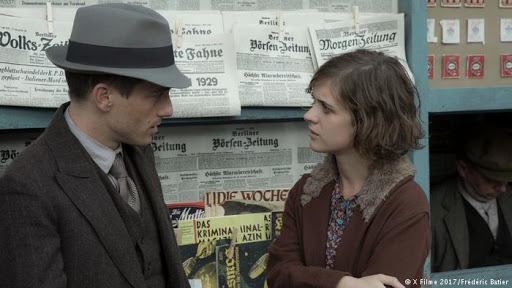
Weimar Berlin, 1929: A principled but very troubled police inspector and a very brave (and lovely) young woman meet. He’s a war veteran addicted to morphine; she lives in a nightmare tenement and moonlights as a prostitute. Thanks to her ingenuity and persistence, they begin to work together to crack a case that becomes increasingly complex and dangerous.
Inspector Rath, the professional, and Charlotte Ritter, the gifted amateur.
*Deep breath*
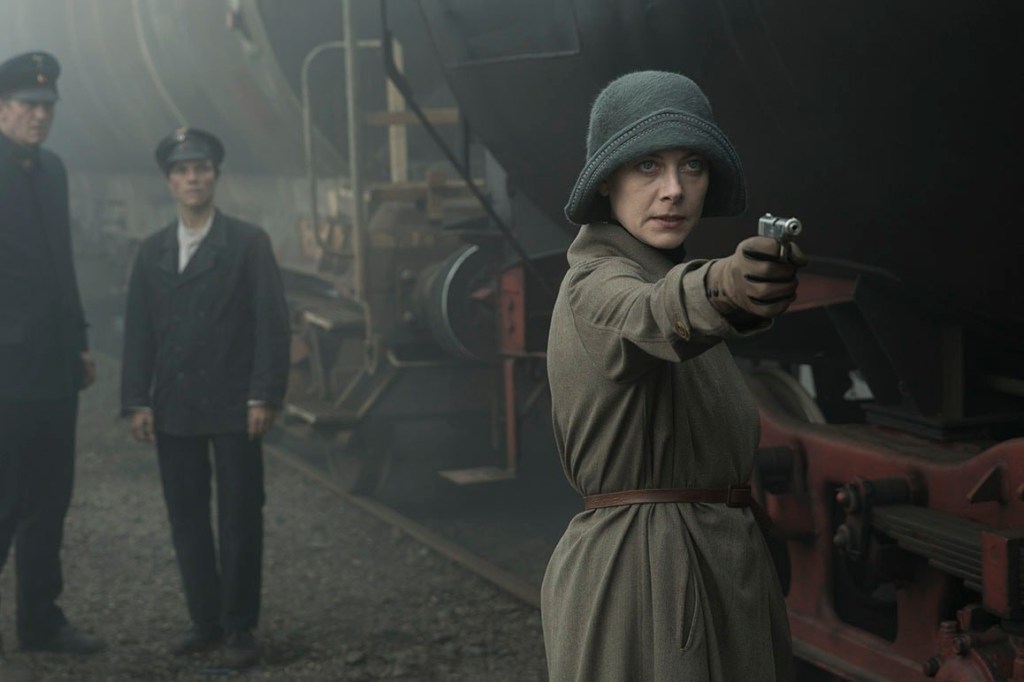
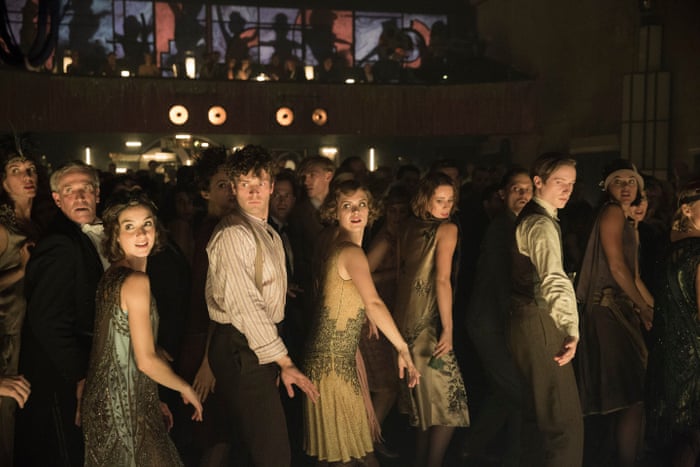
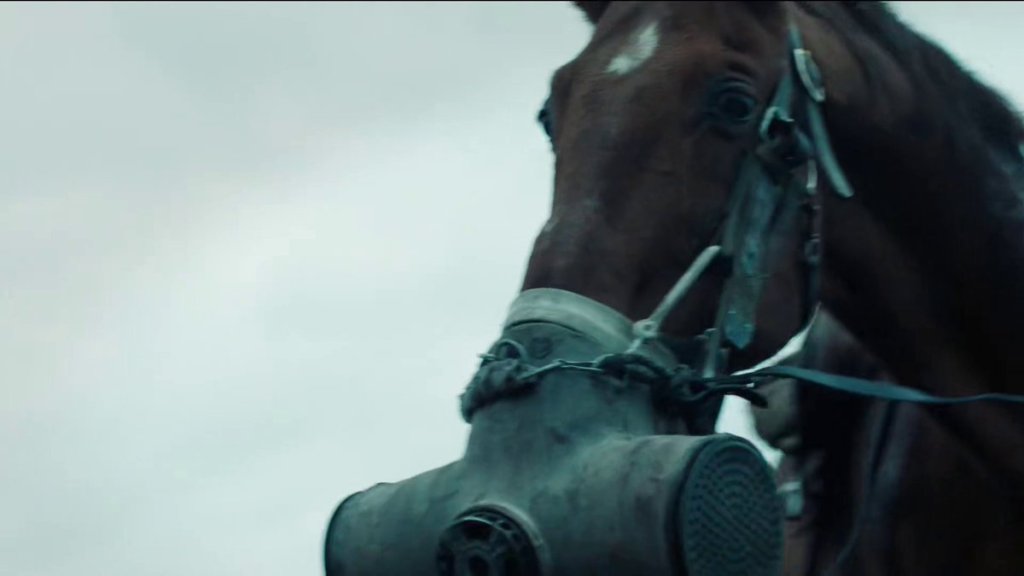
It’s got Stalinists, Trotskyites, Transvestites, Organized Crime, Corrupt Cops, including cynical vice squaddage, the Black Reichswehr, the Red Fortress, frenetic and brilliant Charleston dancing, decaying apartment buildings, workers’ riots, a stunning computer-generated Alexanderplatz, drug-addicted veterans, maimed veterans, a sinister doctor with a hypodermic needle the size of a Krupps field howitzer, a priest-assassin (the protagonist, detective Rath, from Cologne, is Catholic), a furious gunfight perilously close to an immense restaurant fish tank, a St. Valentine’s Day-style massacre, a mysterious vision of a Western Front horse, alone on a bleak battlefield, wearing a gas mask, stolen Russian gold, a character who is frequently killed, tank cars filled with lethal war-surplus gas and an elusive female character, a nightclub singer whose stage persona and assassin’s disguise includes a mustache—and who seems to change the side she’s on every other episode.
Also much sturming und dranging.
The New Yorker review includes a link to an extended nightclub scene from Episode 2—the song “Zu Asche, Zu Staube” (“To Ash, To Dust”) knocked me out, although, since I’m from Arroyo Grande, I’ve rarely seen ladies wearing only banana skirts.
The best part, to me, is that it was all put together by a group of young Germans in their twenties to forties. Brilliant work.
I thought this YouTube video was stunning, and not just for Margot Robbie, who is exactly that.
What struck me even more was how much I loved the song, how much I loved The Mamas and The Papas. My first records weren’t LPs, but 45s, and I played “Monday Monday” and “California Dreamin'” on the same little record player on which I’d once played “Little Toot” and “Tubby the Tuba” as a very little boy.
I was enchanted with harmony—and, of course, I had a huge crush on Michelle Phillips—but beyond that, the Beach Boys, the Beatles, the Byrds and Crosby Stills and Nash always drew me because of the sublime harmonies. They carried me away to places I’d never known but had always wanted to visit, which explains why I played those old 45s until you could practically see through them.
What saddens me is the subtext of this song–the Laurel Canyon of Joni Mitchell, David Crosby, Judy Collins, Neil Young, and, a little later, the Eagles and Linda Ronstadt and Jackson Browne–was so debased by the Tate-LaBianca murders.
I remember reading the first thirty pages of Vincent Bugliosis’s Helter-Skelter and not sleeping for two nights after.
It’s not that my generation deserved Charles Manson–he’s an aberration, not a logical product of historical forces—but I thoroughly get Quentin Tarantino’s thesis: If we had it to do over again, wouldn’t we have relished the chance to destroy Manson, to be heroes?
If we had the chance to do that part of history over again, I think we would embrace it.
But, since history is impassive and indiscriminate in the way it inflicts cruelty, the road my generation took led to a different kind of monster. We voted for him in droves.
And so we’ve empowered leaders, like this one and many more, who laugh at us even as they systematically destroy all the stubborn and self-assured idealism that so maddened our parents.
And then, to make matters worse, we—my generation— refuse to get out of the way. I’m cynical enough to think, if only in halves, that the Coronavirus is Darwinian and so salutary in its selection of victims.
It doesn’t end there. I find myself wishing aloud—embracing the kind of sinfulness that my Irish Catholic background would require consignment to hell, postage paid—that the virus would embrace a president who is much more promiscuous–even moreso than the Manson Family was—in the destruction of his victims.
He kills stupidly and without regret. If he lacks Manson’s premeditation—and only because he lacks the imagination to think beyond the moment he inhabits— he stays behind the way Charlie did to let others, or other forces, do the killing for him.
This is because is a coward.
So he kills indirectly, but, unlike Charlie, he kills the powerless. They will never have movies made about them.
I am not sure how we go to the point where we are today and, of course, the Manson murders weren’t some profound historic tipping point.
Maybe what’s more historically authentic– and so much more painful to confront–is the possibility that all those gifts under Boomer Christmas trees spoiled us and there’s nothing we fear quite so much as having our presents taken away from us. And so we seek the terrible protection of someone who seems a caricature of every Disney villain we hated when we still had the wisdom of children.
When we met the Disney villains we emerged, blinking in the sunlight coming out of the movie theater, sure in the comfort that we would never be like them—or, even more, that we would never be so foolish and weak as to taste the sweet apples that they offered us. They were poisoned, after all.
No. We would be instead like Cinderella—our strength and our beauty and our nobility would defeat any number of wicked stepsisters. Or we would be like Zorro, manly and generous, righting injustices and humiliating the unjust, all the time hidden in the anonymity and the humility of our disguise.
We were, in fact, graced by our intolerance for injustice. We took that to the streets, and we should, I think, be proud of that. But the humiliation didn’t fall on the unjust, did it?
It’s fallen on us instead. So it might be time for us to get out of the way—imagine the absurdity of two septuagenarians running for president when our president was the youngest elected in American history—when, a little later, we said we would never trust anyone over thirty.
But we said that in the comfort of youth, when the young girls coming into the Canyon were strong and beautiful and noble, and when I, if I remember it right, was not quite old enough to have left my belief in heroism behind.
What’s damnable is that I’m still not old enough, not even at sixty-eight.
I taught young people, and I learned, to my delight, that the heroism I once cherished still lives in them. I learned to recognize it in my classrooms over thirty years of teaching, and in those moments when I saw it, their heroism was incandescent and unforgettable.
Maybe it’s the meaning of my generation’s music that’s now forgettable. It’s now so distant and long-ago, even if the harmonies, no matter how faint, are still unmistakeable to me.
But
The music reminds me there’s still a chance to take the road that will make all the difference. If we can find it, we might walk, with our young people–I am just beginning to enter the fragility of age, so that I would need them to hold my hand over the rough spots and mind for me the loose shale on the steeper downslopes—until we would find together a narrow hardpan road that leads into a sunlit California canyon.
This is the road, we would understand, all of us, instantly and without words, when would turn to each other and let smiles suffice, that belongs to us.
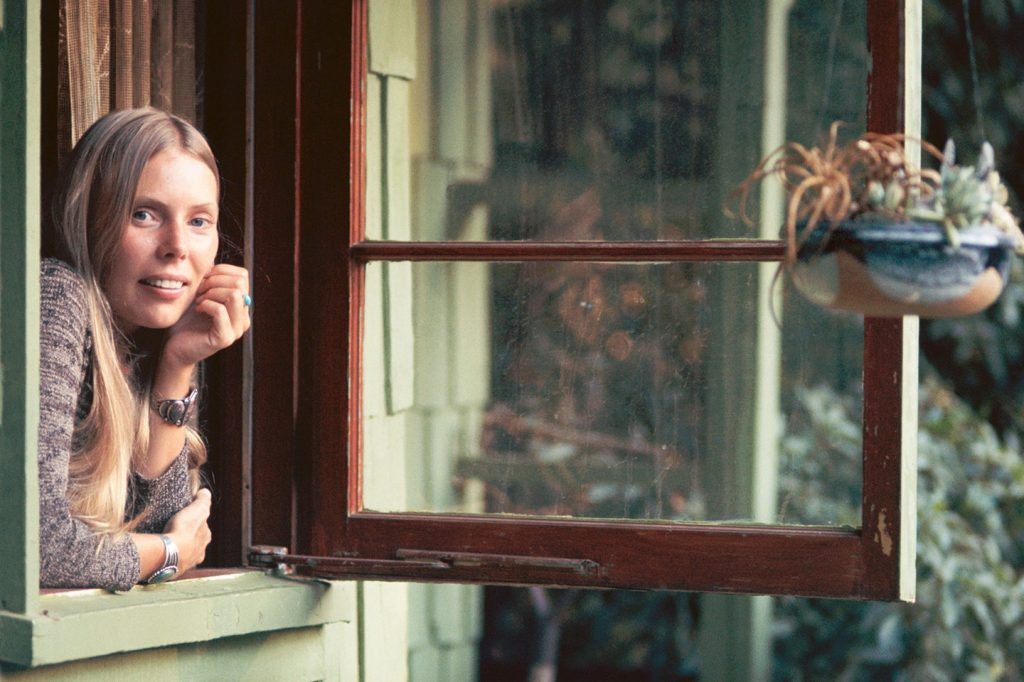
The road ends where a window opens, and then, for the first time, we will see a little yard flush with wildflowers–lupine and blood-orange poppies and shooting stars–and smelling of sage and just-turned soil. Through the window we will see the warm light of a welcome house and smell the sweetness of fresh-baked bread and, most of all, we will hear again the music we loved so much.
And then we will be home, in a place where’s there is room for everything except for fear.






 A Work in Progress