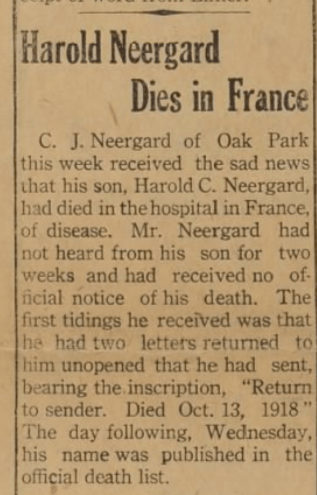
This was how Mr. Neergaard—his name misspelled— of Arroyo Grande learned of his son’s death in France. It’s hard to imagine getting news in so cruel a manner.
But this, of course, had been a cruel war on an epic scale. What ended it was crueler still.
One of the climactic battles of the First World War came at the end of September, 1918, two weeks before the flu took thirty-year-old Harold, on the St. Quentin Canal.
Part of the battle involved Americans, who came into the war so badly equipped (it was the mirror reversal of World War II, when we were the “Arsenal of Democracy”) that our fliers flew obsolete French Nieuports, the Marines at Belleau Wood were casually smoking cigarettes, bewildered German soldiers noted, as they advanced while firing French Chaucat light machine guns from the hip. The heavy machine gun we used was the British Maxim Gun and doughboys were driven into the Meuse-Argonne aboard Renault trucks driven by young men from what would someday be called Vietnam.
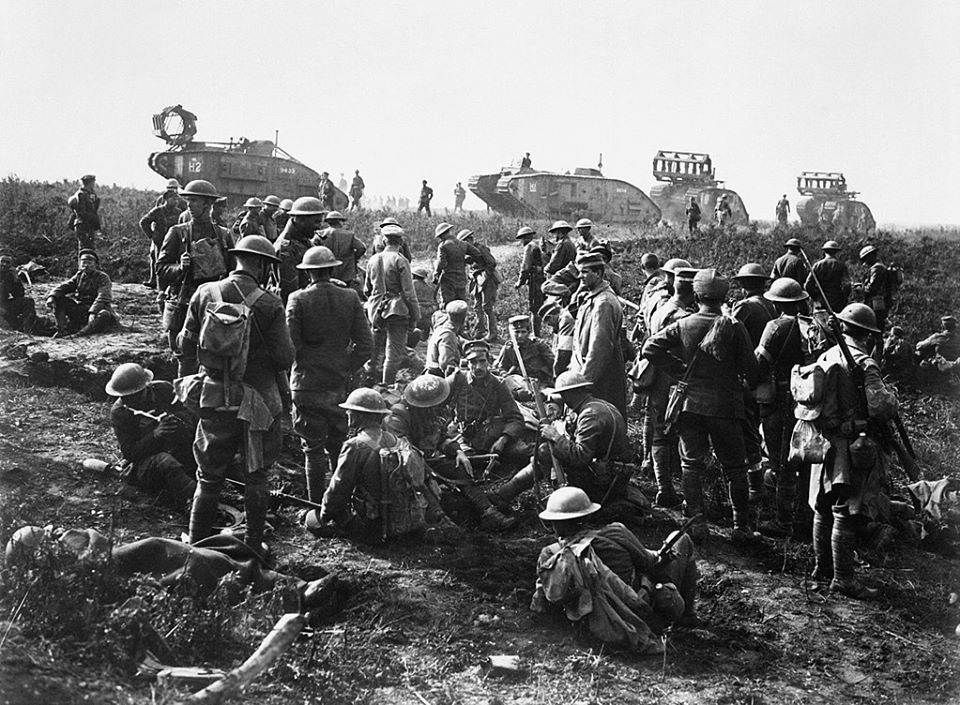
At the canal, the American 30th Division, shown in the photo with German POWs (the tanks are British), went into the Bellocourt Tunnel, shown below, and met the Germans in hand-to-hand combat.
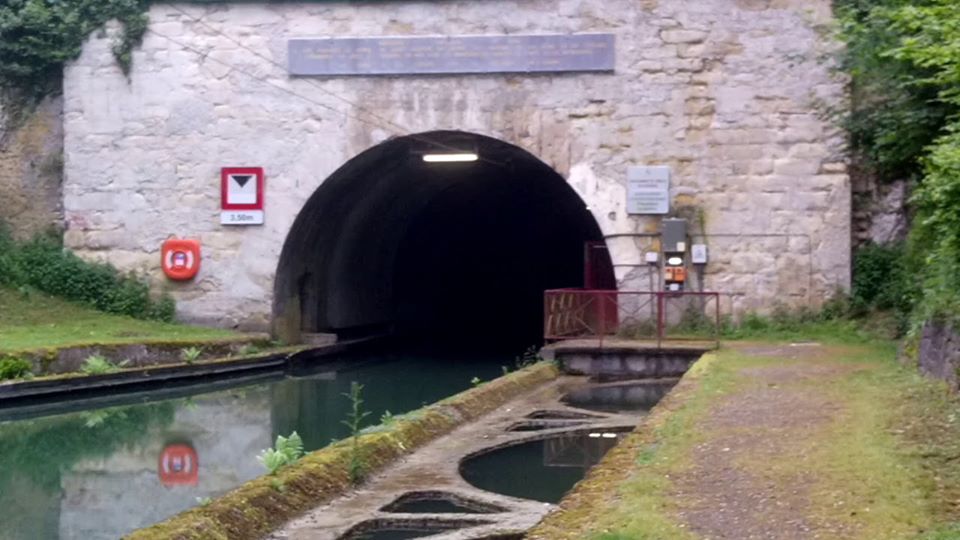
The 30th Division prevailed in ways beyond the ferocity with which they fought. At least one historian has suggested that in the confines of the tunnel and in the closeness of the combat, the Americans brought the flu with them, too, and this was a new, far more virulent strain than the one that had struck the combatants earlier that year, in the spring.
The war ended six weeks later in part from sheer mutual exhaustion. The two sides were too sick to fight anymore.
The flu even played a role in the unsatisfactory peace that followed–the one that led to another, more terrible war–in part because the American delegate, Woodrow Wilson, became ill, with a temperature of 103 degrees, with what was quite possibly the flu
(This was 1919, but the flu came back to Arroyo Grande, too, in 1919 and again in February 1920.)
When Wilson recovered, some said, he wasn’t the same man he’d been. (His presidency would be shattered soon after by the stroke that incapacitated him.)
So it would be the vengeful French leader, Georges Clemenceau, who would dominate the peace settlement at Versailles. Which, of course, was not a peace at all. Even the attacks on 9/11 can be traced back to the terrible Versailles Treaty.
I imagine this pandemic might have powerful effects, many now unseen, that will play out decades away from us.
 A Work in Progress