[Edit]
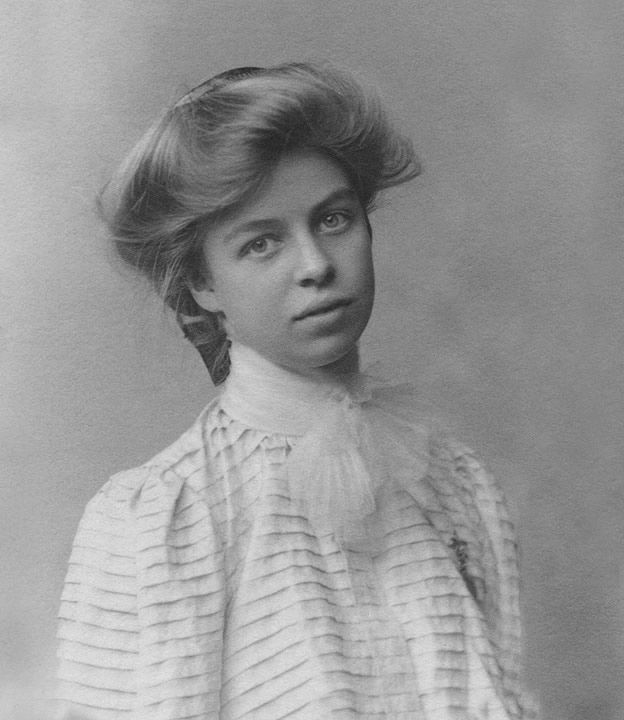
PBS is re-running Ken Burns’s The Roosevelts: An Intimate History and I watched last night the episode that recalls the slide into World War II.
I tend to agree with the historian-commentators who marveled at the dexterity— and the sometime duplicity —with which FDR led Americans in those years. His sights, of course, were set on England, especially when, by the spring of 1940, England was alone against Hitler.
When many advisors, chiefly among them Ambassador Joseph Kennedy, urged the president to stop throwing money and military equipment away on a lost cause—meaning England and meaning FDR’s friend, Churchill—the president bristled. England was our next-to-last line of defense. The last would be our own Atlantic seaboard.
Then, of course, the war came from the opposite direction.
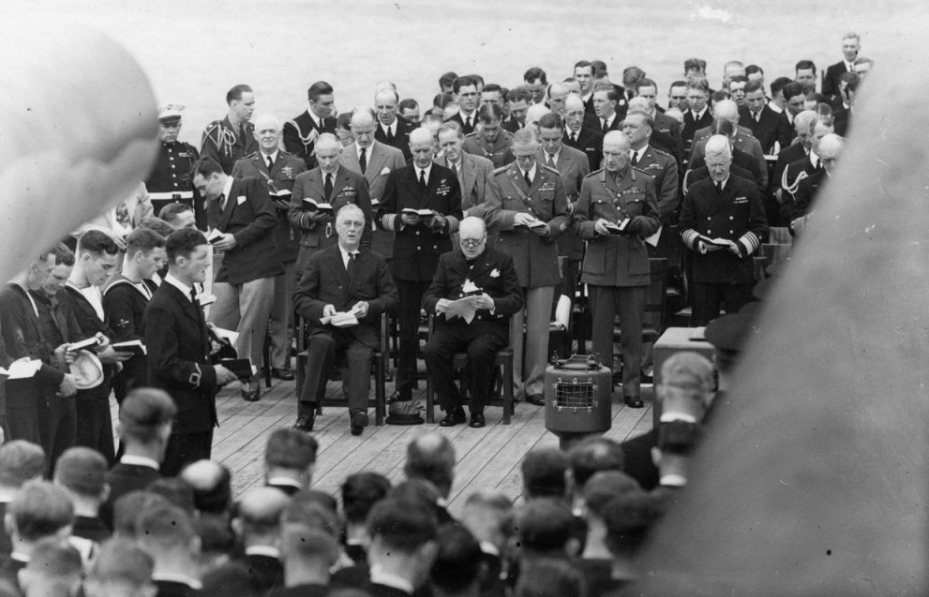
Despite the appeal of wartime drama, I’m thinking less of FDR and more of the First Lady today.
Her life was marked by sadness of immense breadth and depth; denigrated as a child—her nickname was “Granny”— devoted to a father who adored her, but who died an alcoholic, as did her younger brother, Hall. Her marriage was a love match that would come under constant and determined assault by her tyrannical mother-in-law, Sara Delano Roosevelt, because of course Eleanor was not good enough for her darling boy. The darling boy betrayed Eleanor in his love affair with her social secretary, Lucy Mercer.
(The president continued to welcome visits by Lucy, then a married woman, years after their affair had ostensibly ended, which came when Eleanor found Franklin’s cache of love letters. Now, when Eleanor was out of Washington, FDR would invite Lucy Mercer Rutherfurd to quiet dinners at the White House.)
Eleanor was both intensely private—building her own residence at Hyde Park—and yet she was also the administration’s public face. The telecast reminded of this prescient New Yorker cartoon, from 1933.
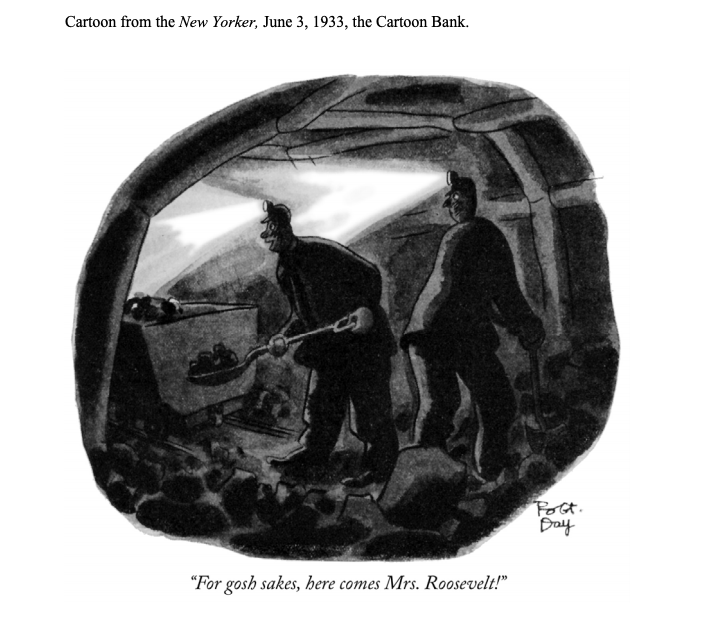
“Prescient,” because this photo was taken two years later. She is, quite obviously, enjoying herself.
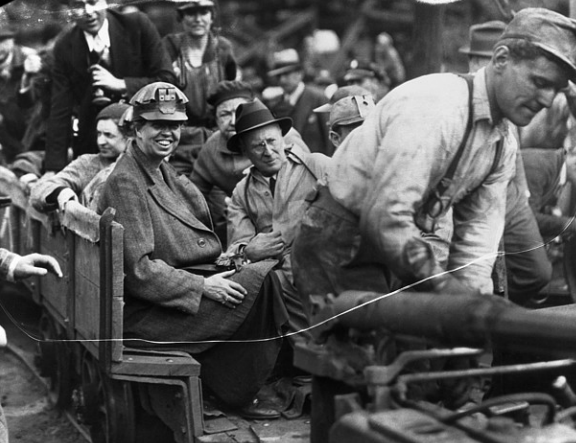
Despite an innate shyness, she worked tirelessly to support the New Deal and then the war effort. She had her own radio program. Americans heard her voice on the night of the Pearl Harbor attack; the president wouldn’t speak until he asked for a declaration of war the next day.
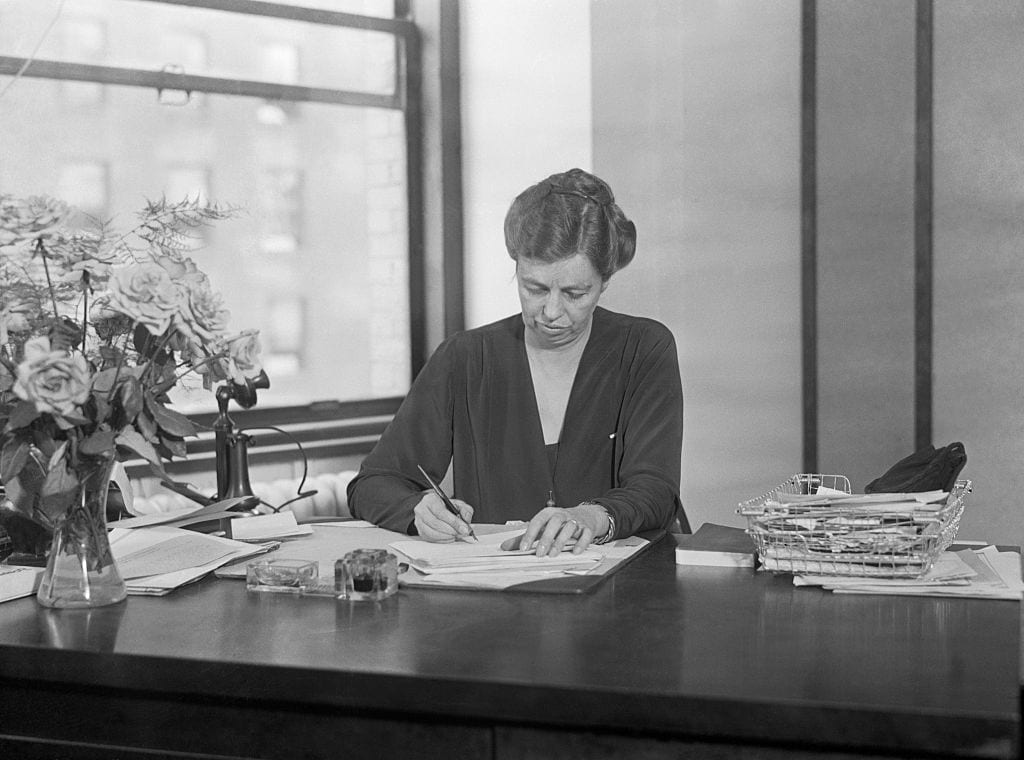
And hers was not a pleasant voice. Like her husband, she had patrician accents, but her delivery was sing-song and she hit unintentional and incongruous high notes that were almost painful to hear. But when the 1940 convention balked at nominating the liberal agriculture secretary Henry Wallace for vice president, the president asked Eleanor to speak—the first time a First Lady addressed a convention. Her speech was brief and as usual a little awkward, but the impact she had was so powerful that Wallace was nominated by acclamation.
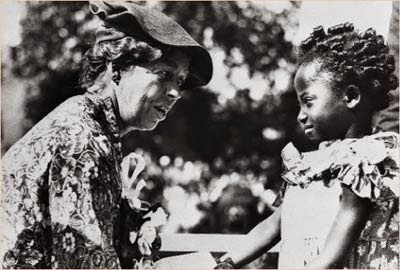
The documentary, too, addressed her humanity, her determination, for example, that black defense workers be treated with dignity and some semblance of parity, as well as her hatred of segregation. The old films revealed something else: This patrician felt at home with black Americans.
There was a stubborn and courageous innocence about her, too. She could simply not understand the deliberate cruelty that motivated Jim Crow and she could not tolerate the pain it inflicted, in a representative democracy, on millions of her fellow citizens. Beyond that, segregation was an assault on humanity. Asserting our common humanity would be the underpinning for all the missions she undertook in her long life. It would be, as well, one of he fundamental values my parents instilled in me.
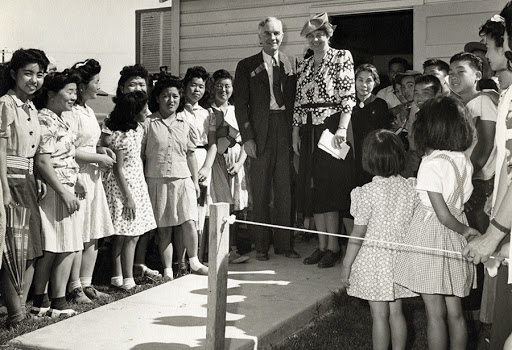
This belief in our common humanity is why she so passionately attacked Executive Order 9066. Franklin finally had to stop her: He was never to hear about Japanese-Americans from Eleanor again. Never. This didn’t stop her from another moment of symbolism: a semi-clandestine visit to the Gila River internment camp, where many of our Arroyo Grande neighbors were confined behind barbed wire, in the spring of 1943.
There is something in this photo of the visit, in the faces of the young women, that suggests her unspoken message. She was among Americans here, and happy, given the bleakness of the camp, to be among them—just as she had been in the CCC camps, in visiting WPA projects or riding in a coal car with Ohio miners.
And then, of course, she became a kind of surrogate mother. This is the Eleanor Roosevelt, with her surrogate sons, that endures the most to me.
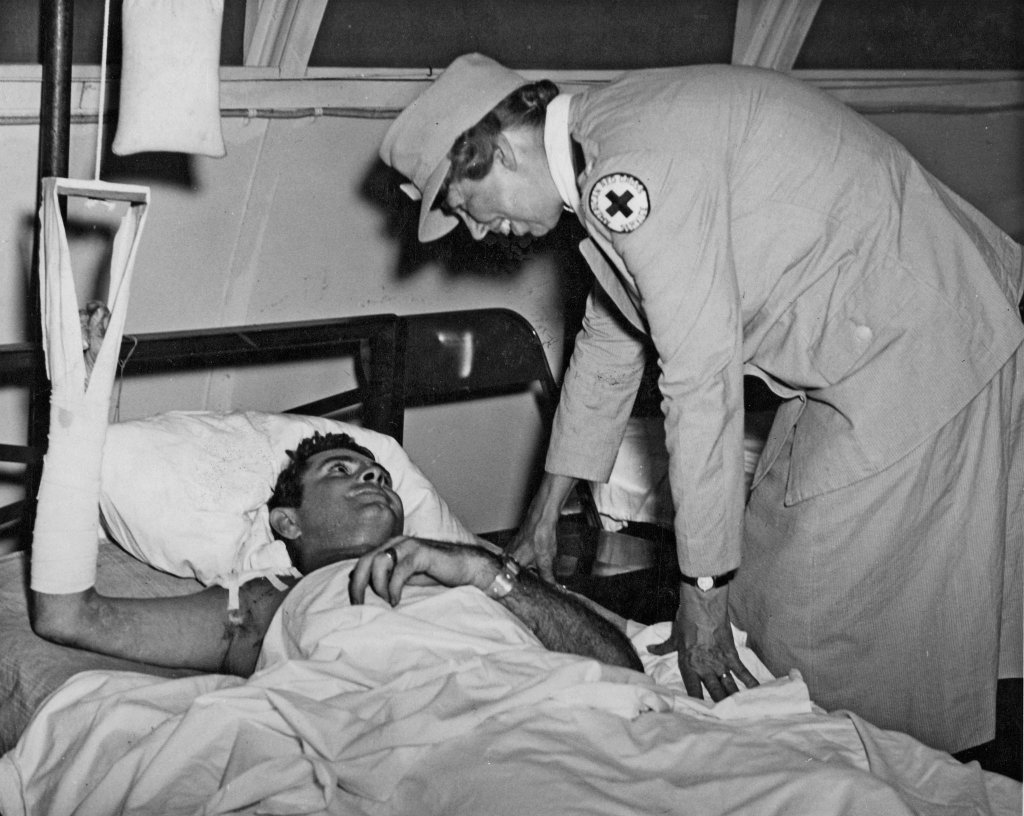
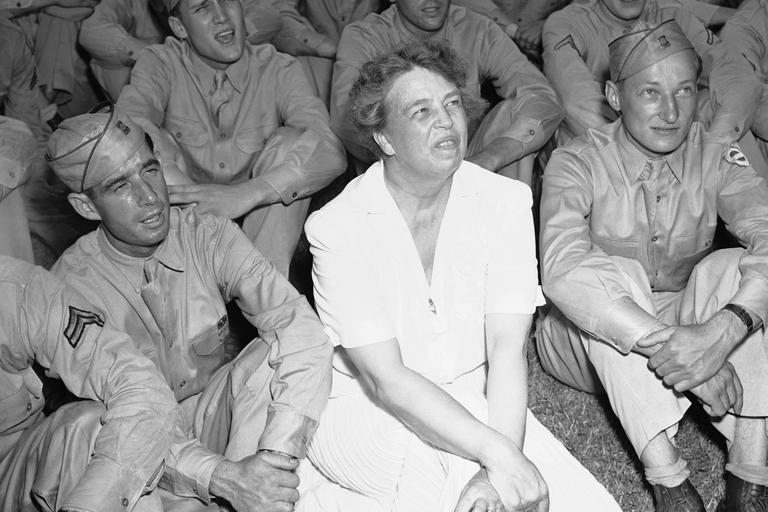
Even as the war was winding down, in the wakening realization of what would soon be Franklin’s greatest victory, the president betrayed her. Lucy Rutherfurd was an arm-length away from the president when a cerebral hemorrhage killed him as he did paperwork at a card table, posing for a portrait, at Warm Springs, Georgia, in April 1945. The First Lady took the train down from Washington to begin the final arrangements. After she’d arrived, it was her daughter, Anna, broke the news about Lucy.
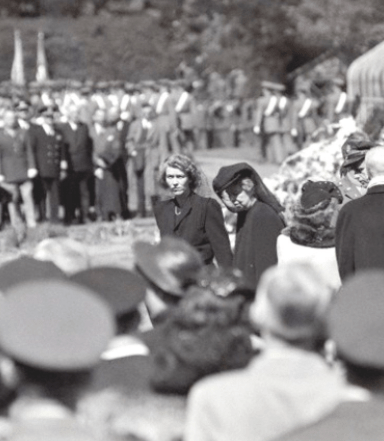
Franklin, the documentary pointed out, frequently and effusively praised Eleanor for her energy, her political acumen, and for the intelligence she brought him from her visits to New Deal projects or to military bases. She was, he told his friends and advisors, remarkable. He never said these things to Eleanor.
That secret was, to me, nearly as profound a betrayal as the president’s relationship with Lucy. Eleanor, like most of us, longed for affirmation, but she would not beg for it.
She deserved to know—most especially from the man so central to her life— how truly remarkable she was.
 A Work in Progress