
Old history: It’s estimated that 20 million people were living in the Americas in 1500, when Europeans began to arrive. By 1800, fewer than two million survived. Most of the difference—except for the premeditated deaths— can be explained by the diseases Europeans brought with their animals.
The Chinese, it’s said, eat bats, and it’s the “wet markets” that are popularly blamed for Coronavirus.
The Europeans ate beef and sheep and chickens–in fact, in winters, early modern Europeans slept with these animals. The animals kept them warm as both animals and humans conserved calories in a kind of suspended animation that enabled them to survive until spring. Then the Europeans ate their companions.
Europeans were therefore immune to the influenza and measles and the smallpox–a remarkably resilient disease–that dropped the Americans like scythed wheat, another European import.
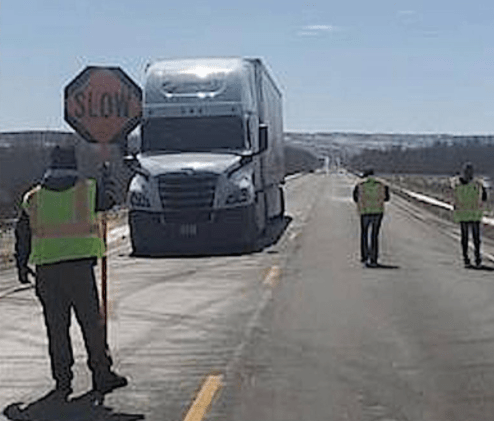
Current events: In South Dakota today, the Lakota (Sioux) people are stopping cars on the highway where they enter reservation land so that they can protect their people from the novel coronavirus.
Novel, or new, diseases have a horrific impact on indigenous people: The 1918 influenza killed more than half the Native Americans in Alaska. The death rate for the H1N1 influenza in 2009 was four times higher among Native Americans than among the general population.
So the Lakota people are wary. And they are stubborn. The checkpoints exist because even though they live amid the most abject poverty in the United States, they want, above all things, to live.
The government is going to take the to court to force the highways open. The Lakota people are going to fight back, in court.
They will lose, of course. In 1890, the Lakota fought back against the government. They fought back by trying to run away. This is how the government responded, and this is how they lost. I wrote this piece six years ago.
* * *
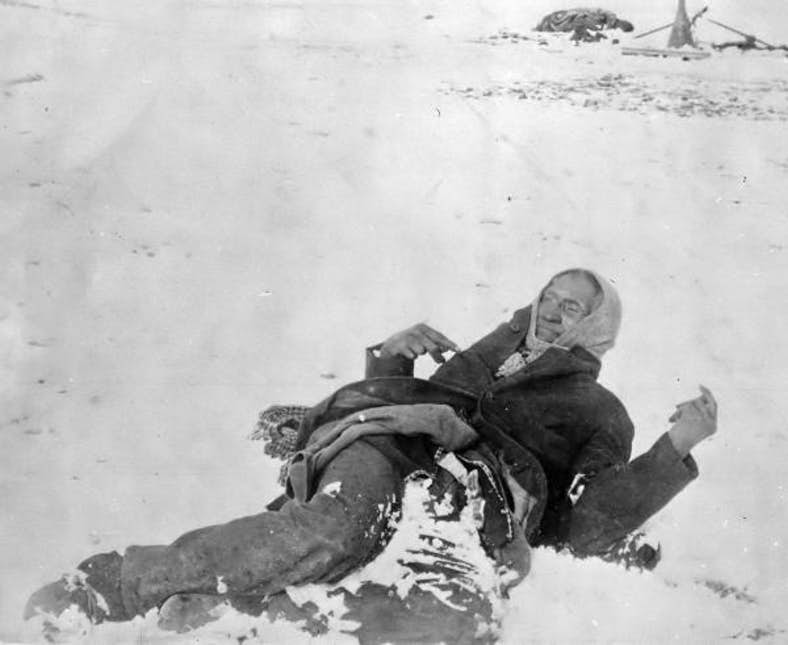
In the winter of 1890, Lakota Chief Big Foot led his people away from the Standing Rock Reservation, in North Dakota, where Sitting Bull had just been killed, because he was afraid for them, afraid there would be more violence. He was fleeing for the Pine Ridge Reservation, in South Dakota, when the Seventh Cavalry caught up to his band. Big Foot was exhausted and sick from pneumonia. He raised a white flag.
When the Seventh confiscated the group’s weapons the next morning, Dec. 29, a rifle discharged. The regiment, which had surrounded Big Foot’s people, opened up with everything they had, including four Hotchkiss guns—42 mm howitzers.
They killed as many as 370 Lakota, including Big Foot. Rifle and shellfire killed many as they huddled close together—fish in a barrel—in panic, in the scant shelter of a creek bank.
Many others were killed while they were running away. The power of their fear was such that a few women and children, hungry and numb from cold, ran for two miles before troopers remorselessly rode them down and shot them.
Twenty cavalry troopers received Congressional Medals of Honor for the work they did at Wounded Knee that day.
The Lakota survivors—the blood from their wounds was frozen—were brought to an Episcopal chapel, decorated for the Christmas season, where, as historian Dee Brown notes, they were laid out on the floor under a sign that read:
“Peace on earth, goodwill toward men.”
 A Work in Progress