
I am constantly amazed by the hardships of frontier life in our county. Infant and child mortality statistics were horrific: Mr. and Mrs. William Dana of Rancho Nipomo lost 11 of their 21 children, a statistic comparable, a century before, to Johann Sebastian Bach’s family. One little girl, named for Dana’s sister, must have been especially beloved. Adeline is buried in the sanctuary wall of Mission San Luis Obispo.
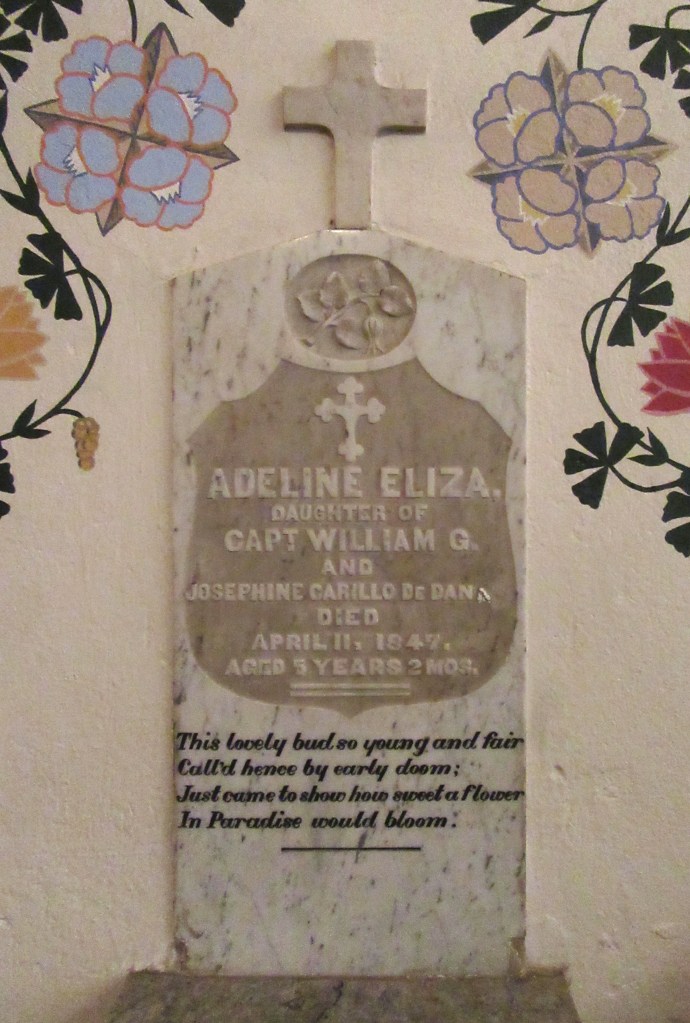
It’s pretty clear that the Danas adored their children. [And that Mr. Dana adored his wife, Josephine Carrillo de Dana. When the gentlemen adjourned after dinner for brandy and cigars—this is how Dana might’ve heard the news of the 1848 gold strike at Sutter’s Mill— she, like many Californio women, joined them.] One story has another daughter climbing up to the little cupola of the family adobe, sited on one of the most beautiful spots in the county, to direct one of the rancho’s vaqueros to rope for her the horse she wanted to ride that day.
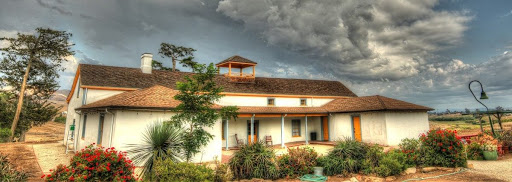
Another Dana, a little boy, hasn’t left Rancho Nipomo. Docents and volunteers still see him from time to time: he’s solid and real but his visits are very brief.
Deaths like these among the Dana family came at a time when, thanks largely to better diet, infant and child mortality among the middle classes of Europe and America was declining rapidly. We would be shocked at the detachment between parents and their children in the centuries before the Victorian Era (Francis Branch, Arroyo Grande’s founder and William Dana’s friend, came to the Valley in 1837, the same year that Victoria ascended the throne.) That detachment was a function of mortality among children: Parents could not afford to invest emotionally in children who were likely to die.
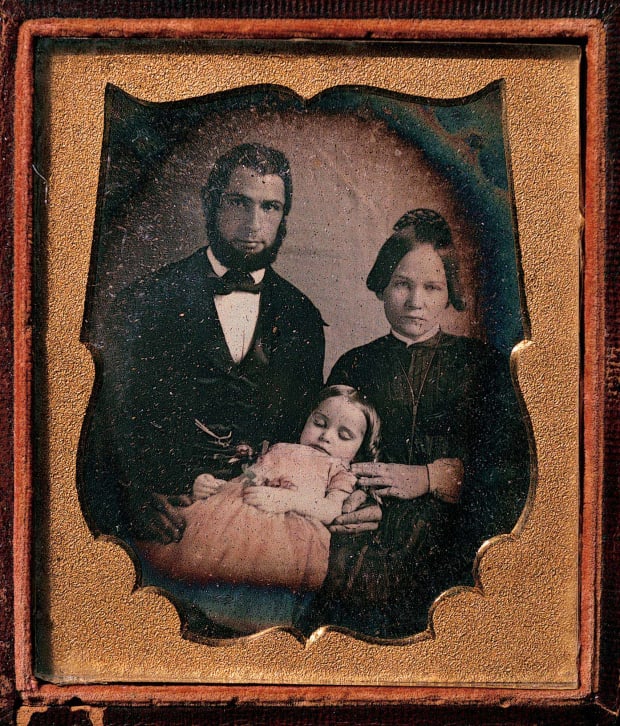
By the 1860s, that had changed. It’s macabre to us, but by then photography was common enough so that affluent parents who’d lost a little girl or boy paid to have them photographed. They weren’t willing to let them go.
In the summer of 1862, Francis Branch, by now the wealthiest man in the county, with tens of thousands of acres as his portfolio, was away on business in San Francisco when one of Rancho Santa Manuela’s vaqueros found him and told him that a traveler passing through had brought smallpox to the ranchero’s family.
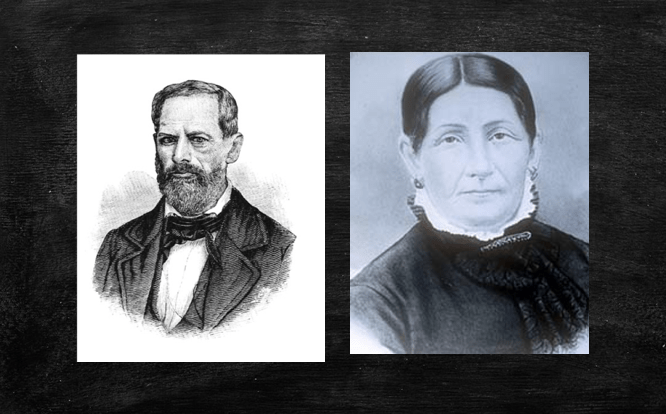
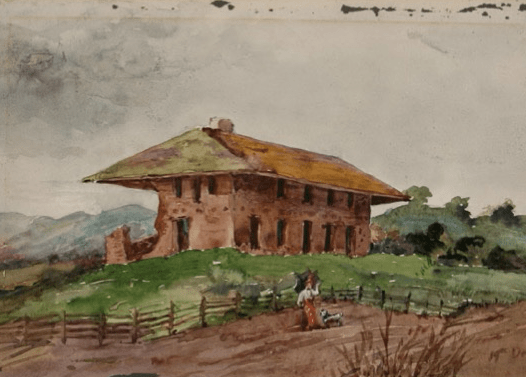
Branch rode hard—the man must have been desperate—to get home to his wife, Manuela, and his children. By the time he got to Santa Manuela (the ranch house was sited on a hilltop just below today’s Branch School) two of his girls were dead and a third died soon after. They ranged in age from five to sixteen.
The next year, a drought came that killed thousands of Branch’s cattle. He lost the modern equivalent of eight million dollars.
Bad as it was, the drought wasn’t the central tragedy of Branch’s life.
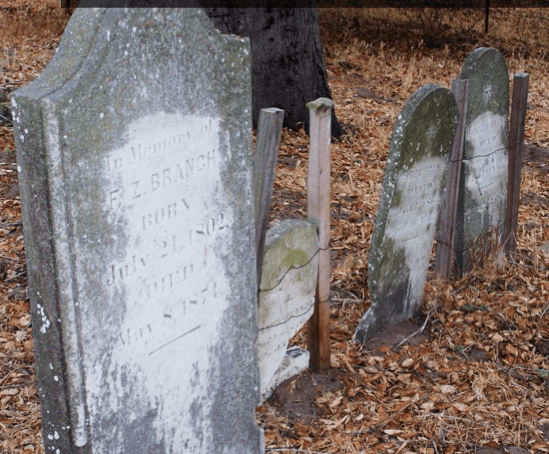
Next to his big tombstone in the family graveyard are the smaller tombstones of the three daughters. Branch died eight years after the smallpox had come to the big adobe atop the hill. When his family laid the great man to rest, they made sure he was close to his little girls.
 A Work in Progress