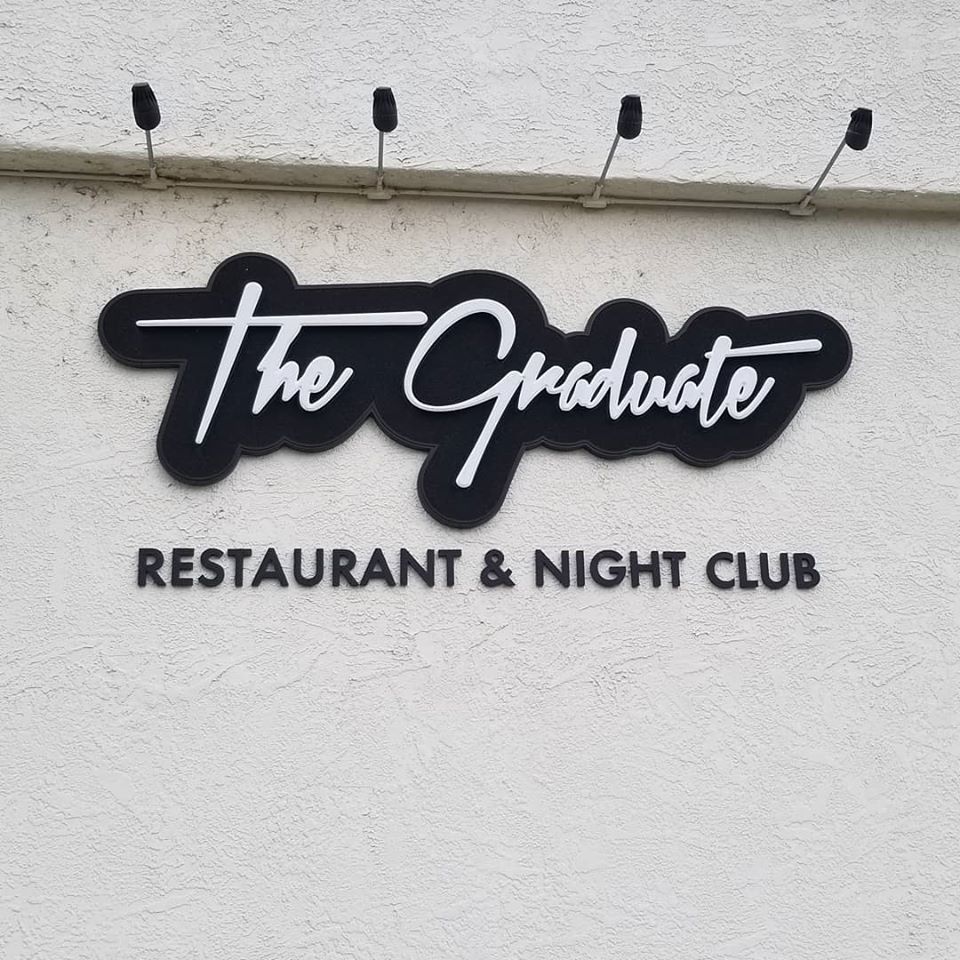
I have been stunned, but not at all surprised, by the sadness so many of us feel at the closing of The Grad, the burger/bar/nightclub in an immense building that seemed to hold the south side of San Luis Obispo down for the last forty-five years.
The grief is authentic and I would like to argue that it’s justified, too. Even my wife had tears in her eyes last night: when we were young parents, lunch at The Grad was a supreme treat for our two little boys, who ran about like wildebeest on the dance floor and played video games and then, when they were very little, after their Junior Gradburgers, they’d fall asleep in the back of our VW Westphalia on the way home to Los Osos.
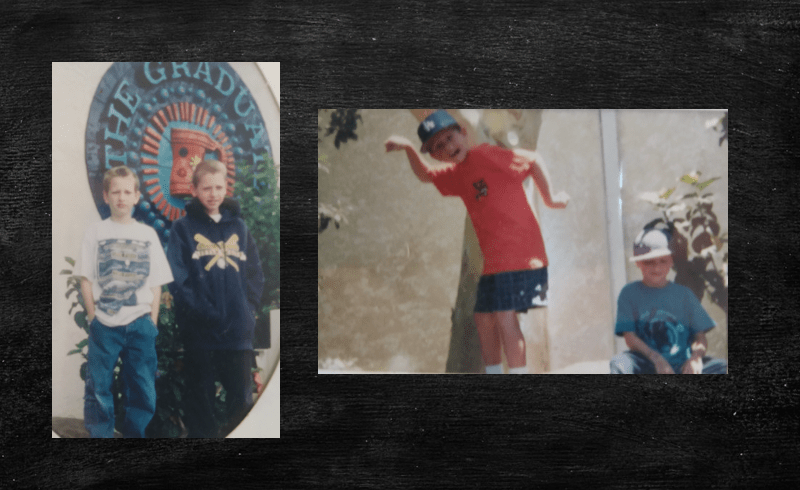
I had my share of burgers there–and beers, too, as a bachelor–with friends like David Cherry and Ricky Monroe and Cleo Cooper and with the fine young man, Rob Rosales, once a Grad bouncer, who would become my best man in 1986. My friend Randy Fiser, a fine teacher and a master of the pizza oven, was once a Grad bouncer, too. I didn’t need much bouncing back then, being a raging introvert. The dancing at night always disoriented me a little–I don’t do well with noise–but it was still fun and the girls were pretty and, as Hemingway would say, the bathrooms were (mostly) clean and well-lighted. And the bartenders were friendly.
But I mostly remember The Grad because of Elizabeth and our little boys.
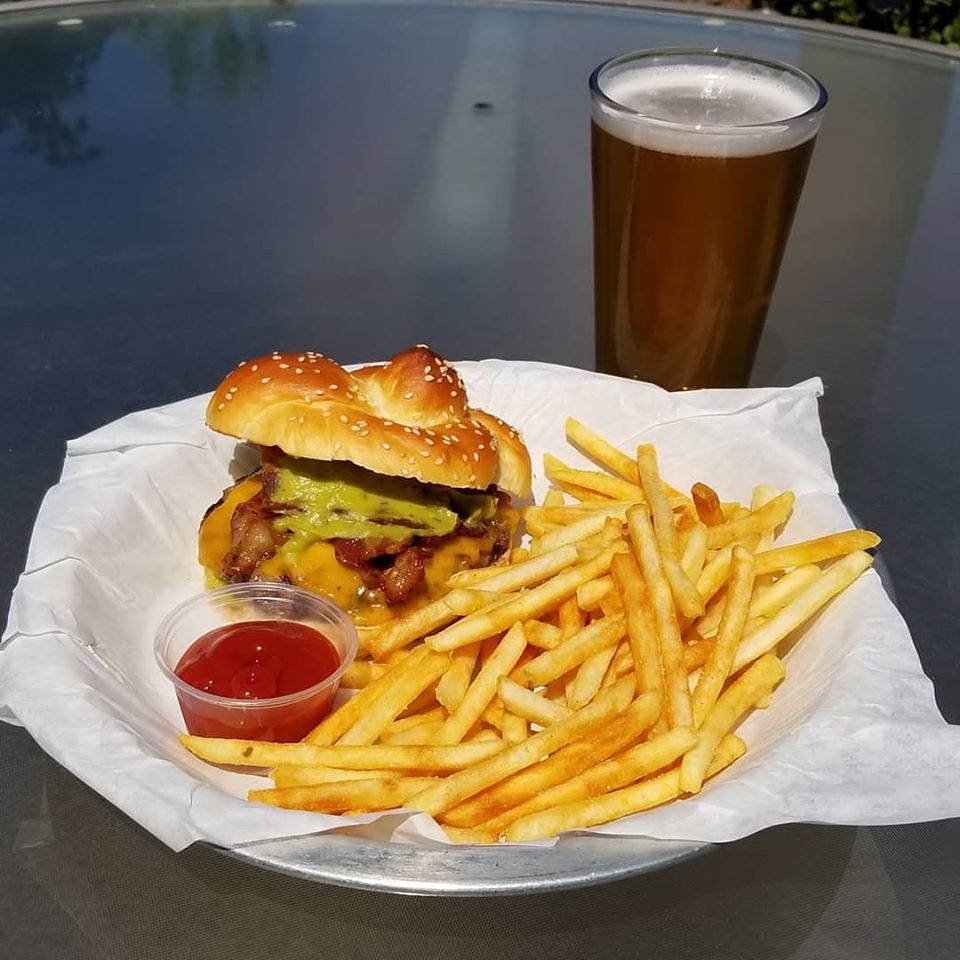
And, being a lifelong devotee of bread products, I remember the fresh-baked Gradburger buns, which were exquisite, baked by a tiny lady whose eyes were intent behind thick glasses and who was the figurative grandmother to every young person who worked there. A kid took your order, and they were almost always cheerful, but seeing Herself in her bakery, in her stolidity, was assurance of permanence, like the Washington Monument or St. Patrick’s Cathedral. She was a monument, too. But a tiny one.
But nothing, of course, is permanent.
There are plenty of people, as cold-blooded as snakes but far less attractive, who are dismissive of us when something fundamental changes in our lives and we are saddened, even if it’s just a burger joint. Or even if it’s a place like Alex’s BBQ in Shell Beach, far older and just as homely as The Grad. But Alex’s had aromatic ribs whose smokiness you can still smell and it had industrial-strength Martinis that recalled its happily scandalous connections to Prohibition bootlegging. Alex’s was the last restaurant where my Dad and I shared a meal before his death. It was destroyed capriciously, with no more warning than the Japanese carrier task force gave Pearl Harbor.
Even though the snaky people are probably correct, I’d argue that
we have a right, if only for a moment, to mourn Progress. We have no power to stop it.
But we leave pieces of our lives in vacant buildings or in the powdered brick that rises from buildings broken up by wreckers as merciless at the Caterpillars that flattened Okie farmhouses in The Grapes of Wrath.
I long ago gave up trying to understand San Luis Obispo, where Progress, when measured in storefronts, is so constant and so fickle that it’s the historic equivalent of a strobe light, freezing us in one moment that’s gone in the next.
But here is where I left pieces of my life: The Sno-White Creamery on Monterey, where Mom took me for consolation after getting a doctor’s shot; Corcoran’s lunches with my mother and grandmother, where you raised a little Bear Flag to let the waitress know you were ready to order; Riley’s Department Store, where Santa, with soft whiskers and a crushed velvet suit, sat in a big chair expecting you; Gabby’s Bookstore, where my parents found a collection of Robert Frost poems, a Christmas gift now sixty years old; Green Brothers clothing, where I rented my Prom tuxes and endured the sardonic but delightful humor of my favorite Green brother, Joe, as he measured me.
I even miss Aethelred’s, a bar where I left parts of myself that I never noticed were missing, including much of my hearing, and the Taco Bell on Santa Rosa, where 29-cent (or were they 19 cents?) tacos and burritos around the big round fire out front kept me sustained in my early college years.
I might miss, most of all, Muzio’s Market on Monterey Street, with its wooden floors and cramped colorful shelves and just-pink, just-sliced roast beef under the glass counter.
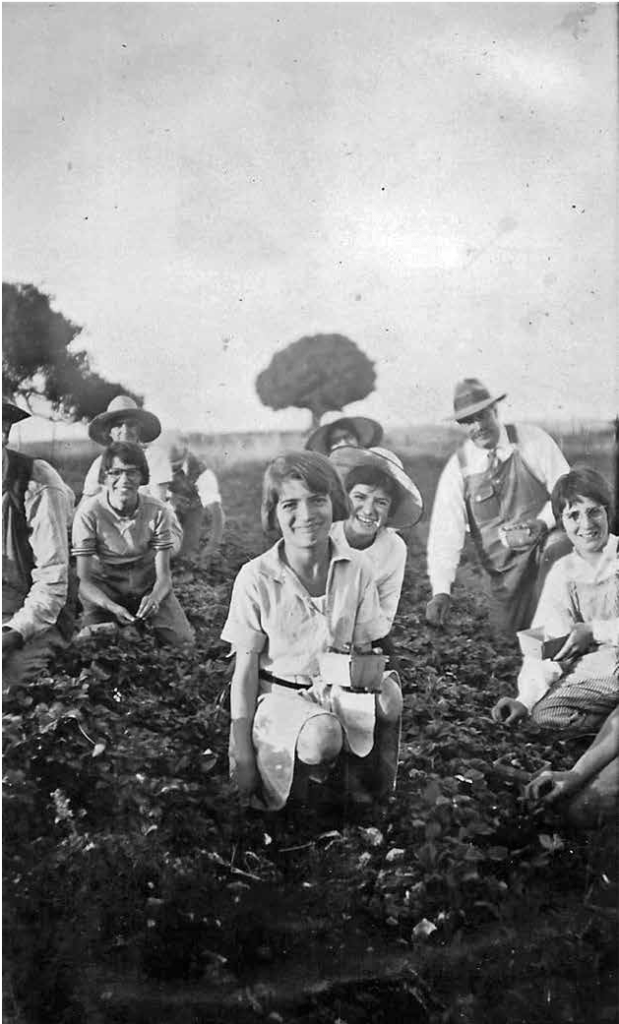
Joe Gularte of Corbett Canyon once delivered fresh strawberries to Muzio’s in a Model A pickup whose bench seat was lined with excited Gularte girls going to town.
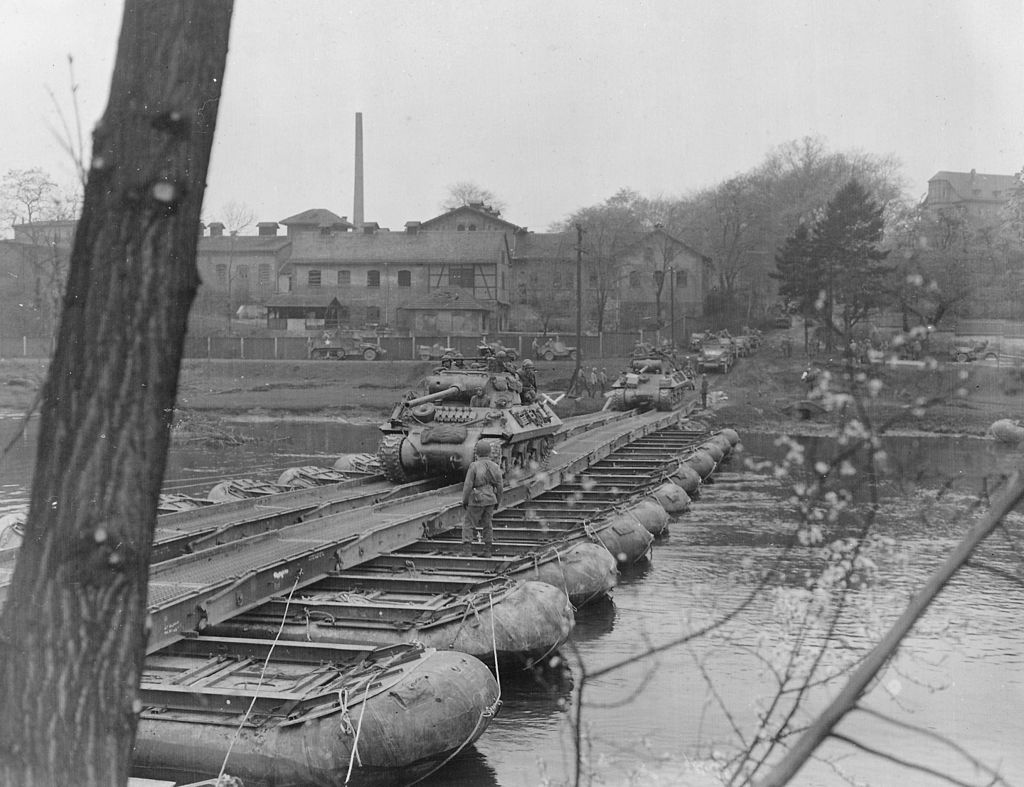
Joe’s son, Frank, died a decade later, in November 1944, during a firefight in the streets of a beautiful mountain French town, Merten, in the Moselle Valley along the German border. Frank’s last moments were chaotic. The first tank destroyer in his battalion to creep into Merten was fired on and returned fire, but then, in moving around a tank barrier, it got mired in the mud was destroyed by a German anti-tank crew. The next destroyer turned back, the third tumbled into a ditch and was set ablaze by enemy fire and the fourth’s gun jammed.
Frank’s son, and Joe’s grandson, Frank Jr., was born in the Mountain View Hospital on Upper Marsh Street three days after the sniper robbed him of his father.
It took another week for the War Department telegram to come home to Corbett Canyon.
Progress hasn’t the time for details like these.
So this business about mourning the latest victim of Progress, The Grad, strikes me as perfectly sensible. What we’re mourning is a place where we’ve shared our lives. In a time when we are so bitterly divided against each other, with the kind of venom we haven’t seen since the Civil War, we will miss The Grad because it reminded us that we, all of us, belong most of all to each other.

 A Work in Progress
I loved this memory. For a few moments I was 20 years old. Remembering great times dancing and meeting new friends. Oh the wonder memories.
“Once upon a time there was a tavern
Where we used to raise a glass or two
Remember how we laughed away the hours
And think of all the great things we would do
Those were the days my friend
We thought they’d never end
We’d sing and dance forever and a day
We’d live the life we choose
We’d fight and never lose
For we were young and sure to have our way
La la la la la la
La la la la la la
La la la la La la la la la la
Then the busy years went rushing by us
We lost our starry notions on the way
If by chance I’d see you in the tavern
We’d smile at one another and we’d say
Those were the days my friend
We thought they’d never end
We’d sing and dance forever and a day
We’d live the life we choose
We’d fight and never lose
Those were the days, oh yes those were the…”
LikeLike
Perfect!!!!
LikeLike
Well written, Jim! Brings back so many pleasant memories. We all bought all of our PE clothes at Bello’s. Still have the Mickey Manyle glove my dad bought for me for my Senior baseball season in 1965. Steve Boyle and I used to sit at the counter at Woolworth’s with a coke and piece of cherry pies before heading to basketball practice every day one hoops season! It is really such a shame that SLO has sold out to being in tourists- the old school charm of the town is long gone. But, like you said, that’s “progress”!
LikeLike