
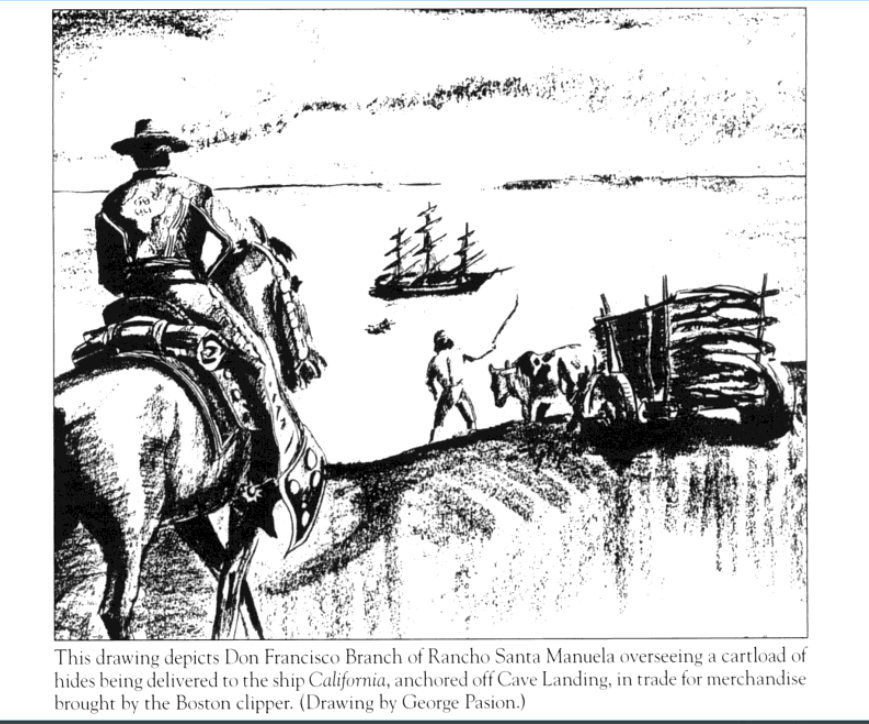
This drawing appears in Jean Hubbard and Gary Hoving’s outstanding book, from Arcadia Publishing, about Arroyo Grande’s history.
It moves me every time I see it. This is why.
The artist was my best friend in first grade at the two-room Branch School. George’s original hangs on a wall of the South County Historical Society’s research library, so every time I go inside I feel an instant of intense pain. George Pasion died two years ago.
George introduced me to empathy. He wore heavy leg braces—the film Forrest Gump replicated them— and running, for him, was awkward and painful. I remember distinctly one day when he could not keep up with the rest of us boys, and his eyes filled with tears. He was frustrated and enraged.
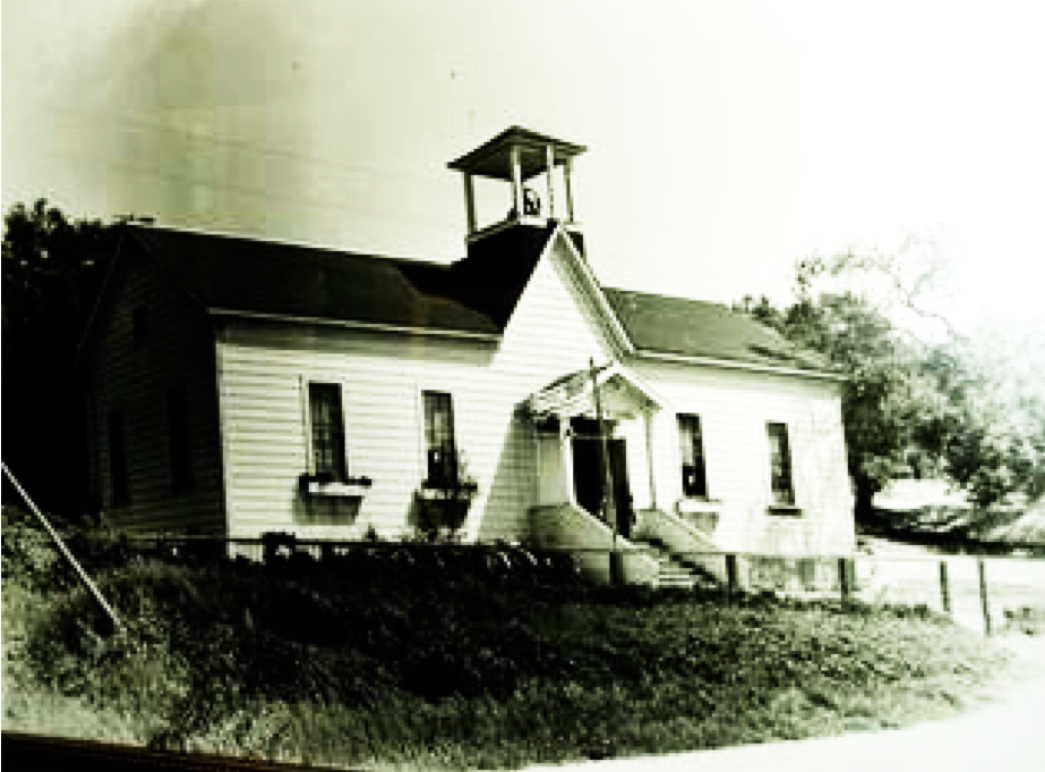
That moment broke my six-year-old heart, which is as good a way as any to begin a friendship.
George’s heart carried immense weight that belied the weakness of his legs. He was strong in ways we couldn’t understand. He was intensely focused but sometimes far, far away; his art, at which we always marveled, took him to places we couldn’t begin to imagine. This piece indicates he found the ability to time-travel while the rest of us were stuck in the Cold War and Mouseketeers.
There was immense wisdom in George, even then, when he was just a second-grade boy.
It was, of course, a wisdom he must’ve inherited from his parents. His father was Filipino, a member of the manong—Elder Brother—generation, bachelor men who came to Arroyo Grande to help support their parents back home. They fought, like tigers, in World War II and, at war’s end, they brought war brides home from the Islands, thanks to newfound liberality on the part of the federal government. Before the war, almost no Filipinas were allowed to immigrate; in California, male immigrants outnumbered them a hundred to one.
This was thanks to some of the most virulent racism, including in Arroyo Grande, that I’ve ever encountered in my research.
So it was World War II, and the families that soldiers started, that made my friend from sixty-two years ago possible. I last saw him fifty years ago. In learning of his passing, and in seeing this drawing, I’m reminded of the Whitman line.
Time avails not, the old fellow wrote in one of my favorite poems, “Crossing Brooklyn Ferry.” Time, according to the poet, doesn’t matter. There are some moments, when we keep them, that can never escape us. And there are some people, like the audacious poet, the old silky-bearded rascal, who inserts himself into his poem, who are looking at us fondly just beyond the reach of our vision.
And so George remains as vivid a presence in my life today as he was in that moment, in 1958, when I saw his eyes fill with tears. That was the moment that made him my first best friend.
 A Work in Progress