
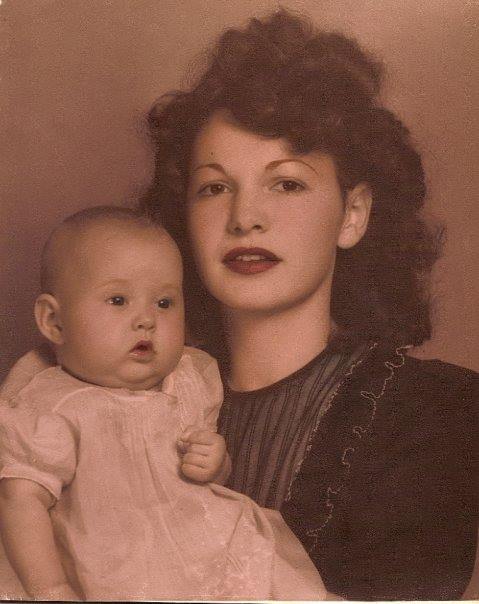
This is my Irish-American Mom. Her grandfather, Thomas, was born there and now I have a son named Thomas. Both her great-grandfathers were Patricks, both from County Wicklow, south of Dublin, and her grandmother was a Margaret, so she was Patricia Margaret Keefe.
The family went from Famine Ireland to Ontario; a brace of them, brothers and cousins from the same Irish village, worked in the Pennsylvania oilfields in the 1870s and then my great-grandfather headed west. He farmed a Minnesota homestead in the 1880s in the same county that had been marked, twenty years earlier, by the Sioux Uprising of 1862.
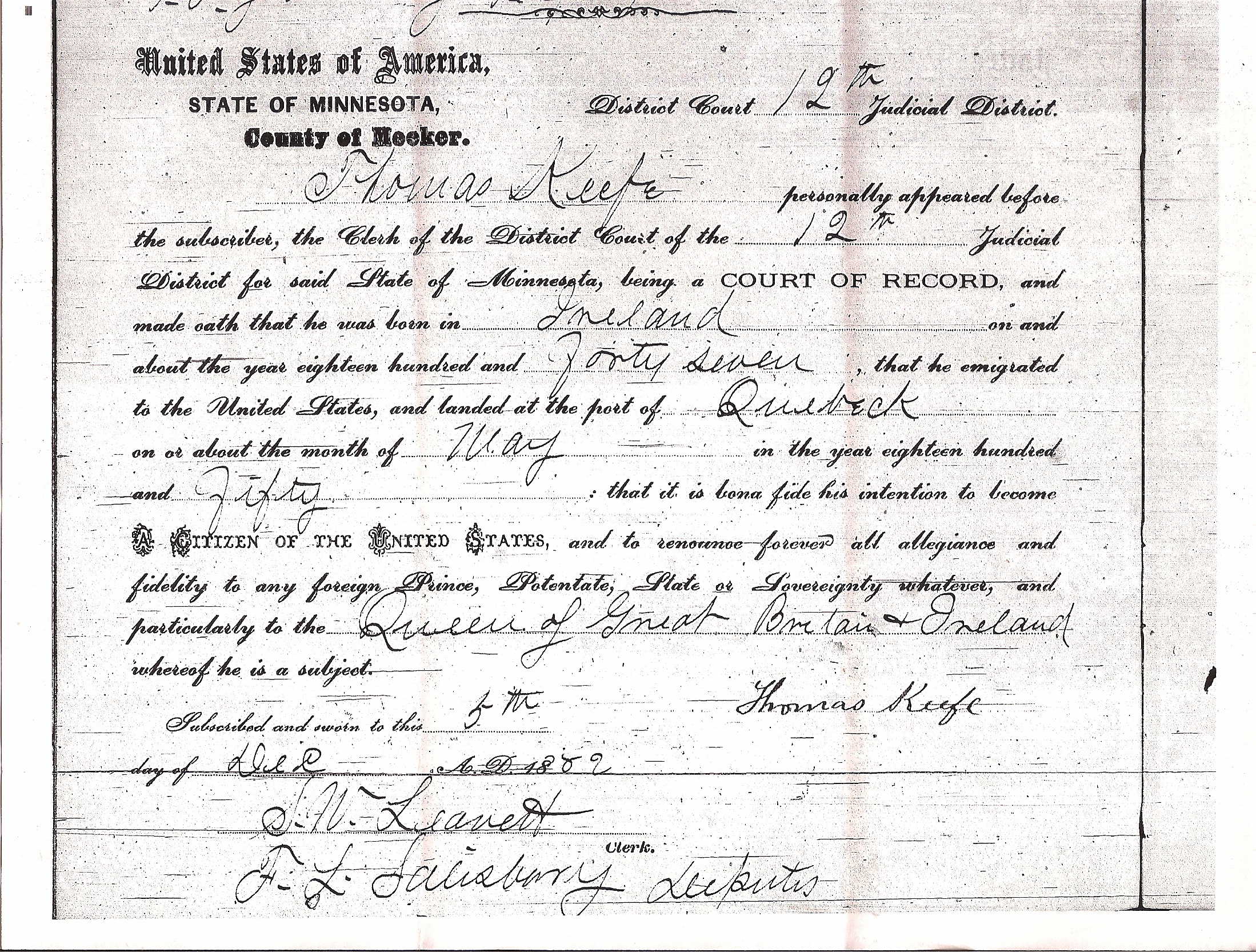
I would write about that tragic event 120 years after my great-grandfather’s time in Meeker County. It kind of followed me. My home town is Arroyo Grande, and one of our pioneers was a Minnesota soldier—he would’ve been among those on horseback in the contemporary illustration below—who witnessed the execution of 38 Sioux from a massive gallows in Mankato on the day after Christmas. A farmer whose family had been murdered was given the honor of springing the trap.

The whole affair started because the Sioux were starving. Their reservation land had been halved and so had the beef and flour distributed by their reservation agent. His response to the reports that the people in his charge were hungry? He channeled Marie Antoinette. “Let them eat grass,” he said.
So the war began when some young men were caught stealing warm eggs from beneath a Meeker County homesteader’s irate hen. Soon after, the reservation agent was found dead with his mouth full of grass.
The uprising ran its course and ended with the mass exeuction. It must have been cold on the day after Christmas in 1862.
My wife and I once met a charming couple in Iowa, Minnesotans (they’d heard of Solvang, where Elizabeth and I were married) come down to Iowa City on vacation to escape the cold.
And so, tired of Minnesota cold, Mom’s people, the Keefes, moved from Meeker County to Orange County (for the oranges) and their son, my grandfather, to Kern County (for the oil).
But I think I wrote about the Minnesota Sioux because of Mom. The woman had no patience for injustice or for cruelty of any kind.
The British shot thirty-seven Irish rebels from the Wolfe Tone Rising dead — in front of their families–in 1798 on the village green in Dunlavin. Only twelve years later, my mother’s great-great-great grandfather was baptized in St. Nicholas, the church that faced the green. Maybe my mother’s impatience was in her DNA.

The obverse side of her “impatience”—a gentle word—was a trait that not all the Irish come to America, I’m afraid to say, necessarily shared, and that was a respect for others who are strangers here. Here’s a story, set in the Upper Arroyo Grande Valley, that I’ve told many times, but here it is again. Since it really happened, it serves to make my point.
* * *
One lesson [I learned from her] appeared to my mother in the form of a Mexican fieldworker, a bracero, who one day walked into our front yard and up to her. She kept her garden shears at port arms and shoved me behind her skirts. The man signaled that he wanted to fill an empty wine gallon jug with water for himself and his friends, who were working the pepper field adjacent to our pasture. His face, with a tiny Cantínflas mustache, radiated good humor. My mother relaxed and filled the jug from her garden hose. The water was cold.
I knew that because of what she said next.
“Now, help him carry it back.”
So I did. And I stayed awhile…I learned a little Spanish from them in a barracks that smelled of damp earth and Aqua Velva. They spread snapshots across their bunks of wives and girlfriends and children, and they laughed when I tried out my new words in their language. That encounter would lead to my college studies’ focus, the history of Mexico and Latin America.
I attended a state college in the Midwest two decades later, where my Spanish teacher informed me one day that I had a pronounced Mexican accent.
It was such a fine compliment.
* * *
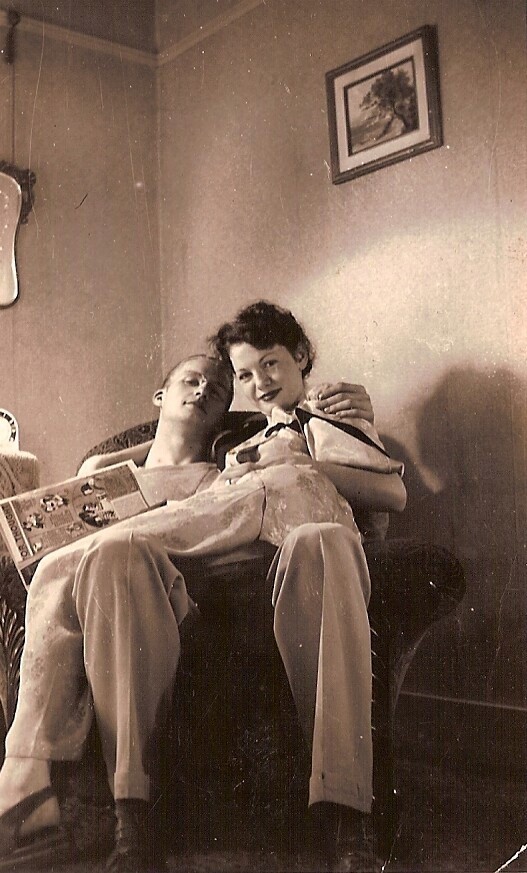
So I became a history teacher because my father, the most marvelous storyteller I’ve ever heard, taught me how to tell stories. It was my mother who put the edge to them. I guess that I was pretty passionate about teaching history. I never got over, for example, the anger I felt every year in teaching my young people about the First World War.
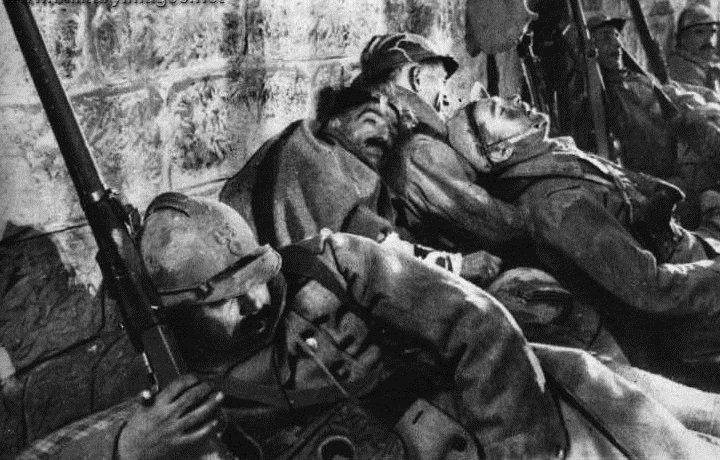
At the end of the year, I once asked a student what unit she’d liked the most in the AP European History class I was teaching.
She didn’t hesitate. “The First World War,” she said.
I was a little flummoxed. I would’ve picked the Renaissance or La Belle Époque.
Why? How can you “like” the First World War?
“Because,” she replied, “now I understand the value of human life.”
It was such a fine compliment, because this marvelous young woman understood the lessons my mother had taught me. My mother was still teaching them.
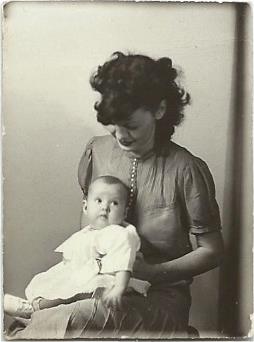
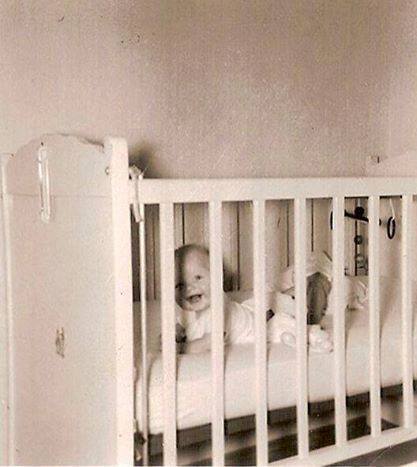
And that’s me in the crib. From the look on my face, it’s Mom’s face that I see.
 A Work in Progress