

A news item, April 10:
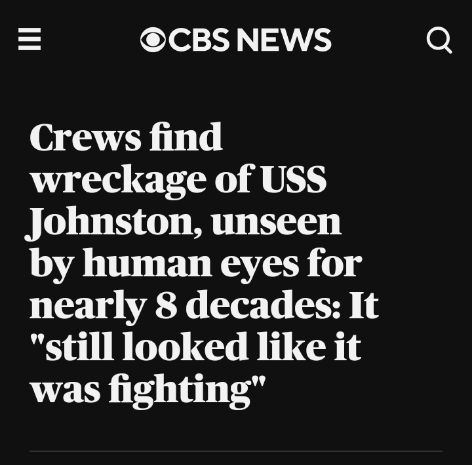
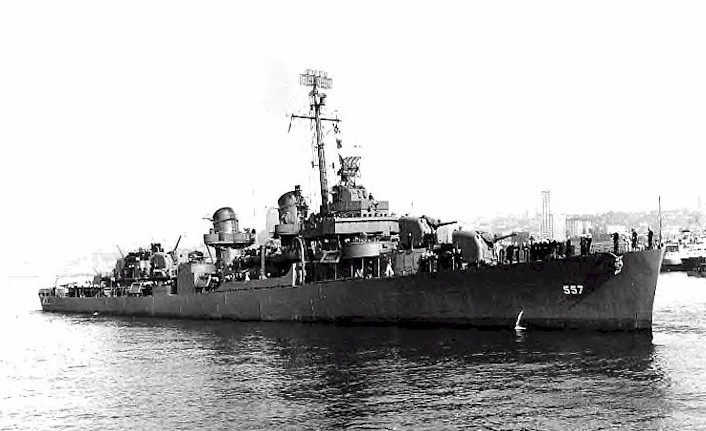
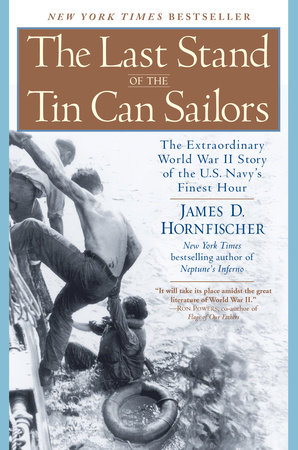
Lt. Cdr. Ernest Evans—vividly portrayed in the book “Last Stand of the Tin Can Sailors”— was commanding USS Johnston in October 1944.
His nickname, “Chief,” typical of the old Navy’s casual racism, alluded to his Cherokee/Creek ancestry. Annapolis must have been an ordeal for him.
Now, his destroyer was among those protecting landings in the Philippines when a massive Japanese task force—four battleships included—appeared from the northwest.
The main American force that was supposed to be guarding the invasion beaches—capital ships and big fleet carriers— was commanded by Adm. William Halsey.
It was gone. Halsey had been made the fool, lured away from the invasion by a Japanese decoy force that was essentially harmless.
The main battle force now appeared, intending to destroy the Americans as they landed.
Facing them were ships no bigger than USS Johnston and a complement of small aircraft carriers, “baby flattops.”
Evans was like Jesus’ Good Shepherd. The ships that were landing the GIs and their supplies were his flock; he was accountable for them and to them.
So he turned Johnston directly toward the enemy fleet. His destroyer, at 5500 tons, was armed with five 5-inch guns.
He was up against the battleship Yamato, 70,000 tons with nine 18-inch guns, twelve 6-inch guns and twelve 5-inch guns.
On her first run, Johnston fired two hundred shells and her entire complement of ten torpedoes: one of them blew the bow off a Japanese cruiser.
Ships even smaller than Johnston—destroyer escorts—followed her lead and went in to attack. Yamato’s armor-piercing shells, intended to cripple battleships, went completely through the fragile destroyer escorts.
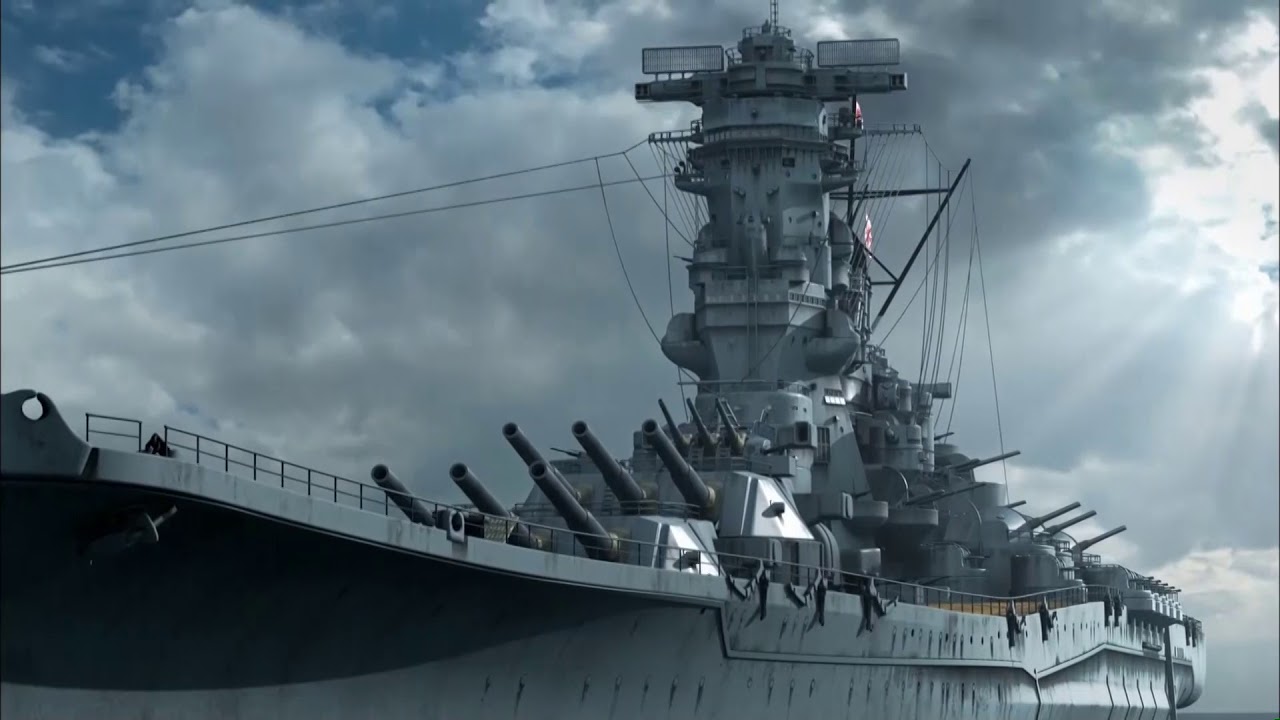
Although eighteen-inch shells from Yamato struck Johnston’s engine room and so nearly halved her speed, Evans kept his ship fighting, dodging in and out of rain squalls or the smokescreen the destroyer escorts had laid down.
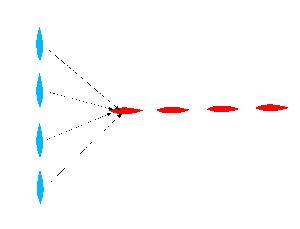
He fought two ship-to-ship battles, one against a heavy cruiser, another against a battleship seven times the size of his ship, at one point crossing an enemy ship’s “T” in a maneuver that would have made Lord Nelson proud.
Johnston scored at least sixty hits on the two enemy ships, but a six-inch shell from Yamato struck Johnston’s bridge, inflicting terrible casualties and mangling Evans’s left hand.
Evans kept his ship fighting.
The shellburst had nearly wiped out the bridge crew. It destroyed the wheel. Witnesses on a destroyer speeding past Johnston saw the badly hurt Evans–he’d suffered burn wounds and two fingers from his hand were gone—standing on the stern, bellowing orders down a hatch to where his ship was now being steered.
He waved at the passing ship.
Evans had taken Johnston into the fight at 7 a.m. By 9:45, the destroyer was dead in the water.
A swarm of Japanese destroyers then concentrated their fire on the ship that had bedeviled the entire fleet, and Evans finally ordered his men to abandon the sinking ship. He went into the water with them.
That was the last time Johnston’s crew saw their captain.
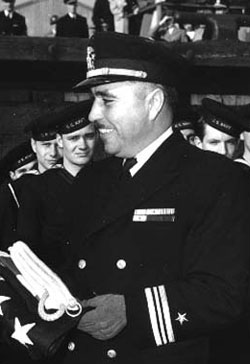
Ernest Evans was the first Native American naval officer to be awarded the Medal of Honor. 190 of his 327-man crew died with him.
But the Americans —little ships like Johnston and combat airplanes launched from the baby flattops—fought so fearlessly and so recklessly that after six hours of combat the Japanese, finally concluding that a fleet much bigger than theirs was about to prevail, abandoned their attack and withdrew.
Earlier this month, when the submersible found the wreck of the Johnston at 20,000 feet, her five-inch guns were still elevated, still pointed toward the enemy.
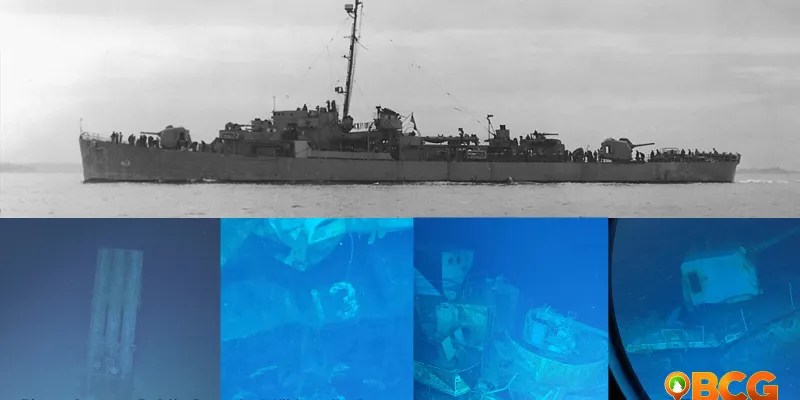
In June 2022, the same expedition discovered Johnston’s comrade, USS Samuel B. Roberts (below), at 22,000 feet. In the same battle, Roberts, 1370 tons, took on the heavy cruiser Chokai, blowing off her stern with a torpedo hit; the ship later had to be scuttled. Roberts’s commander, Lt. Cdr. Robert Copeland, then turned his attention to the heavy cruiser Chikuma, setting that ship’s bridge afire and destroying her No. 3 guns before three fourteen-inch shells from the battleship Kongo sent Roberts to the bottom. Ninety of her 210-man complement died, among them Gunner’s Mate 3c Paul Carr. His aft 5-inch gun turret is at far right in the photo sequence below. Carr died only after firing 325 shells at the enemy in a little over 35 minutes. A guided missile frigate is named for him today.
 A Work in Progress