
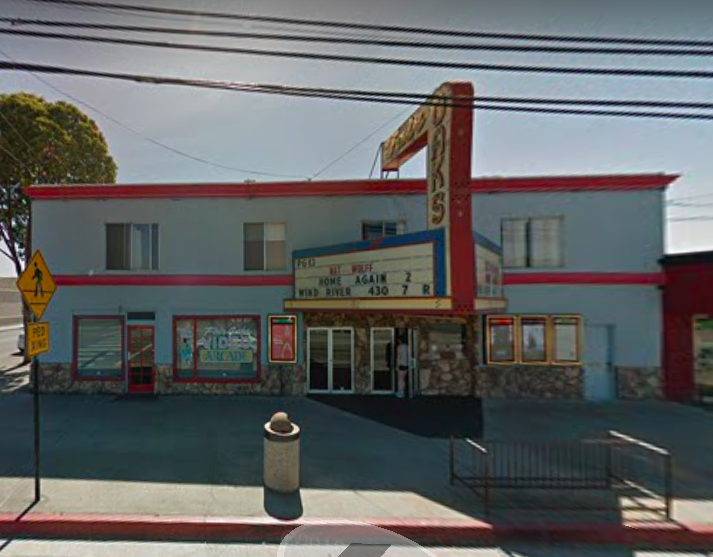
My wife, Elizabeth and I had a post-quarantine movie date to see In the Heights at the Fair Oaks Theater. It was delightful and it was wonderful to see it at the Fair Oaks.
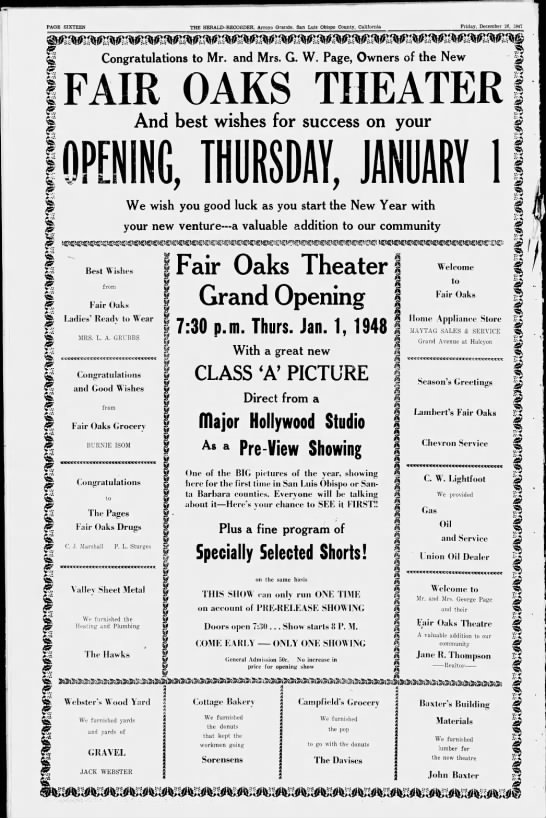
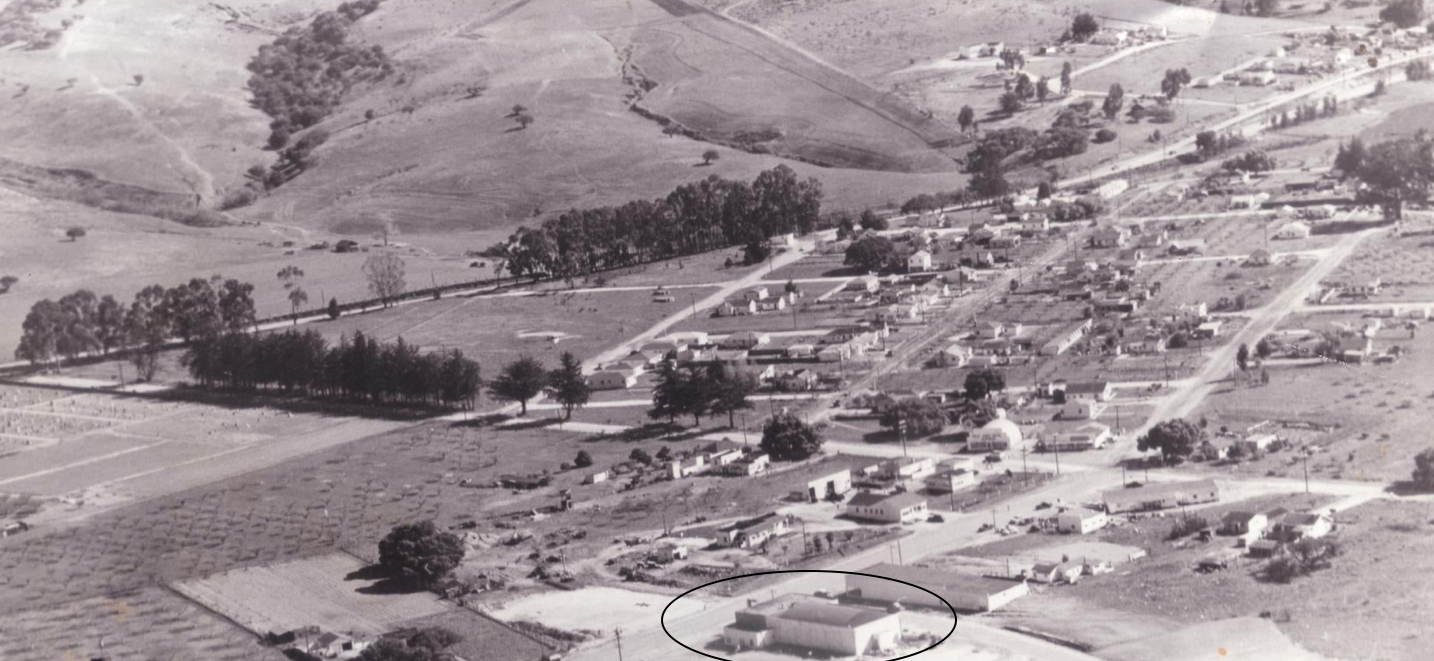
The theater opened in 1948 and by 1955, when my family moved from Taft to Arroyo Grande—the brick barbecue my father built still stands in the back yard of our old Sunset Drive home—it was kind of the center of a community that was growing rapidly.
Fair Oaks already had its own market—the building at the corner of Halcyon and Grand that includes a computer repair shop and a bookstore was the Fair Oaks Grocery, opened in 1939—and would, after the war, add the Fair Oaks Pharmacy, across the street at the other corner of Halcyon and Grand. I remember, vaguely, Mr. Chuck Brooner coming in to fill an after-hours prescription when I was pretty sick.
There was a big hardware store just across Alder from the theater, whose ground floor also included an appliance store. In 1955, Burkhardt’s Shoes, at 951 Grand Avenue, had its grand opening. Mr. Burkhardt was skinny as a whippet and was marked, as was Mr. Brooner, by his kindness: he treated my mother like royalty and was easy with kids who came in for their back-to-school Hush Puppies or Keds.
These places had a growing market because Arroyo Grande’s population more than tripled between 1940 and 1970—from 1,090 to 3,291—and an anecdotal study of new home purchases in the Arroyo Grande Herald-Recorder reveals that many of the new arrivals were, like us, refugees from the San Joaquin Valley.
Dad was a consultant to the founders of Mid-State Bank and got a job as comptroller for Madonna Construction, and, like many others of his generation, bought his home with a V.A. loan and, like many others, wanted a home near a school.
Arroyo Grande obliged with the September 1955 opening of Margaret Harloe Elementary, where my big sister finished her elementary education and my big brother began his. Harloe was one important anchor for Fair Oaks. The theater was the other.
We did not hit it off, the Fair Oaks and I. The first two films I saw there were deMille’s later Ten Commandments—I was distraught when Charlton Heston closed the Red Sea and the Egyptian charioteers’ horses drowned—and John Ford’s The Searchers, in the scene that traumatized me happened in the gathering dusk, when the Texas sodbuster family can hear the Comanche raiding party but can’t see them. It’s since become one of my favorite films, but it wasn’t then, not in 1956.
Forty years before, films were just as important a part of Arroyo Grande life as they were when the Fair Oaks was built. Silent films were screened Saturdays at Tanner’s Dance Hall, on the site where City Hall now stands, and young people were crazy about the movies. I learned this from Jan Scott’s wonderful Readers’ Theater play, “Letters From Home: Keeping Him Close,” which told, through their letters, the story of an Arroyo Grande soldier and his family in the closing months of World War I.
The letters included the impact of the 1918 influenza epidemic and its closure of churches, schools and theaters, and the doughboy’s little sister was desperate to see the movies open again. The high school, maybe not so much.
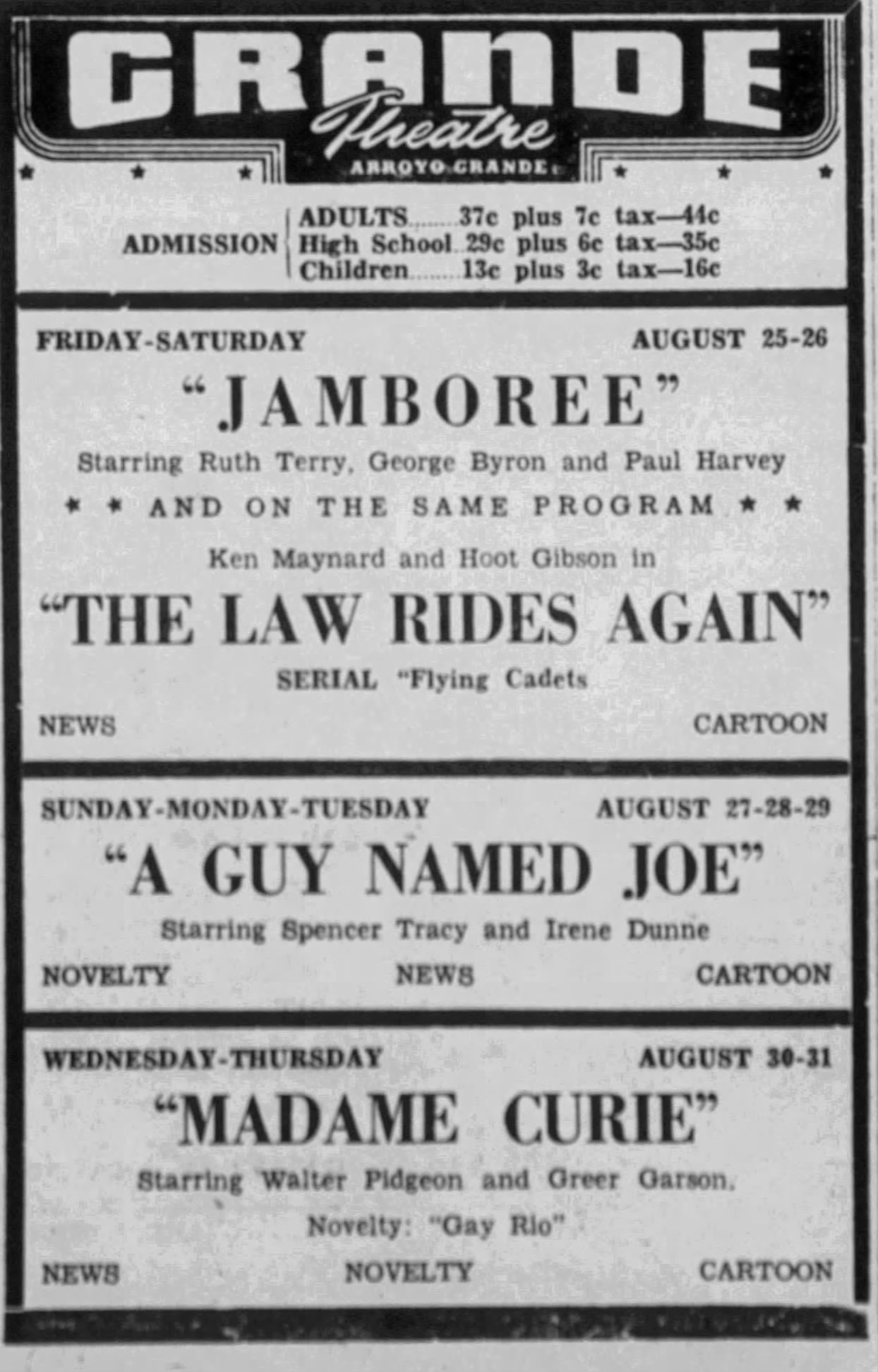
By 1930, the Mission Theater—later the Grande—was boasting talking pictures in its ads. The newer theater—which also sometimes hosted high school commencements (including Stanford-bound Vard Loomis’s), as Tanner’s Hall had once, for the five seniors of the Class of 1898—was housed in the Branch Street commercial building that now includes Posies in the Village.
Jean Wilkinson Frederick’s father owned the meat market on Branch that’s been a meat market since 1897. (Her classmates at the high school, fellow members of the Stamp Collecting Club, included the inseparable Haruo Hayashi, John Loomis, Gordon Bennett and Don Gullickson.)
Jeanne told me a few years ago that she loved the movies at the Grande. Her favorites were the Western serials, and her favorite cowboy was, of course, Gene Autry. It helped that Gene often sang to his horse, Champion, a beautiful sorrel with a blond mane that would’ve been every girl’s dream horse.
The Grande was ideal, too, for high school dates, because just down the street, in today’s Village Grill, was the Economy Drug Company, which featured Arroyo Grande’s soda fountain. Soda fountains were vital to Mickey Rooney and Judy Garland and seemingly, to most young couples in the 1930s and 1940s. My mother was a soda jerk in Taft in 1939 when Dad came in for an ice cream sundae. They were married in 1940.
I would survive the first two films I saw with my parents at the Fair Oaks and would see films my Mom loved (Lilies in the Field), films my big sister loved (Tammy and the Bachelor) and films that were more to the taste of my big brother and me (20,000 Leagues Under the Sea and Kirk Douglas’s epic battle with the giant squid.)
Since the mid 1960s, the Rodkey family have run what is truly is a neighborhood theater with all the elements I require in a theater: it’s clean, with comfortable seats and refillable popcorn. My family missed it when it was closed.
It’s like so many other places in Arroyo Grande I’ve found in growing up here: even when you leave your house you can find a place that’s home.
 A Work in Progress