
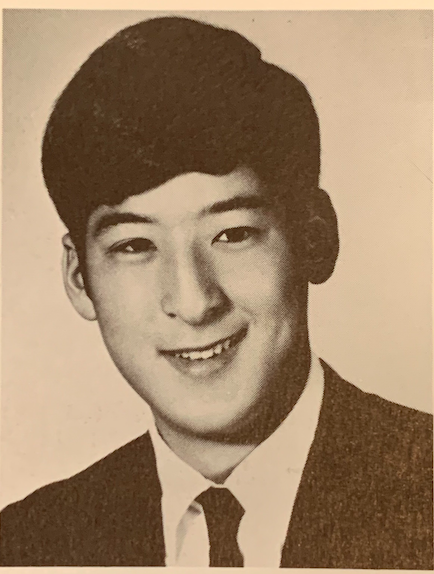
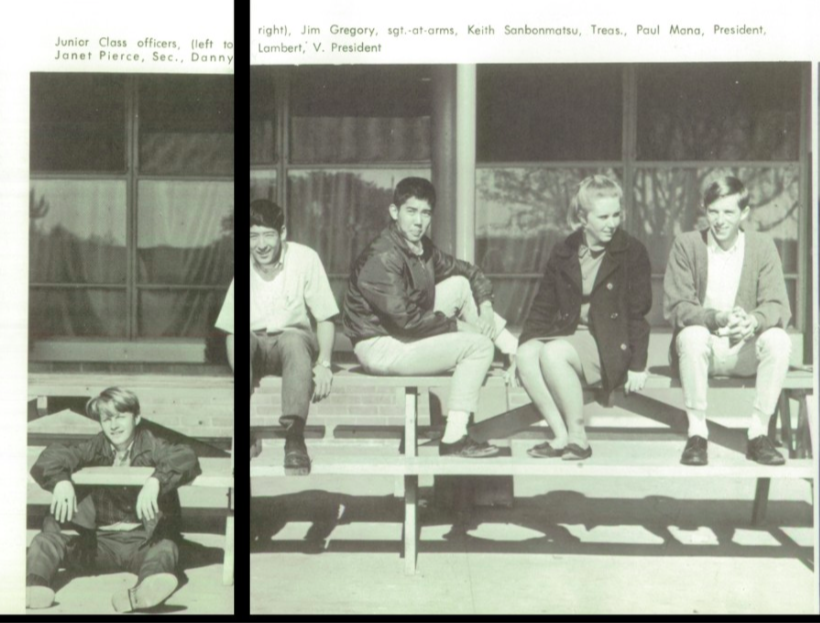
I didn’t learn until last night that my friend and AGHS classmate Keith Sanbonmatsu, AGHS ’70, has died after a motorcycle accident in Simi Valley.
I knew it couldn’t have been ‘natural causes.’ Keith was, throughout his life, an incredible athlete—a swimmer in high school, a relentless walker even as he approached seventy.
He was bright, unfailingly positive, with a sense of humor that flew like an arrow toward anything that was absurd or nonsensical.
He also had an integrity that was bedrock to his personality. I think it was Keith and Vard Ikeda we once saw as referees at a third-grade Biddy Basketball game, when one of the kids’ coaches was doing a terrible-tempered Coach Bobby Knight routine, stopping just short of throwing the folding chairs.
The refs called a time-out and had a very, very quiet talk–we couldn’t hear a word–with the offending coach. He was very, very quiet for the rest of the game.
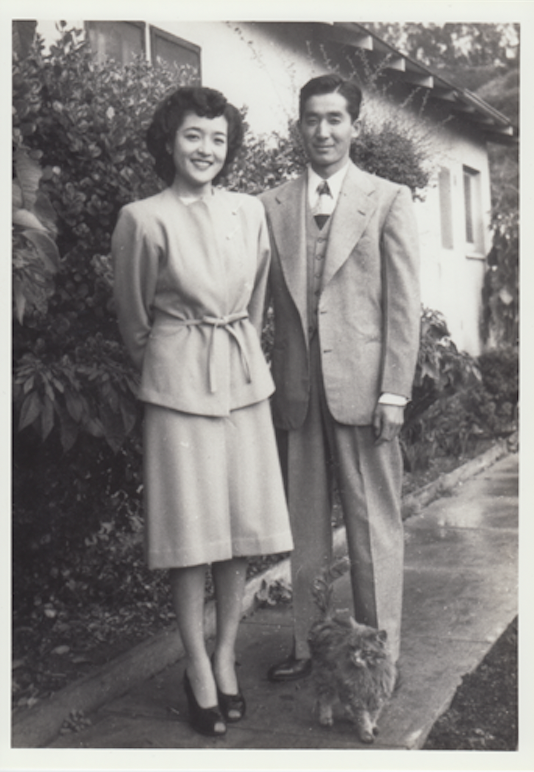
I know that one source of Keith’s integrity and strength of character came from his maternal grandparents, Shig and Kimi Kobara. Like our other Japanese-American neighbors, they were interned, at the Gila River Camp, during World War II. But Shig was such a successful farmer, and such a natural leader, that the FBI picked him up and took him away only days after Pearl Harbor.
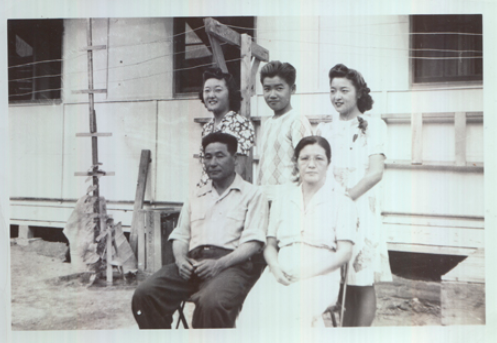
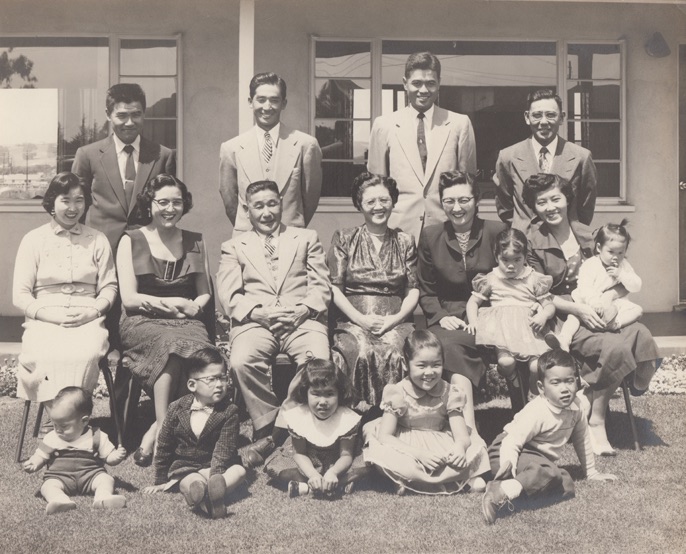
Top row (left to right): Ken Kobara, Mitsuo Sanbonmatsu, Towru Kobara, Hilo Fuchiwaki. Middle (left to right): Mari Kobara, Nami Kobara Sanbonmatsu, Shigechika Kobara, Kimi Kobara, Iso Kobara Fuchiwaki, Lori Fuchiwaki, Fumi Kobara, Joan Kobara. Bottom row (left to right): Gary Kobara, Keith Sanbonmatsu, Dona Fuchiwaki, Susan Fuchiwaki, Steve Kobara. Lori Fuchiwaki Collection, Cal Poly Re/Collecting Project
That’s also why the War Relocation Authority, at the end of the war, made sure the Kobaras were the first to come home from Gila River. They had to sleep for several weeks in the interior hall of their home in the Lower Valley. They could hear gunshots in the night. As the other families began to come home, it was Shig and Kimi who gave them shelter until they could re-establish their own homes and farms. This proved to be a necessity because local hotels refused the Japanese-Americans shelter.
But in a story that was repeated over and over again in Arroyo Grande, farmer Joe Silveira looked after the Kobara family’s land and equipment during the war; I think it was Cyril Phelan who stayed from time to time in their home and let it be generally known that he was accompanied by a 30.06 rifle. That discouraged potential vandals.
Keith and his cousin, Dona Fuchiwaki, both related to Shig and Kimi, were an immense help to me in writing the World War II book. And it was Kimi, through an oral history interview, who provided me with this charming story, included in World War II Arroyo Grande, about what was truly a frontier couple:
…Arroyo Grande’s Ella Honeycutt, a longtime conservationist and a gifted agricultural historian, notes that by 1913, when Congress passed the first Alien Land Law, it was too late. Many local immigrant families had already acquired farms. They tended to concentrate in the Lower Arroyo Grande Valley, where they grew vegetables, especially bush peas and pole peas, and when the latter were hit by disease in the mid 1920s, they began to grow newer crops like celery, lettuce and Chinese cabbage.The newcomers had hunted for legal loopholes and found them: they formed corporations and bought land through them, or through friendly white intermediaries, or they bought land in the names of their American-born children, whose citizenship would be inviolable until Executive Order 9066 proved otherwise. The birth of that new generation of Japanese-Americans—the Nisei—was proof incarnate that the people from Kyushu intended to stay in the Valley and make it their home. This trend was made possible by a single premeditated and humane opening in the anti-Japanese laws. They allowed those men already in American to settle here with their wives, to send home for them, or to send, as if they came from the Sears Catalogue, for “picture brides.”
This is how Shigechika Kobara, one of the early immigrants to the Valley, and his wife Kimi began their lives together. Their fathers were neighbors in Kagoshima, and after a short negotiation and a longer courtship-by-letter, the match was made. Shigechika took a train north and was waiting on a Seattle dock, looking for his bride among the passengers on her ship as it began to berth. She was looking back. “I remembered his brother, a naval officer,” Kimi recalled, “and I found a man who resembled him. I thought that this was the man I was about to marry. From the deck I fixed my eyes on him, even though I had never met him. That is why it is called a ‘picture bride.’”
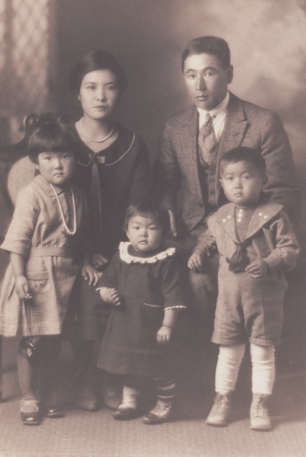
Learning the story of this family has been a grace to my life. I’ve been graced, too, in knowing their grandchildren, my friends and classmates, and in teaching their great-grandchildren in my history classroom. There’s some comfort to be found there when you’ve lost a friend who can’t be replaced.
 A Work in Progress