• About
  • The Germans

A Work in Progress

A Work in Progress

Monthly Archives: August 2021

Normandy, 1944

27 Friday Aug 2021

Posted by ag1970 in Uncategorized

≈ Leave a comment

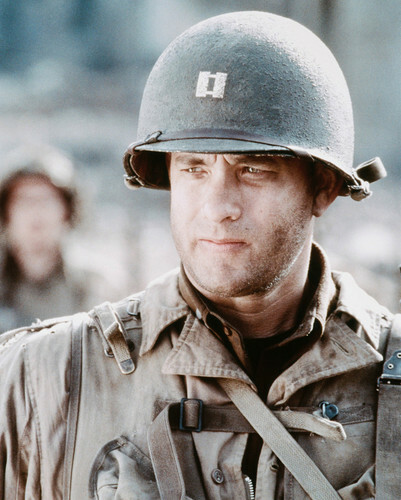
I watched a good part of Saving Private Ryan again last night. It is so compelling, Tom Hanks’s Capt. Miller especially so, that, amid its graphic violence, it reminds us—Miller reminds us—of who we are.

It also reminded me of a local G.I. killed in Normandy. I wrote about Pvt. Domingo Martinez in World War II Arroyo Grande. He was on my mind as I watched this film again.

This is what I wrote about him.
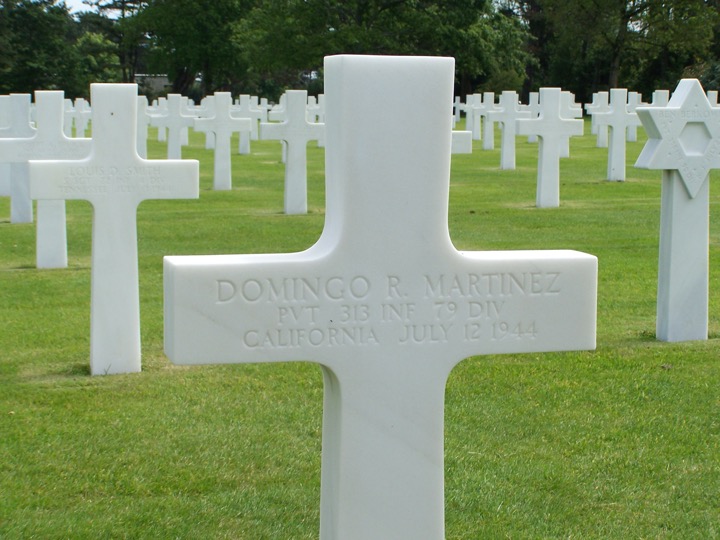

Domingo Martinez’s grave, Colleville-sur-Mer

It was…drought that may have brought a fieldworker, whose family had lived for generations in New Mexico, to these coastal valleys in 1940. Much of his native [New Mexico] in the years before had been swept away by the Dust Bowl. Winds had carried the copper-red soil as far east as the Mid-Atlantic to drop it, like gritty rain from a place that had none, onto ships still sailing freely between continen

Those ships would lose their freedom in the years immediately after, and the coyotes that hunted them without fear were U-boats come out of their lairs in Kiel and later in Lorient. U-boat captains called this the “Happy Time.”

The U-boats would someday kill that young fieldworker, if indirectly, as part of an inexorable chain of events that would lead him to Normandy, so far away from the fields that border Arroyo Grande Creek, and to pastures bound by hedges and grazed by fat dairy cows, cows that lowed piteously to be milked in what had become killing zones. One of them, dead in the crossfire, may have provided scant cover from the German machine guns that harvested crops of young men for fieldworker, now rifleman, Private Domingo Martinez
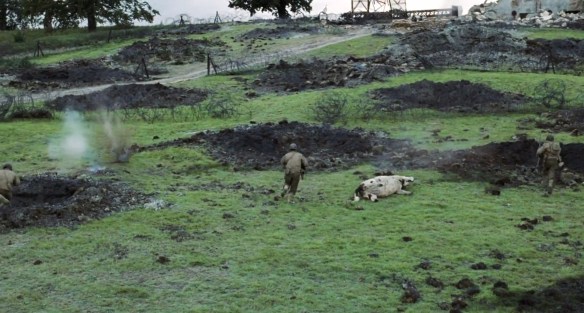
Taking the radio site, from Saving Private Ryan.

It is difficult to imagine Normandy in 1944; it is beautiful today, as are its people. A bonjour from an American tourist has more traction here than it does in Paris, and the little villages, separated by pastures and farm fields, are lovely, each with its distinctive little parish church. During the Middle Ages, as the skilled writer and Francophile Graham Robb notes, few villagers ever went beyond the sound of their parish church’s bells. The world beyond was like the ends of the eart

It is not the ends of the earth, but the Arroyo Grande Valley is 5,500 miles away from the D-Day beaches. Three local men, killed in the campaign to capture and then and break free from Normandy, are buried at the American Cemetery at Colleville-sur-Mer, an almost impossibly serene place above Omaha Beach.
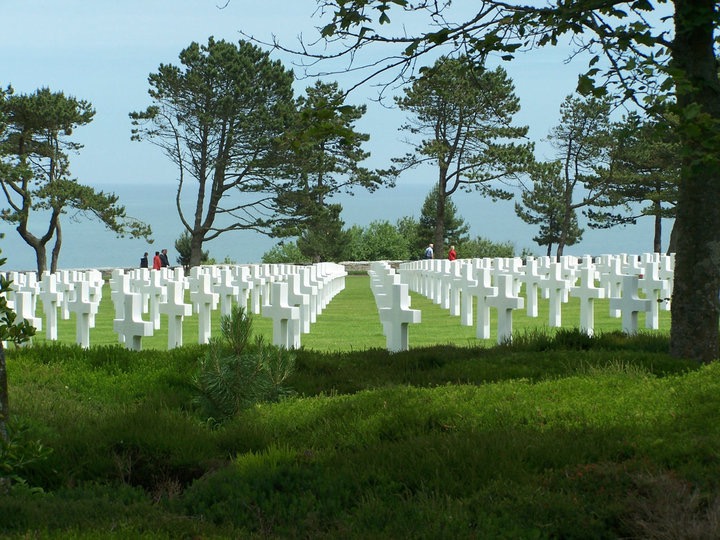
The American Cemetery

Below the cemetery, just offshore, a visitor today can see young men as they should be—exuberant and free—racing tiny sailboats, their sails bright oranges and reds, just beyond the surf line, where on June 6, 1944, young men floated like dead leaves on the water’s surface. The invasion of Hitler’s Europe nearly failed here. It didn’t but only because of an American generation that includes those who still hold the high ground at Colleville-sur-Mer
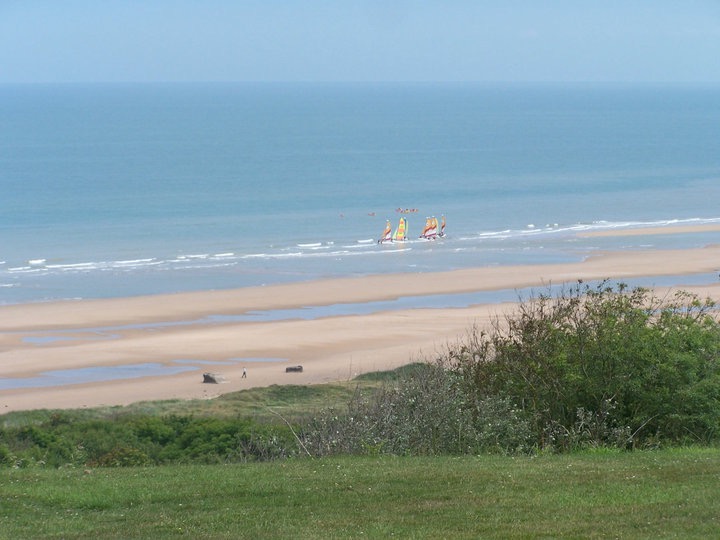
Omaha Beach, 2010

…The [Norman]hedgerows enclosed fields that had been plowed or grazed since Agincourt and were a hopscotch of natural fortresses—roots and compacted earth had formed defensible walls. The GIs had to assault them, one by one, to try to root out the defenders. When they broke through a hedge and entered a field, the superb German machine gun, the MG42, hidden in the next hedge beyond or positioned on the Americans’ flanks, annihilated entire rifle squads. It fired so rapidly that a burst sounded like canvas ripping. Army films had incorporated the sound to try to desensitize trainees. So the Americans could hear but never see in the tangle of the hedges who was killing them so efficiently. With supreme indifference, the bocage quickly transformed GIs into either hardened veterans or into statistics. This is what Private Martinez and the 313th Regiment faced in the attempt to seize the approaches to a key crossroads town, Le Haye du Puits.
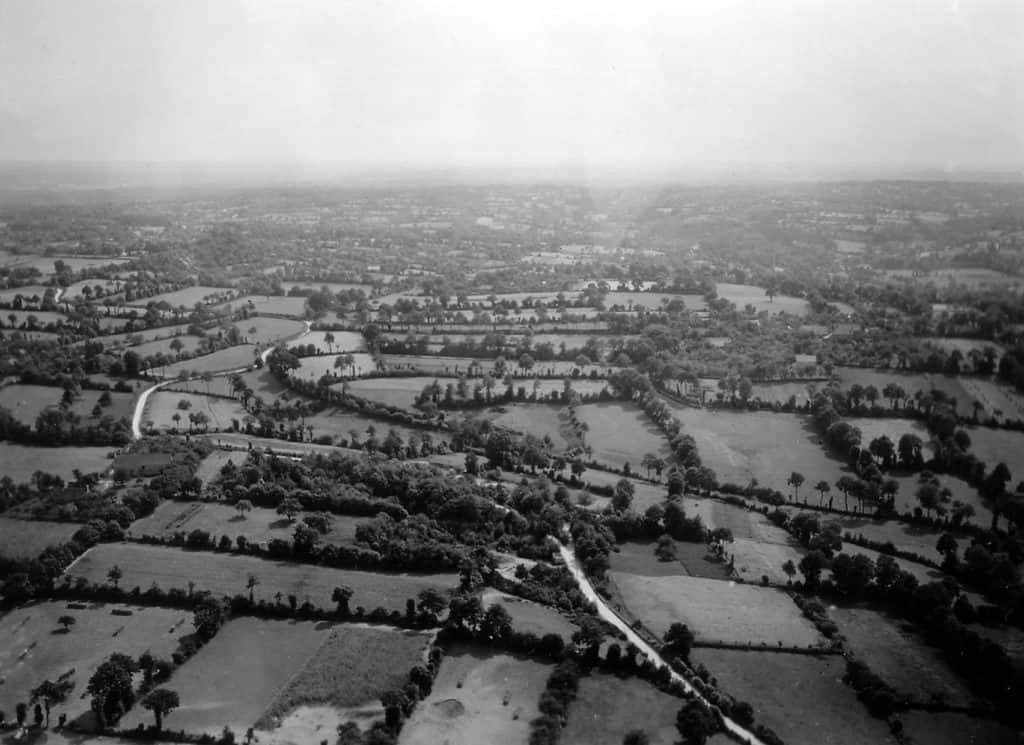
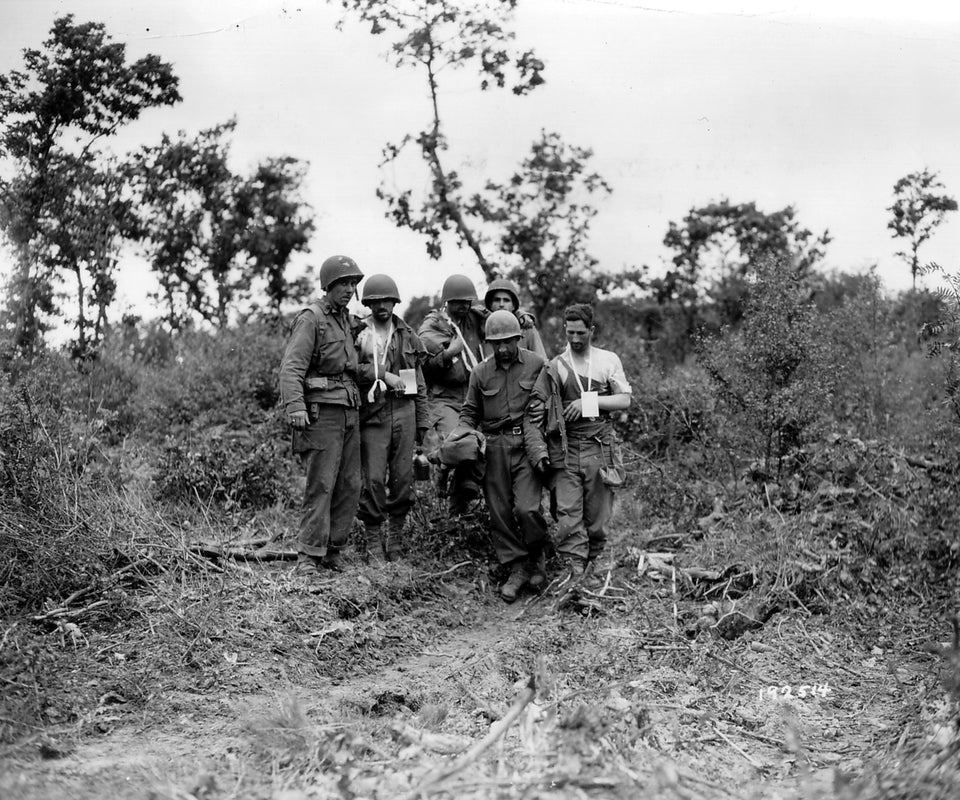
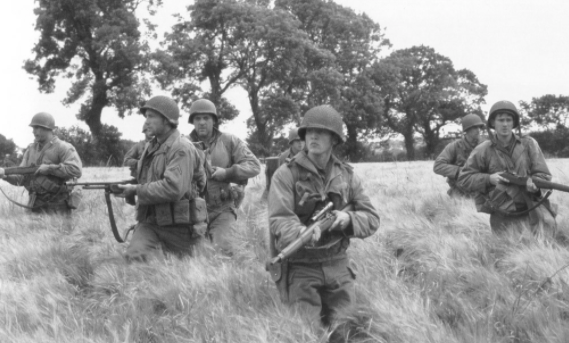
The hedgerows. (Below) Wounded GI’s from Martinez’s 79th Division exit a farm field; Miller’s squad on patrol in a Norman field.

There, the Americans fought first-class combat troops, not garrison soldiers, many of them veterans of the Russian front. As the 313th fought to envelop the town, the regiment’s combat chronicle is almost monotonous with passages that have the Americans falling back to their jump-off points after repeated failed attacks through fields, then across a creek, where every time they would be driven back by concentrated German artillery fire. The Germans had not only the finest machine gun of the war but also the finest artillery piece, the versatile 88-mm gun.
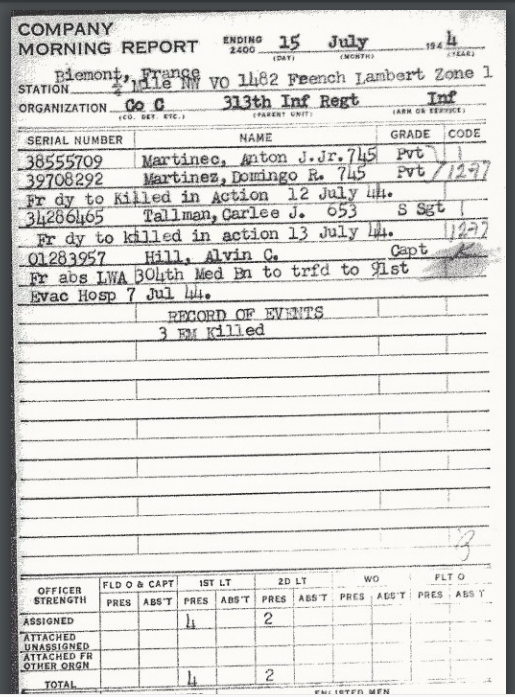
The record of Martinez’s death.

Other elements of the 79th Division would take La Haye du Puits while the 313th Regiment continued its sledgehammer attacks to the south. Martinez died during three furious assaults near a little town called Le Bot on July 12. It was likely an 88-mm shell that killed Martinez. Shrapnel to the head and chest ended his life quickly, but his death wasn’t recorded for three days, an indicator of the intensity of the stress the 313th had to endure. The division was victorious, but both the regiment and the division were depleted and their dogfaces, real veterans now, were used up. Signal corps photographers show some Seventy-ninth soldiers playacting outside a wine shop along a street in La Haye du Puits—they sit at a small table amid the rubble, enjoying a fine red wine as if they had dinner reservations and were awaiting the first course. But other photos of other soldiers show men who resemble sleepwalkers: their faces blank and few of them celebratory.

79th Division soldiers leave a secured Le Haye du Puits. The G.I. in the lead carries a mortar tube; one just behind carries the mortar’s baseplate.

With rest and replacements, the veterans of three weeks’ combat soon joined the breakout from Normandy. Two weeks after Martinez’s death, the Allies launched Operation Cobra, a coordinated drive to the east. They uncovered Paris and liberated the city in August, standing aside to let Free French units and their prickly commander, General Leclerc, enter first. Leclerc would have been furious to learn that Ernest Hemingway and some of his camp followers had preceded him and were, with great offensive spirit but also with deteriorating unit cohesion, busy liberating the bar at the Ritz Hotel.

It’s not hard to wish that Private Martinez had been granted more time—maybe, for this migrant farmworker and Dust Bowl refugee, time enough for a few days’ leave to explore Paris. Perhaps he would decide to visit Notre Dame, where it’s not hard to see him in your mind’s eye. He would enter the great church, remove his garrison cap, and cross himself at a holy water font. Then he would walk up the nave, the silence pressing on his ears, to stand for a moment at the transept crossing, where he would stop to smile with delight as he was bathed in brilliant, colored sunlight. This is the gift of the Rose Window to men and women of good faith.

The Rose Window before the 2019 fire.


Harvest Festivals past. And other things.

26 Thursday Aug 2021

Posted by ag1970 in Arroyo Grande, Uncategorized

≈ Leave a comment

It’s sad–but no recriminations on my part–that the Harvest Festival was canceled this year. (There were cancellations during World War II, as well; the first Harvest Festival was in 1937). The Harvest Festival was an especially big deal when I was little, when my parents dropped me off and turned me loose for the day. The parade was the best part. My sisters, in matching mint-green outfits, appeared in at least one, in the pony cart with Obispo Telstar, one of Anne Westerman’s Welsh ponies, doing the work.


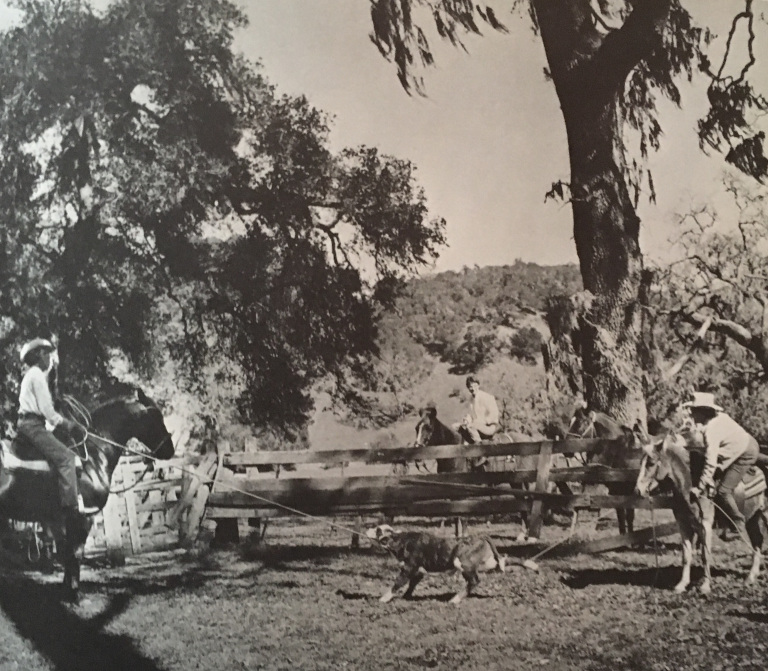
That’s my big sister in the center of the Jeanne Thwaites photograph, taken at Sid Spencer’s cattle ranch, now underneath Lopez Lake. Sid, on her Morgan–Roberta’s riding a Spencer Morgan mare–is on the left and her sister, Anne, on her pony, is on the right.


It was Sid Spencer who taught Sheila Varian how to work cattle. She was a good teacher. Sheila won the National Cow Horse Championship at the Cow Palace in 1961. She was the only woman competitor and her mare, Ronteza, was the only Arabian in a field of Quarter horses.Ronteza’s sire, Witez II, was a champion Polish Arab who plays a central role in a superb book, “The Perfect Horse,” about the American rescue of the Spanish Riding School’s Lipizzaner near the end of World War II.


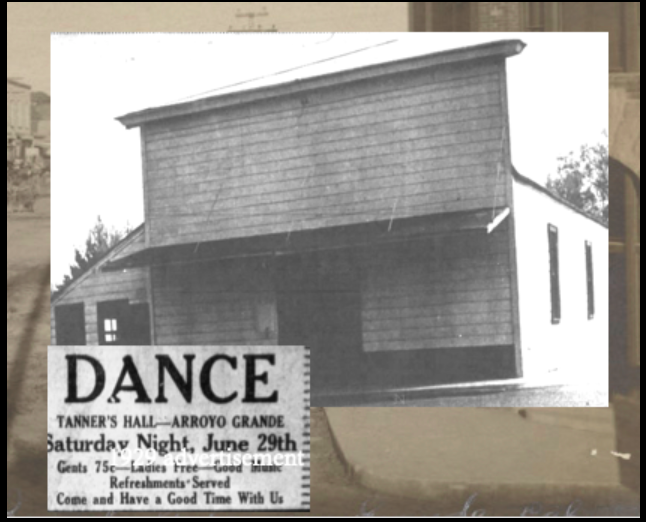
My favorite Harvest Festival equestrian unit was the one that veered off the parade route and entered Ralph and Duane’s. The horses were thirsty.My most vivid memory was the Harvest Festival of 1966, I think. I was a ninth-grader at the big old Paulding campus, having just graduated from Branch in a class of ten boys and three girls. I went to a dance in Tanner Hall, where City Hall now stands.Tanner Hall had been a dance hall since it was built by Beder Wood in 1894.


But in 1966, at that particular Harvest Festival Dance, I saw the second-most epic girl fight of my life. It was terrifying when you come from a graduating class of ten boys and three girls.

These city girls are lethal, I thought.

The most-epic Young Woman fight–note the change in word choice, reflective of the times– I ever saw was one I broke up as a student teacher at Righetti. I barely survived. Boy fights end when they get tired. If I hadn’t intervened at Righetti, those two Young Women would STILL be fighting.I was lucky to survive.

Tanner, or Tanner’s, Hall was also where locals went to watch silent movies, enormously popular by 1912, when the ad appeared in the Herald-Recorder. And Young Women in 1918–we know this from contemporary teenager letters– couldn’t wait for the flu pandemic to end because they missed the movies. High school, not so much.

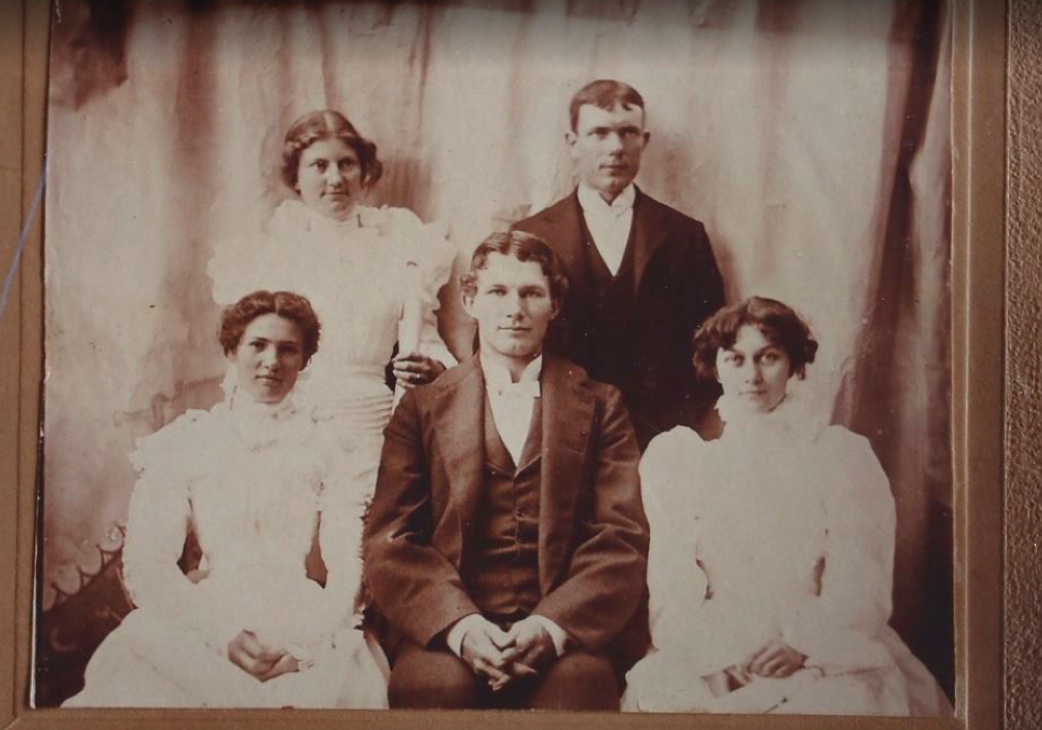
The Hall was also used for high-school graduations. The Hall, according to the Arroyo Grande Herald, “was filled to the point of suffocation” for the graduating class of 1898.All five of them. That’s the Class of ’98 in the photo.

Young Women wore white dresses to their graduations in those days. Fifty years after her graduation from Arroyo Grande Union High School, Ruth Paulding STILL fit into hers.

At the 1898 commencement, graduate Albert Ore delivered what the newspaper characterized as a stirring speech, “Spain and America!” about the then-current war still being played out in Cuba and the Philippines.

Ore gave that speech on June 30, 1898.The next day, Theodore Roosevelt’s Rough Riders, one of them from San Luis Obispo, followed the Buffalo Soldiers in to take the Spanish trenches atop Kettleman Hill in Cuba–misnamed “San Juan Hill.”

Albert Ore must have been thrilled. Look at what his speech did.

Subscribe

  • Entries (RSS)
  • Comments (RSS)

Archives

  • January 2026
  • December 2025
  • November 2025
  • October 2025
  • September 2025
  • August 2025
  • July 2025
  • June 2025
  • May 2025
  • April 2025
  • March 2025
  • February 2025
  • January 2025
  • December 2024
  • November 2024
  • October 2024
  • September 2024
  • August 2024
  • July 2024
  • June 2024
  • May 2024
  • April 2024
  • March 2024
  • February 2024
  • January 2024
  • December 2023
  • November 2023
  • October 2023
  • September 2023
  • August 2023
  • July 2023
  • June 2023
  • May 2023
  • April 2023
  • March 2023
  • February 2023
  • January 2023
  • December 2022
  • November 2022
  • October 2022
  • September 2022
  • August 2022
  • May 2022
  • April 2022
  • March 2022
  • February 2022
  • January 2022
  • December 2021
  • November 2021
  • October 2021
  • September 2021
  • August 2021
  • July 2021
  • June 2021
  • April 2021
  • March 2021
  • February 2021
  • January 2021
  • December 2020
  • November 2020
  • August 2020
  • July 2020
  • June 2020
  • May 2020
  • April 2020
  • January 2020
  • December 2019
  • November 2019
  • October 2019
  • September 2019
  • August 2019
  • May 2019
  • April 2019
  • March 2019
  • February 2019
  • January 2019
  • December 2018
  • November 2018
  • October 2018
  • September 2018
  • July 2018
  • June 2018
  • May 2018
  • April 2018
  • March 2018
  • February 2018
  • January 2018
  • December 2017
  • November 2017
  • October 2017
  • April 2017
  • March 2017
  • December 2016
  • November 2016
  • October 2016
  • September 2016
  • August 2016
  • July 2016
  • June 2016
  • April 2016
  • March 2016
  • February 2016
  • January 2016
  • December 2015
  • November 2015
  • October 2015
  • September 2015
  • August 2015
  • July 2015
  • June 2015
  • May 2015
  • April 2015
  • March 2015
  • February 2015
  • January 2015
  • December 2014
  • November 2014
  • September 2014
  • August 2014
  • July 2014

Categories

  • American History
  • Arroyo Grande
  • California history
  • Family history
  • Film and Popular Culture
  • History
  • News
  • Personal memoirs
  • Teaching
  • The Great Depression
  • trump
  • Uncategorized
  • World War II
  • Writing

Meta

  • Create account
  • Log in

Blog at WordPress.com.

  • Subscribe Subscribed
    • A Work in Progress
    • Join 68 other subscribers
    • Already have a WordPress.com account? Log in now.
    • A Work in Progress
    • Subscribe Subscribed
    • Sign up
    • Log in
    • Report this content
    • View site in Reader
    • Manage subscriptions
    • Collapse this bar
 

Loading Comments...