
Of course I didn’t expect to meet him, but T5 Orville Tucker’s death crossed my life today. Here’s his grave, in the Arroyo Grande District Cemetery.
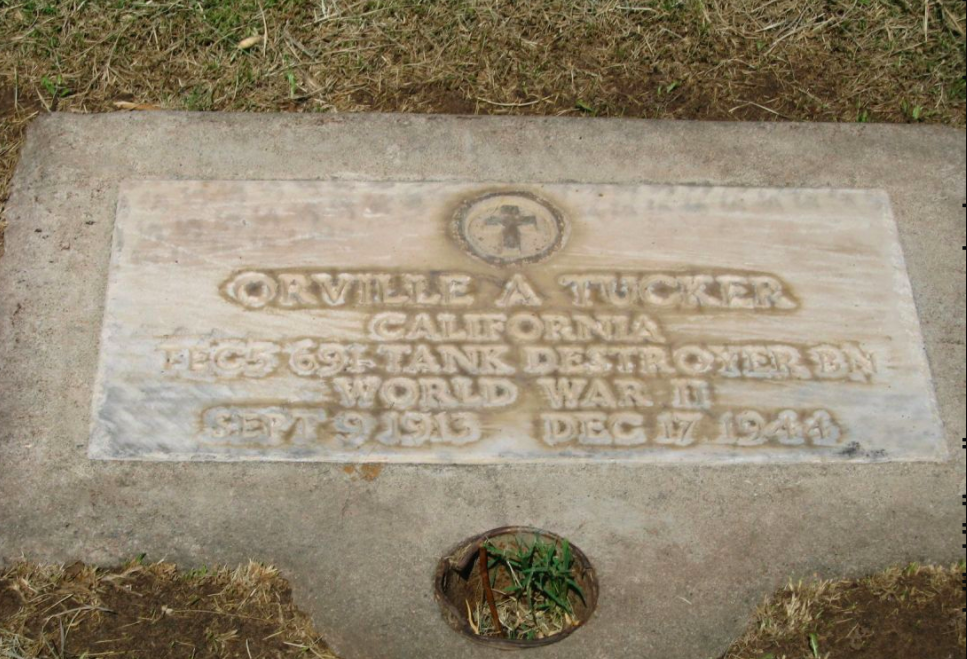
And there were a lot of things that struck me about him. The first was his date of death, and dates mean something to historians. We lost this American on the second day of Operation Wacht am Rhein, in what we now call the Battle of the Bulge.
It struck me, too, that he was part of a tank destroyer unit, like Frank Gularte, another Arroyo Grandean I know much better. Tucker was a member of the 691st TD Battalion, Gularte was part of the 607th. And the two soldiers died only days apart. Here’s what I wrote about Gularte on a website that memorializes fallen GI’s, killed in the war my father’s generation fought:
Sgt. Gularte served with the 607th Tank Destroyer Battalion and was killed in action 28 November 1944 near Metz, possibly outside the town of Merten. His son was born five days later in San Luis Obispo County, California. A memorial Mass was said in Sgt. Gularte’s memory at St. Patrick’s Church, Arroyo Grande, San Luis Obispo County, on Wed., 13 December 1944. Sgt. Gularte, before the war, was employed by E.C. Loomis and Son, a farm supply company; Gularte and his family were and are well-known and highly respected in the Arroyo Grande area.
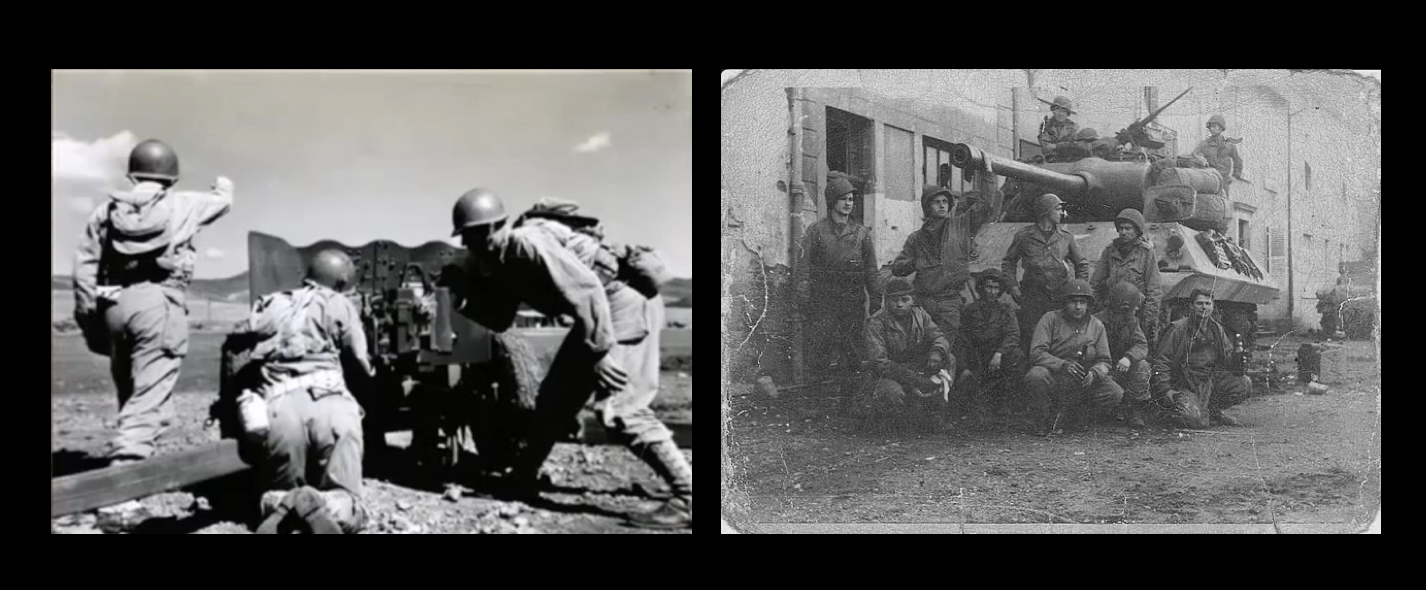
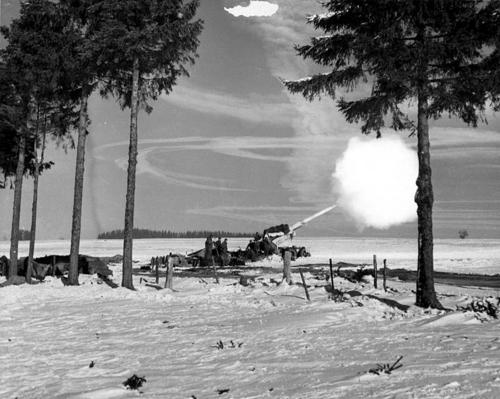
At the time of his death, Tucker’s battalion was still fighting enemy armor with the 57-mm artillery piece, like the one at left being manned by soldiers training at Camp San Luis Obispo in 1944. Frank’s 607th had graduated to the M36 tank destroyer–that’s a 607th TD in the other photo—built on the chassis and hull of the famed Sherman tank, but with a much more robust 90-mm gun.
But it was likely a Mauser rifle that killed Frank, in the hands of a German sniper, during an attack by the 607th that was to have been supported by infantry. They didn’t show, so Frank’s company went into action alone. German fire disabled three tank destroyers edging into Merten—a beautiful mountain town— and the American attack bogged down. Chaos ensued and it claimed Sgt. Gularte.
I don’t know yet how Orville died, but he’s got another tie to the Gularte family.
As near as I can tell, in the opening hours of the Battle of the Bulge, Orville Tucker’s battalion was attached to the 28th Infantry Division. They were defending St. Vith, a Belgian town directly in the enemy’s line of advance and at the seam of two powerful German armies. Twenty-two thousand Americans were in the way of 100,000 Germans and their armor, including 500 tanks. The units that attacked St. Vith on December 17 included the 1st SS Panzer Division Leibstandarte SS Adolf Hitler, an SS unit that had it origins as the dictator’s bodyguard.
Their assignment was to take St. Vith by midnight December 17. It didn’t work out that way, partly in thanks to Orville Tucker and partly because of Frank’s brother, Manuel, also fighting to defend St. Vith. (Two Arroyo Grande settlers, Civil War veterans, had fought in separate regiments within 300 yards of each other at Gettysburg.) Manuel’s field artillery unit–they tended big 155-mm guns, updated versions of the artillery that stood guard over San Luis Bay here at home–and it was the accuracy and ferocity of their fire that delayed the German advance.
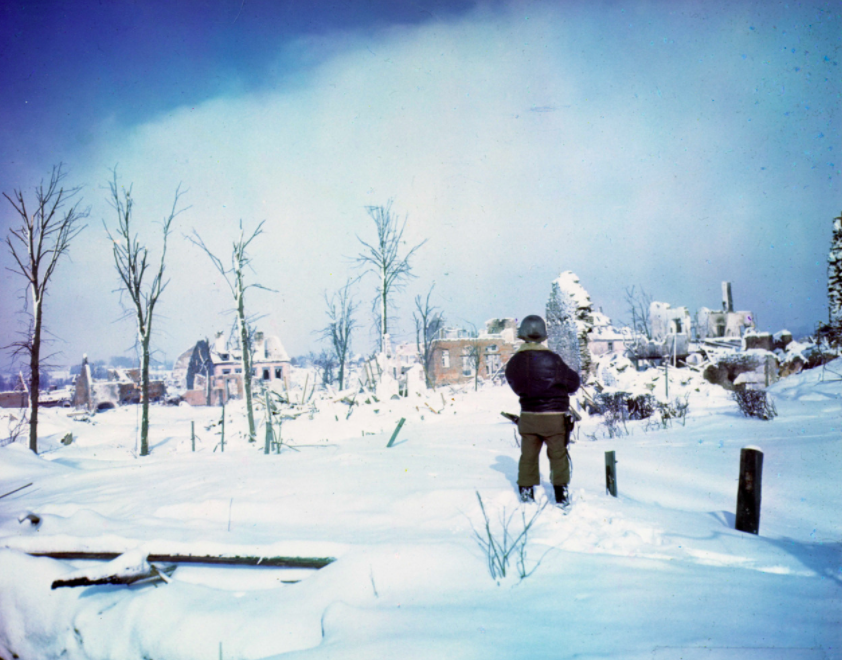
“Delay” was exactly what was needed. The panzers were fuel-poor (because Germany was: Berlin taxis were running on firewood in 1944) and the success of the Battle of the Ardennes depended on speed, on objectives seized promptly, even on the hopeful seizure of vast American stockpiles of gasoline.
Those might’ve been dispatched to the battlefield by my father, a lowly Quartermaster second lieutenant whose responsibilities included providing the African-American gasoline supply companies that kept the American army on the move.
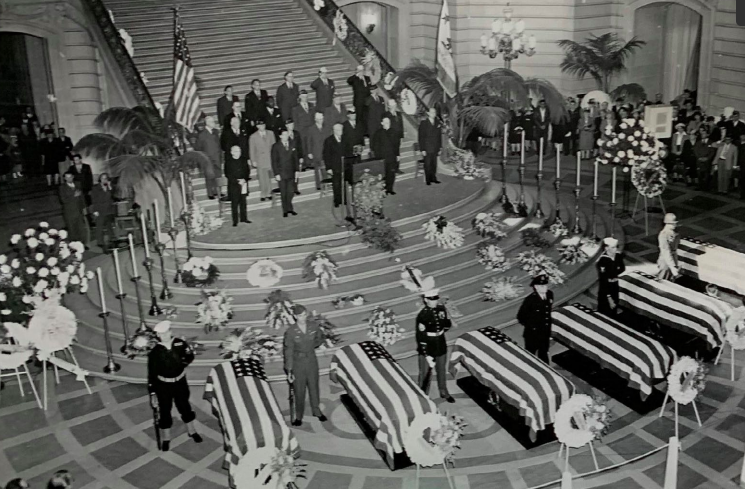
By the time the American army had stopped moving—backward—and flattened the Bulge salient, 20,000 GI’s were dead, among them Orville Tucker. And though he died 5,000 miles away, Tucker was evidently one of the first local GI’s to come home. This is from the December 31, 1948, edition of the Arroyo Grande Herald-Recorder:
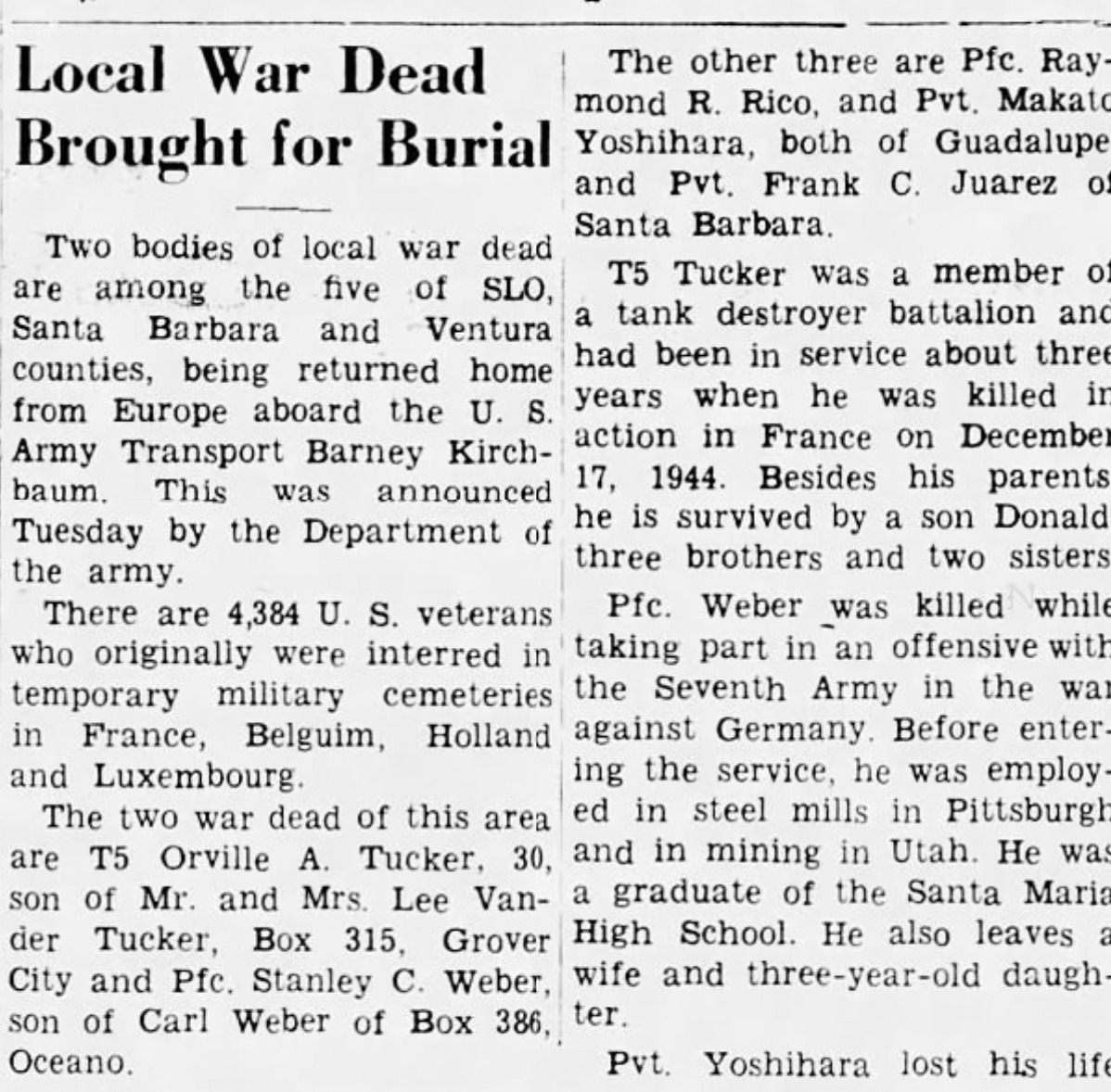
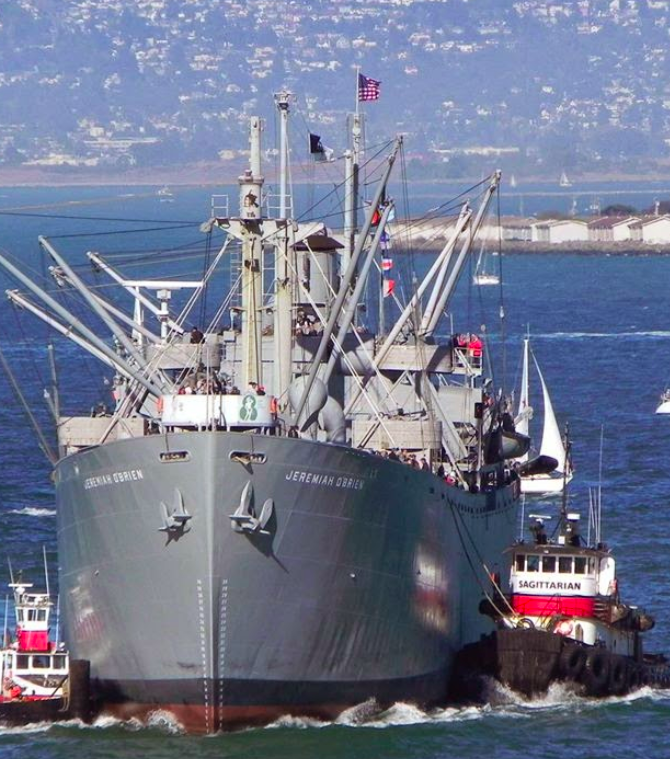
And the ship that brought Orville’s body home, the Barney Kirschbaum, named for an American merchant mariner killed in a 1943 U-boat attack, was a Liberty Ship, one of the miracles of the war, one of 2,710 such freighters launched from American shipyards during the war. Kirschbaum would’ve looked exactly like San Francisco’s Jeremiah O’Brien, tied up at Pier 45. (In 1994, O’Brien had the distinction of returning to the European Theater—to Normandy, no less—where she’d been part of D-Day fifty years before.)
The war dead intersect with my father’s life, as well. Once the war had ended, his duty shifted to training GI’s, nineteen-year-olds, some of them grads from Class of ’44. They’d come to Europe prepared the fight Germans, but the war was over, so Dad’s work, and theirs, was in Graves Registration. He trained these soldiers in the ghastly work of identifying the young Americans the war had claimed. Those young men—forever young— were then to be buried in one of a network of American military cemeteries. Many of those casualties, like Orville Tucker, would eventually come home.
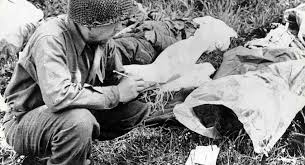
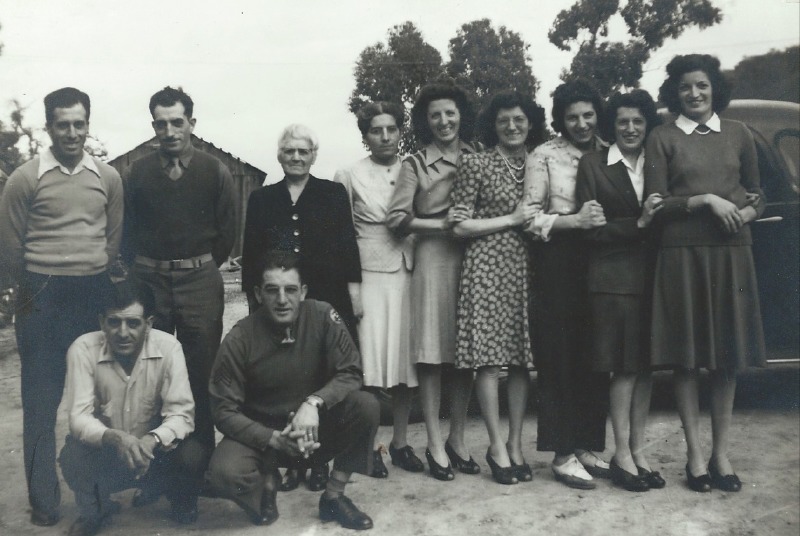
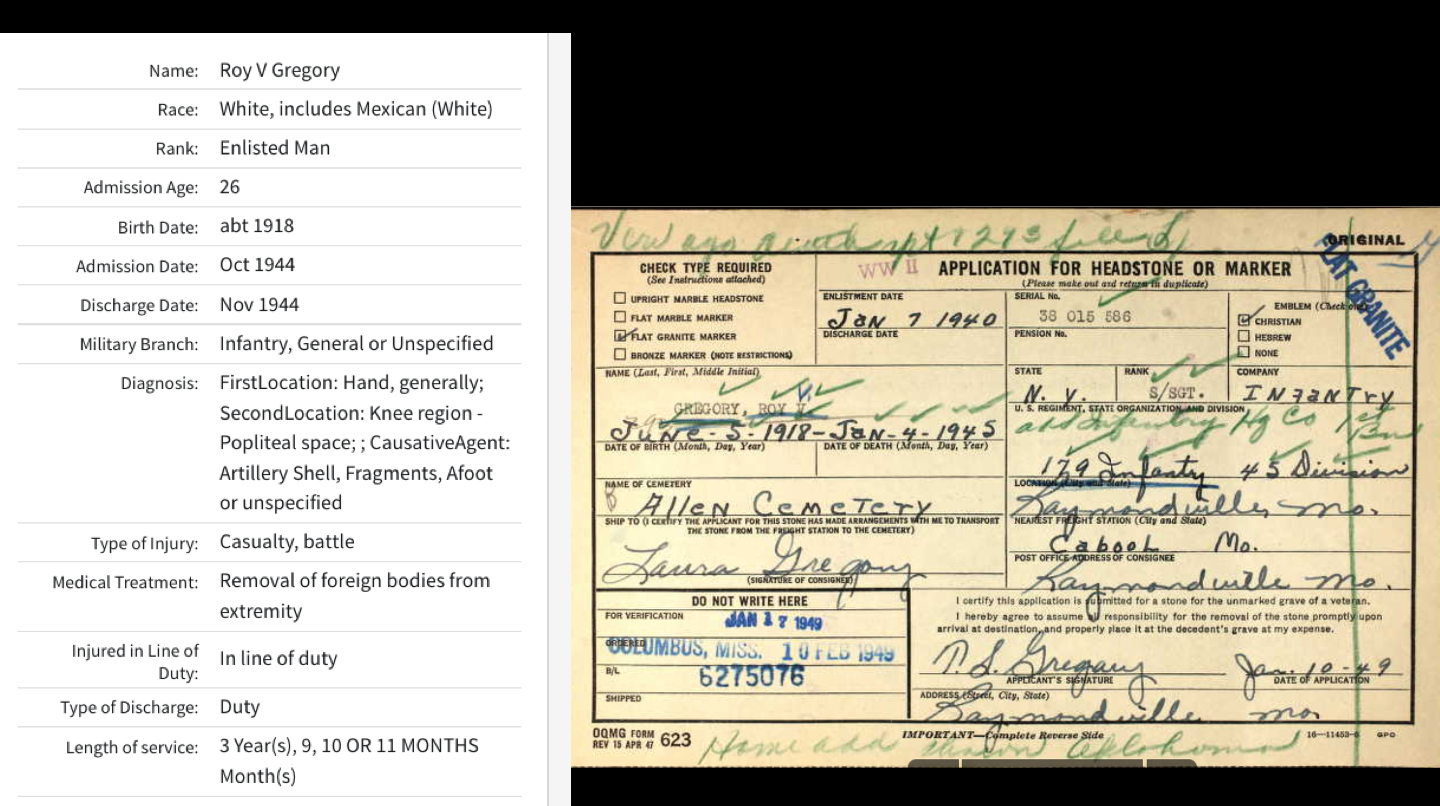
One of the soldiers who came home after the war—in my family’s case to rural Missouri— was my father’s cousin, Roy.
Roy was discharged from a field hospital, where he’d been treated for shrapnel wounds, in November 1944. He went back into action in Alsace, where, in January 1945, another elite SS unit essentially wiped out the headquarters company to which he was attached.
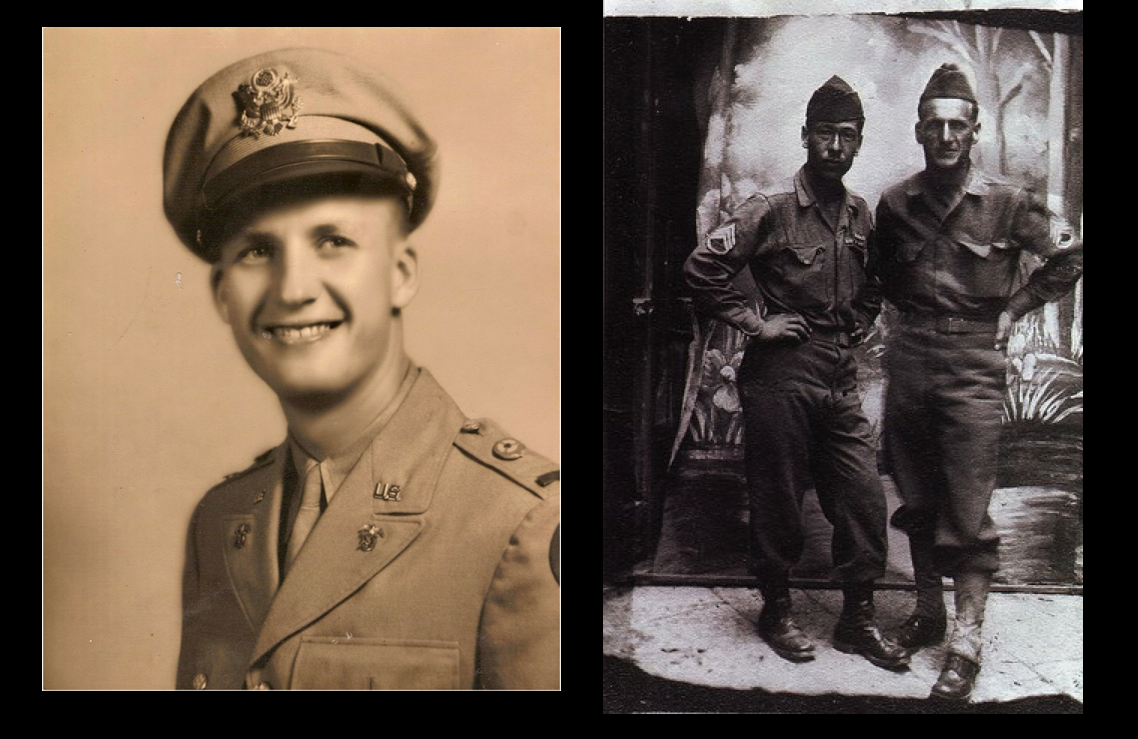
Roy—who’d fought with his buddy, Sgt. Chew, in Sicily, Italy, and finally France–looks remarkably like my Dad.
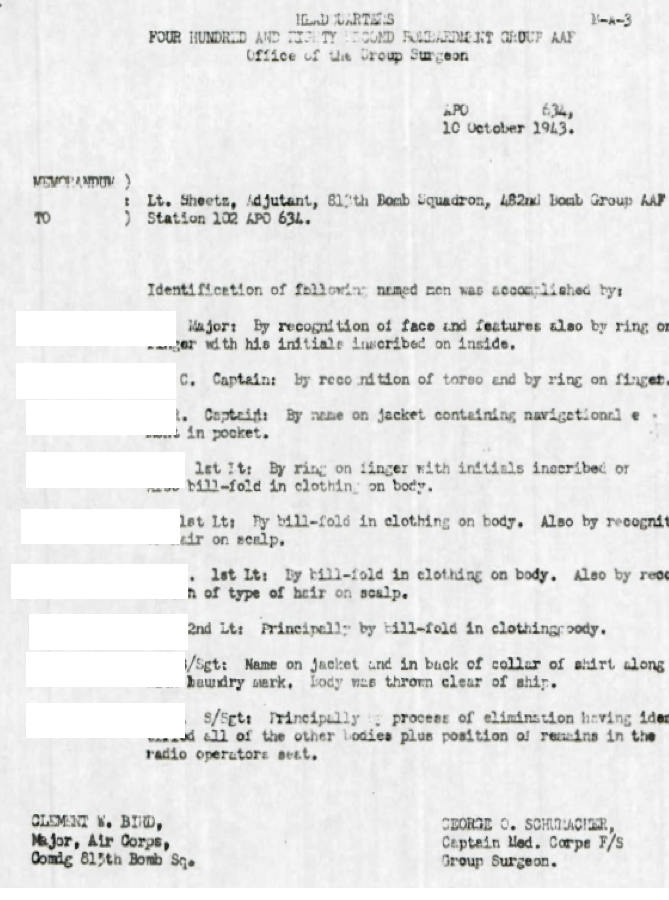
Graves registration work was ghastly, of course, because of the way these young men had died. Sometimes, in the Army Air Forces, when the flight surgeon of a bomb group had the duty of identifying the dead, the clues were circumstantial and almost always, as in the case of this Marine killed on Iwo Jima, the deaths were violent beyond imagination.
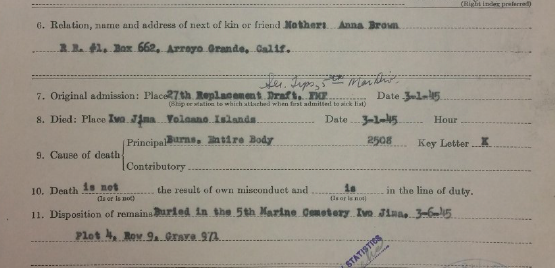
The Quartermasters also took charge of cataloguing a fallen man’s personal effects, and these reveal—with the possible exception of the Army Air Forces, where the sharp lines of rank blurred among bomber crews—that there remained a vast social gap between officers and enlisted men. These are the personal effects of Lt. Ballagh, the Berkeley grad, and Private Brown, who, like 64% of Americans in 1940, hadn’t finished high school:
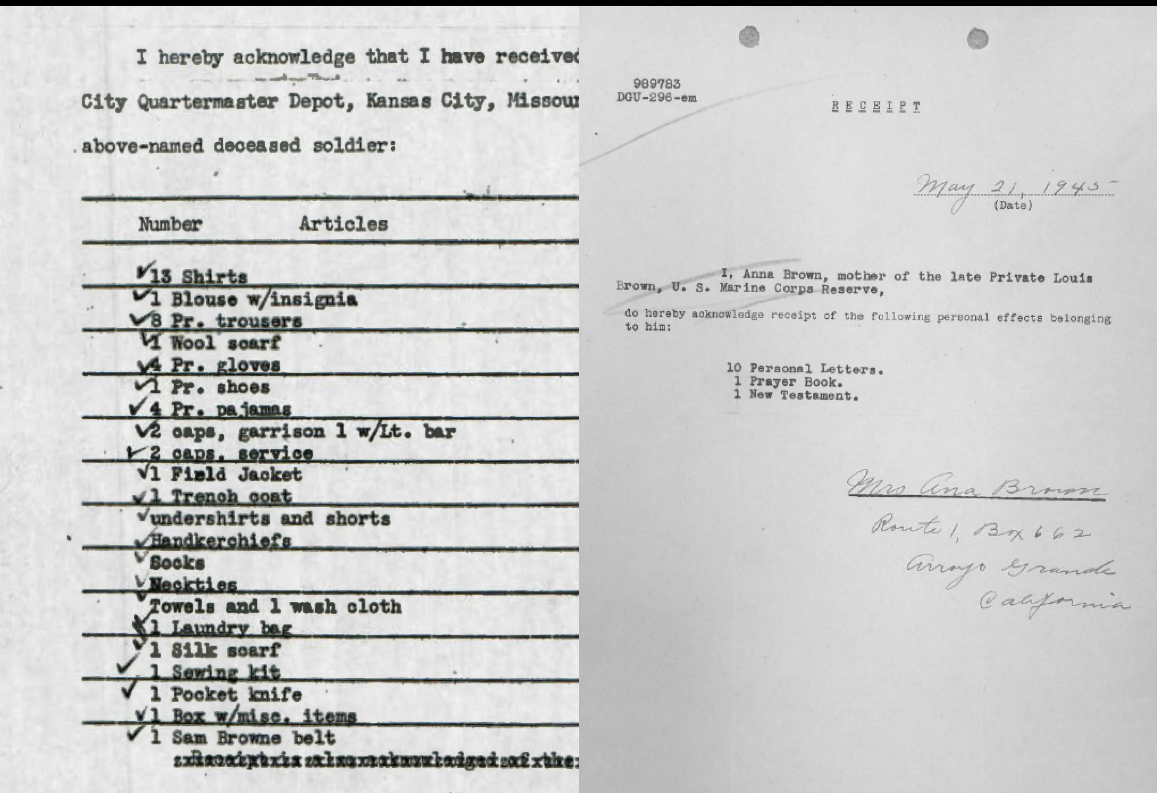
Brown’s Rosary is listed in a separate Navy Department letter to his mother.
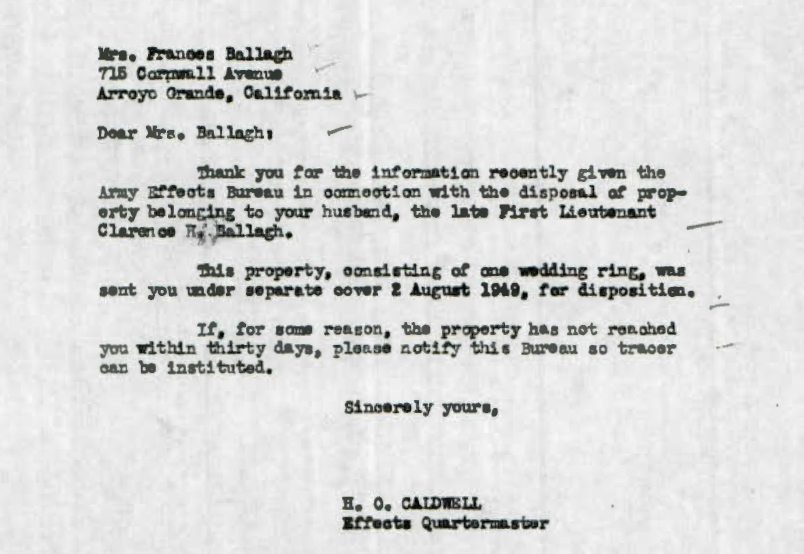
Ballagh was killed when his plane flew into the side of an English mountain; fragments of the B-17 remain there today. Brown was killed, most likely by a Japanese land mine, no more than 48 hours after he went into action on Iwo Jima. Both came home to Arroyo Grande, in a bureaucratic ballet in quadruplicate steps, that was unmistakably human. There’s no mistake that the Army wants Lt. Ballagh, even in death, to come home safely.
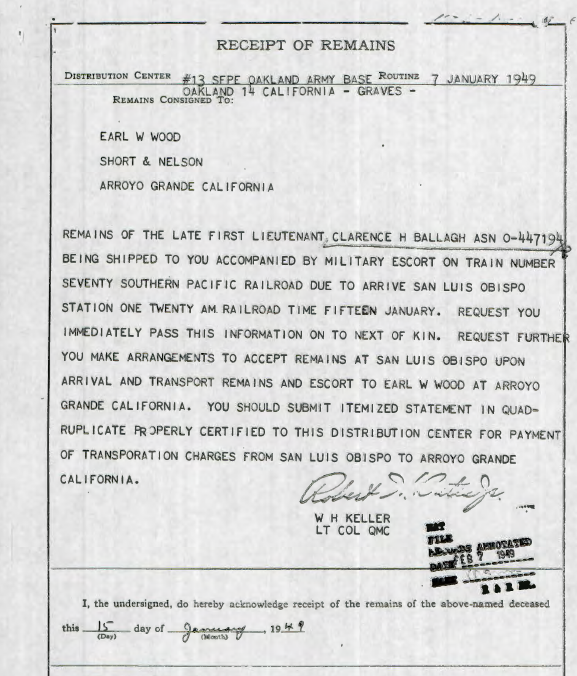
The records of the dead, I think, are important: they force us to confront a war now safely confined to history books and television screens. Beyond that, they reveal the terrible price that the living had to pay, as well.
 A Work in Progress