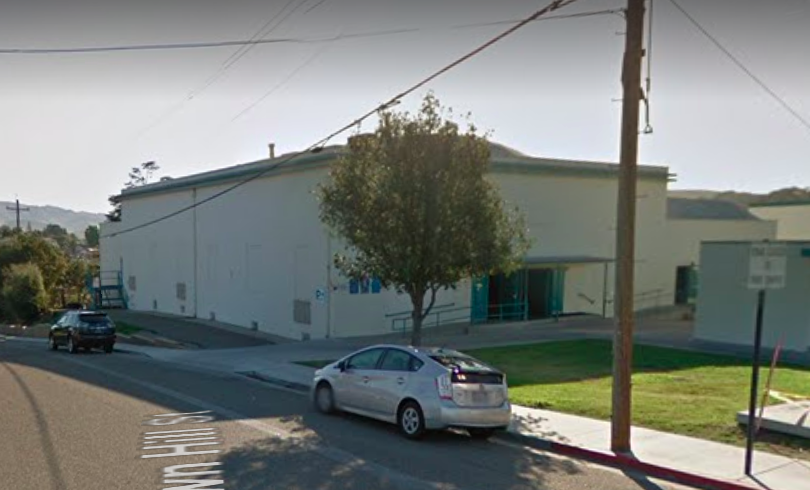
You wouldn’t think a structure as homely as this one—the Paulding Gym, taken from the Google Earth image—would be all that important. There was thought given to demolishing it at one time. That would be a mistake.
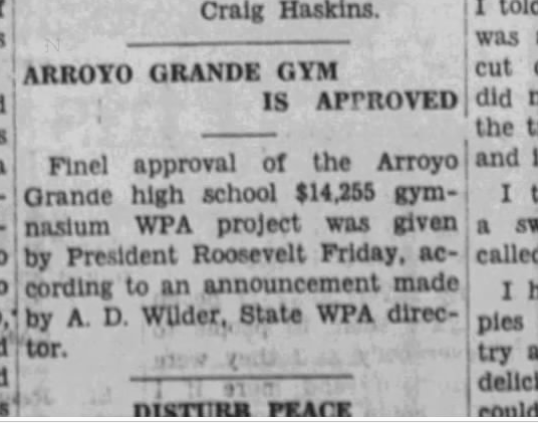
For one thing, Arroyo Grande sports fans had been wanting a high school gym—this would’ve been for the 1916 high school, atop Crown Hill—for many years. For another, it’s a legacy of American history, a small part (for a town of about 1,000 people in 1937, a big part) of American history. Along with the retaining wall below Paulding, the WPA stamps on Mason Street sidewalks and the stone fence around the town cemetery, it’s one of the last legacies of the New Deal.
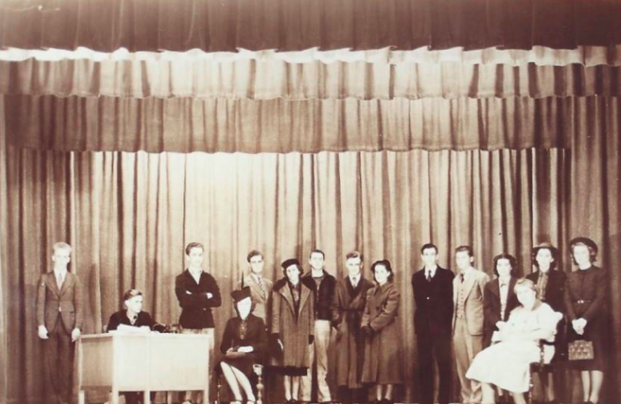
And in many ways, it hasn’t changed all that much. My son Thomas, then a Paulding student, acted in Mr. Liebo’s plays on the same stage these students are using in 1939.
And even the buildings nearby, at the base of Crown Hill, have some historical significance. Here’s another Google Earth image of the IDES Hall, built in 1948;
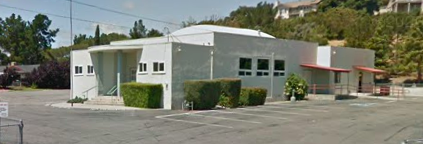
I don’t know that most people realize that this is the second IDES Hall, still a testament to the importance that Azorean immigration has had in Arroyo Grande’s past. Here’s another photo of the gym, from the 1930s, and at the right, you can see the first IDES Hall.
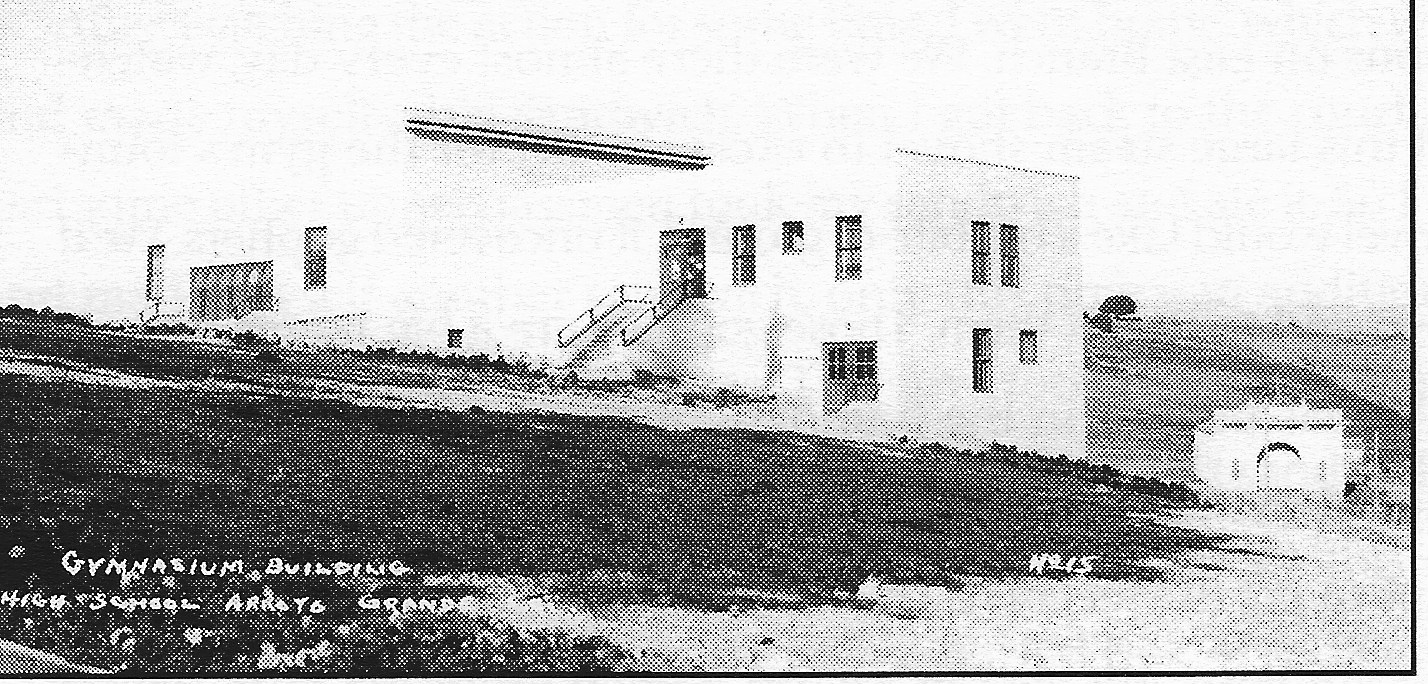
And that structure dates from the 1880s, built by the Phillips brothers, who owned a furniture store—one of their places is today’s Bill’s Place on Branch Street. But what you see in this photo is a sad remnant of a much grander, complete with steeple, Columbian Hall. Here it is, when it was still on Branch Street, in a photo taken about 1908.
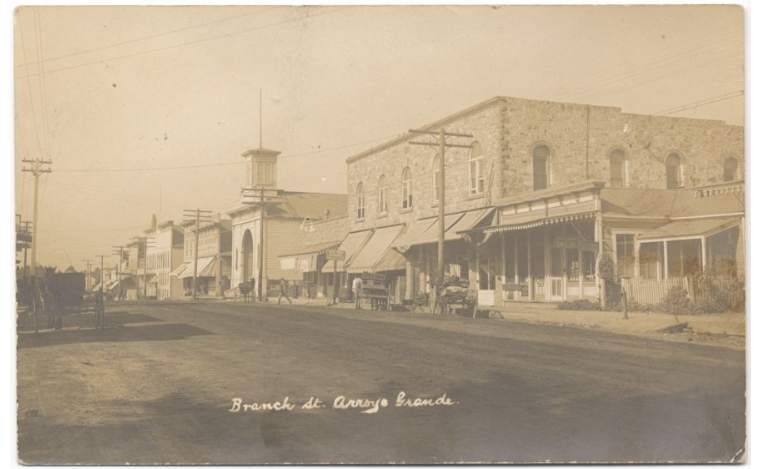
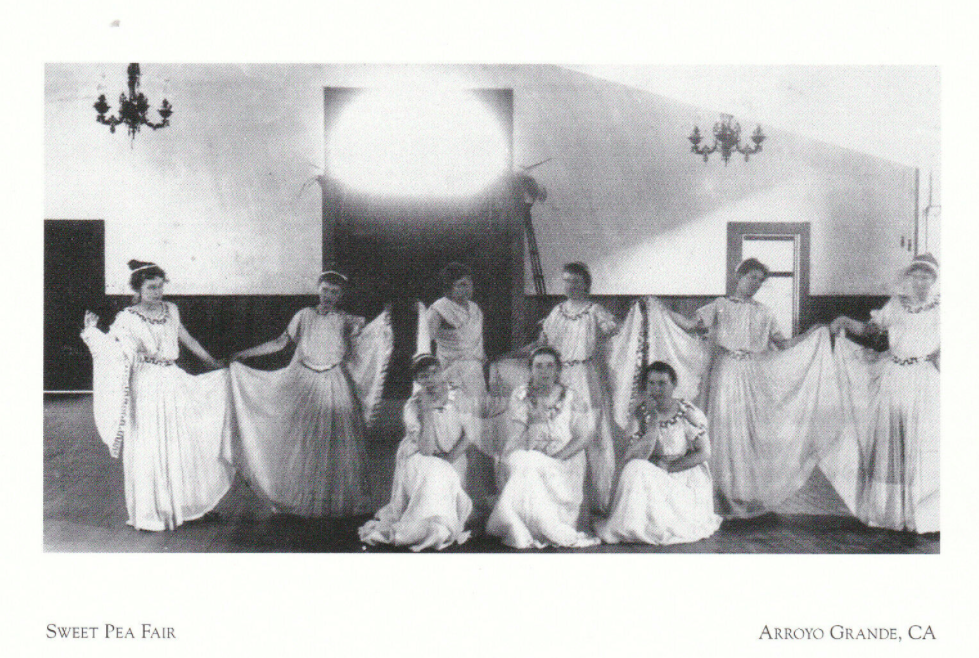
And the Columbia Hall was important—kind of an early 20th Century version of today’s Clark Center—that was the scene for everything from political meetings to Temperance lectures to recitals and plays. And dances: These young women, for all intents and purposes, are dancing in tribute to the local cash crop, the sweet pea, in the Columbian Hall.
By the 1930s, overcultivation of crops like sweet peas had just about done in the topsoil on the hillside around the Arroyo Grande Valley. 230 Civilian Conservation Crops youths from New York City, New Jersey and Delaware—their headquarters stood where today’s Woman’s Club stands–would begin to reverse the damage.
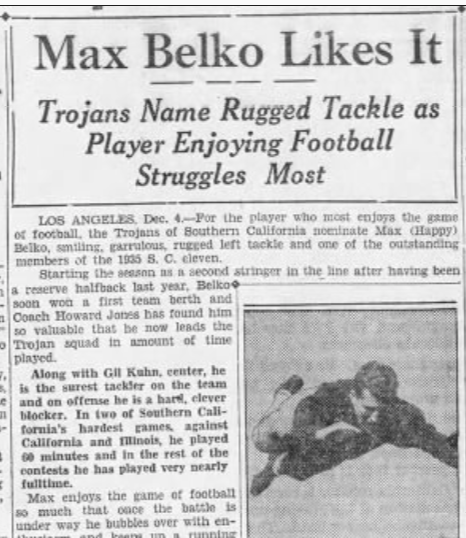
And by the 1930s, the new gym had a new coach. USC Trojan football star also coached basketball in that gym, and he brought a formidable reputation with him. Somehow, Belko, from a tough immigrant family, steelworkers, in Gary Indiana, had somehow escaped the attention of Notre Dame. USC was fine with that. His coach there, Howard Jones, called him “the finest example of a man I’ve ever coached,” and Belko, among other things, kicked a field goal against Montana in 1935. Inexplicably, USC wouldn’t kick another field goal for fifteen years. Frank Gifford kicked that one.
Here’s Belko and his basketball team, from Gordon Bennett and John Loomis’s book, The Old Days.
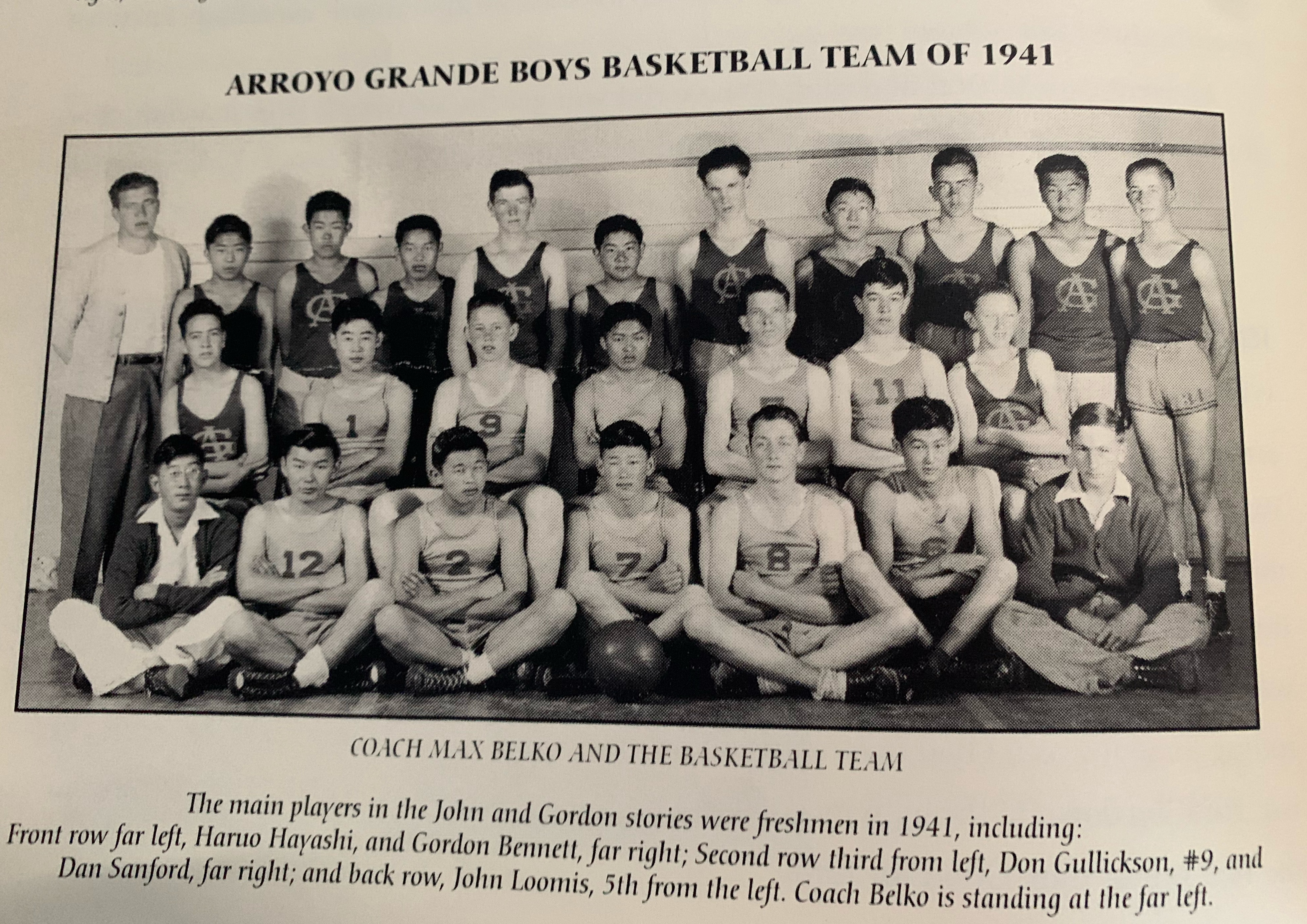
It’s not your imagination. There were a lot of Japanese-Americans who went out for basketball. That’s the next, tragic connection that the Paulding Gym has with history. On April 30, 1942, buses would assemble in the high school parking lot just outside to take local Japanese-Americans into internment. Among them were the Nisei seniors of the Arroyo Grande Union High School Class of 1942. There were fifty-eight seniors that year. Twenty-five were Japanese-Americans.
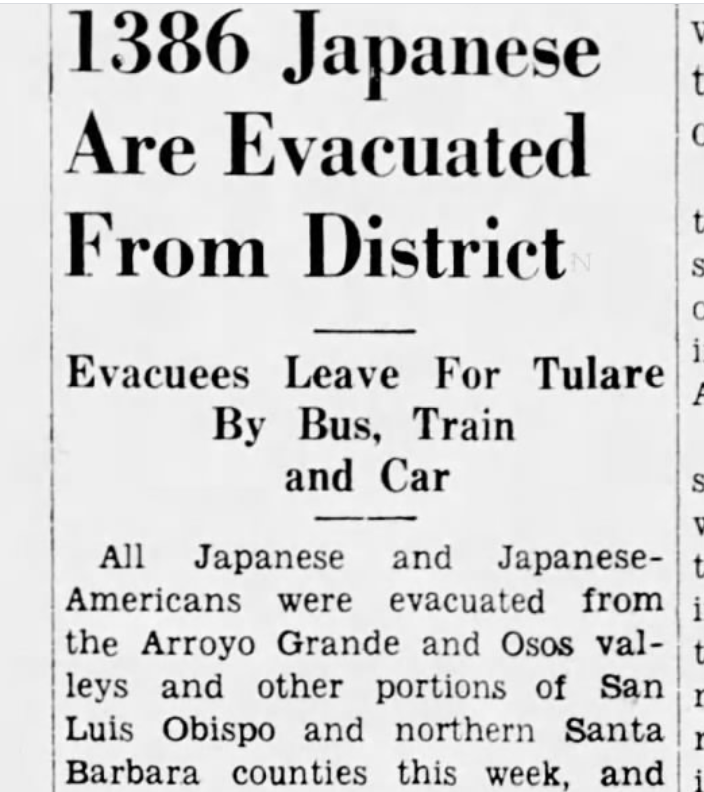
By then, Belko had left Arroyo Grande for a teaching position in Hanford. But the war would sweep him up, as well. The clipping below is from the August 14, 1944 edition of the Arroyo Grande Herald-Recorder.

There have been, of course, thousands of games played—volleyball and basketball—and hundreds of school dances and scores of plays in that old gym since Coach Belko’s time. And that’s been a long time ago. You wonder if the hopes and disappointments of the young people who once lived brief parts of their lives within its walls aren’t somehow still there, imprinted but invisible, invisible but powerful.
 A Work in Progress