

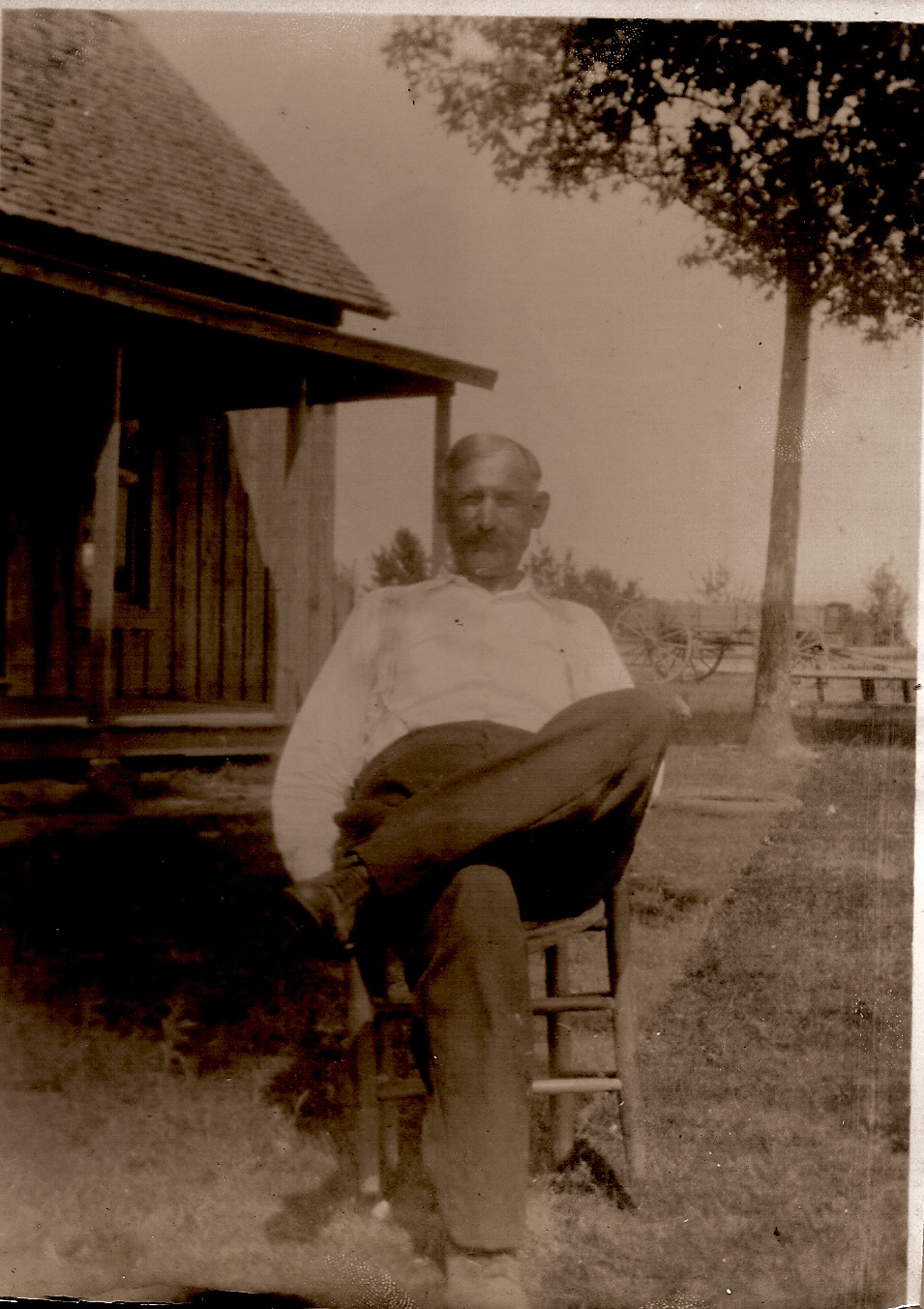
This is my grandfather John, in a photograph taken some time before his death in 1933, in front of his farmhouse in Texas County, Missouri, on the Ozark Plateau. I’ve written about him at length; he was, among other things, a graceful dancer; my grandmother was not amused by the queue of teenaged girls who waited their turn to dance with Mr. Gregory, who transformed the sawdust-strewn floors beneath their feet into polished glass.
This is the farmhouse today. The Ozark Plateau today is vastly different from my grandfather’s time.

And John Gregory came to mind again because I watched again Winter’s Bone, the Daniel Woodrell novel that was committed to film in 2010 by a remarkable director, Debra Granik, marking the debut of a remarkable actress, Jennifer Lawrence.
The film was shot two counties down from Texas County, hard on the Arkansas border, in Christian and Taney Counties (the latter named for the Chief Justice who rejected Dred Scott’s petition for freedom), and the story focuses on teenager Ree Dolly’s search for Jessup, her missing father, a bail-skipping meth cook who has seemingly left his wife and children to fend for themselves.
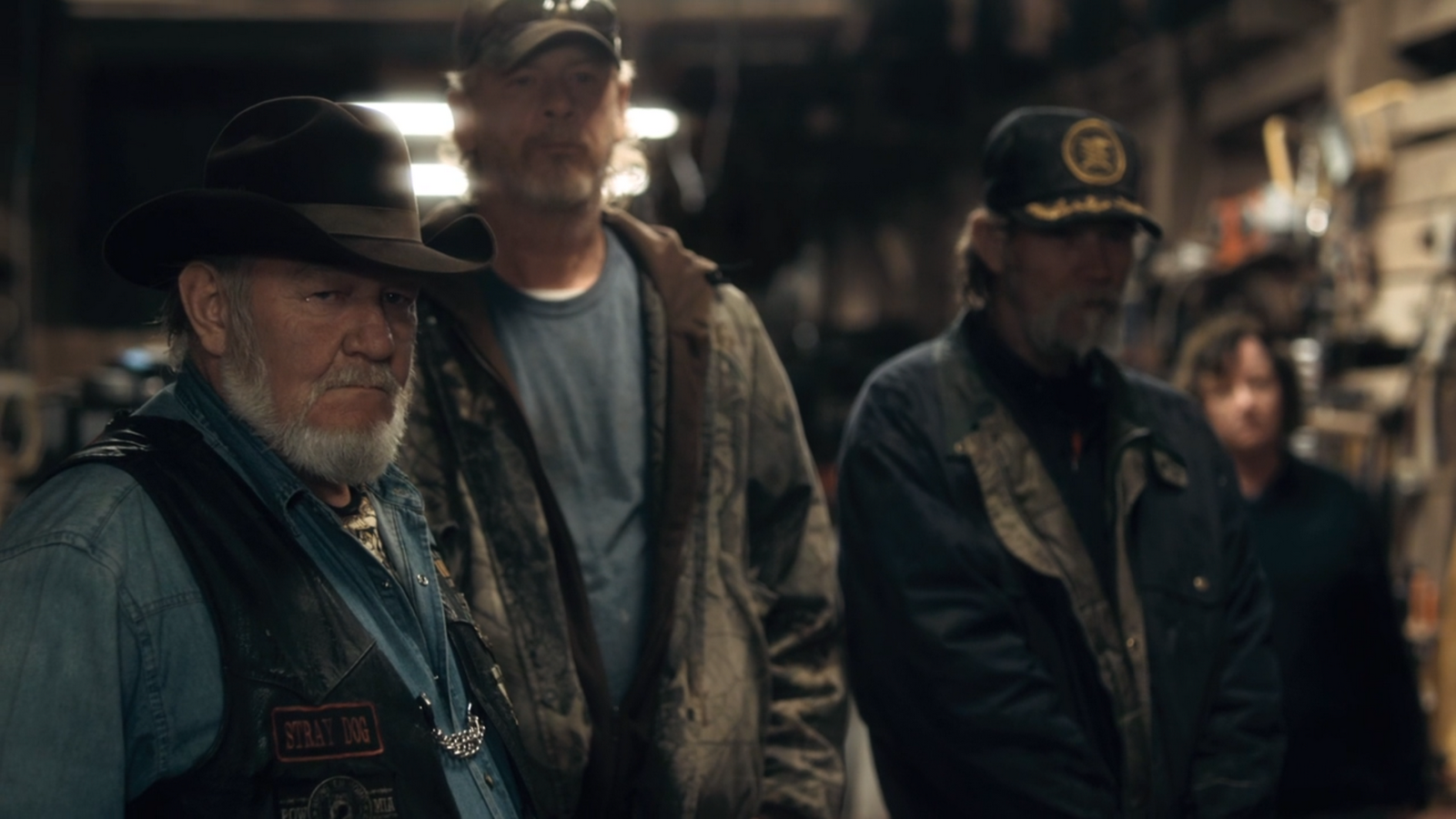
The stolidity, the loyalty and the immense courage of Ree is humbling. What’s sobering is the desperation of this part of the Ozark Plateau, marked by yardfuls of wrecked cars that will never be salvaged and yard dogs, their ribs prominent, tied to stakes, that will never be let go. Always, in the background, there’s the bareness of Missouri trees in wintertime. Even they speak of hopelessness. It’s no accident that they’re the St. Louis Cardinals: one of the most beautiful sights of my life, when I was a student at the University of Missouri, was the sight of a bright-red cardinal, vivid among skeletal tree limbs, on a March day. Seeing him was a sudden and joyful shock. His presence marked the end of a winter of unrelenting grayness.
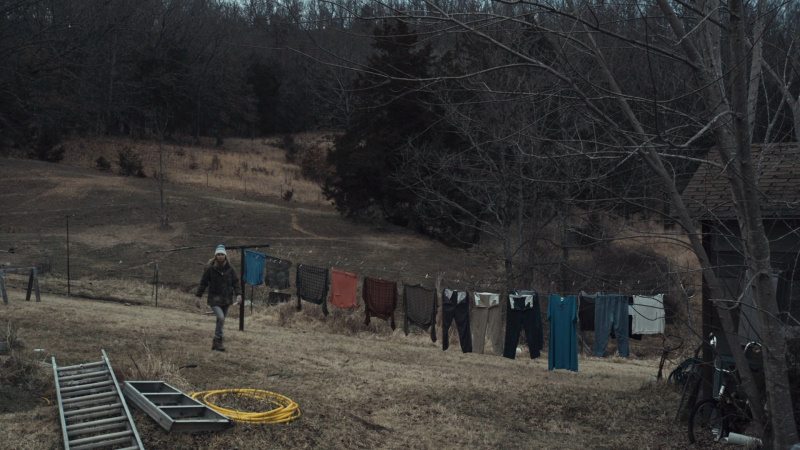
Those trees are important to Ree’s family. The hardwood on them is their only investment in the future; my grandfather, who possessed uncanny arithmetical gifts, was a part-time estimator for lumber companies. He could look into stand of hardwood and tell the company foreman, with precision, how many board-feet of lumber he and his crew would bring out.
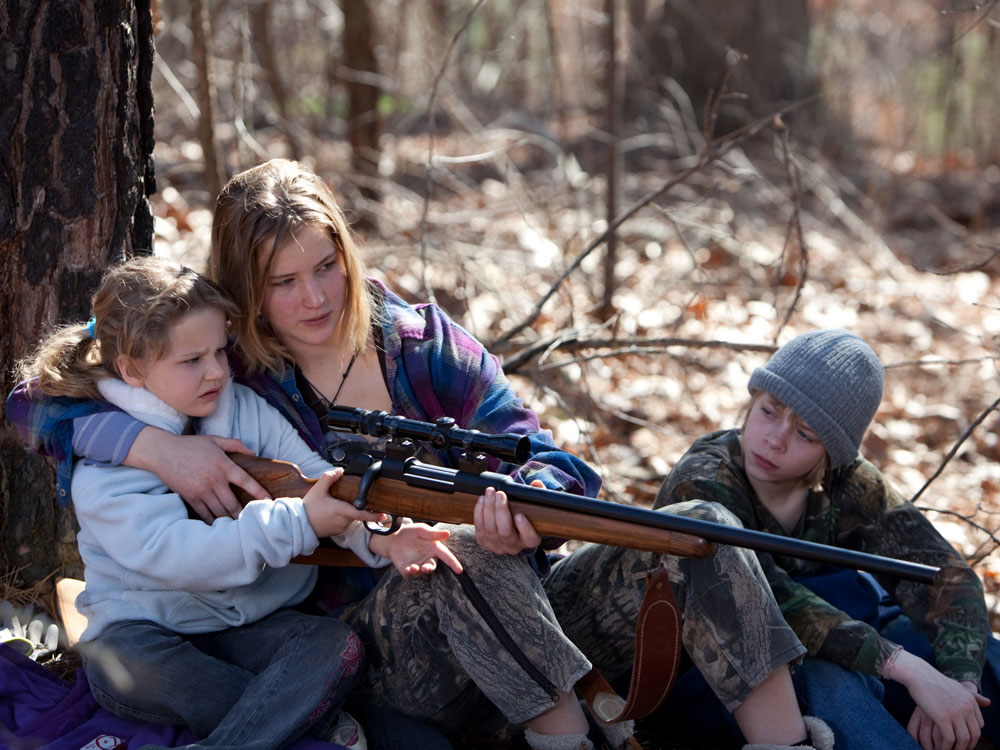
Lawrence, as Ree, keeps the family fed by hunting. She skins a squirrel in one scene; I’ve had squirrel stew but I couldn’t do what she did. (I’ve always admired Lawrence’s authenticity. A New Yorker writer met her for an interview in a Los Angeles Mexican restaurant and wrote admiringly that the actress “ate a burrito the size of a mailbox.”)
Throughout the film, there are constant echoes of Tudor England, in the grave formality with which people speak to each other—there is nothing so wicked in the Ozarks nor in Appalachia as offending another person’s honor—and in the music, fiddle and mandolin and guitar and banjo—that’s so evocative of Elizabethan times in the Midlands or Lowland Scotland.
Here’s an example. The singer is named Marideth Sisco.
My favorite line in the film bespeaks the dignity of speech that so marks hill people. Ree’s father is missing and her mother is addled, so she is the surrogate mother to her little brother and sister. They are desperately afraid that Ree will give up on them and go away to join the Army.
“I’d be lost without the weight of you two on my back.” she tells them.
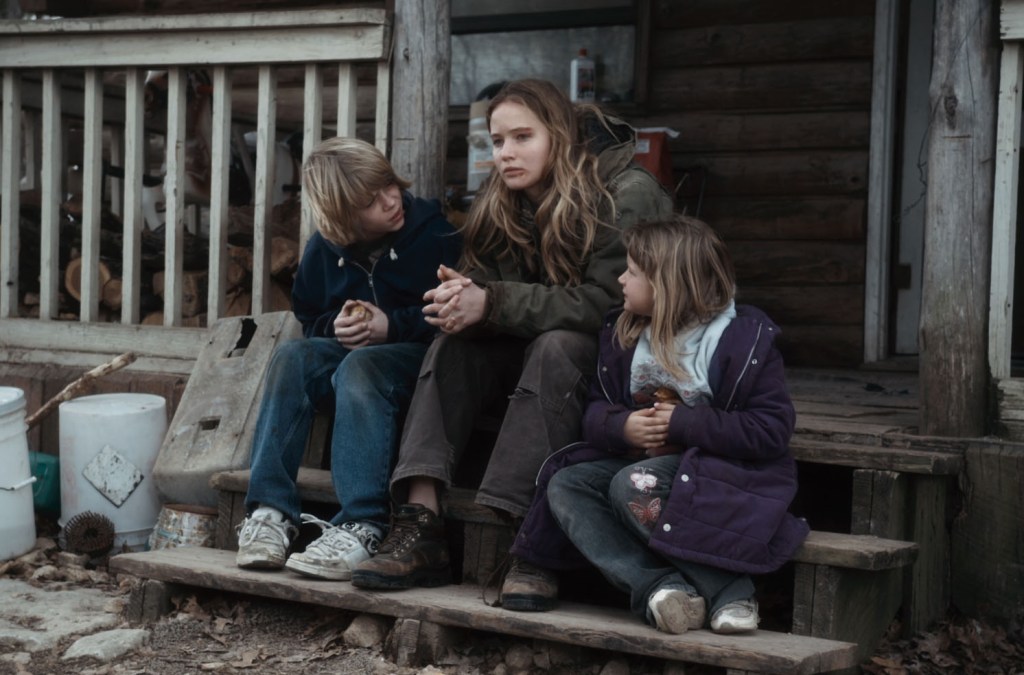
In the end, Ree finds her father. It’s a quest —she’s helped in a backhanded way by her uncle, Teardrop, played by another remarkable actor, John Hawkes, whose name is evocative of Tudor England—that she has to complete, even though you don’t want her to have to do it. You don’t want her to have to skin that squirrel, either.
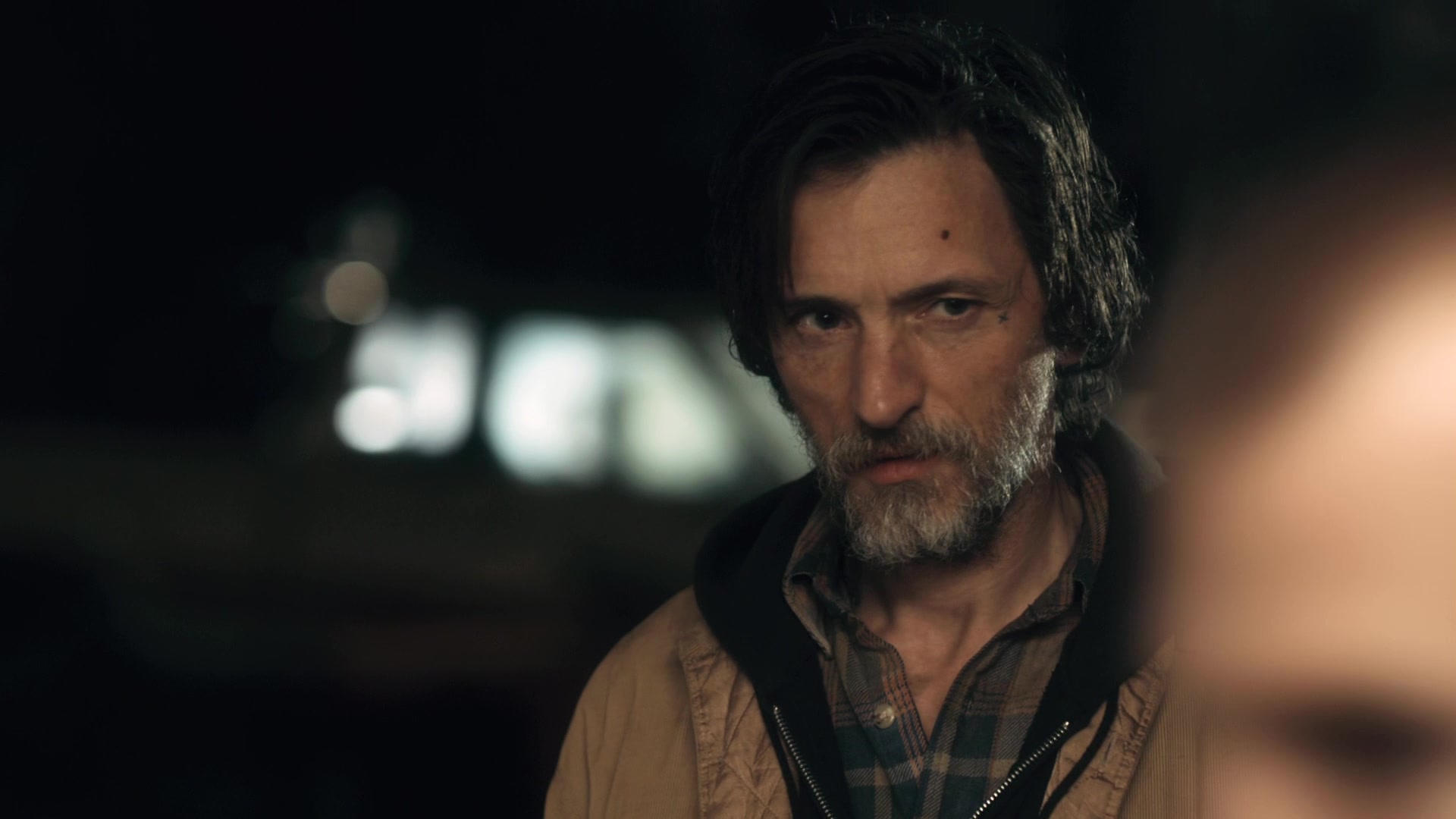
But watching the film again reminded me of the desperation in that beautiful part of our country. I wrote about it a little in a little essay called “Ozark Death Wish.”
* * *
Texas County today is marked by the suffocation of Pentecostal and fundamentalist churches who keep vigilant watch over the ungodly, which probably includes a smattering of Episcopalians and Catholics. They’ve bought up nearly all the local liquor licenses to keep the area dry, in an Ozark variation on Sharia Law.
Life there is also marked by chronic and deep-rooted joblessness, by a thriving trade in meth and by meth addiction, and by violence. Sometimes, folks just vanish.
* * *
Just like Ree’s father.
In the end, it’s the most frightening of Ree’s antagonists—the women—who will help her complete her quest. The language emerges again when Ree first confronts one of them, a woman named Merab.
Merab: One of my nephews is Buster Leroy. Didn’t he shoot your daddy one time?
Ree: Yes, but that’s got nothin’ to do with me. They settle that stuff themselves, don’t they?
Merab: Shootin’ him likely settled it.

 A Work in Progress