
A lot on my mind with this one.
Harry Chapek was a young Arroyo Grande man killed in action on the Belgian-German border, near the Siegfried Line, in September 1944.
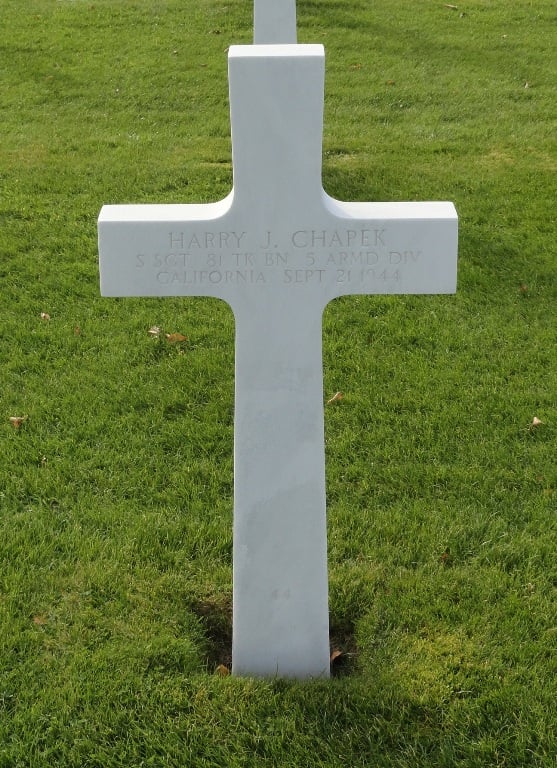
He was a member of the 81st Tank Battalion, 5th Armored Division and is buried at the American Cemetery at Henri-Chapelle, near Liege, Belgium.
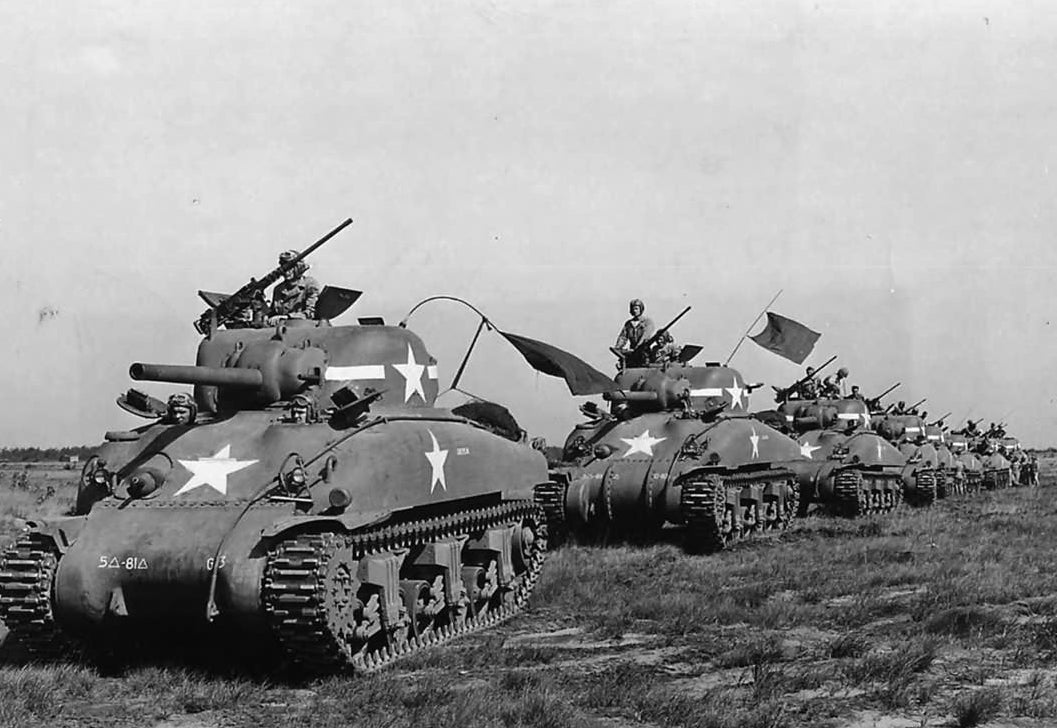
Those are 81st Sherman tanks in the photo.
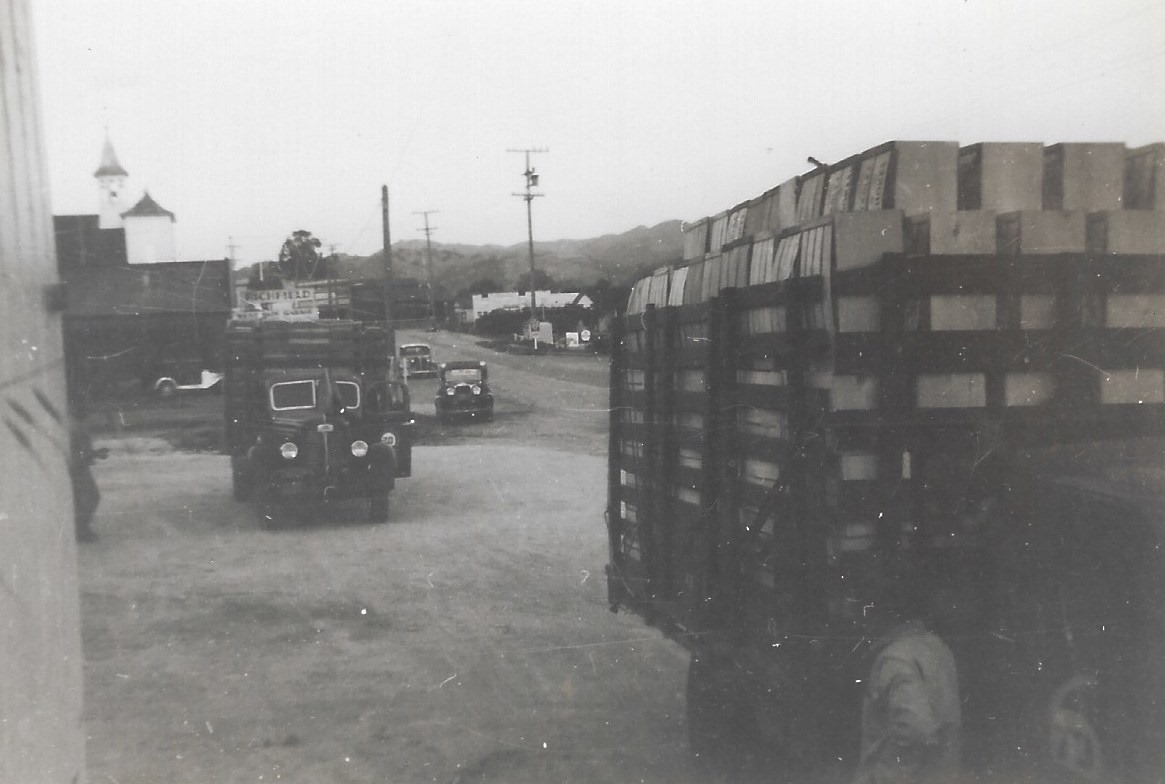
He was almost killed once before, in 1938. He was a driver for the Arroyo Grande Trucking Company, which stood at the site of today’s Bank of America–the photo of the site is courtesy of the Martin family. (That’s the old St. Patrick’s Catholic Church in the left background, built in the 1880s.) It was a vital part of the economy of our little farm town on California’s central coast, population 1,090 in the 1940 census.
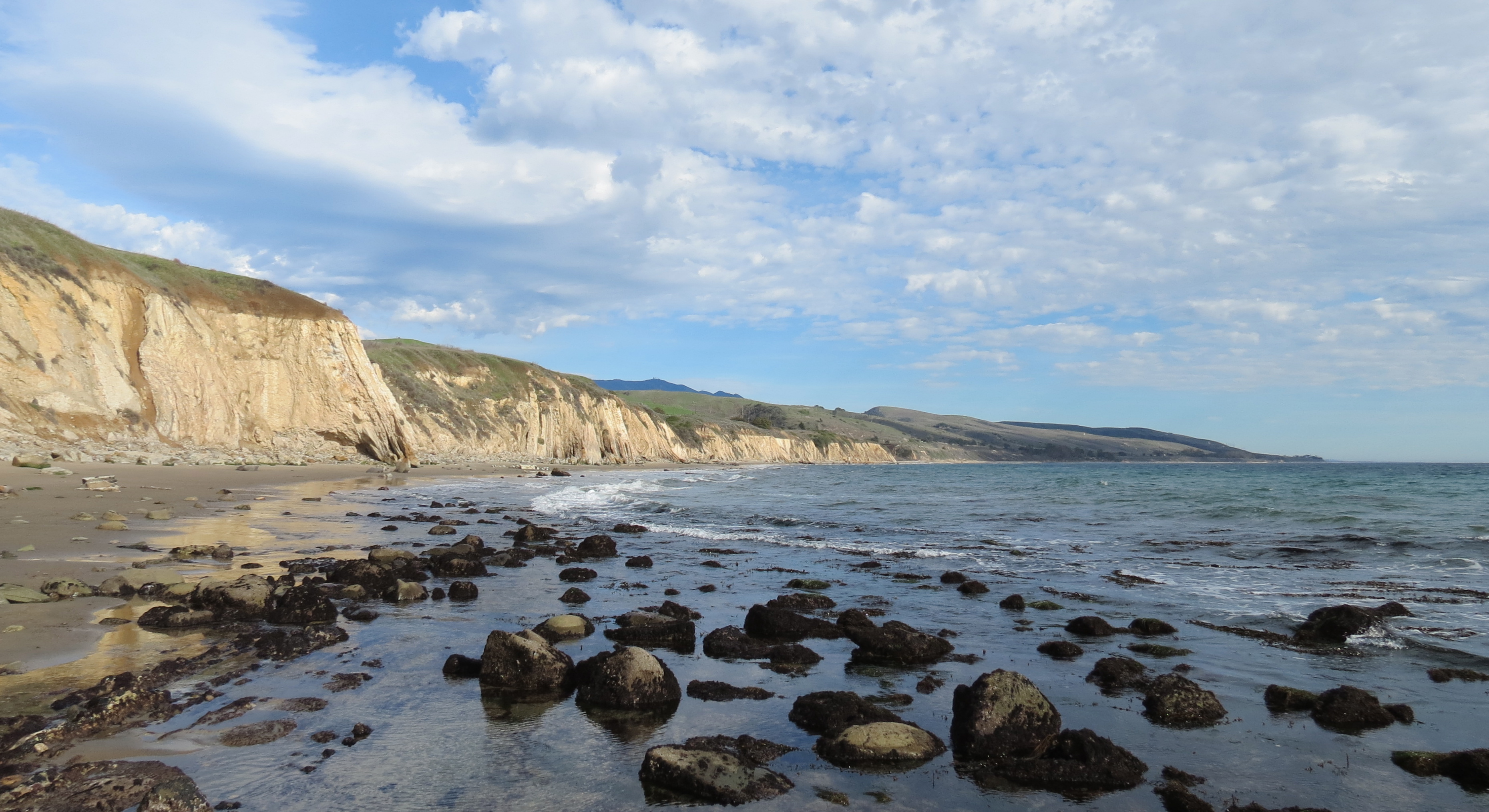
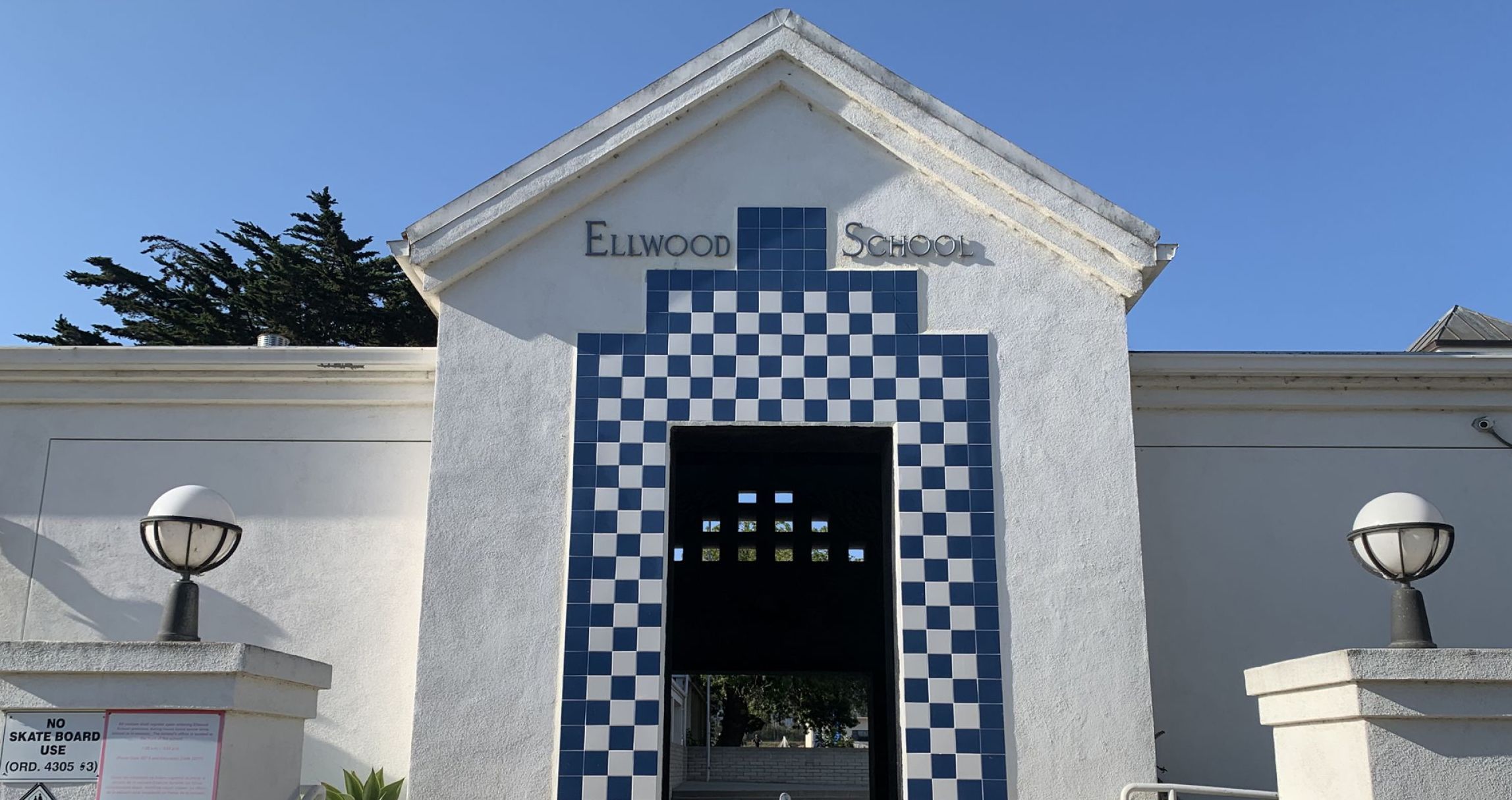
He was driving near Elwood, just south of the Gaviota Pass, and less than an hour north of another beautiful California place, Santa Barbara, when a horse threw three little girls and galloped out into the highway in front of Chapek’s truck.
The impact killed the horse and the truck veered into a tree, where it caught on fire. Chapek was stuck in the cab, which in turn was buried by vegetable crates.
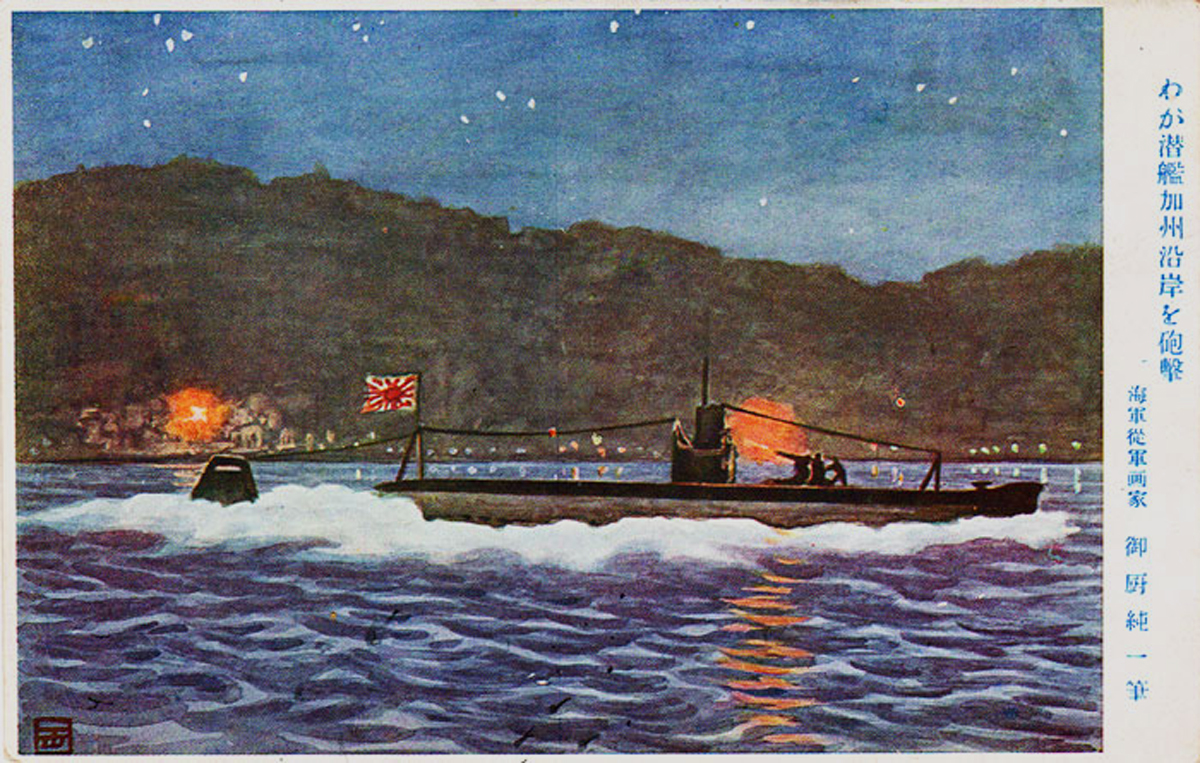
But that night there was a PTA meeting at the Elwood School, which is still there today, and a parent and a janitor ran out to the truck, dragged Chapek out–he was waving his arm out the cab window–and knocked the fire down with two of the school’s fire extinguishers. Four years later, a Japanese submarine shelled Ellwood.
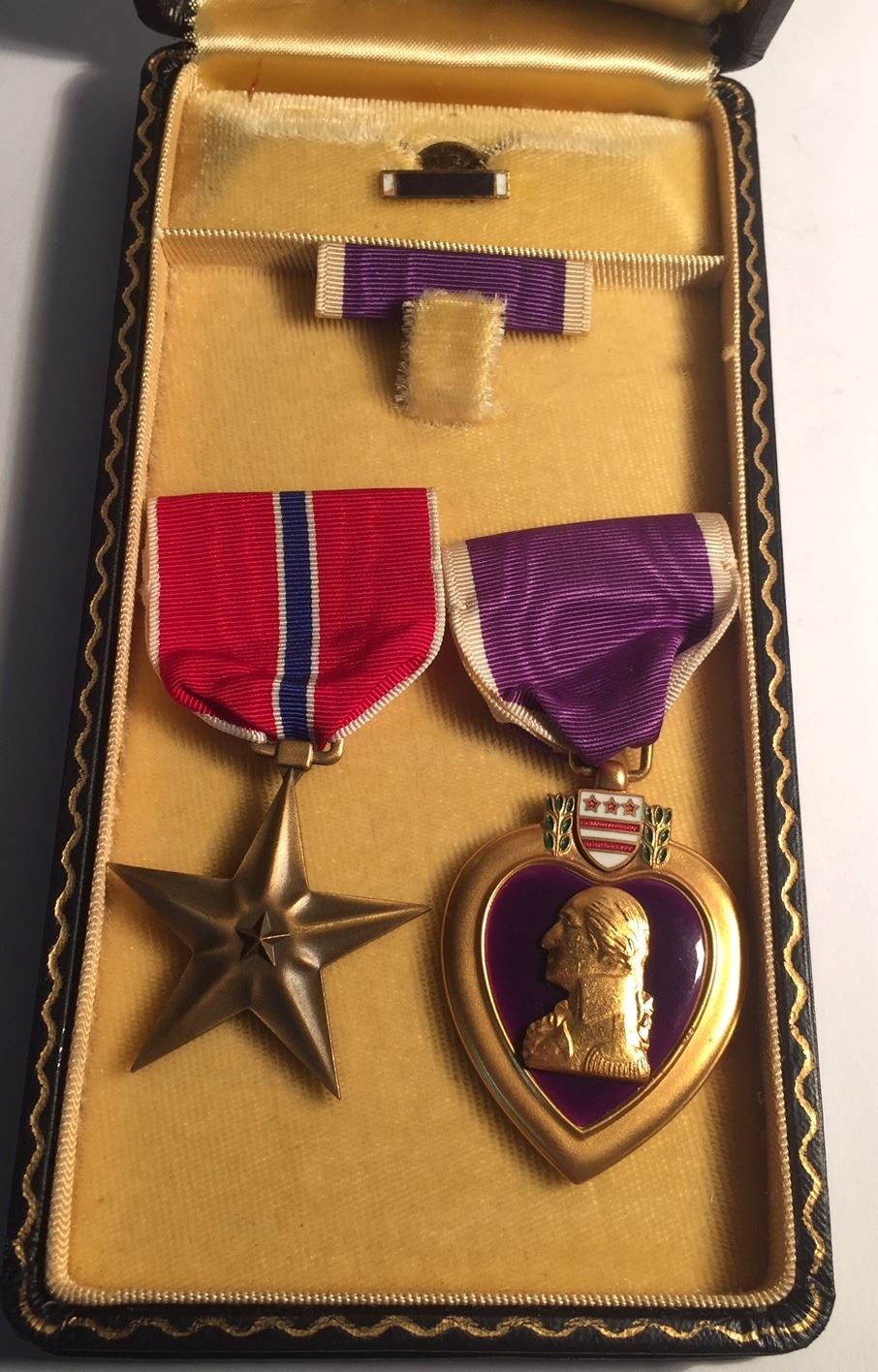
Six years later, a German artillery battery, covered by dense fog, fired a barrage that landed on the 81st’s “A” Company; it was probably the devastating explosion of .88 shells that killed Chapek, awarded a Bronze Star and a Purple Heart.
Growing up, he was a close friend of our friend George Shannon, who farmed near us in fields along Huasna and Branch Mill Roads, peppers and string beans and I think Brussels sprouts, among other crops. Mr. Shannon was an admirable man.
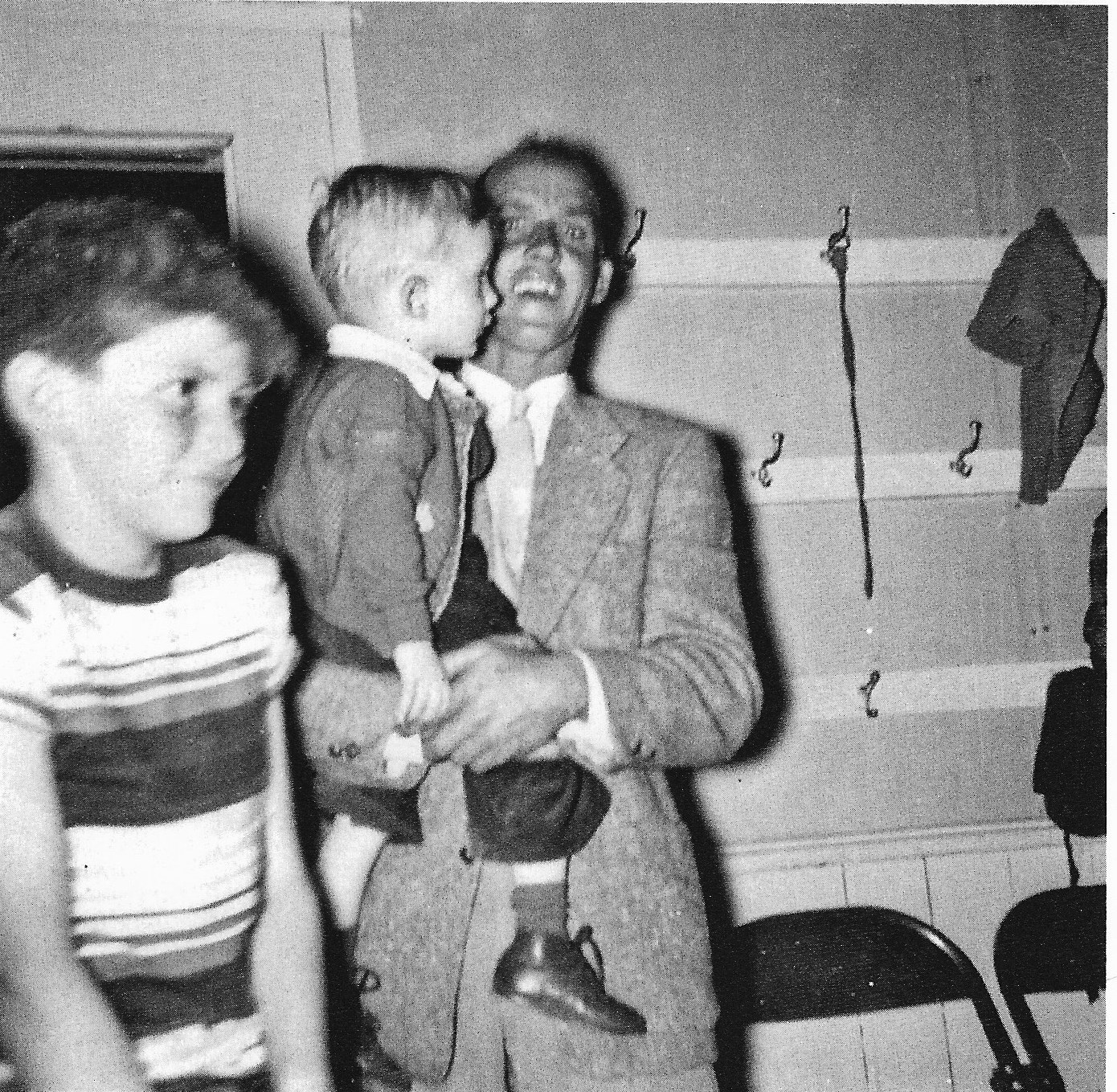
That’s my Mom serving dinner to us Gregory kids and to the three Shannon boys. You can tell how much she thought of them because dinner’s being served on the Irish lace tablecloth.
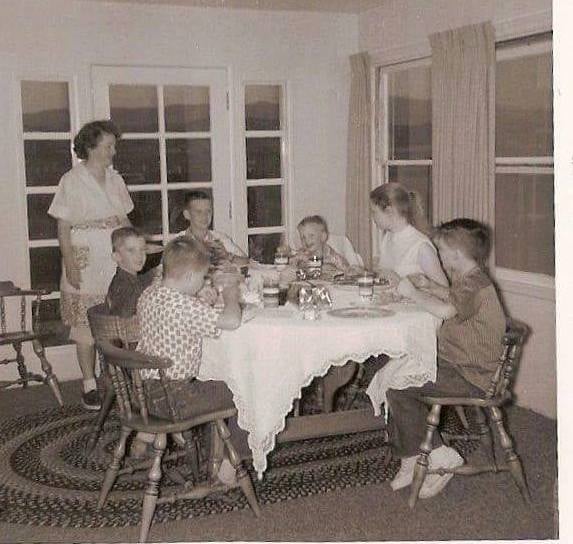
Chapek was an admirable man, too. As was his father, Matthias, or Mat. That’s Mat with the Arroyo Grande Boys’ Band about 1909. He probably lured potential juvenile delinquents away from a life of crime with a tuba or two.
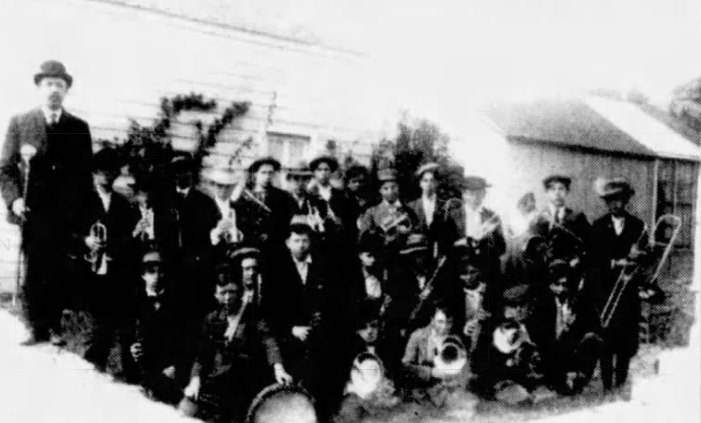
He taught two generations of kids how to play musical instruments. Longtime teacher Ruth Paulding was one of them. The middle school’s named for her. Wayne Morgan, also an Eagle Scout, took up the violin thanks to Mr. Chapek. He was killed on December 7 on USS Arizona, along with another Arroyo Grande musician, Jack Scruggs, a trombonist in the battleship’s band.
I know something about the waves of immigration to Arroyo Grande, for example, from the Azores, Japan and the Philippines. Mat Chapek was from Bohemia– today’s Czech Republic.
It turns out that on upper Cherry Avenue–then called Leedham Lane–Arroyo Grande had a “Little Bohemia.” The Chapeks lived there, as did the Huebners, as did the Marsaleks.
That struck because one of my favorite books as a sophomore in Mrs. Flatt’s sophomore English class at AGHS, was Willa Cather’s My Antonia, about a girl from a family of Bohemian immigrants to Nebraska, to the Great Plains. It’s not more than six pages in before an inordinately large rattlesnake makes its appearance. That snake, and what I read later about the toll laundry and ironing took on frontier farm wives, bending their spines and hunching their shoulders—effectively and mercilessly transforming them into human question marks—remained with me always.

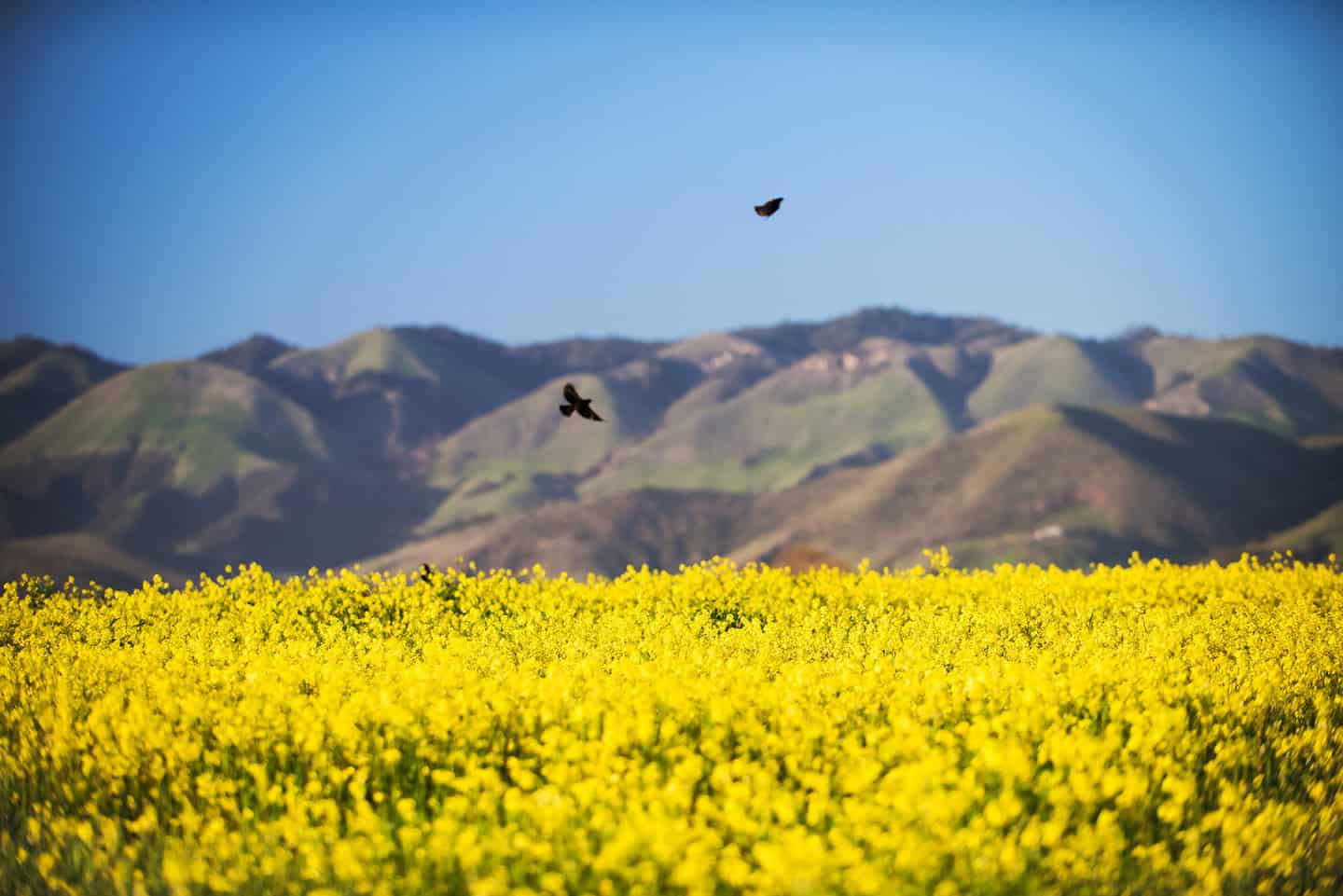
Arroyo Grande’s not much like Nebraska. The climate here is mild and the growing seasons overlap. But both places produce incredible wildflowers. This is field mustard near the foothills east of Arroyo Grande.
So Antonia and Chapek, the children of Bohemian immigrants, are linked in my mind now, even though Nebraska and California are so distant. The cemetery at Henri-Chapelle is more distant still—over 5,000 miles away from the foothills and the farm fields and the wild mustard that both Chapek and I grew up with. The distance, as the poet Whitman wrote, avails not. Sgt. Chapek’s life is now connected to mine. Time, Whitman also wrote, avails not. Arroyo Grande is my home town. Nearly eighty years after George Shannon lost his friend, our town survives both of them. It does so because of them.
It’s their gift to us, you see.
I a now a friend of the American Overseas Memorial Day Association Foundation in Belgium, which is a small honor. But that means I can now pay tribute to Sgt. Chapek on their website, and so draw recognition to the man with far greater honors.
 A Work in Progress