
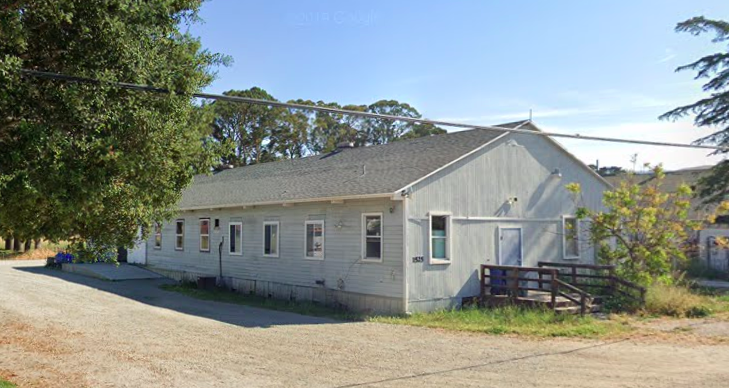
I think–but I’m not sure–that this is the old Journalism classroom at Cuesta College, where classes were taught by a gifted instructor, Bob Tomlinson–gifted, most of all, in teaching the ethics of good reporting–and where the campus newspaper, The Cuestonian, was once produced. It was still in the Eleanor Roosevelt green-over-khaki paint scheme back in our days.
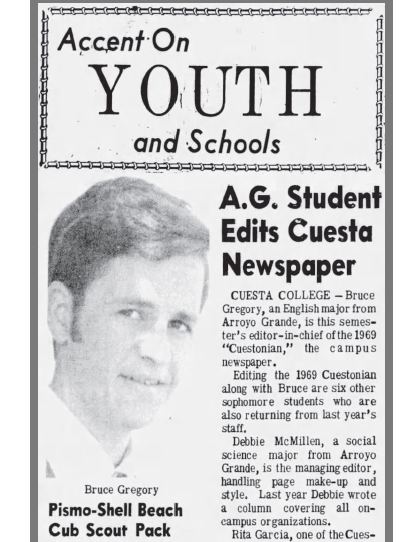
“Our days” because The Cuestonian is an old Gregory family tradition. My big brother Bruce, AGUHS ’66, was the editor in 1968-1969 and he developed a crush on one of his reporters. Fifty-two years later, Bruce and Evie are still married.
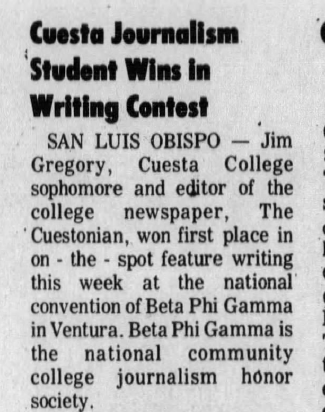
I, AGHS ’70, was the editor a few years later and we won, for such a little punky junior college operating out of World War II barracks, an embarrassing amount of awards, in statewide competitions, in writing, photography, graphics and page design.
You don’t judge a newspaper by its barracks.
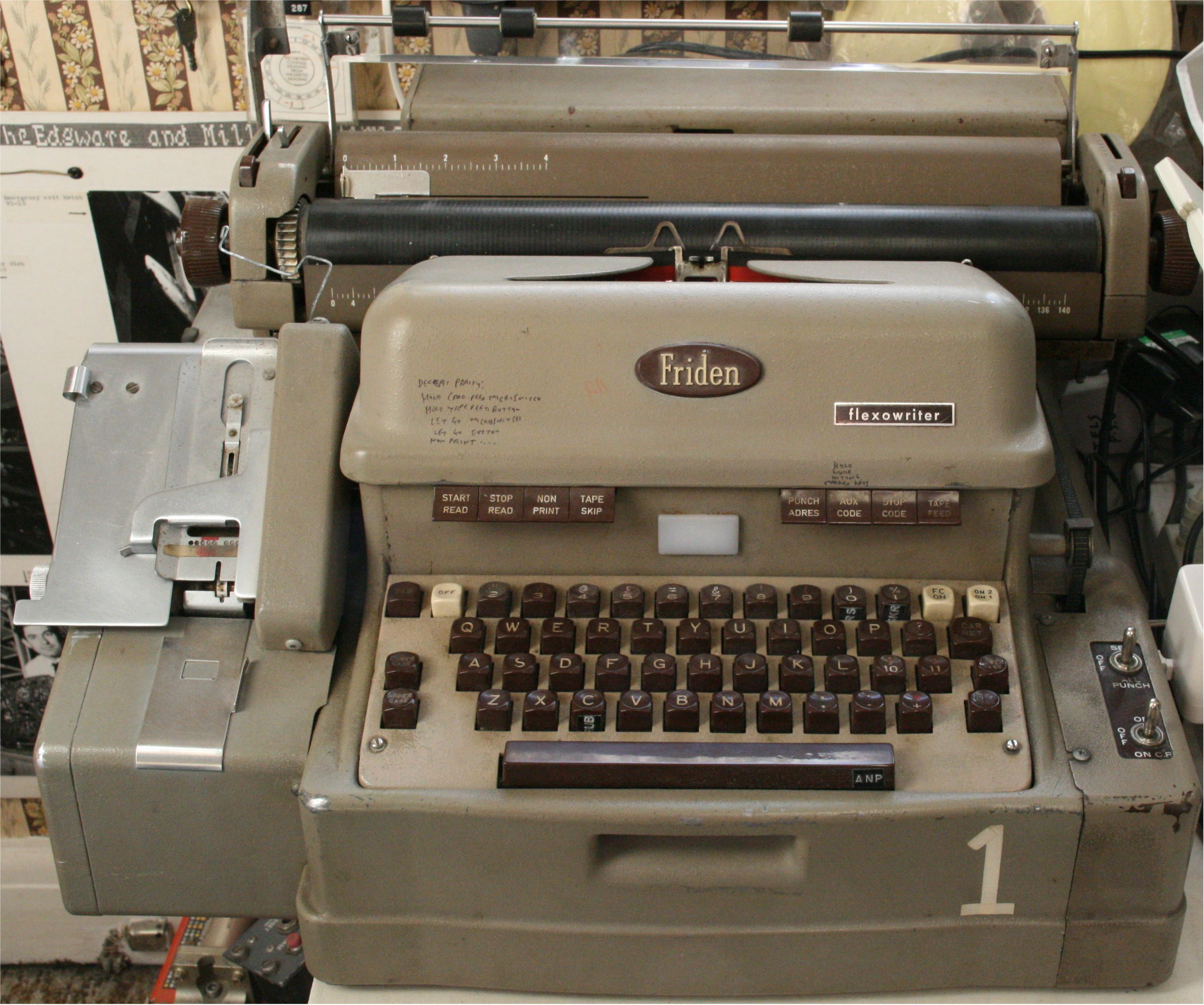
Once you went up the steps, Mr. T’s office was inside the window to the left. He had no more room than a submarine ensign, because most of the office was filled with a monstrous machine called a “Justowriter,” which allowed the keyboard operator to type up the news stories which emerged in a perforated pink ribbon and then, through some alchemy still mysterious to me, the pink ribbon was translated into news columns. (In my imagination, the Justowriter—that’s one of the great beasties below— was steam-powered and drove monstrous pistons, but’s that’s just my imagination.)
The window to the right was my turf and that of the News Editor. We had, at age nineteen or twenty, our own DESKS and so felt immensely important. We filled the room with clackety-clack typewriter noises and immense blue clouds of cigarette smoke–smoking was as fundamental a part of news reporting as were the press passes tucked into the ribbon of your fedora.
Oh, right. We didn’t wear fedoras anymore.
The biggest part of the building was the journalism classroom, edged with banks of tabletops. When it was time to go to press, the desks were cleared away–the process for staging a square-dance in a Victorian one-room schoolhouse was much the same–and the banks of tabletops came alight in the panes of glass that punctuated them.
That’s where you laid out the newspaper, on the glass panes. You’d lay down a big sheet of blue-checkered paper (blue doesn’t pick up in offset photography) and the news stories composed on the Justowriter appeared as long printed columns. They were affixed to the page, guided by the blue lines now transparent in the light, with wax and you rolled them onto the paper with little plastic rollers.When you needed more room, you clipped the end of the story, which is why journalists are trained to get all the good stuff into the lead, or first paragraph, and the ones just following.
Clipping the ends off of stories generated immense emotional anguish from the reporters who’d written them. Me too.
In the back of the building was the darkroom. The reporters did not go into the darkroom. That was the place for more alchemy and photographers (Nikons, Pentaxes, Minoltas)–the ones who used something called “film” that had “speeds,” like Pan X and Plus X–were a justifiably prickly lot.All of them kept the door to the darkroom shut not just out of necessity but because they remembered the story of the great combat photographer Robert Capa, who shot seven rolls of film on Omaha beach on D-Day, was nearly killed seven times, and when the film was shipped back to the darkroom in London, the processor ruined six of them. Even the seventh roll was damaged–it still produced the immortal image below.

So we left the photographers alone, out of respect.
I sometimes wondered if they might not be working out a way to make moonshine out of developer fluid back there.
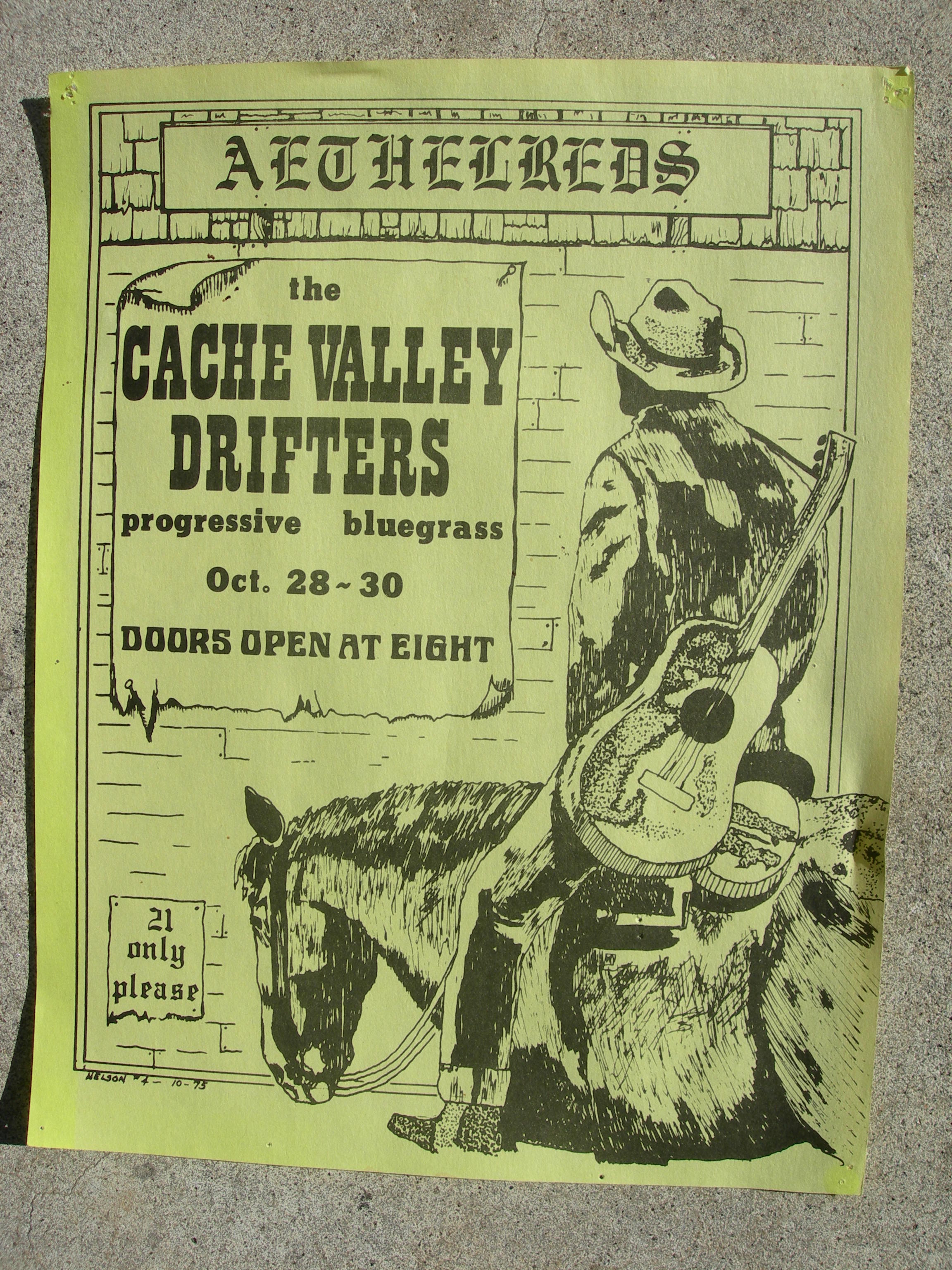
However, I was the only one who could actually go back there from time to time, because sometimes we had to trim headlines, not just stories, and we had a camera called a strip-printer that generated headlines along a strip of photographic paper one letter at a time–in Bodoni Bold. I got to be the Strip Printer Guy, which, just as Aethelred’s Bar on Monterey Street–the Hippie/Biker place that featured incredible bands- had a forever impact on my hearing, the strip printer did the same for my vision.
Putting the paper to bed–a process that sometimes lasted until the wee hours–meant me taking the assembled pages in a big box to Kent Blankenburg’s house–Kent and his brother, Dick published the Five Cities paper, which I still miss– in Arroyo Grande and pretty much throwing them out of the car onto his front porch.
Then I’d drive back to Madonna Plaza Shopping Center (Our Motto: “The wind doesn’t blow here. It sucks.”) to what I think was a Straw Hat Pizza Parlor where all of us would consume obscene amounts of pizza and a platoon or so of ice-cold pitchers of beer or Coca-Cola.
Ah, youth, when we had the metabolisms of muskrats.
We had some great news stories then. A small plane crashed into the roof of the gym where all of us Cuesta students pulled punch cards to register for classes. There was a Vietnam War protest with pallbearers carrying an empty black coffin and I interviewed one, a helicopter pilot in the war, who was both stricken by his experience and one of the most gentle persons I’ve ever met.
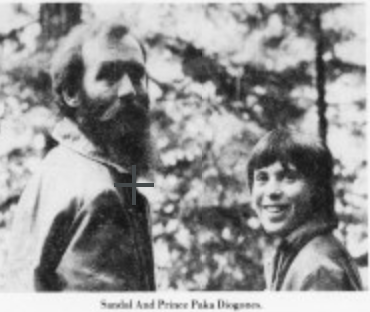
I got to interview a guy who lived on a boat in Morro Bay Harbor, and he was a happy fellow because of it. Moored nearby was the houseboat of two legends, Sandal and his son Paka, reclusive and gentle folks, artists, who took injured seabirds into their care and hand-fed them fish scraps until they were strong enough to fly again.
I got to interview the Black Panther Bobby Seale and the classic film director King Vidor and, during a journalism convention at a hotel in Sacramento–I was within a Frisbee toss of Gov. Ronald Reagan, the guest speaker– I accidentally stepped on state Attorney General Evelle J. Younger’s hand as he came up the stairs that I was descending and he tripped, falling flat on his face.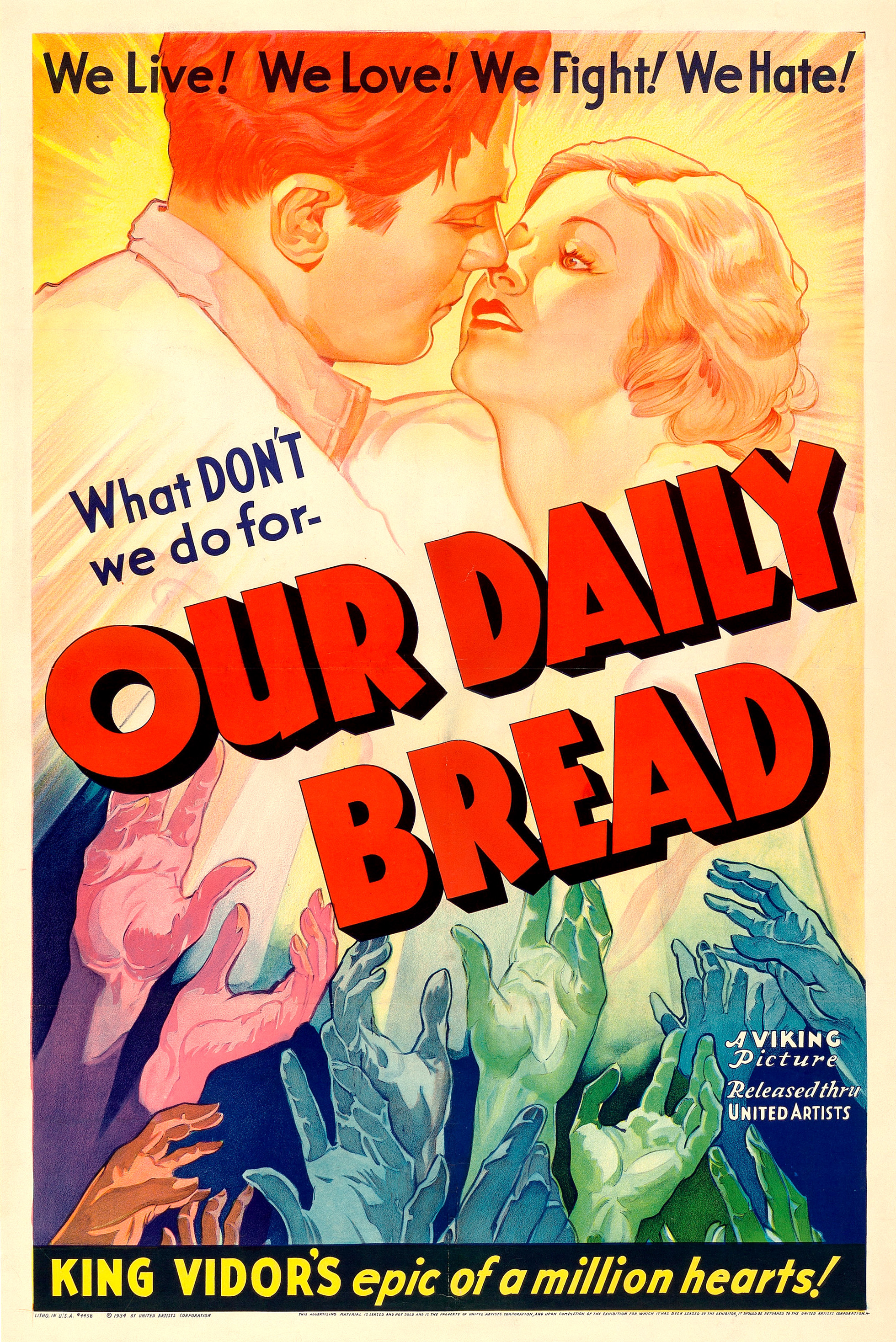
Evelle J. Younger was the California Attorney General. I didn’t like the way his bodyguards looked at me.
The cafeteria was just behind the journalism building, and the only good thing about the cafeteria was Ginger the Checkout Lady, given to smoking 100-mm cigarettes, wisecracking and referring to you as “Hon.” Ginger was a hoot. The food was not. Then the district somehow, either through divine intervention or Trustee Vard Loomis, one of my heroes, hired a European chef named Maurice who made marvelous lunches.
Swedish Meatball Day meant a throng of nineteen-year-old nouveaux Hippie peacenik students packed at the cafeteria doorway–another surplus Army building–trying to claw each other’s eyeballs out before Maurice ran out of meatballs.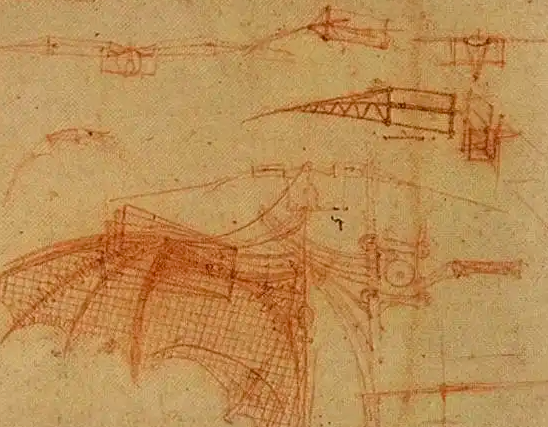
One of my favorite stories was about a slightly mad Canadian artist who took up residence in the Art Department–more barracks, the Art Department was, but augmented by Dali-esque murals–and began building an exquisite wooden replica of a Leonardo da Vinci flying machine. He was going to fly it. He gathered a little coterie of students who believed that he was going to fly it–one volunteered to be the co-pilot– and so they all worked on it merrily together, over there in the Art Department, and I still, to this day, believe it would’ve flown had not the mad artist’s sister driven down from British Columbia to take him, under sedation, back home.
The best part was The Cuestonian staff. I’ve read similar stories about Admiral Nelson’s captains, about the artists and writers who produced the classic Warner Brothers cartoons (Bugs Bunny, Daffy Duck, Elmer Fudd) and, in the book and film “The Right Stuff,” the Mercury astronauts. Gifted people in groups like these last no longer than snowflakes in March, so it remains one of the greatest honors of my life that I got to work with such talented, and now, from the great distance and advantage I have in age, such outrageously young women and men.
 A Work in Progress